

|
시장보고서
상품코드
2154201
폭동 진압 시스템 : 시장 점유율 분석, 업계 동향과 통계, 성장 예측(2026-2031년)Riot Control System - Market Share Analysis, Industry Trends & Statistics, Growth Forecasts (2026 - 2031) |
||||||
 Mordor Intelligence
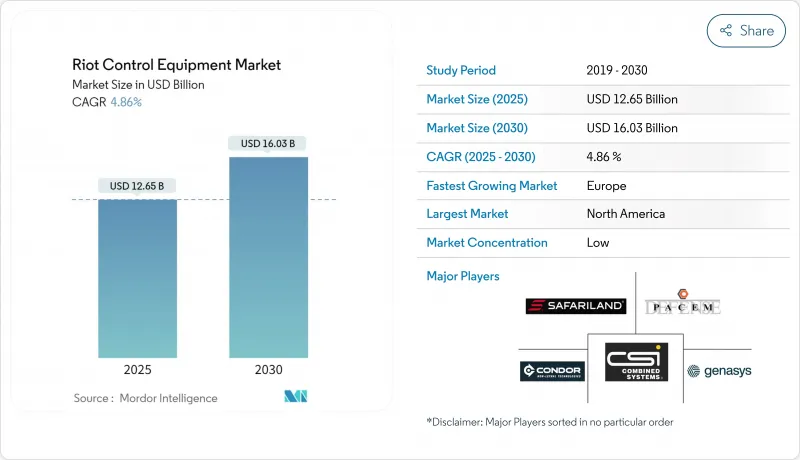
에 따르면 폭동 진압 시스템 시장 규모는 2025년에 129억 달러로 평가되며, 2026년 132억 6,000만 달러에서 2031년까지 171억 4,000만 달러에 달할 것으로 예측되고 있으며, 예측 기간(2026-2031년)에 CAGR은 5.27%에 달할 전망입니다.
전 세계 폭동 진압 시스템 시장의 동향 및 인사이트
시민의 소요, 시위 활동 및 대규모 대중 집회
시위 활동의 빈도와 격화로 인해 폭동 진압 시스템 시장의 법 집행 기관들은 탄약, 방호 장비, 통신 장비 비축을 포함하여 군중 관리 대비책을 더욱 빈번하게 재검토해야 하는 상황에 직면해 있습니다. ACLED의 기록에 따르면 2024년 11월 중순부터 2025년 11월 중순까지 전 세계에서 17만 3,900건 이상의 시위와 폭동이 발생했으며, 이는 전년 대비 약 5% 증가한 수치입니다. 이 기관은 또한 이 기간 중 70개국 이상에서 Z세대가 주도하는 대규모 집회가 열렸다고 보고했습니다. 미국에서는 프린스턴 브리징 디바이즈(Princeton Bridging Divides)가 2025년에 약 2만 건의 시위를 기록했으며, 경찰의 개입이 기록된 시위 중 22%에서 비살상 무기가 사용된 것으로 나타났습니다. 이 정보원에 따르면 이 배치 비율은 2024년 수준의 거의 4배에 달한다고 합니다. 따라서 공급업체가 급증하는 주문을 처리하면서 이미 도입된 발사 장치 플랫폼에 대한 지원도 수행할 수 있다면, 시장은 그 혜택을 누리게 될 것입니다.
법 집행 기관 및 치안 부대의 현대화
현대화 프로그램은 개별 공공 행사에 대한 대응을 넘어 지속적인 시장 수요를 창출합니다. 이는 공공 기관이 일반적으로 갱신 일정이나 표준화된 훈련에 따라 조달 계획을 수립하기 때문입니다. 미국 세관·국경수비국은 2026년 4월, 최대 5,000만 달러 상당의 비치명적 특수 탄약 계약을 체결했습니다. 이 계약은 10개 범주에 걸친 123종의 제품 유형을 대상으로 하며, 각 기관이 공동으로 조달하는 장비의 폭이 넓음을 보여줍니다. 이러한 요구 사항은 일반적으로 장비의 표준화와 요원 훈련, 공급의 지속성, 그리고 부대 차원의 교체 계획을 연계하는 것입니다. 확립된 프레임워크를 갖춘 공급업체는 기관이 하드웨어 플랫폼을 선정한 후에 혜택을 누릴 수 있습니다. 또한 기관이 관련 하드웨어와 호환되는 탄약을 갱신할 때에도 폭동 진압 시스템 업계는 혜택을 받게 됩니다.
인권, 법적 책임 및 무력 행사에 수반되는 위험
법적 책임 위험 및 인권에 대한 면밀한 검토는 특히 기관이 신제품이나 운용 방법을 승인하기 전에 법적 자문이 필요한 경우, 시위 진압 시스템 조달 심사에 소요되는 시간을 연장시킬 가능성이 있습니다. CIVICUS는 2025년에 최소 67개국에서 시위대에 대한 과도한 무력 행사가 기록되었다고 보고했습니다. 이러한 면밀한 검토로 인해 자금이 확보되어 있더라도 기관이 승인할 수 있는 제품 선택의 폭이 좁아질 가능성이 있습니다. 웁살라 분쟁 데이터 프로그램에 따르면 2025년에는 조직적인 폭력으로 인한 사망자 수가 24만 4,600명에 달하여 2024년의 18만 7,000명에서 증가했습니다. 이러한 상황 하에서 무력 행사 사례는 여론, 법적 관점, 정책적 관점에서 즉각적인 주목을 받게 됩니다. 그 결과, 시장 규모 확대가 제약받는 상황에서도 장비의 사용 현황을 보다 적절하게 기록할 수 있는 고부가가치 시스템으로 시장이 전환되고 있습니다.
부문 분석
2025년 진압 시스템 시장에서 공격용 장비는 69.74%의 점유율을 차지하며 해당 부문에서 1위를 기록하고 있습니다. 이러한 위상은 발사 장치, 화학탄, 동적 탄두 및 지향성 에너지 시스템과 같이 오랫동안 보유해 온 재고를 반영한 것입니다. 이 카테고리에서 탄약은 빈번하게 보충되는 품목입니다. 이러한 지속적인 수요 덕분에 하드웨어 발주 시기의 편차를 완화할 수 있습니다. 2026년 4월 미국 세관·국경보호청(CBP)의 계약에는 수동식 폭발탄, 충격탄 및 기타 비치명성 제품이 포함되었습니다.
방탄조끼, 헬멧, 방독면, 방패 등의 개인 보호 장비는 2031년까지 연평균 성장률(CAGR) 6.67%로 성장할 것으로 예측됩니다. 따라서 각 기관이 군중 통제용 장비를 우선시하더라도, 이는 폭동 진압 시스템 시장에 있으며, 필수적인 보완 요소로 남아 있을 것입니다. 이는 나머지 제품 점유율을 차지하며, 안전 및 규정 준수 규칙에 따라 요구될 수 있습니다. 사파리랜드(Safariland)는 2025년 1월 필라델피아 경찰청 SWAT 부대에 자사의 AMP-1X 방탄 헬멧을 공급했습니다. 이 헬멧은 FBI-DEA 방탄 헬멧 프로토콜 2024 V.2에 따라 인증되었으며, 이전 AMP-1TP 모델보다 20% 더 가벼웠습니다. 발사 장비를 업데이트하는 기관은 이를 사용하는 경찰관의 방호 장비도 함께 업데이트할 가능성이 있습니다.
지역별 분석
2025년, 북미는 매출의 29.01%를 차지하며 시위 진압 시스템 시장의 중심적인 위치를 차지했습니다. 이 지역에는 비살상 시스템의 주요 제조사와 연방, 주, 지방 자치 단체의 구매자들이 모여 있습니다. 연방 기관은 전술 장비 및 공공안전 장비의 체계적인 조달을 통해 안정적인 기반을 제공하고 있습니다. 캐나다의 수요는 지방 자치단체의 경찰 활동 및 무력 행사 개혁 요구에 집중되어 있습니다. 이 지역의 기관들은 음향 경고 장치 및 바디캠 통합에도 투자하고 있습니다. 이러한 조달 규모의 깊이는 다른 많은 국가의 시장에 비해 더 대규모이고 복잡한 계약을 지원하고 있습니다.
아시아태평양은 2031년까지 연평균 성장률(CAGR) 6.09%로 성장할 것으로 예측되며, 공공안전 및 국경 경비 요건이 진화함에 따라 시위 진압 시스템 시장에 대한 기여도가 높아질 것으로 전망됩니다. 경찰 현대화, 국경 경비 활동 및 국내 조달 프로그램이 이 지역을 지원하고 있습니다. 인도는 경찰 조직의 기반이 탄탄하며, 주(州) 차원의 기관이 갱신 주기에 영향을 미칠 가능성이 있습니다. 중국은 국내 생산 능력을 보유하고 있으며, 서구 공급업체에 대한 의존도를 낮추고 있습니다. 제나시스(Genasis)는 2026년 2월, 싱가포르 해군으로부터 무인수상정(USV) 탑재용 LRAD 950NXT 시스템에 대해 200만 달러 규모의 수주를 확보했습니다. 이 수주는 해군 및 국경 경비 분야에서 음향 시스템이 활용되고 있음을 보여줍니다.
유럽은 폭동 진압 시스템 시장에서 특수 공공 질서 유지 시스템의 주요 생산지이자 구매지로 자리 잡고 있지만, 규정 준수 요건이 제품 승인 및 수출 절차 모두에 영향을 미치고 있습니다. 규제 준수가 서유럽에서의 성장을 제한하는 한편, 시민 소요에 대한 우려가 지속적인 조달을 지원하고 있습니다. 이 시장에서는 독일, 프랑스, 영국, 이탈리아, 러시아에서 수요가 발생하고 있습니다. EU 규정 2019/125는 시위 진압제 수출에 영향을 미치며, 국경을 넘는 판매 절차를 장기화시킬 가능성이 있습니다. 남미, 중동 및 아프리카는 규모는 작지만 성장을 지속하고 있는 지역입니다. 이 지역들의 수요는 행사 경비, 국경 경비, 국내 치안, 방수차 및 음향 경보 시스템과 관련이 있습니다.
기타 혜택:
- 엑셀 형식의 시장 예측(ME) 시트
- 3개월간의 애널리스트 지원
자주 묻는 질문
목차
제1장 서론
- 조사 전제조건과 시장 정의
- 조사 범위
제2장 조사 방법
제3장 개요
제4장 시장 구도
- 시장 개요
- 시장 성장 촉진요인
- 시장 성장 억제요인
- 밸류체인 분석
- 규제 상황
- 기술 전망
- Porter's Five Forces 분석
제5장 시장 규모와 성장 예측
- 제품 유형별
- 최종사용자별
- 기술별
- 지역별
- 북미
- 미국
- 캐나다
- 멕시코
- 유럽
- 독일
- 영국
- 프랑스
- 이탈리아
- 러시아
- 기타 유럽 국가
- 아시아태평양
- 중국
- 인도
- 일본
- 한국
- 기타 아시아태평양 국가
- 남미
- 브라질
- 아르헨티나
- 기타 남미 국가
- 중동 및 아프리카
- 중동
- 사우디아라비아
- 아랍에미리트
- 이스라엘
- 기타 중동 국가
- 아프리카
- 남아프리카공화국
- 기타 아프리카 국가
- 중동
- 북미
제6장 경쟁 구도
- 시장 집중도
- 전략적 동향
- 시장 점유율 분석
- 기업 개요
- Axon Enterprise, Inc.
- Safariland, LLC
- Combined Systems, Inc.
- EDGE Group PJSC
- Genasys, Inc.
- Pacem Solution International, LLC
- Rheinmetall AG
- Desert Wolf
- Etienne Lacroix Group
- NonLethal Technologies, Inc.
- FN HERSTAL(FN Browning Group)
- Katmerciler A.S.
- STREIT Group
- Byrna Technologies Inc.
- Point Blank Enterprises, Inc.
- Revelyst, Inc.
제7장 시장 기회와 향후 전망
KSAAccording to Mordor Intelligence, the riot control system market size was valued at USD 12.90 billion in 2025, and is forecast to grow from USD 13.26 billion in 2026 to reach USD 17.14 billion by 2031, at a 5.27% CAGR during the forecast period (2026-2031).
Global Riot Control System Market Trends and Insights
Civil Unrest, Protests, and Large Public Gatherings
Protest frequency and intensity are prompting law enforcement agencies in the riot control system market to review crowd-management readiness more often, including their stock of munitions, protective equipment, and communication tools. ACLED recorded more than 173,900 protests and riots globally between mid-November 2024 and mid-November 2025, which represented a nearly 5% year-over-year increase. The organization also reported Gen-Z-led mass mobilizations in more than 70 countries during this period. In the US, Princeton Bridging Divides recorded nearly 20,000 demonstrations in 2025 and found that less-lethal weapons were used in 22% of protests with recorded police engagement. The same source described that deployment rate as almost 4 times the 2024 level. The market, therefore, benefits when suppliers can meet surge orders while supporting installed launcher platforms.
Modernization of Law-Enforcement and Public-Order Forces
Modernization programs create market demand that continues beyond the response to an individual public event, because public agencies commonly plan purchases around replacement schedules and standardized training. The US Customs and Border Protection awarded a less-lethal specialty munitions contract in April 2026 valued at up to USD 50 million. The contract covered 123 product types across 10 categories, indicating the breadth of equipment that agencies procure together. Such requirements commonly link equipment standardization with operator training, supply continuity, and fleet-level replacement planning. Suppliers with established frameworks can benefit after an agency selects a hardware platform. The riot control system industry also benefits when agencies replace compatible ammunition alongside related hardware.
Human-Rights, Liability, and Use-of-Force Exposure
Liability risk and human rights scrutiny can extend the time required for the procurement review of riot control systems, particularly when agencies need legal guidance before approving a new product or operating method. CIVICUS documented excessive force against protesters in at least 67 countries during 2025. This scrutiny can narrow the products that agencies approve, even when funding remains available. The Uppsala Conflict Data Program recorded 244,600 fatalities from organized violence in 2025, compared with 187,000 in 2024. This environment makes use-of-force incidents subject to immediate public, legal, and policy attention. The market is consequently moving toward higher-value systems that better document equipment use, even when volume growth is constrained.
Other drivers and restraints analyzed in the detailed report include:
- Asia-Pacific Border-Security and Urban-Safety Procurement
- De-Escalation Mandates and Accountability Requirements
- Chemical, Environmental, and Export-Control Restrictions
For complete list of drivers and restraints, kindly check the Table Of Contents.
Segment Analysis
Offensive equipment captured 69.74% of the riot control system market share in 2025, giving it the leading position within the category. This position reflects long-standing inventories of launchers, chemical rounds, kinetic projectiles, and directed-energy systems. Ammunition is a frequently replenished item within this category. That recurring requirement can temper the uneven timing of hardware orders. The April 2026 Customs and Border Protection contract covered hand-delivered pyrotechnic munitions, impact munitions, and other less-lethal products.
Personal protective equipment, including vests, helmets, gas masks, and shields, is forecast to grow at a 6.67% CAGR through 2031. Thus, it remains an essential complement to the riot control system market, even when agencies prioritize equipment for crowd management. It represents the remaining product share and can be required by safety and compliance rules. Safariland supplied its AMP-1X ballistic helmets to the Philadelphia Police SWAT Unit in January 2025. The helmets were certified under the FBI-DEA Ballistic Helmet Protocol 2024 V.2 and were 20% lighter than the earlier AMP-1TP model. Agencies that update launchers may also update protective equipment for the officers who use them.
Complete Report Scope:
- By Product Type
- Personal Protective Equipment
- Vests
- Helmets
- Gas Masks
- Shields
- Offensive Equipment
- Area Denial
- Anti-vehicle
- Anti-personnel
- Ammunition
- Rubber Bullets
- Wax Bullets
- Plastic Bullets
- Bean Bag Rounds
- Sponge Grenade
- Explosives
- Flash Bang Grenades
- Sting Grenades
- Gases and Sprays
- Water Cannons
- Scent-based Weapons
- Tear Gas
- Pepper Spray
- Directed Energy Weapons
- Electroshock Weapons
- Other Offensive Equipment
- Area Denial
- Personal Protective Equipment
- By End-User
- Law Enforcement
- Special Forces
- By Technology
- Electronic and Sonic Weapons
- Kinetic Impact Weapons
- Chemical Agents
- Others
- By Geography
- North America
- United States
- Canada
- Mexico
- Europe
- Germany
- United Kingdom
- France
- Italy
- Russia
- Rest of Europe
- Asia-Pacific
- China
- India
- Japan
- South Korea
- Rest of Asia-Pacific
- South America
- Brazil
- Argentina
- Rest of South America
- Middle East and Africa
- Middle East
- Saudi Arabia
- United Arab Emirates
- Israel
- Rest of Middle East
- Africa
- South Africa
- Rest of Africa
- Middle East
- North America
Geography Analysis
North America held 29.01% of revenue in 2025, placing it at the center of the riot control system market. The region brings together major producers of less-lethal systems and federal, state, and municipal buyers. Federal agencies provide a steady base of framework procurement for tactical and public-safety equipment. Canada's demand is more concentrated in municipal policing and use-of-force reform needs. The region's agencies are also investing in acoustic hailing and body-worn camera integration. This procurement depth supports larger and more complex contracts than many other national markets.
Asia-Pacific is forecast to grow at a 6.09% CAGR through 2031 and is expected to increase its contribution to the riot control system market as public safety and border requirements evolve. Police modernization, border operations, and domestic procurement programs support the region. India has a large policing base, and state-level agencies can influence replacement cycles. China has domestic production capacity that reduces its reliance on Western suppliers. Genasys received a USD 2 million order from the Republic of Singapore Navy in February 2026 for LRAD 950NXT systems on USVs. The order shows the use of acoustic systems across naval and border-security applications.
Europe remains a major producer and buyer of specialized public-order systems in the riot control system market, although compliance requirements affect both product approvals and export processes. Regulatory compliance limits growth in Western Europe, while concerns about civil unrest support ongoing procurement. The market has demand across Germany, France, the UK, Italy, and Russia. EU Regulation 2019/125 affects the export of riot control agents and can lengthen cross-border sales processes. South America, and the Middle East and Africa remain smaller but growing areas. Their demand is linked to event security, border protection, internal security, water-cannon vehicles, and acoustic warning systems.
- Axon Enterprise, Inc.
- Safariland, LLC
- Combined Systems, Inc.
- EDGE Group PJSC
- Genasys, Inc.
- Pacem Solution International, LLC
- Rheinmetall AG
- Desert Wolf
- Etienne Lacroix Group
- NonLethal Technologies, Inc.
- FN HERSTAL (FN Browning Group)
- Katmerciler A.S.
- STREIT Group
- Byrna Technologies Inc.
- Point Blank Enterprises, Inc.
- Revelyst, Inc.
Additional Benefits:
- The market estimate (ME) sheet in Excel format
- 3 months of analyst support
TABLE OF CONTENTS
1 INTRODUCTION
- 1.1 Study Assumptions and Market Definition
- 1.2 Scope of the Study
2 RESEARCH METHODOLOGY
3 EXECUTIVE SUMMARY
4 MARKET LANDSCAPE
- 4.1 Market Overview
- 4.2 Market Drivers
- 4.2.1 Civil unrest, protests, and large public gatherings
- 4.2.2 Modernization of law-enforcement and public-order forces
- 4.2.3 Asia-Pacific border-security and urban-safety procurement
- 4.2.4 De-escalation mandates and accountability requirements
- 4.2.5 Integrated evidence, surveillance, and command platforms
- 4.2.6 Compatibility of less-lethal ammunition with installed launchers
- 4.3 Market Restraints
- 4.3.1 Human-rights, liability, and use-of-force exposure
- 4.3.2 Chemical, environmental, and export-control restrictions
- 4.3.3 Variable effectiveness and recertification requirements
- 4.3.4 Procurement fragmentation and interoperability costs
- 4.4 Value Chain Analysis
- 4.5 Regulatory Landscape
- 4.6 Technological Outlook
- 4.7 Porter's Five Forces Analysis
- 4.7.1 Threat of New Entrants
- 4.7.2 Bargaining Power of Suppliers
- 4.7.3 Bargaining Power of Buyers
- 4.7.4 Threat of Substitutes
- 4.7.5 Intensity of Competitive Rivalry
5 MARKET SIZE AND GROWTH FORECASTS (VALUE)
- 5.1 By Product Type
- 5.1.1 Personal Protective Equipment
- 5.1.1.1 Vests
- 5.1.1.2 Helmets
- 5.1.1.3 Gas Masks
- 5.1.1.4 Shields
- 5.1.2 Offensive Equipment
- 5.1.2.1 Area Denial
- 5.1.2.1.1 Anti-vehicle
- 5.1.2.1.2 Anti-personnel
- 5.1.2.2 Ammunition
- 5.1.2.2.1 Rubber Bullets
- 5.1.2.2.2 Wax Bullets
- 5.1.2.2.3 Plastic Bullets
- 5.1.2.2.4 Bean Bag Rounds
- 5.1.2.2.5 Sponge Grenade
- 5.1.2.3 Explosives
- 5.1.2.3.1 Flash Bang Grenades
- 5.1.2.3.2 Sting Grenades
- 5.1.2.4 Gases and Sprays
- 5.1.2.4.1 Water Cannons
- 5.1.2.4.2 Scent-based Weapons
- 5.1.2.4.3 Tear Gas
- 5.1.2.4.4 Pepper Spray
- 5.1.2.5 Directed Energy Weapons
- 5.1.2.6 Electroshock Weapons
- 5.1.2.7 Other Offensive Equipment
- 5.1.2.1 Area Denial
- 5.1.1 Personal Protective Equipment
- 5.2 By End-User
- 5.2.1 Law Enforcement
- 5.2.2 Special Forces
- 5.3 By Technology
- 5.3.1 Electronic and Sonic Weapons
- 5.3.2 Kinetic Impact Weapons
- 5.3.3 Chemical Agents
- 5.3.4 Others
- 5.4 By Geography
- 5.4.1 North America
- 5.4.1.1 United States
- 5.4.1.2 Canada
- 5.4.1.3 Mexico
- 5.4.2 Europe
- 5.4.2.1 Germany
- 5.4.2.2 United Kingdom
- 5.4.2.3 France
- 5.4.2.4 Italy
- 5.4.2.5 Russia
- 5.4.2.6 Rest of Europe
- 5.4.3 Asia-Pacific
- 5.4.3.1 China
- 5.4.3.2 India
- 5.4.3.3 Japan
- 5.4.3.4 South Korea
- 5.4.3.5 Rest of Asia-Pacific
- 5.4.4 South America
- 5.4.4.1 Brazil
- 5.4.4.2 Argentina
- 5.4.4.3 Rest of South America
- 5.4.5 Middle East and Africa
- 5.4.5.1 Middle East
- 5.4.5.1.1 Saudi Arabia
- 5.4.5.1.2 United Arab Emirates
- 5.4.5.1.3 Israel
- 5.4.5.1.4 Rest of Middle East
- 5.4.5.2 Africa
- 5.4.5.2.1 South Africa
- 5.4.5.2.2 Rest of Africa
- 5.4.5.1 Middle East
- 5.4.1 North America
6 COMPETITIVE LANDSCAPE
- 6.1 Market Concentration
- 6.2 Strategic Moves
- 6.3 Market Share Analysis
- 6.4 Company Profiles (includes Global level Overview, Market level Overview, Core Segments, Financials as available, Strategic Information, Market Rank/Share for key companies, Products and Services, and Recent Developments)
- 6.4.1 Axon Enterprise, Inc.
- 6.4.2 Safariland, LLC
- 6.4.3 Combined Systems, Inc.
- 6.4.4 EDGE Group PJSC
- 6.4.5 Genasys, Inc.
- 6.4.6 Pacem Solution International, LLC
- 6.4.7 Rheinmetall AG
- 6.4.8 Desert Wolf
- 6.4.9 Etienne Lacroix Group
- 6.4.10 NonLethal Technologies, Inc.
- 6.4.11 FN HERSTAL (FN Browning Group)
- 6.4.12 Katmerciler A.S.
- 6.4.13 STREIT Group
- 6.4.14 Byrna Technologies Inc.
- 6.4.15 Point Blank Enterprises, Inc.
- 6.4.16 Revelyst, Inc.
7 MARKET OPPORTUNITIES AND FUTURE OUTLOOK
- 7.1 White-space and Unmet-Need Assessment


