

|
시장보고서
상품코드
2154965
남미의 화장품 포장 : 시장 점유율 분석, 업계 동향과 통계, 성장 예측(2026-2031년)South America Cosmetic Packaging - Market Share Analysis, Industry Trends & Statistics, Growth Forecasts (2026 - 2031) |
||||||
 Mordor Intelligence
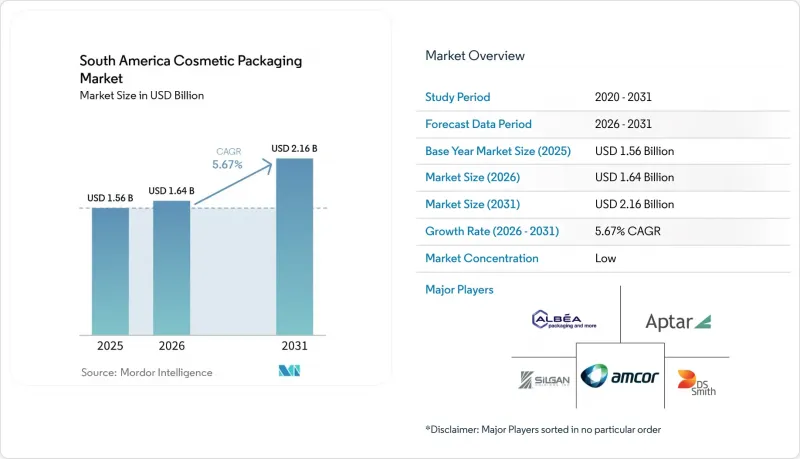
에 따르면 남미의 화장품 패키지 시장 규모는 2025년에 15억 6,000만 달러로 평가되며, 2026년 16억 4,000만 달러에서 확대하며, 2031년까지 21억 6,000만 달러에 달할 것으로 예측됩니다.
예측 기간(2026-2031년) 동안 연평균 성장률(CAGR)은 5.67%에 달할 것으로 전망됩니다.
남미 화장품 포장 시장의 동향 및 인사이트
프리미엄 및 마스티지 뷰티 제품의 소비 동향
남미 화장품 패키지 시장은 브라질, 아르헨티나, 칠레에서 프리미엄 및 마스티지 뷰티 제품에 대한 수요가 확대되는 혜택을 받고 있으며, 이들 국가에서는 각 브랜드가 제품 개발 초기 단계부터 패키지 사양을 변경하고 있습니다. 이 지역의 프리미엄 뷰티 부문은 2031년까지 상당한 연평균 성장률(CAGR)로 확대될 것으로 예측됩니다. 소매 가격 상승에 따라 판매 현장에서 제품의 차별화를 꾀하고, 경쟁이 치열한 소매 환경에서 제품의 품질을 강조하는 소재, 장식, 디스펜서 시스템에 대한 수요가 증가하고 있습니다. 그 결과, 공급업체에 대한 유리, 라미네이트 금속, 에어리스 디스펜서, 리필 가능한 디자인 등에 대한 요구가 증가하고 있으며, 이를 위해서는 브랜드, 디자인, 생산 팀 간의 더욱 긴밀한 협력이 요구되고 있습니다. 브라질의 프리미엄 뷰티 부문은 2031년까지 높은 연평균 성장률(CAGR)로 성장할 것으로 예상되며, 이는 이러한 고사양 패키지 형태에 대한 수요를 지원하고 있습니다. 마스티지 계층은 프리미엄 기능을 보다 합리적인 가격대에 제공함으로써 부가가치가 높은 패키지의 고객 기반을 확대하고 있습니다.
E-Commerce에 적합한 경량 패키지
디지털 뷰티 소매의 부상으로 인해 제품이 생산 단계에 들어가기 전의 패키지 평가 방식이 변화하고 있습니다. 이는 온라인 주문 처리 과정에서 기존의 매장 진열 기준에 더해 배송 및 상품 외관과 관련된 요건이 추가되기 때문입니다. 이 지역의 뷰티 및 퍼스널 케어 분야 E-Commerce 채널은 2024년까지 5년 동안 놀라운 연평균 성장률(CAGR)을 기록하며 확대되고 있으며, 배송시 내구성은 설계상 중요한 고려 사항이 되고 있습니다. 각 브랜드는 온라인 상품 페이지, 샘플링 프로그램, 개봉 영상에 적합한 외관을 유지하면서도 배송시 취급 과정에도 견딜 수 있는 패키지를 요구받고 있습니다. 아프터 뷰티는 2025년 4월, 콜롬비아, 아르헨티나, 브라질, 멕시코에서 현지 생산을 통해 ‘시에라’, ‘모다’, ‘루나’ 에어리스 팩을 출시했습니다. 이 회사는 ISTA-6 E-Commerce 프로토콜을 준수하여 이러한 패키지를 설계했으며, 재활용이 가능한 PP 및 PCR(소비 후 재활용) 부품을 채택했습니다. 이러한 접근 방식을 통해 지역 브랜드에 신속하게 공급할 수 있게 되었으며, 남미 화장품 패키지 시장에서 가볍고 배송에 적합한 패키지가 더욱 실용적으로 자리 잡게 되었습니다.
재생 수지 가격 변동
재활용 수지의 비용은 브랜드 소유자가 보다 지속가능한 소재 사양을 약속하고 있는 경우에도, 컨버터가 재활용 소재 함유율을 높이는 속도를 제한할 가능성이 있습니다. 2026년 중반, 재생 PET의 프리미엄 가격은 버진 수지 가격보다 20-30% 높은 수준을 유지하고 있었으며, 2027년까지는 정상화가 예상되지 않았습니다. 재활용 수지를 필요로 하는 남미의 가공업체들은, 특히 품질, 일관성 또는 수량 요건을 충족하기 위해 수입 수지가 필요한 경우, 조달 비용 상승에 직면할 가능성이 있습니다. 이러한 비용은 가공업체의 이익률을 압박하거나, 가격에 민감한 소비자를 대상으로 대중적인 미용 카테고리에서 경쟁하는 브랜드 소유자의 제품 가격을 인상시킬 가능성이 있습니다. 또한 국내 재활용 능력이 제한적이기 때문에 구매자는 북미 및 유럽 공급 시장의 운송 비용과 가격 조건에 더 쉽게 영향을 받게 됩니다. 그 결과 발생하는 가격 차이로 인해 의무적 요건을 초과하는 범위에서의 재활용 소재의 자발적 채택이 둔화될 가능성이 있습니다.
부문 분석
2025년, 남미 화장품 포장 시장에서 플라스틱은 58.82%의 점유율을 차지했습니다. 이는 비용 효율성, 가공의 유연성, 그리고 브라질과 콜롬비아에 확립된 컨버터의 생산 능력을 바탕으로 한 결과입니다. PET는 투명도가 높고 샴푸 병에서 에센스 용기에 이르기까지 다양한 형태에 적합하므로 널리 사용되고 있습니다. 또한 재활용성이 뛰어나 브랜드가 소재 및 규제 요건을 충족하는 데 있으며, PET는 중요한 역할을 하고 있습니다. PP 및 PE는 비용 대비 중량 비율이 우수하므로 캡, 튜브, 유연 라이너 분야에서 여전히 널리 사용되고 있습니다. 종이 및 판지는 특히 브라질의 가공업체와 제휴하는 독립 브랜드를 통해 접이식 카톤에 대한 사용이 증가하고 있습니다.
유리는 2031년까지 연평균 성장률(CAGR) 6.94%로 확대될 것으로 예상되며, 이는 남미 화장품 포장 시장에서 소재 유형별 가장 높은 성장률입니다. 이러한 위상은 고급스러운 외관과 순환형 디자인을 강조하는 포장에 대한 수요를 반영하고 있습니다. 유리는 무게, 투명도, 촉감이 제품 포지셔닝의 일부가 되는 향수, 에센스, 바디 오일 등의 제품에 특히 적합합니다. 게레스하이머(Geresheimer)사는 BIOFACH 2026에서 사용 후 유리병을 고도로 재활용한 유리, 경량화된 형태, 그리고 천연 화장품용 리필 가능한 솔루션을 선보였습니다. 그럼에도 불구하고 프리미엄 브랜드는 유리를 사용함으로써 부가가치가 높은 디자인과 재사용 및 재활용 소재 사용이라는 목표를 동시에 달성할 수 있습니다.
병과 용기는 스킨케어, 헤어케어, 향수 분야에서 여전히 중심적인 역할을 하고 있으며, 2025년 남미 화장품 포장 시장 규모의 39.74%를 차지했습니다. 세럼, 페이스 크림, 컨디셔너, 로션과 같은 제품들이 이러한 용기 형태에 대한 수요를 지속적으로 지원하고 있습니다. 프리미엄 가격대에서는 각 브랜드가 에어리스 병, 유리 용기, 더욱 정교한 캡을 점점 더 많이 채택하고 있습니다. 접이식 카톤은 리필 시스템이나 프리미엄 기프트 세트의 외포장으로 활용되고 있습니다. 또한 온라인 소매가 콤팩트하고 인증을 받았으며 내구성이 뛰어난 배송용 패키지에 대한 수요를 주도하고 있으며, 골판지 운송용 상자의 중요성도 높아지고 있습니다.
유연한 사셰와 파우치는 2031년까지 연평균 성장률(CAGR) 6.78%로 확대될 것으로 예측되며, 이는 제품 유형 중 가장 높은 성장률입니다. 이러한 형태는 콜롬비아와 페루에서 온라인 샘플 제공, 여행용, 리필 시스템 및 저가 전략에 활용되고 있습니다. 또한 유연한 형태는 구매 규모가 작은 2, 3선 도시로 진출하는 브랜드의 요구도 충족시키고 있습니다. 2025년부터 남미 전역에서 사용되고 있는 InvPack의 1회용 충전기는 이 지역에서 유연한 1회용 화장품 충전 기능을 활용할 수 있음을 보여주었습니다. 남미의 화장품 포장 업계는 이러한 형태를 활용함으로써 편의성, 비용, 배송 성능 간의 균형을 맞출 수 있습니다.
기타 이점:
- 엑셀 형식의 시장 예측(ME) 시트
- 3개월간의 애널리스트 지원
자주 묻는 질문
목차
제1장 서론
- 조사 전제조건과 시장 정의
- 조사 범위
제2장 조사 방법
제3장 개요
제4장 시장 구도
- 시장 개요
- 거시경제 요인이 시장에 미치는 영향
- 시장 성장 촉진요인
- 시장 성장 억제요인
- 업계 밸류체인 분석
- 규제 상황
- 기술 전망
- Porter's Five Forces 분석
제5장 시장 규모와 성장 예측
- 소재 유형별
- 제품 유형별
- 디스펜싱 기구별
- 화장품 유형별
- 국가별
- 브라질
- 아르헨티나
- 칠레
- 콜롬비아
- 페루
- 기타 남미 국가
제6장 경쟁 구도
- 시장 집중도
- 전략적 동향
- 시장 점유율 분석
- 기업 개요
- Albea SA
- AptarGroup Inc.
- Amcor plc
- Silgan Holdings Inc.
- DS Smith PLC
- Graham Packaging LP
- Quadpack Industries SA
- Libo Cosmetics Co. Ltd
- Gerresheimer AG
- Ball Corporation
- Verescence France SA
- Cosmopak Ltd
- Raepak Ltd
- Rieke Corporation
- Huhtamaki Oyj
- ALPLA Werke Alwin Lehner GmbH
- HCP Packaging Co. Ltd
- Wheaton Brasil Vidros S.A.
- Thomriss Industria e Comercio Ltda.
- C-Pack Creative Packaging S.A.
- Simex S.A.S.
- SOINCO S.A.S.
- TUBAPLAS S.A.
- Ibratec Artes Graficas Ltda.
- Brasilata S.A.
제7장 시장 기회와 향후 전망
KSA 26.10.28According to Mordor Intelligence, the South America cosmetic packaging market size was valued at USD 1.56 billion in 2025 and is estimated to expand from USD 1.64 billion in 2026 to reach USD 2.16 billion by 2031, at a CAGR of 5.67% during the forecast period (2026-2031).
South America Cosmetic Packaging Market Trends and Insights
Premium and Masstige Beauty Consumption
The South America cosmetic packaging market is benefiting from greater demand for premium and masstige beauty products in Brazil, Argentina, and Chile, where brands are changing packaging requirements early in product development. The regional premium beauty segment is projected to expand at a notable CAGR through 2031. Higher retail prices raise demand for materials, decoration, and dispensing systems that make a product feel differentiated at the point of sale and reinforce product quality in a crowded retail environment. Suppliers are consequently receiving more requests for glass, laminated metal, airless dispensers, and refillable designs, which require closer coordination among brand, design, and production teams. Brazil's premium beauty segment is projected to expand at a significant CAGR through 2031, supporting demand for these higher-specification formats. The masstige tier broadens the customer base for value-added packaging by bringing premium features to more accessible price points.
E-Commerce-Friendly Lightweight Formats
Digital beauty retail is changing how brands evaluate packaging before a product enters production, because online fulfillment adds shipping and presentation requirements to the usual shelf-display criteria. The region's beauty and personal care e-commerce channel expanded at a significant CAGR during the 5 years through 2024, making delivery durability a central design consideration. Brands need packaging that withstands parcel handling while maintaining an appearance suited to online product pages, sampling programs, and unboxing. Aptar Beauty launched the Sierra, Moda, and Luna airless packs in April 2025, with local production in Colombia, Argentina, Brazil, and Mexico. The company designed the formats for ISTA-6 e-commerce protocols and included recycle-ready PP and PCR-capable components. This approach supports faster supply to regional brands and makes lightweight, delivery-ready formats more practical for the South America cosmetic packaging market.
Recycled-Resin Price Volatility
Recycled-resin costs can limit the pace at which converters adopt higher recycled content, even when brand owners have committed to more sustainable material specifications. In mid-2026, recycled PET premiums tracked 20-30% above virgin-resin parity, and normalization was not expected before 2027. South American converters that need post-consumer recycled resin can face higher procurement costs, especially when imported resin is needed to meet quality, consistency, or volume requirements. Those costs can reduce converter margins or raise prices for brand owners serving price-sensitive consumers and competing in mass beauty categories. Limited domestic recycling capacity also exposes buyers to freight costs and pricing conditions in North American and European supply markets. The resulting price gap can slow voluntary adoption of recycled materials beyond mandatory requirements.
Other drivers and restraints analyzed in the detailed report include:
- Refillable and Reusable Delivery Systems
- Authentication-Enabled Smart Packaging
- Plastic Packaging Regulation and Compliance Costs
For complete list of drivers and restraints, kindly check the Table Of Contents.
Segment Analysis
Plastics held 58.82% of the South America cosmetic packaging market share in 2025, supported by cost efficiency, processing flexibility, and established converter capacity in Brazil and Colombia. PET is widely used because it offers clarity and suits a range of formats, from shampoo bottles to serum containers. Its recyclability profile also makes PET relevant as brands respond to material and regulatory requirements. PP and PE remain common in caps, tubes, and flexible liners because they offer favorable cost-to-weight performance. Paper and paperboard are increasingly used for folding cartons, especially by independent brands working with Brazilian converters.
Glass is projected to expand at a 6.94% CAGR through 2031, the fastest rate among material types in the South America cosmetic packaging market. Its position reflects demand for premium presentation and packaging that supports circular design claims. Glass is particularly suited to fragrance, serums, body oils, and other products where weight, clarity, and tactile quality are part of product positioning. Gerresheimer presented high post-consumer recycled-content glass, lightweight formats, and refillable solutions for natural cosmetics at BIOFACH 2026. Even so, premium brands can use glass to combine higher-value design with reuse and recycled-content objectives.
Bottles and jars accounted for 39.74% of the South America cosmetic packaging market size in 2025, as they remain central to skin care, hair care, and fragrance applications. Serums, facial creams, conditioners, and lotion products continue to support demand for these formats. In premium price tiers, brands are increasingly using airless bottles, glass jars, and more elaborate closures. Folding cartons provide outer packaging for refill systems and premium gift sets. Corrugated transit boxes are also becoming increasingly important as online retail drives demand for compact, certified, and resilient shipping packaging.
Flexible sachets and pouches are projected to expand at a 6.78% CAGR through 2031, the fastest rate within product types. These formats serve online sample fulfillment, travel use, refill systems, and lower entry-price strategies in Colombia and Peru. Flexible formats also meet the needs of brands entering Tier 2 and Tier 3 cities, where purchase sizes are smaller. The InvPack single-dose machine, used across South America since 2025, showed the regional availability of flexible single-dose cosmetic filling capabilities. The South America cosmetic packaging industry can use these formats to balance convenience, cost, and delivery performance.
Complete Report Scope:
- By Material Type
- Plastics
- Polyethylene Terephthalate (PET)
- Polypropylene (PP)
- Polyethylene (PE)
- Other Plastics
- Glass
- Metal
- Paper and Paperboard
- Plastics
- By Product Type
- Bottles and Jars
- Tubes and Sticks
- Folding Cartons
- Corrugated Transit Boxes
- Flexible Sachets and Pouches
- Other Product Type
- By Dispensing Mechanism
- Pump-Based
- Dropper / Pipette
- Spray / Mist
- Stick / Twist-Up
- Jar / Scoop
- By Cosmetic Type
- Skin Care
- Facial Care
- Body Care
- Hair Care
- Color Cosmetics
- Perfumes and Fragrances
- Other Cosmetics Type
- Skin Care
- By Country
- Brazil
- Argentina
- Chile
- Colombia
- Peru
- Rest of South America
List of Companies Covered in this Report:
- Albea SA
- AptarGroup Inc.
- Amcor plc
- Silgan Holdings Inc.
- DS Smith PLC
- Graham Packaging LP
- Quadpack Industries SA
- Libo Cosmetics Co. Ltd
- Gerresheimer AG
- Ball Corporation
- Verescence France SA
- Cosmopak Ltd
- Raepak Ltd
- Rieke Corporation
- Huhtamaki Oyj
- ALPLA Werke Alwin Lehner GmbH
- HCP Packaging Co. Ltd
- Wheaton Brasil Vidros S.A.
- Thomriss Industria e Comercio Ltda.
- C-Pack Creative Packaging S.A.
- Simex S.A.S.
- SOINCO S.A.S.
- TUBAPLAS S.A.
- Ibratec Artes Graficas Ltda.
- Brasilata S.A.
Additional Benefits:
- The market estimate (ME) sheet in Excel format
- 3 months of analyst support
TABLE OF CONTENTS
1 INTRODUCTION
- 1.1 Study Assumptions and Market Definition
- 1.2 Scope of the Study
2 RESEARCH METHODOLOGY
3 EXECUTIVE SUMMARY
4 MARKET LANDSCAPE
- 4.1 Market Overview
- 4.2 Impact of Macroeconomic Factors on the Market
- 4.3 Market Drivers
- 4.3.1 Premium and Masstige Beauty Consumption
- 4.3.2 E-Commerce-Friendly Lightweight Formats
- 4.3.3 Refillable and Reusable Delivery Systems
- 4.3.4 Authentication-Enabled Smart Packaging
- 4.3.5 Carbon-Label-Ready Packaging Demand
- 4.3.6 Localized Small-Batch Packaging for Indie Beauty Brands
- 4.4 Market Restraints
- 4.4.1 Recycled-Resin Price Volatility
- 4.4.2 Plastic Packaging Regulation and Compliance Costs
- 4.4.3 Filling-Line Incompatibility of Novel Biomaterials
- 4.4.4 Reverse-Logistics and Collection Gaps
- 4.5 Industry Value Chain Analysis
- 4.6 Regulatory Landscape
- 4.7 Technological Outlook
- 4.8 Porter's Five Forces Analysis
- 4.8.1 Bargaining Power of Suppliers
- 4.8.2 Bargaining Power of Buyers
- 4.8.3 Threat of New Entrants
- 4.8.4 Threat of Substitute Products
- 4.8.5 Intensity of Competitive Rivalry
5 MARKET SIZE AND GROWTH FORECASTS (VALUE)
- 5.1 By Material Type
- 5.1.1 Plastics
- 5.1.1.1 Polyethylene Terephthalate (PET)
- 5.1.1.2 Polypropylene (PP)
- 5.1.1.3 Polyethylene (PE)
- 5.1.1.4 Other Plastics
- 5.1.2 Glass
- 5.1.3 Metal
- 5.1.4 Paper and Paperboard
- 5.1.1 Plastics
- 5.2 By Product Type
- 5.2.1 Bottles and Jars
- 5.2.2 Tubes and Sticks
- 5.2.3 Folding Cartons
- 5.2.4 Corrugated Transit Boxes
- 5.2.5 Flexible Sachets and Pouches
- 5.2.6 Other Product Type
- 5.3 By Dispensing Mechanism
- 5.3.1 Pump-Based
- 5.3.2 Dropper / Pipette
- 5.3.3 Spray / Mist
- 5.3.4 Stick / Twist-Up
- 5.3.5 Jar / Scoop
- 5.4 By Cosmetic Type
- 5.4.1 Skin Care
- 5.4.1.1 Facial Care
- 5.4.1.2 Body Care
- 5.4.2 Hair Care
- 5.4.3 Color Cosmetics
- 5.4.4 Perfumes and Fragrances
- 5.4.5 Other Cosmetics Type
- 5.4.1 Skin Care
- 5.5 By Country
- 5.5.1 Brazil
- 5.5.2 Argentina
- 5.5.3 Chile
- 5.5.4 Colombia
- 5.5.5 Peru
- 5.5.6 Rest of South America
6 COMPETITIVE LANDSCAPE
- 6.1 Market Concentration
- 6.2 Strategic Moves
- 6.3 Market Share Analysis
- 6.4 Company Profiles (includes Global Level Overview, Market Level Overview, Core Segments, Financials as available, Strategic Information, Market Rank/Share, Products and Services, Recent Developments)
- 6.4.1 Albea SA
- 6.4.2 AptarGroup Inc.
- 6.4.3 Amcor plc
- 6.4.4 Silgan Holdings Inc.
- 6.4.5 DS Smith PLC
- 6.4.6 Graham Packaging LP
- 6.4.7 Quadpack Industries SA
- 6.4.8 Libo Cosmetics Co. Ltd
- 6.4.9 Gerresheimer AG
- 6.4.10 Ball Corporation
- 6.4.11 Verescence France SA
- 6.4.12 Cosmopak Ltd
- 6.4.13 Raepak Ltd
- 6.4.14 Rieke Corporation
- 6.4.15 Huhtamaki Oyj
- 6.4.16 ALPLA Werke Alwin Lehner GmbH
- 6.4.17 HCP Packaging Co. Ltd
- 6.4.18 Wheaton Brasil Vidros S.A.
- 6.4.19 Thomriss Industria e Comercio Ltda.
- 6.4.20 C-Pack Creative Packaging S.A.
- 6.4.21 Simex S.A.S.
- 6.4.22 SOINCO S.A.S.
- 6.4.23 TUBAPLAS S.A.
- 6.4.24 Ibratec Artes Graficas Ltda.
- 6.4.25 Brasilata S.A.
7 MARKET OPPORTUNITIES AND FUTURE OUTLOOK
- 7.1 White-Space and Unmet-Need Assessment


