

|
시장보고서
상품코드
2154966
남미의 의약품 포장 : 시장 점유율 분석, 업계 동향과 통계, 성장 예측(2026-2031년)South America Pharmaceutical Packaging - Market Share Analysis, Industry Trends & Statistics, Growth Forecasts (2026 - 2031) |
||||||
 Mordor Intelligence
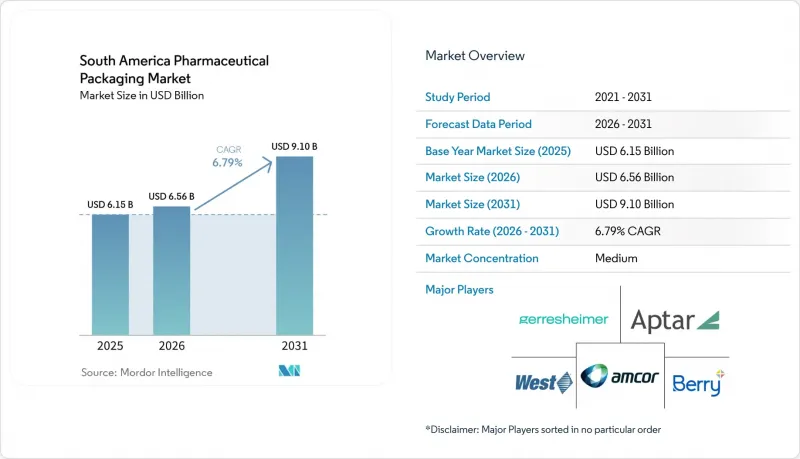
에 따르면 남미의 의약품 포장 시장 규모는 2025년에 61억 5,000만 달러로 평가되며, 2026-2031년에 CAGR 6.79%로 추이하며, 2031년에는 91억 달러에 달할 것으로 예측됩니다.
남미 의약품 포장 시장의 동향 및 인사이트
브라질 및 아르헨티나에서의 의약품 생산 확대
브라질과 아르헨티나에서는 의약품 생산 능력이 확대되고 있으며, 이에 따라 여러 의약품 카테고리에 걸친 1차 및 2차 포장 수요가 지원되고 있습니다. 브라질의 제네릭 의약품 제조사들은 2025년에 수십억 단위를 판매하여 2024년 대비 대폭 증가했습니다. 이 판매량의 대부분은 국내 제약사가 차지하고 있습니다. 브라질의 통합 보건 제도(SUS)에 따른 공공 조달에서는 고혈압 및 당뇨병 치료제의 경우, 대용량 병이 아닌 개별 블리스터 포장으로된 1회 투여량이 우선적으로 채택되고 있습니다. 이러한 요건으로 인해 이미 시장에 자리 잡은 제네릭 의약품이라 하더라도 블리스터 포장에 대한 수요가 유지되고 있습니다. BNDES는 2025년, Bionovis사에 6억 5,000만 레알(1억 1,100만 달러)의 대출을 승인하여, 국내 바이오의약품 생산 및 향후 고복잡성 주사제 포장에 대한 수요를 지원했습니다.
만성질환의 증가와 제네릭 의약품 판매량 확대
만성질환 치료는 남미 전역에서 경구용 고형 제네릭 의약품 포장에 대한 안정적인 판매량 기반을 창출하고 있습니다. 2025년, 브라질의 주요 제네릭 의약품으로는 로사르탄, 에날라프릴, 아테놀롤, 암로디핀 등이 있습니다. 로사르탄은 2025년 4월까지 5,640만 상자의 판매를 기록했습니다. 이 지역의 소매 약국에서는 이러한 의약품에 대해 일반적으로 스트립 팩이나 1회 투여용 블리스터 포장이 사용되고 있습니다. 이러한 추세로 인해 벌크 병 형태보다 알루미늄 호일 라미네이트나 인쇄된 포장에 대한 수요가 증가하고 있습니다. 또한 장기간에 걸친 치료 기간 중 조제되는 대량 생산 의약품에 대해 지속적인 생산 체제를 지원하는 데에도 기여하고 있습니다. 제네릭 의약품의 판매량이 증가한다고 해서 반드시 포장 요건이 줄어드는 것은 아닙니다. 1회 투여 사양이나 추적성에 관한 규제로 인해 유효 성분의 비용이 낮아지더라도, 의약품 1개당 포장 내용량이 증가할 가능성이 있습니다.
수입 수지, 알루미늄, 의약품용 유리의 원가 변동
원자재 비용 변동은 남미의 의약품 포장 가공업체들에게 큰 경영상 과제가 되고 있습니다. 브라질에서 사용되는 고순도 붕규산 유리관의 70% 이상은 수입에 의존하고 있습니다. NCM 코드 7010에 해당하는 의약품용 유리 용기에 대한 수입 관세는 12%에서 18% 사이입니다. 브라질 레알이 10% 하락하면 상쇄 메커니즘이 없는 경우, 유리 용기의 입고 비용이 5%에서 8% 상승할 가능성이 있습니다. 런던 금속 거래소(LME)의 알루미늄 가격은 2023-2025년 사이에 ±30% 변동했습니다. 이러한 가격 변동으로 인해 블리스터용 호일 가공업체들은 수년에 걸친 고정 공급 계약을 체결했을 가능성이 있는 제약 구매업체들과 계약을 재협상할 수밖에 없게 되었습니다. 생산 능력의 제약 또한 이러한 비용 위험을 가중시키고 있습니다. 붕규산 튜브 성형 라인의 경우, 유럽 및 일본의 자본재 공급업체로부터 납품받기까지 18-24개월이 소요됩니다. 가격 변동으로 인해 수요가 변화하더라도 생산자는 공급량을 신속하게 조정할 수 없습니다.
부문별 분석
2025년, 남미 의약품 포장 시장에서 플라스틱이 48.62%의 점유율을 차지했습니다. HDPE 병과 PET 용기는 경구용 고형 제네릭 의약품에 사용되는 반면, LDPE 및 LLDPE로 만든 파우치와 튜브는 액제 및 반고형 제제에 사용됩니다. 바이오의약품 및 백신용 유형 I 붕규산 유리 용기에는 프리미엄 가격이 책정되어 있으므로 유리 제품은 수량 점유율에 비해 매출에서 차지하는 비중이 더 큽니다. 금속, 바이오폴리머 및 기타 소재는 블리스터 포장의 뚜껑 재료로 사용되는 알루미늄 호일 등 특수한 요구 사항을 충족하고 있습니다. 바이오폴리머의 활용은 검증된 의약품 등급 대체재의 입수 가능성에 의해 여전히 제한받고 있습니다.
종이 및 판지는 2026-2031년까지 연평균 성장률(CAGR) 7.45%로 확대될 것으로 예측되며, 가장 빠르게 성장하는 소재 부문이 될 전망입니다. 칠레의 회수 규정과 브라질의 지속가능성 프로그램이 재활용 가능한 판지 및 블리스터 카드 수요에 영향을 미치고 있습니다. 수자노(Suzano)사의 ‘Pharma Plus’ 판지는 의약품 외부 포장 상자 및 블리스터 카드 용도로 설계되었습니다. 크로크너 펜타플러스(Klockner Pentaplus)와 콘스탄티아 플렉서블스(Constantia Flexibles)는 재활용 가능한 포장 목표를 지원하면서도 방습성 및 산소 차단 성능을 유지하는 단일 소재 블리스터 라미네이트를 개발하고 있습니다. 남미의 의약품 포장 업계는 지속가능성 요건과 의약품 보호, 그리고 규제 관련 문서화 사이에서 균형을 맞춰야 합니다.
2025년 기준, 1차 포장은 남미 의약품 포장 시장 규모의 74.62%를 차지했습니다. 2031년까지 연평균 성장률(CAGR) 7.78%로 확대될 것으로 예상되며, 이는 포장 부문 중 가장 높은 성장률입니다. 이 부문에는 의약품을 직접 보호하는 용기 및 밀봉 시스템이 포함되며, 그 시장 규모는 주사제, 바이오의약품, 백신의 수요를 반영하고 있습니다. 제조업체들이 바이알·주사기 시스템에서 즉시 사용 가능한 형태로 전환함에 따라 프리필드 주사기는 1차 포장 형태 중 가장 빠르게 성장하고 있습니다. 바이알과 앰플은 여전히 비경구용 항생제 및 백신 분야에서 가장 큰 취급량을 차지하고 있습니다.
SCHOTT Pharma의 브라질 이투페바 공장은 2026년에 가동 25주년을 맞이하며, 500명의 직원을 고용하고 있습니다. 이 공장에서는 현지 시장을 대상으로 앰플, 바이알, 카트리지를 생산하고 있습니다. 2차 포장에는 상자, 슬리브, 라벨, 첨부 문서가 포함되며, 3차 포장에는 골판지 운송 상자나 팔레트가 포함됩니다. ANVISA의 RDC 885/2024 디지털 리플릿 시범 프로그램에서는 규제 정보 전자 저장소에 대응하는 2D 데이터 매트릭스 코드를 기재할 수 있도록 2차 카톤의 변경이 요구되고 있습니다. 바이오시밀러 및 백신의 콜드체인 유통으로 인해 1차, 2차, 3차 포장이 연계된 솔루션에 대한 수요가 증가하고 있습니다.
기타 혜택:
- 엑셀 형식의 시장 예측(ME) 시트
- 3개월간의 애널리스트 지원
자주 묻는 질문
목차
제1장 서론
- 조사 전제조건과 시장 정의
- 조사 범위
제2장 조사 방법
제3장 개요
제4장 시장 구도
- 시장 개요
- 시장 성장 촉진요인
- 시장 성장 억제요인
- 업계 가치/밸류체인 분석
- 규제 상황
- 기술 전망
- Porter's Five Forces 분석
- 거시경제 요인이 시장에 미치는 영향
제5장 시장 규모와 성장 예측
- 소재별
- 포장 레벨별
- 제품 유형별
- 최종사용자별
- 국가별
- 브라질
- 아르헨티나
- 칠레
- 콜롬비아
- 페루
- 기타 남미 국가
제6장 경쟁 구도
- 시장 집중도
- 전략적 동향
- 시장 점유율 분석
- 기업 개요
- Amcor plc
- Gerresheimer AG
- West Pharmaceutical Services, Inc.
- Berry Global Group, Inc.
- AptarGroup, Inc.
- Smurfit WestRock plc
- Becton, Dickinson and Company
- Stevanato Group S.p.A.
- SCHOTT Pharma AG and Co. KGaA
- Nipro Corporation
- SGD Pharma
- Klockner Pentaplast Group
- Constantia Flexibles Group GmbH
- Huhtamaki Oyj
- Tekni-Plex, Inc.
- Evertis S.A.
- Grupo HZ
- Condensa S.A.
- TGI Pack S.R.L.
- SG+PACK
제7장 시장 기회와 향후 전망
KSA 26.10.28According to Mordor Intelligence, the South America pharmaceutical packaging market size was valued at USD 6.15 billion in 2025 and is projected to reach USD 9.1 billion by 2031, at a CAGR of 6.79% during 2026-2031.
South America Pharmaceutical Packaging Market Trends and Insights
Expansion of Pharmaceutical Manufacturing in Brazil and Argentina
Brazil and Argentina are expanding pharmaceutical production capacity, thereby supporting demand for primary and secondary packaging across multiple drug categories. Brazilian generic drug manufacturers sold billions of units in 2025, a significant increase over 2024, with domestic laboratories accounting for most of the generic unit volume. Public procurement under Brazil's Unified Health System favors individually blister-packed doses for hypertension and diabetes treatments rather than bulk bottles. This requirement supports demand for blister packaging, even for established generic molecules. BNDES approved BRL 650 million (USD 111 million) in financing for Bionovis in 2025, supporting domestic biologics production and future demand for high-complexity injectable packaging.
Rising Chronic Disease and Generic Drug Volumes
Chronic disease treatment creates a stable volume base for oral-solid generic packaging across South America. Losartan, enalapril, atenolol, and amlodipine were among the leading generic products in Brazil during 2025. Losartan recorded 56.4 million boxes sold through April 2025. Retail pharmacies in the region commonly use strip packs and unit-dose blisters for these medicines. This preference increases demand for aluminum foil laminates and printed packaging rather than bulk-bottle formats. It also supports recurring production runs for high-volume medicines that are dispensed over long treatment periods. Generic volume does not necessarily reduce packaging requirements. Unit-dose specifications and traceability rules can increase packaging content per medicine even as active ingredient costs decline.
Volatility in Imported Resin, Aluminum, and Pharmaceutical Glass Costs
Raw material cost volatility is a major operational challenge for pharmaceutical packaging converters in South America. More than 70% of high-purity borosilicate glass tubing used in Brazil is imported. Import tariffs on pharmaceutical glass containers under NCM code 7010 range from 12% to 18%. A 10% depreciation of the Brazilian real can raise landed glass container costs by 5% to 8% in the absence of an offsetting mechanism. Aluminum prices on the London Metal Exchange moved by +-30% between 2023 and 2025. These movements required blister-foil converters to renegotiate contracts with pharmaceutical buyers that may use multiyear fixed supply agreements. Capacity constraints add to this cost exposure. Borosilicate tubing forming lines require 18 to 24 months of lead time from European and Japanese capital equipment suppliers. Producers cannot quickly adjust supply when price changes alter demand.
Other drivers and restraints analyzed in the detailed report include:
- Growth of Biologics, Vaccines, and Parenteral Therapies
- Sustainability-Led Shift Toward Recyclable Packaging
- High Validation Costs for Sterile and Barrier Packaging
For complete list of drivers and restraints, kindly check the Table Of Contents.
Segment Analysis
Plastics held 48.62% of the South America pharmaceutical packaging market in 2025. HDPE bottles and PET containers support oral-solid generic medicines, while LDPE and LLDPE pouches and tubes serve liquid and semi-solid formulations. Glass carries greater revenue weight than its volume share because Type I borosilicate formats for biologics and vaccines carry a premium. Metal, biopolymers, and other materials address specialized needs, including aluminum foil for blister lidding. The use of biopolymers remains limited by the availability of validated pharmaceutical-grade alternatives.
Paper and paperboard is projected to expand at a 7.45% CAGR from 2026 to 2031, making it the fastest-growing material category. Chilean recovery rules and sustainability programs in Brazil are influencing demand for recyclable cartons and blister cards. Suzano's Pharma Plus paperboard was designed for pharmaceutical outer cartons and blister-card uses. Klockner Pentaplast and Constantia Flexibles are developing mono-material blister laminates that retain moisture- and oxygen-barrier performance while supporting recyclable packaging goals. The South America pharmaceutical packaging industry must balance sustainability requirements with drug protection and regulatory documentation.
Primary packaging accounted for 74.62% of the South America pharmaceutical packaging market size in 2025. It is projected to expand at a 7.78% CAGR through 2031, the highest rate among packaging levels. The segment includes containers and closure systems that directly protect medicines, with its value position reflecting the needs of injectables, biologics, and vaccines. Prefilled syringes are the fastest-growing primary format as manufacturers shift from vial-and-syringe systems to ready-to-use configurations. Vials and ampoules still handle the largest volumes for parenteral antibiotics and vaccines.
SCHOTT Pharma's Itupeva facility in Brazil marked its 25th anniversary in 2026 and employs 500 people. The site produces ampoules, vials, and cartridges for the local market. Secondary packaging includes cartons, sleeves, labels, and inserts, while tertiary formats include corrugated shippers and pallets. ANVISA's RDC 885/2024 digital leaflet pilot requires changes to secondary cartons so they can carry compliant 2D DataMatrix codes for the regulatory information electronic repository. Cold-chain distribution for biosimilars and vaccines increases the need for coordinated primary, secondary, and tertiary solutions.
Complete Report Scope:
- By Material
- Plastics
- HDPE
- LDPE and LLDPE
- PET
- Other Plastics
- Glass
- Type I Borosilicate
- Type II Treated Soda-Lime
- Type III Soda-Lime
- Metal
- Paper and Paperboard
- Biopolymers and Other Materials
- Plastics
- By Packaging Level
- Primary Packaging
- Bottles
- Prefilled Syringes
- Vials and Ampoules
- Blister Packs
- Secondary Packaging
- Cartons and Sleeves
- Labels and Inserts
- Tertiary Packaging
- Corrugated Shippers
- Pallets and Protective Systems
- Primary Packaging
- By Product Type
- Bottles
- Prefilled Syringes
- Vials and Ampoules
- Blister Packs
- Caps and Closures
- Tubes and Pouches
- Other Product Types
- By End User
- Pharmaceutical Companies
- Contract Development and Manufacturing Organizations
- Research Institutes
- Other End Users
- By Country
- Brazil
- Argentina
- Chile
- Colombia
- Peru
- Rest of South America
List of Companies Covered in this Report:
- Amcor plc
- Gerresheimer AG
- West Pharmaceutical Services, Inc.
- Berry Global Group, Inc.
- AptarGroup, Inc.
- Smurfit WestRock plc
- Becton, Dickinson and Company
- Stevanato Group S.p.A.
- SCHOTT Pharma AG and Co. KGaA
- Nipro Corporation
- SGD Pharma
- Klockner Pentaplast Group
- Constantia Flexibles Group GmbH
- Huhtamaki Oyj
- Tekni-Plex, Inc.
- Evertis S.A.
- Grupo HZ
- Condensa S.A.
- TGI Pack S.R.L.
- SG+PACK
Additional Benefits:
- The market estimate (ME) sheet in Excel format
- 3 months of analyst support
TABLE OF CONTENTS
1 INTRODUCTION
- 1.1 Study Assumptions and Market Definition
- 1.2 Scope of the Study
2 RESEARCH METHODOLOGY
3 EXECUTIVE SUMMARY
4 MARKET LANDSCAPE
- 4.1 Market Overview
- 4.2 Market Drivers
- 4.2.1 Expansion of Pharmaceutical Manufacturing in Brazil and Argentina
- 4.2.2 Rising Chronic-Disease and Generic-Drug Volumes
- 4.2.3 Growth of Biologics, Vaccines, and Parenteral Therapies
- 4.2.4 Sustainability-Led Shift Toward Recyclable Packaging
- 4.2.5 Serialization and Traceability Requirements in Unit-Dose Packaging
- 4.2.6 Regionalization of Fill-Finish and Contract Packaging Capacity
- 4.3 Market Restraints
- 4.3.1 Volatility in Imported Resin, Aluminum, and Pharmaceutical Glass Costs
- 4.3.2 High Validation Costs for Sterile and Barrier Packaging
- 4.3.3 Fragmented Waste-Collection and Recycling Infrastructure
- 4.3.4 Currency, Import, and Working-Capital Pressure on Packaging Buyers
- 4.4 Industry Value / Supply-Chain Analysis
- 4.5 Regulatory Landscape
- 4.5.1 Brazil, ANVISA Labeling and Package-Information Requirements
- 4.5.2 Argentina, Digital Prescription and Traceability Implications
- 4.5.3 Chile, Extended Producer Responsibility and Packaging Recovery
- 4.5.4 Good Manufacturing Practice and Primary-Packaging Quality Standards
- 4.6 Technological Outlook
- 4.6.1 Serialization-Ready Blister Printing and Vision Inspection
- 4.6.2 Ready-to-Fill Vials, Cartridges, and Prefilled Syringes
- 4.6.3 Recycled-Content and Mono-Material Packaging Formats
- 4.6.4 Digital Leaflets, QR Codes, and Connected Packaging
- 4.7 Porter's Five Forces Analysis
- 4.7.1 Bargaining Power of Suppliers
- 4.7.2 Bargaining Power of Buyers
- 4.7.3 Threat of New Entrants
- 4.7.4 Threat of Substitutes
- 4.7.5 Degree of Competition
- 4.8 Impact of Macroeconomic Factors on the Market
5 MARKET SIZE AND GROWTH FORECASTS (VALUE)
- 5.1 By Material
- 5.1.1 Plastics
- 5.1.1.1 HDPE
- 5.1.1.2 LDPE and LLDPE
- 5.1.1.3 PET
- 5.1.1.4 Other Plastics
- 5.1.2 Glass
- 5.1.2.1 Type I Borosilicate
- 5.1.2.2 Type II Treated Soda-Lime
- 5.1.2.3 Type III Soda-Lime
- 5.1.3 Metal
- 5.1.4 Paper and Paperboard
- 5.1.5 Biopolymers and Other Materials
- 5.1.1 Plastics
- 5.2 By Packaging Level
- 5.2.1 Primary Packaging
- 5.2.1.1 Bottles
- 5.2.1.2 Prefilled Syringes
- 5.2.1.3 Vials and Ampoules
- 5.2.1.4 Blister Packs
- 5.2.2 Secondary Packaging
- 5.2.2.1 Cartons and Sleeves
- 5.2.2.2 Labels and Inserts
- 5.2.3 Tertiary Packaging
- 5.2.3.1 Corrugated Shippers
- 5.2.3.2 Pallets and Protective Systems
- 5.2.1 Primary Packaging
- 5.3 By Product Type
- 5.3.1 Bottles
- 5.3.2 Prefilled Syringes
- 5.3.3 Vials and Ampoules
- 5.3.4 Blister Packs
- 5.3.5 Caps and Closures
- 5.3.6 Tubes and Pouches
- 5.3.7 Other Product Types
- 5.4 By End User
- 5.4.1 Pharmaceutical Companies
- 5.4.2 Contract Development and Manufacturing Organizations
- 5.4.3 Research Institutes
- 5.4.4 Other End Users
- 5.5 By Country
- 5.5.1 Brazil
- 5.5.2 Argentina
- 5.5.3 Chile
- 5.5.4 Colombia
- 5.5.5 Peru
- 5.5.6 Rest of South America
6 COMPETITIVE LANDSCAPE
- 6.1 Market Concentration
- 6.2 Strategic Moves
- 6.3 Market Share Analysis
- 6.4 Company Profiles (includes Global Level Overview, Market Level Overview, Core Segments, Financials as available, Strategic Information, Market Rank/Share, Products and Services, Recent Developments)
- 6.4.1 Amcor plc
- 6.4.2 Gerresheimer AG
- 6.4.3 West Pharmaceutical Services, Inc.
- 6.4.4 Berry Global Group, Inc.
- 6.4.5 AptarGroup, Inc.
- 6.4.6 Smurfit WestRock plc
- 6.4.7 Becton, Dickinson and Company
- 6.4.8 Stevanato Group S.p.A.
- 6.4.9 SCHOTT Pharma AG and Co. KGaA
- 6.4.10 Nipro Corporation
- 6.4.11 SGD Pharma
- 6.4.12 Klockner Pentaplast Group
- 6.4.13 Constantia Flexibles Group GmbH
- 6.4.14 Huhtamaki Oyj
- 6.4.15 Tekni-Plex, Inc.
- 6.4.16 Evertis S.A.
- 6.4.17 Grupo HZ
- 6.4.18 Condensa S.A.
- 6.4.19 TGI Pack S.R.L.
- 6.4.20 SG+PACK
7 MARKET OPPORTUNITIES AND FUTURE OUTLOOK
- 7.1 White-Space and Unmet-Need Assessment


