

|
시장보고서
상품코드
2154970
남미의 의약품용 블리스터 포장 : 시장 점유율 분석, 업계 동향과 통계, 성장 예측(2026-2031년)South America Pharmaceutical Blister Packaging - Market Share Analysis, Industry Trends & Statistics, Growth Forecasts (2026 - 2031) |
||||||
 Mordor Intelligence
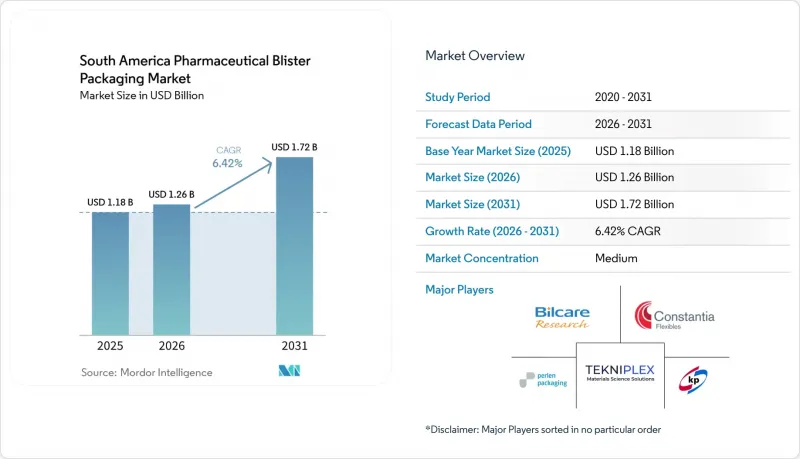
에 따르면 남미의 의약품 블리스터 포장 시장 규모는 2025년에 11억 8,000만 달러로 평가되며, 2026년 12억 6,000만 달러에서 확대하며, 2031년까지 17억 2,000만 달러에 달할 것으로 추정되고 있습니다.
예측 기간(2026-2031년) 동안 연평균 성장률(CAGR)은 6.42%에 달할 것으로 전망됩니다.
남미 의약품 블리스터 포장 시장의 동향 및 인사이트
단회 투여용 및 복약 순응도 지원용 패키징에 대한 수요 증가
1회 투여용 블리스터는 의약품의 안전성, 조제의 정확성, 그리고 의약품 공급망 전반에 걸친 기록의 명확화에 기여합니다. 고령화에 따라 다제 병용이 증가할 것으로 예상되며, 이에 따라 투여량을 분리하고 치료 일정을 준수하기 쉽게 해주는 포장에 대한 수요가 높아지고 있습니다. 또한 병원 약국의 자동화 분야에서도 1회 투여 조제 시스템에 대응할 수 있는 균일한 캐비티 치수가 요구되고 있습니다. 병원이 카세트식 자동화 시스템을 도입한 경우, 다른 1차 포장 형태로 변경하려면 추가적인 설비 투자나 워크플로우 변경이 필요할 수 있습니다. 아르헨티나의 ‘Disposición 8277’에서는 병원에 공급되는 경구용 고형 의약품에 대해 개별적으로 식별 가능하고 분리 가능한 1회 투여용 블리스터 포장을 의무화하고 있습니다. 약국이 의료 기관 및 지역 사회의 조제 관행을 조화시켜 나감에 따라 이러한 요건들은 소매 현장의 사양 수립에도 영향을 미치고 있습니다. 이는 포장에 관한 결정이 지역 전체에 걸쳐 확립된 의약품 품질 절차, 생산 일정 및 유통 관행에 부합해야 하므로 중요한 의미를 지닙니다.
의약품 일련번호 부여 및 추적성 요건
일련번호 부여로 인해 남미 의약품 블리스터 포장 시장 전반에서 규제 준수 인쇄 및 검증 역량의 중요성이 높아지고 있습니다. 아르헨티나의 ‘Disposición 3294/2025’에 따르면 의약품 2차 포장에 QR코드 또는 데이터 매트릭스 코드를 표기해야 합니다. 이 요건은 전문 의약품에 적용되며, 환자가 제품 정보에 접근할 수 있도록 돕기 위한 것입니다. 각 포장 변환 업체들은 규제 대상인 제약 업계 고객에게 서비스를 제공하기 전에 검증된 코드 인쇄 및 비전 검사 시스템을 점점 더 필요로 하고 있습니다. 이러한 역량은 계약 수주에 영향을 미칠 수 있습니다. 검증된 생산 기록을 보유하지 않은 공급업체는 고객의 자격 요건을 충족하지 못할 가능성이 있기 때문입니다. 그 결과 발생하는 투자 사이클은 규제 대상 공급 계약을 위해 생산 라인을 업그레이드하고 있는 제네릭 의약품 제조사 및 수탁제조업체에도 영향을 미치고 있습니다. 또한 이 요건은 제조사가 원자재 적합성 평가, 생산 라인 운영, 제품 출하 및 약국 공급 활동을 어떻게 조정하는지에 대해서도 영향을 미칩니다.
의료 폐기물 및 재활용이 어려운 다층 구조
다층 블리스터는 일반적으로 PVC, PVDC, 알루미늄을 조합하고 있으며, 기존의 기계적 재활용이 어렵습니다. 칠레와 콜롬비아에서는 포장 회수 및 재생 재료 함유율에 관한 요건이 도입되어, 이러한 구조를 사용하는 컨버터에게 규정 준수 부담이 증가하고 있습니다. 재활용 가능한 단일 소재 대체품은 이 문제를 완화할 수 있지만, 제약 회사는 우선 새로운 포장이 정해진 보관 조건에서 의약품을 보호할 수 있는지 확인해야 합니다. Klockner Pentaplast사는 제약 용도를 위한 재활용 가능한 경질 필름 솔루션을 제공하며, 제조사가 선택할 수 있는 소재의 방향을 제시하고 있습니다. 검증에는 12-24개월이 소요되므로 검증된 다층 포장의 즉각적인 대체는 지연되고 있습니다. 따라서 남미의 의약품 블리스터 포장 시장에서는 기존 구조로부터의 급격한 전환보다는 점진적인 변화가 나타날 것입니다. 이 과제는 소재 선정과 가동 신뢰성, 문서화된 품질관리, 그리고 의약품 유통의 일상적인 요구 사항을 종합적으로 고려해야 하는 문제입니다.
부문 분석
2025년 제품 유형별 점유율에서 카드형 및 페이스 실형 블리스터는 25.83%를 차지하며, 남미 의약품 블리스터 포장 시장에서 가장 큰 제품 카테고리를 형성하고 있습니다. 이러한 위상은 소매 약국이나 병원 유통 채널을 통해 판매되는 고형 경구 의약품에서 이러한 포장이 확고히 자리 잡았음을 반영합니다. 이 형태는 일반적인 열성형 장비와 호환되며, 대량 생산되는 제네릭 의약품 프로그램에 적합합니다. 또한 제약사가 서로 다른 정제 제품 간에 포장 표시를 표준화할 수 있게 해줍니다. 클램쉘형 블리스터는 제품을 육안으로 확인할 수 있어야 하거나 추가적인 보호가 필요한 진단 키트 및 일반의약품 분야에서 여전히 중요한 역할을 하고 있습니다. 이는 포장 결정이 해당 지역 전체의 확립된 의약품 품질 절차, 생산 일정, 유통 관행에 부합해야 하므로 중요합니다. 또한 이 범주는 여러 의약품 및 유통 환경에서 익숙한 포장 구성을 필요로 하면서도, 생산 계획을 기존 설비 및 작업자 교육과 조화시키고자 하는 제조사에게도 계속해서 유용합니다.
어린이 안전 사양 및 고령자용 블리스터 시장은 2031년까지 연평균 성장률(CAGR) 7.82%로 확대될 것으로 예측됩니다. 이 카테고리는 어린이의 의도하지 않은 복용을 방지해야 할 필요성에 대응하는 동시에, 고령 환자가 처방약을 개봉할 수 있도록 하는 것을 목표로 합니다. 동일한 형태로 두 가지 목적을 모두 충족해야 하므로, 뚜껑 선정 및 패키지 디자인에는 세심한 주의가 필요합니다. 트랩 구조나 풀 카드 구조는 프리미엄 브랜드 제품을 위해 추가적인 위변조 방지 옵션을 제공합니다. 남미의 의약품 블리스터 포장 업계는 안전성, 접근성 및 명확한 제품 식별을 지원하는 설계로 이에 대응하고 있습니다. 이러한 요구 사항은 제조사가 원자재 적합성 평가, 생산 라인 운영, 제품 출시, 약국 공급 활동을 어떻게 조정할지에까지 영향을 미치고 있으며, 개봉 성능, 포장 정보, 아동 안전 대책에 대한 기대, 그리고 정기적인 복약 일정을 관리해야 하는 환자의 실질적인 요구 사항에 대해 공급업체가 제약 팀과 긴밀히 협력할 필요가 대두되고 있습니다.
2025년 소재 점유율에서 플라스틱 필름은 40.71%를 차지하고 있으며, 이는 고형 경구용 의약품을 위한 열성형용 PVC가 널리 사용되고 있는 데 기인합니다. PVC는 많은 정평이 난 제품에서 비용, 가공 성능 및 적당한 내습성의 균형이 잘 잡혀 있는 것으로 알려져 있습니다. 알루미늄 호일은 뚜껑 소재의 기판이나 냉간 성형 패키지의 성형용 웹으로서 여전히 필수적인 존재입니다. 그 수요는 습기에 민감한 의약품 카테고리에서 요구되는 차단 보호의 필요성과 밀접한 관련이 있습니다. PCTFE, COC, 아크랄 계열 소재 등의 특수 필름은 장벽 성능 요건이 엄격하여 소재 대체가 제한되는 바이오의약품이나 항암제 용도로 사용되고 있습니다. 그 실용적인 효과는 공급업체가 일반적인 생산 계획을 방해하지 않으면서 고객의 지정 사양을 충족할 수 있는지 여부에 달려 있으며, 소재 선정 시에는 성형 특성, 밀봉 강도, 인쇄성, 공급 안정성, 그리고 시판 의약품 포장이 출시되기 전에 적용되는 일련의 제품 요구 사항에도 주의를 기울여야 합니다.
제약사들이 플라스틱 함량 감축을 모색하는 가운데, 종이 및 판지 시장은 2031년까지 연평균 성장률(CAGR) 7.51%로 확대될 것으로 예상됩니다. 칠레와 콜롬비아의 포장 요건으로 인해 새로운 회수 시스템에 적합한 구조에 대한 비즈니스 타당성이 강화되고 있습니다. 남미 의약품 블리스터 포장 시장에서 종이 및 판지 시장 규모는 2031년까지 연평균 성장률(CAGR) 7.51%로 확대될 것으로 예측됩니다. 콘스탄티아 플렉서블스(Constantia Flexibles)는 재활용 가능하거나 PVC가 포함되지 않은 구조에 중점을 둔 의약품 포장 솔루션으로 ‘PERPETUA’와 ‘REGULA CIRC’를 발표했습니다. 채용 여부는 지역 규제 요건에 따라 의약품의 안정성과 제조 가능성이 입증되는지에 달려 있습니다. 따라서 소재 전환은 PVC를 일률적으로 대체하는 형태가 아니라, 제품별로 단계적으로 진행될 가능성이 높다고 볼 수 있습니다. 이 점은 제약사가 보호 및 투여 요구 사항이 서로 다른 광범위한 제품 포트폴리오를 관리하는 경우에 특히 중요하며, 이러한 변화로 인해 차단 성능을 개별적인 기술적 특징으로 제시하기보다는 각 대안이 해당 지역의 보관 조건 및 이용 가능한 설비에서 어떻게 기능하는지를 설명할 수 있는 공급업체가 유리해질 것입니다.
기타 혜택:
- 엑셀 형식의 시장 예측(ME) 시트
- 3개월간의 애널리스트 지원
자주 묻는 질문
목차
제1장 서론
- 조사 전제조건과 시장 정의
- 조사 범위
제2장 조사 방법
제3장 개요
제4장 시장 구도
- 시장 개요
- 시장 성장 촉진요인
- 시장 성장 억제요인
- 거시경제 요인이 시장에 미치는 영향
- 업계 밸류체인 분석
- 규제 상황
- 기술 전망
- Porter's Five Forces 분석
제5장 시장 규모와 성장 예측
- 제품 유형별
- 소재별
- 기술별
- 용도별
- 최종사용자별
- 포장 형태별
- 지역별
- 브라질
- 아르헨티나
- 콜롬비아
- 기타 남미 국가
제6장 경쟁 구도
- 시장 집중도
- 전략적 동향
- 시장 점유율 분석
- 기업 개요
- Constantia Flexibles Group GmbH
- Tekni-Plex, Inc.
- Klockner Pentaplast Group
- Bilcare Limited
- Perlen Packaging AG
- ACG Pharmapack Private Limited
- UFlex Limited
- Aluflexpack AG
- Liveo Research GmbH
- Rollprint Packaging Products, Inc.
- R-Pharm Germany GmbH
- Shanghai Haishun New Pharmaceutical Packaging Co., Ltd.
- Zibo Zhongnan Pharmaceutical Packaging Materials Co., Ltd.
- Nantong Huideseng Packaging Co., Ltd.
- Shanghai Hongli Pharmaceutical Packaging Materials Co., Ltd.
- Yangzhou Jerel Pharmaceutical New Material Co., Ltd.
- Svam Toyal Packaging Industries Private Limited
- Blisterpack Embalagens Ltda.
- Blistal S.A.
- Serpac Embalagens Farmaceuticas Ltda.
- Dapack Embalagens Ltda.
- Berkes S.A.
- Blipack S.A.
- Meprec S.A.S.
제7장 시장 기회와 향후 전망
KSA 26.10.28According to Mordor Intelligence, the South America pharmaceutical blister packaging market size was valued at USD 1.18 billion in 2025 and is estimated to expand from USD 1.26 billion in 2026 to reach USD 1.72 billion by 2031, at a CAGR of 6.42% during the forecast period (2026-2031).
South America Pharmaceutical Blister Packaging Market Trends and Insights
Rising Unit-Dose and Adherence Packaging Demand
Unit-dose blisters support medication safety, dispensing accuracy, and clearer records across the pharmaceutical supply chain. An aging population is expected to increase polypharmacy, which strengthens the need for packs that separate doses and make treatment schedules easier to follow. Hospital pharmacy automation also favors consistent cavity dimensions that work with unit-dose dispensing systems. Once hospitals install cassette-based automation, changing to another primary format can require additional equipment spending and workflow changes. Argentina's Disposicion 8277 requires individually identifiable, peelable unit-dose blisters for oral solid medicines supplied to hospitals. These requirements are shaping specifications in retail settings as pharmacies align institutional and community dispensing practices This matters because packaging decisions must fit established pharmaceutical quality procedures, production schedules, and distribution practices across the region.
Pharmaceutical Serialization and Traceability Requirements
Serialization is making compliant printing and verification capacity more important across the South America pharmaceutical blister packaging market. Argentina's Disposicion 3294/2025 requires QR or Data Matrix codes on secondary pharmaceutical packaging. The requirement applies to pharmaceutical specialties and supports patient access to product information. Packaging converters increasingly need validated code printing and vision inspection systems before they can serve regulated pharmaceutical customers. This capability can influence contract awards because a supplier without verified production records may not meet customer qualification requirements. The resulting investment cycle extends to generic manufacturers and contract producers that are upgrading lines for regulated supply arrangements The requirement also affects how manufacturers coordinate material qualification, line operation, product release, and pharmacy supply activities.
Medical-Waste and Difficult-to-Recycle Multilayer Structures
Multilayer blisters commonly combine PVC, PVDC, and aluminum, which makes conventional mechanical recycling difficult. Chile and Colombia have introduced packaging recovery and recycled-content requirements that add compliance work for converters using these structures. Recyclable mono-material alternatives can reduce this issue, but pharmaceutical companies must first confirm that new packs protect medicines under required storage conditions. Klockner Pentaplast offers recyclable rigid film solutions for pharmaceutical applications, illustrating the material direction available to manufacturers. Validation can take 12-24 months, which slows immediate replacement of established multilayer packs. The South America pharmaceutical blister packaging market will therefore see a gradual change rather than a rapid shift away from traditional structures The issue links material selection with operating reliability, documented quality controls, and the everyday requirements of medicine distribution.
Other drivers and restraints analyzed in the detailed report include:
- Expansion of Generic-Drug and Contract-Manufacturing Capacity
- High-Barrier Protection for Moisture-Sensitive Medicines
- PVC, Aluminum, Resin, and Currency Volatility
For complete list of drivers and restraints, kindly check the Table Of Contents.
Segment Analysis
Carded and face-seal blisters held 25.83% of the 2025 product-type share, making them the largest product category in the South America pharmaceutical blister packaging market. Their position reflects their established use for solid oral medicines sold through retail pharmacies and hospital distribution channels. The format works with common thermoforming equipment and suits high-volume generic-drug programs. It also allows pharmaceutical companies to standardize pack presentation across different tablet products. Clamshell blisters remain relevant for diagnostic kits and over-the-counter products that need physical product visibility or added protection This matters because packaging decisions must fit established pharmaceutical quality procedures, production schedules, and distribution practices across the region, and the category also remains useful for manufacturers that need a familiar pack configuration across multiple medicines and distribution settings, while keeping production planning aligned with established equipment and operator training.
Child-resistant and senior-friendly blisters are projected to expand at a 7.82% CAGR through 2031. This category addresses the need to prevent unintended access by children while allowing older patients to open prescribed medicines. It requires careful lidding selection and pack design because both objectives must be met in the same format. Trapped and full-card structures provide further tamper-evidence options for premium branded products. The South America pharmaceutical blister packaging industry is responding with designs that support safety, accessibility, and clear product identification The requirement also affects how manufacturers coordinate material qualification, line operation, product release, and pharmacy supply activities, creating a need for suppliers to work closely with pharmaceutical teams on opening performance, pack information, child protection expectations, and the practical needs of patients who manage recurring medicine schedules.
Plastic films held 40.71% of the 2025 material share, supported by the wide use of thermoforming-grade PVC for solid oral medicines. PVC offers a familiar balance of cost, processing performance, and moderate moisture resistance for many established products. Aluminum foil remains essential as a lidding substrate and as a forming web in cold-form packs. Its demand is linked to the need for barrier protection in moisture-sensitive medicine categories. Specialty films such as PCTFE, COC, and aclar-based materials serve biologic and oncology applications where barrier requirements limit material substitution Its practical effect depends on whether the supplier can meet the customer's stated specification without disrupting routine production planning, while material decisions also require attention to forming behavior, seal integrity, printing, supply availability, and the full set of product requirements that apply before a commercial medicine pack is released.
Paper and paperboard is expected to expand at a 7.51% CAGR through 2031 as pharmaceutical companies seek to reduce plastic content. Chilean and Colombian packaging requirements are strengthening the business case for structures that fit emerging recovery systems. The South America pharmaceutical blister packaging market size for paper and paperboard is projected to expand at a 7.51% CAGR through 2031. Constantia Flexibles presented PERPETUA and REGULA CIRC as pharmaceutical packaging approaches that focus on recyclable or PVC-free structures. Adoption will remain dependent on proving drug stability and manufacturability under regional regulatory expectations. The material shift is therefore likely to proceed product by product rather than through a uniform replacement of PVC This consideration is especially relevant where medicine producers manage broad product portfolios with different protection and dispensing needs, and the change favors providers that can explain how each option works in regional storage conditions and on available equipment, rather than offering barrier performance as a separate technical feature.
Complete Report Scope:
- By Product Type
- Carded and Face-Seal Blisters
- Clamshell Blisters
- Trapped and Full-Card Blisters
- Child-Resistant and Senior-Friendly Blisters
- Other Product Types
- By Material
- Plastic Films
- Aluminum Foil
- Paper and Paperboard
- Other Materials
- By Technology
- Thermoforming
- Cold Forming
- Heat-Seal and Heat-Shrink
- By Application
- Tablets
- Capsules
- Oral Thin Films and Lozenges
- Diagnostic Kits
- Other Applications
- By End User
- Branded and Generic Pharmaceutical Manufacturers
- Contract Development and Manufacturing Organizations
- Contract Packaging Organizations
- By Packaging Format
- Push-Through Blisters
- Peelable Blisters
- Alu-Alu Blisters
- PVC-PVDC Blisters
- PVC-PET and Polypropylene Blisters
- By Geography
- Brazil
- Argentina
- Colombia
- Rest of South America
List of Companies Covered in this Report:
- Constantia Flexibles Group GmbH
- Tekni-Plex, Inc.
- Klockner Pentaplast Group
- Bilcare Limited
- Perlen Packaging AG
- ACG Pharmapack Private Limited
- UFlex Limited
- Aluflexpack AG
- Liveo Research GmbH
- Rollprint Packaging Products, Inc.
- R-Pharm Germany GmbH
- Shanghai Haishun New Pharmaceutical Packaging Co., Ltd.
- Zibo Zhongnan Pharmaceutical Packaging Materials Co., Ltd.
- Nantong Huideseng Packaging Co., Ltd.
- Shanghai Hongli Pharmaceutical Packaging Materials Co., Ltd.
- Yangzhou Jerel Pharmaceutical New Material Co., Ltd.
- Svam Toyal Packaging Industries Private Limited
- Blisterpack Embalagens Ltda.
- Blistal S.A.
- Serpac Embalagens Farmaceuticas Ltda.
- Dapack Embalagens Ltda.
- Berkes S.A.
- Blipack S.A.
- Meprec S.A.S.
Additional Benefits:
- The market estimate (ME) sheet in Excel format
- 3 months of analyst support
TABLE OF CONTENTS
1 INTRODUCTION
- 1.1 Study Assumptions and Market Definition
- 1.2 Scope of the Study
2 RESEARCH METHODOLOGY
3 EXECUTIVE SUMMARY
4 MARKET LANDSCAPE
- 4.1 Market Overview
- 4.2 Market Drivers
- 4.2.1 Rising Unit-Dose and Adherence Packaging Demand
- 4.2.2 Pharmaceutical Serialization and Traceability Requirements
- 4.2.3 Expansion of Generic-Drug and Contract-Manufacturing Capacity
- 4.2.4 High-Barrier Protection for Moisture-Sensitive Medicines
- 4.2.5 Growth of Retail Pharmacy, Self-Medication, and Chronic-Therapy Volumes
- 4.2.6 Localized Production and Near-Shoring of Pharmaceutical Packaging
- 4.3 Market Restraints
- 4.3.1 Medical-Waste and Difficult-to-Recycle Multilayer Structures
- 4.3.2 PVC, Aluminum, Resin, and Currency Volatility
- 4.3.3 Limited Regional Capacity for Validated Specialty Barrier Films
- 4.3.4 Qualification, Validation, and Tooling Costs for Small Batches
- 4.4 Impact of Macroeconomic Factors on the Market
- 4.5 Industry Value Chain Analysis
- 4.6 Regulatory Landscape
- 4.7 Technological Outlook
- 4.8 Porter's Five Forces Analysis
- 4.8.1 Bargaining Power of Suppliers
- 4.8.2 Bargaining Power of Buyers
- 4.8.3 Threat of New Entrants
- 4.8.4 Threat of Substitutes
- 4.8.5 Competitive Rivalry
5 MARKET SIZE AND GROWTH FORECASTS (VALUE)
- 5.1 By Product Type
- 5.1.1 Carded and Face-Seal Blisters
- 5.1.2 Clamshell Blisters
- 5.1.3 Trapped and Full-Card Blisters
- 5.1.4 Child-Resistant and Senior-Friendly Blisters
- 5.1.5 Other Product Types
- 5.2 By Material
- 5.2.1 Plastic Films
- 5.2.2 Aluminum Foil
- 5.2.3 Paper and Paperboard
- 5.2.4 Other Materials
- 5.3 By Technology
- 5.3.1 Thermoforming
- 5.3.2 Cold Forming
- 5.3.3 Heat-Seal and Heat-Shrink
- 5.4 By Application
- 5.4.1 Tablets
- 5.4.2 Capsules
- 5.4.3 Oral Thin Films and Lozenges
- 5.4.4 Diagnostic Kits
- 5.4.5 Other Applications
- 5.5 By End User
- 5.5.1 Branded and Generic Pharmaceutical Manufacturers
- 5.5.2 Contract Development and Manufacturing Organizations
- 5.5.3 Contract Packaging Organizations
- 5.6 By Packaging Format
- 5.6.1 Push-Through Blisters
- 5.6.2 Peelable Blisters
- 5.6.3 Alu-Alu Blisters
- 5.6.4 PVC-PVDC Blisters
- 5.6.5 PVC-PET and Polypropylene Blisters
- 5.7 By Geography
- 5.7.1 Brazil
- 5.7.2 Argentina
- 5.7.3 Colombia
- 5.7.4 Rest of South America
6 COMPETITIVE LANDSCAPE
- 6.1 Market Concentration
- 6.2 Strategic Moves
- 6.3 Market Share Analysis
- 6.4 Company Profiles (includes Global Level Overview, Market Level Overview, Core Segments, Financials as available, Strategic Information, Market Rank/Share, Products and Services, Recent Developments)
- 6.4.1 Constantia Flexibles Group GmbH
- 6.4.2 Tekni-Plex, Inc.
- 6.4.3 Klockner Pentaplast Group
- 6.4.4 Bilcare Limited
- 6.4.5 Perlen Packaging AG
- 6.4.6 ACG Pharmapack Private Limited
- 6.4.7 UFlex Limited
- 6.4.8 Aluflexpack AG
- 6.4.9 Liveo Research GmbH
- 6.4.10 Rollprint Packaging Products, Inc.
- 6.4.11 R-Pharm Germany GmbH
- 6.4.12 Shanghai Haishun New Pharmaceutical Packaging Co., Ltd.
- 6.4.13 Zibo Zhongnan Pharmaceutical Packaging Materials Co., Ltd.
- 6.4.14 Nantong Huideseng Packaging Co., Ltd.
- 6.4.15 Shanghai Hongli Pharmaceutical Packaging Materials Co., Ltd.
- 6.4.16 Yangzhou Jerel Pharmaceutical New Material Co., Ltd.
- 6.4.17 Svam Toyal Packaging Industries Private Limited
- 6.4.18 Blisterpack Embalagens Ltda.
- 6.4.19 Blistal S.A.
- 6.4.20 Serpac Embalagens Farmaceuticas Ltda.
- 6.4.21 Dapack Embalagens Ltda.
- 6.4.22 Berkes S.A.
- 6.4.23 Blipack S.A.
- 6.4.24 Meprec S.A.S.
7 MARKET OPPORTUNITIES AND FUTURE OUTLOOK
- 7.1 White-Space and Unmet-Need Assessment


