

|
시장보고서
상품코드
2155632
대사 약물 : 시장 점유율 분석, 업계 동향과 통계, 성장 예측(2026-2031년)Metabolism Drugs - Market Share Analysis, Industry Trends & Statistics, Growth Forecasts (2026 - 2031) |
||||||
 Mordor Intelligence
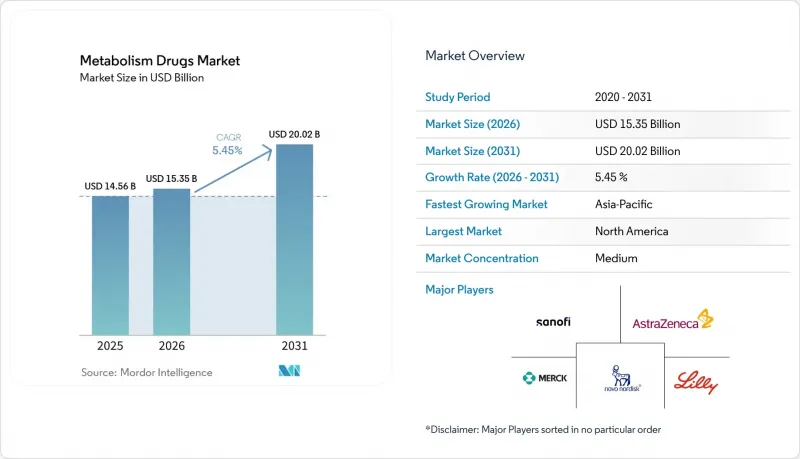
에 따르면 대사 약물 시장 규모는 2025년에 145억 6,000만 달러로 평가되며, 2026년 153억 5,000만 달러에서 2031년까지 200억 2,000만 달러에 달할 것으로 예측되며, 예측 기간(2026-2031년) 동안 CAGR은 5.45%가 될 전망입니다.
세계 대사 약물 시장의 동향 및 인사이트
세계 당뇨병 부담의 증가와 뿌리 깊은 치료 격차
당뇨병 유병률의 증가는 대사 약물 시장에 안정적인 수요 기반을 제공하고 있습니다. 국제당뇨병연맹(IDF)의 추산에 따르면, 2025년에는 5억 8,900만 명의 성인이 당뇨병을 앓고 있으며, 2050년까지 그 총수는 8억 5,300만 명에 달할 것으로 예상됩니다. 2형 당뇨병 환자의 상당수는 기본적인 치료법을 이용할 수 있음에도 불구하고 혈당 조절 목표치를 달성하지 못하고 있습니다. 특히 남아시아와 사하라 이남 아프리카에서는 2차 선택 약물인 인크레틴 계열 약물이나 SGLT-2 억제제에 대한 접근이 도시 지역의 병원으로 제한되는 경우가 많아, 치료 격차가 여전히 두드러집니다. 인도에서는 국내 제조 정책에 더해, 2026년 4월 CDSCO가 Dr. Reddy’s사의 제네릭 경구용 세마글루타이드를 승인함으로써 저비용으로 약물을 이용할 수 있게 되어, 인도의 중요성이 더욱 높아졌습니다.
비만 약물 치료의 확대와 심혈관·대사 위험 감소
비만 치료는 행동 지원에서 장기적인 약물 치료로 전환되고 있으며, 이는 대사 약물 시장의 수요를 확대시키고 있습니다. FDA는 STEP UP 3상 임상시험에서 평균 20.7%의 체중 감량이 보고된 것을 바탕으로, 2026년 3월에 주 1회 투여하는 세마글루티드 7.2mg 주사제 ‘웨고비 HD’를 승인했습니다. CMS는 2026년 7월 ‘메디케어 GLP-1 브릿지 프로그램’을 시작하여, 웨고비, 젭바운드 퀵펜 또는 파운다요를 투여받는 적격 수급자에 대해월 50달러의 본인 부담금을 설정했습니다. 또한, FDA는 2026년 8월, 2형 당뇨병을 앓고 있으며 심혈관 위험이 높은 성인의 주요 심혈관 이상반응을 감소시키기 위해 ‘Mounjaro’를 승인했습니다. 이러한 진전을 통해 비만 치료제는 만성 심혈관 대사 질환 치료의 일환으로 자리매김하며, 보험 적용 전망과 치료 기간이 확대되었으나, 가격 책정은 여전히 제약요인으로 남아 있습니다.
높은 순비용과 불균등한 보험 적용
대사 약물 시장에서는 높은 순비용과 불균일한 보험 급여가 여전히 환자의 접근성을 제한하고 있습니다. 메디케어의 GLP-1 브릿지 프로그램은 대상 메디케어 파트 D 수혜자의 비용을 경감시켰지만, 민간 보험에 가입한 많은 환자들이 직면한 접근 장벽은 해결하지 못하고 있습니다. 독일, 프랑스, 영국 간의 비용 대비 효과 기준 차이로 인해 규제 당국의 승인 후에도 도입 상황에 편차가 발생하고 있습니다. ‘인플레이션 억제법’에 따른 가격 협상 절차는 미국 내 세마글루티드의 향후 수익에 불확실성을 초래하고 있습니다. 희귀질환의 경우, 대체 치료법이 없음에도 불구하고 환자 1인당 연간 치료비가 10만 달러를 초과함에 따라 보험사의 보장 범위가 제한될 가능성이 있습니다.
부문별 분석
2025년, 당뇨병은 매출의 32.40%를 차지하며 대사 약물 시장에서 여전히 가장 큰 치료 분야였습니다. 높은 유병률, 확립된 치료 지침, 그리고 혈당 관리에 대한 보험 급여 제도가 이러한 위상을 뒷받침하고 있습니다. 메트포르민과 설포닐우레아계 약물은 대량 판매가 예상되는 제네릭 의약품의 수요를 견인하는 한편, GLP-1 수용체 작용제, DPP-4 억제제, SGLT-2 억제제, 그리고 인슐린 아날로그는 더 높은 부가가치의 매출을 창출하고 있습니다. FDA는 2026년 3월 ‘Awiqli’를 승인하여 주 1회 투여하는 기저 인슐린의 선택지가 추가되었습니다. 노보노르디스크는 2026년 5월, 심혈관 위험 감소를 적응증으로 하는 2형 당뇨병 치료용 경구약 ‘Ozempic’을 출시했으며, 한편 FDA는 2026년 8월에 ‘Mounjaro’를 승인하여 고위험 2형 당뇨병 치료에서 틸제파티드의 역할을 강화했습니다.
비만 및 체중 관리 시장은 2031년까지 연평균 성장률(CAGR) 7.55%로 성장할 것으로 예측되며, 가장 빠르게 성장하는 치료 분야가 될 전망입니다. ‘웨고비’ 정제, ‘웨고비 HD’, 그리고 ‘파운다요’는 경구 치료, 고용량 요법, 혹은 투여 제한이 적은 치료를 원하는 환자들을 대상으로 합니다. 이상지질혈증 및 고콜레스테롤혈증은 스타틴의 광범위한 사용과 고가의 PCSK9 억제제에 힘입어 여전히 중요한 분야입니다. 갑상선 및 호르몬 대사 장애는 레보티록신의 장기 사용으로 인해 안정적인 수요가 예상됩니다. MASH, 유전성 대사 이상, 리소좀 축적증, 고요산혈증, 통풍은 규모는 작지만, 신규 승인, 전문적인 치료, 그리고 복잡한 보험 급여 요건에 힘입어 고부가가치 분야입니다.
2025년에는 지질강하제가 매출의 24.45%를 차지할 것으로 예상되며, 이는 스타틴의 전 세계적인 광범위한 사용과 PCSK9 억제제의 부가가치를 반영한 것입니다. 주요 심혈관질환 지침에서는 여전히 스타틴이 1차 선택 약물로 권장되고 있으며, 이것이 처방량을 뒷받침하고 있습니다. ‘레파타(Repatha)’라는 이름으로 판매되는 에볼로쿠맙과 ‘프랄루엔트(Praluent)’라는 이름으로 판매되는 알릴로쿠맙은 스타틴 불내성이나 가족성 고콜레스테롤혈증 환자에게 사용되고 있습니다. ‘렉비오(Lexvio)’라는 이름으로 판매되는 인크리실란은 연 2회 투여로 충분하지만, 많은 의료 제도에서 사전 승인이 여전히 걸림돌로 작용하고 있습니다. 머크의 엔리시티드 데카노에이트(MK-0616으로도 알려져 있음)는 2026년에 3상 임상시험 단계에 있으며, 경구용 PCSK9 치료제로서의 선택지가 될 가능성이 있습니다.
항당뇨병제는 2031년까지 연평균 성장률(CAGR) 6.71%로 성장할 것으로 예측되며, 이는 모든 약물군 중 가장 높은 성장률입니다. GLP-1 및 GIP/GLP-1 작용제는 당뇨병과 비만 치료 두 분야 모두에서 수익을 창출하며 성장을 뒷받침하고 있습니다. 지질강하제의 경우, 스타틴 계열 약물에 대한 제네릭 의약품의 압박과 저소득 국가에서 PCSK9 억제제의 사용이 제한적이라는 과제에 직면해 있습니다. 항비만제는 약물 치료에 대한 접근성 확대에 따라 시장이 성장하고 있는 반면, 갑상선 호르몬 대체요법은 예측 가능한 성장세를 유지하고 있습니다. 대사성 간질환 치료제는 MASH(비알코올성 지방간염) 처방이 증가함에 따라 새로운 수익을 창출할 가능성이 있지만, 요산 강하제는 제네릭 의약품에 의한 시장 잠식을 겪고 있으며, 페그로티아제는 난치성 통풍 치료에서 여전히 중요한 역할을 하고 있습니다.
지역별 분석
2025년, 북미는 매출의 41.65%를 차지하며 대사 약물 시장에서 가장 큰 지역이 되었습니다. 높은 의약품 지출, GLP-1 제제의 꾸준한 보급, 신속한 규제 심사가 시장 성장을 뒷받침하고 있습니다. CMS는 2026년 7월에 ‘메디케어 GLP-1 브릿지 프로그램’을 도입하여, 대상 수급자에게 특정 치료에 대해월 50달러의 본인 부담금을 지원하고 있습니다. 이 프로그램으로 인해 메디케어 수급자의 비만 치료제 접근성이 개선되는 한편, 캐나다의 처방약 목록 수립 절차나 멕시코의 COFEPRIS 심사 시스템으로 인해 접근 조건에는 편차가 발생하고 있습니다. 또한 미국에서는 지불 주체의 규제가 있음에도 불구하고 ‘레파타’나 ‘프랄루엔트’와 같은 PCSK9 억제제에도 기회가 생기고 있습니다.
아시아태평양은 2031년까지 연평균 성장률(CAGR) 9.73%로 성장할 것으로 예측되며, 대사 약물 분야에서 가장 빠르게 성장하는 지역 시장이 될 전망입니다. 의료비 증가, 당뇨병 유병률의 높음, 국내 제네릭 의약품 생산, 그리고 브랜드 의약품에 대한 접근성 확대가 이러한 성장을 주도하고 있습니다. 중국에서는 15종 이상의 세마글루티드 바이오시밀러가 규제 당국의 심사 중이며, 이로 인해 다국적 기업의 가격 결정력이 약화되고 치료 접근성이 확대될 가능성이 있습니다. 인도의 의약품 생산 장려 프로그램과 2026년 4월에 승인된 닥터 레디(Dr. Reddy’s)사의 제네릭 경구용 세마글루티드는 국내 경쟁을 촉진하고 있습니다. 일본에서 경구 요법에 대한 선호도와 싱가포르가 2026년 4월에 eCTD 제출 형식으로 전환한 점도 시장 발전을 더욱 뒷받침하고 있습니다.
유럽은 대사 약물의 주요 시장으로, 스타틴 및 레보티록신에 대한 높은 처방량에 더해 GLP-1 및 PCSK9 요법의 이용 확대가 이를 뒷받침하고 있습니다. 유럽연합 집행위원회는 2026년 7월, 유럽연합(EU) 전 회원국에서 비만 및 과체중 관리를 목적으로 하는 ‘웨고비(Wegovy)’ 정제의 사용을 승인했습니다. 영국 의약품규제청(MHRA)의 ‘레즈디프라(Rezdiffra)’ 승인 및 유럽의약품청(EMA)의 ‘케이실드(Kayshild)’ 승인을 통해 MASH는 유럽에서 새로운 상업적 치료 분야로 자리매김했습니다. 중동 및 아프리카 및 남미는 여전히 소규모 지역 시장이지만, 의료 투자, 의약품 현지 생산, 그리고 브랜드 당뇨병 치료제에 대한 공적 보험 적용 범위 확대로 인해 성장이 뒷받침되고 있습니다.
기타 혜택:
- 엑셀 형식의 시장 예측(ME) 시트
- 3개월간의 애널리스트 지원
자주 묻는 질문
목차
제1장 소개
- 조사 가정과 시장 정의
- 조사 범위
제2장 조사 방법
제3장 주요 요약
제4장 시장 구도
- 시장 개요
- 시장 성장 촉진요인
- 시장 성장 억제요인
- 가치 및 공급망 분석
- 규제 상황
- 기술 전망
- Porter's Five Forces 분석
제5장 시장 규모 및 성장 예측(금액, 달러)
- 치료 분야별
- 약물 계열별
- 투여 경로별
- 유통 채널별
- 지역별
- 북미
- 미국
- 캐나다
- 멕시코
- 유럽
- 독일
- 영국
- 프랑스
- 이탈리아
- 스페인
- 기타 유럽 국가
- 아시아태평양
- 중국
- 인도
- 일본
- 호주
- 한국
- 기타 아시아태평양 국가
- 중동 및 아프리카
- GCC
- 남아프리카공화국
- 기타 중동 및 아프리카 국가
- 남미
- 브라질
- 아르헨티나
- 기타 남미 국가
- 북미
제6장 경쟁 구도
- 시장 집중도
- 시장 점유율 분석
- 기업 개요
- Amgen Inc.
- Amicus Therapeutics, Inc.
- AstraZeneca plc
- Bayer AG
- Biocon Limited
- BioMarin Pharmaceutical Inc.
- Boehringer Ingelheim International GmbH
- Cipla Limited
- Eli Lilly and Company
- Merck & Co., Inc.
- Novo Nordisk A/S
- Pfizer Inc.
- Recordati S.p.A.
- Sanofi S.A.
- Sun Pharmaceutical Industries Limited
- Takeda Pharmaceutical Company Limited
- Teva Pharmaceutical Industries Ltd.
- Ultragenyx Pharmaceutical Inc.
제7장 시장 기회와 향후 전망
KSM 26.10.30According to Mordor Intelligence, the metabolism drugs market size was valued at USD 14.56 billion in 2025 and is estimated to grow from USD 15.35 billion in 2026 to reach USD 20.02 billion by 2031, at a CAGR of 5.45% during the forecast period (2026-2031).
Global Metabolism Drugs Market Trends and Insights
Rising Global Diabetes Burden and Persistent Treatment Gap
The rising prevalence of diabetes provides a stable demand base for the metabolism drugs market. The International Diabetes Federation estimated that 589 million adults had diabetes in 2025 and expects the total to reach 853 million by 2050. Many patients with type 2 diabetes do not achieve glycemic targets despite the availability of basic therapies. The treatment gap remains particularly significant in South Asia and Sub-Saharan Africa, where access to second-line incretin and SGLT-2 medicines is often limited to urban hospitals. India gained importance as domestic manufacturing policies and the April 2026 CDSCO approval of Dr. Reddy's generic oral semaglutide supported lower-cost access.
Expansion of Obesity Pharmacotherapy and Cardiometabolic Risk Reduction
Obesity care is shifting from behavioral support toward long-term medical treatment, expanding demand in the metabolism drugs market. The FDA approved Wegovy HD, a once-weekly semaglutide 7.2 mg injection, in March 2026 after the STEP UP Phase 3 trial reported a mean weight loss of 20.7%. CMS launched the Medicare GLP-1 Bridge program in July 2026, establishing a USD 50 monthly copay for eligible beneficiaries receiving Wegovy, Zepbound KwikPen, or Foundayo. The FDA also approved Mounjaro in August 2026 to reduce major adverse cardiovascular events in adults with type 2 diabetes and high cardiovascular risk. These developments positioned obesity medicines within chronic cardiometabolic care, strengthening reimbursement prospects and treatment duration, although pricing remained a constraint.
High Net Cost and Uneven Reimbursement
High net costs and inconsistent reimbursement continue to restrict patient access in the metabolism drugs market. The Medicare GLP-1 Bridge Program has reduced costs for eligible Medicare Part D beneficiaries but does not address access barriers for many commercially insured patients. Different cost-effectiveness standards in Germany, France, and the United Kingdom result in uneven adoption after regulatory approval. The Inflation Reduction Act pricing negotiation process creates uncertainty for future semaglutide revenue in the United States. For rare diseases, annual treatment costs above USD 100,000 per patient can limit payer coverage despite the lack of alternatives.
Other drivers and restraints analyzed in the detailed report include:
- Broader Cardiorenal and Metabolic Liver Disease Indications
- Greater Use of Once-Weekly, Oral, and Long-Acting Therapies
- Gastrointestinal Tolerability and Chronic Discontinuation
For complete list of drivers and restraints, kindly check the Table Of Contents.
Segment Analysis
Diabetes held 32.40% of revenue in 2025 and remained the largest therapeutic area in the metabolism drugs market. High disease prevalence, established treatment guidelines, and glycemic management reimbursement systems support its position. Metformin and sulfonylureas drive high-volume generic demand, while GLP-1 receptor agonists, DPP-4 inhibitors, SGLT-2 inhibitors, and insulin analogs generate higher-value revenue. The FDA approved Awiqli in March 2026, adding a once-weekly basal insulin option. Novo Nordisk launched oral Ozempic for type 2 diabetes with cardiovascular risk-reduction labeling in May 2026, while the FDA approved Mounjaro in August 2026, strengthening tirzepatide's role in high-risk type 2 diabetes care.
Obesity and weight management are forecast to grow at a 7.55% CAGR through 2031, making them the fastest-growing therapeutic area. Wegovy pill, Wegovy HD, and Foundayo address patients seeking oral treatments, higher-dose therapies, or fewer dosing restrictions. Dyslipidemia and hypercholesterolemia remain significant areas, supported by widespread statin use and premium-priced PCSK9 inhibitors. Thyroid and hormonal metabolism disorders provide stable demand due to the long-term use of levothyroxine. MASH, inherited metabolic disorders, lysosomal storage diseases, hyperuricemia, and gout are smaller but high-value areas supported by new approvals, specialized care, and complex reimbursement requirements.
Lipid-lowering drugs accounted for 24.45% of revenue in 2025, reflecting the broad global use of statins and the added value of PCSK9 inhibitors. Major cardiovascular guidelines continue to recommend statins as first-line treatments, supporting prescription volumes. Evolocumab, marketed as Repatha, and alirocumab, marketed as Praluent, serve patients with statin intolerance and familial hypercholesterolemia. Inclisiran, marketed as Leqvio, provides twice-yearly dosing, although prior authorization remains a barrier in many health systems. Merck's enlicitide decanoate, also known as MK-0616, was in Phase 3 development in 2026 and represents a potential oral PCSK9 treatment option.
Antidiabetic drugs are forecast to grow at a 6.71% CAGR through 2031, the fastest rate among drug classes. GLP-1 and GIP/GLP-1 agonists generate revenue across diabetes and obesity care, supporting growth. Lipid-lowering drugs face generic pressure on statins and limited PCSK9 use in lower-income countries. Anti-obesity medicines are expanding with broader pharmacotherapy access, while thyroid replacement therapies maintain predictable growth. Metabolic liver disease medicines can generate new revenue as MASH prescriptions rise, while uric acid-lowering medicines face generic erosion, and pegloticase retains a premium role in refractory gout.
Complete Report Scope:
- By Therapeutic Area
- Diabetes
- Obesity and Weight Management
- Dyslipidemia and Hypercholesterolemia
- Thyroid and Hormonal Metabolism Disorders
- Metabolic Liver Diseases
- Inherited Metabolic Disorders and Lysosomal Storage Diseases
- Hyperuricemia and Gout
- By Drug Class
- Antidiabetic Drugs
- Anti-obesity Drugs
- Lipid-Lowering Drugs
- Thyroid Hormone Replacement
- Uric-Acid Lowering Drugs
- Metabolic Liver Diseases Drugs
- Other Metabolic Drugs
- By Route of Administration
- Oral
- Injectable
- Intravenous Infusion
- Other Routes
- By Distribution Channel
- Hospital Pharmacies
- Retail Pharmacies
- Specialty Pharmacies
- Online Pharmacies
- Others
- By Geography
- North America
- United States
- Canada
- Mexico
- Europe
- Germany
- United Kingdom
- France
- Italy
- Spain
- Rest of Europe
- Asia-Pacific
- China
- India
- Japan
- Australia
- South Korea
- Rest of Asia-Pacific
- Middle East and Africa
- GCC
- South Africa
- Rest of Middle East and Africa
- South America
- Brazil
- Argentina
- Rest of South America
- North America
Geography Analysis
North America held 41.65% of revenue in 2025, making it the largest regional metabolism drugs market. High pharmaceutical spending, strong GLP-1 uptake, and rapid regulatory reviews support market growth. CMS introduced the Medicare GLP-1 Bridge Program in July 2026, offering eligible beneficiaries a USD 50 monthly copay for selected treatments. The program improves access to obesity medicines for Medicare patients, while Canada's formulary process and Mexico's COFEPRIS review system create varied access conditions. The United States also offers opportunities for PCSK9 inhibitors, including Repatha and Praluent, despite payer controls.
Asia-Pacific is forecast to grow at a CAGR of 9.73% through 2031, making it the fastest-growing regional market for metabolism drugs. Rising health care spending, high diabetes prevalence, domestic generic production, and broader access to branded medicines drive growth. China has more than 15 semaglutide biosimilars under regulatory review, which may reduce multinational pricing power and expand treatment access. India's pharmaceutical production incentive program and the April 2026 approval of Dr. Reddy's generic oral semaglutide support domestic competition. Japan's preference for oral therapies and Singapore's April 2026 shift to the eCTD submission format further support market development.
Europe is a major market for metabolic drugs, supported by high prescription volumes for statins and levothyroxine and increasing use of GLP-1 and PCSK9 therapies. The European Commission authorized the Wegovy pill for obesity and overweight management across European Union member states in July 2026. The UK MHRA authorization of Rezdiffra and the EMA authorization of Kayshild established MASH as a new commercial treatment area in Europe. Middle East and Africa and South America remain smaller regional markets, with growth supported by health care investment, pharmaceutical localization, and broader public coverage for branded antidiabetic medicines.
- Amgen
- Amicus Therapeutics, Inc.
- AstraZeneca
- Bayer
- Biocon
- Biomarin Pharmaceutical
- Boehringer Ingelheim
- Cipla
- Eli Lilly and Company
- Merck
- Novo Nordisk
- Pfizer
- Recordati S.p.A.
- Sanofi
- Sun Pharmaceuticals Industries
- Takeda Pharmaceuticals
- Teva Pharmaceutical Industries
- Ultragenyx Pharmaceutical Inc.
Additional Benefits:
- The market estimate (ME) sheet in Excel format
- 3 months of analyst support
TABLE OF CONTENTS
1 INTRODUCTION
- 1.1 Study Assumptions and Market Definition
- 1.2 Scope of the Study
2 RESEARCH METHODOLOGY
3 EXECUTIVE SUMMARY
4 MARKET LANDSCAPE
- 4.1 Market Overview
- 4.2 Market Drivers
- 4.2.1 Rising Global Diabetes Burden and Persistent Treatment Gap
- 4.2.2 Expansion of Obesity Pharmacotherapy and Cardiometabolic Risk Reduction
- 4.2.3 Broader Cardiorenal and Metabolic Liver Disease Indications
- 4.2.4 Greater Use of Once-Weekly, Oral and Long-Acting Therapies
- 4.2.5 Manufacturing-Led Access Expansion for Peptides and Biologics
- 4.2.6 GLP-1 Treatment-Response Phenotyping and Muscle-Preservation Endpoints
- 4.3 Market Restraints
- 4.3.1 High Net Cost and Uneven Reimbursement
- 4.3.2 Gastrointestinal Tolerability and Chronic Discontinuation
- 4.3.3 Peptide Cold-Chain and Fill-Finish Capacity Constraints
- 4.3.4 Weight-Set-Point Relapse and Long-Term Adherence Economics
- 4.4 Value / Supply-Chain Analysis
- 4.5 Regulatory Landscape
- 4.6 Technological Outlook
- 4.7 Porter's Five Forces Analysis
- 4.7.1 Threat of New Entrants
- 4.7.2 Bargaining Power of Suppliers
- 4.7.3 Bargaining Power of Buyers
- 4.7.4 Threat of Substitutes
- 4.7.5 Competitive Rivalry
5 MARKET SIZE AND GROWTH FORECASTS ( VALUE, USD)
- 5.1 By Therapeutic Area
- 5.1.1 Diabetes
- 5.1.2 Obesity and Weight Management
- 5.1.3 Dyslipidemia and Hypercholesterolemia
- 5.1.4 Thyroid and Hormonal Metabolism Disorders
- 5.1.5 Metabolic Liver Diseases
- 5.1.6 Inherited Metabolic Disorders and Lysosomal Storage Diseases
- 5.1.7 Hyperuricemia and Gout
- 5.2 By Drug Class
- 5.2.1 Antidiabetic Drugs
- 5.2.2 Anti-obesity Drugs
- 5.2.3 Lipid-Lowering Drugs
- 5.2.4 Thyroid Hormone Replacement
- 5.2.5 Uric-Acid Lowering Drugs
- 5.2.6 Metabolic Liver Diseases Drugs
- 5.2.7 Other Metabolic Drugs
- 5.3 By Route of Administration
- 5.3.1 Oral
- 5.3.2 Injectable
- 5.3.3 Intravenous Infusion
- 5.3.4 Other Routes
- 5.4 By Distribution Channel
- 5.4.1 Hospital Pharmacies
- 5.4.2 Retail Pharmacies
- 5.4.3 Specialty Pharmacies
- 5.4.4 Online Pharmacies
- 5.4.5 Others
- 5.5 By Geography
- 5.5.1 North America
- 5.5.1.1 United States
- 5.5.1.2 Canada
- 5.5.1.3 Mexico
- 5.5.2 Europe
- 5.5.2.1 Germany
- 5.5.2.2 United Kingdom
- 5.5.2.3 France
- 5.5.2.4 Italy
- 5.5.2.5 Spain
- 5.5.2.6 Rest of Europe
- 5.5.3 Asia-Pacific
- 5.5.3.1 China
- 5.5.3.2 India
- 5.5.3.3 Japan
- 5.5.3.4 Australia
- 5.5.3.5 South Korea
- 5.5.3.6 Rest of Asia-Pacific
- 5.5.4 Middle East and Africa
- 5.5.4.1 GCC
- 5.5.4.2 South Africa
- 5.5.4.3 Rest of Middle East and Africa
- 5.5.5 South America
- 5.5.5.1 Brazil
- 5.5.5.2 Argentina
- 5.5.5.3 Rest of South America
- 5.5.1 North America
6 COMPETITIVE LANDSCAPE
- 6.1 Market Concentration
- 6.2 Market Share Analysis
- 6.3 Company Profiles (includes Global Level Overview, Market Level Overview, Core Segments, Financials as available, Strategic Information, Market Rank/Share, Products and Services, Recent Developments)
- 6.3.1 Amgen Inc.
- 6.3.2 Amicus Therapeutics, Inc.
- 6.3.3 AstraZeneca plc
- 6.3.4 Bayer AG
- 6.3.5 Biocon Limited
- 6.3.6 BioMarin Pharmaceutical Inc.
- 6.3.7 Boehringer Ingelheim International GmbH
- 6.3.8 Cipla Limited
- 6.3.9 Eli Lilly and Company
- 6.3.10 Merck & Co., Inc.
- 6.3.11 Novo Nordisk A/S
- 6.3.12 Pfizer Inc.
- 6.3.13 Recordati S.p.A.
- 6.3.14 Sanofi S.A.
- 6.3.15 Sun Pharmaceutical Industries Limited
- 6.3.16 Takeda Pharmaceutical Company Limited
- 6.3.17 Teva Pharmaceutical Industries Ltd.
- 6.3.18 Ultragenyx Pharmaceutical Inc.
7 MARKET OPPORTUNITIES AND FUTURE OUTLOOK
- 7.1 White-Space and Unmet-Need Assessment


