|
시장보고서
상품코드
1452937
심장 부정맥 모니터링 기기 시장(2024-2031년)Global Cardiac Arrhythmia Monitoring Devices Market 2024-2031 |
||||||

세계의 심장 부정맥 모니터링 기기 시장 규모, 점유율, 동향 분석 리포트 : 기기 유형별(이벤트 모니터링 기기, 연속 리듬 모니터링 기기, 홀터 모니터링 기기), 서비스 프로바이더별(모바일 심장 텔레메트리 모니터링 서비스 프로바이더, 독립 진단 검사 시설/클리닉) 예측 기간(2024-2031년)
세계의 심장 부정맥 모니터링 기기 시장은 예측 기간 중 CAGR 7.5%대폭적인 성장이 전망됩니다. 전 세계에서 심방세동(AF)의 발생률과 유병률이 증가함에 따라 심장 부정맥 모니터링 기기에 대한 수요가 증가하여 세계 시장 성장을 주도하고 있습니다. 미국에서만 300만-600만 명이 심방세동을 앓고 있으며, 2050년까지 약 600만-1,600만 명에 달할 것으로 예측됩니다. 유럽에서는 2010년 55세 이상 심방세동 유병자 수가 약 900만 명이며, 2060년에는 1,400만 명에 달할 것으로 예측됩니다. 아시아에서는 2050년까지 최소 7,200만 명이 심방세동 진단을 받고, 약 300만 명이 심방세동과 관련된 뇌졸중을 겪을 것으로 추정됩니다. 노인 인구는 심방세동 위험이 높습니다. 세계보건기구(WHO)의 2021년 10월 보고서에 따르면 전 세계 60세 이상 노인 인구는 2020년 10억 명에서 2050년 21억 명으로 증가할 것으로 예상되며, 노인들이 간병 및 기타 필요를 타인에게 의존하는 경향이 강해져 재택치료 소프트웨어 시장 수요에 큰 영향을 미칠 것으로 예상됩니다.
고령자 인구의 증가는 세계 시장의 수요를 한층 더 지원하고 있습니다. 2024년 1월, 리투아니아의 두 대학 연구진은 심방세동을 유발하는 개별 요인을 식별하고 관리하는 환자 안전 모니터링 기술을 개발했습니다. 이 기술은 카우나스 공과대학교 바이오메디컬 엔지니어링 연구소(KTU BMEI)와 빌뉴스 대학교(VU) 산타로스 클리닉의 공동 연구 결과입니다. 심방세동 모니터링 기기 분야에서 진행 중인 연구는 시장 개척에 더욱 박차를 가하고 있습니다. 휴대가 간편하고 모니터링이 용이한 기기의 개발은 세계 시장 성장에 유리한 기회를 제공할 것으로 예상됩니다. 모니터링 기기의 높은 비용은 시장 성장을 저해할 수 있습니다.
부문별 전망
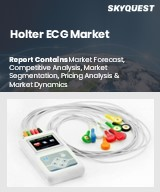
홀터 모니터링 기기, 세계 심장 부정맥 모니터링 기기 시장에서 괄목할 만한 성장세 보일 전망
이러한 기기는 환자의 산발적인 증상을 진단할 때 장시간 사용할 수 있다는 점이 시장 수요 증가에 크게 기여하고 있습니다. 또한 환자의 순응도를 높이고 치료 결과를 개선하기 위해 더 빠르고 편리한 모니터링을 제공합니다. 이 카테고리의 신제품 출시는 이 시장 부문의 성장을 더욱 촉진하고 있습니다. 예를 들어 2021년 2월 RhythMedix는 부정맥 감지를 위한 웨어러블 심장 모니터를 출시했는데, RhythMedix는 이 통합 기기가 홀터 모니터링을 제공하고 환자와 임상의를 연결하여 더 나은 환자 치료를 위해 환자와 임상의를 연결해주는 최초의 웨어러블 멀티모달리티 심장 모니터라고 밝혔습니다. 환자 및 임상의를 연결하는 최초의 웨어러블 멀티모달리티 심장 모니터라고 밝혔습니다.
지역별 전망
세계 심장 부정맥 모니터링 기기 시장은 북미(미국 및 캐나다), 유럽(이탈리아, 스페인, 독일, 프랑스, 기타), 아시아태평양(인도, 중국, 일본, 한국, 기타), 기타 지역(중동 및 아프리카, 라틴아메리카)으로 세분화됩니다. 아시아태평양은 세계 시장에서 상당한 성장을 보일 것으로 예상됩니다.
북미, 세계 시장에서 큰 비중을 차지
이 지역 시장 점유율은 부정맥의 높은 유병률과 높은 수준의 의료 인프라로 인한 것입니다. 심방세동은 종종 AFib 또는 AF로 불리며, 치료되는 심장 부정맥 중 가장 흔한 유형입니다. 미국 질병예방통제센터에 따르면 2019년 미국에서 183,321명이 심방세동으로 사망했으며, 2030년에는 미국에서 1,210만 명이 심방세동으로 사망할 것으로 추산됩니다. 높은 의료비 지출과 함께 고급 모니터링 기기의 쉬운 접근성은 이 지역 시장 점유율에 더욱 기여하고 있습니다.
목차
제1장 리포트 개요
- 업계의 현황 분석과 성장 가능성 전망
- 조사 방법과 툴
- 시장 내역
- 부문별
- 지역별
제2장 시장 개요와 인사이트
- 조사 범위
- 애널리스트 인사이트와 현재 시장 동향
- 주요 조사 결과
- 권장사항
- 결론
제3장 경쟁 구도
- 주요 기업 분석
- Abbott Laboratories
- 개요
- 재무 분석
- SWOT 분석
- 최근 동향
- ACSDiagnostics
- 회사 개요
- 재무 분석
- SWOT 분석
- 최근 동향
- GE Healthcare
- 개요
- 재무 분석
- SWOT 분석
- 최근 동향
- Koninklijke Philips NV
- 개요
- 재무 분석
- SWOT 분석
- 최근 동향
- 주요 전략 분석
제4장 시장 세분화
- 세계의 심장 부정맥 모니터링 기기 시장 : 기기 유형별
- 이벤트 모니터링 기기
- 연속 리듬 모니터링 기기
- 홀터 모니터링 기기
- 세계의 심장 부정맥 모니터링 기기 시장 : 서비스 프로바이더별
- 모바일 심장 텔레메트리 모니터링 서비스 프로바이더
- 독립 진단 검사 시설/클리닉
제5장 지역 분석
- 북미
- 미국
- 캐나다
- 유럽
- 영국
- 독일
- 이탈리아
- 스페인
- 프랑스
- 기타 유럽
- 아시아태평양
- 중국
- 인도
- 일본
- 한국
- 기타 아시아태평양
- 세계의 기타 지역
제6장 기업 개요
- AliveCor Inc.
- Applied Cardiac Systems
- Biotricity
- Biotronik
- BPL Medical Technologies
- Fukuda Denshi Co. Ltd.
- HD Medical Inc.
- HemoCath Ltd.
- iRhythm Technologies Inc.
- Medi-Lynx Cardiac Monitoring LLC
- Medtronic PLC
- Moving Analytics Inc.
- Nihon Kohden Corp.
- Progetti SRL
- SpaceLabs Healthcare(OSI Systems, Inc.)
- Spacelabs Healthcare Inc.
- Welch Allyn, Inc.
Global Cardiac Arrhythmia Monitoring Devices Market Size, Share & Trends Analysis Report by Device Type (Event Monitoring Devices, Continuous Rhythm Monitoring Devices, and Holter Monitoring Devices), and by Service Provider (Mobile Cardiac Telemetry Monitoring Service Providers, Independent Diagnostic Testing Facilities/Clinics) Forecast Period (2024-2031)
The global cardiac arrhythmia monitoring devices market is anticipated to grow at a considerable CAGR of 7.5% during the forecast period. The growing incidence and prevalence of atrial fibrillation (AF) globally has driven the demand for cardiac arrhythmia monitoring devices thereby driving the global market growth. In the US alone, 3 to 6 million people have AF, and the numbers are projected to reach approximately 6 to 16 million by 2050. In Europe, prevalent AF in 2010 was approximately 9 million among individuals older than 55 years and is expected to reach 14 million by 2060. It was estimated that by 2050 AF will be diagnosed at least in 72 million individuals in Asia, with approximately 3 million with AF-related strokes. The geriatric population is highly at risk of having AF. According to the October 2021 report of the World Health Organization, the global population of people aged 60 years and more is expected to increase from 1 billion in 2020 to 2.1 billion by 2050, which is expected to have a significant impact on the demand for home healthcare software market as older people are more dependent upon others for their care and other needs.
The growing geriatric population is further aiding to the demand for the global market. In January 2024, researchers from two Lithuanian universities have developed a patient-safe monitoring technology to identify and manage individual factors provoking atrial fibrillation. The technology is a result of a collaboration between Kaunas University of Technology Biomedical Engineering Institute (KTU BMEI) and Vilnius University (VU) Santaros Clinics. The ongoing researches in the field of AF monitoring devices are further aiding to the market development. The development of portable and easy to monitoring devices is anticipated to offer lucrative opportunities to the growth of the global market. The high cost of monitoring device may restrain their market growth.
Segmental Outlook
The global cardiac arrhythmia monitoring devices market is segmented based on device type, and service provider. Based on device type, the market is segmented into event monitoring devices, continuous rhythm monitoring devices, and Holter monitoring devices. Based on service providers, the market is segmented into mobile cardiac telemetry monitoring service providers, and independent diagnostic testing facilities/clinics.
Holter Monitoring Devices Anticipated to Exhibit Considerable Growth in the Global Cardiac Arrhythmia Monitoring Devices Market
The ability of these devices to be used for longer durations in diagnosing sporadic symptoms among patients is a key contributor to its growing market demand. They also offer faster and more convenient monitoring to increase patient compliance and enhance treatment outcomes. New product launches in this category are further aiding the growth of this market segment. For instance, in February 2021, RhythMedix launched a wearable cardiac monitor for arrhythmia detection. RhythMedix stated that the one-piece device is the first wearable multi-modality cardiac monitor offering Holter monitoring and connecting patients and clinicians for better patient care.
Regional Outlook
The global cardiac arrhythmia monitoring devices market is further segmented based on geography, including North America (the US and Canada), Europe (Italy, Spain, Germany, France, and others), Asia-Pacific (India, China, Japan, South Korea, and others), and the Rest of the World (the Middle East & Africa and Latin America). Asia-Pacific is anticipated to exhibit considerable growth in the global market.
North America Held a Major Share in the Global Market
The regional market share is attributed to the high prevalence of arrhythmia and the availability of advanced healthcare infrastructure. Atrial fibrillation, often called AFib or AF, is the most common type of treated heart arrhythmia. According to the Centers for Disease Control & Prevention, in 2019, 183,321 mortalities occurred in the US due to AFib. It is estimated that 12.1 million people in the US will have AFib in 2030. The easy availability of advanced monitoring devices along with high healthcare expenditure is further contributing to the regional market share.
Market Players Outlook
The major companies serving the global cardiac arrhythmia monitoring devices market include Abbott Laboratories, Medtronic PLC, ACSDiangostics, GE Healthcare, and Koninklijke Philips NV among others. The market players are considerably contributing to the market growth by the adoption of various strategies, including mergers and acquisitions, partnerships, collaborations, funding, and advancement in their product offerings to stay competitive in the market. For instance, in October 2023, Boston Scientific received FDA clearance and launched its next-generation insertable cardiac monitor for long-term monitoring of arrhythmias associated with atrial fibrillation, cryptogenic stroke, and syncope. The system (LUX-Dx II+) is designed with algorithms to detect and verify arrhythmias before sending an alert to clinicians and allows patient care teams to adjust event detection settings remotely and record symptoms without in-person visits, according to a company email sent to Healio.
The Report Covers:
- Market value data analysis of 2023 and forecast to 2031.
- Annualized market revenues ($ million) for each market segment.
- Country-wise analysis of major geographical regions.
- Key companies operating in the global cardiac arrhythmia monitoring devices market. Based on the availability of data, information related to new product launches, and relevant news is also available in the report.
- Analysis of business strategies by identifying the key market segments positioned for strong growth in the future.
- Analysis of market-entry and market expansion strategies.
- Competitive strategies by identifying 'who-stands-where' in the market.
Table of Contents
1.Report Summary
- Current Industry Analysis and Growth Potential Outlook
- 1.1.Research Methods and Tools
- 1.2.Market Breakdown
- 1.2.1.By Segments
- 1.2.2.By Region
2.Market Overview and Insights
- 2.1.Scope of the Report
- 2.2.Analyst Insight & Current Market Trends
- 2.2.1.Key Findings
- 2.2.2.Recommendations
- 2.2.3.Conclusion
3.Competitive Landscape
- 3.1.Key Company Analysis
- 3.2.Abbott Laboratories
- 3.2.1.Overview
- 3.2.2.Financial Analysis
- 3.2.3.SWOT Analysis
- 3.2.4.Recent Developments
- 3.3.ACSDiagnostics
- 3.3.1.Overview
- 3.3.2.Financial Analysis
- 3.3.3.SWOT Analysis
- 3.3.4.Recent Developments
- 3.4.GE Healthcare
- 3.4.1.Overview
- 3.4.2.Financial Analysis
- 3.4.3.SWOT Analysis
- 3.4.4.Recent Developments
- 3.5.Koninklijke Philips NV
- 3.5.1.Overview
- 3.5.2.Financial Analysis
- 3.5.3.SWOT Analysis
- 3.5.4.Recent Developments
- 3.6.Key Strategy Analysis
4.Market Segmentation
- 4.1.Global Cardiac Arrhythmia Monitoring Devices Market by Device Type
- 4.1.1.Event Monitoring Devices
- 4.1.2.Continuous Rhythm Monitoring Devices
- 4.1.3.Holter Monitoring Devices
- 4.2.Global Cardiac Arrhythmia Monitoring Devices Market by Service Provider
- 4.2.1.Mobile Cardiac Telemetry Monitoring Service Providers
- 4.2.2.Independent Diagnostic Testing Facilities/Clinics
5.Regional Analysis
- 5.1.North America
- 5.1.1.United States
- 5.1.2.Canada
- 5.2.Europe
- 5.2.1.UK
- 5.2.2.Germany
- 5.2.3.Italy
- 5.2.4.Spain
- 5.2.5.France
- 5.2.6.Rest of Europe
- 5.3.Asia-Pacific
- 5.3.1.China
- 5.3.2.India
- 5.3.3.Japan
- 5.3.4.South Korea
- 5.3.5.Rest of Asia-Pacific
- 5.4.Rest of the World
6.Company Profiles
- 6.1.AliveCor Inc.
- 6.2.Applied Cardiac Systems
- 6.3.Biotricity
- 6.4.Biotronik
- 6.5.BPL Medical Technologies
- 6.6.Fukuda Denshi Co. Ltd.
- 6.7.HD Medical Inc.
- 6.8.HemoCath Ltd.
- 6.9.iRhythm Technologies Inc.
- 6.10.Medi-Lynx Cardiac Monitoring LLC
- 6.11.Medtronic PLC
- 6.12.Moving Analytics Inc.
- 6.13.Nihon Kohden Corp.
- 6.14.Progetti SRL
- 6.15.SpaceLabs Healthcare (OSI Systems, Inc.)
- 6.16.Spacelabs Healthcare Inc.
- 6.17.Welch Allyn, Inc.