|
시장보고서
상품코드
1895609
아크릴 섬유 시장 규모, 점유율 및 성장 분석 : 섬유 형태별, 염색 방법별, 혼방별, 최종사용자별, 지역별 - 업계 예측(2026-2033년)Acrylic Fiber Market Size, Share, and Growth Analysis, By Fiber Form (Staple, Filament), By Dyeing Method (Acid, Gel), By Blending, By End User, By Region - Industry Forecast 2026-2033 |
||||||

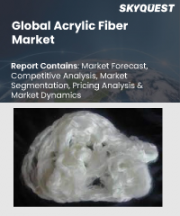
아크릴 섬유 시장 규모는 2024년에 60억 4,000만 달러로 평가되었고, 2025년 62억 9,000만 달러에서 2033년까지 86억 7,000만 달러로 성장할 전망이며, 예측 기간(2026-2033년) CAGR은 4.1%를 보일 것으로 예측됩니다.
아크릴 섬유 시장은 다양한 최종 용도 분야에서 수요 증가에 힘입어 꾸준한 성장세를 보이고 있습니다. 섬유산업이 이 시장을 주도하고 있으며, 부드러움, 경량성, 다양한 색상 등 우수한 특성으로 인해 직물, 스웨터, 담요 등 다양한 제품에 아크릴 섬유가 활용되고 있습니다. 우수한 염색성으로 인해 제조업체는 다양한 디자인을 제공할 수 있습니다. 또한, 자동차 산업에서는 편안함과 미관을 향상시키는 경량 소재를 찾는 움직임에 따라 특히 내장재와 카펫에서 아크릴 섬유의 채용이 증가하고 있습니다. 우수한 단열성, 내마모성, 부드러운 질감을 인정받아 섬유 및 자동차 분야에서 입지를 확고히 하며 전체 시장 확대를 주도하고 있습니다.
아크릴 섬유 시장 부문 분석
아크릴 섬유 시장의 성장 요인
아크릴 섬유 시장은 양모와 같은 천연섬유에 비해 저렴한 비용으로 동등한 외관과 질감을 제공할 수 있는 경제적인 대안으로 성장하고 있습니다. 이 저렴한 가격은 예산을 중시하는 소비자와 비용 효율적인 재료를 찾는 제조업체 모두에게 매력적으로 다가옵니다. 또한, 동물 복지와 환경적 지속가능성에 대한 인식이 높아지면서 아크릴 섬유는 동물 친화적이고 친환경적인 선택으로 그 매력을 더하고 있습니다. 이러한 요인들이 복합적으로 작용하여 아크릴 섬유 수요 증가에 기여하고 섬유 산업 내 다양한 응용 분야에서 우선적인 선택으로 자리매김하고 있습니다.
아크릴 섬유 시장 성장 억제요인
아크릴 섬유 시장은 생산에 따른 환경 문제로 인해 심각한 문제에 직면해 있습니다. 내구성과 성능으로 평가받는 반면, 제조 과정에서 석유화학 공정은 온실가스를 배출하기 때문에 탄소배출량 증가를 초래하고 있습니다. 또한, 아크릴 섬유의 생분해되지 않는 특성은 장기적인 환경 영향에 대한 우려를 높이고 지속 가능하고 친환경적인 대체 소재에 대한 수요를 촉진하고 있습니다. 섬유 분야의 탄소 발자국을 최소화하고 지속 가능한 관행을 촉진하기 위한 정부 규제가 강화되면서 아크릴 섬유 시장에 장벽이 될 수 있기 때문에 제조업체와 소비자 모두 친환경적인 선택에 대한 요구가 가속화되고 있습니다.
아크릴 섬유 시장 동향
아크릴 섬유 시장에서는 친환경적이고 재생 가능한 소재에 대한 소비자 수요 증가를 배경으로 지속가능성에 대한 큰 흐름이 형성되고 있습니다. 각 제조업체들은 환경 친화적인 제조방법을 이용한 생분해성 아크릴 섬유 개발에 적극 나서고 있습니다. 이러한 전환은 세계 지속가능성 목표에 부합할 뿐만 아니라 기존 아크릴 섬유와 동등한 성능을 충족시켜 섬유 및 의류 분야의 다양한 용도에서 이러한 지속가능한 대체품이 주목받고 있습니다. 브랜드와 소비자 모두가 환경에 미치는 영향을 중시하는 가운데, 친환경 아크릴 섬유의 성장은 업계 표준을 재정의하고 섬유 생산에서 지속 가능한 관행이 주류가 될 수 있는 길을 열어줄 것으로 보입니다.
자주 묻는 질문
목차
서론
- 조사 목적
- 조사 범위
- 정의
조사 방법
- 정보 조달
- 2차와 1차 데이터 방법
- 시장 규모 예측
- 시장 전제조건과 제한
주요 요약
- 세계 시장 전망
- 공급과 수요 동향 분석
- 부문별 기회 분석
시장 역학과 전망
- 시장 규모
- 시장 역학
- 성장 촉진요인과 기회
- 성장 억제요인과 과제
- Porter의 Five Forces 분석
주요 시장 인사이트
- 중요 성공 요인
- 경쟁 정도
- 주요 투자 기회
- 시장 생태계
- 시장의 매력 지수(2025년)
- PESTEL 분석
- 거시경제 지표
- 밸류체인 분석
- 가격 분석
- 규제 상황
- 사례 연구
- 기술 분석
- 특허 분석
- 원재료 분석
세계의 아크릴 섬유 시장 규모 : 섬유 형태별&CAGR(2026-2033년)
- 단섬유
- 필라멘트
세계의 아크릴 섬유 시장 규모 : 염색 방법별&CAGR(2026-2033년)
- 산성 염색
- 겔
- 무염색
세계의 아크릴 섬유 시장 규모 : 혼방별&CAGR(2026-2033년)
- 울
- 면
- 기타
세계의 아크릴 섬유 시장 규모 : 최종사용자별&CAGR(2026-2033년)
- 의류
- 인테리어
- 산업용
- 아웃도어
- 기타
세계의 아크릴 섬유 시장 규모 : 지역별&CAGR(2026-2033년)
- 북미
- 미국
- 캐나다
- 유럽
- 독일
- 스페인
- 프랑스
- 영국
- 이탈리아
- 기타 유럽
- 아시아태평양
- 중국
- 인도
- 일본
- 한국
- 기타 아시아태평양
- 라틴아메리카
- 브라질
- 기타 라틴아메리카
- 중동 및 아프리카
- GCC 국가
- 남아프리카공화국
- 기타 중동 및 아프리카
경쟁 정보
- 주요 5개사 비교
- 주요 기업의 시장 포지셔닝(2025년)
- 주요 시장 기업이 채택한 전략
- 최근 시장 동향
- 기업의 시장 점유율 분석(2025년)
- 주요 기업 개요
- 기업 상세
- 제품 포트폴리오 분석
- 기업 부문별 점유율 분석
- 매출 전년대비 비교(2023-2025년)
주요 기업 개요
- Aksa Akrilik Kimya Sanayii A.S.(Turkey)
- Aditya Birla Management Corporation Pvt. Ltd.(India)
- China Petrochemical Corporation(Sinopec)(China)
- Dralon GmbH(Germany)
- Formosa Plastics Corporation(Taiwan)
- Indian Acrylics Limited(India)
- Japan Exlan Co., Ltd.(Japan)
- Jiangsu Zhongxin Resources Group(China)
- Jilin Chemical Fiber Group Co. Ltd(China)
- Kaneka Corporation(Japan)
- Mitsubishi Chemical Corporation(Japan)
- Pasupati Acrylon(India)
- Polyacryl Iran Corporation(Iran)
- SGL Carbon(Germany)
- Taekwang Industrial Co., Ltd.(South Korea)
- Toray Industries, Inc.(Japan)
- Vardhman Acrylics Ltd.(India)
- Yousuf Dewan Companies(Pakistan)
- Exlan Toyobo Group(Japan)
- DOLAN GmbH(Germany)
결론과 제안
LSH 26.01.08Acrylic Fiber Market size was valued at USD 6.04 Billion in 2024 and is poised to grow from USD 6.29 Billion in 2025 to USD 8.67 Billion by 2033, growing at a CAGR of 4.1% during the forecast period (2026-2033).
The acrylic fiber market is witnessing consistent growth, propelled by rising demand across diverse end-use sectors. The textile industry dominates this market, utilizing acrylic fibers for an array of products including fabrics, sweaters, and blankets, due to their desirable qualities such as softness, lightweight, and a broad spectrum of colors. The fibers' ease of dyeing enables manufacturers to offer a vast selection of designs. Additionally, the automotive industry is increasingly incorporating acrylic fibers, particularly in upholstery and carpeting, as it seeks lightweight materials that enhance comfort and aesthetics. These fibers are valued for their excellent insulation, abrasion resistance, and soft texture, solidifying their position in both textile and automotive applications and driving overall market expansion.
Top-down and bottom-up approaches were used to estimate and validate the size of the Acrylic Fiber market and to estimate the size of various other dependent submarkets. The research methodology used to estimate the market size includes the following details: The key players in the market were identified through secondary research, and their market shares in the respective regions were determined through primary and secondary research. This entire procedure includes the study of the annual and financial reports of the top market players and extensive interviews for key insights from industry leaders such as CEOs, VPs, directors, and marketing executives. All percentage shares split, and breakdowns were determined using secondary sources and verified through Primary sources. All possible parameters that affect the markets covered in this research study have been accounted for, viewed in extensive detail, verified through primary research, and analyzed to get the final quantitative and qualitative data.
Acrylic Fiber Market Segments Analysis
Global Acrylic Fiber Market is segmented by Fiber Form, Dyeing Method, Blending, End User and region. Based on Fiber Form, the market is segmented into Staple and Filament. Based on Dyeing Method, the market is segmented into Acid, Gel and Undyed. Based on Blending, the market is segmented into Wool, Cotton and Others. Based on End User, the market is segmented into Apparels, Home Furnishing, Industrial, Outdoor and Others. Based on region, the market is segmented into North America, Europe, Asia Pacific, Latin America and Middle East & Africa.
Driver of the Acrylic Fiber Market
The acrylic fiber market is experiencing growth due to its ability to serve as an economical substitute for natural fibers such as wool, offering comparable appearance and texture at a lower cost. This affordability appeals to both budget-minded consumers and manufacturers looking for cost-efficient materials. Furthermore, with rising awareness about animal welfare and environmental sustainability, acrylic fibers present a cruelty-free and eco-friendly option, enhancing their appeal. These factors collectively contribute to the increasing demand for acrylic fibers, positioning them as a preferred choice in various applications within the textile industry.
Restraints in the Acrylic Fiber Market
The acrylic fiber market faces significant challenges due to environmental concerns linked to its production. While acrylic fibers are recognized for their durability and performance, the petrochemical processes involved in their manufacture emit greenhouse gases, thereby exacerbating carbon emissions. Furthermore, the non-biodegradable nature of acrylic fibers heightens worries regarding their long-term environmental impact, fueling the push for sustainable and eco-friendly alternatives. Increasing government regulations aimed at minimizing carbon footprints and encouraging sustainable practices in the textile sector could present obstacles for the acrylic fiber market, prompting both manufacturers and consumers to seek greener options.
Market Trends of the Acrylic Fiber Market
The Acrylic Fiber market is experiencing a significant trend towards sustainability, driven by increasing consumer demand for eco-friendly and renewable materials. Manufacturers are actively innovating to create biodegradable acrylic fibers utilizing environmentally responsible production methods. This shift not only aligns with global sustainability goals but also meets the performance expectations of traditional acrylic fibers, making these sustainable alternatives attractive for diverse applications in the textile and apparel sectors. As brands and consumers alike prioritize environmental impact, the growth of eco-conscious acrylic fibers is set to redefine industry standards, paving the way for sustainable practices to become mainstream in fiber production.
Table of Contents
Introduction
- Objectives of the Study
- Scope of the Report
- Definitions
Research Methodology
- Information Procurement
- Secondary & Primary Data Methods
- Market Size Estimation
- Market Assumptions & Limitations
Executive Summary
- Global Market Outlook
- Supply & Demand Trend Analysis
- Segmental Opportunity Analysis
Market Dynamics & Outlook
- Market Overview
- Market Size
- Market Dynamics
- Drivers & Opportunities
- Restraints & Challenges
- Porters Analysis
- Competitive rivalry
- Threat of substitute
- Bargaining power of buyers
- Threat of new entrants
- Bargaining power of suppliers
Key Market Insights
- Key Success Factors
- Degree of Competition
- Top Investment Pockets
- Market Ecosystem
- Market Attractiveness Index, 2025
- PESTEL Analysis
- Macro-Economic Indicators
- Value Chain Analysis
- Pricing Analysis
- Regulatory Landscape
- Case Studies
- Technology Analysis
- Patent Analysis
- Raw Material Analysis
Global Acrylic Fiber Market Size by Fiber Form & CAGR (2026-2033)
- Market Overview
- Staple
- Filament
Global Acrylic Fiber Market Size by Dyeing Method & CAGR (2026-2033)
- Market Overview
- Acid
- Gel
- Undyed
Global Acrylic Fiber Market Size by Blending & CAGR (2026-2033)
- Market Overview
- Wool
- Cotton
- Others
Global Acrylic Fiber Market Size by End User & CAGR (2026-2033)
- Market Overview
- Apparels
- Home Furnishing
- Industrial
- Outdoor
- Others
Global Acrylic Fiber Market Size & CAGR (2026-2033)
- North America (Fiber Form, Dyeing Method, Blending, End User)
- US
- Canada
- Europe (Fiber Form, Dyeing Method, Blending, End User)
- Germany
- Spain
- France
- UK
- Italy
- Rest of Europe
- Asia Pacific (Fiber Form, Dyeing Method, Blending, End User)
- China
- India
- Japan
- South Korea
- Rest of Asia-Pacific
- Latin America (Fiber Form, Dyeing Method, Blending, End User)
- Brazil
- Rest of Latin America
- Middle East & Africa (Fiber Form, Dyeing Method, Blending, End User)
- GCC Countries
- South Africa
- Rest of Middle East & Africa
Competitive Intelligence
- Top 5 Player Comparison
- Market Positioning of Key Players, 2025
- Strategies Adopted by Key Market Players
- Recent Developments in the Market
- Company Market Share Analysis, 2025
- Company Profiles of All Key Players
- Company Details
- Product Portfolio Analysis
- Company's Segmental Share Analysis
- Revenue Y-O-Y Comparison (2023-2025)
Key Company Profiles
- Aksa Akrilik Kimya Sanayii A.S. (Turkey)
- Company Overview
- Business Segment Overview
- Financial Updates
- Key Developments
- Aditya Birla Management Corporation Pvt. Ltd. (India)
- Company Overview
- Business Segment Overview
- Financial Updates
- Key Developments
- China Petrochemical Corporation (Sinopec) (China)
- Company Overview
- Business Segment Overview
- Financial Updates
- Key Developments
- Dralon GmbH (Germany)
- Company Overview
- Business Segment Overview
- Financial Updates
- Key Developments
- Formosa Plastics Corporation (Taiwan)
- Company Overview
- Business Segment Overview
- Financial Updates
- Key Developments
- Indian Acrylics Limited (India)
- Company Overview
- Business Segment Overview
- Financial Updates
- Key Developments
- Japan Exlan Co., Ltd. (Japan)
- Company Overview
- Business Segment Overview
- Financial Updates
- Key Developments
- Jiangsu Zhongxin Resources Group (China)
- Company Overview
- Business Segment Overview
- Financial Updates
- Key Developments
- Jilin Chemical Fiber Group Co. Ltd (China)
- Company Overview
- Business Segment Overview
- Financial Updates
- Key Developments
- Kaneka Corporation (Japan)
- Company Overview
- Business Segment Overview
- Financial Updates
- Key Developments
- Mitsubishi Chemical Corporation (Japan)
- Company Overview
- Business Segment Overview
- Financial Updates
- Key Developments
- Pasupati Acrylon (India)
- Company Overview
- Business Segment Overview
- Financial Updates
- Key Developments
- Polyacryl Iran Corporation (Iran)
- Company Overview
- Business Segment Overview
- Financial Updates
- Key Developments
- SGL Carbon (Germany)
- Company Overview
- Business Segment Overview
- Financial Updates
- Key Developments
- Taekwang Industrial Co., Ltd. (South Korea)
- Company Overview
- Business Segment Overview
- Financial Updates
- Key Developments
- Toray Industries, Inc. (Japan)
- Company Overview
- Business Segment Overview
- Financial Updates
- Key Developments
- Vardhman Acrylics Ltd. (India)
- Company Overview
- Business Segment Overview
- Financial Updates
- Key Developments
- Yousuf Dewan Companies (Pakistan)
- Company Overview
- Business Segment Overview
- Financial Updates
- Key Developments
- Exlan Toyobo Group (Japan)
- Company Overview
- Business Segment Overview
- Financial Updates
- Key Developments
- DOLAN GmbH (Germany)
- Company Overview
- Business Segment Overview
- Financial Updates
- Key Developments