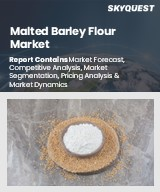
|
시장보고서
상품코드
1917211
맥아 보리 가루 시장 규모, 점유율, 성장 분석 : 제품별, 원료별, 용도별, 지역별 - 업계 예측(2026-2033년)Malted Barley Flour Market Size, Share, and Growth Analysis, By Product (Diastatic, Non-Diastatic), By Source (Organic, Conventional), By End Use, By Region - Industry Forecast 2026-2033 |
||||||

세계의 맥아 보리 가루 시장 규모는 2024년에 28억 6,000만 달러로 평가되며, 2025년 30억 4,000만 달러에서 2033년에는 48억 8,000만 달러로 성장하며, 예측 기간(2026-2033년) CAGR은 6.1%될 전망입니다.
세계 맥아 보리분말 시장은 소비자의 건강에 대한 인식이 높아짐에 따라 괄목할 만한 성장세를 보이고 있습니다. 식이섬유가 풍부하고 콜레스테롤 수치가 낮은 등 보리의 영양학적 이점에 대한 인식이 높아지면서 맥아 보리 분말에 대한 수요도 증가하고 있습니다. 이 원료는 맛과 질감을 자연스럽게 향상시키는 능력이 있으며, 건강 지향적인 소비자들에게 어필할 수 있으며, 베이커리 및 제과 부문에서 점점 더 선호되고 있습니다. 또한 수제 맥주 산업에서는 맥주 제조에 필수적인 디아스태틱 맥아 분말에 대한 수요가 증가하고 있습니다. 더 건강하고 편리하며 RTE(Ready-to-eat) 식품의 동향도 맥아 가루의 사용을 더욱 촉진하고 있습니다. 유기농 식품과 무글루텐 식품에 대한 관심이 높아지고 제분 기술의 발전으로 제품의 품질이 안정화되어 산업 생산자에게 이익을 가져다주고 시장 접근성이 확대되고 있습니다.
세계 맥아 보리 가루 시장 성장 촉진요인
세계 맥아 보리밀가루 수요는 우수한 섬유질 함량과 콜레스테롤을 함유하지 않는 특성으로 인해 영양가 높은 대안을 찾는 건강 지향적 소비자들에게 큰 영향을 받고 있습니다. 특히 소화기 건강에 대한 건강 효과에 대한 인식이 높아지면서 무글루텐, 유기농, 통밀가루를 선호하는 소비자의 취향과 맞물려 맥아 보리 가루의 인기가 급상승하고 있습니다. 소비자들이 더 건강한 선택을 선호하는 경향이 높아짐에 따라 맥아 보리 분말의 사용은 제과, 베이커리, 기능성 식품 등 다양한 분야로 확대되고 있으며, 이에 따라 시장에서의 존재감과 더 넓은 소비자층에 대한 매력이 증가하고 있습니다.
세계 맥아 보리 가루 시장 성장 억제요인
세계 맥아 보리밀가루 시장은 밀, 귀리, 호밀과 같이 기능성과 영양가가 동등한 대체 밀가루를 사용할 수 있으므로 몇 가지 문제에 직면해 있습니다. 이러한 대체 제품이 풍부하므로 특히 소비자가 비용을 우선시하거나 다른 재료를 선호하는 특정 레시피를 고수하는 경우 맥아 보리 가루 시장 점유율이 제한될 수 있습니다. 이러한 대체품의 존재는 구매자가 선택권을 고려하는 과정에서 맥아 보리 분말의 다양한 식품에 대한 광범위한 수용과 통합을 방해할 수 있으며, 궁극적으로 시장 성장을 저해하는 경쟁 환경을 조성하고 있습니다.
세계 맥아 보리 가루 시장 시장 동향
세계 맥아 보리 분말 시장은 소비자의 선호도가 유기농 및 클린 라벨 제품으로 이동함에 따라 큰 변화를 경험하고 있습니다. 자연적이고 최소한의 가공을 거쳤으며 지속가능한 방식으로 조달된 재료에 대한 수요가 증가하면서 유기농 맥아 보리 분말 부문의 성장을 주도하고 있습니다. 생산자들은 무글루텐, 고섬유질, 영양가 높은 대안을 찾는 건강 지향적인 소비자들을 위해 기존 밀가루보다 더 높은 영양가를 제공하는 강화 밀가루와 특수 밀가루를 제공함으로써 이러한 수요에 대응하고 있습니다. 이러한 추세는 건강한 식습관을 추구하는 광범위한 움직임을 강조하고 있으며, 제조업체들은 이러한 소비자의 변화하는 요구에 대응하여 맥아 보리 분말 시장의 혁신과 확장을 촉진하고 있습니다.
자주 묻는 질문
목차
서론
- 조사의 목적
- 조사 범위
- 정의
조사 방법
- 정보 조달
- 1차와 2차 데이터 방법
- 시장 규모 예측
- 시장 전제조건과 제한
개요
- 세계 시장 전망
- 공급과 수요 동향 분석
- 부문별 기회 분석
시장 역학과 전망
- 시장 규모
- 시장 역학
- 촉진요인과 기회
- 억제요인과 과제
- Porter의 산업 분석
주요 시장 인사이트
- 주요 성공 요인
- 경쟁의 정도
- 주요 투자 기회
- 시장 에코시스템
- 시장의 매력 지수(2025년)
- PESTEL 분석
- 거시경제 지표
- 밸류체인 분석
- 가격 분석
- 사용 사례
- 고객 구매 행동 분석
세계의 맥아 보리 가루 시장 규모 : 제품별 & CAGR(2026-2033년)
- 디아스타틱
- 비디아스타틱
세계의 맥아 보리 가루 시장 규모 : 원료별 & CAGR(2026-2033년)
- 오가닉
- 기존형
세계의 맥아 보리 가루 시장 규모 : 최종 용도별 & CAGR(2026-2033년)
- 베이커리
- 영양 식품 스낵 식품
- 제과
- 향료
- 가정
- 기타
세계의 맥아 보리 가루 시장 규모 & CAGR(2026-2033년)
- 북미
- 미국
- 캐나다
- 유럽
- 독일
- 스페인
- 프랑스
- 영국
- 이탈리아
- 기타 유럽
- 아시아태평양
- 중국
- 인도
- 일본
- 한국
- 기타 아시아태평양
- 라틴아메리카
- 브라질
- 기타 라틴아메리카
- 중동 및 아프리카
- GCC
- 남아프리카공화국
- 기타 중동 및 아프리카
경쟁 정보
- 상위 5사의 비교
- 주요 기업의 시장 포지셔닝(2025년)
- 주요 시장 기업이 채택한 전략
- 최근 시장 동향
- 기업의 시장 점유율 분석(2025년)
- 주요 기업의 기업 개요
- 기업의 상세
- 제품 포트폴리오 분석
- 기업의 부문별 점유율 분석
- 매출의 전년대비 비교(2023-2025년)
주요 기업 개요
- Malteurop Group
- Cargill Inc.
- GrainCorp
- Soufflet Group
- Crisp Malting Group
- IREKS GmbH
- Global Malt GmbH & Co. KG
- Muntons Plc
- Ardent Mills
- Richardson Malting(UK) Limited
- Boortmalt
- Briess Malt Ingredients
- Mirfak Pty Ltd.
- Vertical Malt
결론과 제안
KSA 26.02.06Global Malted Barley Flour Market size was valued at USD 2.86 Billion in 2024 and is poised to grow from USD 3.04 Billion in 2025 to USD 4.88 Billion by 2033, growing at a CAGR of 6.1% during the forecast period (2026-2033).
The global malted barley flour market is experiencing significant growth driven by heightened consumer health awareness. As more people recognize the nutritional benefits of barley, including its rich fiber content and low cholesterol levels, demand for malted barley flour is on the rise. This ingredient is increasingly favored in bakery and confectionery applications for its ability to enhance flavor and texture naturally, appealing to health-conscious consumers. Additionally, the craft brewing sector drives demand for diastatic malted barley flour, essential for beer production. The trend towards convenience and ready-to-eat foods with healthier profiles further boosts malted barley flour usage. Increased interest in organic and gluten-free options, coupled with advancements in milling technology, enhances product consistency and benefits industrial producers, expanding market access.
Top-down and bottom-up approaches were used to estimate and validate the size of the Global Malted Barley Flour market and to estimate the size of various other dependent submarkets. The research methodology used to estimate the market size includes the following details: The key players in the market were identified through secondary research, and their market shares in the respective regions were determined through primary and secondary research. This entire procedure includes the study of the annual and financial reports of the top market players and extensive interviews for key insights from industry leaders such as CEOs, VPs, directors, and marketing executives. All percentage shares split, and breakdowns were determined using secondary sources and verified through Primary sources. All possible parameters that affect the markets covered in this research study have been accounted for, viewed in extensive detail, verified through primary research, and analyzed to get the final quantitative and qualitative data.
Global Malted Barley Flour Market Segments Analysis
Global Malted Barley Flour Market is segmented by Product, Source, End Use and region. Based on Product, the market is segmented into Diastatic and Non-Diastatic. Based on Source, the market is segmented into Organic and Conventional. Based on End Use, the market is segmented into Bakeries, Nutritional & Snack Foods, Confectioneries, Flavourings, Households and Others. Based on region, the market is segmented into North America, Europe, Asia Pacific, Latin America and Middle East & Africa.
Driver of the Global Malted Barley Flour Market
The demand for global malted barley flour is significantly influenced by its impressive fiber content and cholesterol-free characteristics, which resonate with health-conscious consumers seeking nutritious alternatives. This growing awareness of health benefits, particularly regarding digestive health, has led to a surge in popularity for malted barley flour as it aligns with the preferences for gluten-free, organic, and whole grain options. As consumers increasingly prioritize healthier choices, the usage of malted barley flour is expanding across various sectors, including confectionery, bakery, and functional foods, thereby enhancing its market presence and appeal to a wider audience.
Restraints in the Global Malted Barley Flour Market
The Global Malted Barley Flour market faces several challenges due to the availability of alternative flours like wheat, oat, and rye, which offer comparable functional and nutritional advantages. This abundance of substitute products can limit the market share of malted barley flour, particularly when consumers prioritize cost or adhere to specific recipes that favor other ingredients. As buyers weigh their options, the presence of these alternatives may hinder the broader acceptance and integration of malted barley flour into various food products, ultimately creating a competitive environment that poses a restraint on its market growth.
Market Trends of the Global Malted Barley Flour Market
The Global Malted Barley Flour market is experiencing a significant shift as consumer preferences evolve towards organic and clean label products. This heightened demand for natural, minimally processed, and sustainably sourced ingredients is propelling the growth of organic malted barley flour segments. Producers are responding by offering fortified and specialty flour options, catering to health-conscious consumers who seek gluten-free, high-fiber, and enriched alternatives that provide added nutritional value beyond traditional flour. This trend underscores a broader movement towards healthier eating habits, driving innovation and expansion within the malted barley flour market as manufacturers adapt to these changing consumer needs.
Table of Contents
Introduction
- Objectives of the Study
- Scope of the Report
- Definitions
Research Methodology
- Information Procurement
- Secondary & Primary Data Methods
- Market Size Estimation
- Market Assumptions & Limitations
Executive Summary
- Global Market Outlook
- Supply & Demand Trend Analysis
- Segmental Opportunity Analysis
Market Dynamics & Outlook
- Market Overview
- Market Size
- Market Dynamics
- Drivers & Opportunities
- Restraints & Challenges
- Porters Analysis
- Competitive rivalry
- Threat of substitute
- Bargaining power of buyers
- Threat of new entrants
- Bargaining power of suppliers
Key Market Insights
- Key Success Factors
- Degree of Competition
- Top Investment Pockets
- Market Ecosystem
- Market Attractiveness Index, 2025
- PESTEL Analysis
- Macro-Economic Indicators
- Value Chain Analysis
- Pricing Analysis
- Case Studies
- Customer Buying Behavior Analysis
Global Malted Barley Flour Market Size by Product & CAGR (2026-2033)
- Market Overview
- Diastatic
- Non-Diastatic
Global Malted Barley Flour Market Size by Source & CAGR (2026-2033)
- Market Overview
- Organic
- Conventional
Global Malted Barley Flour Market Size by End Use & CAGR (2026-2033)
- Market Overview
- Bakeries
- Nutritional & Snack Foods
- Confectioneries
- Flavourings
- Households
- Others
Global Malted Barley Flour Market Size & CAGR (2026-2033)
- North America (Product, Source, End Use)
- US
- Canada
- Europe (Product, Source, End Use)
- Germany
- Spain
- France
- UK
- Italy
- Rest of Europe
- Asia Pacific (Product, Source, End Use)
- China
- India
- Japan
- South Korea
- Rest of Asia-Pacific
- Latin America (Product, Source, End Use)
- Brazil
- Rest of Latin America
- Middle East & Africa (Product, Source, End Use)
- GCC Countries
- South Africa
- Rest of Middle East & Africa
Competitive Intelligence
- Top 5 Player Comparison
- Market Positioning of Key Players, 2025
- Strategies Adopted by Key Market Players
- Recent Developments in the Market
- Company Market Share Analysis, 2025
- Company Profiles of All Key Players
- Company Details
- Product Portfolio Analysis
- Company's Segmental Share Analysis
- Revenue Y-O-Y Comparison (2023-2025)
Key Company Profiles
- Malteurop Group
- Company Overview
- Business Segment Overview
- Financial Updates
- Key Developments
- Cargill Inc.
- Company Overview
- Business Segment Overview
- Financial Updates
- Key Developments
- GrainCorp
- Company Overview
- Business Segment Overview
- Financial Updates
- Key Developments
- Soufflet Group
- Company Overview
- Business Segment Overview
- Financial Updates
- Key Developments
- Crisp Malting Group
- Company Overview
- Business Segment Overview
- Financial Updates
- Key Developments
- IREKS GmbH
- Company Overview
- Business Segment Overview
- Financial Updates
- Key Developments
- Global Malt GmbH & Co. KG
- Company Overview
- Business Segment Overview
- Financial Updates
- Key Developments
- Muntons Plc
- Company Overview
- Business Segment Overview
- Financial Updates
- Key Developments
- Ardent Mills
- Company Overview
- Business Segment Overview
- Financial Updates
- Key Developments
- Richardson Malting (UK) Limited
- Company Overview
- Business Segment Overview
- Financial Updates
- Key Developments
- Boortmalt
- Company Overview
- Business Segment Overview
- Financial Updates
- Key Developments
- Briess Malt Ingredients
- Company Overview
- Business Segment Overview
- Financial Updates
- Key Developments
- Mirfak Pty Ltd.
- Company Overview
- Business Segment Overview
- Financial Updates
- Key Developments
- Vertical Malt
- Company Overview
- Business Segment Overview
- Financial Updates
- Key Developments