|
시장보고서
상품코드
1964318
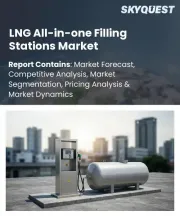
LNG 올인원 충전소 시장 규모, 점유율, 성장 분석 : 제품 유형별, 용도별, 최종사용자별, 유통 모드별, 지역별 - 업계 예측(2026-2033년)LNG All-in-one Filling Stations Market Size, Share, and Growth Analysis, By Product Type (LNG Filling Stations, Components), By Application (Transportation, Industrial), By End-User, By Distribution Mode, By Region - Industry Forecast 2026-2033 |
||||||

세계의 LNG 올인원 충전소 시장 규모는 2024년에 12억 달러로 평가되었으며, 2025년 13억 1,000만 달러에서 2033년까지 26억 5,000만 달러로 성장할 전망입니다. 예측 기간(2026-2033년) 동안 CAGR은 9.2%로 예측됩니다.
LNG 올인원 충전소 시장은 강화된 배출 규제와 중량물 운송 및 해운 분야에서 비용 효율적인 연료 솔루션의 필요성이라는 복합적인 요인에 의해 주도되고 있습니다. 이러한 통합형 스테이션은 LNG의 저장, 기화, 공급을 효율화하는 동시에 CNG 및 바이오 LNG와 같은 대체 연료를 제공하여 원활한 연료 전환을 가능하게 합니다. 규제 요구사항에 대한 대응으로 단일 연료 보급 시설에서 종합적인 전국 네트워크로의 전환이 진행되고 있으며, 시장 역학이 활성화되고 모듈식 및 확장 가능한 설계에 대한 투자가 촉진되고 있습니다. 자본 측면의 우대 조치로 인해 시행 리스크가 완화되어 주요 화물 운송 경로를 따라 스테이션 설치가 추진되고 있습니다. 또한, IoT를 활용한 모니터링 시스템은 센서에 의한 실시간 데이터 수집, 예지보전, 자동 진단 기능을 통해 운영 효율을 향상시키고, 궁극적으로 LNG 충전소의 다운타임 감소와 연료 관리 최적화로 이어질 수 있습니다.
세계 LNG 올인원 충전소 시장 활성화 요인
친환경 운송 수단과 산업용 연료 옵션에 대한 관심이 높아지면서 LNG 올인원 충전소에 대한 수요가 크게 증가하고 있습니다. 이 스테이션은 연료 보급 인프라의 도입과 관리를 효율화할 수 있는 종합적인 솔루션을 제공함으로써 사업자와 차량 관리자에게 매력적인 선택이 될 수 있습니다. 물류 문제를 최소화하고 연료의 표준화를 촉진하여 장거리 트럭 운송 및 해운 활동 등의 분야에서 LNG의 보급을 촉진합니다. 이러한 LNG에 대한 관심의 증가는 모듈식 및 상호 운용 가능한 스테이션 설계에 초점을 맞춘 공급업체들의 투자와 관심 증가로 이어져 궁극적으로 시장 성장을 촉진하고 서비스 제공업체가 변화하는 고객 요구 사항을 충족할 수 있는 역량을 확대할 수 있게 해줍니다.
세계 LNG 올인원 충전소 시장의 억제요인
세계 LNG 올인원 충전소 시장은 통합 시설 건설에 필요한 고가의 초기 투자로 인해 어려움을 겪고 있습니다. 이는 잠재적 투자자를 주저하게 만들고, 네트워크의 성장을 저해할 수 있습니다. 부지 취득, 전문 설비, 안전 시스템에 대한 수요는 수익이 발생하기 전에 많은 자본을 필요로 합니다. 소규모 기업이나 신흥 시장 기업은 수요나 지원적인 자금 조달 수단이 없는 경우, 자금 조달이 어려운 경우가 많기 때문에 투자에 신중을 기할 수밖에 없습니다. 이러한 자본 집약적 특성은 스테이션의 빠른 확장을 제한하고, 초기 단계의 지리적 확장을 제한하며, 재정적 수익이 명확해질 때까지 이해관계자들이 보다 점진적인 전략과 대체 연료 솔루션으로 전환하도록 유도하는 요인으로 작용할 수 있습니다.
세계 LNG 올인원 충전소 시장 동향
세계 LNG 올인원 충전소 시장은 도시와 지방의 교통 회랑을 아우르는 종합적인 연료 공급 네트워크의 구축이 진행됨에 따라 점진적인 성장세를 보이고 있습니다. 사업자와 정책 입안자들은 전략적 입지 집적과 운송 물류의 상호운용성 촉진에 집중하고 있으며, 에너지 기업과의 제휴를 통해 소비자의 편의성을 향상시키고 있습니다. 모듈식 스테이션 설계와 신속한 배치에 대한 노력은 수요 변동에 대한 적응적 대응과 청정 대체 연료로의 차량 전환을 촉진하기 위한 노력을 반영하고 있습니다. 업스트림과 다운스트림의 연계 강화를 통해 운영상의 문제를 더욱 최소화하고 공급망의 탄력성을 강화함으로써 지속가능한 투자와 장기적인 네트워크 개발을 촉진할 수 있는 환경을 조성하고 있습니다.
자주 묻는 질문
목차
소개
조사 방법
주요 요약
시장 역학과 전망
주요 시장 인사이트
세계의 LNG 올인원 충전소 시장 규모 : 제품 유형별 & CAGR(2026-2033년)
세계의 LNG 올인원 충전소 시장 규모 : 용도별 & CAGR(2026-2033년)
세계의 LNG 올인원 충전소 시장 규모 : 최종사용자별 & CAGR(2026-2033년)
세계의 LNG 올인원 충전소 시장 규모 : 공급 형태별 & CAGR(2026-2033년)
세계의 LNG 올인원 충전소 시장 규모 & CAGR(2026-2033년)
경쟁 정보
주요 기업 개요
결론과 제안
KSM 26.03.23Global Lng All-In-One Filling Stations Market size was valued at USD 1.2 Billion in 2024 and is poised to grow from USD 1.31 Billion in 2025 to USD 2.65 Billion by 2033, growing at a CAGR of 9.2% during the forecast period (2026-2033).
The LNG all-in-one filling stations market is propelled by a combination of stricter emissions regulations and the need for cost-effective fuel solutions in heavy transport and maritime sectors. These integrated stations streamline LNG storage, vaporization, and dispensing while offering alternative fuels like CNG or bio-LNG, facilitating seamless fuel transitions. A shift from standalone bunkering to comprehensive national networks has emerged in response to regulatory demands, enhancing market dynamics and attracting investment in modular, scalable designs. Capital incentives reduce execution risks, promoting the establishment of stations along key freight routes. Furthermore, IoT-enabled monitoring enhances operational efficiency by utilizing sensors for real-time data, predictive maintenance, and automated diagnostics, ultimately leading to reduced downtime and optimized fuel management in LNG filling stations.
Top-down and bottom-up approaches were used to estimate and validate the size of the Global Lng All-In-One Filling Stations market and to estimate the size of various other dependent submarkets. The research methodology used to estimate the market size includes the following details: The key players in the market were identified through secondary research, and their market shares in the respective regions were determined through primary and secondary research. This entire procedure includes the study of the annual and financial reports of the top market players and extensive interviews for key insights from industry leaders such as CEOs, VPs, directors, and marketing executives. All percentage shares split, and breakdowns were determined using secondary sources and verified through Primary sources. All possible parameters that affect the markets covered in this research study have been accounted for, viewed in extensive detail, verified through primary research, and analyzed to get the final quantitative and qualitative data.
Global Lng All-In-One Filling Stations Market Segments Analysis
Global lng all-in-one filling stations market is segmented by product type, application, end-user, distribution mode and region. Based on product type, the market is segmented into LNG Filling Stations and Components. Based on application, the market is segmented into Transportation, Industrial, Marine and Power Generation. Based on end-user, the market is segmented into Public Transport, Private Fleet Operators, Shipping Industry, Power Generation Companies and Heavy Duty Vehicles. Based on distribution mode, the market is segmented into Direct Supply and Retail Distribution. Based on region, the market is segmented into North America, Europe, Asia Pacific, Latin America and Middle East & Africa.
Driver of the Global Lng All-In-One Filling Stations Market
The growing emphasis on environmentally friendly transportation and industrial fuel options has significantly driven the demand for LNG all-in-one filling stations. These stations provide a comprehensive solution that streamlines the deployment and management of refueling infrastructure, making them appealing to operators and fleet managers. By minimizing logistical challenges and promoting fuel standardization, they facilitate the wider adoption of LNG in sectors such as long-haul trucking and maritime activities. This rising interest in LNG translates into increased investment and attention from suppliers who are focused on creating modular, interoperable station designs, ultimately enhancing market growth and enabling service providers to expand their capabilities to satisfy changing customer requirements.
Restraints in the Global Lng All-In-One Filling Stations Market
The Global LNG All-In-One Filling Stations market faces challenges due to the high initial investment required for the construction of integrated facilities, which can discourage potential investors and hinder the growth of the network. The need for site acquisition, specialized equipment, and safety systems necessitates substantial capital before any revenue can be generated. Smaller enterprises and emerging market players often encounter difficulties in securing financing, particularly in the absence of established demand or supportive funding options, resulting in a cautious approach to investment. This capital-intensive nature limits the swift deployment of stations, restricts geographic expansion in the initial phases, and nudges stakeholders towards more incremental strategies or alternative fueling solutions until financial returns become clearer.
Market Trends of the Global Lng All-In-One Filling Stations Market
The Global LNG All-In-One Filling Stations market is experiencing a progressive trend fueled by the increasing establishment of comprehensive fueling networks that cater to both urban and regional transportation corridors. Operators and policymakers are focusing on strategic site clustering and fostering interoperability within transport logistics, alongside forming partnerships with energy companies to enhance accessibility for consumers. The drive toward modular station design and rapid deployment reflects a commitment to adaptively responding to shifts in demand while facilitating fleet conversions toward cleaner alternatives. Improving upstream and downstream coordination further minimizes operational challenges and fortifies supply chain resilience, fostering an environment conducive to sustainable investments and long-term network development.
Table of Contents
Introduction
- Objectives of the Study
- Market Definition & Scope
Research Methodology
- Research Process
- Secondary & Primary Data Methods
- Market Size Estimation Methods
Executive Summary
- Global Market Outlook
- Key Market Highlights
- Segmental Overview
- Competition Overview
Market Dynamics & Outlook
- Macro-Economic Indicators
- Drivers & Opportunities
- Restraints & Challenges
- Supply Side Trends
- Demand Side Trends
- Porters Analysis & Impact
- Competitive Rivalry
- Threat of Substitute
- Bargaining Power of Buyers
- Threat of New Entrants
- Bargaining Power of Suppliers
Key Market Insights
- Key Success Factors
- Market Impacting Factors
- Top Investment Pockets
- Ecosystem Mapping
- Market Attractiveness Index 2025
- PESTEL Analysis
- Regulatory Landscape
- Value Chain Analysis
Global LNG All-in-one Filling Stations Market Size by Product Type & CAGR (2026-2033)
- Market Overview
- LNG Filling Stations
- Traditional LNG Filling Stations
- Mobile LNG Filling Stations
- Components
- Storage Tanks
- Fuel Dispensing Equipment
- Compression Units
- Vaporizer Systems
- Others
Global LNG All-in-one Filling Stations Market Size by Application & CAGR (2026-2033)
- Market Overview
- Transportation
- Industrial
- Marine
- Power Generation
Global LNG All-in-one Filling Stations Market Size by End-User & CAGR (2026-2033)
- Market Overview
- Public Transport
- Private Fleet Operators
- Shipping Industry
- Power Generation Companies
- Heavy Duty Vehicles
Global LNG All-in-one Filling Stations Market Size by Distribution Mode & CAGR (2026-2033)
- Market Overview
- Direct Supply
- Retail Distribution
Global LNG All-in-one Filling Stations Market Size & CAGR (2026-2033)
- North America (Product Type, Application, End-User, Distribution Mode)
- US
- Canada
- Europe (Product Type, Application, End-User, Distribution Mode)
- Germany
- Spain
- France
- UK
- Italy
- Rest of Europe
- Asia Pacific (Product Type, Application, End-User, Distribution Mode)
- China
- India
- Japan
- South Korea
- Rest of Asia-Pacific
- Latin America (Product Type, Application, End-User, Distribution Mode)
- Mexico
- Brazil
- Rest of Latin America
- Middle East & Africa (Product Type, Application, End-User, Distribution Mode)
- GCC Countries
- South Africa
- Rest of Middle East & Africa
Competitive Intelligence
- Top 5 Player Comparison
- Market Positioning of Key Players, 2025
- Strategies Adopted by Key Market Players
- Recent Developments in the Market
- Company Market Share Analysis, 2025
- Company Profiles of All Key Players
- Company Details
- Product Portfolio Analysis
- Company's Segmental Share Analysis
- Revenue Y-O-Y Comparison (2023-2025)
Key Company Profiles
- CIMC ENRIC
- Company Overview
- Business Segment Overview
- Financial Updates
- Key Developments
- Chart Industries
- Company Overview
- Business Segment Overview
- Financial Updates
- Key Developments
- Linde
- Company Overview
- Business Segment Overview
- Financial Updates
- Key Developments
- Clean Energy Fuels
- Company Overview
- Business Segment Overview
- Financial Updates
- Key Developments
- Cryeng Group
- Company Overview
- Business Segment Overview
- Financial Updates
- Key Developments
- Cryonorm BV
- Company Overview
- Business Segment Overview
- Financial Updates
- Key Developments
- Nikkiso Co.
- Company Overview
- Business Segment Overview
- Financial Updates
- Key Developments
- Kobe Steel
- Company Overview
- Business Segment Overview
- Financial Updates
- Key Developments
- Sumitomo Precision Products Co.
- Company Overview
- Business Segment Overview
- Financial Updates
- Key Developments
- Incryo Systems
- Company Overview
- Business Segment Overview
- Financial Updates
- Key Developments
- Cryogas Equipment Private Limited
- Company Overview
- Business Segment Overview
- Financial Updates
- Key Developments
- Teyco Comercial SL
- Company Overview
- Business Segment Overview
- Financial Updates
- Key Developments
- Kwangsan Co.
- Company Overview
- Business Segment Overview
- Financial Updates
- Key Developments
- Scandinavian Engineering Group
- Company Overview
- Business Segment Overview
- Financial Updates
- Key Developments
- Honeywell
- Company Overview
- Business Segment Overview
- Financial Updates
- Key Developments
- DNV GL
- Company Overview
- Business Segment Overview
- Financial Updates
- Key Developments
- Air Products and Chemicals, Inc.
- Company Overview
- Business Segment Overview
- Financial Updates
- Key Developments
- Mitsubishi Heavy Industries
- Company Overview
- Business Segment Overview
- Financial Updates
- Key Developments
- GE Oil & Gas
- Company Overview
- Business Segment Overview
- Financial Updates
- Key Developments
- Siemens Energy
- Company Overview
- Business Segment Overview
- Financial Updates
- Key Developments