|
시장보고서
상품코드
2054173
피부과용 의약품 시장 규모, 점유율, 성장 분석 : 약제 종류별, 적응증별, 유통 경로별, 지역별 - 업계 예측(2026-2033년)Dermatology Drugs Market Size, Share, and Growth Analysis, By Drug Type (Topical Agents, Systemic Agents), By Indication (Psoriasis, Atopic Dermatitis), By Distribution, By Region - Industry Forecast 2026-2033 |
||||||

세계의 피부과용 의약품 시장 규모는 2024년에 425억 2,000만 달러로 평가되었으며, 2025년 453억 3,000만 달러에서 2033년까지 758억 5,000만 달러로 확대되어 예측 기간(2026-2033년) 동안 CAGR 6.62%로 성장할 것으로 전망됩니다.
세계 피부과용 의약품 시장은 만성 피부질환의 유병률 증가에 따라 환자 수 증가와 치료 수요 증가로 인해 큰 영향을 받고 있습니다. 이 시장에는 여드름, 습진, 건선, 피부암 등의 질환을 대상으로 하는 처방약, 일반의약품, 여드름, 습진, 건선, 저분자 화합물 등 혁신적인 생물학적 제제 및 저분자 화합물이 포함됩니다. 이러한 질병은 환자의 삶의 질에 큰 영향을 미치며, 의료비 증가와 생산성 저하를 초래하고 있습니다. 이 분야는 기존 치료법에서 첨단 전신요법으로 진화하고 있으며, 많은 투자와 상용화를 촉진하고 있습니다. 주요 성장 요인으로는 급속한 치료법 혁신과 유통 채널의 확대가 있으며, 이는 이해관계자들에게 많은 기회를 창출하고 있습니다. 획기적인 생물학적 제제와 JAK 억제제는 치료의 효과와 지속성을 높이고, 원격 피부과 진료와 AI 솔루션은 조기 진단과 원격 환자 관리를 가능하게 하여 만성 질환 치료에 대한 수요를 더욱 촉진하고 있습니다.
세계 피부과용 의약품 시장 성장요인
만성 및 급성 피부 질환의 유병률 증가는 피부과용 의약품 시장에서 기존 및 신규 치료 옵션에 대한 수요를 크게 견인하고 있습니다. 의료 서비스 제공자와 제약회사는 혁신적인 피부과 솔루션 개발을 우선시하는 한편, 외래 진료 및 전문 의료 현장의 서비스 제공 개선에도 힘쓰고 있습니다. 이러한 지속적인 수요는 연구개발, 제형 개선 및 광범위한 유통망 구축에 대한 막대한 투자를 촉진하여 기업이 생산능력을 강화하고 첨단 제품을 시장에 출시할 수 있도록 하고 있습니다. 또한, 환자와 의료진의 인식이 높아짐에 따라 진단율과 치료 추구 행동이 증가하고 있으며, 일상적인 임상 진료와 상업적 노력을 통해 시장 성장을 더욱 가속화하고 있습니다.
세계 피부과용 의약품 시장의 억제요인
세계 피부과용 의약품 시장은 새로운 치료법의 연구 개발 및 제조에 따른 높은 비용으로 인해 심각한 도전에 직면해 있습니다. 이러한 비용은 종종 치료비 상승으로 이어져 환자의 접근성을 제한하고, 의료 서비스 제공자와 보험사가 이러한 혁신 기술을 채택하는 것을 방해할 수 있습니다. 기대되는 이익이 비용에 비해 크지 않을 경우, 보험 적용이 제한적이거나 처방 빈도가 낮아져 시장 수용 및 신규 진입 기업의 시장 진입을 저해하는 요인이 될 수 있습니다. 또한, 환자 본인부담금이 높다는 것은 치료의 시작과 지속을 방해하는 요인이 될 수 있습니다. 반면, 비용에 민감한 의료 시스템에서는 더 저렴한 대체품이 선택되는 경향이 있습니다. 이러한 요인들이 복합적으로 작용하여 시장의 성장과 확장 가능성을 저해하고 있습니다.
세계 피부과용 의약품 시장 동향
세계 피부과용 의약품 시장에서는 피부과 의료의 접근성과 효율성에 혁명을 가져올 '텔레더마톨로지(원격 피부과 의료)'의 도입이 두드러진 추세입니다. 이러한 발전은 온라인 진료, 분류 및 경과 관찰을 통해 만성 피부 질환의 원격 관리를 가능하게 하여 환자의 참여와 치료 계획 준수를 크게 향상시키고 있습니다. 원격 피부과 진료와 일차 진료 및 전자건강기록(EHR)의 통합은 협력적 치료 접근을 촉진하고, 적시에 개입하여 환자 결과를 개선할 수 있습니다. 이러한 추세가 가속화됨에 따라 디지털 헬스 분야의 혁신가들과 제약회사들의 협력이 활발해지면서 피부과 치료법을 더욱 향상시킬 수 있는 원격 모니터링 솔루션과 종합적인 서비스 개발을 목표로 하고 있습니다.
자주 묻는 질문
목차
소개
조사 방법
주요 요약
시장 역학과 전망
주요 시장 인사이트
세계의 피부과용 의약품 시장 규모 : 약물 유형별
세계의 피부과용 의약품 시장 규모 : 적응증별
세계의 피부과용 의약품 시장 규모 : 유통별
세계의 피부과용 의약품 시장 규모 : 지역별
세계의 피부과용 의약품 시장 규모 : 지역별
경쟁 정보
주요 기업 개요
결론과 제안
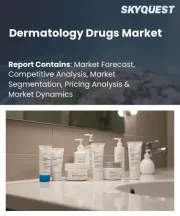
KSM 26.06.12Global Dermatology Drugs Market size was valued at USD 42.52 Billion in 2024 and is poised to grow from USD 45.33 Billion in 2025 to USD 75.85 Billion by 2033, growing at a CAGR of 6.62% during the forecast period (2026-2033).
The global dermatology drugs market is significantly influenced by the rising prevalence of chronic skin conditions, leading to larger patient populations and greater therapeutic needs. This market encompasses prescription medications, over-the-counter treatments, and innovative biologics and small molecules targeted at conditions like acne, eczema, psoriasis, and skin cancers. These ailments greatly impact patient well-being, driving healthcare costs and loss of productivity. The sector has evolved from traditional treatments to advanced systemic therapies, fostering substantial investment and commercialization. Key growth factors include rapid therapeutic innovation and broadened distribution channels, creating myriad opportunities for stakeholders. Breakthrough biologics and JAK inhibitors enhance treatment efficacy and durability, while teledermatology and AI solutions facilitate earlier diagnoses and remote patient management, further fueling demand for chronic condition therapies.
Top-down and bottom-up approaches were used to estimate and validate the size of the Global Dermatology Drugs market and to estimate the size of various other dependent submarkets. The research methodology used to estimate the market size includes the following details: The key players in the market were identified through secondary research, and their market shares in the respective regions were determined through primary and secondary research. This entire procedure includes the study of the annual and financial reports of the top market players and extensive interviews for key insights from industry leaders such as CEOs, VPs, directors, and marketing executives. All percentage shares split, and breakdowns were determined using secondary sources and verified through Primary sources. All possible parameters that affect the markets covered in this research study have been accounted for, viewed in extensive detail, verified through primary research, and analyzed to get the final quantitative and qualitative data.
Global Dermatology Drugs Market Segments Analysis
Global dermatology drugs market is segmented by drug type, indication, distribution and region. Based on drug type, the market is segmented into Topical Agents, Systemic Agents and Biologics. Based on indication, the market is segmented into Psoriasis, Atopic Dermatitis, Acne Vulgaris, Rosacea and Skin Cancer. Based on distribution, the market is segmented into Hospital Pharmacies, Retail Pharmacies and Online. Based on region, the market is segmented into North America, Europe, Asia Pacific, Latin America and Middle East & Africa.
Driver of the Global Dermatology Drugs Market
The increasing prevalence of chronic and acute dermatological conditions is significantly driving the demand for both current and new treatment options in the dermatology drugs market. As healthcare providers and pharmaceutical companies prioritize the development of innovative dermatology solutions, they are also working to enhance service delivery across outpatient and specialty care settings. This persistent demand prompts substantial investments in research and development, formulation improvements, and the establishment of more extensive distribution networks, enabling companies to increase production capabilities and introduce advanced products to the market. Additionally, heightened awareness among patients and healthcare professionals boosts diagnostic rates and treatment-seeking behaviors, further accelerating market growth through routine clinical practices and commercial initiatives.
Restraints in the Global Dermatology Drugs Market
The Global Dermatology Drugs market faces significant challenges due to the high costs associated with the research, development, and manufacturing of new therapies. These expenses often lead to elevated treatment prices, which can restrict patient access and deter healthcare providers and payers from embracing these innovations. When the perceived benefits do not justify the costs, it can result in limited formulary inclusion and reduced prescribing practices, hindering market acceptance and the ability of new entrants to penetrate the market. Furthermore, high out-of-pocket expenses for patients may discourage them from starting or continuing treatment, while cost-sensitive healthcare systems often lean towards cheaper alternatives. Collectively, these factors impede the market's potential for growth and expansion.
Market Trends of the Global Dermatology Drugs Market
The Global Dermatology Drugs market is experiencing a notable trend towards the adoption of teledermatology, which revolutionizes the accessibility and efficiency of dermatological care. This advancement facilitates remote management of chronic skin conditions through virtual consultations, triage, and follow-up, significantly enhancing patient engagement and adherence to treatment plans. The integration of teledermatology with primary care and electronic health records fosters collaborative treatment approaches, promoting timely intervention and better patient outcomes. As this trend gains momentum, collaborations between digital health innovators and pharmaceutical companies are on the rise, aiming to develop remote monitoring solutions and holistic services that further elevate dermatology treatment methodologies.
Table of Contents
Introduction
- Objectives of the Study
- Market Definition & Scope
Research Methodology
- Research Process
- Secondary & Primary Data Methods
- Market Size Estimation Methods
Executive Summary
- Global Market Outlook
- Key Market Highlights
- Segmental Overview
- Competition Overview
Market Dynamics & Outlook
- Macro-Economic Indicators
- Drivers & Opportunities
- Restraints & Challenges
- Supply Side Trends
- Demand Side Trends
- Porters Analysis & Impact
- Competitive Rivalry
- Threat of Substitute
- Bargaining Power of Buyers
- Threat of New Entrants
- Bargaining Power of Suppliers
Key Market Insights
- Key Success Factors
- Market Impacting Factors
- Top Investment Pockets
- Ecosystem Mapping
- Market Attractiveness Index 2025
- PESTEL Analysis
- Regulatory Landscape
Global Dermatology Drugs Market Size by Drug Type & CAGR (2026-2033)
- Market Overview
- Topical Agents
- Systemic Agents
- Biologics
Global Dermatology Drugs Market Size by Indication & CAGR (2026-2033)
- Market Overview
- Psoriasis
- Atopic Dermatitis
- Acne Vulgaris
- Rosacea
- Skin Cancer
Global Dermatology Drugs Market Size by Distribution & CAGR (2026-2033)
- Market Overview
- Hospital Pharmacies
- Retail Pharmacies
- Online
Global Dermatology Drugs Market Size by Region & CAGR (2026-2033)
- Market Overview
- North America
- Europe
- Asia-Pacific
Global Dermatology Drugs Market Size & CAGR (2026-2033)
- North America (Drug Type, Indication, Distribution, Region)
- US
- Canada
- Europe (Drug Type, Indication, Distribution, Region)
- Germany
- Spain
- France
- UK
- Italy
- Rest of Europe
- Asia Pacific (Drug Type, Indication, Distribution, Region)
- China
- India
- Japan
- South Korea
- Rest of Asia-Pacific
- Latin America (Drug Type, Indication, Distribution, Region)
- Mexico
- Brazil
- Rest of Latin America
- Middle East & Africa (Drug Type, Indication, Distribution, Region)
- GCC Countries
- South Africa
- Rest of Middle East & Africa
Competitive Intelligence
- Top 5 Player Comparison
- Market Positioning of Key Players, 2025
- Strategies Adopted by Key Market Players
- Recent Developments in the Market
- Company Market Share Analysis, 2025
- Company Profiles of All Key Players
- Company Details
- Product Portfolio Analysis
- Company's Segmental Share Analysis
- Revenue Y-O-Y Comparison (2023-2025)
Key Company Profiles
- AbbVie Inc. (Skyrizi, Humira)
- Company Overview
- Business Segment Overview
- Financial Updates
- Key Developments
- Johnson & Johnson (Tremfya)
- Company Overview
- Business Segment Overview
- Financial Updates
- Key Developments
- Pfizer Inc. (Eucrisa)
- Company Overview
- Business Segment Overview
- Financial Updates
- Key Developments
- Novartis AG (Cosentyx)
- Company Overview
- Business Segment Overview
- Financial Updates
- Key Developments
- Eli Lilly (Taltz)
- Company Overview
- Business Segment Overview
- Financial Updates
- Key Developments
- Sanofi/Regeneron (Dupixent)
- Company Overview
- Business Segment Overview
- Financial Updates
- Key Developments
- LEO Pharma
- Company Overview
- Business Segment Overview
- Financial Updates
- Key Developments
- Galderma SA
- Company Overview
- Business Segment Overview
- Financial Updates
- Key Developments
- Bausch Health
- Company Overview
- Business Segment Overview
- Financial Updates
- Key Developments
- Almirall SA
- Company Overview
- Business Segment Overview
- Financial Updates
- Key Developments
- UCB SA
- Company Overview
- Business Segment Overview
- Financial Updates
- Key Developments
- Sun Pharmaceutical
- Company Overview
- Business Segment Overview
- Financial Updates
- Key Developments
- Cassiopea SpA
- Company Overview
- Business Segment Overview
- Financial Updates
- Key Developments
- Arcutis Biotherapeutics
- Company Overview
- Business Segment Overview
- Financial Updates
- Key Developments
- Dermira (Eli Lilly)
- Company Overview
- Business Segment Overview
- Financial Updates
- Key Developments
- Foamix (Vyne Therapeutics)
- Company Overview
- Business Segment Overview
- Financial Updates
- Key Developments
- Timber Pharma
- Company Overview
- Business Segment Overview
- Financial Updates
- Key Developments
- Botanix Pharmaceuticals
- Company Overview
- Business Segment Overview
- Financial Updates
- Key Developments
- Verrica Pharmaceuticals
- Company Overview
- Business Segment Overview
- Financial Updates
- Key Developments
- Corvus Pharmaceuticals
- Company Overview
- Business Segment Overview
- Financial Updates
- Key Developments