|
시장보고서
상품코드
2064612
모세혈관 채혈 장치 시장 규모, 점유율 및 성장 분석 : 제품 유형별, 기술별, 용도별, 최종사용자별, 지역별 - 업계 예측(2026-2033년)Capillary Blood Collection Devices Market Size, Share, and Growth Analysis, By Product Type, By Technology, By Application, By End-User, By Region - Industry Forecast 2026-2033 |
||||||

세계의 모세혈관 채혈 장치 시장 규모는 2024년에 18억 2,000만 달러로 평가되었고, 2025년 19억 6,000만 달러에서 2033년까지 35억 2,000만 달러로 확대되어 예측 기간(2026-2033년)에 CAGR 7.62%를 기록할 전망입니다.
모세혈관 채혈 기기 세계 시장은 분산형 환자 중심 의료로의 전환에 힘입어 성장하고 있습니다. 이러한 기기들은 손가락 끝에서 소량의 혈액을 채취할 수 있게 해주며, 만성 질환 검사 및 공중보건 선별검사에서 직면하는 장벽을 극복하는 데 필수적입니다. 이러한 추세는 신생아 선별검사나 당뇨병 관리에서 시작해, 재택 치료 모니터링 및 감염병 감시 분야의 원격 채혈로 진화하고 있으며, 접근성이 높은 진단법의 필요성을 부각시키고 있습니다. 마이크로 샘플링 기술의 발전으로 검체의 품질이 향상되었으며, 건조 혈액 스팟이나 체적 흡수형 마이크로 샘플링 등의 임상 적용 범위가 확대되고 있습니다. 이를 통해 분석 대상 물질의 안정성이 향상되고 물류 비용이 절감됩니다. 이러한 혁신은 임상시험에서 원격 검체 채취의 수용을 촉진하고, 동반 진단에 대한 제약 업계의 관심을 높이며, 신흥 시장 및 원격 의료 파트너십 분야에서 새로운 기회를 창출할 것입니다. 결국에는 비용 절감과 환자의 치료 순응도 향상으로 이어집니다.
세계 모세혈관 채혈 기기 시장의 성장 요인
현장 진단 검사의 도입 확대가 모세혈관 채혈 기기 수요를 크게 견인하고 있습니다. 기존 검사실 환경 이외의 장소에서 이루어지는 이러한 검사에는 효율적이고 침습성이 낮은 채혈 기술이 필수적이며, 이를 통해 환자 처리가 신속해지고 분산형 임상 의사결정이 촉진됩니다. 의료 서비스 제공업체와 지역 클리닉은 휴대용 분석 기기 및 진단 워크플로우와 원활하게 통합될 수 있는 사용하기 편리한 채혈 도구를 우선적으로 선택하고 있으며, 그 결과 일회용 기기의 구매와 재고가 증가하고 있습니다. 또한, 환자들이 침습성이 낮은 채혈 방법을 선호하는 경향에 더해, 병상이나 자택에서 검사를 받을 수 있는 편의성이 더해지면서, 다양한 의료 환경에서 이러한 기기의 도입과 일상적인 사용이 더욱 촉진되고 있습니다.
세계 모세혈관 채혈 기기 시장의 제약 요인
분석 대상 물질의 농도 편차나 미량의 모세혈관 혈액으로는 충분한 검체를 채취할 수 없는 위험으로 인해, 임상의는 검사 결과의 타당성에 대한 신뢰를 잃을 가능성이 있습니다. 이러한 회의적인 시각으로 인해 의료진은 중요한 검사 시 정맥 채혈을 선호하는 경향이 있으며, 이는 확정 진단이나 치료 방침 결정에 있어 모세혈관 혈액 검사 결과에 대한 의존도에 영향을 미치고 있습니다. 분석 정확도에 대한 우려는 검사실이나 의료 제공업체가 온도 조절기의 사용을 자제하게 만드는 요인이 되며, 그 결과 재주문이나 전반적인 조달량 감소로 이어집니다. 이러한 소극적인 태도는 결국 해당 장비의 허용되는 용도를 좁히고, 높은 진단 신뢰성이 요구되는 환경에서의 도입을 저해함으로써 시장 성장을 제한하게 될 것입니다.
세계 온도 조절기 시장 동향
세계 모세혈관 채혈 기기 시장에서는 소비자들이 자발적으로 건강 관리를 할 수 있는 비침습적 방법을 점점 더 선호함에 따라, 자가 검사 솔루션 도입을 향한 뚜렷한 추세가 나타나고 있습니다. 이러한 변화에 따라 제조업체들은 임상 현장 이외의 곳에서도 신뢰성 있게 사용할 수 있는 사용자 친화적인 기기의 개발과 생산에 주력하고 있습니다. 사용자 경험 향상에 중점을 둔 이 제품들은 우편 검사와 현장 검사(POC) 모두를 지원하며, 알기 쉬운 설명서와 유연한 워크플로우를 갖추고 있습니다. 만성 질환 관리가 원격 모니터링으로 전환되는 가운데, 이러한 추세는 진단 기업, 원격 의료 서비스, 검사 기관 간의 협력을 촉진하고, 궁극적으로는 분산형 임상시험을 용이하게 하여 의료 분야의 접근성 확대 전략을 추진하게 될 것입니다.
자주 묻는 질문
목차
서론
조사 방법
주요 요약
시장 역학과 전망
주요 시장 인사이트
세계의 모세혈관 채혈 장치 시장 규모 : 제품 유형별
세계의 모세혈관 채혈 장치 시장 규모 : 기술별
세계의 모세혈관 채혈 장치 시장 규모 : 용도별
세계의 모세혈관 채혈 장치 시장 규모 : 최종사용자별
세계의 모세혈관 채혈 장치 시장 규모 : 지역별
경쟁 정보
주요 기업 개요
결론과 제안
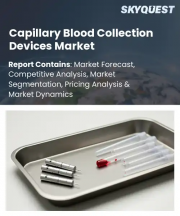
LSH 26.06.26Global Capillary Blood Collection Devices Market size was valued at USD 1.82 Billion in 2024 and is poised to grow from USD 1.96 Billion in 2025 to USD 3.52 Billion by 2033, growing at a CAGR of 7.62% during the forecast period (2026-2033).
The global market for capillary blood collection devices is driven by the shift towards decentralized, patient-centered care. These devices enable microsampling from fingertips, essential for overcoming barriers to testing chronic illnesses and public health screenings. The trend has evolved from neonatal screening and diabetes management to at-home therapeutic monitoring and remote sampling for infectious disease surveillance, highlighting the need for accessible diagnostics. Technological advancements in microsampling enhance sample quality and broaden clinical applications, such as dried blood spots and volumetric absorptive microsampling, improving analyte stability and reducing logistics costs. This innovation fosters remote sampling acceptance in clinical studies and stimulates pharmaceutical interest in companion diagnostics, creating opportunities in emerging markets and telehealth partnerships, ultimately leading to cost savings and improved patient compliance.
Top-down and bottom-up approaches were used to estimate and validate the size of the Global Capillary Blood Collection Devices market and to estimate the size of various other dependent submarkets. The research methodology used to estimate the market size includes the following details: The key players in the market were identified through secondary research, and their market shares in the respective regions were determined through primary and secondary research. This entire procedure includes the study of the annual and financial reports of the top market players and extensive interviews for key insights from industry leaders such as CEOs, VPs, directors, and marketing executives. All percentage shares split, and breakdowns were determined using secondary sources and verified through Primary sources. All possible parameters that affect the markets covered in this research study have been accounted for, viewed in extensive detail, verified through primary research, and analyzed to get the final quantitative and qualitative data.
Global Capillary Blood Collection Devices Market Segments Analysis
Global capillary blood collection devices market is segmented by product type, technology, application, end-user and region. Based on product type, the market is segmented into Lancets, Microtubes & Capillaries, Collection Systems and Warming Devices. Based on technology, the market is segmented into Safety Lancets, Contact-Activated Lancets and Adjustable-Depth Lancets. Based on application, the market is segmented into Blood Glucose Monitoring, Newborn Screening, Hemoglobin Testing and Point-of-Care Testing. Based on end-user, the market is segmented into Hospitals, Diagnostic Labs and Home Care. Based on region, the market is segmented into North America, Europe, Asia Pacific, Latin America and Middle East & Africa.
Driver of the Global Capillary Blood Collection Devices Market
The increasing adoption of point of care testing is significantly driving the demand for capillary blood collection devices. These tests, which are conducted outside traditional laboratory settings, necessitate efficient and minimally invasive sampling techniques, allowing for quicker patient processing and facilitating decentralized clinical decision-making. Healthcare providers and community clinics prioritize straightforward collection tools that seamlessly integrate with portable analyzers and diagnostic workflows, leading to a rise in the purchase and inventory of single-use devices. Additionally, patients' preference for less invasive sampling methods, coupled with the convenience of bedside or home testing, further enhances the procurement and regular utilization of these devices across various care environments.
Restraints in the Global Capillary Blood Collection Devices Market
The variability in analyte concentrations and the risk of inadequate sample capture from small capillary volumes can diminish clinician confidence in the validity of test results. This skepticism often leads healthcare professionals to favor venous sampling for critical tests, which impacts the reliance on capillary-derived results for definitive diagnoses or treatment decisions. Concerns over analytical accuracy may deter laboratories and providers from utilizing capillary blood collection devices, resulting in decreased repeat orders and overall procurement. Such reluctance ultimately restricts market growth by narrowing the acceptable applications for these devices and hindering their adoption in environments that require high diagnostic reliability.
Market Trends of the Global Capillary Blood Collection Devices Market
The Global Capillary Blood Collection Devices market is witnessing a significant trend towards the adoption of home testing solutions as consumers increasingly seek non-invasive methods to manage their health independently. This shift is propelling manufacturers to innovate and produce user-friendly devices designed for reliable use outside clinical settings. Focused on enhancing user experience, these products come equipped with clear instructions and adaptable workflows for both mail-in and point-of-care testing. As chronic illness management increasingly moves towards remote monitoring, this trend fosters collaboration between diagnostic companies, telemedicine services, and laboratories, ultimately facilitating decentralized clinical trials and expanding access strategies in the healthcare landscape.
Table of Contents
Introduction
- Objectives of the Study
- Market Definition & Scope
Research Methodology
- Research Process
- Secondary & Primary Data Methods
- Market Size Estimation Methods
Executive Summary
- Global Market Outlook
- Key Market Highlights
- Segmental Overview
- Competition Overview
Market Dynamics & Outlook
- Macro-Economic Indicators
- Drivers & Opportunities
- Restraints & Challenges
- Supply Side Trends
- Demand Side Trends
- Porters Analysis & Impact
- Competitive Rivalry
- Threat of Substitute
- Bargaining Power of Buyers
- Threat of New Entrants
- Bargaining Power of Suppliers
Key Market Insights
- Key Success Factors
- Market Impacting Factors
- Top Investment Pockets
- Ecosystem Mapping
- Market Attractiveness Index 2025
- PESTEL Analysis
- Regulatory Landscape
Global Capillary Blood Collection Devices Market Size by Product Type & CAGR (2026-2033)
- Market Overview
- Lancets
- Microtubes & Capillaries
- Collection Systems
- Warming Devices
Global Capillary Blood Collection Devices Market Size by Technology & CAGR (2026-2033)
- Market Overview
- Safety Lancets
- Contact-Activated Lancets
- Adjustable-Depth Lancets
Global Capillary Blood Collection Devices Market Size by Application & CAGR (2026-2033)
- Market Overview
- Blood Glucose Monitoring
- Newborn Screening
- Hemoglobin Testing
- Point-of-Care Testing
Global Capillary Blood Collection Devices Market Size by End-User & CAGR (2026-2033)
- Market Overview
- Hospitals
- Diagnostic Labs
- Home Care
Global Capillary Blood Collection Devices Market Size & CAGR (2026-2033)
- North America (Product Type, Technology, Application, End-User)
- US
- Canada
- Europe (Product Type, Technology, Application, End-User)
- Germany
- Spain
- France
- UK
- Italy
- Rest of Europe
- Asia Pacific (Product Type, Technology, Application, End-User)
- China
- India
- Japan
- South Korea
- Rest of Asia-Pacific
- Latin America (Product Type, Technology, Application, End-User)
- Mexico
- Brazil
- Rest of Latin America
- Middle East & Africa (Product Type, Technology, Application, End-User)
- GCC Countries
- South Africa
- Rest of Middle East & Africa
Competitive Intelligence
- Top 5 Player Comparison
- Market Positioning of Key Players, 2025
- Strategies Adopted by Key Market Players
- Recent Developments in the Market
- Company Market Share Analysis, 2025
- Company Profiles of All Key Players
- Company Details
- Product Portfolio Analysis
- Company's Segmental Share Analysis
- Revenue Y-O-Y Comparison (2023-2025)
Key Company Profiles
- Becton Dickinson
- Company Overview
- Business Segment Overview
- Financial Updates
- Key Developments
- Roche Diagnostics (Accu-Chek)
- Company Overview
- Business Segment Overview
- Financial Updates
- Key Developments
- Greiner Bio-One
- Company Overview
- Business Segment Overview
- Financial Updates
- Key Developments
- Sarstedt AG
- Company Overview
- Business Segment Overview
- Financial Updates
- Key Developments
- Terumo Corporation
- Company Overview
- Business Segment Overview
- Financial Updates
- Key Developments
- Medline Industries
- Company Overview
- Business Segment Overview
- Financial Updates
- Key Developments
- Owen Mumford
- Company Overview
- Business Segment Overview
- Financial Updates
- Key Developments
- ARKRAY Inc.
- Company Overview
- Business Segment Overview
- Financial Updates
- Key Developments
- Improve Medical
- Company Overview
- Business Segment Overview
- Financial Updates
- Key Developments
- Cardinal Health
- Company Overview
- Business Segment Overview
- Financial Updates
- Key Developments
- Nipro Corporation
- Company Overview
- Business Segment Overview
- Financial Updates
- Key Developments
- SteriLance Medical
- Company Overview
- Business Segment Overview
- Financial Updates
- Key Developments
- Haselmeier GmbH
- Company Overview
- Business Segment Overview
- Financial Updates
- Key Developments
- HTL-STREFA S.A.
- Company Overview
- Business Segment Overview
- Financial Updates
- Key Developments
- Vitrex Medical
- Company Overview
- Business Segment Overview
- Financial Updates
- Key Developments