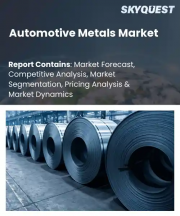
|
시장보고서
상품코드
2068812
자동차용 금속 시장 규모, 점유율 및 성장 분석 : 제품 유형별, 자동차 부품 용도별, 제조 공정별, 대상차종 부문별, 지역별 - 업계 예측(2026-2033년)Automotive Metals Market Size, Share, and Growth Analysis, By Product Metal Type, By Vehicle Component Application, By Manufacturing Modification Process, By Target Vehicle Segment, By Region - Industry Forecast 2026-2033 |
||||||

세계의 자동차용 금속 시장 규모는 2024년에 1,614억 달러로 평가되었고, 2025년 1,696억 3,000만 달러에서 2033년까지 2,525억 4,000만 달러로 확대되어 예측 기간(2026-2033년)에 CAGR 5.1%를 기록할 전망입니다.
철강, 알루미늄, 마그네슘, 특수 합금을 포함하는 전 세계 자동차용 금속 시장은 차체 구조, 파워트레인, 안전 시스템의 구축에 필수적입니다. 연비 효율 향상과 배기가스 규제 준수를 위해 업계가 경량이며 고강도 부품 개발에 주력하고 있는 것이 수요를 견인하고 있습니다. 규제 요건과 더 가벼운 차량을 원하는 소비자 수요에 영향을 받아, 고탄소강에서 첨단 고장력강 및 알루미늄으로의 전환이 뚜렷하게 나타나고 있습니다. 전기차(EV) 생산은 소재 수요를 재편하는 주요 요인으로 작용하고 있으며, 각 제조업체들은 배터리 무게를 줄이기 위해 알루미늄과 마그네슘에 대한 의존도를 높이고 있습니다. 이러한 변화는 재활용 업체와 합금 개발 기업에 새로운 가능성을 열어주어, 고강도·내식성 소재에 대한 투자를 촉진하는 한편, AI를 활용한 공급망 자동화를 추진함으로써 효율성과 대응력을 향상시키고 있습니다.
세계 자동차용 금속 시장의 성장 요인
세계 자동차용 금속 시장은 연비 효율 향상과 배기가스 감축을 요구하는 환경 의식이 높은 소비자 수요에 부응하기 위해 자동차 제조업체들이 경량화에 더욱 주력함에 따라 성장하고 있습니다. 이러한 추세에 따라, 안전 기준을 유지하면서도 뛰어난 강도 대 중량비를 제공하는 고장력강이나 알루미늄 합금이 선호되고 있습니다. 그 결과, 첨단 자동차용 금속에 대한 수요가 증가하고 있으며, 차량의 성능과 지속가능성을 한층 더 향상시킬 수 있는 혁신적인 합금 조성 및 가공 기술에 대한 연구가 지속적으로 진행되고 있습니다. 이러한 발전은 친환경 부문에서 시장 점유율 확대를 목표로 하는 자동차 제조업체의 전략적 목표에 부합할 뿐만 아니라, 금속 공급망 전체의 확대에도 기여하고 있습니다.
세계 자동차용 금속 시장의 제약 요인
세계 자동차용 금속 시장은 특히 철광석이나 알루미늄과 같은 원자재 가격의 예측 불가능한 변동으로 인해 큰 제약에 직면해 있습니다. 이러한 가격 변동은 금속 제조업체의 생산 비용을 상승시켜, 가격 전략의 재검토나 생산 능력 확대를 위한 투자 연기로 이어질 가능성이 있습니다. 그 결과, 자동차 제조업체들은 더 저렴한 대체 재료를 모색하거나, 고품질 금속 부품에 의존하는 신차 출시를 연기할 가능성이 있으며, 이는 결국 첨단 자동차용 금속 수요 증가를 억제하게 될 것입니다. 또한, 투입 비용의 급등은 이익률을 압박할 가능성이 있어, 제조업체들은 혁신적인 합금 개발에 매진하기보다는 기존 제품 라인의 유지에 주력하게 될 것이며, 그 결과 시장 전체의 성장세가 둔화될 우려가 있습니다.
세계 자동차용 금속 시장 동향
세계 자동차용 금속 시장에서는 경량 소재의 채택이 확대되고 있으며, 기업들이 알루미늄 합금이나 고장력강을 활용해 차량의 경량화와 연비 효율 향상을 도모함에 따라 제조 방식이 변화하고 있습니다. 이러한 추세는 친환경 차량에 대한 소비자 수요가 증가하고, 엄격한 규제 요건에 대응하기 위한 결과입니다. 그 결과, 각 공급업체들은 내식성과 성형성을 향상시킨 첨단 합금 개발을 위한 연구 개발을 강화하고 있는 반면, 자동차 제조업체들은 부품 집약화를 위한 설계 최적화를 추진하고 있습니다. 이러한 역동적인 상황은 혁신적인 접합 기술과 지속 가능한 재활용 솔루션에 초점을 맞춘 산업 간 협력을 촉진하고 있으며, 전 세계적인 순환 경제 노력과도 부합합니다.
자주 묻는 질문
목차
서론
조사 방법
주요 요약
시장 역학과 전망
주요 시장 인사이트
세계의 자동차용 금속 시장 규모 : 제품 공금속 유형별
세계의 자동차용 금속 시장 규모 : 자동차 부품 용도별
세계의 자동차용 금속 시장 규모 : 제조 가공 프로세스별
세계의 자동차용 금속 시장 규모 : 대상차종 부문별
세계의 자동차용 금속 시장 규모 : 지역별
경쟁 정보
주요 기업 개요
결론과 제안
LSH 26.06.30Global Automotive Metals Market size was valued at USD 161.4 Billion in 2024 and is poised to grow from USD 169.63 Billion in 2025 to USD 252.54 Billion by 2033, growing at a CAGR of 5.1% during the forecast period (2026-2033).
The global automotive metals market, which includes steel, aluminum, magnesium, and speciality alloys, is essential for constructing vehicle structures, powertrains, and safety systems. The industry's focus on lightweight, high-strength components to enhance fuel efficiency and comply with emissions standards drives demand. There has been a notable transition from high-carbon steel to advanced high-strength steel and aluminum, influenced by regulatory requirements and consumer demand for lighter vehicles. Electric vehicle production is a major factor reshaping material needs, with manufacturers increasingly relying on aluminum and magnesium to mitigate battery weight. This shift opens new avenues for recyclers and alloy innovators, driving investment in high-strength, corrosion-resistant materials, and pushing advancements in supply chain automation through AI, enhancing efficiency and responsiveness.
Top-down and bottom-up approaches were used to estimate and validate the size of the Global Automotive Metals market and to estimate the size of various other dependent submarkets. The research methodology used to estimate the market size includes the following details: The key players in the market were identified through secondary research, and their market shares in the respective regions were determined through primary and secondary research. This entire procedure includes the study of the annual and financial reports of the top market players and extensive interviews for key insights from industry leaders such as CEOs, VPs, directors, and marketing executives. All percentage shares split, and breakdowns were determined using secondary sources and verified through Primary sources. All possible parameters that affect the markets covered in this research study have been accounted for, viewed in extensive detail, verified through primary research, and analyzed to get the final quantitative and qualitative data.
Global Automotive Metals Market Segments Analysis
Global automotive metals market is segmented by product metal type, vehicle component application, manufacturing modification process, target vehicle segment and region. Based on product metal type, the market is segmented into Steel Formulations, Aluminum Alloys, Magnesium Formulations, Titanium Alloys and Others. Based on vehicle component application, the market is segmented into Body Structures, Powertrain Components, Suspension Architectures, Battery Pack Housing Enclosures and Others. Based on manufacturing modification process, the market is segmented into Metal Stamping, High-Pressure Die Casting, Extrusion Procedures, Metal Rolling, Forging Operations and Others. Based on target vehicle segment, the market is segmented into Two-Wheelers and Three-Wheelers, Passenger Cars, Light Commercial Vehicles, Heavy Commercial Vehicles and Buses and Coaches. Based on region, the market is segmented into North America, Europe, Asia Pacific, Latin America and Middle East & Africa.
Driver of the Global Automotive Metals Market
The global automotive metals market is driven by a growing emphasis among automakers on lightweight construction aimed at enhancing fuel efficiency and meeting the demands of environmentally conscious consumers for lower emissions. This trend is leading to a preference for high-strength steel and aluminum alloys, which provide excellent strength-to-weight ratios while ensuring safety standards are upheld. As a result, there is an increasing demand for advanced automotive metals, prompting ongoing research into innovative alloy formulations and processing techniques that further improve vehicle performance and sustainability. These advancements not only align with automakers' strategic objectives to capture greater market share in eco-friendly segments but also contribute to the overall expansion of the metal supply chain.
Restraints in the Global Automotive Metals Market
The Global Automotive Metals market faces significant restraints due to unpredictable fluctuations in raw material prices, particularly iron ore and aluminum. These price variations elevate production costs for metal manufacturers, leading them to modify pricing strategies and potentially postpone investments in expanding their capacities. Consequently, automakers may pursue more affordable material alternatives or delay the introduction of new vehicle models that depend on high-quality metal components, ultimately restricting the demand growth for advanced automotive metals. Additionally, soaring input costs can erode profit margins, causing manufacturers to focus on maintaining existing product lines rather than exploring innovative alloy development, thus limiting overall market momentum.
Market Trends of the Global Automotive Metals Market
In the Global Automotive Metals market, the rising adoption of lightweight materials is transforming manufacturing practices as companies leverage aluminum alloys and high-strength steel to achieve reduced vehicle weight and enhanced fuel efficiency. This trend responds to increasing consumer demand for environmentally friendly vehicles and stringent regulatory requirements. Consequently, suppliers are ramping up research and development efforts to create advanced alloys that offer improved corrosion resistance and formability, while automakers are optimizing designs for component consolidation. This dynamic landscape encourages cross-industry collaborations focused on innovative joining techniques and sustainable recycling solutions, aligning with global circular economy initiatives.
Table of Contents
Introduction
- Objectives of the Study
- Market Definition & Scope
Research Methodology
- Research Process
- Secondary & Primary Data Methods
- Market Size Estimation Methods
Executive Summary
- Global Market Outlook
- Key Market Highlights
- Segmental Overview
- Competition Overview
Market Dynamics & Outlook
- Macro-Economic Indicators
- Drivers & Opportunities
- Restraints & Challenges
- Supply Side Trends
- Demand Side Trends
- Porters Analysis & Impact
- Competitive Rivalry
- Threat of Substitute
- Bargaining Power of Buyers
- Threat of New Entrants
- Bargaining Power of Suppliers
Key Market Insights
- Key Success Factors
- Market Impacting Factors
- Top Investment Pockets
- Ecosystem Mapping
- Market Attractiveness Index 2025
- PESTEL Analysis
- Regulatory Landscape
Global Automotive Metals Market Size by Product Metal Type & CAGR (2026-2033)
- Market Overview
- Steel Formulations
- High-Strength Low-Alloy Steel
- Advanced High-Strength Steel
- Aluminum Alloys
- Magnesium Formulations
- Titanium Alloys
- Others
Global Automotive Metals Market Size by Vehicle Component Application & CAGR (2026-2033)
- Market Overview
- Body Structures
- Exterior Panels
- Giga-Casting Underbody Elements
- Powertrain Components
- Suspension Architectures
- Battery Pack Housing Enclosures
- Others
Global Automotive Metals Market Size by Manufacturing Modification Process & CAGR (2026-2033)
- Market Overview
- Metal Stamping
- High-Pressure Die Casting
- Extrusion Procedures
- Metal Rolling
- Forging Operations
- Others
Global Automotive Metals Market Size by Target Vehicle Segment & CAGR (2026-2033)
- Market Overview
- Two-Wheelers and Three-Wheelers
- Passenger Cars
- Light Commercial Vehicles
- Heavy Commercial Vehicles
- Buses and Coaches
Global Automotive Metals Market Size & CAGR (2026-2033)
- North America (Product Metal Type, Vehicle Component Application, Manufacturing Modification Process, Target Vehicle Segment)
- US
- Canada
- Europe (Product Metal Type, Vehicle Component Application, Manufacturing Modification Process, Target Vehicle Segment)
- Germany
- Spain
- France
- UK
- Italy
- Rest of Europe
- Asia Pacific (Product Metal Type, Vehicle Component Application, Manufacturing Modification Process, Target Vehicle Segment)
- China
- India
- Japan
- South Korea
- Rest of Asia-Pacific
- Latin America (Product Metal Type, Vehicle Component Application, Manufacturing Modification Process, Target Vehicle Segment)
- Mexico
- Brazil
- Rest of Latin America
- Middle East & Africa (Product Metal Type, Vehicle Component Application, Manufacturing Modification Process, Target Vehicle Segment)
- GCC Countries
- South Africa
- Rest of Middle East & Africa
Competitive Intelligence
- Top 5 Player Comparison
- Market Positioning of Key Players, 2025
- Strategies Adopted by Key Market Players
- Recent Developments in the Market
- Company Market Share Analysis, 2025
- Company Profiles of All Key Players
- Company Details
- Product Portfolio Analysis
- Company's Segmental Share Analysis
- Revenue Y-O-Y Comparison (2023-2025)
Key Company Profiles
- ArcelorMittal
- Company Overview
- Business Segment Overview
- Financial Updates
- Key Developments
- Nippon Steel Corporation
- Company Overview
- Business Segment Overview
- Financial Updates
- Key Developments
- POSCO Holdings Inc.
- Company Overview
- Business Segment Overview
- Financial Updates
- Key Developments
- Alcoa Corporation
- Company Overview
- Business Segment Overview
- Financial Updates
- Key Developments
- Rio Tinto Group
- Company Overview
- Business Segment Overview
- Financial Updates
- Key Developments
- Norsk Hydro ASA
- Company Overview
- Business Segment Overview
- Financial Updates
- Key Developments
- Tata Steel Limited
- Company Overview
- Business Segment Overview
- Financial Updates
- Key Developments
- Thyssenkrupp AG
- Company Overview
- Business Segment Overview
- Financial Updates
- Key Developments
- United States Steel Corporation
- Company Overview
- Business Segment Overview
- Financial Updates
- Key Developments
- JFE Holdings Inc.
- Company Overview
- Business Segment Overview
- Financial Updates
- Key Developments
- Novelis Inc.
- Company Overview
- Business Segment Overview
- Financial Updates
- Key Developments
- Constellium SE
- Company Overview
- Business Segment Overview
- Financial Updates
- Key Developments
- Kobe Steel Ltd.
- Company Overview
- Business Segment Overview
- Financial Updates
- Key Developments
- Baoshan Iron & Steel Co. Ltd.
- Company Overview
- Business Segment Overview
- Financial Updates
- Key Developments
- China Baowu Steel Group Corporation
- Company Overview
- Business Segment Overview
- Financial Updates
- Key Developments
- Voestalpine AG
- Company Overview
- Business Segment Overview
- Financial Updates
- Key Developments
- SSAB AB
- Company Overview
- Business Segment Overview
- Financial Updates
- Key Developments
- Hwangjin Metal Co. Ltd.
- Company Overview
- Business Segment Overview
- Financial Updates
- Key Developments
- Aichi Steel Corporation
- Company Overview
- Business Segment Overview
- Financial Updates
- Key Developments
- Magnesium Products of America Inc.
- Company Overview
- Business Segment Overview
- Financial Updates
- Key Developments