|
시장보고서
상품코드
2078738
토양 비옥도 검사 시장 : 시장 규모, 점유율 및 성장 분석 - 검사 유형별, 방법별, 용도별, 최종 사용자별, 지역별 업계 예측(2026-2033년)Soil Fertility Testing Market Size, Share, and Growth Analysis, By Test Type (Macronutrient Testing (N, P)), By Method (Laboratory Testing, On-Site/Portable Testing), By Application, By End-User, By Region - Industry Forecast 2026-2033 |
||||||

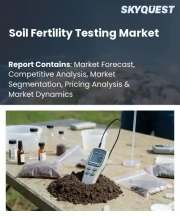
세계의 토양 비옥도 검사 시장 규모는 2024년에 35억 2,000만 달러로 평가되었고, 2025년 37억 7,000만 달러에서 2033년까지 65억 2,000만 달러로 확대될 전망이며, 예측 기간(2026-2033년) CAGR 7.12%로 성장할 전망입니다.
세계 토양 비옥도 검사 시장에서는 영양분 농도, pH, 유기물 함량과 같은 주요 토양 특성을 측정하는 분석 서비스를 제공하고 있으며, 이를 통해 농가들은 투입 자재를 최적화하고 농업 생산량을 향상시킬 수 있습니다. 이 시장은 식량 안보라는 중요한 요구를 충족시키는 동시에, 정밀 농업 분야의 지속 가능한 실천을 촉진하고 있습니다. 데이터 기반 농업으로의 전환 추세가 강화되는 가운데, 현장에서의 분석이 가능한 신속하고 휴대용 검사 키트에 대한 수요가 높아지고 있습니다. 이러한 혁신을 통해 비료 사용량을 실시간으로 조절할 수 있게 되어, 낭비를 최소화하고 온실가스 배출을 줄일 수 있습니다. 한편, 인공지능(AI)은 센서 데이터를 처리하여 실행 가능한 인사이트를 제공함으로써 정확도와 효율성을 높이고 있습니다. 이 기술은 농업 관련 기업의 신속한 의사결정을 촉진하며, 특히 수출 과정에서 모니터링이 필수적인 신흥 시장에서 토양 비옥도 검사의 추가적인 성장을 이끌고 있습니다.
세계 토양 비옥도 검사 시장의 성장 요인
토양 악화와 이것이 농작물 수확량에 미치는 악영향에 대한 인식이 높아짐에 따라, 농가와 농업 관련 기업들은 토양의 건전성 향상에 주력하고 있습니다. 이러한 변화로 인해 영양 부족, pH 값, 유기물 함량을 평가하는 철저한 토양 검사 서비스에 대한 수요가 증가하고 있습니다. 이러한 상세한 분석을 통해 목표가 명확한 토양 개량이 가능해져 농업의 생산성과 지속가능성이 향상되는 한편, 규제 기준 준수가 보장되고, 지속 가능한 농업 실천을 통한 시장 접근성도 확대됩니다. 또한, 이러한 추세를 반영하여 연구 기관들은 교육 및 계몽 활동을 확대하고 있으며, 생산자들이 검사 결과를 이해하고 그 지식을 정밀 관리 전략에 반영하여 농업 성과를 향상시킬 수 있도록 지원하고 있습니다.
세계 토양 비옥도 검사 시장의 제약 요인
세계의 토양 비옥도 검사 시장은 분광계나 자동 시료 처리 장치 등 첨단 실험 장비와 관련된 높은 자본 비용으로 인해 현저한 과제에 직면해 있습니다. 이러한 재정적 부담은 중소규모의 검사 사업자들에게 장벽이 되어, 서비스 포트폴리오의 확대나 혁신적인 기술의 도입을 저해하고 있습니다. 그 결과, 예산 제약이 더욱 엄격한 농업 개발도상 지역에서 시장 진출이 제한되어, 신규 시장 진출기업들이 사업을 시작하는 데 어려움을 겪고 있습니다. 그 결과, 시장 전체의 성장이 저해되고 있으며, 정확도가 낮은 기존의 검사 방법에 대한 의존이 계속되고 있습니다. 또한, 이러한 재정적 제약은 연구 자금 확보를 저해하고, 혁신 및 비용 절감 노력을 방해할 가능성이 있습니다.
세계의 토양 비옥도 검사 시장 동향
세계의 토양 비옥도 검사 시장은 정밀 농업의 실천이 확대되고 있는 것을 배경으로, 눈부신 성장을 이루고 있습니다. 농가들이 토양 비옥도에 관한 실시간 데이터를 제공하는 센서 기반 플랫폼을 도입함에 따라, 휴대용 신속 검사 솔루션에 대한 수요가 증가하고 있습니다. 이러한 추세는 클라우드 기반 분석 기능과의 통합을 통해 더욱 가속화되고 있으며, 이를 통해 생산자들에게는 목표 지향적인 영양 관리와 지속가능성 목표 달성에 필수적인 실행 가능한 인사이트이 제공됩니다. 그 결과, 서비스 제공업체들은 자문 생태계를 확대하여 하드웨어, 소프트웨어 및 농업 분야의 전문 지식을 결합한 종합적인 패키지를 제공합니다. 이러한 종합적인 접근 방식은 의사 결정과 자원 효율성을 향상시켜, 다양한 작물 재배 체계에서 시장 침투를 심화시키고 있습니다.
자주 묻는 질문
목차
서론
조사 방법
주요 요약
시장 역학 및 전망
주요 시장 인사이트
세계의 토양 비옥도 검사 시장 규모 : 검사 유형별
세계의 토양 비옥도 검사 시장 규모 : 방법별
세계의 토양 비옥도 검사 시장 규모 : 용도별
세계의 토양 비옥도 검사 시장 규모 : 최종 사용자별
세계의 토양 비옥도 검사 시장 규모 : 지역별
경쟁 정보
주요 기업 개요
결론 및 제안
AJY 26.07.13Global Soil Fertility Testing Market size was valued at USD 3.52 Billion in 2024 and is poised to grow from USD 3.77 Billion in 2025 to USD 6.52 Billion by 2033, growing at a CAGR of 7.12% during the forecast period (2026-2033).
The global soil fertility testing market offers analytical services that measure key soil attributes like nutrient levels, pH, and organic matter, empowering farmers to optimize inputs and enhance agricultural yields. This market addresses the critical need for food security while promoting sustainable practices in precision agriculture. With a growing trend toward data-driven farming, there is an increasing demand for rapid, portable testing kits that enable on-site analysis. These innovations allow for real-time adjustments in fertilizer usage, minimizing waste and lowering greenhouse gas emissions. Meanwhile, artificial intelligence is enhancing accuracy and efficiency by processing sensor data and providing actionable insights. This technology facilitates quick decision-making for agribusinesses, driving further growth in soil fertility testing, particularly in emerging markets where monitoring is essential for exports.
Top-down and bottom-up approaches were used to estimate and validate the size of the Global Soil Fertility Testing market and to estimate the size of various other dependent submarkets. The research methodology used to estimate the market size includes the following details: The key players in the market were identified through secondary research, and their market shares in the respective regions were determined through primary and secondary research. This entire procedure includes the study of the annual and financial reports of the top market players and extensive interviews for key insights from industry leaders such as CEOs, VPs, directors, and marketing executives. All percentage shares split, and breakdowns were determined using secondary sources and verified through Primary sources. All possible parameters that affect the markets covered in this research study have been accounted for, viewed in extensive detail, verified through primary research, and analyzed to get the final quantitative and qualitative data.
Global Soil Fertility Testing Market Segments Analysis
Global soil fertility testing market is segmented by test type, method, application, end-user and region. Based on test type, the market is segmented into Macronutrient Testing (N, P, K), Micronutrient Testing, pH Testing and Organic Matter Testing. Based on method, the market is segmented into Laboratory Testing, On-Site/Portable Testing and Remote Sensing. Based on application, the market is segmented into Crop Farms, Horticulture and Turf & Landscaping. Based on end-user, the market is segmented into Commercial Farms and Agricultural Research. Based on region, the market is segmented into North America, Europe, Asia Pacific, Latin America and Middle East & Africa.
Driver of the Global Soil Fertility Testing Market
The growing recognition of soil degradation and its detrimental effect on crop yields has encouraged farmers and agribusinesses to focus on enhancing soil health. This shift has resulted in an increased demand for thorough soil testing services that assess nutrient deficiencies, pH levels, and organic matter content. Such detailed analyses facilitate targeted amendments that enhance agricultural productivity and sustainability while ensuring adherence to regulatory standards and enhancing market access for sustainable practices. Furthermore, this trend has led research institutions to broaden their educational outreach, helping growers understand test results and incorporate these insights into precision management strategies for improved farming outcomes.
Restraints in the Global Soil Fertility Testing Market
The Global Soil Fertility Testing market faces notable challenges due to the high capital costs associated with advanced laboratory equipment, such as spectrometers and automated sample processors. These financial demands create obstacles for small and medium-sized testing providers, hindering their ability to broaden service portfolios and implement innovative techniques. Consequently, this limits market reach in developing agricultural areas where budgetary limitations are more severe and deters new entrants from launching operations. As a result, the overall market growth is restrained, perpetuating dependency on traditional, less accurate testing methods. Additionally, these financial constraints can stifle research funding, hampering innovation and cost reduction efforts.
Market Trends of the Global Soil Fertility Testing Market
The Global Soil Fertility Testing market is experiencing significant growth, propelled by the rise of precision agriculture practices. As farmers embrace sensor-driven platforms that provide real-time data on soil fertility, the need for portable and rapid testing solutions is escalating. This trend is complemented by the integration of cloud-based analytics, which offers growers actionable insights crucial for targeted nutrient management and sustainability objectives. Consequently, service providers are expanding their advisory ecosystems, delivering comprehensive packages that combine hardware, software, and agronomic expertise. This holistic approach enhances decision-making and resource efficiency, leading to deeper market penetration across various cropping systems.
Table of Contents
Introduction
- Objectives of the Study
- Market Definition & Scope
Research Methodology
- Research Process
- Secondary & Primary Data Methods
- Market Size Estimation Methods
Executive Summary
- Global Market Outlook
- Key Market Highlights
- Segmental Overview
- Competition Overview
Market Dynamics & Outlook
- Macro-Economic Indicators
- Drivers & Opportunities
- Restraints & Challenges
- Supply Side Trends
- Demand Side Trends
- Porters Analysis & Impact
- Competitive Rivalry
- Threat of Substitute
- Bargaining Power of Buyers
- Threat of New Entrants
- Bargaining Power of Suppliers
Key Market Insights
- Key Success Factors
- Market Impacting Factors
- Top Investment Pockets
- Ecosystem Mapping
- Market Attractiveness Index 2025
- PESTEL Analysis
- Regulatory Landscape
Global Soil Fertility Testing Market Size by Test Type & CAGR (2026-2033)
- Market Overview
- Macronutrient Testing (N, P, K)
- Micronutrient Testing
- pH Testing
- Organic Matter Testing
Global Soil Fertility Testing Market Size by Method & CAGR (2026-2033)
- Market Overview
- Laboratory Testing
- On-Site/Portable Testing
- Remote Sensing
Global Soil Fertility Testing Market Size by Application & CAGR (2026-2033)
- Market Overview
- Crop Farms
- Horticulture
- Turf & Landscaping
Global Soil Fertility Testing Market Size by End-User & CAGR (2026-2033)
- Market Overview
- Commercial Farms
- Agricultural Research
Global Soil Fertility Testing Market Size & CAGR (2026-2033)
- North America (Test Type, Method, Application, End-User)
- US
- Canada
- Europe (Test Type, Method, Application, End-User)
- Germany
- Spain
- France
- UK
- Italy
- Rest of Europe
- Asia Pacific (Test Type, Method, Application, End-User)
- China
- India
- Japan
- South Korea
- Rest of Asia-Pacific
- Latin America (Test Type, Method, Application, End-User)
- Mexico
- Brazil
- Rest of Latin America
- Middle East & Africa (Test Type, Method, Application, End-User)
- GCC Countries
- South Africa
- Rest of Middle East & Africa
Competitive Intelligence
- Top 5 Player Comparison
- Market Positioning of Key Players, 2025
- Strategies Adopted by Key Market Players
- Recent Developments in the Market
- Company Market Share Analysis, 2025
- Company Profiles of All Key Players
- Company Details
- Product Portfolio Analysis
- Company's Segmental Share Analysis
- Revenue Y-O-Y Comparison (2023-2025)
Key Company Profiles
- Thermo Fisher Scientific
- Company Overview
- Business Segment Overview
- Financial Updates
- Key Developments
- Agilent Technologies
- Company Overview
- Business Segment Overview
- Financial Updates
- Key Developments
- LaMotte Company
- Company Overview
- Business Segment Overview
- Financial Updates
- Key Developments
- Hach Company (Danaher)
- Company Overview
- Business Segment Overview
- Financial Updates
- Key Developments
- Eurofins Scientific
- Company Overview
- Business Segment Overview
- Financial Updates
- Key Developments
- A&L Canada Laboratories
- Company Overview
- Business Segment Overview
- Financial Updates
- Key Developments
- Agvise Laboratories
- Company Overview
- Business Segment Overview
- Financial Updates
- Key Developments
- Waypoint Analytical
- Company Overview
- Business Segment Overview
- Financial Updates
- Key Developments
- Ward Laboratories
- Company Overview
- Business Segment Overview
- Financial Updates
- Key Developments
- SGS SA
- Company Overview
- Business Segment Overview
- Financial Updates
- Key Developments
- Bureau Veritas
- Company Overview
- Business Segment Overview
- Financial Updates
- Key Developments
- APAL Agricultural Laboratory
- Company Overview
- Business Segment Overview
- Financial Updates
- Key Developments
- Soil and Plant Laboratory
- Company Overview
- Business Segment Overview
- Financial Updates
- Key Developments
- Midwest Laboratories
- Company Overview
- Business Segment Overview
- Financial Updates
- Key Developments
- SoilOptix Inc.
- Company Overview
- Business Segment Overview
- Financial Updates
- Key Developments
- Trace Genomics
- Company Overview
- Business Segment Overview
- Financial Updates
- Key Developments
- Biome Makers
- Company Overview
- Business Segment Overview
- Financial Updates
- Key Developments
- Sound Agriculture
- Company Overview
- Business Segment Overview
- Financial Updates
- Key Developments
- AgrisTech
- Company Overview
- Business Segment Overview
- Financial Updates
- Key Developments
- CropX Technologies
- Company Overview
- Business Segment Overview
- Financial Updates
- Key Developments