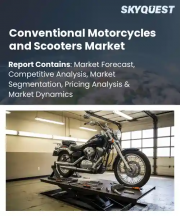
|
시장보고서
상품코드
2091290
기존 오토바이 및 스쿠터 시장 규모, 점유율, 성장 분석 : 제품 유형별, 배기량별, 구동 기술별, 최종 용도별, 가격대별, 판매 채널별, 지역별 - 업계 예측(2026-2033년)Conventional Motorcycles and Scooters Market Size, Share, and Growth Analysis, By Product Type, By Engine Displacement, By Propulsion Technology, By End-Use Application, By Price Range, By Sales Channel, By Region - Industry Forecast 2026-2033 |
||||||

세계의 기존 오토바이 및 스쿠터 시장 규모는 2024년에 13억 달러로 평가되었으며, 2025년 13억 7,000만 달러에서 2033년까지 20억 6,000만 달러로 확대되어 예측 기간(2026-2033년) 동안 CAGR 5.2%로 성장할 것으로 전망됩니다.
50cc에서 250cc의 가솔린 엔진을 탑재한 이륜차를 대상으로 하는 전 세계 기존형 오토바이 및 스쿠터 시장은 자동차를 소유하기 어려운 인구 밀집 지역에서 연비 효율이 뛰어난 이동 수단을 제공하는 데 있어 매우 중요한 역할을 하고 있습니다. 도시 지역의 교통 체증과 도시 생활로의 전환이 기동성이 뛰어난 교통 수단에 대한 수요 확대를 뒷받침하고 있습니다. 다양한 브랜드의 진출로 인해 시장의 매력은 더욱 확대되고 있습니다. 한편, 유로 5나 인도의 BS-VI와 같은 배기가스 규제의 강화는 보다 친환경적인 기술 혁신과 운영 비용 절감을 촉진하고 있습니다. 라이드셰어링 플랫폼의 부상은 새로운 수요를 창출하고 있으며, AI의 발전으로 인해 그 추세가 더욱 가속화되고 있습니다. AI는 실시간 위험 감지 및 적응형 제어를 통해 안전 기능을 강화하고, 궁극적으로는 제조사에게 성장 기회를 제공하며, 고급 라이더 보호에 중점을 둔 프리미엄 시장을 창출하고 있습니다.
세계 기존 오토바이 및 스쿠터 시장의 성장요인
전 세계의 기존 오토바이 및 스쿠터 시장은 도시 확장에 따라 큰 영향을 받고 있습니다. 도시의 확대로 인해 인구 밀도가 높은 지역이 생겨나고, 교통 체증이 심화되는 가운데, 대형 차량의 실용성은 떨어지고 있습니다. 오토바이와 스쿠터는 컴팩트한 크기, 편리한 주차, 뛰어난 기동성을 갖추고 있어 매력적인 대안 수단이 되며, 교통 체증이 심한 환경에서 출퇴근하는 사람들에게 안성맞춤입니다. 도시 지역에 전용 차로와 지원 인프라가 정비됨에 따라 라이더들의 신뢰도가 높아지고, 일상적인 이동 수단으로서의 보급이 확대되고 있습니다. 이러한 추세는 시장의 인지도를 높이고 새로운 경쟁사를 유치할 뿐만 아니라, 혁신을 촉진하여 이 분야의 지속적인 성장을 뒷받침하는 한편, 합리적인 가격의 이동 수단을 찾는 신흥 경제국들에게도 어필하고 있습니다.
세계 기존 오토바이 및 스쿠터 시장의 제약요인
연료비 급등은 기존 오토바이 및 스쿠터와 관련된 운영 비용을 대폭 증가시켜, 예산을 중시하는 소비자들의 구매 결정에 영향을 미치고 있습니다. 운송 비용이 상승함에 따라, 많은 잠재적 구매자들은 구매를 미루거나, 장기적으로 볼 때 비용 대비 효율이 더 높은 해결책이 될 수 있는 대중교통이나 전기이륜차 등의 대체 교통수단을 고려할 가능성이 있습니다. 운영 비용 증가에 대한 인식은 기존 연료 구동 모델의 매력을 떨어뜨리고 있으며, 제조사들은 수요 감소에 대응하고 가격 전략을 재검토할 수밖에 없게 되어, 이는 결국 시장 확대를 저해하고 있습니다. 게다가, 차량 대여 업체들도 차량 교체 전략을 재검토하고 있어, 이로 인해 시장의 판매 대수 감소가 더욱 가속화되고 있습니다.
세계 기존 오토바이 및 스쿠터 시장의 동향
세계 기존 오토바이 및 스쿠터 시장에서는 혼잡한 도시 환경에서 효율적인 이동 수단에 대한 수요가 증가함에 따라, 도시 지역의 마이크로모빌리티 솔루션으로의 뚜렷한 전환이 나타나고 있습니다. 도시 계획 담당자들이 교통 체증 완화와 지속가능성 증진을 도모하는 가운데, 소형 이륜차가 통근자들 사이에서 인기를 끌고 있습니다. 각 제조사는 경량 설계, 첨단 안전 기능, 통합된 연결성을 갖춘 제품 라인업을 확충함으로써 이러한 추세에 대응하고 있습니다. 이러한 추세는 카셰어링 서비스나 지자체 차량 함대와의 제휴를 촉진하고 있으며, 특히 젊은 소비자들에게 호응을 얻고 있습니다. 소매업체들은 구매 행태의 변화와 맞춤형 금융 옵션에 대한 수요를 반영하여, 옴니채널 판매 전략과 혁신적인 디지털 모델에 주력함으로써 이러한 변화에 대응하고 있습니다.
자주 묻는 질문
목차
소개
조사 방법
주요 요약
시장 역학과 전망
주요 시장 인사이트
세계의 기존 오토바이 및 스쿠터 시장 규모 : 제품 유형별
세계의 기존 오토바이 및 스쿠터 시장 규모 : 배기량별
세계의 기존 오토바이 및 스쿠터 시장 규모 : 추진 기술별
세계의 기존 오토바이 및 스쿠터 시장 규모 : 최종 용도별
세계의 기존 오토바이 및 스쿠터 시장 규모 : 가격대별
세계의 기존 오토바이 및 스쿠터 시장 규모 : 판매 채널별
세계의 기존 오토바이 및 스쿠터 시장 규모 : 지역별
경쟁 정보
주요 기업 개요
결론과 제안
KSM 26.07.22Global Conventional Motorcycles And Scooters Market size was valued at USD 1.3 Billion in 2024 and is poised to grow from USD 1.37 Billion in 2025 to USD 2.06 Billion by 2033, growing at a CAGR of 5.2% during the forecast period (2026-2033).
The global conventional motorcycles and scooters market, featuring gasoline-powered two-wheelers from 50 cc to 250 cc, plays a crucial role in providing fuel-efficient mobility in densely populated regions where car ownership is often unaffordable. Urban congestion and a shift towards urban living have catalyzed increased demand for agile transportation solutions. The entry of diverse brands has widened the market's appeal, while stricter emissions regulations, such as Euro 5 and India's BS-VI, drive innovation in cleaner technologies and lower operating costs. The rise of ride-hailing platforms creates new demand, further propelled by advancements in AI, which enhances safety features through real-time hazard detection and adaptive controls, ultimately fostering growth opportunities for manufacturers and creating a premium segment focused on advanced rider protection.
Top-down and bottom-up approaches were used to estimate and validate the size of the Global Conventional Motorcycles And Scooters market and to estimate the size of various other dependent submarkets. The research methodology used to estimate the market size includes the following details: The key players in the market were identified through secondary research, and their market shares in the respective regions were determined through primary and secondary research. This entire procedure includes the study of the annual and financial reports of the top market players and extensive interviews for key insights from industry leaders such as CEOs, VPs, directors, and marketing executives. All percentage shares split, and breakdowns were determined using secondary sources and verified through Primary sources. All possible parameters that affect the markets covered in this research study have been accounted for, viewed in extensive detail, verified through primary research, and analyzed to get the final quantitative and qualitative data.
Global Conventional Motorcycles And Scooters Market Segments Analysis
Global conventional motorcycles and scooters market is segmented by product type, engine displacement, propulsion technology, end-use application, price range, sales channel and region. Based on product type, the market is segmented into Conventional Motorcycles, Conventional Scooters and Mopeds. Based on engine displacement, the market is segmented into Under 150cc, 150cc-250cc, 250cc-500cc and Above 500cc. Based on propulsion technology, the market is segmented into Two-Stroke Engines and Four-Stroke Engines. Based on end-use application, the market is segmented into Personal Mobility, Commuting, Commercial Delivery Services, Last-Mile Delivery Services, Sports, Racing and Recreation. Based on price range, the market is segmented into Budget Economy, Mid-Range, Premium and Luxury. Based on sales channel, the market is segmented into Franchise Dealerships, Independent Retailers, Online Sales and Direct Sales. Based on region, the market is segmented into North America, Europe, Asia Pacific, Latin America and Middle East & Africa.
Driver of the Global Conventional Motorcycles And Scooters Market
The global market for conventional motorcycles and scooters is significantly influenced by urban expansion, which leads to densely populated areas where traffic congestion makes larger vehicles less practical. Motorcycles and scooters present an appealing alternative due to their compact size, easy parking, and superior maneuverability, making them ideal for commuters in congested environments. As cities increasingly develop dedicated lanes and supportive infrastructure, confidence among riders grows, fostering greater adoption among everyday travelers. This trend not only boosts market visibility and attracts new competitors but also stimulates innovation, promoting sustained growth in the sector while appealing to emerging economies looking for affordable mobility options.
Restraints in the Global Conventional Motorcycles And Scooters Market
The rising cost of fuel significantly increases the operating expenses associated with conventional motorcycles and scooters, impacting affordability for budget-conscious consumers. As transportation costs rise, many potential buyers might delay their purchases or consider alternative transportation options such as public transit or electric two-wheelers, which offer more cost-effective long-term solutions. The perception of increased ongoing costs undermines the appeal of traditional fuel-powered models, forcing manufacturers to navigate declining demand and reevaluate their pricing strategies, which ultimately hampers market expansion. Moreover, fleet operators are also revisiting their vehicle replacement strategies, further contributing to reduced sales volumes in the market.
Market Trends of the Global Conventional Motorcycles And Scooters Market
The Global Conventional Motorcycles and Scooters market is witnessing a notable shift towards urban micro-mobility solutions, driven by the growing need for efficient transport in congested urban environments. As city planners seek to alleviate traffic woes and promote sustainability, compact two-wheelers are gaining traction among commuters. Manufacturers are responding by enhancing their offerings with lightweight designs, advanced safety features, and integrated connectivity. This trend is fostering collaborations with ride-sharing services and municipal fleets, particularly appealing to younger consumers. Retailers are adapting by focusing on omnichannel sales strategies and innovative digital models, reflecting changing purchasing behaviors and the demand for personalized financing options.
Table of Contents
Introduction
- Objectives of the Study
- Market Definition & Scope
Research Methodology
- Research Process
- Secondary & Primary Data Methods
- Market Size Estimation Methods
Executive Summary
- Global Market Outlook
- Key Market Highlights
- Segmental Overview
- Competition Overview
Market Dynamics & Outlook
- Macro-Economic Indicators
- Drivers & Opportunities
- Restraints & Challenges
- Supply Side Trends
- Demand Side Trends
- Porters Analysis & Impact
- Competitive Rivalry
- Threat of Substitute
- Bargaining Power of Buyers
- Threat of New Entrants
- Bargaining Power of Suppliers
Key Market Insights
- Key Success Factors
- Market Impacting Factors
- Top Investment Pockets
- Ecosystem Mapping
- Market Attractiveness Index 2025
- PESTEL Analysis
- Regulatory Landscape
Global Conventional Motorcycles and Scooters Market Size by Product Type & CAGR (2026-2033)
- Market Overview
- Conventional Motorcycles
- Conventional Scooters
- Mopeds
Global Conventional Motorcycles and Scooters Market Size by Engine Displacement & CAGR (2026-2033)
- Market Overview
- Under 150cc
- 150cc-250cc
- 250cc-500cc
- Above 500cc
Global Conventional Motorcycles and Scooters Market Size by Propulsion Technology & CAGR (2026-2033)
- Market Overview
- Two-Stroke Engines
- Four-Stroke Engines
Global Conventional Motorcycles and Scooters Market Size by End-Use Application & CAGR (2026-2033)
- Market Overview
- Personal Mobility
- Commuting
- Commercial Delivery Services
- Last-Mile Delivery Services
- Sports
- Racing
- Recreation
Global Conventional Motorcycles and Scooters Market Size by Price Range & CAGR (2026-2033)
- Market Overview
- Budget Economy
- Mid-Range
- Premium
- Luxury
Global Conventional Motorcycles and Scooters Market Size by Sales Channel & CAGR (2026-2033)
- Market Overview
- Franchise Dealerships
- Independent Retailers
- Online Sales
- Direct Sales
Global Conventional Motorcycles and Scooters Market Size & CAGR (2026-2033)
- North America (Product Type, Engine Displacement, Propulsion Technology, End-Use Application, Price Range, Sales Channel)
- US
- Canada
- Europe (Product Type, Engine Displacement, Propulsion Technology, End-Use Application, Price Range, Sales Channel)
- Germany
- Spain
- France
- UK
- Italy
- Rest of Europe
- Asia Pacific (Product Type, Engine Displacement, Propulsion Technology, End-Use Application, Price Range, Sales Channel)
- China
- India
- Japan
- South Korea
- Rest of Asia-Pacific
- Latin America (Product Type, Engine Displacement, Propulsion Technology, End-Use Application, Price Range, Sales Channel)
- Mexico
- Brazil
- Rest of Latin America
- Middle East & Africa (Product Type, Engine Displacement, Propulsion Technology, End-Use Application, Price Range, Sales Channel)
- GCC Countries
- South Africa
- Rest of Middle East & Africa
Competitive Intelligence
- Top 5 Player Comparison
- Market Positioning of Key Players, 2025
- Strategies Adopted by Key Market Players
- Recent Developments in the Market
- Company Market Share Analysis, 2025
- Company Profiles of All Key Players
- Company Details
- Product Portfolio Analysis
- Company's Segmental Share Analysis
- Revenue Y-O-Y Comparison (2023-2025)
Key Company Profiles
- Honda Motor Co., Ltd.
- Company Overview
- Business Segment Overview
- Financial Updates
- Key Developments
- Yamaha Motor Co., Ltd.
- Company Overview
- Business Segment Overview
- Financial Updates
- Key Developments
- Suzuki Motor Corporation
- Company Overview
- Business Segment Overview
- Financial Updates
- Key Developments
- Kawasaki Heavy Industries, Ltd.
- Company Overview
- Business Segment Overview
- Financial Updates
- Key Developments
- Hero MotoCorp Ltd
- Company Overview
- Business Segment Overview
- Financial Updates
- Key Developments
- Bajaj Auto Ltd
- Company Overview
- Business Segment Overview
- Financial Updates
- Key Developments
- TVS Motor Company Limited
- Company Overview
- Business Segment Overview
- Financial Updates
- Key Developments
- Piaggio & C. S.p.A.
- Company Overview
- Business Segment Overview
- Financial Updates
- Key Developments
- KTM AG
- Company Overview
- Business Segment Overview
- Financial Updates
- Key Developments
- Harley-Davidson, Inc.
- Company Overview
- Business Segment Overview
- Financial Updates
- Key Developments
- BMW Group
- Company Overview
- Business Segment Overview
- Financial Updates
- Key Developments
- Triumph Motorcycles Ltd
- Company Overview
- Business Segment Overview
- Financial Updates
- Key Developments
- Ducati Motor Holding S.p.A.
- Company Overview
- Business Segment Overview
- Financial Updates
- Key Developments
- Lifan Technology Co., Ltd.
- Company Overview
- Business Segment Overview
- Financial Updates
- Key Developments
- Loncin Motor Co., Ltd.
- Company Overview
- Business Segment Overview
- Financial Updates
- Key Developments
- Zongshen Power Machinery Co., Ltd.
- Company Overview
- Business Segment Overview
- Financial Updates
- Key Developments
- SYMsan Motorcycle Co., Ltd.
- Company Overview
- Business Segment Overview
- Financial Updates
- Key Developments
- Kymco
- Company Overview
- Business Segment Overview
- Financial Updates
- Key Developments
- Benelli Q.J.
- Company Overview
- Business Segment Overview
- Financial Updates
- Key Developments
- Royal Enfield
- Company Overview
- Business Segment Overview
- Financial Updates
- Key Developments