
|
시장보고서
상품코드
2102310
농약 탱크 시장 규모, 점유율, 성장 분석 : 유형별, 용도별, 용량별, 지역별 - 업계 예측(2026-2033년)Agrochemical Tank Market Size, Share, and Growth Analysis, By Type (Vertical Tanks, Horizontal Tanks), By Application (Water Storage, Fertilizer Storage), By Capacity, By Region - Industry Forecast 2026-2033 |
||||||

세계의 농약 탱크 시장 규모는 2024년에 15억 달러로 평가되었으며, 2025년 15억 7,000만 달러에서 2033년까지 22억 3,000만 달러로 확대되어 예측 기간(2026-2033년) 동안 CAGR 4.5%로 성장할 것으로 전망됩니다.
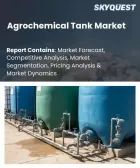
세계 농약 탱크 시장에는 비료 및 농약과 같은 농업용 화학제품을 저장, 운송, 살포하는 데 필수적인 용기 및 공급 시스템이 포함됩니다. 기본적인 금속 드럼통에서 환경 기준을 준수하는 첨단 폴리에틸렌 및 복합 소재 탱크로의 전환은 살포 작업의 안전성과 정밀성에 대한 수요가 증가하고 있음을 여실히 보여줍니다. 이러한 변화는 신흥국에서의 기계화 농업 확대를 반영하며, 더 크고 내구성이 뛰어난 탱크에 대한 수요를 높이는 동시에 스마트 계량과 같은 혁신적인 기술에 대한 투자를 촉진하고 있습니다. 지속가능한 농업 실천으로 인해 신뢰할 수 있는 탱크 인프라에 대한 수요가 증가하고 있으며, IoT를 활용한 모니터링의 가치가 부각되고 있습니다. 이는 잔량 및 유량에 관한 실시간 데이터를 제공함으로써 효율성을 향상시킵니다. 이를 통해 살포 정밀도가 향상되고 낭비가 줄어들며 생산성이 높아지므로, 시장 성장을 견인하고 지속가능한 농업 솔루션에 대한 투자를 유치하고 있습니다.
세계 농약 탱크 시장의 성장요인
각 지역에서 작물 수확량 증대에 대한 수요가 높아짐에 따라 효과적인 저장 솔루션에 대한 수요가 증가하고 있으며, 농약 탱크는 비료, 농약, 생장 조절제를 보관하는 데 있어 매우 중요한 역할을 하고 있습니다. 농업 생산자들이 재배 방식을 확대하고 더욱 집약적인 접근 방식을 도입함에 따라, 제품 품질을 유지하고 환경을 보호할 수 있는 내구성과 내식성이 뛰어난 탱크의 필요성이 매우 중요해지고 있습니다. 이러한 수요 증가에 따라 제조업체들은 혁신을 추진하고, 농업 분야의 변화하는 요구에 대응하며, 진화하는 규제 기준을 준수하는 첨단 소재 및 모듈식 설계에 투자하고 있으며, 궁극적으로 더 지속가능한 세계 농약 산업의 구축에 기여하고 있습니다.
세계 농약 탱크 시장의 제약요인
세계 농약 탱크 시장은 저장 탱크의 제조, 시험, 폐기에 관한 엄격한 기준을 규정하는 환경 규제로 인해 큰 제약에 직면해 있습니다. 이러한 규제를 준수하기 위해서는 대개 높은 비용이 드는 소재 개선이나 대규모 인증 절차가 필요합니다. 기업은 자사 탱크가 누출 방지 및 내식성을 갖추고 가혹한 기상 조건을 견딜 수 있음을 보장해야 하며, 이로 인해 개발 기간이 길어지고 생산 비용이 상승할 가능성이 있습니다. 이러한 규제상의 과제는 신규 진입 기업의 시장 진입을 가로막고, 제품 혁신의 속도를 늦추며, 궁극적으로는 시장 확대를 저해할 우려가 있습니다. 왜냐하면 기업들은 매출 성장에 주력하기보다는 규제 준수를 위한 노력에 자원을 할당할 수밖에 없기 때문입니다.
세계 농약 탱크 시장 동향
세계 농약 탱크 시장에서는 농업 분야의 친환경적 노력에 대한 중요성이 높아지고 있음을 반영하여, 지속가능한 제형으로의 대대적인 전환이 진행되고 있습니다. 이러한 동향은 저독성 솔루션에 대한 수요 증가에 부응하기 위해 제조사들이 유효 성분 및 운반액을 재조제하는 것으로 특징지어지며, 토양 잔류물을 최소화하고 생분해성을 높이는 제품에 대한 소비자의 선호도 상승에 대응하고 있습니다. 연구 기관과의 공동 연구, 그린 케미스트리 원칙의 도입, 그리고 혁신적인 포장 솔루션은 폐기물 감축과 밸류체인 재구축에 기여하기 때문에 매우 중요한 요소로 자리 잡고 있습니다. 이러한 진화는 생태계 보전을 촉진할 뿐만 아니라, 지속가능성에 초점을 맞춘 새로운 시장 부문의 창출로도 이어지고 있습니다.
자주 묻는 질문
목차
소개
조사 방법
주요 요약
시장 역학과 전망
주요 시장 인사이트
세계의 농약 탱크 시장 규모 : 유형별
세계의 농약 탱크 시장 규모 : 용도별
세계의 농약 탱크 시장 규모 : 용량(사이즈)별
세계의 농약 탱크 시장 규모 : 지역별
경쟁 정보
주요 기업 개요
결론과 제안
KSM 26.08.05Global Agrochemical Tank Market size was valued at USD 1.5 Billion in 2024 and is poised to grow from USD 1.57 Billion in 2025 to USD 2.23 Billion by 2033, growing at a CAGR of 4.5% during the forecast period (2026-2033).
The global agrochemical tank market encompasses essential containers and dispensing systems for storing, transporting, and applying agricultural chemicals like fertilizers and pesticides. Transitioning from basic metal drums to advanced, environmentally compliant polyethylene and composite tanks highlights a demand for safety and precision in applications. This change mirrors the growth of mechanized farming in emerging economies, boosting the need for larger and more resilient tanks, stimulating investments in innovative technologies like smart metering. Sustainable farming practices intensify the demand for reliable tank infrastructure, underscoring the value of IoT-enabled monitoring, which enhances efficiency by providing real-time data on levels and flow. This facilitates better application precision, reduces waste, and increases productivity, thus driving the market's growth and attracting investment in sustainable agricultural solutions.
Top-down and bottom-up approaches were used to estimate and validate the size of the Global Agrochemical Tank market and to estimate the size of various other dependent submarkets. The research methodology used to estimate the market size includes the following details: The key players in the market were identified through secondary research, and their market shares in the respective regions were determined through primary and secondary research. This entire procedure includes the study of the annual and financial reports of the top market players and extensive interviews for key insights from industry leaders such as CEOs, VPs, directors, and marketing executives. All percentage shares split, and breakdowns were determined using secondary sources and verified through Primary sources. All possible parameters that affect the markets covered in this research study have been accounted for, viewed in extensive detail, verified through primary research, and analyzed to get the final quantitative and qualitative data.
Global Agrochemical Tank Market Segments Analysis
Global agrochemical tank market is segmented by type, application, capacity (size) and region. Based on type, the market is segmented into Vertical Tanks, Horizontal Tanks and Conical Tanks. Based on application, the market is segmented into Water Storage, Fertilizer Storage, Chemical Storage and Others. Based on capacity (size), the market is segmented into 200 - 500 Litres, 500 - 1,000 Litres, 1,000 - 15,000 Litres, 15,000 - 30,000 Litres and Above 30,000 Litres. Based on region, the market is segmented into North America, Europe, Asia Pacific, Latin America and Middle East & Africa.
Driver of the Global Agrochemical Tank Market
The escalating need for improved crop yields in various regions drives the demand for effective storage solutions, with agrochemical tanks playing a crucial role in containing fertilizers, pesticides, and growth regulators. As agricultural producers extend their cultivation practices and implement more intensive approaches, the necessity for durable, corrosion-resistant tanks that safeguard product integrity and protect the environment becomes paramount. This rising demand leads manufacturers to innovate, investing in advanced materials and modular designs that meet the changing needs of agronomy and comply with evolving regulatory standards, ultimately contributing to a more sustainable global agrochemical landscape.
Restraints in the Global Agrochemical Tank Market
The Global Agrochemical Tank market faces significant constraints due to strict environmental regulations that establish demanding criteria for the production, testing, and disposal of storage tanks. Compliance with these regulations often necessitates expensive material enhancements and extensive certification procedures. Businesses must ensure that their tanks are leak-proof, corrosion-resistant, and able to endure harsh weather conditions, which can prolong development timelines and elevate production costs. These regulatory challenges may dissuade new players from entering the market, slow down the pace of product innovation, and ultimately hinder market expansion as companies are compelled to divert resources towards compliance efforts rather than focusing on sales growth.
Market Trends of the Global Agrochemical Tank Market
The Global Agrochemical Tank market is experiencing a significant shift towards sustainable formulations, reflecting an increasing emphasis on environmentally friendly practices within the agriculture sector. This trend is characterized by manufacturers reformulating active ingredients and carrier liquids to meet the rising demand for low-toxicity solutions, catering to the growing consumer preference for products that minimize soil residue and enhance biodegradability. Collaborative efforts with research institutions, the adoption of green chemistry principles, and innovative packaging solutions are becoming pivotal, as they contribute to reducing waste and reshaping value chains. This evolution is not only fostering ecological stewardship but also creating new market segments focused on sustainability.
Table of Contents
Introduction
- Objectives of the Study
- Market Definition & Scope
Research Methodology
- Research Process
- Secondary & Primary Data Methods
- Market Size Estimation Methods
Executive Summary
- Global Market Outlook
- Key Market Highlights
- Segmental Overview
- Competition Overview
Market Dynamics & Outlook
- Macro-Economic Indicators
- Drivers & Opportunities
- Restraints & Challenges
- Supply Side Trends
- Demand Side Trends
- Porters Analysis & Impact
- Competitive Rivalry
- Threat of Substitute
- Bargaining Power of Buyers
- Threat of New Entrants
- Bargaining Power of Suppliers
Key Market Insights
- Key Success Factors
- Market Impacting Factors
- Top Investment Pockets
- Ecosystem Mapping
- Market Attractiveness Index 2025
- PESTEL Analysis
- Regulatory Landscape
- Value Chain Analysis
- Case Studies
- Raw Material Analysis
Global Agrochemical Tank Market Size by Type & CAGR (2026-2033)
- Market Overview
- Vertical Tanks
- Horizontal Tanks
- Conical Tanks
Global Agrochemical Tank Market Size by Application & CAGR (2026-2033)
- Market Overview
- Water Storage
- Fertilizer Storage
- Chemical Storage
- Others
Global Agrochemical Tank Market Size by Capacity (Size) & CAGR (2026-2033)
- Market Overview
- 200 - 500 Litres
- 500 - 1000 Litres
- 1000 - 15000 Litres
- 15000 - 30000 Litres
- Above 30000 Litres
Global Agrochemical Tank Market Size & CAGR (2026-2033)
- North America (Type, Application, Capacity (Size))
- US
- Canada
- Europe (Type, Application, Capacity (Size))
- Germany
- Spain
- France
- UK
- Italy
- Rest of Europe
- Asia Pacific (Type, Application, Capacity (Size))
- China
- India
- Japan
- South Korea
- Rest of Asia-Pacific
- Latin America (Type, Application, Capacity (Size))
- Mexico
- Brazil
- Rest of Latin America
- Middle East & Africa (Type, Application, Capacity (Size))
- GCC Countries
- South Africa
- Rest of Middle East & Africa
Competitive Intelligence
- Top 5 Player Comparison
- Market Positioning of Key Players, 2025
- Strategies Adopted by Key Market Players
- Recent Developments in the Market
- Company Market Share Analysis, 2025
- Company Profiles of All Key Players
- Company Details
- Product Portfolio Analysis
- Company's Segmental Share Analysis
- Revenue Y-O-Y Comparison (2023-2025)
Key Company Profiles
- Snyder Industries, LLC
- Company Overview
- Business Segment Overview
- Financial Updates
- Key Developments
- Norwesco, Inc.
- Company Overview
- Business Segment Overview
- Financial Updates
- Key Developments
- L.F. Manufacturing, Inc.
- Company Overview
- Business Segment Overview
- Financial Updates
- Key Developments
- Assmann Corporation of America
- Company Overview
- Business Segment Overview
- Financial Updates
- Key Developments
- Chemical Containers, Inc.
- Company Overview
- Business Segment Overview
- Financial Updates
- Key Developments
- Enduramaxx Limited
- Company Overview
- Business Segment Overview
- Financial Updates
- Key Developments
- ProMinent GmbH
- Company Overview
- Business Segment Overview
- Financial Updates
- Key Developments
- Tank Holding Corporation
- Company Overview
- Business Segment Overview
- Financial Updates
- Key Developments
- Poly Processing Company, LLC
- Company Overview
- Business Segment Overview
- Financial Updates
- Key Developments
- Grupo Rotoplas, S.A.B. de C.V.
- Company Overview
- Business Segment Overview
- Financial Updates
- Key Developments
- Polymaster Group
- Company Overview
- Business Segment Overview
- Financial Updates
- Key Developments
- Sintex Industries Limited
- Company Overview
- Business Segment Overview
- Financial Updates
- Key Developments
- Sherman Roto Tank LLC
- Company Overview
- Business Segment Overview
- Financial Updates
- Key Developments
- Meridian Manufacturing Inc.
- Company Overview
- Business Segment Overview
- Financial Updates
- Key Developments
- Balmoral Tanks Limited
- Company Overview
- Business Segment Overview
- Financial Updates
- Key Developments
- Balson Polyplast Pvt. Ltd.
- Company Overview
- Business Segment Overview
- Financial Updates
- Key Developments
- NEL Tanks Pty Ltd
- Company Overview
- Business Segment Overview
- Financial Updates
- Key Developments
- Forti Technology Group
- Company Overview
- Business Segment Overview
- Financial Updates
- Key Developments
- Prettech Machinery Making Co., Ltd.
- Company Overview
- Business Segment Overview
- Financial Updates
- Key Developments
- Stafco Inc.
- Company Overview
- Business Segment Overview
- Financial Updates
- Key Developments


