
|
시장보고서
상품코드
2102508
트리 가드 시장 규모, 점유율 및 성장 분석 : 소재별, 제품 유형별, 용도별, 최종사용자별, 유통 채널별, 지역별 - 업계 예측(2026-2033년)Tree Guards Market Size, Share, and Growth Analysis, By Material (Steel, Plastic), By Product Type, By Application, By End User, By Distribution Channel, By Region - Industry Forecast 2026-2033 |
||||||

세계의 트리 가드 시장 규모는 2024년에 3억 1,240만 달러로 평가되며, 2025년 3억 3,052만 달러에서 2033년까지 5억 1,890만 달러로 확대하며, 예측 기간(2026-2033년)에 CAGR 5.8%로 성장할 것으로 전망되고 있습니다.
전 세계 트리 가드 시장은 플라스틱, 금속, 생분해성 물질 등의 소재로 제작된 보호 장치로 구성되어 있으며, 초식동물의 먹이 피해나 경쟁 등 다양한 위협으로부터 어린 묘목을 보호하도록 설계되었습니다. 건강한 묘목은 탄소 고정 및 생태계 안정에 크게 기여하므로 이 시장은 산림 재생 노력에서 매우 중요한 역할을 수행하고 있습니다. 도시 녹화 노력이 성장의 주요 원동력이 되고 있으며, 지자체는 묘목을 보호함으로써 장기적인 유지 관리 비용을 절감하고 공중 보건을 향상시킬 수 있다고 인식하고 있습니다. 실시간 모니터링과 데이터 분석을 가능하게 하는 IoT 기술이 트리 가드에 점점 더 많이 통합됨에 따라 시장의 확산이 더욱 가속화되고 있습니다. 이러한 혁신적인 접근 방식은 수목 관리를 개선할 뿐만 아니라 사망률을 낮추는 데에도 기여하여, 더욱 푸르른 지역 사회를 조성하고 지속가능한 도시 개발을 위한 자금 증액의 정당성을 지원하고 있습니다.
전 세계 트리 가드 시장의 성장 요인
전 세계 트리 가드 시장은 수목 보전에 중점을 둔 포괄적인 녹화 정책을 시행하는 도시 지자체에 의해 주도되며, 인상적인 성장을 달성하고 있습니다. 이러한 프로그램은 트리 가드와 같은 보호 조치에 대한 인식을 높이고, 기획 담당자와 개발자가 프로젝트 설계시 수목 보호를 우선시하도록 유도하고 있습니다. 어린 나무를 기계적 손상으로부터 확실하게 보호하기 위해서는 신뢰성이 높고 사용하기 편리한 가드의 필요성이 필수적입니다. 도시가 지속가능성 목표 달성과 도시 수관(樹冠)의 건전성 향상에 힘쓰는 가운데, 공공, 민간, 비영리 부문의 트리 가드 조달량이 현저히 증가하고 있으며, 이는 각 지역에서의 시장 확대를 더욱 지원하고 있습니다.
전 세계 트리 가드 시장의 제약 요인
고품질의 트리 가드는 자재비, 제조비, 전문 설치 서비스비 등 막대한 초기 비용이 수반되므로 부동산 소유주나 개발업자에게는 과제가 되고 있습니다. 예산이 제한적인 경우, 의사결정자는 가격은 더 저렴하지만 효과가 낮은 대안을 선택하거나, 보호 조치 자체를 포기할 가능성이 있으며, 이는 시장 확산을 저해하는 요인이 될 수 있습니다. 이러한 가격 민감도는 재정적 인센티브가 부족한 지역에서 특히 두드러지며, 조직은 수관(樹冠)에 대한 장기적인 이익보다 단기적인 현금 흐름에 중점을 두는 경향이 있습니다. 그 결과, 이러한 동향은 특히 신흥 경제국에서 시장 전체의 성장을 억제하는 한편, 건설 회사의 경쟁 우위를 유지하는 데 기여하고 있습니다.
전 세계 트리 가드 시장 동향
지속가능한 도시 계획에 대한 노력이 탄력을 받으면서 전 세계 트리 가드 시장은 인상적인 성장을 달성하고 있습니다. 지자체는 인프라를 정비하면서도 성숙한 수관을 보전하기 위해 개발 프로젝트에 트리 가드 솔루션을 도입하는 사례가 늘고 있습니다. 지속가능한 녹지 회랑으로의 이러한 중점 전환은 도시 녹지를 보호하는 것의 생태학적 및 사회적 이점을 부각시키고 있습니다. 구역 지정 규제의 진화로 인해 개발업자들은 도시 경관과 조화를 이루는 보호 장벽을 도입해야만 하며, 이는 시장에서 더 광범위한 수용을 촉진하고 있습니다. 그 결과, 제조사들은 규제 기준과 지역 사회의 선호도에 부합하는 친환경 소재 및 맞춤형 디자인 개발을 통해 이러한 수요에 부응하고 있으며, 이는 해당 분야의 시장 확대와 혁신을 더욱 촉진하고 있습니다.
자주 묻는 질문
목차
서론
조사 방법
개요
시장 역학과 전망
주요 시장 인사이트
세계의 트리 가드 시장 규모 : 소재별
세계의 트리 가드 시장 규모 : 제품 유형별
세계의 트리 가드 시장 규모 : 용도별
세계의 트리 가드 시장 규모 : 최종사용자별
세계의 트리 가드 시장 규모 : 유통 채널별
세계의 트리 가드 시장 규모 : 지역별
경쟁 정보
주요 기업 개요
결론과 제안
KSA 26.08.05Global Tree Guards Market size was valued at USD 312.4 Million in 2024 and is poised to grow from USD 330.52 Million in 2025 to USD 518.9 Million by 2033, growing at a CAGR of 5.8% during the forecast period (2026-2033).
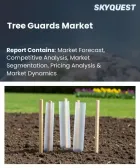
The global tree guard market consists of protective devices made from materials like plastic, metal, and biodegradable substances, designed to protect young saplings from various threats including herbivory and competition. This market plays a crucial role in reforestation efforts, as healthy seedlings contribute significantly to carbon sequestration and ecosystem stability. Urban greening initiatives act as the primary driver for growth, with municipalities recognizing that safeguarding saplings can lower long-term maintenance expenses and enhance public health. The increasing integration of IoT technology into tree guards, which enables real-time monitoring and data analysis, further accelerates market adoption. This innovative approach not only enhances tree care but also leads to reduced mortality rates, fostering greener neighborhoods and justifying increased funding for sustainable urban development.
Top-down and bottom-up approaches were used to estimate and validate the size of the Global Tree Guards market and to estimate the size of various other dependent submarkets. The research methodology used to estimate the market size includes the following details: The key players in the market were identified through secondary research, and their market shares in the respective regions were determined through primary and secondary research. This entire procedure includes the study of the annual and financial reports of the top market players and extensive interviews for key insights from industry leaders such as CEOs, VPs, directors, and marketing executives. All percentage shares split, and breakdowns were determined using secondary sources and verified through Primary sources. All possible parameters that affect the markets covered in this research study have been accounted for, viewed in extensive detail, verified through primary research, and analyzed to get the final quantitative and qualitative data.
Global Tree Guards Market Segments Analysis
Global tree guards market is segmented by material, product type, application, end user, distribution channel and region. Based on material, the market is segmented into Steel, Plastic, Bamboo, Recycled Composite and Others. Based on product type, the market is segmented into Circular Tree Guards, Square Tree Guards, Mesh Tree Guards, Decorative Tree Guards and Others. Based on application, the market is segmented into Urban Landscaping, Forestry, Agriculture, Parks & Gardens and Others. Based on end user, the market is segmented into Municipal Authorities, Landscaping Companies, Agricultural Users and Others. Based on distribution channel, the market is segmented into Direct Sales, Building & Garden Supply Stores, Online Retail and Others. Based on region, the market is segmented into North America, Europe, Asia Pacific, Latin America and Middle East & Africa.
Driver of the Global Tree Guards Market
The Global Tree Guards market is experiencing significant growth driven by urban municipalities implementing comprehensive greening initiatives focused on tree preservation. These programs heighten awareness of protective measures like tree guards, prompting planners and developers to prioritize tree protection in their project designs. By ensuring that young trees are safeguarded from mechanical damage, the need for reliable and user-friendly guards becomes essential. As cities strive to achieve sustainability goals and enhance urban canopy health, there is a marked increase in the procurement of tree guards by public, private, and nonprofit sectors, further propelling market expansion across various regions.
Restraints in the Global Tree Guards Market
The significant initial cost tied to high-quality tree guards, encompassing materials, manufacturing, and specialized installation services, poses a challenge for property owners and developers. In instances where budgets are tight, decision-makers might lean towards more affordable yet less effective options or forgo protective measures altogether, which can hinder market adoption. This price sensitivity is particularly pronounced in areas lacking financial incentives, leading organizations to focus on short-term cash flow instead of long-term benefits for the canopy. Consequently, this dynamic restrains overall market growth, especially in emerging economies, while maintaining the competitive edge for construction firms.
Market Trends of the Global Tree Guards Market
The Global Tree Guards market is experiencing significant growth as sustainable urban planning initiatives gain momentum. Municipalities are increasingly integrating tree guard solutions into development projects to preserve mature tree canopies while enhancing infrastructure. This shift in focus towards sustainable green corridors reveals the ecological and social advantages of protecting urban greenery. Evolving zoning regulations compel developers to incorporate protective barriers that harmonize with urban aesthetics, driving broader market acceptance. Consequently, manufacturers are responding to this demand by innovating eco-friendly materials and customizable designs that align with regulatory standards and community preferences, further propelling market expansion and innovation in this sector.
Table of Contents
Introduction
- Objectives of the Study
- Market Definition & Scope
Research Methodology
- Research Process
- Secondary & Primary Data Methods
- Market Size Estimation Methods
Executive Summary
- Global Market Outlook
- Key Market Highlights
- Segmental Overview
- Competition Overview
Market Dynamics & Outlook
- Macro-Economic Indicators
- Drivers & Opportunities
- Restraints & Challenges
- Supply Side Trends
- Demand Side Trends
- Porters Analysis & Impact
- Competitive Rivalry
- Threat of Substitute
- Bargaining Power of Buyers
- Threat of New Entrants
- Bargaining Power of Suppliers
Key Market Insights
- Key Success Factors
- Market Impacting Factors
- Top Investment Pockets
- Ecosystem Mapping
- Market Attractiveness Index 2025
- PESTEL Analysis
- Regulatory Landscape
Global Tree Guards Market Size by Material & CAGR (2026-2033)
- Market Overview
- Steel
- Plastic
- Bamboo
- Recycled Composite
- Others
Global Tree Guards Market Size by Product Type & CAGR (2026-2033)
- Market Overview
- Circular Tree Guards
- Square Tree Guards
- Mesh Tree Guards
- Decorative Tree Guards
- Others
Global Tree Guards Market Size by Application & CAGR (2026-2033)
- Market Overview
- Urban Landscaping
- Forestry
- Agriculture
- Parks & Gardens
- Others
Global Tree Guards Market Size by End User & CAGR (2026-2033)
- Market Overview
- Municipal Authorities
- Landscaping Companies
- Agricultural Users
- Others
Global Tree Guards Market Size by Distribution Channel & CAGR (2026-2033)
- Market Overview
- Direct Sales
- Building & Garden Supply Stores
- Online Retail
- Others
Global Tree Guards Market Size & CAGR (2026-2033)
- North America (Material, Product Type, Application, End User, Distribution Channel)
- US
- Canada
- Europe (Material, Product Type, Application, End User, Distribution Channel)
- Germany
- Spain
- France
- UK
- Italy
- Rest of Europe
- Asia Pacific (Material, Product Type, Application, End User, Distribution Channel)
- China
- India
- Japan
- South Korea
- Rest of Asia-Pacific
- Latin America (Material, Product Type, Application, End User, Distribution Channel)
- Mexico
- Brazil
- Rest of Latin America
- Middle East & Africa (Material, Product Type, Application, End User, Distribution Channel)
- GCC Countries
- South Africa
- Rest of Middle East & Africa
Competitive Intelligence
- Top 5 Player Comparison
- Market Positioning of Key Players, 2025
- Strategies Adopted by Key Market Players
- Recent Developments in the Market
- Company Market Share Analysis, 2025
- Company Profiles of All Key Players
- Company Details
- Product Portfolio Analysis
- Company's Segmental Share Analysis
- Revenue Y-O-Y Comparison (2023-2025)
Key Company Profiles
- Tensar International Corporation
- Company Overview
- Business Segment Overview
- Financial Updates
- Key Developments
- A.M. Leonard, Inc.
- Company Overview
- Business Segment Overview
- Financial Updates
- Key Developments
- Tubex Ltd.
- Company Overview
- Business Segment Overview
- Financial Updates
- Key Developments
- GreenBlue Urban Ltd.
- Company Overview
- Business Segment Overview
- Financial Updates
- Key Developments
- Tree Pro Ltd.
- Company Overview
- Business Segment Overview
- Financial Updates
- Key Developments
- Metsa Group
- Company Overview
- Business Segment Overview
- Financial Updates
- Key Developments
- Suregreen Ltd.
- Company Overview
- Business Segment Overview
- Financial Updates
- Key Developments
- Jacksons Fencing Ltd.
- Company Overview
- Business Segment Overview
- Financial Updates
- Key Developments
- Naylor Industries plc
- Company Overview
- Business Segment Overview
- Financial Updates
- Key Developments
- Treeguard Limited
- Company Overview
- Business Segment Overview
- Financial Updates
- Key Developments
- Green-tech Ltd.
- Company Overview
- Business Segment Overview
- Financial Updates
- Key Developments
- Plant & Plant Ltd.
- Company Overview
- Business Segment Overview
- Financial Updates
- Key Developments
- Tildenet Gardenware Ltd.
- Company Overview
- Business Segment Overview
- Financial Updates
- Key Developments
- Brett Martin Ltd.
- Company Overview
- Business Segment Overview
- Financial Updates
- Key Developments
- Punto Verde S.r.l.
- Company Overview
- Business Segment Overview
- Financial Updates
- Key Developments
- Premier Protective Packaging Ltd.
- Company Overview
- Business Segment Overview
- Financial Updates
- Key Developments
- Rainbow Professional Ltd.
- Company Overview
- Business Segment Overview
- Financial Updates
- Key Developments
- Bamboo Australia Pty Ltd.
- Company Overview
- Business Segment Overview
- Financial Updates
- Key Developments
- Veguemat SA
- Company Overview
- Business Segment Overview
- Financial Updates
- Key Developments
- Arborguard Tree Protection Ltd.
- Company Overview
- Business Segment Overview
- Financial Updates
- Key Developments


