|
시장보고서
상품코드
1945760
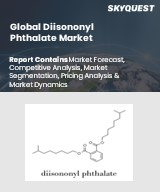
디이소노닐프탈레이트(DINP) 시장 - 세계 산업 규모, 점유율, 동향, 기회, 예측 : 유형별, 용도별, 지역별&경쟁(2021-2031년)Diisononyl Phthalate Market - Global Industry Size, Share, Trends, Opportunity, and Forecast, Segmented By Type, By Application, By Region & Competition, 2021-2031F |
||||||

세계의 디이소노닐프탈레이트(DINP)(DINP) 시장은 2025년 43억 2,000만 달러에서 2031년까지 54억 2,000만 달러로 성장하고, CAGR 3.86%를 나타낼 것으로 예측됩니다.
고분자량 가소제인 DINP는 주로 폴리염화비닐(PVC) 제품의 내후성, 내구성, 유연성을 향상시키기 위해 사용됩니다. 시장 성장은 주로 세계 자동차 산업과 건설 산업의 견고한 발전에 힘입어 이루어지고 있으며, 이들 산업에서는 내구성이 뛰어난 전선 절연체, 탄성 바닥재 솔루션, 지붕용 방수포 제조에 이 화학물질이 필수적입니다. 또한, 범용 대체품에 비해 우수한 안정성과 낮은 휘발성으로 고성능 자동차 내장재 및 언더바디 코팅에 지속적으로 사용되어 변동하는 열 환경에서도 재료의 무결성을 보장합니다.
| 시장 개요 | |
|---|---|
| 예측 기간 | 2027-2031년 |
| 시장 규모 : 2025년 | 43억 2,000만 달러 |
| 시장 규모 : 2031년 | 54억 2,000만 달러 |
| CAGR : 2026-2031년 | 3.86% |
| 가장 성장이 빠른 부문 | 폴리우레탄 |
| 최대 시장 | 아시아태평양 |
한편, 업계는 엄격한 규제 감독과 관련된 큰 장벽에 직면하고 있으며, 시장 접근을 보장하기 위해서는 지속적인 안전성 검증이 필수적입니다. 화학물질 기준이 변화하는 가운데, 제조업체는 다운스트림 사용자에게 제품의 안전성을 보장하기 위해 복잡한 컴플라이언스 요건을 관리해야 하는 상황에 직면해 있습니다. 이 규제 프레임워크에서 중요한 명확성을 제공하는 것은 미국화학공업협회의 고프탈레이트 패널의 지적입니다. 2025년 미국 환경보호청은 유해물질관리법(TSCA)에 따라 평가된 DINP의 약 97%가 의도된 용도에서 안전하다고 판단했습니다. 이 결론은 향후 시장 활동을 유지하기 위해서는 규제 당국과의 지속적인 대화가 필수적이라는 점을 강조하고 있습니다.
시장 성장 촉진요인
자동차 용도의 유연성 PVC 수요 증가가 시장 확대의 주요 원동력이 되고 있으며, 주요 부품에는 DINP와 같은 고성능 감수제가 요구되고 있습니다. DINP는 고온에 견디고 차량 수명 내내 열화에 저항하는 특성으로 인해 자동차 와이어 하네스, 언더바디 코팅, 합성피혁 내장재 제조에 널리 채택되고 있습니다. 이 분야의 성장 궤적은 생산량 증가로 나타나고 있으며, 이는 조립 공정에서 사용되는 가소제의 양과 직접적으로 연관되어 있습니다. 중국자동차공업협회가 2025년 1월에 발표한 데이터에 따르면, 2024년 중국의 연간 자동차 생산량은 3,128만 대에 달할 것으로 예상되며, 제조업체들이 안전과 내구성에 초점을 맞추고 있는 가운데 자동차 산업이 주도하는 재료 수요의 방대한 규모를 뒷받침합니다.
또한, 전 세계 건설 및 인프라 분야의 성장은 특히 지붕용 타포린, 탄성 바닥재, 케이블 피복재 등 장기적인 내후성이 요구되는 제품에서 DINP의 소비를 촉진하고 있습니다. 이 분야는 경제 변동에 영향을 받는 분야로, 인프라 업데이트 및 주택 건설에 대한 필수 요구사항이 건설용 비닐 소재 조달을 계속 지원하고 있습니다. 미국화학공업협회(ACC)의 2024년 12월 기준 예측에 따르면, 미국의 주택 착공 건수는 2025년 140만 가구에 달할 것으로 예상되며, 이는 유연한 염화비닐수지(PVC)의 기초 수요를 뒷받침하는 회복 추세를 보이고 있습니다. 이 산업의 긍정적인 추세는 주요 화학업체들의 실적에도 반영되어, 예를 들어 UPC 테크놀로지(UPC Technology)는 2025년 총 판매량이 전년 대비 2.2% 증가하여 가소제 솔루션에 대한 시장의 지속적인 수요를 뒷받침하고 있습니다.
시장의 과제
엄격한 규제 모니터링은 디이소노닐 프탈레이트 시장의 지속적인 확장에 큰 장벽이 되고 있습니다. 안전성 검증이 지속적으로 요구되는 상황에서 제조업체는 제품 혁신이나 생산 능력 확대가 아닌 컴플라이언스 대책에 막대한 기술적, 자본적 자원을 투입할 수밖에 없는 상황입니다. 이러한 사업 환경은 지속적인 불확실성을 야기하고 있으며, 자동차 및 건설 분야의 다운스트림 사용자들이 장기 공급 계약 체결을 주저하는 원인이 되고 있습니다. 기업들은 특정 배합이 상업적으로 위험하거나 규정 위반이 될 수 있는 화학물질 규정의 변화를 항상 예측해야 하므로, 이러한 주저는 시장의 유동성을 제한합니다.
이러한 복잡한 컴플라이언스 환경을 관리하기 위한 경제적 부담은 광범위한 산업 성과 지표에서도 분명하게 나타나며, 이러한 압력 하에서 모멘텀을 유지하기가 어렵다는 것을 보여줍니다. 유럽화학공업협의회(Cefic)의 2024년판 'Facts &&Figures' 보고서에 따르면, EU27 회원국의 화학산업 설비 가동률은 75% 내외로 역사적 평균을 크게 밑돌고 있는 것으로 나타났습니다. 규제 준수에 따른 높은 비용이 제조업체의 경쟁력을 떨어뜨리는 요인 중 하나로 꼽힙니다. 이 데이터는 규제 압력 증가가 산업 생산을 직접적으로 억제하고 가소제 부문의 견조한 성장에 필요한 투자 의욕을 떨어뜨리는 현실을 보여줍니다.
시장 동향
바이오 유래 및 지속 가능한 DINP 등급의 등장은 제조업체들이 순환 경제의 원칙을 사업 운영에 통합하려는 움직임이 가속화되면서 경쟁 환경을 변화시키고 있습니다. 엄격한 환경 기준과 탄소 배출량 감소를 요구하는 소비자 선호도를 충족시키기 위해 주요 이해관계자들은 가소제의 기술적 성능을 손상시키지 않고 재생 가능한 원료와 재활용 원료를 사용하는 매스밸런스 방식을 도입하고 있습니다. 이러한 전환은 첨단 재활용 인프라에 대한 대규모 산업적 투자에 의해 뒷받침되고 있습니다. 예를 들어, 엑손모빌이 2024년 9월에 발표한 '화학적 재활용 지원'이라는 제목의 기사에 따르면, 엑손모빌의 베이타운 시설은 2024년 3월까지 2만 2,000톤 이상의 플라스틱 폐기물을 처리하여 고성능 첨가제의 지속 가능한 조달에 기여하는 인증된 재활용 플라스틱의 원료로 전환할 계획이라고 밝혔습니다. 원료로 전환했습니다.
동시에 산업 응용 분야에서 DEHP의 대체가 가속화되면서 시장 역학이 재편되고 있으며, DINP와 같은 고분자량 대체품에 대한 선호가 정착되고 있습니다. 저분자량 프탈레이트에 대한 규제 프레임워크가 강화되는 가운데, 가공 및 제조 부문의 다운스트림 사용자들은 공급 안정성과 장기적인 컴플라이언스 확보를 위해 DINP로 빠르게 전환하고 있습니다. 이러한 추세는 주요 지역 제조업체들의 사업 회복력에서도 두드러지게 나타나고 있으며, 이들 적합 대체품에 대한 주문이 급증하고 있습니다. 2024년 11월에 발표된 '2024년 10월기 미감사 연결 영업수익 속보'에 따르면, 회사는 전월 대비 13억 3,000만 대만 달러의 매출 증가를 기록했습니다. 이는 주로 다운스트림 기업들이 생산 재개와 재고 보충에 적극 나서면서 프탈레이트 가소제 주문이 급증한 것이 주요 원인입니다.
자주 묻는 질문
목차
제1장 개요
제2장 조사 방법
제3장 주요 요약
제4장 고객의 소리
제5장 세계의 디이소노닐프탈레이트(DINP)(DINP) 시장 전망
제6장 북미의 디이소노닐프탈레이트(DINP)(DINP) 시장 전망
제7장 유럽의 디이소노닐프탈레이트(DINP)(DINP) 시장 전망
제8장 아시아태평양디이소노닐프탈레이트(DINP)(DINP) 시장 전망
제9장 중동 및 아프리카의 디이소노닐프탈레이트(DINP)(DINP) 시장 전망
제10장 남미의 디이소노닐프탈레이트(DINP)(DINP) 시장 전망
제11장 시장 역학
제12장 시장 동향과 발전
제13장 세계의 디이소노닐프탈레이트(DINP)(DINP) 시장 : SWOT 분석
제14장 Porter의 Five Forces 분석
제15장 경쟁 구도
제16장 전략적 제안
제17장 회사 소개 및 면책조항
LSH 26.03.11The Global Diisononyl Phthalate (DINP) Market is projected to expand from USD 4.32 Billion in 2025 to USD 5.42 Billion by 2031, reflecting a compound annual growth rate of 3.86%. As a high molecular weight plasticizer, DINP is primarily employed to improve the weather resistance, durability, and flexibility of polyvinyl chloride (PVC) goods. The market's growth is fundamentally anchored by strong developments in the global automotive and construction industries, where the chemical is crucial for fabricating durable wire insulation, resilient flooring solutions, and roofing membranes. Additionally, its superior stability and reduced volatility compared to general-purpose alternatives encourage its ongoing use in high-performance automotive interiors and underbody coatings, guaranteeing material integrity despite fluctuating thermal environments.
| Market Overview | |
|---|---|
| Forecast Period | 2027-2031 |
| Market Size 2025 | USD 4.32 Billion |
| Market Size 2031 | USD 5.42 Billion |
| CAGR 2026-2031 | 3.86% |
| Fastest Growing Segment | Polyurethanes |
| Largest Market | Asia Pacific |
Conversely, the industry faces substantial hurdles related to strict regulatory oversight, which necessitates continuous safety verification to secure market access. Manufacturers are compelled to manage intricate compliance requirements to reassure downstream users regarding product safety amidst shifting chemical standards. Offering essential clarity within this regulatory framework, the American Chemistry Council's High Phthalates Panel noted that in 2025, the U.S. Environmental Protection Agency determined that roughly 97% of the DINP volume evaluated under the Toxic Substances Control Act is safe for its intended applications. This conclusion highlights the vital need for persistent regulatory interaction to maintain future market activities.
Market Driver
The escalating demand for flexible PVC within automotive applications acts as a major catalyst for market expansion, requiring high-performance plasticizers like DINP for essential components. DINP is widely applied in manufacturing automotive wire harnesses, underbody coatings, and synthetic leather interiors because of its capacity to endure high temperatures and resist degradation throughout a vehicle's life. The trajectory of this sector is demonstrated by strong manufacturing output, which correlates directly with the volume of plasticizers used in assembly. According to the China Association of Automobile Manufacturers in January 2025, annual automobile production in China hit 31.28 million units in 2024, underscoring the massive scale of material requirements driven by the automotive industry as manufacturers focus on safety and durability.
Furthermore, growth in the global construction and infrastructure sector boosts DINP consumption, especially for products demanding long-term weather resistance like roofing membranes, resilient flooring, and cable jacketing. Although the sector faces economic volatility, the essential requirement for infrastructure renewal and housing sustains the procurement of construction-grade vinyl materials. According to the American Chemistry Council in December 2024, U.S. housing starts were anticipated to rise to 1.40 million units in 2025, indicating a recovery that underpins the baseline demand for flexible PVC. This positive industrial trend is mirrored in the performance of major chemical producers; for instance, UPC Technology Corporation reported a 2.2% rise in total sales volume for the previous year in 2025, reflecting sustained market needs for plasticizer solutions.
Market Challenge
Intense regulatory scrutiny presents a significant obstacle to the continued expansion of the Diisononyl Phthalate market. The incessant need for safety validation forces manufacturers to allocate substantial technical and capital resources toward compliance measures rather than product innovation or capacity growth. This operational climate generates ongoing uncertainty, causing downstream users in the automotive and construction sectors to waver in committing to long-term supply contracts. Such hesitation limits market fluidity, as enterprises must continually forecast potential changes in chemical regulations that could make specific formulations commercially risky or non-compliant.
The economic burden of managing this intricate compliance environment is apparent in broader industrial performance metrics, which illustrate the difficulty of maintaining momentum under such strain. According to the European Chemical Industry Council (Cefic) in its 2024 Facts & Figures report, capacity utilization in the EU27 chemical industry hovered around 75%, a level significantly below the historical average, partly due to the high costs associated with regulatory adherence that place manufacturers at a competitive disadvantage. This data demonstrates how escalating regulatory pressure directly suppresses industrial output and dampens the investment required for the robust growth of the plasticizer sector.
Market Trends
The rise of bio-attributed and sustainable DINP grades is altering the competitive environment as manufacturers increasingly incorporate circular economy principles into their operations. To satisfy strict environmental criteria and consumer preferences for reduced carbon footprints, key stakeholders are implementing mass-balance techniques that use renewable or recycled feedstocks without sacrificing the plasticizer's technical performance. This transition is supported by substantial industrial investments in advanced recycling infrastructure; for example, according to an article by ExxonMobil in September 2024 titled 'Supporting chemical recycling', the company's Baytown facility had processed more than 22,000 metric tons of plastic waste by March 2024, transforming it into raw materials for certified-circular plastics that aid in the sustainable sourcing of high-performance additives.
Concurrently, the accelerated replacement of DEHP in industrial applications is reshaping market dynamics, leading to a consolidated preference for high-molecular-weight alternatives such as DINP. As regulatory frameworks regarding lower-molecular-weight phthalates become more stringent, downstream users in the processing and manufacturing sectors are quickly switching to DINP to guarantee supply stability and long-term compliance. This trend is evident in the operational resilience of major regional producers who are experiencing immediate order growth for these compliant substitutes. According to Nan Ya Plastics Corporation's 'October 2024 non-audited Consolidated Operating Revenue Announcement' in November 2024, the company recorded a month-over-month revenue rise of 1,330 million NTD, largely driven by a spike in orders for phthalate plasticizers as downstream firms actively resumed production and replenishment.
Key Market Players
- BASF SE
- Exxon Mobil Corporation
- Evonik Industries AG
- LG Chem Ltd.
- Mitsubishi Chemical Holdings Corporation
- KLJ Group
- Azelis Group NV
- Aekyung Chemical Co Ltd.
- Nan Ya Plastics Corporation
- UPC Technology Corporation
Report Scope
In this report, the Global Diisononyl Phthalate (DINP) Market has been segmented into the following categories, in addition to the industry trends which have also been detailed below:
Diisononyl Phthalate (DINP) Market, By Type
- PVC
- Acrylics
- Polyurethanes
- Other
Diisononyl Phthalate (DINP) Market, By Application
- Flooring & Wall Covering
- Wires & Cables
- Films & Sheets
- Coated Fabrics
- Consumer Goods
- Other
Diisononyl Phthalate (DINP) Market, By Region
- North America
- United States
- Canada
- Mexico
- Europe
- France
- United Kingdom
- Italy
- Germany
- Spain
- Asia Pacific
- China
- India
- Japan
- Australia
- South Korea
- South America
- Brazil
- Argentina
- Colombia
- Middle East & Africa
- South Africa
- Saudi Arabia
- UAE
Competitive Landscape
Company Profiles: Detailed analysis of the major companies present in the Global Diisononyl Phthalate (DINP) Market.
Available Customizations:
Global Diisononyl Phthalate (DINP) Market report with the given market data, TechSci Research offers customizations according to a company's specific needs. The following customization options are available for the report:
Company Information
- Detailed analysis and profiling of additional market players (up to five).
Table of Contents
1. Product Overview
- 1.1. Market Definition
- 1.2. Scope of the Market
- 1.2.1. Markets Covered
- 1.2.2. Years Considered for Study
- 1.2.3. Key Market Segmentations
2. Research Methodology
- 2.1. Objective of the Study
- 2.2. Baseline Methodology
- 2.3. Key Industry Partners
- 2.4. Major Association and Secondary Sources
- 2.5. Forecasting Methodology
- 2.6. Data Triangulation & Validation
- 2.7. Assumptions and Limitations
3. Executive Summary
- 3.1. Overview of the Market
- 3.2. Overview of Key Market Segmentations
- 3.3. Overview of Key Market Players
- 3.4. Overview of Key Regions/Countries
- 3.5. Overview of Market Drivers, Challenges, Trends
4. Voice of Customer
5. Global Diisononyl Phthalate (DINP) Market Outlook
- 5.1. Market Size & Forecast
- 5.1.1. By Value
- 5.2. Market Share & Forecast
- 5.2.1. By Type (PVC, Acrylics, Polyurethanes, Other)
- 5.2.2. By Application (Flooring & Wall Covering, Wires & Cables, Films & Sheets, Coated Fabrics, Consumer Goods, Other)
- 5.2.3. By Region
- 5.2.4. By Company (2025)
- 5.3. Market Map
6. North America Diisononyl Phthalate (DINP) Market Outlook
- 6.1. Market Size & Forecast
- 6.1.1. By Value
- 6.2. Market Share & Forecast
- 6.2.1. By Type
- 6.2.2. By Application
- 6.2.3. By Country
- 6.3. North America: Country Analysis
- 6.3.1. United States Diisononyl Phthalate (DINP) Market Outlook
- 6.3.1.1. Market Size & Forecast
- 6.3.1.1.1. By Value
- 6.3.1.2. Market Share & Forecast
- 6.3.1.2.1. By Type
- 6.3.1.2.2. By Application
- 6.3.1.1. Market Size & Forecast
- 6.3.2. Canada Diisononyl Phthalate (DINP) Market Outlook
- 6.3.2.1. Market Size & Forecast
- 6.3.2.1.1. By Value
- 6.3.2.2. Market Share & Forecast
- 6.3.2.2.1. By Type
- 6.3.2.2.2. By Application
- 6.3.2.1. Market Size & Forecast
- 6.3.3. Mexico Diisononyl Phthalate (DINP) Market Outlook
- 6.3.3.1. Market Size & Forecast
- 6.3.3.1.1. By Value
- 6.3.3.2. Market Share & Forecast
- 6.3.3.2.1. By Type
- 6.3.3.2.2. By Application
- 6.3.3.1. Market Size & Forecast
- 6.3.1. United States Diisononyl Phthalate (DINP) Market Outlook
7. Europe Diisononyl Phthalate (DINP) Market Outlook
- 7.1. Market Size & Forecast
- 7.1.1. By Value
- 7.2. Market Share & Forecast
- 7.2.1. By Type
- 7.2.2. By Application
- 7.2.3. By Country
- 7.3. Europe: Country Analysis
- 7.3.1. Germany Diisononyl Phthalate (DINP) Market Outlook
- 7.3.1.1. Market Size & Forecast
- 7.3.1.1.1. By Value
- 7.3.1.2. Market Share & Forecast
- 7.3.1.2.1. By Type
- 7.3.1.2.2. By Application
- 7.3.1.1. Market Size & Forecast
- 7.3.2. France Diisononyl Phthalate (DINP) Market Outlook
- 7.3.2.1. Market Size & Forecast
- 7.3.2.1.1. By Value
- 7.3.2.2. Market Share & Forecast
- 7.3.2.2.1. By Type
- 7.3.2.2.2. By Application
- 7.3.2.1. Market Size & Forecast
- 7.3.3. United Kingdom Diisononyl Phthalate (DINP) Market Outlook
- 7.3.3.1. Market Size & Forecast
- 7.3.3.1.1. By Value
- 7.3.3.2. Market Share & Forecast
- 7.3.3.2.1. By Type
- 7.3.3.2.2. By Application
- 7.3.3.1. Market Size & Forecast
- 7.3.4. Italy Diisononyl Phthalate (DINP) Market Outlook
- 7.3.4.1. Market Size & Forecast
- 7.3.4.1.1. By Value
- 7.3.4.2. Market Share & Forecast
- 7.3.4.2.1. By Type
- 7.3.4.2.2. By Application
- 7.3.4.1. Market Size & Forecast
- 7.3.5. Spain Diisononyl Phthalate (DINP) Market Outlook
- 7.3.5.1. Market Size & Forecast
- 7.3.5.1.1. By Value
- 7.3.5.2. Market Share & Forecast
- 7.3.5.2.1. By Type
- 7.3.5.2.2. By Application
- 7.3.5.1. Market Size & Forecast
- 7.3.1. Germany Diisononyl Phthalate (DINP) Market Outlook
8. Asia Pacific Diisononyl Phthalate (DINP) Market Outlook
- 8.1. Market Size & Forecast
- 8.1.1. By Value
- 8.2. Market Share & Forecast
- 8.2.1. By Type
- 8.2.2. By Application
- 8.2.3. By Country
- 8.3. Asia Pacific: Country Analysis
- 8.3.1. China Diisononyl Phthalate (DINP) Market Outlook
- 8.3.1.1. Market Size & Forecast
- 8.3.1.1.1. By Value
- 8.3.1.2. Market Share & Forecast
- 8.3.1.2.1. By Type
- 8.3.1.2.2. By Application
- 8.3.1.1. Market Size & Forecast
- 8.3.2. India Diisononyl Phthalate (DINP) Market Outlook
- 8.3.2.1. Market Size & Forecast
- 8.3.2.1.1. By Value
- 8.3.2.2. Market Share & Forecast
- 8.3.2.2.1. By Type
- 8.3.2.2.2. By Application
- 8.3.2.1. Market Size & Forecast
- 8.3.3. Japan Diisononyl Phthalate (DINP) Market Outlook
- 8.3.3.1. Market Size & Forecast
- 8.3.3.1.1. By Value
- 8.3.3.2. Market Share & Forecast
- 8.3.3.2.1. By Type
- 8.3.3.2.2. By Application
- 8.3.3.1. Market Size & Forecast
- 8.3.4. South Korea Diisononyl Phthalate (DINP) Market Outlook
- 8.3.4.1. Market Size & Forecast
- 8.3.4.1.1. By Value
- 8.3.4.2. Market Share & Forecast
- 8.3.4.2.1. By Type
- 8.3.4.2.2. By Application
- 8.3.4.1. Market Size & Forecast
- 8.3.5. Australia Diisononyl Phthalate (DINP) Market Outlook
- 8.3.5.1. Market Size & Forecast
- 8.3.5.1.1. By Value
- 8.3.5.2. Market Share & Forecast
- 8.3.5.2.1. By Type
- 8.3.5.2.2. By Application
- 8.3.5.1. Market Size & Forecast
- 8.3.1. China Diisononyl Phthalate (DINP) Market Outlook
9. Middle East & Africa Diisononyl Phthalate (DINP) Market Outlook
- 9.1. Market Size & Forecast
- 9.1.1. By Value
- 9.2. Market Share & Forecast
- 9.2.1. By Type
- 9.2.2. By Application
- 9.2.3. By Country
- 9.3. Middle East & Africa: Country Analysis
- 9.3.1. Saudi Arabia Diisononyl Phthalate (DINP) Market Outlook
- 9.3.1.1. Market Size & Forecast
- 9.3.1.1.1. By Value
- 9.3.1.2. Market Share & Forecast
- 9.3.1.2.1. By Type
- 9.3.1.2.2. By Application
- 9.3.1.1. Market Size & Forecast
- 9.3.2. UAE Diisononyl Phthalate (DINP) Market Outlook
- 9.3.2.1. Market Size & Forecast
- 9.3.2.1.1. By Value
- 9.3.2.2. Market Share & Forecast
- 9.3.2.2.1. By Type
- 9.3.2.2.2. By Application
- 9.3.2.1. Market Size & Forecast
- 9.3.3. South Africa Diisononyl Phthalate (DINP) Market Outlook
- 9.3.3.1. Market Size & Forecast
- 9.3.3.1.1. By Value
- 9.3.3.2. Market Share & Forecast
- 9.3.3.2.1. By Type
- 9.3.3.2.2. By Application
- 9.3.3.1. Market Size & Forecast
- 9.3.1. Saudi Arabia Diisononyl Phthalate (DINP) Market Outlook
10. South America Diisononyl Phthalate (DINP) Market Outlook
- 10.1. Market Size & Forecast
- 10.1.1. By Value
- 10.2. Market Share & Forecast
- 10.2.1. By Type
- 10.2.2. By Application
- 10.2.3. By Country
- 10.3. South America: Country Analysis
- 10.3.1. Brazil Diisononyl Phthalate (DINP) Market Outlook
- 10.3.1.1. Market Size & Forecast
- 10.3.1.1.1. By Value
- 10.3.1.2. Market Share & Forecast
- 10.3.1.2.1. By Type
- 10.3.1.2.2. By Application
- 10.3.1.1. Market Size & Forecast
- 10.3.2. Colombia Diisononyl Phthalate (DINP) Market Outlook
- 10.3.2.1. Market Size & Forecast
- 10.3.2.1.1. By Value
- 10.3.2.2. Market Share & Forecast
- 10.3.2.2.1. By Type
- 10.3.2.2.2. By Application
- 10.3.2.1. Market Size & Forecast
- 10.3.3. Argentina Diisononyl Phthalate (DINP) Market Outlook
- 10.3.3.1. Market Size & Forecast
- 10.3.3.1.1. By Value
- 10.3.3.2. Market Share & Forecast
- 10.3.3.2.1. By Type
- 10.3.3.2.2. By Application
- 10.3.3.1. Market Size & Forecast
- 10.3.1. Brazil Diisononyl Phthalate (DINP) Market Outlook
11. Market Dynamics
- 11.1. Drivers
- 11.2. Challenges
12. Market Trends & Developments
- 12.1. Merger & Acquisition (If Any)
- 12.2. Product Launches (If Any)
- 12.3. Recent Developments
13. Global Diisononyl Phthalate (DINP) Market: SWOT Analysis
14. Porter's Five Forces Analysis
- 14.1. Competition in the Industry
- 14.2. Potential of New Entrants
- 14.3. Power of Suppliers
- 14.4. Power of Customers
- 14.5. Threat of Substitute Products
15. Competitive Landscape
- 15.1. BASF SE
- 15.1.1. Business Overview
- 15.1.2. Products & Services
- 15.1.3. Recent Developments
- 15.1.4. Key Personnel
- 15.1.5. SWOT Analysis
- 15.2. Exxon Mobil Corporation
- 15.3. Evonik Industries AG
- 15.4. LG Chem Ltd.
- 15.5. Mitsubishi Chemical Holdings Corporation
- 15.6. KLJ Group
- 15.7. Azelis Group NV
- 15.8. Aekyung Chemical Co Ltd.
- 15.9. Nan Ya Plastics Corporation
- 15.10. UPC Technology Corporation