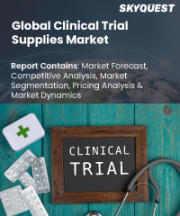
|
시장보고서
상품코드
2040453
임상시험용 물품 시장 규모, 점유율 및 동향 분석 보고서 : 단계별, 서비스별, 제품별, 치료 영역별, 지역별 및 부문별 예측(2026-2033년)Clinical Trial Supplies Market Size, Share & Trends Analysis Report By Phase, By Service, By Product, By Therapeutic Area, By Region, And Segment Forecasts, 2026 - 2033 |
||||||

임상시험용 재료 시장 요약
세계의 임상시험용 물품 시장 규모는 2025년에 57억 달러로 추계되며, 2033년까지 107억 달러에 달할 것으로 예측됩니다.
2026-2033년 CAGR 8.4%로 성장할 것으로 예상됩니다. 이 시장의 성장은 연구개발(R&D) 투자 증가, 만성질환의 유병률 증가, 임상 시험의 글로벌화에 의해 주도되고 있습니다.
이 시장에 기여하는 다른 요인으로는 바이오의약품 및 맞춤형 의료의 확대, 온도 관리 물류 및 JIT(Just In Time) 배송 모델을 포함한 복잡한 공급망 솔루션에 대한 수요 증가를 들 수 있습니다. 또한 제약회사 및 생명공학 기업의 전문 공급업체에 대한 아웃소싱 증가 추세는 시장 확대를 더욱 촉진하고 있습니다.
제약 및 생명공학 기업의 전문 공급업체에 대한 아웃소싱 증가 추세가 시장 확대를 주도하고 있습니다. 또한 바이오의약품과 맞춤의료에 대한 관심이 높아지면서 임상시험용 의약품 공급 산업이 가속화되고 있으며, 전문적인 공급망 솔루션이 요구되고 있습니다. 단클론 항체, 세포치료제, 유전자치료제 등 바이오의약품은 콜드체인 물류를 포함하여 엄격하게 관리된 보관 및 운송 조건을 필요로 합니다. 이러한 치료법이 보편화됨에 따라 공급망 공급업체들은 온도 관리가 필요한 자재를 효율적으로 처리할 수 있는 역량을 강화하고 있습니다.
또한 유전자 프로파일을 기반으로 맞춤형 치료를 제공하는 맞춤형 의료의 부상으로 JIT(Just In Time) 제조 및 배송 모델에 대한 수요가 증가하고 있습니다. 이러한 접근 방식은 낭비를 최소화하고 비용을 절감하며, 환자별로 특화된 약물이 임상 현장에 효율적으로 전달될 수 있도록 보장합니다. 따라서 제약회사는 전문 물류 제공업체와 협력하여 업무를 간소화하고 제품의 무결성을 유지합니다.
분산형 임상시험(DCT)의 채택이 확대되면서 유연한 공급망 전략의 필요성이 더욱 커지고 있으며, 임상시험 수행의 접근성과 효율성을 향상시켜 보다 광범위한 시장 확장을 지원하고 있습니다. 현재 대부분의 임상시험은 개발도상국에서 진행되고 있습니다. 임상시험 비용의 증가와 피험자 모집의 어려움으로 인해 바이오제약 기업은 아시아태평양, 라틴아메리카, 중동, 동유럽, 중동 등의 지역으로 임상시험을 아웃소싱하고 있습니다. 개발도상국의 질병 다양성은 바이오 제약사들이 희귀질환에 대한 임상시험을 진행하는 데에도 큰 도움이 되고 있습니다. 또한 싱가포르와 중국 정부가 생물의학 연구 촉진에 자금을 할당함에 따라 아시아태평양은 바이오제약 기업에게 더 큰 경제적 이익을 가져다주고 있습니다. 라틴아메리카에서는 언어 장벽이 낮아 환자 모집이 용이하고, 사전 동의도 원활하게 이루어지기 때문에 임상시험 과정을 빠르게 진행할 수 있습니다.
또한 글로벌 임상시험용 의약품 공급 산업은 의약품 개발에 대한 R&D 투자 증가와 만성질환의 유병률 증가에 힘입어 성장하고 있습니다. 제약사 및 생명공학 기업은 종양학, 순환기 질환, 희귀질환의 새로운 치료제에 대한 수요가 증가함에 따라 임상시험에 대한 예산 배분을 확대하고 있습니다. 이에 따라 임상시험의 수와 복잡성이 증가하고 있으며, 효율적인 공급망 관리가 요구되고 있습니다.
또한 고령화에 따른 만성질환의 증가와 생활습관의 변화로 인해 임상시험에 대한 수요가 확대되고 있으며, 신뢰할 수 있는 공급 솔루션의 필요성이 더욱 커지고 있습니다. 그 결과, 임상시험용 재료 공급업체들은 임상시험용 재료의 무결성을 보장하기 위해 첨단 물류, 온도 관리 보관 및 실시간 모니터링 기술에 투자하고 있습니다. GMP(Good Manufacturing Practice) 및 GDP(Good Distribution Practice)에 대한 규제 당국의 관심이 높아지면서 규정 준수를 보장하기 위한 강력한 공급망 솔루션이 필요해짐에 따라 시장 성장에 더욱 박차를 가하고 있습니다. 따라서 임상시험이 복잡해짐에 따라 제약회사 및 바이오테크놀러지 기업은 임상시험용 의약품 공급 전문업체에 공급망 관리를 위탁하고 있습니다. 아웃소싱을 통해 스폰서는 임상시험용 의약품의 유통, 포장 및 규제 준수에 대한 전문적인 솔루션을 제공하는 제3자 물류업체, 위탁제조업체(CMO) 및 임상시험수탁기관(CRO)의 전문성을 활용할 수 있습니다. 전문 공급업체와 협력함으로써 기업은 비용을 최적화하고, 업무를 효율화하며, 공급망 혼란에 따른 리스크를 줄일 수 있습니다. 따라서 기능별 서비스 제공업체(FSP)와의 제휴, 엔드투엔드 공급망 솔루션 등 유연한 아웃소싱 모델 도입이 확대되면서 시장 성장을 더욱 가속화하고 있습니다. 임상시험이 신흥 시장과 분산형 모델로 확대됨에 따라 글로벌 확장성과 규제에 대한 전문성을 갖춘 전문 물류 파트너에 대한 수요가 증가하고 있습니다.
자주 묻는 질문
목차
제1장 연구 방법과 범위
제2장 개요
제3장 임상시험용 물품 시장 : 변수, 동향, 범위
제4장 임상시험용 물품 시장 : 단계별 추정·동향 분석
제5장 임상시험용 물품 시장 : 서비스별 추정·동향 분석
제6장 임상시험용 물품 시장 : 제품별 추정·동향 분석
제7장 임상시험용 물품 시장 : 치료 영역별 추정·동향 분석
제8장 임상시험용 물품 시장 : 지역별 추정·동향 분석
제9장 경쟁 구도
KSA 26.06.01Clinical Trial Supplies Market Summary
The global clinical trial supplies market size was estimated at USD 5.7 billion in 2025 and is projected to reach USD 10.7 billion by 2033, growing at a CAGR of 8.4% from 2026 to 2033. The market growth is driven by increasing R&D investments, the rising prevalence of chronic diseases, and the globalization of clinical trials.
Some other factors contributing to the market are the expansion of biologics and personalized medicine, increased demand for complex supply chain solutions, including temperature-sensitive logistics and just-in-time delivery models. Furthermore, growing outsourcing trends among pharmaceutical and biotech companies to specialized supply providers further boost the market expansion.
Growing outsourcing trends among pharmaceutical and biotech companies to specialized supply providers drive the market expansion. Besides, increasing focus on biologics and personalized medicine is accelerating the clinical trial supplies industry, requiring specialized supply chain solutions. Biologic drugs, such as monoclonal antibodies, cell therapies, and gene therapies, require highly controlled storage and transportation conditions, including cold chain logistics. As these treatments become more prominent, supply chain providers are strengthening their capabilities to efficiently handle temperature-sensitive materials.
Moreover, the rise of personalized medicine, which customizes treatments based on genetic profiles, has increased the demand for just-in-time (JIT) manufacturing and delivery models. These approaches minimize waste, reduce costs, and ensure that patient-specific drugs reach clinical sites efficiently. Therefore, pharmaceutical companies collaborate with specialized logistics providers to streamline operations and maintain product integrity.
The growing adoption of decentralized clinical trials (DCTs) further enhances the need for flexible supply chain strategies, supporting the broader market expansion by improving accessibility and efficiency in trial execution. Most clinical trials are currently being conducted in developing economies. The increasing cost of clinical trials and complications in the recruitment of patients have encouraged biopharmaceutical companies to outsource clinical trials to regions such as the Asia Pacific, Latin America, Central & Eastern Europe, and the Middle East. Disease variation in developing economies further aids biopharmaceutical companies in performing clinical trials on rare diseases. Asia Pacific also provides more significant economic benefits to biopharmaceutical companies, as governments in Singapore and China allocate funds to promote biomedical research. In Latin America, patient recruitment is easy due to reduced language barriers, which can help obtain informed consent easily, resulting in a faster clinical trial process.
Furthermore, the global clinical trial supplies industry is driven by increasing R&D investments in drug development and the rising prevalence of chronic diseases. Pharmaceutical and biotechnology companies are allocating higher budgets to clinical trials, driven by the growing need for novel therapeutics across oncology, cardiovascular, and rare diseases. This has led to an increase in the number and complexity of clinical trials, requiring efficient supply chain management.
In addition, the rise in chronic diseases among aging populations and lifestyle changes has expanded the demand for clinical trials, further propelling the need for reliable supply solutions. As a result, clinical trial supply providers are investing in advanced logistics, temperature-controlled storage, and real-time monitoring technologies to ensure the integrity of trial materials. The growing regulatory focus on Good Manufacturing Practices (GMP) and Good Distribution Practices (GDP) also imposes robust supply chain solutions to ensure compliance, further fueling the market growth. Thus, the increasing complexity of clinical trials is prompting pharmaceutical and biotechnology companies to outsource their supply chain management to specialized clinical trial supply providers. Outsourcing allows sponsors to utilize the expertise of third-party logistics providers, contract manufacturing organizations (CMOs), and contract research organizations (CROs) that offer specialized solutions for investigational drug distribution, packaging, and regulatory compliance. By partnering with specialized vendors, companies can optimize costs, streamline operations, and mitigate risks associated with supply chain disruptions. Thus, the rising adoption of flexible outsourcing models, including functional service provider (FSP) partnerships and end-to-end supply chain solutions, further accelerates the market growth. As clinical trials expand into emerging markets and decentralized models, there is a rising demand for specialized logistics partners with global reach and regulatory expertise.
Global Clinical Trial Supplies Market Report Segmentation
This report forecasts revenue growth at global, regional, and country levels and provides an analysis of the latest industry trends in each of the sub-segments from 2021 to 2033. For this study, Grand View Research has segmented the global clinical trial supplies market based on product, service, phase, therapeutic area, and region:
- Phase Outlook (Revenue, USD Million, 2021 - 2033)
- Phase I
- Phase II
- Phase III
- Others
- Service Outlook (Revenue, USD Million, 2021 - 2033)
- Manufacturing
- Storage & Distribution
- Cold Chain
- Non-cold Chain
- Supply Chain Management
- Product Outlook (Revenue, USD Million, 2021 - 2033)
- Pharmaceutical
- Biologics
- Medical device
- Others
- Therapeutic Area Outlook (Revenue, USD Million, 2021 - 2033)
- Oncology
- CNS Diseases
- Cardiovascular Diseases
- Infectious Diseases
- Metabolic Disorders
- Others
- Regional Outlook (Revenue, USD Million, 2021 - 2033)
- North America
- U.S.
- Canada
- Mexico
- Europe
- UK
- Germany
- France
- Italy
- Spain
- Denmark
- Sweden
- Norway
- Asia Pacific
- Japan
- China
- India
- Australia
- Thailand
- South Korea
- Latin America
- Brazil
- Argentina
- Middle East & Africa
- South Africa
- UAE
- Saudi Arabia
- Kuwait
- Qatar
- Oman
Table of Contents
Chapter 1. Research Methodology and Scope
- 1.1. Market Segmentation & Scope
- 1.2. Segment Definitions
- 1.2.1. Phase
- 1.2.2. Service
- 1.2.3. Product
- 1.2.4. Therapeutic Area
- 1.3. Research Methodology
- 1.4. Information Procurement
- 1.4.1. Purchased Database
- 1.4.2. GVR's Internal Database
- 1.4.3. Secondary Sources
- 1.4.4. Primary Research
- 1.5. Information Or Data Analysis
- 1.5.1. Data Analysis Models
- 1.6. Market Formulation & Validation
- 1.7. Model Details
- 1.7.1. Commodity Flow Analysis
- 1.7.2. Top-Down Analysis
- 1.7.3. Bottom-Up Approach
- 1.7.4. Multivariate Analysis
- 1.8. List of Secondary Sources
- 1.9. List of Abbreviations
- 1.10. Objectives
Chapter 2. Executive Summary
- 2.1. Market Outlook
- 2.2. Segment Outlook
- 2.3. Competitive Insights
Chapter 3. Clinical Trial Supplies Market Variables, Trends & Scope
- 3.1. Market Lineage Outlook
- 3.1.1. Parent Market Outlook
- 3.1.2. Related/Ancillary Market Outlook
- 3.2. Market Dynamics
- 3.2.1. Market Driver Analysis
- 3.2.1.1. Expansion of Clinical Trials Sites
- 3.2.1.2. Growing R&D in Biologics and Biosimilars
- 3.2.1.3. Advancements in Supply Chain Technology
- 3.2.2. Market Restraint Analysis
- 3.2.2.1. Presence of Stringent Regulatory Policies
- 3.2.2.2. High Possibility of Counterfeiting Drugs
- 3.2.1. Market Driver Analysis
- 3.3. Technology Landscape
- 3.4. Pricing Model Analysis
- 3.5. Tariff Impact Analysis
- 3.6. Value Chain Analysis
- 3.6.1. Supply Trends
- 3.6.2. Demand Trends
- 3.7. Market Analysis Tools
- 3.7.1. Porter's Five Force Analysis
- 3.7.2. PESTEL by SWOT Analysis
Chapter 4. Clinical Trial Supplies Market: Phase Estimates & Trend Analysis
- 4.1. Clinical Trial Supplies Market, By Phase: Segment Dashboard
- 4.2. Clinical Trial Supplies Market, By Phase: Movement Analysis
- 4.3. Clinical Trial Supplies Market Estimates & Forecasts, By Phase, 2021 - 2033 (USD Million)
- 4.4. Phase I
- 4.4.1. Phase I Market Estimates and Forecasts, 2021 - 2033 (USD Million)
- 4.5. Phase II
- 4.5.1. Phase II Market Estimates and Forecasts, 2021 - 2033 (USD Million)
- 4.6. Phase III
- 4.6.1. Phase III Market Estimates and Forecasts, 2021 - 2033 (USD Million)
- 4.7. Others
- 4.7.1. Others Market Estimates and Forecasts, 2021 - 2033 (USD Million)
Chapter 5. Clinical Trial Supplies Market: Service Estimates & Trend Analysis
- 5.1. Clinical Trial Supplies Market, By Service: Segment Dashboard
- 5.2. Clinical Trial Supplies Market, By Service: Movement Analysis
- 5.3. Clinical Trial Supplies Market Estimates & Forecasts, By Service, 2021 - 2033 (USD Million)
- 5.4. Manufacturing
- 5.4.1. Manufacturing Market Estimates and Forecasts, 2021 - 2033 (USD Million)
- 5.5. Storage & Distribution
- 5.5.1. Storage & Distribution Market Estimates and Forecasts, 2021 - 2033 (USD Million)
- 5.5.2. Cold Chain
- 5.5.2.1. Cold Chain Market Estimates and Forecasts, 2021 - 2033 (USD Million)
- 5.5.3. Non-cold Chain
- 5.5.3.1. Non-Cold Chain Market Estimates and Forecasts, 2021 - 2033 (USD Million)
- 5.6. Supply Chain Management
- 5.6.1. Supply Chain Management Market Estimates and Forecasts, 2021 - 2033 (USD Million)
Chapter 6. Clinical Trial Supplies Market: Product Estimates & Trend Analysis
- 6.1. Clinical Trial Supplies Market, By Product: Segment Dashboard
- 6.2. Clinical Trial Supplies Market, By Product: Movement Analysis
- 6.3. Clinical Trial Supplies Market Estimates & Forecasts, By Product, 2021 - 2033 (USD Million)
- 6.4. Pharmaceutical
- 6.4.1. Pharmaceutical Market Estimates and Forecasts, 2021 - 2033 (USD Million)
- 6.5. Biologics
- 6.5.1. Biologics Market Estimates and Forecasts, 2021 - 2033 (USD Million)
- 6.6. Medical Device
- 6.6.1. Medical Device Market Estimates and Forecasts, 2021 - 2033 (USD Million)
- 6.7. Others
- 6.7.1. Others Market Estimates and Forecasts, 2021 - 2033 (USD Million)
Chapter 7. Clinical Trial Supplies Market: Therapeutic Area Estimates & Trend Analysis
- 7.1. Clinical Trial Supplies Market, By Therapeutic Area: Segment Dashboard
- 7.2. Clinical Trial Supplies Market, By Therapeutic Area: Movement Analysis
- 7.3. Clinical Trial Supplies Market Estimates & Forecasts, By Therapeutic Area, 2021 - 2033 (USD Million)
- 7.4. Oncology
- 7.4.1. Oncology Market Estimates and Forecasts, 2021 - 2033 (USD Million)
- 7.5. CNS Diseases
- 7.5.1. CNS Diseases Market Estimates and Forecasts, 2021 - 2033 (USD Million)
- 7.6. Cardiovascular Diseases
- 7.6.1. Cardiovascular Diseases Market Estimates and Forecasts, 2021 - 2033 (USD Million)
- 7.7. Infectious Diseases
- 7.7.1. Infectious Diseases Market Estimates and Forecasts, 2021 - 2033 (USD Million)
- 7.8. Metabolic Disorders
- 7.8.1. Metabolic Disorders Market Estimates and Forecasts, 2021 - 2033 (USD Million)
- 7.9. Others
- 7.9.1. Others Market Estimates and Forecasts, 2021 - 2033 (USD Million)
Chapter 8. Clinical Trial Supplies Market: Regional Estimates & Trend Analysis
- 8.1. Regional Market Dashboard
- 8.2. Regional Market Share Analysis, 2025 & 2033
- 8.3. North America
- 8.3.1. North America Market Estimates and Forecasts, 2021 - 2033 (USD Million)
- 8.3.2. U.S
- 8.3.2.1. Key Country Dynamics
- 8.3.2.2. Competitive Scenario
- 8.3.2.3. Regulatory Framework
- 8.3.2.4. U.S. Market Estimates and Forecasts, 2021 - 2033 (USD Million)
- 8.3.3. Canada
- 8.3.3.1. Key Country Dynamics
- 8.3.3.2. Competitive Scenario
- 8.3.3.3. Regulatory Framework
- 8.3.3.4. Canada Market Estimates and Forecasts, 2021 - 2033 (USD Million)
- 8.3.4. Mexico
- 8.3.4.1. Key Country Dynamics
- 8.3.4.2. Competitive Scenario
- 8.3.4.3. Regulatory Framework
- 8.3.4.4. Mexico Market Estimates and Forecasts, 2021 - 2033 (USD Million)
- 8.4. Europe
- 8.4.1. Europe Market Estimates and Forecasts, 2021 - 2033 (USD Million)
- 8.4.2. UK
- 8.4.2.1. Key Country Dynamics
- 8.4.2.2. Competitive Scenario
- 8.4.2.3. Regulatory Framework
- 8.4.2.4. UK Market Estimates and Forecasts, 2021 - 2033 (USD Million)
- 8.4.3. Germany
- 8.4.3.1. Key Country Dynamics
- 8.4.3.2. Competitive Scenario
- 8.4.3.3. Regulatory Framework
- 8.4.3.4. Germany Market Estimates and Forecasts, 2021 - 2033 (USD Million)
- 8.4.4. France
- 8.4.4.1. Key Country Dynamics
- 8.4.4.2. Competitive Scenario
- 8.4.4.3. Regulatory Framework
- 8.4.4.4. France Market Estimates and Forecasts, 2021 - 2033 (USD Million)
- 8.4.5. Italy
- 8.4.5.1. Key Country Dynamics
- 8.4.5.2. Competitive Scenario
- 8.4.5.3. Regulatory Framework
- 8.4.5.4. Italy Market Estimates and Forecasts, 2021 - 2033 (USD Million)
- 8.4.6. Spain
- 8.4.6.1. Key Country Dynamics
- 8.4.6.2. Competitive Scenario
- 8.4.6.3. Regulatory Framework
- 8.4.6.4. Spain Market Estimates and Forecasts, 2021 - 2033 (USD Million)
- 8.4.7. Denmark
- 8.4.7.1. Key Country Dynamics
- 8.4.7.2. Competitive Scenario
- 8.4.7.3. Regulatory Framework
- 8.4.7.4. Denmark Market Estimates and Forecasts, 2021 - 2033 (USD Million)
- 8.4.8. Sweden
- 8.4.8.1. Key Country Dynamics
- 8.4.8.2. Competitive Scenario
- 8.4.8.3. Regulatory Framework
- 8.4.8.4. Sweden Market Estimates and Forecasts, 2021 - 2033 (USD Million)
- 8.4.9. Norway
- 8.4.9.1. Key Country Dynamics
- 8.4.9.2. Competitive Scenario
- 8.4.9.3. Regulatory Framework
- 8.4.9.4. Norway Market Estimates and Forecasts, 2021 - 2033 (USD Million)
- 8.5. Asia Pacific
- 8.5.1. Asia Pacific Market Estimates and Forecasts, 2021 - 2033 (USD Million)
- 8.5.2. Japan
- 8.5.2.1. Key Country Dynamics
- 8.5.2.2. Competitive Scenario
- 8.5.2.3. Regulatory Framework
- 8.5.2.4. Japan Market Estimates and Forecasts, 2021 - 2033 (USD Million)
- 8.5.3. China
- 8.5.3.1. Key Country Dynamics
- 8.5.3.2. Competitive Scenario
- 8.5.3.3. Regulatory Framework
- 8.5.3.4. China Market Estimates and Forecasts, 2021 - 2033 (USD Million)
- 8.5.4. India
- 8.5.4.1. Key Country Dynamics
- 8.5.4.2. Competitive Scenario
- 8.5.4.3. Regulatory Framework
- 8.5.4.4. India Market Estimates and Forecasts, 2021 - 2033 (USD Million)
- 8.5.5. Thailand
- 8.5.5.1. Key Country Dynamics
- 8.5.5.2. Competitive Scenario
- 8.5.5.3. Regulatory Framework
- 8.5.5.4. Thailand Market Estimates and Forecasts, 2021 - 2033 (USD Million)
- 8.5.6. South Korea
- 8.5.6.1. Key Country Dynamics
- 8.5.6.2. Competitive Scenario
- 8.5.6.3. Regulatory Framework
- 8.5.6.4. South Korea Market Estimates and Forecasts, 2021 - 2033 (USD Million)
- 8.5.7. Australia
- 8.5.7.1. Key Country Dynamics
- 8.5.7.2. Competitive Scenario
- 8.5.7.3. Regulatory Framework
- 8.5.7.4. Australia Market Estimates and Forecasts, 2021 - 2033 (USD Million)
- 8.6. Latin America
- 8.6.1. Latin America Market Estimates and Forecasts, 2021 - 2033 (USD Million)
- 8.6.2. Brazil
- 8.6.2.1. Key Country Dynamics
- 8.6.2.2. Competitive Scenario
- 8.6.2.3. Regulatory Framework
- 8.6.2.4. Brazil Market Estimates and Forecasts, 2021 - 2033 (USD Million)
- 8.6.3. Argentina
- 8.6.3.1. Key Country Dynamics
- 8.6.3.2. Competitive Scenario
- 8.6.3.3. Regulatory Framework
- 8.6.3.4. Argentina Market Estimates and Forecasts, 2021 - 2033 (USD Million)
- 8.7. MEA
- 8.7.1. MEA Market Estimates and Forecasts, 2021 - 2033 (USD Million)
- 8.7.2. South Africa
- 8.7.2.1. Key Country Dynamics
- 8.7.2.2. Competitive Scenario
- 8.7.2.3. Regulatory Framework
- 8.7.2.4. South Africa Market Estimates and Forecasts, 2021 - 2033 (USD Million)
- 8.7.3. Saudi Arabia
- 8.7.3.1. Key Country Dynamics
- 8.7.3.2. Competitive Scenario
- 8.7.3.3. Regulatory Framework
- 8.7.3.4. Saudi Arabia Market Estimates and Forecasts, 2021 - 2033 (USD Million)
- 8.7.4. UAE
- 8.7.4.1. Key Country Dynamics
- 8.7.4.2. Competitive Scenario
- 8.7.4.3. Regulatory Framework
- 8.7.4.4. UAE Market Estimates and Forecasts, 2021 - 2033 (USD Million)
- 8.7.5. Kuwait
- 8.7.5.1. Key Country Dynamics
- 8.7.5.2. Competitive Scenario
- 8.7.5.3. Regulatory Framework
- 8.7.5.4. Kuwait Market Estimates and Forecasts, 2021 - 2033 (USD Million)
- 8.7.6. Oman
- 8.7.6.1. Key Country Dynamics
- 8.7.6.2. Competitive Scenario
- 8.7.6.3. Regulatory Framework
- 8.7.6.4. Oman Market Estimates and Forecasts, 2021 - 2033 (USD Million)
- 8.7.7. Qatar
- 8.7.7.1. Key Country Dynamics
- 8.7.7.2. Competitive Scenario
- 8.7.7.3. Regulatory Framework
- 8.7.7.4. Qatar Market Estimates and Forecasts, 2021 - 2033 (USD Million)
Chapter 9. Competitive Landscape
- 9.1. Key Participant Categorization
- 9.1.1. Market Leaders
- 9.1.2. Emerging Players
- 9.2. Market Share/Assessment Analysis, 2025 (Heat Map Analysis)
- 9.3. Company Profiles
- 9.3.1. Almac Group
- 9.3.1.1. Company Overview
- 9.3.1.2. Financial Performance
- 9.3.1.3. Service Benchmarking
- 9.3.1.4. Strategic Initiatives
- 9.3.2. Biocair
- 9.3.2.1. Company Overview
- 9.3.2.2. Financial Performance
- 9.3.2.3. Service Benchmarking
- 9.3.2.4. Strategic Initiatives
- 9.3.3. Catalent Inc.
- 9.3.3.1. Company Overview
- 9.3.3.2. Financial Performance
- 9.3.3.3. Service Benchmarking
- 9.3.3.4. Strategic Initiatives
- 9.3.4. KLIFO
- 9.3.4.1. Company Overview
- 9.3.4.2. Financial Performance
- 9.3.4.3. Service Benchmarking
- 9.3.4.4. Strategic Initiatives
- 9.3.5. Movianto
- 9.3.5.1. Company Overview
- 9.3.5.2. Financial Performance
- 9.3.5.3. Service Benchmarking
- 9.3.5.4. Strategic Initiatives
- 9.3.6. PCI Pharma Services
- 9.3.6.1. Company Overview
- 9.3.6.2. Financial Performance
- 9.3.6.3. Service Benchmarking
- 9.3.6.4. Strategic Initiatives
- 9.3.7. Sharp Services, LLC
- 9.3.7.1. Company Overview
- 9.3.7.2. Financial Performance
- 9.3.7.3. Service Benchmarking
- 9.3.7.4. Strategic Initiatives
- 9.3.8. Thermo Fischer Scientific Inc.
- 9.3.8.1. Company Overview
- 9.3.8.2. Financial Performance
- 9.3.8.3. Service Benchmarking
- 9.3.8.4. Strategic Initiatives
- 9.3.9. United Parcel Service of America, Inc (UPS Healthcare)
- 9.3.9.1. Company Overview
- 9.3.9.2. Financial Performance
- 9.3.9.3. Service Benchmarking
- 9.3.9.4. Strategic Initiatives
- 9.3.10. Parexel International Corporation
- 9.3.10.1. Company Overview
- 9.3.10.2. Financial Performance
- 9.3.10.3. Service Benchmarking
- 9.3.10.4. Strategic Initiatives
- 9.3.1. Almac Group