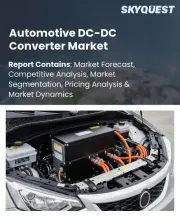
|
시장보고서
상품코드
2034470
자동차 DC-DC 컨버터 시장 보고서 : 동향, 예측 및 경쟁 분석(-2035년)Automotive DC-DC Converter Market Report: Trends, Forecast and Competitive Analysis to 2035 |
||||||
 Lucintel
세계의 자동차 DC-DC 컨버터 시장 전망은 절연 및 비절연 시장에서의 기회로 인해 밝은 전망을 가지고 있습니다. 세계의 자동차 DC-DC 컨버터 시장은 2026년부터 2035년까지 연평균 18.3% 성장하여 2035년에는 약 140억 달러 규모에 이를 것으로 예측됩니다. 이 시장의 주요 성장 요인으로는 전기자동차(EV) 아키텍처의 보급 확대, 고효율 차량용 전원 시스템에 대한 수요 증가, 첨단 차량용 전장품 통합이 꼽힙니다.
- Lucintel의 예측에 따르면, 차종별로는 승용차가 예측 기간 동안 높은 성장률을 나타낼 것으로 예측됩니다.
- 제품 유형별로는 비절연형이 더 높은 성장률을 나타낼 것으로 예측됩니다.
- 지역별로는 유럽이 예측 기간 동안 가장 높은 성장률을 나타낼 것으로 예측됩니다.
자동차 DC-DC 컨버터 시장의 새로운 트렌드
자동차 DC-DC 컨버터 시장은 전기자동차(EV) 기술의 발전, 에너지 효율에 대한 수요 증가, 환경 규제 강화에 힘입어 빠르게 성장하고 있습니다. 자동차 제조업체들이 전동화로 전환함에 따라 신뢰할 수 있는 소형의 고성능 전력 변환 솔루션의 필요성이 매우 중요해지고 있습니다. 재료, 디자인 및 통합의 혁신은 이 시장 전망을 형성하고 시장을 더욱 경쟁력 있고 다양하게 만들고 있습니다. 이러한 발전은 차량의 성능 향상뿐만 아니라 자율주행, 커넥티드카 시스템 등 새로운 기능의 구현을 가능하게 하고 있습니다. 아래 동향은 자동차 DC-DC 컨버터 시장의 발전에 영향을 미치는 주요 요인을 강조하고 있습니다.
- 전기자동차(EV)의 보급 확대 : EV 생산의 급증은 고효율 전력 변환 부품 수요를 견인하고 있습니다. 자동차 제조업체들은 에너지 관리 개선, 배터리 수명 연장, 주행거리 향상을 위해 첨단 DC-DC 컨버터를 탑재하고 있습니다. 이러한 추세는 정부의 인센티브와 지속 가능한 교통수단으로 이동하는 소비자의 선호도가 뒷받침하고 있습니다. EV 판매량이 증가함에 따라 대용량, 소형, 고신뢰성 컨버터에 대한 요구가 더욱 두드러지게 나타나면서 시장에서의 혁신과 경쟁을 촉진하고 있습니다.
- 와이드 밴드갭 반도체의 도입 : 실리콘 카바이드(SiC), 질화갈륨(GaN)과 같은 와이드 밴드갭 재료의 채택으로 컨버터의 성능은 크게 변화하고 있습니다. 이러한 소재는 더 높은 스위칭 주파수, 소형화, 열 관리 개선을 통해 보다 효율적이고 컴팩트한 컨버터를 구현할 수 있게 해줍니다. 이를 통합하면 차량 전체의 효율이 향상되고 에너지 손실이 줄어듭니다. 이는 전기차와 하이브리드 자동차에 있어 매우 중요합니다. 반도체 기술의 발전에 따라 더 우수한 성능과 비용적 이점이 제공되기 때문에 이러한 추세는 앞으로도 지속될 것으로 예측됩니다.
- 소형화 및 경량화 설계에 집중 : 차량이 고도화됨에 따라 더 작고 가벼운 DC-DC 컨버터에 대한 수요가 증가하고 있습니다. 소형화로 공간 효율성이 향상되고 차량 전체 무게가 줄어들어 연비 효율과 성능 향상에 기여합니다. 패키징, 재료 및 회로 설계의 혁신을 통해 제조업체는 출력과 신뢰성을 저하시키지 않으면서도 컴팩트한 컨버터를 개발할 수 있게 되었습니다. 이러한 추세는 공간과 무게가 중요한 고려사항이 되는 전기차와 하이브리드 자동차에서 특히 중요합니다.
- 고출력 밀도 컨버터 개발 : 시장에서는 전기자동차 증가하는 전력부하에 대응할 수 있는 고출력 밀도 컨버터로의 전환이 진행되고 있습니다. 이러한 컨버터는 급속 충전, 자율주행, 첨단운전자보조시스템(ADAS) 등의 고성능 용도를 지원하는 데 필수적입니다. 향상된 냉각 기술과 혁신적인 회로 아키텍처를 통해 더 작은 설치 공간에서 더 높은 출력을 구현하여 차량의 효율성과 기능성을 향상시키고 있습니다.
- 지속가능성과 비용 절감에 대한 관심 증가 : 제조업체들은 친환경적이고 비용 효율적인 DC-DC 컨버터 개발에 주력하고 있습니다. 여기에는 재활용 가능한 재료의 사용, 제조 비용 절감, 환경 기준을 충족하기 위한 에너지 효율 향상 등이 포함됩니다. 비용 절감 전략에는 표준화 및 모듈화 설계가 포함되며, 이를 통해 보다 다양한 차종에서 컨버터를 쉽게 사용할 수 있습니다. 또한, 지속가능성에 대한 노력은 탄소 발자국을 줄이기 위한 전 세계적인 노력에 발맞추어 소재와 제조 공정의 혁신을 촉진하고 있습니다.
이러한 새로운 트렌드는 고효율, 소형화, 지속가능성을 촉진함으로써 자동차 DC-DC 컨버터 시장 전체를 재편하고 있습니다. 첨단 반도체 소재와 혁신적인 설계 기법의 통합을 통해 자동차 제조업체는 보다 스마트하고 효율적인 차량을 개발할 수 있게 되었습니다. 시장이 계속 진화하는 가운데, 이러한 추세는 경쟁 심화, 기술 혁신, 그리고 전기차와 하이브리드 자동차의 보급을 촉진하고 궁극적으로 자동차 전원 시스템의 미래를 변화시킬 것입니다.
자동차 DC-DC 컨버터 시장의 최근 동향
자동차 DC-DC 컨버터 시장은 전기자동차 기술의 발전, 에너지 효율에 대한 수요 증가, 배출가스 규제 강화에 힘입어 빠르게 성장하고 있습니다. 파워 일렉트로닉스의 혁신과 스마트 시스템 통합이 차량 아키텍처를 변화시키고 있습니다. 시장 기업들은 전기차와 하이브리드 자동차의 진화하는 요구에 부응하기 위해 소형, 고성능 컨버터 개발에 집중하고 있습니다. 이러한 추세는 제조업체와 공급업체에게 새로운 기회를 창출하고, 궁극적으로 자동차 전원 시스템의 미래상을 형성하게 될 것입니다.
- 전기자동차의 보급 확대 : 전기자동차의 생산 급증은 자동차 DC-DC 컨버터 시장의 주요 성장 촉진요인입니다. EV가 보편화됨에 따라 효율적인 전력 변환 시스템에 대한 요구가 증가하여 주행거리 연장 및 에너지 관리 개선에 도움이 되고 있습니다. 이러한 성장은 정부의 인센티브, 기술 발전, 소비자 선호도 변화에 힘입어 성장하고 있습니다. 경량, 고신뢰성, 대용량 컨버터에 대한 수요가 증가함에 따라 제조업체는 제품 포트폴리오를 혁신하고 확장할 수 있는 큰 성장 기회를 얻게 되었습니다.
- 파워 일렉트로닉스 기술의 발전 : SiC 및 GaN과 같은 광대역 갭 반도체와 같은 파워 일렉트로닉스의 혁신은 DC-DC 컨버터의 성능에 혁명을 일으키고 있습니다. 이 소재들은 자동차 용도에 필수적인 고효율, 소형화 및 우수한 열 관리 기능을 제공합니다. 이러한 기술의 통합은 차량의 성능과 에너지 효율을 향상시키고, 배기가스 배출을 줄이고 운영 비용을 절감할 수 있습니다. 이러한 발전에 투자하는 기업은 경쟁 우위를 확보하고 고성능 컨버터의 새로운 시장을 개척하고 있습니다.
- 스마트 디지털 시스템 통합 : DC-DC 컨버터에 스마트 디지털 제어 시스템을 통합하여 차량 전력 관리를 혁신적으로 변화시키고 있습니다. 이러한 시스템을 통해 실시간 모니터링, 예지보전, 적응형 제어가 가능하여 신뢰성과 효율성이 향상됩니다. IoT 및 AI 기술 채택으로 차량 네트워크와의 연계가 강화되어 전체 시스템 성능이 향상됩니다. 이러한 추세는 보다 스마트하고 커넥티드한 차량을 원하는 자동차 제조업체들의 관심을 불러일으키고 있으며, 디지털 통합형 컨버터 시장을 확대시키고 있습니다.
- 컴팩트하고 가벼운 컨버터에 대한 수요 증가 : 공간 절약과 경량화가 요구되는 가운데, 컴팩트한 DC-DC 컨버터 개발이 진행되고 있습니다. 이러한 소형 경량 유닛은 차량의 공기역학적 성능을 향상시키고 총 중량을 줄여 전기차의 연비 향상과 항속거리 연장에 기여합니다. 패키징 및 재료의 혁신으로 제조업체는 최소한의 크기로 대용량의 컨버터를 생산할 수 있게 되었습니다. 이러한 추세는 공간과 무게가 중요한 고려사항이 되는 전기차와 하이브리드 자동차에서 특히 중요한 의미를 갖습니다.
- 지속가능성과 재활용에 집중 : 환경 문제에 대한 우려로 인해 자동차 업계는 DC-DC 컨버터 제조에 있어 지속 가능한 노력을 우선시하고 있습니다. 여기에는 친환경 소재 사용, 재활용성을 고려한 설계, 생산 시 에너지 소비 감소 등이 포함됩니다. 전자 부품의 재활용에 대한 노력은 점점 더 활발해지고 있으며, 이는 세계 지속가능성 목표와도 일치합니다. 이러한 노력은 보다 친환경적이고 지속 가능한 전력 변환 솔루션의 개발을 촉진하고, 환경에 민감한 소비자와 규제 당국에 어필함으로써 시장 역학에 영향을 미치고 있습니다.
이러한 추세는 자동차 DC-DC 컨버터 시장에 큰 영향을 미치고 있으며, 혁신을 촉진하고 효율을 향상시키며 전기차와 하이브리드 자동차의 성장을 뒷받침하고 있습니다. 첨단 소재, 스마트 시스템, 지속가능성에 대한 관심은 제조업체와 공급업체에게 새로운 기회를 창출하고 있습니다. 이러한 추세가 지속됨에 따라 시장 경쟁은 더욱 치열해질 것으로 예상되며, 고성능, 친환경, 통합 전력 솔루션의 채택이 확대되면서 자동차 전기화의 미래를 형성할 것으로 보입니다.
목차
제1장 주요 요약
제2장 시장 개요
제3장 시장 동향과 예측 분석
제4장 세계의 자동차 DC-DC 컨버터 시장 : 차량 유형별
제5장 세계의 자동차 DC-DC 컨버터 시장 : 추진 방식별
제6장 세계의 자동차 DC-DC 컨버터 시장 : 제품 유형별
제7장 지역별 분석
제8장 북미의 자동차 DC-DC 컨버터 시장
제9장 유럽의 자동차 DC-DC 컨버터 시장
제10장 아시아태평양의 자동차 DC-DC 컨버터 시장
제11장 기타 지역의 자동차 DC-DC 컨버터 시장
제12장 경쟁 분석
제13장 기회와 전략 분석
제14장 밸류체인 전체 주요 기업 개요
제15장 부록
KTH 26.05.22The future of the global automotive DC-DC converter market looks promising with opportunities in the isolated and non-isolated markets. The global automotive DC-DC converter market is expected to reach an estimated $14 billion by 2035 with a CAGR of 18.3% from 2026 to 2035. The major drivers for this market are the increasing adoption of electric vehicle architectures, the rising demand for efficient onboard power systems, and the growing integration of advanced vehicle electronics.
- Lucintel forecasts that, within the vehicle type category, passenger vehicle is expected to witness higher growth over the forecast period.
- Within the product type category, non-isolated is expected to witness higher growth.
- In terms of region, Europe is expected to witness the highest growth over the forecast period.
Emerging Trends in the Automotive DC-DC Converter Market
The automotive DC-DC converter market is experiencing rapid growth driven by advancements in electric vehicle (EV) technology, increasing demand for energy efficiency, and stricter environmental regulations. As automakers shift towards electrification, the need for reliable, compact, and high-performance power conversion solutions becomes critical. Innovations in materials, design, and integration are shaping the future of this market, making it more competitive and diverse. These developments are not only enhancing vehicle performance but also enabling new functionalities such as autonomous driving and connected car systems. The following trends highlight the key factors influencing the evolution of the automotive DC-DC converter market.
- Increasing Adoption of Electric Vehicles : The surge in EV production is driving demand for efficient power conversion components. Automakers are integrating advanced DC-DC converters to improve energy management, extend battery life, and enhance vehicle range. This trend is supported by government incentives and consumer preferences shifting towards sustainable transportation. As EV sales grow, the need for high-capacity, compact, and reliable converters becomes more prominent, fueling innovation and competition in the market.
- Integration of Wide Bandgap Semiconductors : The adoption of wide bandgap materials like silicon carbide (SiC) and gallium nitride (GaN) is transforming converter performance. These materials enable higher switching frequencies, reduced size, and improved thermal management, leading to more efficient and compact converters. Their integration enhances overall vehicle efficiency and reduces energy losses, which is crucial for electric and hybrid vehicles. This trend is expected to continue as semiconductor technology advances, offering better performance and cost benefits.
- Focus on Miniaturization and Lightweight Design : As vehicles become more sophisticated, there is a growing demand for smaller, lighter DC-DC converters. Miniaturization improves space utilization and reduces overall vehicle weight, contributing to better fuel efficiency and performance. Innovations in packaging, materials, and circuit design are enabling manufacturers to develop compact converters without compromising power output or reliability. This trend is particularly significant for electric and hybrid vehicles, where space and weight are critical considerations.
- Development of High-Power Density Converters : The market is witnessing a shift towards high-power density converters capable of handling increased power loads in electric vehicles. These converters are essential for supporting high-performance applications such as fast charging, autonomous driving, and advanced driver-assistance systems (ADAS). Enhanced cooling techniques and innovative circuit architectures are enabling higher power outputs within smaller footprints, thus improving vehicle efficiency and functionality.
- Growing Emphasis on Sustainability and Cost Reduction : Manufacturers are focusing on developing eco-friendly and cost-effective DC-DC converters. This involves using recyclable materials, reducing manufacturing costs, and improving energy efficiency to meet environmental standards. Cost reduction strategies include standardization and modular design, making converters more accessible for a broader range of vehicle models. Sustainability initiatives are also driving innovation in materials and manufacturing processes, aligning with global efforts to reduce carbon footprints.
These emerging trends are collectively reshaping the automotive DC-DC converter market by promoting higher efficiency, compactness, and sustainability. The integration of advanced semiconductor materials and innovative design approaches is enabling automakers to develop smarter, more efficient vehicles. As the market continues to evolve, these trends will foster increased competition, technological innovation, and broader adoption of electric and hybrid vehicles, ultimately transforming the future of automotive power systems.
Recent Developments in the Automotive DC-DC Converter Market
The automotive DC-DC converter market is experiencing rapid growth driven by advancements in electric vehicle technology, increasing demand for energy efficiency, and stricter emission regulations. Innovations in power electronics and the integration of smart systems are transforming vehicle architectures. Market players are focusing on developing compact, high-performance converters to meet the evolving needs of electric and hybrid vehicles. These developments are creating new opportunities for manufacturers and suppliers, ultimately shaping the future landscape of automotive power systems.
- Growing Adoption of Electric Vehicles: The surge in electric vehicle production is a primary driver for the automotive DC-DC converter market. As EVs become more mainstream, the need for efficient power conversion systems increases, supporting longer driving ranges and better energy management. This growth is fueled by government incentives, technological advancements, and consumer preference shifts. The demand for lightweight, reliable, and high-capacity converters is rising, creating significant opportunities for manufacturers to innovate and expand their product portfolios.
- Advances in Power Electronics Technology: Innovations in power electronics, such as wide-bandgap semiconductors like SiC and GaN, are revolutionizing DC-DC converter performance. These materials enable higher efficiency, reduced size, and better thermal management, which are critical for automotive applications. The integration of these technologies enhances vehicle performance and energy efficiency, leading to lower emissions and operational costs. Companies investing in these advancements are gaining competitive advantages and opening new markets for high-performance converters.
- Integration of Smart and Digital Systems: The incorporation of smart, digital control systems into DC-DC converters is transforming vehicle power management. These systems enable real-time monitoring, predictive maintenance, and adaptive control, improving reliability and efficiency. The adoption of IoT and AI technologies allows for better integration with vehicle networks, enhancing overall system performance. This trend is attracting automakers seeking smarter, more connected vehicles, thereby expanding the market for digitally integrated converters.
- Rising Demand for Compact and Lightweight Converters: The push for space-saving and lightweight vehicle components is driving the development of compact DC-DC converters. These smaller, lighter units help improve vehicle aerodynamics and reduce overall weight, contributing to better fuel efficiency and extended range in electric vehicles. Innovations in packaging and materials are enabling manufacturers to produce high-capacity converters with minimal size. This trend is particularly significant for electric and hybrid vehicles, where space and weight are critical considerations.
- Focus on Sustainability and Recycling: Environmental concerns are prompting the automotive industry to prioritize sustainable practices in DC-DC converter manufacturing. This includes using eco-friendly materials, designing for recyclability, and reducing energy consumption during production. Recycling initiatives for electronic components are gaining traction, aligning with global sustainability goals. These efforts are influencing market dynamics by encouraging the development of greener, more sustainable power conversion solutions, appealing to environmentally conscious consumers and regulators.
These developments are significantly impacting the automotive DC-DC converter market by driving innovation, improving efficiency, and supporting the growth of electric and hybrid vehicles. The focus on advanced materials, smart systems, and sustainability is creating new opportunities for manufacturers and suppliers. As these trends continue, the market is expected to become more competitive, with increased adoption of high-performance, eco-friendly, and integrated power solutions shaping the future of automotive electrification.
Strategic Growth Opportunities in the Automotive DC-DC Converter Market
The automotive DC-DC converter market is experiencing rapid growth driven by increasing electrification, rising demand for electric vehicles (EVs), and advancements in power electronics. As automakers focus on improving energy efficiency and reducing emissions, the need for reliable, compact, and high-performance DC-DC converters becomes critical. Market players are exploring innovative designs and expanding applications across various vehicle types, including hybrids and autonomous vehicles, to capitalize on emerging opportunities and meet stringent regulatory standards.
- Electric Vehicle Adoption Accelerates Market Growth: The surge in electric vehicle production worldwide is a primary driver for the automotive DC-DC converter market. These converters are essential for managing power distribution between high-voltage batteries and low-voltage systems like lighting, infotainment, and control modules. As EV sales increase, the demand for efficient, lightweight, and durable DC-DC converters grows, creating opportunities for manufacturers to develop advanced solutions tailored for different EV architectures and ranges.
- Expansion of Hybrid Vehicles Boosts Demand for Converters: Hybrid vehicles, combining internal combustion engines with electric propulsion, require specialized DC-DC converters to optimize power transfer and improve fuel efficiency. The integration of regenerative braking systems and increased electronic control units (ECUs) further amplifies this need. Manufacturers are focusing on designing converters that can handle higher power levels, operate reliably under varying conditions, and support the evolving hybrid vehicle platforms, thus expanding market potential.
- Growing Adoption of Autonomous Vehicles Creates New Opportunities: Autonomous vehicles rely heavily on electronic systems, sensors, and communication modules, all powered by efficient DC-DC converters. The need for high reliability, low electromagnetic interference (EMI), and compact form factors is driving innovation in converter design. As autonomous vehicle technology advances, the market for specialized converters that support advanced driver-assistance systems (ADAS) and vehicle-to-everything (V2X) communication is expected to expand significantly.
- Focus on Lightweight and Compact Designs Enhances Market Competitiveness: Automakers and suppliers are prioritizing lightweight and space-saving DC-DC converters to optimize vehicle design and improve overall efficiency. Innovations in materials, thermal management, and circuit integration enable the development of smaller, more efficient converters. This trend supports the integration of more electronic features without increasing vehicle weight, thereby enhancing fuel economy and performance, and opening avenues for new product development.
- Increasing Emphasis on Sustainability and Regulatory Compliance Drives Innovation: Stringent emissions and safety standards compel manufacturers to develop eco-friendly, energy-efficient DC-DC converters. The focus on reducing electronic waste and improving recyclability influences material selection and design processes. Companies investing in sustainable solutions and compliance-driven innovations are poised to gain competitive advantages, ensuring their products meet evolving regulatory requirements and contribute to the overall growth of the automotive electrification market.
The overall market outlook indicates that these growth opportunities will significantly influence the evolution of automotive DC-DC converters, fostering technological advancements and expanding application scopes. As the industry shifts towards electrification and smarter vehicles, the integration of innovative, efficient, and sustainable power conversion solutions will be crucial for market expansion and competitiveness.
Automotive DC-DC Converter Market Driver and Challenges
The automotive DC-DC converter market is influenced by a variety of technological, economic, and regulatory factors. Rapid advancements in electric vehicle technology, increasing demand for energy efficiency, and stringent government regulations on emissions are shaping the market landscape. Additionally, the growing adoption of hybrid and electric vehicles worldwide is driving the need for reliable power conversion solutions. Economic factors such as rising vehicle production and consumer preference for sustainable transportation further propel market growth. However, challenges like high manufacturing costs, technological complexities, and regulatory compliance issues pose significant hurdles. Understanding these drivers and challenges is essential for stakeholders to navigate the evolving market effectively.
The factors responsible for driving the automotive DC-DC converter market include:
- Technological Advancements: The continuous development of compact, efficient, and high-performance DC-DC converters is a major driver. Innovations such as wide input voltage ranges and enhanced thermal management improve reliability and efficiency, meeting the demands of modern electric vehicles. These advancements enable automakers to design lighter, more efficient vehicles, reducing overall weight and improving range. As technology progresses, the integration of smart features and digital control systems further boosts market growth by offering better performance and diagnostics. The push for innovation ensures that automotive manufacturers can meet evolving consumer expectations and regulatory standards, fueling market expansion.
- Rising Adoption of Electric Vehicles (EVs): The global shift towards electric mobility is a key driver for the market. Governments worldwide are implementing policies and incentives to promote EV adoption, leading to increased demand for efficient power conversion solutions. DC-DC converters are essential for managing power distribution within EVs, supporting battery management systems, and ensuring optimal performance. As automakers expand their EV portfolios, the need for reliable, high-capacity converters grows. This trend is further supported by consumer preferences for sustainable transportation options, which collectively accelerate market growth and technological development in this sector.
- Stringent Regulatory Standards: Governments and regulatory bodies are imposing strict emission norms and safety standards that compel automakers to adopt advanced electrical systems. These regulations necessitate the use of high-quality, efficient DC-DC converters to meet safety, reliability, and environmental requirements. Compliance with standards such as ISO 26262 for functional safety and emissions regulations encourages innovation and higher product standards. Automakers are investing in R&D to develop converters that not only meet current standards but are also adaptable to future regulations, thereby driving market growth while ensuring safety and environmental compliance.
- Increasing Vehicle Electrification: The trend toward electrification of various vehicle components, including powertrains, infotainment, and auxiliary systems, is a significant driver. As vehicles become more electrified, the demand for efficient power management solutions like DC-DC converters increases. These converters facilitate seamless power transfer between different electrical systems, improving overall vehicle efficiency and performance. The expansion of hybrid and plug-in hybrid vehicles further amplifies this demand. The integration of advanced electronics in vehicles necessitates robust power conversion solutions, which in turn propels the market forward.
- Growing Focus on Energy Efficiency: The automotive industry's emphasis on reducing energy consumption and enhancing vehicle range is a crucial driver. DC-DC converters play a vital role in optimizing power usage within vehicles, contributing to overall energy efficiency. Automakers are adopting more efficient converters to meet fuel economy standards and reduce carbon footprints. This focus is also driven by consumer demand for longer-range electric vehicles and lower operating costs. As a result, manufacturers are investing in developing high-efficiency converters that can operate under diverse conditions, further stimulating market growth.
The challenges facing the automotive DC-DC converter market include:
- High Manufacturing Costs: Developing advanced DC-DC converters involves significant investment in research, high-quality components, and sophisticated manufacturing processes. These costs can lead to higher product prices, which may hinder adoption, especially in cost-sensitive markets. Additionally, economies of scale are still developing, making it challenging for manufacturers to reduce costs quickly. The high costs also impact the overall profitability and competitiveness of suppliers, potentially limiting innovation and slowing market expansion. Overcoming these financial barriers requires strategic investments and technological breakthroughs to produce cost-effective solutions.
- Technological Complexities: Designing reliable, high-performance DC-DC converters for automotive applications involves overcoming complex technical challenges. These include managing thermal dissipation, ensuring electromagnetic compatibility, and maintaining performance across a wide temperature range. The integration of digital control systems adds further complexity, requiring advanced engineering expertise. These technological hurdles can delay product development, increase time-to-market, and elevate costs. Ensuring durability and safety in harsh automotive environments demands rigorous testing and validation, which can be resource-intensive and pose significant challenges for manufacturers.
- Regulatory Compliance and Standards: Navigating the evolving landscape of automotive safety, emissions, and electrical standards is a significant challenge. Manufacturers must ensure their DC-DC converters meet diverse regional regulations, which can vary widely and frequently change. Achieving compliance involves extensive testing, certification, and documentation, increasing development time and costs. Non-compliance can lead to legal penalties, product recalls, and damage to brand reputation. Staying ahead of regulatory changes requires continuous R&D investment and adaptation, which can strain resources and complicate product development cycles.
The automotive DC-DC converter market is driven by technological innovation, the surge in electric vehicle adoption, regulatory pressures, vehicle electrification, and a focus on energy efficiency. However, high manufacturing costs, technological complexities, and regulatory compliance challenges pose significant hurdles. These factors collectively influence the market's growth trajectory, requiring stakeholders to innovate strategically and adapt swiftly. The overall impact is a dynamic landscape where opportunities for growth are balanced by technical and financial challenges, shaping the future of automotive electrical systems.
List of Automotive DC-DC Converter Companies
Companies in the market compete on the basis of product quality offered. Major players in this market focus on expanding their manufacturing facilities, R&D investments, infrastructural development, and leverage integration opportunities across the value chain. With these strategies automotive DC-DC converter companies cater increasing demand, ensure competitive effectiveness, develop innovative products & technologies, reduce production costs, and expand their customer base. Some of the automotive DC-DC converter companies profiled in this report include-
- Borgwarner Inc.
- Denso Corporation
- Valeo
- Vicor Corporation
- Tdk-Lambda Corporation
- Delta Electronics
- Continental Ag
- Toyota Industries Corporation
- Hyundai Mobis
- Robert Bosch Gmbh
Automotive DC-DC Converter Market by Segment
The study includes a forecast for the global automotive DC-DC converter market by vehicle type, propulsion type, product type, and region.
Automotive DC-DC Converter Market by Vehicle Type [Value from 2019 to 2035]:
- Commercial Vehicle
- Passenger Vehicle
Automotive DC-DC Converter Market by Propulsion Type [Value from 2019 to 2035]:
- Battery Electric Vehicle
- Fuel Cell Electric Vehicle
- Plug-in Hybrid Vehicle
Automotive DC-DC Converter Market by Product Type [Value from 2019 to 2035]:
- Isolated
- Non-isolated
Automotive DC-DC Converter Market by Region [Value from 2019 to 2035]:
- North America
- Europe
- Asia Pacific
- The Rest of the World
Country Wise Outlook for the Automotive DC-DC Converter Market
The automotive DC-DC converter market has experienced significant growth driven by the increasing adoption of electric vehicles (EVs), advancements in power electronics, and stricter emission regulations worldwide. As automakers focus on enhancing vehicle efficiency and sustainability, the demand for reliable, high-performance DC-DC converters has surged. Technological innovations, such as improved thermal management and miniaturization, are shaping the market landscape. Additionally, government incentives and investments in EV infrastructure are accelerating market expansion across key regions. This evolving environment presents both opportunities and challenges for manufacturers aiming to meet the rising global demand for efficient power conversion solutions in the automotive sector.
- United States: The US market has seen rapid growth due to strong EV adoption and supportive government policies. Major automakers are investing heavily in developing advanced DC-DC converters to improve vehicle range and efficiency. Innovations in thermal management and miniaturization are prominent trends. The rise of autonomous vehicles also drives demand for reliable power conversion systems. Additionally, collaborations between tech firms and automakers are fostering new technological developments. The US government's incentives and infrastructure investments further bolster market expansion, making it a leading region for automotive DC-DC converter innovations.
- China: China remains the largest market for automotive DC-DC converters, driven by aggressive EV adoption and government initiatives promoting clean transportation. Domestic manufacturers are expanding their product portfolios with high-efficiency, compact converters tailored for local vehicle models. The focus on cost reduction and scalability is evident, with significant investments in R&D. The Chinese government's subsidies and policies aim to boost EV sales, which directly impact the demand for advanced power electronics. Moreover, local companies are forming strategic alliances to enhance technological capabilities and meet export demands, positioning China as a key global player.
- Germany: Germany's automotive market is characterized by a strong emphasis on premium EVs and hybrid vehicles, with a focus on high-performance DC-DC converters. Leading automakers like Volkswagen and BMW are investing in innovative power electronics to improve vehicle efficiency and safety. The country's emphasis on sustainability and stringent emissions standards are driving technological advancements. Germany's robust automotive supply chain and R&D infrastructure support the development of next-generation converters with enhanced thermal management and durability. Additionally, collaborations between automotive and electronics firms are fostering innovation, positioning Germany as a hub for high-quality, reliable DC-DC converter solutions.
- India: The Indian automotive market is witnessing rapid growth in EV adoption, supported by government initiatives like FAME II and increasing consumer awareness. Local manufacturers are focusing on developing cost-effective, efficient DC-DC converters suitable for budget-friendly electric vehicles. The market is also seeing a rise in startups innovating in power electronics and thermal management solutions. Infrastructure development and policy support are expected to further accelerate growth. However, challenges such as supply chain constraints and the need for localized R&D remain. Overall, India is emerging as a promising market for affordable, efficient automotive power conversion solutions.
- Japan: Japan's market is characterized by advanced technological development and a focus on hybrid and electric vehicles. Leading automakers like Toyota and Honda are investing in high-performance DC-DC converters to enhance vehicle efficiency and reliability. The country's emphasis on innovation and quality drives the development of miniaturized, highly durable converters with superior thermal management. Japan's strong electronics industry and R&D capabilities support continuous advancements. Additionally, government policies promoting clean energy and EV adoption are contributing to market growth. Japan remains a key player in developing cutting-edge power electronics for the global automotive industry.
Features of the Global Automotive DC-DC Converter Market
- Market Size Estimates: Automotive DC-DC converter market size estimation in terms of value ($B).
- Trend and Forecast Analysis: Market trends (2019 to 2025) and forecast (2026 to 2035) by various segments and regions.
- Segmentation Analysis: Automotive DC-DC converter market size by vehicle type, propulsion type, product type, and region in terms of value ($B).
- Regional Analysis: Automotive DC-DC converter market breakdown by North America, Europe, Asia Pacific, and Rest of the World.
- Growth Opportunities: Analysis of growth opportunities in different vehicle type, propulsion type, product type, and regions for the automotive DC-DC converter market.
- Strategic Analysis: This includes M&A, new product development, and competitive landscape of the automotive DC-DC converter market.
Analysis of competitive intensity of the industry based on Porter's Five Forces model.
This report answers following 11 key questions:
- Q.1. What are some of the most promising, high-growth opportunities for the automotive DC-DC converter market by vehicle type (commercial vehicle and passenger vehicle), propulsion type (battery electric vehicle, fuel cell electric vehicle, and plug-in hybrid vehicle), product type (isolated and non-isolated), and region (North America, Europe, Asia Pacific, and the Rest of the World)?
- Q.2. Which segments will grow at a faster pace and why?
- Q.3. Which region will grow at a faster pace and why?
- Q.4. What are the key factors affecting market dynamics? What are the key challenges and business risks in this market?
- Q.5. What are the business risks and competitive threats in this market?
- Q.6. What are the emerging trends in this market and the reasons behind them?
- Q.7. What are some of the changing demands of customers in the market?
- Q.8. What are the new developments in the market? Which companies are leading these developments?
- Q.9. Who are the major players in this market? What strategic initiatives are key players pursuing for business growth?
- Q.10. What are some of the competing products in this market and how big of a threat do they pose for loss of market share by material or product substitution?
- Q.11. What M&A activity has occurred in the last 5 years and what has its impact been on the industry?
Table of Contents
1. Executive Summary
2. Market Overview
- 2.1 Background and Classifications
- 2.2 Supply Chain
3. Market Trends & Forecast Analysis
- 3.1 Macroeconomic Trends and Forecasts
- 3.2 Industry Drivers and Challenges
- 3.3 PESTLE Analysis
- 3.4 Patent Analysis
- 3.5 Regulatory Environment
4. Global Automotive DC-DC Converter Market by Vehicle Type
- 4.1 Overview
- 4.2 Attractiveness Analysis by Vehicle Type
- 4.3 Commercial Vehicle : Trends and Forecast (2019-2035)
- 4.4 Passenger Vehicle : Trends and Forecast (2019-2035)
5. Global Automotive DC-DC Converter Market by Propulsion Type
- 5.1 Overview
- 5.2 Attractiveness Analysis by Propulsion Type
- 5.3 Battery Electric Vehicle : Trends and Forecast (2019-2035)
- 5.4 Fuel Cell Electric Vehicle : Trends and Forecast (2019-2035)
- 5.5 Plug-in Hybrid Vehicle : Trends and Forecast (2019-2035)
6. Global Automotive DC-DC Converter Market by Product Type
- 6.1 Overview
- 6.2 Attractiveness Analysis by Product Type
- 6.3 Isolated : Trends and Forecast (2019-2035)
- 6.4 Non-isolated : Trends and Forecast (2019-2035)
7. Regional Analysis
- 7.1 Overview
- 7.2 Global Automotive DC-DC Converter Market by Region
8. North American Automotive DC-DC Converter Market
- 8.1 Overview
- 8.2 North American Automotive DC-DC Converter Market by Vehicle Type
- 8.3 North American Automotive DC-DC Converter Market by Product Type
- 8.4 The United States Automotive DC-DC Converter Market
- 8.5 Canadian Automotive DC-DC Converter Market
- 8.6 Mexican Automotive DC-DC Converter Market
9. European Automotive DC-DC Converter Market
- 9.1 Overview
- 9.2 European Automotive DC-DC Converter Market by Vehicle Type
- 9.3 European Automotive DC-DC Converter Market by Product Type
- 9.4 German Automotive DC-DC Converter Market
- 9.5 French Automotive DC-DC Converter Market
- 9.6 Italian Automotive DC-DC Converter Market
- 9.7 Spanish Automotive DC-DC Converter Market
- 9.8 The United Kingdom Automotive DC-DC Converter Market
10. APAC Automotive DC-DC Converter Market
- 10.1 Overview
- 10.2 APAC Automotive DC-DC Converter Market by Vehicle Type
- 10.3 APAC Automotive DC-DC Converter Market by Product Type
- 10.4 Chinese Automotive DC-DC Converter Market
- 10.5 Indian Automotive DC-DC Converter Market
- 10.6 Japanese Automotive DC-DC Converter Market
- 10.7 South Korean Automotive DC-DC Converter Market
- 10.8 Indonesian Automotive DC-DC Converter Market
11. ROW Automotive DC-DC Converter Market
- 11.1 Overview
- 11.2 ROW Automotive DC-DC Converter Market by Vehicle Type
- 11.3 ROW Automotive DC-DC Converter Market by Product Type
- 11.4 Middle Eastern Automotive DC-DC Converter Market
- 11.5 South American Automotive DC-DC Converter Market
- 11.6 African Automotive DC-DC Converter Market
12. Competitor Analysis
- 12.1 Product Portfolio Analysis
- 12.2 Operational Integration
- 12.3 Porter's Five Forces Analysis
- Competitive Rivalry
- Bargaining Power of Buyers
- Bargaining Power of Suppliers
- Threat of Substitutes
- Threat of New Entrants
- 12.4 Market Share Analysis
13. Opportunities & Strategic Analysis
- 13.1 Value Chain Analysis
- 13.2 Growth Opportunity Analysis
- 13.2.1 Growth Opportunity by Vehicle Type
- 13.2.2 Growth Opportunity by Propulsion Type
- 13.2.3 Growth Opportunity by Product Type
- 13.2.4 Growth Opportunity by Region
- 13.3 Emerging Trends in the Global Automotive DC-DC Converter Market
- 13.4 Strategic Analysis
- 13.4.1 New Product Development
- 13.4.2 Certification and Licensing
- 13.4.3 Mergers, Acquisitions, Agreements, Collaborations, and Joint Ventures
14. Company Profiles of the Leading Players Across the Value Chain
- 14.1 Competitive Analysis Overview
- 14.2 Borgwarner Inc.
- Company Overview
- Automotive DC-DC Converter Market Business Overview
- New Product Development
- Merger, Acquisition, and Collaboration
- Certification and Licensing
- 14.3 Denso Corporation
- Company Overview
- Automotive DC-DC Converter Market Business Overview
- New Product Development
- Merger, Acquisition, and Collaboration
- Certification and Licensing
- 14.4 Valeo
- Company Overview
- Automotive DC-DC Converter Market Business Overview
- New Product Development
- Merger, Acquisition, and Collaboration
- Certification and Licensing
- 14.5 Vicor Corporation
- Company Overview
- Automotive DC-DC Converter Market Business Overview
- New Product Development
- Merger, Acquisition, and Collaboration
- Certification and Licensing
- 14.6 Tdk-Lambda Corporation
- Company Overview
- Automotive DC-DC Converter Market Business Overview
- New Product Development
- Merger, Acquisition, and Collaboration
- Certification and Licensing
- 14.7 Delta Electronics
- Company Overview
- Automotive DC-DC Converter Market Business Overview
- New Product Development
- Merger, Acquisition, and Collaboration
- Certification and Licensing
- 14.8 Continental Ag
- Company Overview
- Automotive DC-DC Converter Market Business Overview
- New Product Development
- Merger, Acquisition, and Collaboration
- Certification and Licensing
- 14.9 Toyota Industries Corporation
- Company Overview
- Automotive DC-DC Converter Market Business Overview
- New Product Development
- Merger, Acquisition, and Collaboration
- Certification and Licensing
- 14.10 Hyundai Mobis
- Company Overview
- Automotive DC-DC Converter Market Business Overview
- New Product Development
- Merger, Acquisition, and Collaboration
- Certification and Licensing
- 14.11 Robert Bosch Gmbh
- Company Overview
- Automotive DC-DC Converter Market Business Overview
- New Product Development
- Merger, Acquisition, and Collaboration
- Certification and Licensing
15. Appendix
- 15.1 List of Figures
- 15.2 List of Tables
- 15.3 Research Methodology
- 15.4 Disclaimer
- 15.5 Copyright
- 15.6 Abbreviations and Technical Units
- 15.7 About Us
- 15.8 Contact Us