|
시장보고서
상품코드
2063901
인도의 펜스 시장 : 시장 점유율 분석, 업계 동향 및 통계, 성장 예측(2026-2031년)India Fencing - Market Share Analysis, Industry Trends & Statistics, Growth Forecasts (2026 - 2031) |
||||||
 Mordor Intelligence
Mordor Intelligence에 의하면, 인도의 펜스 시장 규모는 2025년에 23억 4,000만 달러로 평가되었고, 2026년에 25억 1,000만 달러로 추정되고, 2031년까지 35억 5,000만 달러에 이를 것으로 예측되며, 2026-2031년 CAGR 7.15%로 성장할 전망입니다.
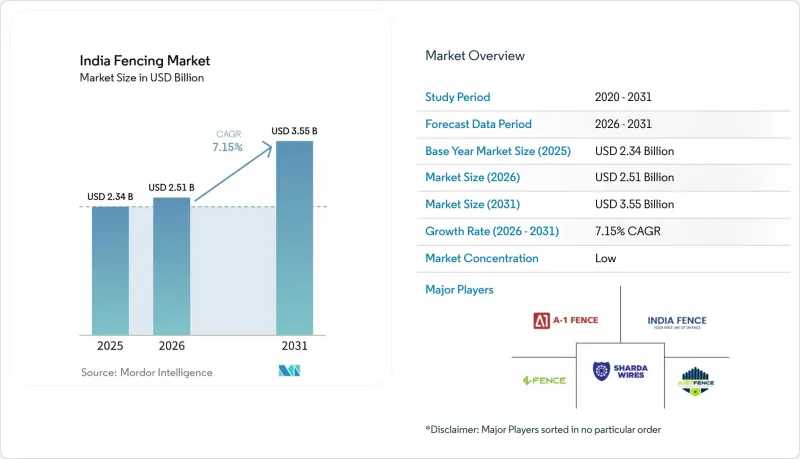
본 보고서는 재료별(금속, 목재, 플라스틱 복합재, 콘크리트, 기타), 최종 사용자별(주택, 농업, 국방, 정부, 광업, 기타), 설치 유형별(고정 및 영구형, 일시 및 이동형), 설치 채널별(전문 업체, 제조업체 및 DIY), 도시별(뭄바이, 델리 수도권, 푸네, 기타)로 분류되어 있습니다. 시장 전망은 금액(달러) 기준으로 제시되어 있습니다.
인도의 펜스 시장 동향 및 분석
정부의 국경 경비 : 국가의 요청이 수년에 걸친 조달을 촉진
인도의 펜스 시장에서는 국경 관련 공사가 단발성 구매에서 장기적인 인프라 계획으로 전환되고 있습니다. 인도는 이미 파키스탄과의 국경 93.25%, 방글라데시와의 국경 79.08%에 펜스를 설치했습니다. 이와 동시에, 미얀마와 접한 1,643km에 달하는 국경 지대에 대해서도 2024년에 37억 달러 규모의 프로젝트가 승인됨에 따라 새로운 실행 단계에 접어들었습니다. 2025년 5월, 내무부는 파키스탄 국경에 있는 노후화된 펜스 500km 이상을 모듈식 다층 장벽으로 교체하기 위해 2억 달러의 예산을 승인했습니다. 스마트 펜스 모델인 ‘종합적 통합 국경 관리 시스템(CIBMS)’은 장벽에 센서, 열화상 카메라, 모니터링 도구를 연동함으로써 제품 라인업을 확대되고 있습니다. 이로 인해 인도의 펜스 시장은 일반적인 건설 주기의 영향을 덜 받게 되었으며, 조직화된 공급업체들은 확실한 프로젝트 파이프라인을 확보하고 있습니다.
산업단지 및 물류 허브 : 플러그 앤 플레이형 인프라가 체계화된 펜스 수요를 창출
인도의 펜스 시장은 공식 사양서에 따라 경계 시스템을 구매하는 체계적인 산업단지 및 창고 단지의 확산으로 인해 혜택을 보고 있습니다. 인도의 물류창고 부문은 2024년에 19억 6,000만 달러의 기관 투자를 유치했으며, A급 물류창고 시장은 지난 5년간 연평균 성장률(CAGR) 21%를 기록하며 성장했습니다. 2026년 3월, 연방 내각은 40억 달러 규모의 BHAVYA 계획을 승인했습니다. 이는 플러그 앤 플레이 방식의 인프라를 갖춘 100개의 산업단지를 개발하는 것으로, 이를 통해 경계 펜스는 사후 추가 공사가 아닌 기본 프로젝트 범위의 일부가 됩니다. 산업·국내무역진흥국은 PM GatiShakti가 장기적인 부지 개발을 뒷받침할 산업 회랑 및 물류 단지를 포함한 600건 이상의 프로젝트를 수립했다고 발표했습니다. 이를 통해 인도의 펜스 시장은 산업 및 물류 분야 사용자들의 반복적인 프로젝트 수요를 더욱 견고하게 결합하여 확보하게 될 것입니다.
원자재 비용 변동 : 철강 가격의 하락과 폴리머 가격의 급등이 불균형한 이익률에 압박을 가하고 있습니다.
인도의 펜스 시장은 철강, 알루미늄, PVC의 가격이 서로 일치하지 않아 원가 구성 측면에서 어려운 상황에 직면해 있습니다. 2025년 10월, 선재 가격은 톤당 451-455달러까지 하락한 반면, 같은 기간 동안 PVC 원가는 최대 30% 상승했고, 알루미늄 가격도 8-10% 상승했습니다. 이는 철강을 많이 사용하는 기초 제품에는 유리하지만, 수요가 회복세를 보이고 있는 복합재나 PVC 코팅 펜스에는 부담을 주고 있습니다. 따라서 제품 포트폴리오가 광범위한 제조업체는 제품 라인별로 이익률의 편차를 겪고 있습니다. 인도의 펜스 시장은 이러한 상황 속에서도 성장이 가능하지만, 비용 변동으로 인해 신소재 부문으로의 전면적인 확산은 더뎌질 가능성이 있습니다.
부문별 분석
2025년, 금속 펜스는 시장 매출의 65.1%를 차지했으며, 인도 펜스 시장에서 가장 큰 소재 부문으로서의 위상을 유지했습니다. 아연 도금 연강 와이어 메쉬, 가시철조망, 체인 링크 패널은 정부 입찰이나 국경 관련 프로젝트에서 인증을 받고 실적이 입증된 제품이 우선적으로 선정되기 때문에 여전히 판매량에서 선두를 달리고 있습니다. 알루미늄 펜스는 비용보다 내식성이 더 중요시되는 연안 지역이나 화학 플랜트 등의 환경에서 보다 소규모의 프리미엄 틈새 시장을 차지하고 있습니다. 콘크리트 펜스는 고속도로의 방호책이나 공공시설 부지 내에서 여전히 중요한 역할을 하고 있는 반면, 목재 펜스는 장식용 주거용으로만 사용되고 있습니다.
플라스틱 및 복합 소재로 제작된 펜스는 가장 빠르게 성장하고 있는 부문으로, 2026-2031년 연평균 성장률(CAGR) 7.9%를 나타낼 것으로 전망되며, 인도 펜스 시장에서 이 부문은 대문이 있는 주택과 조경이 잘 된 캠퍼스에서 점차 확대되고 있습니다. 목질 플라스틱 복합재나 고밀도 폴리에틸렌 패널은 외관, 낮은 유지보수 비용, 흰개미 저항성이 높은 초기 비용을 상쇄하는 경우, 점차 널리 채택되고 있습니다. 카르나타카주의 ‘산업 정책 2025-2030’은 전자, 항공우주, 전기차 클러스터에 대한 투자를 지원하고 있으며, 이는 보다 친환경적인 산업 환경에서의 모듈식 경계 펜스에 대한 수요와 부합합니다. 인도의 펜스 산업에서 이러한 구조는 금속 제품의 우위를 유지하면서도 복합재에 명확한 성장 경로를 제시하고 있습니다.
2025년 기준으로, 인도 펜스 시장에서 정부 기관 최종 사용자 수요는 30.5%를 차지했으며, 가장 큰 수요층을 형성하고 있습니다. 수요는 방위 시설, 철도 경계, 국도, 국경 관련 사업, 공공시설에서 발생하고 있습니다. 'BHAVYA' 계획과 'PM GatiShakti' 파이프라인은 이러한 위상을 강화하는 것으로, 공원, 도로, 물류 프로젝트의 경우 건설 주기의 초기 단계에서 경계 시스템이 필요하기 때문입니다. 또한, 방위 관련 수주 건은 제품 사양이 높기 때문에 기본적인 펜스 공사보다 높은 판매 가격을 실현하고 있습니다.
농업용 펜스는 가장 빠르게 성장하고 있는 최종 사용자 부문으로, 2026-2031년 연평균 성장률(CAGR) 8.1%를 나타낼 것으로 전망됩니다. 작물 손실, 가축의 이동, 야생동물과의 충돌로 인해 예방적 펜스 설치가 직접적으로 필요한 지역에서 그 성장이 가장 두드러집니다. 광업, 석유·화학, 에너지·발전 부문의 점유율은 여전히 낮지만, 고사양 시스템을 도입하고 일반적인 주택 건설 주기에 대한 의존도가 낮기 때문에 중요한 시장으로 자리 잡고 있습니다. 인도의 펜스 산업에서 주택용 수요는 현재 규모가 작지만, 온라인 조달과 조립식 키트의 보급으로 인해 도시 지역의 주택 소유자들에게 접근성이 확대되기 시작하고 있습니다.
기타 혜택
- 엑셀 형식 시장 예측(ME) 시트
- 3개월간의 애널리스트 지원
자주 묻는 질문
목차
제1장 서론
제2장 조사 방법
제3장 주요 요약
제4장 시장 동향 및 분석
제5장 시장 규모 및 성장 예측
제6장 경쟁 구도
제7장 시장 기회 및 향후 전망
AJY 26.06.26According to Mordor Intelligence, the india fencing market size is projected to be USD 2.34 billion in 2025, USD 2.51 billion in 2026, and reach USD 3.55 billion by 2031, growing at a CAGR of 7.15% from 2026 to 2031.
This report is Segmented by Material (Metal, Wood, Plastic & Composite, Concrete, Other), by End-User (Residential, Agricultural, Defense, Government, Mining, and More), by Installation Type (Fixed/Permanent, Temporary/Mobile), by Installation Channel (Professional Contractor, Fabricators/DIY), and by City (Mumbai, Delhi NCR, Pune, and More). The Market Forecasts are Provided in Terms of Value (USD).
India Fencing Market Trends and Insights
Government Border Security: Sovereign Mandates Unlock Multi-Year Procurement
The India fencing market is seeing border work move from periodic buying to a long-cycle infrastructure program. India had already fenced 93.25% of its border with Pakistan and 79.08% of its border with Bangladesh. At the same time, the 1,643 km Myanmar frontier moved into a new execution phase after the USD 3.7 billion project was approved in 2024. In May 2025, the Ministry of Home Affairs also cleared USD 0.2 billion to replace more than 500 km of aging fencing on the Pakistan border with modular, multi-layered barriers. The Comprehensive Integrated Border Management System, a smart-fencing model, is expanding the product mix by linking barriers with sensors, thermal imaging, and surveillance tools. This keeps the India fencing market less exposed to normal construction cycles and gives organized suppliers a visible project pipeline.
Industrial Parks and Logistics Hubs: Plug-And-Play Infrastructure Creates Structured Fencing Demand
The India fencing market is also gaining from the spread of planned industrial parks and warehouse campuses that buy perimeter systems through formal specifications. India's warehousing sector drew USD 1.96 billion in institutional investment in 2024, while Grade A stock had expanded at a 21% CAGR over the prior five years. In March 2026, the Union Cabinet approved the BHAVYA scheme at USD 4.0 billion to develop 100 industrial parks with plug-and-play infrastructure, which makes perimeter fencing part of the base project scope rather than a later add-on. The Department for Promotion of Industry and Internal Trade stated that PM GatiShakti had mapped more than 600 projects, including industrial corridors and logistics parks, which support long-horizon site development. This gives the India fencing market a stronger mix of repeatable project demand from industrial and logistics users.
Input Cost Volatility: Steel Softness and Polymer Spikes Create Asymmetric Margin Pressure
The India fencing market faces a difficult cost mix because steel, aluminum, and PVC are not moving in the same direction. Wire rod prices dropped to USD 451-455 per tonne in October 2025, while PVC costs rose by up to 30% and aluminum prices increased by 8-10% over the same broad period. This helps basic steel-heavy products but puts pressure on composite and PVC-coated fencing, which are seeing improving demand. Producers with mixed portfolios, therefore, face uneven margin performance across product lines. The India fencing market can still grow under these conditions, but cost swings are likely to slow full adoption in newer material categories.
Other drivers and restraints analyzed in the detailed report include:
- Agricultural Fencing: Crop Losses and Wildlife Pressure Drive Rural Electrification Of Perimeters
- Rising Security Concerns: Industrial And Institutional Buyers Upgrade Perimeter Systems
- Unorganized Competition: Fragmented Supply Base Restrains Quality Standardization
For complete list of drivers and restraints, kindly check the Table Of Contents.
Segment Analysis
Metal fencing accounted for 65.1% of market revenues in 2025, maintaining its position as the largest material category in the India fencing market. Galvanized mild steel wire mesh, barbed wire, and chain-link panels still lead volume because government tenders and border projects favor certified and proven products. Aluminum fencing serves a smaller premium niche in coastal and chemical settings where corrosion resistance matters more than cost. Concrete fencing continues to hold a role in highway barriers and utility compounds, while wood remains limited to decorative residential use.
Plastic and composite fencing is the fastest-growing segment, with a 7.9% CAGR for 2026-2031, and this part of the India fencing market is expanding in gated housing and landscaped campuses. Wood-plastic composite and high-density polyethylene panels are gaining acceptance where appearance, low maintenance, and termite resistance offset the higher initial cost. Karnataka's Industrial Policy 2025-2030 supports investment in electronics, aerospace, and electric vehicle clusters, which aligns with demand for modular perimeter formats in cleaner industrial settings. Within the India fencing industry, this mix keeps metal dominant while giving composites a clearer growth lane.
Government end-users accounted for 30.5% of the India fencing market in 2025, making them the single largest demand group. Demand came from defense compounds, railway boundaries, national highways, border programs, and public utility sites. The BHAVYA scheme and the PM GatiShakti pipeline strengthen this position, as park, road, and logistics projects require perimeter systems early in the build cycle. Defense-linked orders also carry higher product specifications, which support better selling prices than basic enclosure work.
Agricultural fencing is the fastest-growing end-user segment, with a 8.1% CAGR for 2026-2031. Growth is strongest where crop losses, livestock movement, and wildlife conflict create a direct need for preventive fencing. Mining, petroleum and chemicals, and energy and power remain smaller in share, but they are important because they buy high-specification systems and are less tied to normal housing cycles. In the India fencing industry, residential demand is smaller today, but online sourcing and prefabricated kits are starting to expand access for urban homeowners.
List of Companies Covered in this Report:
- A-1 Fence Products
- India Fence
- Maa Vishla Industries (MV FENCE)
- JustFence
- Sharda Wires
- VBS Industries (VBS Group)
- Perfect Fencings
- Smart Fence Integrated Security Pvt. Ltd.
- Safe and Save Equipments (iFENCE)
- Fence Tech Innovations
- Godrej & Boyce Mfg. Co. Ltd.
- Static Systems
Additional Benefits:
- The market estimate (ME) sheet in Excel format
- 3 months of analyst support
TABLE OF CONTENTS
1 Introduction
- 1.1 Study Assumptions & Market Definition
- 1.2 Scope of the Study
2 Research Methodology
3 Executive Summary
4 Market Insights and Dynamics
- 4.1 Market Overview
- 4.2 Market Drivers
- 4.2.1 Government initiatives for border security and infrastructure projects such as fencing along international borders
- 4.2.2 Government infrastructure development is driving fencing demand across roads, railways, and public facilities
- 4.2.3 Growth in industrial parks, warehouses, and logistics hubs supporting perimeter security fencing
- 4.2.4 Increasing agricultural protection needs driving demand for farm and livestock fencing
- 4.2.5 Rising security concerns boosting adoption of metal, wire mesh, and electric fencing systems
- 4.2.6 Growing need for wildlife protection and human-animal conflict mitigation driving adoption of wildlife fencing solutions
- 4.3 Market Restraints
- 4.3.1 Fluctuating steel, aluminum, and PVC prices increasing fencing product costs
- 4.3.2 Price sensitivity among rural and small-scale buyers limiting premium fencing adoption
- 4.3.3 Competition from unorganized local manufacturers affecting pricing and product quality
- 4.4 Value / Supply-Chain Analysis
- 4.5 Regulatory Landscape
- 4.6 Technology & Innovation Trends
- 4.7 Porter's Five Forces
- 4.7.1 Bargaining Power of Suppliers
- 4.7.2 Bargaining Power of Consumers
- 4.7.3 Threat of New Entrants
- 4.7.4 Threat of Substitutes
- 4.7.5 Intensity of Competitive Rivalry
- 4.8 Pricing Analysis
- 4.9 Sustainability & Eco-Friendly Material Trends
- 4.10 Border Security Framework & Deployment Trends
5 Market Size & Growth Forecasts (Value, USD)
- 5.1 By Material
- 5.1.1 Metal
- 5.1.1.1 Steel
- 5.1.1.2 Aluminium
- 5.1.2 Wood
- 5.1.3 Plastic & Composite
- 5.1.4 Concrete
- 5.1.5 Other Materials
- 5.1.1 Metal
- 5.2 By End-User
- 5.2.1 Residential
- 5.2.2 Agricultural
- 5.2.3 Military & Defense
- 5.2.4 Government
- 5.2.5 Mining
- 5.2.6 Petroleum & Chemicals
- 5.2.7 Energy & Power
- 5.2.8 Other End-Users
- 5.3 By Installation Type
- 5.3.1 Fixed / Permanent Fencing
- 5.3.2 Temporary / Mobile Fencing
- 5.4 By Installation Channel
- 5.4.1 Professional Contractor
- 5.4.2 Others - Fabricators, DIY / Modular Kits
- 5.5 By City
- 5.5.1 Mumbai Metropolitan Region
- 5.5.2 Delhi NCR
- 5.5.3 Pune
- 5.5.4 Bengaluru
- 5.5.5 Hyderabad
- 5.5.6 Chennai
- 5.5.7 Kolkata
- 5.5.8 Rest of India
6 Competitive Landscape
- 6.1 Market Concentration
- 6.2 Strategic Moves
- 6.3 Market Share Analysis
- 6.4 Company Profiles {(includes Global level Overview, Market level overview, Core Segments, Financials as available, Strategic Information, Products & Services, and Recent Developments)}
- 6.4.1 A-1 Fence Products
- 6.4.2 India Fence
- 6.4.3 Maa Vishla Industries (MV FENCE)
- 6.4.4 JustFence
- 6.4.5 Sharda Wires
- 6.4.6 VBS Industries (VBS Group)
- 6.4.7 Perfect Fencings
- 6.4.8 Smart Fence Integrated Security Pvt. Ltd.
- 6.4.9 Safe and Save Equipments (iFENCE)
- 6.4.10 Fence Tech Innovations
- 6.4.11 Godrej & Boyce Mfg. Co. Ltd.
- 6.4.12 Static Systems
7 Market Opportunities & Future Outlook
- 7.1 White-space & Unmet-Need Assessment