

|
시장보고서
상품코드
2065750
싱가포르의 옥외광고(OOH) 및 디지털 옥외광고(DOOH) 시장 : 점유율 분석, 업계 동향과 통계, 성장 예측(2026-2031년)Singapore OOH And DOOH - Market Share Analysis, Industry Trends & Statistics, Growth Forecasts (2026 - 2031) |
||||||
 Mordor Intelligence
Mordor Intelligence에 의하면, 싱가포르 OOH 및 DOOH 시장 규모는 2025년에 1억 9,439만 달러로 평가되었고 2026년 2억 630만 달러에서 2031년까지 2억 7,778만 달러에 이를 것으로 예측되며, 예측 기간 CAGR은 6.13%입니다(2026-2031년).
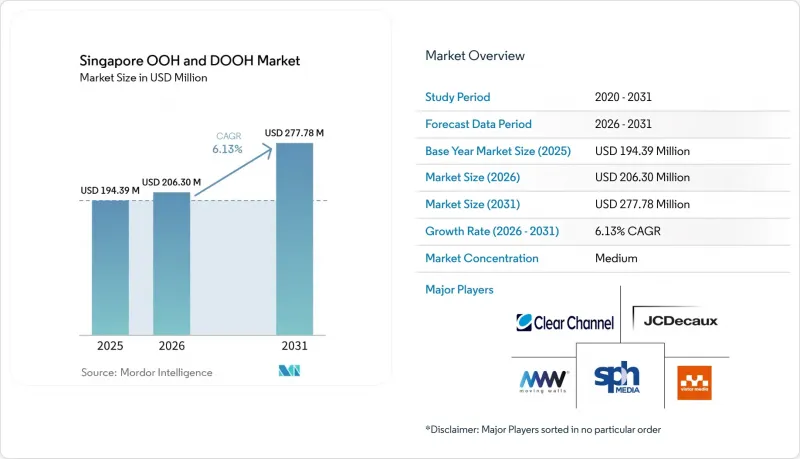
본 보고서는 유형별(정적 OOH, 디지털 OOH(프로그래매틱 DOOH, 인터랙티브 OOH)), 형식별(간판, 교통 광고 등), 설치 환경별(실외, 실내), 최종 사용 산업별(소매 및 소비재, 자동차 등)로 분류되어 있습니다. 시장 전망치는 금액(달러)으로 표시되어 있습니다.
싱가포르 OOH 및 DOOH 시장 동향과 인사이트
프리미엄 LED 파사드의 급속한 보급
오차드 로드는 라이프스타일 지구로 재편되고 있으며, 부동산 소유주들은 거리 광고 매체에 영화 같은 화질을 선사하는 고해상도 스크린에 투자하고 있습니다. URA(도시재개발청)의 인센티브 제도는 2025년 이후, 여러 개의 디지털 캔버스를 추가하는 파사드 개보수를 장려하고 있습니다. 마리나 베이 샌즈는 새로운 타워와 15,000석 규모의 아레나를 증설함으로써, 이를 통해 새로운 야외 및 실내 미디어 구역이 조성될 예정입니다. 이곳들은 유동 인구가 많고 부유층 관객층을 동시에 확보하고 있어, 프리미엄 CPM(노출당 단가)을 실현하고 있습니다. 광고주는 동적 스케줄링, 실시간 광고 소재 교체, 시청자에 대한 노출 보장 등의 이점을 누릴 수 있습니다. 그 결과, DOOH(디지털 옥외광고) 예산은 정적인 포스터에서 이러한 데이터가 풍부한 프리미엄 스크린으로 꾸준히 이동하고 있으며, 싱가포르의 OOH 및 DOOH 시장을 더 높은 디지털 보급률로 끌어올리고 있습니다.
싱가포르 창이 공항 ‘쥬얼’ 및 T5 확장
'쥬얼 창이 공항'은 소매, 어트랙션, 교통 수단이 융합된 라이프스타일 거점으로 자리매김하며, 브랜드에게 주민과 여행객 모두에게 다가갈 수 있는 몰입형 플랫폼을 제공합니다. 연간 5,000만 명의 승객을 수용할 수 있는 제5터미널은 향후 10년 이내에 운영을 시작하면 환승 광고 시장에 새로운 물결을 일으킬 것입니다. JCDecaux사는 2034년까지 운영권 계약을 연장하여, 높이 14미터의 ‘디지털 샹들리에’를 포함해 총 100대의 디지털 스크린으로 구성된, 유기적으로 연계된 공항 네트워크를 광고주들에게 보장하고 있습니다. 전 세계에서 찾아오는 여행객의 구성이 안정적이기 때문에 체류 시간이 길고 전환율도 높아, 창이 공항은 싱가포르의 OOH 및 DOOH 시장의 중요한 축으로 자리 잡고 있습니다.
대형 광고판에 대한 URA의 엄격한 규제
싱가포르는 보존 구역 내 간판 설치를 제한함으로써 경관 회랑과 역사적인 스카이라인을 보호하고 있습니다. 현재의 광고 라이선스 제도에 따르면, 디지털 광고 계획서 제출이 의무화되어 있으며, 건물의 미관을 해치는 광고 크리에이티브는 제한되고 있습니다. 이로 인해, 특히 차이나타운이나 리틀 인디아와 같이 유동 인구가 많은 지역에서는 광고 공간 증가가 억제되고 있습니다. 공급 부족은 가격 프리미엄을 유지하는 한편, 가격에 민감한 부문을 멀어지게 할 가능성이 있어 싱가포르의 OOH 및 DOOH 시장 확대를 둔화시킬 우려가 있습니다.
부문별 분석
싱가포르의 OOH 및 DOOH 시장에서 디지털 OOH 시장 규모는 2025년에 7,699만 달러에 달해, 2031년까지 연평균 성장률(CAGR) 8.55%로 확대될 것으로 전망됩니다. 프로그램 거래는 이미 디지털 스크린 매출의 20%를 차지하고 있으며, JCDecaux사는 2025년까지 그 비중이 30%를 나타낼 것으로 전망하고 있습니다. 다이나믹 크리에이티브 최적화를 통해 광고주는 날씨, 교통 상황, 소매 프로모션에 맞추어 메시지를 실시간으로 조정할 수 있게 됩니다. 정적 광고 공간은 2025년에도 싱가포르의 OOH 및 DOOH 시장 점유율의 60.40%를 계속 차지하고 있지만, CPM 하락과 예약 주기의 장기화로 인해 연평균 3.85%라는 완만한 성장에 그치고 있습니다. 교외 타운 센터에 위치한 수많은 정적 광고판은 여전히 장기적인 브랜드 노출의 장으로서 매력적이지만, 부동산 소유주들은 단계적으로 LED로 교체할 계획을 세우고 있어, 이에 따라 수익은 계속해서 디지털 형식으로 이동할 전망입니다.
싱가포르의 OOH 및 DOOH 시장에서는 미디어 소유주들이 정적 포스터와 디지털 패널을 결합하여, 기존 자산을 보호하는 동시에 수익성이 높은 스크린을 확대해 나가는 단계적 패키지를 제공합니다. FMCG(일용소비재) 및 엔터테인먼트 분야의 브랜드들은 정지 화면에 비해 인지도를 최대 30%까지 높일 수 있기 때문에 풀 모션 비디오를 적극적으로 도입하고 있습니다. 통신 사업자의 위치 정보 데이터를 통해 검증된 오디언스 노출 모델링 등, 측정 도구의 개선을 통해 광고주는 디지털이 가져다주는 추가 도달 범위에 대해 확신을 갖게 되었습니다. 이러한 발전으로 인해 향후 5년 동안 디지털 OOH가 광고비 증가를 주도하는 주요 요인이 될 것이라는 전망이 더욱 확고해지고 있습니다.
대중교통을 통한 광고 게재는 2025년에 4,919만 달러의 매출을 창출해, 이는 싱가포르의 OOH 및 DOOH 시장 규모의 25.30%에 해당하며, 연평균 성장률(CAGR) 9.12%라는 가장 빠른 성장세를 보이고 있습니다. 래플스 플레이스나 도비 고트 등의 MRT 역에서는 평일 방문객 수가 18만 명을 넘어, 통근자들에게 높은 노출 빈도를 제공합니다. 『스트레이츠 타임스』지의 보도에 따르면, 육상교통청(LTA)은 2025년에 버스 광고 단독 운영 사업자를 지정하여, 5,800대의 버스와 100곳의 터미널을 아우르는 패키지 판매를 가능하게 할 예정입니다. 이러한 규모 덕분에 노선을 넘나드는 노출 빈도와 데이터 기반의 경로 계획이 실현되어, 전국적으로 사업을 전개하는 브랜드에게 대중교통 매체의 매력이 더욱 커집니다.
빌보드는 여전히 34.10%의 시장 점유율을 차지하는 최대의 개별 광고 매체이지만, 설치 장소의 제한으로 인해 성장세가 둔화되고 있습니다. 주택개발청(HDB)의 디지털 스크린이 주택 단지에 보급됨에 따라, 거리 광고 시설은 점진적으로 확대되고 있으며, 중간 수준의 CPM으로 초지역적인 도달 범위를 실현하고 있습니다. 공항 미디어는 프리미엄 가격을 유지하고 있으며, JCDecaux의 세계 프로그램형 공항 네트워크를 통해 광고주는 단일 거래 콘솔 내에서 항공편 목적지에 대한 지오펜스 설정을 할 수 있습니다. 이러한 혁신들이 어우러져 광고주들의 관심을 높이고, 싱가포르의 OOH 및 DOOH 시장의 상승세를 지속시키고 있습니다.
기타 혜택:
- 엑셀 형식 시장 예측(ME) 시트
- 3개월간의 애널리스트 지원
자주 묻는 질문
목차
제1장 서론
제2장 조사 방법
제3장 주요 요약
제4장 시장 구도
제5장 시장 규모와 성장 예측
제6장 경쟁 구도
제7장 시장 기회와 향후 전망
JHS 26.06.29According to Mordor Intelligence, the singapore OOH And DOOH market size was valued at USD 194.39 million in 2025 and is estimated to grow from USD 206.30 million in 2026 to reach USD 277.78 million by 2031, at a CAGR of 6.13% during the forecast period (2026-2031).
This report is Segmented by Type (Static OOH, Digital OOH [Programmatic DOOH, Interactive OOH]), Format (Billboards, Transportation, and More), Location Environment (Outdoor, Indoor), End-User Industry (Retail and Consumer Goods, Automotive, and More). The Market Forecasts are Provided in Terms of Value (USD).
Singapore OOH And DOOH Market Trends and Insights
Rapid build-out of premium LED facades
Orchard Road is being repositioned as a lifestyle precinct, and property owners are investing in high-resolution screens that bring cinematic quality to street-level media. The URA's incentive scheme encourages facade upgrades that will add multiple digital canvases from 2025 onward. Marina Bay Sands will add a new tower and a 15,000-seat arena that together create fresh exterior and interior media zones. These sites attract premium CPMs because they marry high footfall with affluent audiences. Advertisers gain dynamic scheduling, real-time creative swaps, and audience impression guarantees. As a result, DOOH budgets move steadily from static posters into these data-rich premium screens, propelling the Singapore OOH and DOOH market toward higher digital penetration.
Singapore Changi Airport Jewel & T5 expansion
Jewel Changi Airport has matured into a lifestyle destination that blends retail, attractions, and transport, giving brands an immersive platform that reaches residents and travelers alike. Terminal 5, sized for 50 million annual passengers, will launch a wave of transit inventory when operations begin in the next decade. JCDecaux extended its concession through 2034, guaranteeing advertisers a coordinated airport network of 100 digital screens, including the 14-meter-tall Digital Chandelier. The consistent global traveler mix supports long dwell times and high conversion rates, making Changi a core pillar of the Singapore OOH and DOOH market.
Stringent URA cap on large-format sites
Singapore protects visual corridors and heritage skylines by limiting billboard approvals in conservation areas. The Advertising Licensing System now requires digital plan submissions and restricts creatives that impede building aesthetics. This curtails inventory growth, especially in high-traffic zones like Chinatown and Little India. Supply scarcity sustains price premiums and can deter price-sensitive sectors, slowing the expansion of the Singapore OOH and DOOH market.
Other drivers and restraints analyzed in the detailed report include:
- Smart-Nation push for programmatic DOOH
- MAS open-banking policy catalysing fintech OOH spend
- High median CPM versus regional peers
For complete list of drivers and restraints, kindly check the Table Of Contents.
Segment Analysis
The Singapore OOH and DOOH market size for Digital OOH reached USD 76.99 million in 2025 and is forecast to climb at an 8.55% CAGR through 2031. Programmatic trading already accounts for 20% of digital screen revenue, and JCDecaux expects that share to hit 30% by 2025. Dynamic creative optimization allows advertisers to align messaging with weather, traffic, and retail promotions in real time. Static inventory, while still holding 60.40% of the Singapore OOH and DOOH market share in 2025, sees slower 3.85% annual growth thanks to lower CPMs and longer booking cycles. Many static faces in suburban town centers remain attractive for long-term brand presence, yet landlords plan phased LED retrofits that will continue to tilt revenue toward digital formats.
In the Singapore OOH and DOOH market, media owners bundle static posters with digital panels to offer tiered packages that protect legacy assets while promoting high-margin screens. Brands in FMCG and entertainment embrace full-motion video because it yields recall uplifts of up to 30% compared with static. Improved measurement tools, such as audience impression modeling validated by telecom location data, provide advertisers with confidence in the incremental reach delivered by digital. These advances reinforce Digital OOH as the primary driver of incremental spend over the next five years.
Transit placements generated USD 49.19 million, equal to 25.30% of the Singapore OOH and DOOH market size in 2025, and exhibit the fastest trajectory at a 9.12% CAGR. MRT stations like Raffles Place and Dhoby Ghaut record weekday gate counts above 180,000, offering dense commuter impressions. The Straits Times reports that the Land Transport Authority will appoint a single concessionaire for bus advertising in 2025, allowing package sales across 5,800 buses and 100 terminals. This scale creates cross-line frequency and data-driven route planning, raising the appeal of transit media to national brands.
Billboards remain the largest individual format at 34.10% market share, yet growth lags due to site caps. Street furniture enjoys moderate expansion as Housing and Development Board (HDB) digital screens penetrate residential estates, delivering hyper-local reach at mid-range CPMs. Airport media enjoys premium pricing, and JCDecaux's global programmatic airport network lets advertisers geofence flight destinations inside one trading console. Collectively, these innovations intensify advertiser interest and sustain the upward curve of the Singapore OOH and DOOH market.
List of Companies Covered in this Report:
- JCDecaux Singapore Pte Ltd
- Clear Channel Singapore Pte Ltd
- Moving Walls Pte Ltd
- Talon Outdoor Ltd
- Moove Media
- Vistar Media
- Gleamedia
- SPH Media Ltd
- Hivestack Inc.
- Broadsign International LLC
- Asiaray Media Group Ltd
- Mediacorp Pte Ltd
- oOh!Media Singapore
- VGI Public Company Ltd (SG office)
- Stroer SE and Co. KGaA
- Pixel Media Mania Pte Ltd
- Ads On Cab Pte Ltd
- SY Media Advertising
- Scala Asia-Pacific Pte Ltd
- Stellar Ace
Additional Benefits:
- The market estimate (ME) sheet in Excel format
- 3 months of analyst support
TABLE OF CONTENTS
1 INTRODUCTION
- 1.1 Study Assumptions and Market Definition
- 1.2 Scope of the Study
2 RESEARCH METHODOLOGY
3 EXECUTIVE SUMMARY
4 MARKET LANDSCAPE
- 4.1 Market Overview
- 4.2 Market Drivers
- 4.2.1 Rapid build-out of premium LED facades along Orchard Road and Marina Bay Sands
- 4.2.2 Singapore Changi Airport's Jewel and T5 expansion boosting transit inventory
- 4.2.3 Smart-nation push accelerating programmatic-DOOH adoption by local SMEs
- 4.2.4 MAS open-banking policy catalysing fintech OOH spend
- 4.2.5 Data-mingled commuter insights from SBS Transit/SMRT mobile apps
- 4.3 Market Restraints
- 4.3.1 Stringent Urban Redevelopment Authority cap on large-format sites
- 4.3.2 High median media-buy CPM versus regional peers (Bangkok, Kuala Lumpur)
- 4.3.3 Advertising exclusion zones near heritage districts
- 4.4 Regulatory Outlook
- 4.5 Porter's Five Forces Analysis
- 4.5.1 Bargaining Power of Suppliers
- 4.5.2 Bargaining Power of Consumers
- 4.5.3 Threat of New Entrants
- 4.5.4 Competitive Rivalry within the Industry
- 4.5.5 Threat of Substitutes
- 4.6 Industry Ecosystem Analysis
5 MARKET SIZE AND GROWTH FORECASTS (VALUE)
- 5.1 By Type
- 5.1.1 Static (Traditional) OOH
- 5.1.2 Digital OOH
- 5.1.2.1 Programmatic-OOH
- 5.1.2.2 Other DOOH Types
- 5.2 By Format
- 5.2.1 Billboard
- 5.2.2 Street Furniture
- 5.2.3 Transportation (Transit)
- 5.2.3.1 Airports
- 5.2.3.2 Other Transit (MRT, buses, taxis)
- 5.2.4 Place-based Media
- 5.3 By Location Environment
- 5.3.1 Outdoor
- 5.3.2 Indoor
- 5.4 By End-User Industry
- 5.4.1 Automotive
- 5.4.2 Retail and Consumer Goods
- 5.4.3 Healthcare
- 5.4.4 BFSI
- 5.4.5 Other End Users
6 COMPETITIVE LANDSCAPE
- 6.1 Strategic Moves
- 6.2 Vendor Positioning Analysis
- 6.3 Company Profiles (includes Market-level Overview, Core Segments, Financials as available, Strategic Information, Products and Services, and Recent Developments)
- 6.3.1 JCDecaux Singapore Pte Ltd
- 6.3.2 Clear Channel Singapore Pte Ltd
- 6.3.3 Moving Walls Pte Ltd
- 6.3.4 Talon Outdoor Ltd
- 6.3.5 Moove Media
- 6.3.6 Vistar Media
- 6.3.7 Gleamedia
- 6.3.8 SPH Media Ltd
- 6.3.9 Hivestack Inc.
- 6.3.10 Broadsign International LLC
- 6.3.11 Asiaray Media Group Ltd
- 6.3.12 Mediacorp Pte Ltd
- 6.3.13 oOh!Media Singapore
- 6.3.14 VGI Public Company Ltd (SG office)
- 6.3.15 Stroer SE and Co. KGaA
- 6.3.16 Pixel Media Mania Pte Ltd
- 6.3.17 Ads On Cab Pte Ltd
- 6.3.18 SY Media Advertising
- 6.3.19 Scala Asia-Pacific Pte Ltd
- 6.3.20 Stellar Ace
7 MARKET OPPORTUNITIES AND FUTURE OUTLOOK
- 7.1 White-space and Unmet-Need Assessment


