|
시장보고서
상품코드
2072713
중유럽 및 동유럽의 지붕재 시장 : 시장 점유율 분석, 업계 동향 및 통계, 성장 예측(2026-2031년)Central and Eastern Europe Roofing - Market Share Analysis, Industry Trends & Statistics, Growth Forecasts (2026 - 2031) |
||||||
 Mordor Intelligence
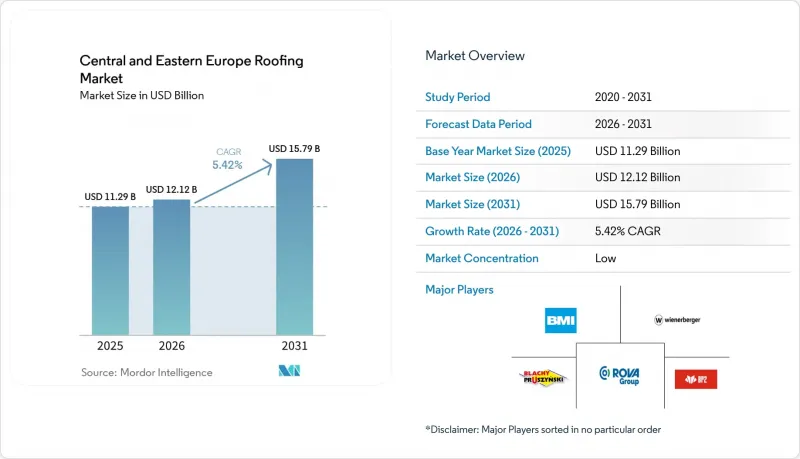
Mordor Intelligence에 의하면, 중유럽 및 동유럽의 지붕재 시장 규모는 2025년에 112억 9,000만 달러로 평가되었고, 2026년에 121억 2,000만 달러로 추정되고, 2031년까지 157억 9,000만 달러에 이를 것으로 예측되며, 2026-2031년 CAGR 5.42%로 성장할 전망입니다.
본 보고서는 자재 유형별(아스팔트 슁글, 점토 및 콘크리트 기와, 금속 지붕, 역청 및 개질 아스팔트 막 등), 시공 유형별(신축, 지붕 재시공), 용도별(주택 등), 지역별(폴란드, 루마니아, 체코 공화국, 헝가리, 기타 유럽 국가)로 분류되어 있습니다. 시장 전망은 금액(달러) 기준으로 제시되어 있습니다.
중유럽 및 동유럽의 지붕재 시장 동향과 인사이트
EPBD에 따른 개보수 의무화가 정책에 뒷받침된 지속적인 수요 파이프라인을 창출
중유럽 및 동유럽의 지붕재 시장은 '건축물의 에너지 성능에 관한 지침(EPBD)' 개정안에 따라 재구축이 진행되고 있으며, 이는 예측 기간 동안 지붕 개보수 결정에 영향을 미치는 가장 강력한 정책적 요인 중 하나입니다. 이 지침에 따르면, 에너지 성능이 가장 낮은 비주거용 건축물 중 2030년까지 16%, 2033년까지 26%를 개보수해야 할 의무가 부과될 뿐만 아니라, 2030년까지 주거용 건축물의 평균 1차 에너지 사용량을 16% 감축하는 것도 목표로 하고 있습니다. 중유럽 및 동유럽에서 이 점이 특히 중요한 이유는 건축물 재고의 50% 이상이 현재의 성능 기준을 충족하지 못하고 있으며, 주택 재고의 상당 부분이 1990년 이전에 건설된 것이기 때문입니다. 실제로 많은 건물에서는 소규모 보수만으로는 기준을 충족할 수 없기 때문에 지붕 재시공, 단열 성능 향상 및 관련 외피 공사가 세트로 지정되는 사례가 늘어날 것으로 보입니다. 이러한 세트화 조치로 인해 지붕 공사 수요는 선택적 성격이 약화되고, 의무적으로 준수해야 하는 일정과 밀접하게 연계되게 됩니다. 이를 통해 중유럽 및 동유럽의 지붕재 시장에 서비스를 제공하는 공급업체와 시공업체 입장에서는 수요 전망을 더 쉽게 예측할 수 있게 됩니다. 또한, 기술적으로 인증받은 시스템의 가치도 높아집니다. 이는 구매자들이 단순히 내후성을 회복하는 것뿐만 아니라, 완성된 지붕이 에너지 성능 목표를 충족한다는 증명을 요구하게 되었기 때문입니다.
단열 개보수 보조금 프로그램이 주택 지붕 교체 공사를 대규모로 촉진하고 있습니다.
일반 가구를 대상으로 한 보조금 프로그램은 개보수 공사의 대상 범위를 확대하고 있어, 중유럽 및 동유럽의 지붕재 시장을 단기적인 가격 압박에 대해 더욱 탄력적으로 만들고 있습니다. 폴란드의 'Czyste Powietrze'이 프로그램은 2025년 3월 유럽연합(EU)의 현대화 기금으로부터 100억 즈워티(25억 달러)의 자금을 확보했습니다. 여기에는 보다 광범위한 가정용 에너지 개보수의 일환으로 지붕 단열에 대한 지원도 포함되어 있습니다. 체코 공화국에서는 '뉴 그린 세이빙스 프로그램'에서 단독주택이나 공동주택의 지붕 및 천장 단열 공사를 직접 지원하고 있으며, 이를 통해 정책적 수요가 실제 지붕 교체 공사로 이어지고 있습니다. 이러한 효과는 특히 저소득층에서 두드러지며, 보조금 지원 비율이 높기 때문에 금속 및 아스팔트 가격 변동에 따른 보수 결정의 민감도가 낮아지고 있습니다. 이로 인해, 특히 주택 재고가 노후되고 난방 효율이 낮은 국가들에서는 순수하게 보조금이 없는 소비자 시장인 경우보다 지붕 교체 수주 전망이 더욱 안정적으로 나타나고 있습니다. 그 결과, 중유럽 및 동유럽의 지붕재 시장에서는 단열, 지붕재 교체, 향후 태양광 발전에 대한 대비를 별개의 단계가 아닌 주택 소유자의 단일 의사결정 과정에서 검토하는 프로젝트가 늘어나고 있습니다.
철강, 아스팔트 및 에너지 투입 비용의 변동
철강 및 아스팔트 가격 변동은 중유럽 및 동유럽 지붕재 시장에 여전히 직접적인 역풍으로 작용하고 있으며, 특히 수입 원료에 의존하는 제품군이나 에너지 집약적인 생산 공정이 필요한 제품군에서 그 영향이 두드러집니다. EUROMETAL의 보고에 따르면, 2026년 5월 하순의 열간 압연 코일 가격은 톤당 700-770유로(톤당 756-831.6달러 상당)였으나, 2026년 7월의 세이프가드 조치 변경으로 인해, 철강 제품의 가격 동향은 불투명한 상태가 지속될 것으로 예측됩니다. 이러한 불확실성으로 인해 견적 기간 설정 및 조달 시기 관리가 어려워지면서, 금속 지붕재 제조업체, 가공업체 및 판매업체에 영향을 미치고 있습니다. 평지붕 시스템의 경우, 아스팔트와 관련된 압력도 중요한 요인이 됩니다. 원자재 공급 차질은 프로젝트 일정을 지연시키고 이익률을 압박할 가능성이 있기 때문입니다. 또한, 에너지 비용은 안정적인 공장 운영에 의존하는 점토 기와, 방수 시트 및 기타 지붕재 제품의 생산에 추가적인 부담을 주고 있습니다. 이러한 부담은 지역 중소기업에 특히 크게 작용하고 있으며, 그 결과 폭넓은 조달 옵션과 견고한 재무 기반을 갖춘 대기업의 시장 점유율 확대가 가속화될 가능성이 있습니다.
부문별 분석
2025년 기준으로 점토 및 콘크리트 기와가 36.20%의 시장 점유율을 차지했으며, 중유럽 및 동유럽의 지붕재 시장에서 가장 큰 소재 카테고리를 형성하고 있습니다. 이러한 주도적인 위상은 폴란드, 헝가리, 체코 공화국에서 기와 지붕이 여전히 주택 건축의 주류를 이루고 있다는 점과 밀접하게 연관되어 있으며, 이는 경사 지붕에 대한 오랜 선호도를 반영한 것입니다. 또한, 이 부문은 개보수 대상이 되는 주택의 상당수가 원래 기와 시스템에 적합한 경사 지붕으로 지어졌기 때문에 재건축 수요의 혜택도 누리고 있습니다. 실용적인 관점에서 볼 때, 성능에 대한 기대가 높아지는 상황에서도 이러한 기존 설치 실적이 있기 때문에 기와가 여전히 중요한 위치를 차지하고 있습니다. 2025년 말 시점의 투자 동향을 보아도, 각 제조업체가 여전히 이 부문을 전략적으로 중요하게 여기고 있음을 알 수 있습니다. 예를 들어, 위너베르거사는 헝가리에 연간 생산 능력 300만 제곱미터, 투자액 3,000만 유로(3,240만 달러) 규모의 새로운 콘크리트 기와 공장을 가동했습니다. 이번 결정은 중유럽 및 동유럽의 지붕재 업계에서 규모, 제품의 지속성, 지역적 공급 체계가 여전히 중요하다는 견해를 뒷받침하는 것입니다.
CAGR 따라서, 기존의 지붕 골조가 무거운 교체용 시스템을 쉽게 지탱할 수 없는 리모델링 프로젝트의 경우, 금속 지붕이 특히 매력적입니다. 또한, 인증받은 숙련된 인력이 제한적이기 때문에 시공업체가 더 적은 현장 작업 일수로 더 넓은 면적을 시공해야 하는 프로젝트에도 적합합니다. 평지붕 상업시설의 경우, 아스팔트계 및 개질 아스팔트계 방수 시트가 여전히 필수적이지만, 비용 및 공급 변동으로 인해 조달 계획이 복잡해질 가능성이 있습니다. 단층막은 배수 설계 및 옥상 태양광 발전 시스템과의 통합에 적합하기 때문에 대규모 산업용 분야에서 시장 점유율을 확대되고 있습니다. 한편, 아스팔트 슁글은 틈새 시장에서의 역할을 유지하고 있으며, 목재는 역사적 건축물이나 고급 용도에 집중적으로 사용되고 있습니다. 중부 및 동유럽 지붕재 업계 전반에서 소유주들이 단순히 저렴한 자재로 교체하는 것보다 규격 준수, 내구 연수, 통합성을 더욱 중요시하게 됨에 따라, 인증 시스템 솔루션으로의 전환이 더욱 뚜렷해지고 있습니다.
기타 혜택 :
- 엑셀 형식 시장 예측(ME) 시트
- 3개월간의 애널리스트 지원
자주 묻는 질문
목차
제1장 서론
제2장 조사 방법
제3장 주요 요약
제4장 시장 구도
제5장 시장 규모 및 성장 예측
제6장 경쟁 구도
제7장 시장 기회 및 향후 전망
AJY 26.07.03According to Mordor Intelligence, the central and eastern europe roofing market size is projected to be USD 11.29 billion in 2025, USD 12.12 billion in 2026, and reach USD 15.79 billion by 2031, growing at a CAGR of 5.42% from 2026 to 2031.
This report is Segmented by Material Type (Asphalt Shingles, Clay & Concrete Tiles, Metal Roofing, Bituminous / Modified Bitumen Membranes, and More), Construction Type (New Construction, Reroofing), Application (Residential, and More), and Geography (Poland, Romania, Czech Republic, Hungary, and Rest of Central and Eastern Europe). The Market Forecasts are Provided in Terms of Value (USD).
Central and Eastern Europe Roofing Market Trends and Insights
EPBD Renovation Mandates Create a Durable, Policy-Anchored Demand Pipeline
The Central and Eastern Europe roofing market is being reshaped by the recast of the Energy Performance of Buildings Directive (EPBD), which is one of the strongest policy drivers influencing roof renovation decisions over the forecast period. The directive requires renovating the 16% worst-performing non-residential buildings by 2030 and 26% by 2033, while also targeting a 16% reduction in average primary energy use in residential buildings by 2030. This matters more in Central and Eastern Europe because more than 50% of the building stock does not meet current performance expectations, and much of the residential base predates 1990. In practice, many properties will not be able to comply solely through minor repairs, so roof replacement, insulation upgrades, and related envelope work will increasingly be specified together. That bundling effect makes roofing demand less discretionary and more tied to mandatory compliance schedules, which improves visibility for suppliers and installers serving the Central and Eastern Europe roofing market. It also raises the value of technically certified systems, because buyers now need proof that the finished roof meets energy performance targets rather than just restoring weather protection.
Thermal Modernization Subsidy Programs Activate Household Reroofing at Scale
Household subsidy programs are expanding the addressable base for renovation work and making the Central and Eastern European roofing market more resilient to short-term price pressure. Poland's Czyste Powietrze program secured PLN 10 billion (USD 2.5 billion) from the European Union (EU) Modernization Fund in March 2025, including support for roof insulation as part of wider household energy upgrades. In the Czech Republic, the New Green Savings Programme directly supports roof and ceiling insulation for family houses and apartment buildings, which helps convert policy demand into actual roof replacement activity. The effect is especially strong at the lower-income end, where high grant coverage reduces the sensitivity of repair decisions to movements in metal or bitumen prices. That keeps reroofing pipelines more stable than they would be in a purely unsubsidized consumer market, particularly in countries with older housing stock and low heating efficiency. As a result, the Central and Eastern Europe roofing market is seeing more projects where insulation, covering replacement, and future solar compatibility are considered in a single homeowner decision rather than in separate phases.
Volatile Steel, Bitumen, and Energy Input Costs
Steel and bitumen price volatility remains a direct headwind for the Central and Eastern Europe roofing market, particularly in product groups that depend on imported feedstock or energy-intensive production. EUROMETAL reported late May 2026 hot-rolled coil prices at EUR 700 to EUR 770 per tonne, equivalent to USD 756 to USD 831.6 per tonne, while the July 2026 safeguard changes are expected to keep pricing for steel-based products uncertain. That uncertainty affects metal roofing manufacturers, fabricators, and distributors because quoting windows and procurement timing become harder to manage. Bitumen-related pressure also matters for flat roofing systems, as disruptions in raw material availability can delay project schedules and compress margins. Energy costs add another layer of strain on clay tile, membrane, and other manufactured roofing products that depend on stable plant economics. The burden falls more heavily on smaller regional players, which may accelerate share gains for larger businesses with broader sourcing options and stronger balance sheets.
Other drivers and restraints analyzed in the detailed report include:
- Nearshoring Industrial Construction Sustains Single-Ply and Panel Roofing Demand
- Metal Roofing Substitution in Renovation for Lightweight, Faster Installation
- Skilled Roofer Shortages and Ageing Installer Base
For complete list of drivers and restraints, kindly check the Table Of Contents.
Segment Analysis
Clay & Concrete Tiles held a 36.20% market share in 2025, making them the largest material category in the Central and Eastern Europe roofing market. This leading position reflects long-established preferences for pitched roofs across Poland, Hungary, and the Czech Republic, where tile roofs remain closely tied to mainstream residential construction. The category also benefits from replacement demand, as many renovated homes were originally built with pitched roofs that are well-suited to tile systems. In practical terms, that installed base keeps tile relevant even as performance expectations rise. End-2025 investment also showed that manufacturers still view this category as strategically important, with Wienerberger commissioning a new concrete roof tile plant in Hungary with an annual capacity of 3 million square meters and an investment of EUR 30 million (USD 32.4 million). The decision supports the view that scale, product continuity, and regional supply remain important in the Central and Eastern Europe roofing industry.
Metal Roofing is the fastest-growing material segment, with the Central and Eastern Europe roofing market size for this category projected to expand at a 6.40% CAGR from 2026 to 2031. Its growth is tied to two practical advantages that matter more each year: lighter structural loading on older buildings and faster installation under tight labor conditions. That makes metal especially attractive in renovation projects where legacy roof frames cannot easily support heavier replacement systems. It also fits projects where installers need to complete more area in fewer site days because certified labor is limited. Bituminous and modified bitumen membranes remain essential for flat commercial roofs, although cost and supply volatility can complicate procurement planning. Single-ply membranes are gaining ground in large industrial applications due to their compatibility with drainage design and rooftop solar integration. At the same time, asphalt shingles retain a niche role, and wood remains concentrated in heritage and premium uses. Across the Central and Eastern Europe roofing industry, the shift toward certified system solutions is becoming clearer as owners place more value on compliance, service life, and integration than on low-end material substitution alone.
Complete Report Scope:
- By Material Type
- Asphalt Shingles
- Clay & Concrete Tiles
- Metal Roofing
- Bituminous / Modified Bitumen Membranes
- Single-Ply Membranes (TPO, EPDM, and PVC)
- Wood
- Others
- By Construction Type
- New Construction
- Reroofing and Replacement
- By Application
- Residential
- Commercial
- Industrial
- Institutional
- Others
- By Geography
- Poland
- Romania
- Czech Republic
- Hungary
- Rest of Central and Eastern Europe
List of Companies Covered in this Report:
- BMI Group
- Wienerberger
- Pruszynski
- BP2
- ROVA Group
- Lindab
- Ruukki Construction
- Kingspan Group
- Soprema
- Bilka
- Metigla
- Wetterbest
- Balex Metal
- swissporTON
- Terran Group
- Onduline Group
- PREFA Aluminiumprodukte
- Gerard Roofing System
- Nelskamp
- Bauder
Additional Benefits:
- The market estimate (ME) sheet in Excel format
- 3 months of analyst support
TABLE OF CONTENTS
1 Introduction
- 1.1 Study Assumptions & Market Definition
- 1.2 Scope of the Study
2 Research Methodology
3 Executive Summary
4 Market Landscape
- 4.1 Market Overview
- 4.2 Market Drivers
- 4.2.1 EPBD-Led Deep Renovation of Worst-Performing Buildings
- 4.2.2 Thermal Modernization Subsidies Supporting Reroofing Demand
- 4.2.3 Nearshoring-Led Warehouse and Light-Industrial Roof Build-Out
- 4.2.4 Metal Roofing Substitution in Renovation for Lightweight, Faster Installation
- 4.2.5 Solar-Ready and Rooftop PV Permit Triggers Increasing Roof-System Upgrades
- 4.2.6 Hail and Convective Storm Damage Accelerating Reroofing Cycles
- 4.3 Market Restraints
- 4.3.1 Volatile Steel, Bitumen, and Energy Input Costs
- 4.3.2 Skilled Roofer Shortages and Ageing Installer Base
- 4.3.3 Renovation Underperformance and Weak Building-Level Execution Controls
- 4.3.4 Fragmented Installer Quality and Uneven Code Enforcement
- 4.4 Value / Supply-Chain Analysis
- 4.5 Regulatory Landscape
- 4.6 Technological Outlook
- 4.7 Cost Structure Analysis
- 4.8 Trend and Impacts of Roofing Replacements
- 4.9 Porter's Five Forces
- 4.9.1 Threat of New Entrants
- 4.9.2 Bargaining Power of Suppliers
- 4.9.3 Bargaining Power of Buyers
- 4.9.4 Threat of Substitutes
- 4.9.5 Intensity of Competitive Rivalry
5 Market Size & Growth Forecasts (Value, USD)
- 5.1 By Material Type
- 5.1.1 Asphalt Shingles
- 5.1.2 Clay & Concrete Tiles
- 5.1.3 Metal Roofing
- 5.1.4 Bituminous / Modified Bitumen Membranes
- 5.1.5 Single-Ply Membranes (TPO, EPDM, and PVC)
- 5.1.6 Wood
- 5.1.7 Others
- 5.2 By Construction Type
- 5.2.1 New Construction
- 5.2.2 Reroofing and Replacement
- 5.3 By Application
- 5.3.1 Residential
- 5.3.2 Commercial
- 5.3.3 Industrial
- 5.3.4 Institutional
- 5.3.5 Others
- 5.4 By Geography
- 5.4.1 Poland
- 5.4.2 Romania
- 5.4.3 Czech Republic
- 5.4.4 Hungary
- 5.4.5 Rest of Central and Eastern Europe
6 Competitive Landscape
- 6.1 Market Concentration
- 6.2 Strategic Moves
- 6.3 Market Share Analysis
- 6.4 Company Profiles (Includes Global Level Overview, Market Level Overview, Core Segments, Financials as Available, Strategic Information, Products & Services, and Recent Developments)
- 6.4.1 BMI Group
- 6.4.2 Wienerberger
- 6.4.3 Pruszynski
- 6.4.4 BP2
- 6.4.5 ROVA Group
- 6.4.6 Lindab
- 6.4.7 Ruukki Construction
- 6.4.8 Kingspan Group
- 6.4.9 Soprema
- 6.4.10 Bilka
- 6.4.11 Metigla
- 6.4.12 Wetterbest
- 6.4.13 Balex Metal
- 6.4.14 swissporTON
- 6.4.15 Terran Group
- 6.4.16 Onduline Group
- 6.4.17 PREFA Aluminiumprodukte
- 6.4.18 Gerard Roofing System
- 6.4.19 Nelskamp
- 6.4.20 Bauder
7 Market Opportunities & Future Outlook
- 7.1 White-Space & Unmet-Need Assessment