

|
시장보고서
상품코드
2099052
영국의 역물류 시장 : 점유율 분석, 업계 동향 및 통계, 성장 예측(2026-2031년)United Kingdom Reverse Logistics - Market Share Analysis, Industry Trends & Statistics, Growth Forecasts (2026 - 2031) |
||||||
 Mordor Intelligence
Mordor Intelligence에 의하면, 영국 역물류 시장 규모는 2025년에 322억 9,000만 달러로 평가되었고 2026년 347억 7,000만 달러에서 2031년까지 495억 1,000만 달러에 이를 것으로 예측되며, 예측 기간(2026-2031년) CAGR은 7.32%를 나타낼 전망입니다.
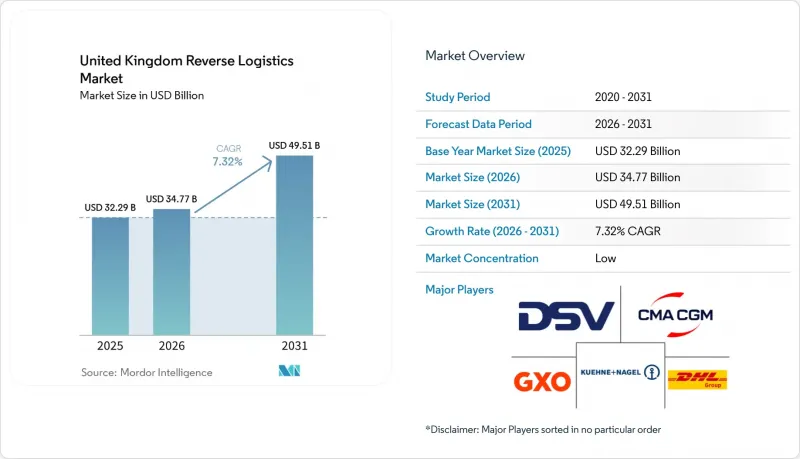
영국의 역물류 시장은 회수 및 재활용 관련 규제 강화에 힘입어 성장하고 있습니다. 구체적으로는 2025년 10월에 포장재에 대한 EPR(확대 생산자 책임) 수수료가 시행되며, 개정된 WEEE 규정에 따른 온라인 마켓플레이스의 의무가 2025년 8월부터 시행되고, 자금 조달 의무는 2026년 1월부터 시작됩니다. 본 보고서는 역물류 기능별(운송(육상, 항공, 기타 운송 수단), 창고 관리(보관, 유통 등), 부가가치 서비스), 최종 사용자 산업별(소비자·소매, 주택·인테리어, 의료 및 의약품, FMCG, 기타 최종 사용자), 지역별(잉글랜드, 스코틀랜드, 웨일스, 북아일랜드)로 분류되어 있습니다. 시장 전망은 달러 기준으로 제시되어 있습니다.
영국 역물류 시장 동향과 인사이트
증가하는 전자상거래 반품량
영국의 역물류 시장은 의류, 신발, 전자기기 분야의 온라인 반품 활동이 활발해짐에 따라 계속해서 혜택을 보고 있습니다. 영국의 전자상거래 반품률은 2025년 내내 17.5% 전후로 유지되었으나, 패션 및 신발 카테고리의 경우 피크 시 30%에서 40%에 달했으며, 운송을 통한 수거량 및 창고 반입량은 구조적으로 높은 수준을 유지했습니다. 2026년의 ‘리턴 유어리(반품 시즌)’ 기간에만 반품 상품에서 16억 파운드(21억 4,000만 달러)가 창출되어, 영국 내 계절적 수요 집중 현상이 여전히 두드러짐이 부각되었습니다. 이러한 반품 중 여러 상품을 한꺼번에 주문하는 경향에 따른 비중이 증가하고 있어, 재판매 가능한 상태로 반품되는 상품이 늘어나며, 폐기나 저가 처분이 아닌 보다 신속한 회수 채널로 분류되고 있습니다. 이러한 추세로 인해 운송 네트워크, 처분 도구, 반품 플랫폼에 대한 투자 확대가 촉진되고 있습니다. 상품이 새 제품이거나 사용 흔적이 적을수록 각 상품의 재판매 가능성이 높아지기 때문입니다.
소매업체의 환불 주기 단축 노력
영국의 역물류 시장은 고객의 반품부터 환불 확인까지 걸리는 시간을 단축하라는 소매업체들의 압력에 의해서도 형성되고 있습니다. ASOS는 2026년 1월에 단계적인 반품 수수료 정책을 도입했습니다. 이에 따르면, 반품률이 70%를 초과하는 고객은 40파운드(53달러) 이상의 상품을 구매하지 않는 한 4파운드(5.35달러)의 수수료가 부과됩니다. 이는 소매업체가 현재 반품과 관련된 경제성을 얼마나 엄격하게 관리하고 있는지를 보여줍니다. 이러한 수수료 변경이 있더라도 반품된 상품을 처리할 필요가 없어지는 것은 아닙니다. 상품은 여전히 회수, 검사, 재판매 또는 폐기 과정을 거쳐야 하기 때문입니다. 물류 제공업체들은 재고가 유휴 상태로 있는 동안 가치가 손실되지 않도록 입고, 분류, 재입고 워크플로우의 신속화를 추진함으로써 이에 대응하고 있습니다. 그 결과, 특히 패션이나 가전제품 등 반품률이 높은 카테고리에서 처리 시간을 며칠에서 몇 시간으로 단축할 수 있는 외부 위탁 파트너에 대한 수요가 증가하고 있습니다.
개당 높은 반품 처리 비용
개당 높은 처리 비용은 여전히 영국 역물류 시장의 가장 뚜렷한 걸림돌로 남아 있습니다. 반품된 상품 한 점마다 운송, 입고, 검사, 등급 분류, 재포장, 그리고 재판매 또는 폐기 중 하나의 공정이 필요하기 때문에 저가 상품의 이익 확보는 어렵습니다. 반품률이 높은 카테고리의 경우, 역물류 비용이 총 매출의 7%에 달하기도 하는데, 이는 중견 온라인 소매업체의 이익률을 압박하기에 충분한 수준입니다. 따라서 재판매 가치가 낮은 상품의 경우, 상품 회수를 완전히 포기하더라도 반품 없이 환불 처리하는 방식을 채택하는 판매업체도 있습니다. 이러한 비용 부담은 경우에 따라 아웃소싱을 촉진하는 한편, 저가 상품에 대한 고품질 반품 처리에 소매업체가 투자하려는 의지를 제한하는 요인이 되기도 합니다.
부문 분석
2025년 영국 역물류 시장에서 운송이 46.17%의 점유율을 차지하며, 현재 국내 반품 활동 구조에서 가장 큰 기능을 담당하고 있습니다. 이러한 주도적인 지위는 수거 거점, 지역 집하 거점 및 중앙 반품 거점 간의 도로 운송을 통한 수거가 매우 대규모로 이루어지고 있음을 반영합니다. Evri사의 전국 소포 접근 네트워크와 InPost사의 소포 보관함 및 우체국 접근 지점에 대한 지속적인 확장은 왜 운송이 이 모델에서 여전히 매우 중요한 위치를 차지하고 있는지를 보여줍니다. 이는 반품을 위한 접점이 하나 늘어날 때마다 수거 밀도와 간선 운송 수요가 증가하기 때문입니다. 또한, 반품에 대한 고객의 기대에 부응하기 위해 분산된 소비자와 처리 허브를 신속하게 연결해야 하므로, 운송은 운영 비용의 상당 부분을 차지하고 있습니다. 영국의 역물류 시장에서는 국내 소포 흐름이 밀집되어 있으며, 대부분의 반품 상품에서 운송 수단의 복잡성보다 수거 속도가 더 중요하게 여겨지기 때문에 이 기능에서도 도로 운송이 주도적인 역할을 계속하고 있습니다.
창고 업무는 가장 빠르게 성장하는 분야이며, 영국 역물류 시장의 창고 업무는 2031년까지 연평균 성장률(CAGR) 13.33%로 확대될 것으로 예측됩니다. 이러한 성장은 단순한 보관 업무에서 공유 시설 내의 다단계 반품 처리로 전환됨에 따라 주도되고 있습니다. 2025년 10월에 출범한 DHL 공급망의 ‘리턴 네트워크’는 11곳의 전용 시설을 핵심으로 구축되어 있으며, 동일한 네트워크 내에서 여러 제품 유형 및 고객의 반품을 처리함으로써 수령부터 검사, 재입고까지의 프로세스를 단축하고 있습니다. 소매업체들이 재고의 유휴 기간을 단축하고 회수 가치를 높일 수 있도록, 주문 처리 및 반품 업무를 동일한 거점에서 운영하기를 원함에 따라 이 기능의 중요성은 더욱 커지고 있습니다. 또한, 반품된 상품의 상당수가 저가 처분 대신 재생, 재입고, 리커머스 채널로 전환됨에 따라, 기타 부가가치 서비스도 서비스 구성 내에서 그 존재감을 계속해서 확대되고 있습니다.
기타 혜택:
- 엑셀 형식 시장 예측(ME) 시트
- 3개월간의 애널리스트 지원
자주 묻는 질문
목차
제1장 서론
제2장 조사 방법
제3장 주요 요약
제4장 시장 구도
제5장 시장 규모 및 성장 예측(금액, 2026-2031년)
제6장 경쟁 구도
제7장 시장 기회와 향후 전망
JHS 26.08.05According to Mordor Intelligence, the United Kingdom reverse logistics market size was valued at USD 32.29 billion in 2025 and estimated to grow from USD 34.77 billion in 2026 to reach USD 49.51 billion by 2031, at a CAGR of 7.32% during the forecast period (2026 to 2031).
The United Kingdom reverse logistics market is being lifted by tighter recovery and recycling rules, as packaging EPR fees became enforceable in October 2025 and online marketplace obligations under the amended WEEE rules moved into force from August 2025, with financing obligations starting in January 2026. This report is Segmented by Reverse Logistics Function (Transportation (Road, Air, Other Modes), Warehousing (Storage, Distribution, and More), Value-Added Services), by End-User Industry (Consumer and Retail, Home and Decor, Healthcare and Pharmaceuticals, FMCG, and Other End Users), and by Geography (England, Scotland, Wales, and Northern Ireland). The Market Forecasts are Provided in USD.
United Kingdom Reverse Logistics Market Trends and Insights
Rising E-Commerce Return Volumes
The United Kingdom reverse logistics market continues to benefit from elevated online return activity across apparel, footwear, and electronics. The United Kingdom e-commerce return rate remained near 17.5% through 2025, while fashion and footwear categories reached 30% to 40% during peak periods, keeping transport pickup and warehouse intake volumes structurally high. Returnuary 2026 alone generated GBP 1.6 billion (USD 2.14 billion) in returned goods, underscoring the continued concentration of seasonal demand in this country. A growing share of these returns comes from multi-item ordering behavior, meaning more products return in resale-ready condition and can be routed to quicker recovery channels rather than scrap or low-value clearance. That pattern supports greater spending on transport links, disposition tools, and returns platforms because each unit has stronger resale potential when the item is still new or lightly handled.
Retailer Push for Faster Refund Cycles
The United Kingdom reverse logistics market is also being shaped by retailer pressure to shorten the time between customer drop-off and refund confirmation. ASOS introduced a tiered return fee policy in January 2026, under which customers with a return rate above 70% face a GBP 4 (USD 5.35) charge unless they keep at least GBP 40 (USD 53) of goods, which shows how tightly retailers are now managing return economics. These fee changes do not remove the need to process returned items, because the product still has to move back through collection, inspection, and resale or disposal channels. Logistics providers are responding by pushing faster intake, sorting, and restocking workflows so that value is not lost while inventory sits idle. The result is a stronger demand for outsourced partners that can compress processing time from days to hours, especially in high-return categories such as fashion and consumer electronics.
High Per-Item Reverse Handling Costs
High per-item handling costs remain the clearest brake on the United Kingdom reverse logistics market. Every returned unit may require transport, intake, inspection, grading, repacking, and either restocking or disposal, making low-ticket goods hard to recover profitably. In high-return categories, reverse logistics spend can reach 7% of gross sales, which is enough to pressure margins for mid-tier online retailers. This is why some sellers use returnless refunds for items with low resale value, even when that means giving up product recovery entirely. The cost burden supports outsourcing in some cases, but it also limits how much retailers are willing to invest in premium returns handling for low-value goods.
Other drivers and restraints analyzed in the detailed report include:
- Regulation-Led Recovery, Repair, and Recycling Demand
- Dense Urban Return Aggregation Networks in England
- Labor Intensity in Inspection and Sorting
For complete list of drivers and restraints, kindly check the Table Of Contents.
Segment Analysis
Transportation accounted for 46.17% of the United Kingdom reverse logistics market share in 2025, making it the largest function in the current structure of national returns activity. That leadership reflects the volume intensity of road-based collection between drop-off points, local aggregation nodes, and central returns sites. Evri's national parcel access network and InPost's ongoing rollout of parcel lockers and Post Office access points show why transport remains so central to the model, because every additional return touchpoint feeds collection density and line-haul demand. Transportation also absorbs a large share of operating costs because it has to connect dispersed consumers with processing hubs quickly enough to support refund expectations. The United Kingdom reverse logistics market stays road-led in this function because domestic parcel flows are dense and collection speed matters more than modal complexity for most returned goods.
Warehousing is the fastest-growing function, and the United Kingdom reverse logistics market for warehousing is projected to expand at a 13.33% CAGR through 2031. This growth is being driven by a shift from simple storage activities to multi-step returns processing within shared facilities. DHL Supply Chain's Return Network, launched in October 2025, is built around 11 purpose-built facilities that process returns for multiple product types and customers within the same network, shortening the path from receipt to inspection and restocking. The function is gaining importance because retailers want co-located fulfillment and returns operations that can cut idle inventory time and lift recovery value. Other value-added services continue to gain ground in the mix as more returned goods are redirected to refurbishment, restocking, and recommerce channels rather than low-value disposal.
Complete Report Scope:
- By Reverse Logistics Function
- Transportation
- Road
- Air
- Other Modes
- Warehousing (Storage, Distribution, Consolidation)
- Other Value-added Services (Return Processing, Restocking, Refurbishment, Disposition)
- Transportation
- By End-user Industry
- Consumer and Retail
- Home and Decor
- Healthcare and Pharmaceuticals
- FMCG
- Other End Users
- By Geography
- England
- Scotland
- Wales
- Northern Ireland
List of Companies Covered in this Report:
- DHL Group
- GXO Logistics, Inc.
- Wincanton plc
- Kuehne+Nagel International AG
- CEVA Logistics (CMA CGM)
- DSV A/S (incl. DB Schenker)
- Yusen Logistics Co., Ltd.
- UPS Supply Chain Solutions
- FedEx Logistics, Inc.
- Royal Mail Group Ltd.
- Evri
- InPost S.A.
- ZigZag Global Limited
- ReBOUND Returns Ltd. (Now part of Reconomy Group)
- The Europa Worldwide Group
- Geopost
- ArrowXL Limited
- Ingram Micro United Kingdom
- Unipart Group
- Iron Mountain United Kingdom
- Restore Technology
- Sims Lifecycle Services United Kingdom
Additional Benefits:
- The market estimate (ME) sheet in Excel format
- 3 months of analyst support
TABLE OF CONTENTS
1 Introduction
- 1.1 Study Assumptions & Market Definition
- 1.2 Scope of the Study
2 Research Methodology
3 Executive Summary
4 Market Landscape
- 4.1 Market Overview and Role of Reverse Logistics in Logistics
- 4.2 Market Drivers
- 4.2.1 Rising E-Commerce Return Volumes
- 4.2.2 Retailer Push for Faster Refund Cycles
- 4.2.3 Regulation-Led Recovery, Repair, and Recycling Demand
- 4.2.4 Dense Urban Return Aggregation Networks in England
- 4.2.5 Growth of Returnless Refund and Keep-It Decisioning
- 4.2.6 AI-Driven Grading, Triage, and Recommerce Routing
- 4.3 Market Restraints
- 4.3.1 High Per-Item Reverse Handling Costs
- 4.3.2 Labor Intensity in Inspection and Sorting
- 4.3.3 Limited Standardization Across Returns Workflows
- 4.3.4 Inconsistent Product Condition Data at Return Initiation
- 4.4 Regulatory Framework
- 4.5 Value Chain and Distribution Channel Architecture Analysis
- 4.6 Technology Innovations Outlook
- 4.7 Porter's Five Forces
- 4.7.1 Threat of New Entrants
- 4.7.2 Bargaining Power of Suppliers
- 4.7.3 Bargaining Power of Buyers
- 4.7.4 Threat of Substitutes
- 4.7.5 Rivalry Among Competitors
- 4.8 Evolution of Reverse Logistics Requirements
- 4.9 Spotlight - United Kingdom E-commerce Industry
- 4.10 Study on Changing Consumer Behavior and Preferences
- 4.11 Impact of Cost of Returns on Retailers - Analyst View
- 4.12 Impact of Geo-Political Events on Supply Chain Shifts
5 Market Size & Growth Forecasts (Value, 2026-2031)
- 5.1 By Reverse Logistics Function
- 5.1.1 Transportation
- 5.1.1.1 Road
- 5.1.1.2 Air
- 5.1.1.3 Other Modes
- 5.1.2 Warehousing (Storage, Distribution, Consolidation)
- 5.1.3 Other Value-added Services (Return Processing, Restocking, Refurbishment, Disposition)
- 5.1.1 Transportation
- 5.2 By End-user Industry
- 5.2.1 Consumer and Retail
- 5.2.2 Home and Decor
- 5.2.3 Healthcare and Pharmaceuticals
- 5.2.4 FMCG
- 5.2.5 Other End Users
- 5.3 By Geography
- 5.3.1 England
- 5.3.2 Scotland
- 5.3.3 Wales
- 5.3.4 Northern Ireland
6 Competitive Landscape
- 6.1 Market Concentration
- 6.2 Key Strategic Moves
- 6.3 Market Share Analysis
- 6.4 Company Profiles (includes Global level Overview, Market level overview, Core Segments, Financials as available, Strategic Information, Market Rank/Share for key companies, Products & Services, and Recent Developments)
- 6.4.1 DHL Group
- 6.4.2 GXO Logistics, Inc.
- 6.4.3 Wincanton plc
- 6.4.4 Kuehne+Nagel International AG
- 6.4.5 CEVA Logistics (CMA CGM)
- 6.4.6 DSV A/S (incl. DB Schenker)
- 6.4.7 Yusen Logistics Co., Ltd.
- 6.4.8 UPS Supply Chain Solutions
- 6.4.9 FedEx Logistics, Inc.
- 6.4.10 Royal Mail Group Ltd.
- 6.4.11 Evri
- 6.4.12 InPost S.A.
- 6.4.13 ZigZag Global Limited
- 6.4.14 ReBOUND Returns Ltd. (Now part of Reconomy Group)
- 6.4.15 The Europa Worldwide Group
- 6.4.16 Geopost
- 6.4.17 ArrowXL Limited
- 6.4.18 Ingram Micro United Kingdom
- 6.4.19 Unipart Group
- 6.4.20 Iron Mountain United Kingdom
- 6.4.21 Restore Technology
- 6.4.22 Sims Lifecycle Services United Kingdom
7 Market Opportunities & Future Outlook
- 7.1 White-space & Unmet-Need Assessment


