
|
시장보고서
상품코드
2100731
영국의 항공 시장 : 점유율 분석, 업계 동향 및 통계, 성장 예측(2026-2031년)UK Aviation - Market Share Analysis, Industry Trends & Statistics, Growth Forecasts (2026 - 2031) |
||||||
 Mordor Intelligence
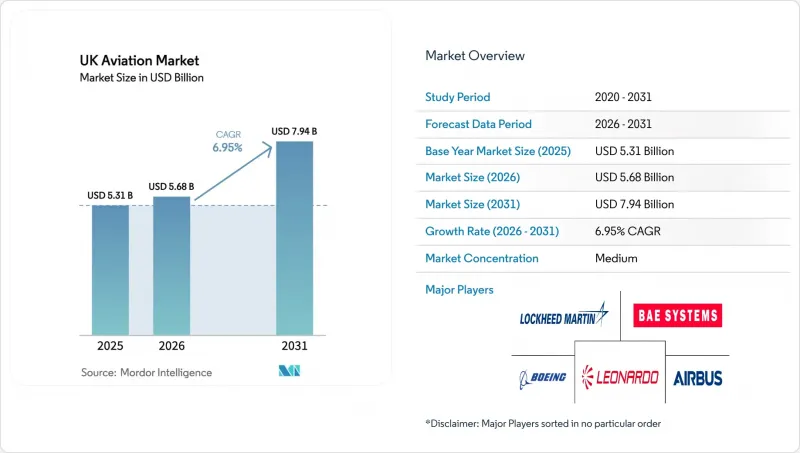
Mordor Intelligence에 의하면, 영국 항공 시장 규모는 2025년에 53억 1,000만 달러로 평가되었고 2026년 56억 8,000만 달러에서 2031년까지 79억 4,000만 달러에 이를 것으로 예측되며, 예측 기간(2026-2031년) CAGR은 6.95%를 나타낼 전망입니다.
본 보고서는 항공기 유형(민간 항공, 일반 항공, 군용 항공), 추진 기술(터보프롭, 터보팬, 피스톤 엔진, 터보샤프트, 기타) 및 최종 사용자(민간·상업 운항 사업자, 정부 및 방위 기관, 비즈니스 및 일반 항공기 소유자)별로 분류되어 있습니다. 시장 전망은 금액(달러)으로 표시되어 있습니다.
영국 항공 시장 동향 및 인사이트
정부가 의무화한 지속가능 항공 연료(SAF) 혼합 목표
2030년까지 전체 제트 연료의 10%를 SAF로 대체해야 한다는 정부의 요건에 따라, 항공사, 정유사, 공항 간에 자본 재분배가 진행되고 있습니다. 각 항공사는 SAF 대응 엔진 및 경량 기체로 기체 교체를 가속화하고 있습니다. 브리티시 에어웨이즈는 장기 공급 계약에 4억 파운드(5억 3,373만 달러)를 투입하여, 향후 탄소세 부과로부터 네트워크 계획을 보호하고 있습니다. 국내 정유사들은 수입 의존도를 낮추고 정책적 인센티브를 누리기 위해 친환경 연료 생산 능력을 확대되고 있습니다. 공항들은 연료 저장 시설의 미래 경쟁력을 확보하기 위해 부지 내 혼합 설비 및 급유 설비 업그레이드에 투자하고 있습니다. 협폭기(narrow-body)의 교체 주기가 일치함에 따라, 각 항공사는 규제 준수를 위한 지출과 운영 비용 절감을 동시에 달성할 수 있습니다. 배출량에 기반한 슬롯 가격 책정이 도입되면, 조기에 도입한 기업들은 슬롯이 부족한 허브 공항에서 슬롯의 유연성을 확보할 수 있게 됩니다.
브렉시트 이후 자유화된 항공 협정이 노선 개척을 주도
인도, 미국 및 주요 아시아태평양 국가들과의 양자 간 오픈 스카이 협정을 통해 영국 항공사들은 추가 운항 편수와 제5자유권을 확보하고 있습니다. 버진 애틀랜틱 항공은 오스틴 및 텔아비브 노선을 개설함으로써 이러한 권리를 가장 먼저 활용하여 시장 진출 속도 면에서 EU 경쟁사들을 앞섰습니다. 지방 공항들은 수익성이 높은 시장으로의 직항편을 확보하여 런던 허브 공항의 혼잡을 완화하는 동시에 인바운드 관광 흐름을 다각화하고 있습니다. 화물 운송 사업자들은 전자상거래 노선에서 우선적인 화물 적재 공간 및 화물 전용기 운항권을 확보함으로써 영국의 수출 경쟁력을 강화하고 있습니다. 공항 운영사는 지역 관광청과 협력하여 신규 노선에 대한 공동 프로모션을 전개하고 있으며, 이를 통해 여객 수를 유지하고 터미널 투자 위험을 경감시키고 있습니다.
전국적인 공항 혼잡이 성장을 저해
히스로 공항은 공표 용량의 98%로 운영되고 있으며, 피크 시간대 수요는 슬롯 공급량을 30% 상회하고 있습니다. 기상 조건에 따른 간격 확보를 위해 도착편 수는 시간당 40편으로 감소했으며, 이로 인한 지연이 유럽 전역으로 파급되고 있습니다. 개트윅 공항의 경우, 북쪽 활주로 계획이 최종 승인을 기다리고 있어 활주로가 단 하나뿐이라는 제약이 여전히 지속되고 있습니다. 각 항공사는 이에 대응하여 대형 기종으로 기종을 변경하고 있으며, 이로 인해 운항 빈도에 기반한 경쟁이 압박을 받아 신규 시장 진출기업의 진입이 제한되고 있습니다. 슬롯 프리미엄은 기존 항공사 시장 지배력을 공고히 하고, 서비스가 미치지 않는 노선을 타겟으로 하는 혁신적인 항공사에게 진입 장벽을 높이고 있습니다.
부문 분석
2025년, 상업 부문은 영국 항공 시장 점유율의 56.05%를 차지하며, 여객 및 화물 연결에서 중심적인 역할을 수행하고 있는 것으로 나타났습니다. 미국 내 기업 출장이 재개되고, 레저 여행객들이 달러 표시 항공권 가격에 대해 파운드 강세를 활용함에 따라 대서양 횡단 노선의 좌석 공급량은 가장 빠르게 회복되었습니다. 전세편 및 화물 부문은 히스로 공항의 전용 화물 레인을 통해 의약품, 전자상거래, 신선식품의 물류를 조정함으로써 더 높은 수익률을 확보했습니다. 각 항공사는 기내 좌석 밀도 향상과 Wi-Fi 업그레이드를 우선시하며, 유류 가격 변동을 완화할 수 있는 부가 수익원의 수익화를 도모했습니다. 한편, 비즈니스 클래스 개조에서는 팬데믹 기간 동안 비즈니스 제트기 전세편으로 유출된 프리미엄 승객을 되찾기 위해 프라이버시 스위트 정비에 중점을 두었습니다.
'템페스트' 프로토타입이 구상 단계에서 비행 시험 단계로 넘어가는 가운데, 군용 항공 분야는 연평균 성장률(CAGR) 7.58%로 발전하고 있습니다. 국방부(MoD)가 2030년까지 GDP의 2.50%를 국방비로 충당하겠다고 공약함에 따라, NATO 임무에 필요한 급유기 및 ISR(정보·감시·정찰) 플랫폼을 포함한 항공 자산의 현대화를 위한 예산 여유가 확보되었습니다. 기체 공통화 전략을 통해 유인 시스템과 무인 시스템 간에 아비오닉스 및 추진 시스템의 공유가 촉진되어, 공급업체의 규모의 경제가 확대되고 있습니다. 일본 및 이탈리아로의 수출 파생 기종으로 인해 대상 시장 규모가 확대되고, Tier 2 공급업체로의 민간 자금 유입이 촉진되고 있습니다. 일반 항공은 여전히 틈새 시장이지만 견조한 성장세를 유지하고 있으며, 해상 에너지 시설로의 셔틀 운항 및 스코틀랜드 외딴 섬에서의 의료 이송 임무를 지원하고 있습니다. 안전 관리 시스템에 대한 규제 강화로 운영 비용은 상승하고 있지만, 대규모 감사 및 규정 준수를 수행할 수 있는 사업자는 혜택을 보고 있습니다.
기타 혜택:
- 엑셀 형식 시장 예측(ME) 시트
- 3개월간의 애널리스트 지원
자주 묻는 질문
목차
제1장 서론
제2장 조사 방법
제3장 주요 요약
제4장 주요 업계 동향
제5장 시장 구도
제6장 시장 규모와 성장 예측
제7장 경쟁 구도
제8장 시장 기회와 향후 전망
제9장 영국 항공 업계 CEO를 향한 중요 전략적 과제
JHS 26.08.07According to Mordor Intelligence, the UK aviation market size was valued at USD 5.31 billion in 2025 and estimated to grow from USD 5.68 billion in 2026 to reach USD 7.94 billion by 2031, at a CAGR of 6.95% during the forecast period (2026-2031).
This report is Segmented by Aircraft Type (Commercial Aviation, General Aviation, and Military Aviation), Propulsion Technology (Turboprop, Turbofan, Piston Engine, Turboshaft, and Others), and End User (Civil and Commercial Operators, Government and Defense Agencies, and Business and General Aviation Owners). The Market Forecasts are Provided in Terms of Value (USD).
UK Aviation Market Trends and Insights
Government-Mandated Sustainable Aviation Fuel Blending Targets
The government's requirement that 10% of all jet fuel be SAF by 2030 is realigning capital across airlines, refiners, and airports. Airlines are accelerating fleet renewal toward SAF-ready engines and lightweight airframes. British Airways is earmarking GBP 400 million (USD 533.73 million) for long-term offtake contracts, shielding its network planning from future carbon surcharges. Domestic refiners are scaling green-fuel capacity to cut import exposure and capture policy incentives. Airports are investing in on-site blending and hydrant upgrades that future-proof their fuel farms. The synchronized replacement cycle for narrowbody aircraft lets carriers align compliance spending with operating cost reduction. Once emissions-based slot pricing is introduced, early adopters gain slot flexibility in slot-constrained hubs.
Liberalized Air-Service Agreements Post-Brexit Unlock Routes
Bilateral open-sky deals with India, the US, and key Asia-Pacific states grant UK carriers extra frequencies and fifth-freedom rights. Virgin Atlantic exploited early rights by opening Austin and Tel Aviv services, beating EU rivals on time-to-market. Regional airports secure nonstop connectivity to high-yield markets, easing London hub congestion and diversifying inbound tourism flows. Freight operators gain preferential belly-hold and freighter rights on e-commerce lanes, strengthening UK export competitiveness. Airport operators are co-marketing new routes with local tourism boards, underpinning passenger volumes that de-risk terminal investments.
National-Level Airport Congestion Curbs Growth
Heathrow operates at 98% declared capacity, with peak-hour demand exceeding slot supply by 30%. Weather-induced spacing drops arrival rates to 40 hourly movements, cascading delays across Europe. Gatwick's single-runway constraint persists as the Northern Runway plan awaits full planning approval. Airlines respond by up-gauging to larger aircraft, which squeezes frequency-based competition and limits new entrant access. The slot premium entrenches incumbent market power and raises barriers for innovative carriers targeting underserved routes.
Other drivers and restraints analyzed in the detailed report include:
- Military Aviation Recapitalization Through AUKUS and Tempest
- Rapid VFR Travel Recovery Reshapes Economics
- Skilled-Workforce Shortages Threaten Scalability
For complete list of drivers and restraints, kindly check the Table Of Contents.
Segment Analysis
The commercial segment captured 56.05% of the UK aviation market share in 2025, reflecting its central role in passenger and cargo connectivity. Transatlantic seat capacity rebounded fastest as US corporate travel resumed and leisure travelers leveraged a strong pound against dollar-denominated ticket prices. Charter and cargo divisions locked in higher yields by balancing pharmaceutical, e-commerce, and perishables flows through Heathrow's dedicated freight lanes. Airlines prioritized cabin densification and Wi-Fi upgrades, monetizing ancillary revenue streams that cushion fuel-price volatility. Meanwhile, business-class refurbishments focused on privacy suites to recapture premium travelers lured by corporate-jet charters during the pandemic.
Military aviation is advancing at a 7.58% CAGR as Tempest prototypes transition from concept to flight test. The Ministry of Defence's (MoD's) pledge to allocate 2.50% of GDP to defense by 2030 guarantees budget headroom for air asset renewal, including tanker and ISR platforms needed for NATO taskings. Fleet commonality strategies favor shared avionics and propulsion across manned and uncrewed systems, extending supplier economies of scale. Export derivatives to Japan and Italy to broaden addressable volume, crowding in private finance for tier-2 suppliers. General aviation remains niche yet resilient, supporting offshore-energy shuttle flights and medical evacuation missions in remote Scottish islands. Regulatory emphasis on safety management systems raises operating costs but rewards operators able to scale audit compliance.
Complete Report Scope:
- By Aircraft Type
- Commercial Aviation
- Passenger Aircraft
- Narrowbody Aircraft
- Widebody Aircraft
- Regional Jets
- Passenger Aircraft
- General Aviation
- Business Jets
- Large Jet
- Mid-Size Jet
- Light Jet
- Piston and Turboprop Aircraft
- Commercial Helicopters
- Business Jets
- Military Aviation
- Fixed-Wing Aircraft
- Combat Aircraft
- Multi-Role Aircraft
- Transport Aircraft
- Training Aircraft
- Rotorcraft
- Multi-Mission Helicopter
- Transport Helicopter
- Others
- Fixed-Wing Aircraft
- Commercial Aviation
- By Propulsion Technology
- Turboprop
- Turbofan
- Piston Engine
- Turboshaft
- Others
- By End User
- Civil and Commercial Operators
- Government and Defense Agencies
- Business and General Aviation Owners
List of Companies Covered in this Report:
- Airbus SE
- The Boeing Company
- BAE Systems plc
- Bombardier Inc.
- Embraer S.A.
- Leonardo S.p.A.
- Textron Inc.
- Cirrus Design Corporation (Aviation Industry Corporation of China)
- Robinson Helicopter Company
- MD Helicopters LLC
- Lockheed Martin Corporation
- General Dynamics Corporation
- Pilatus Aircraft Ltd.
- Piper Aircraft, Inc.
Additional Benefits:
- The market estimate (ME) sheet in Excel format
- 3 months of analyst support
TABLE OF CONTENTS
1 INTRODUCTION
- 1.1 Study Assumptions and Market Definition
- 1.2 Scope of the Study
2 RESEARCH METHODOLOGY
3 EXECUTIVE SUMMARY
4 KEY INDUSTRY TRENDS
- 4.1 Air Passenger Traffic
- 4.2 Air Transport Freight
- 4.3 Gross Domestic Product
- 4.4 Revenue Passenger Kilometers (RPK)
- 4.5 Inflation Rate
- 4.6 Active Fleet Data
- 4.7 Defense Spending
- 4.8 High-Net-Worth-Individual (HNWI)
5 MARKET LANDSCAPE
- 5.1 Market Overview
- 5.2 Market Drivers
- 5.2.1 Government-mandated sustainable aviation fuel blending targets
- 5.2.2 Liberalized air services agreements with non-EU countries post-Brexit
- 5.2.3 Rapid recovery in visiting friends and relatives (VFR) and discretionary travel demand
- 5.2.4 Expansion of regional airport infrastructure under the levelling-up agenda
- 5.2.5 Military aviation recapitalization through AUKUS and Tempest programs
- 5.2.6 Advancements in electric and hybrid-electric aviation technologies led by UK-based OEMs
- 5.3 Market Restraints
- 5.3.1 National-level airport congestion limiting capacity expansion
- 5.3.2 Shortage of skilled workforce across aviation maintenance and air traffic services
- 5.3.3 Increasing air passenger duty reducing UK's competitiveness as a transit hub
- 5.3.4 High production and adoption costs of sustainable aviation fuel impacting ticket prices
- 5.4 Value Chain Analysis
- 5.5 Regulatory Landscape
- 5.6 Technological Outlook
- 5.7 Porter's Five Forces Analysis
- 5.7.1 Threat of New Entrants
- 5.7.2 Bargaining Power of Buyers
- 5.7.3 Bargaining Power of Suppliers
- 5.7.4 Threat of Substitutes
- 5.7.5 Intensity of Competitive Rivalry
6 MARKET SIZE AND GROWTH FORECASTS (VALUE)
- 6.1 By Aircraft Type
- 6.1.1 Commercial Aviation
- 6.1.1.1 Passenger Aircraft
- 6.1.1.1.1 Narrowbody Aircraft
- 6.1.1.1.2 Widebody Aircraft
- 6.1.1.1.3 Regional Jets
- 6.1.1.1 Passenger Aircraft
- 6.1.2 General Aviation
- 6.1.2.1 Business Jets
- 6.1.2.1.1 Large Jet
- 6.1.2.1.2 Mid-Size Jet
- 6.1.2.1.3 Light Jet
- 6.1.2.2 Piston and Turboprop Aircraft
- 6.1.2.3 Commercial Helicopters
- 6.1.2.1 Business Jets
- 6.1.3 Military Aviation
- 6.1.3.1 Fixed-Wing Aircraft
- 6.1.3.1.1 Combat Aircraft
- 6.1.3.1.2 Multi-Role Aircraft
- 6.1.3.1.3 Transport Aircraft
- 6.1.3.1.4 Training Aircraft
- 6.1.3.2 Rotorcraft
- 6.1.3.2.1 Multi-Mission Helicopter
- 6.1.3.2.2 Transport Helicopter
- 6.1.3.2.3 Others
- 6.1.3.1 Fixed-Wing Aircraft
- 6.1.1 Commercial Aviation
- 6.2 By Propulsion Technology
- 6.2.1 Turboprop
- 6.2.2 Turbofan
- 6.2.3 Piston Engine
- 6.2.4 Turboshaft
- 6.2.5 Others
- 6.3 By End User
- 6.3.1 Civil and Commercial Operators
- 6.3.2 Government and Defense Agencies
- 6.3.3 Business and General Aviation Owners
7 COMPETITIVE LANDSCAPE
- 7.1 Market Concentration
- 7.2 Strategic Moves
- 7.3 Market Share Analysis
- 7.4 Company Profiles (includes Global level Overview, Market level overview, Core Segments, Financials as available, Strategic Information, Market Rank/Share for key companies, Products and Services, and Recent Developments)
- 7.4.1 Airbus SE
- 7.4.2 The Boeing Company
- 7.4.3 BAE Systems plc
- 7.4.4 Bombardier Inc.
- 7.4.5 Embraer S.A.
- 7.4.6 Leonardo S.p.A.
- 7.4.7 Textron Inc.
- 7.4.8 Cirrus Design Corporation (Aviation Industry Corporation of China)
- 7.4.9 Robinson Helicopter Company
- 7.4.10 MD Helicopters LLC
- 7.4.11 Lockheed Martin Corporation
- 7.4.12 General Dynamics Corporation
- 7.4.13 Pilatus Aircraft Ltd.
- 7.4.14 Piper Aircraft, Inc.
8 MARKET OPPORTUNITIES AND FUTURE OUTLOOK
- 8.1 White-space and Unmet-need Assessment