

|
시장보고서
상품코드
2113719
북미의 의료 임상 영양 시장 : 시장 점유율 분석, 업계 동향과 통계, 성장 예측(2026-2031년)North America Medical Clinical Nutrition - Market Share Analysis, Industry Trends & Statistics, Growth Forecasts (2026 - 2031) |
||||||
 Mordor Intelligence
북미의 의료·임상 영양학 시장 규모는 2026년은 184억 2,000만 달러로 추정되고 있으며, 2025년 174억 5,000만 달러에서 확대하며, 2031년에는 241억 5,000만 달러에 달할 것으로 예측됩니다.
2026-2031년의 연평균 성장률(CAGR)은 5.57%에 달할 것으로 전망됩니다.
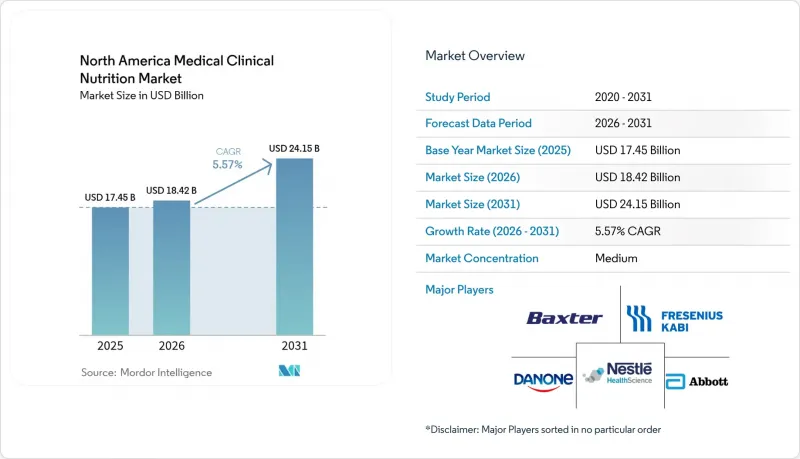
이 보고서는 투여 경로(경구·경장 및 비경구), 제품 유형(영아용 영양식품 등), 제형(분말 등), 용도(영양실조에 대한 영양 지원 등), 최종사용자(병원·진료소 등), 유통 채널 및 지역(미국 등)별로 분류되어 있습니다. 시장 전망은 금액(달러) 기준으로 제시되어 있습니다.
북미 의료·임상 영양학 시장의 동향 및 인사이트
북미 의료 현장에서 만성질환의 부담 증가
당뇨병, 만성 신장 질환, 심부전, 만성폐쇄성폐질환이 복합적으로 작용하여 병원 및 지역 의료 현장에서 지속적인 영양실조의 위험을 초래하고 있으며, 표준 경구 식단만으로는 불충분한 경우 의료용 임상 영양의 필요성이 높아지고 있습니다. 병원에서는 검증된 툴을 사용하여 입원시 선별 검사 절차를 강화하고 있으며, 선별 검사에서 양성 반응이 나올 경우 당일 중으로 관리 영양사와의 상담이나 장내 영양 공급 지시가 이루어지는 경우가 늘어나고 있으며, 치료 과정이 품질 및 재입원 지표와 일치하도록 되어 있습니다. 병원의 재입원 방지 방침 및 가치 기반 구매 프로그램에 따라 관리자에게는 입원 초기나 치료 전환기에 영양 관리를 조기에 실시할 것이 요구되고 있으며, 이를 통해 적응증이 있는 경우 더 많은 환자가 체계적인 경구, 장내 또는 정맥 영양 요법으로 유도되고 있습니다. 전문 학회는 전해질을 조절한 신장 질환용 영양제나 혈당 수치에 미치는 영향이 적은 당뇨병용 영양제 등 질환 특이적 영양제에 관한 지침을 보급하고 있지만, 보험 적용 범위의 불일치로 인해 의료 기관은 여전히 포괄 지급 범위 내에서 비용을 부담할 수밖에 없는 상황이 지속되고 있습니다. 욕창 등 병원내 감염과 관련된 처벌 규정 또한 임상적으로 적절한 경우 피부의 건강과 이동 능력 유지를 목적으로 한 조기 장내 영양 공급을 촉진하고 있습니다. 문서화된 영양 관리 계획을 의무화하는 의료기관 인증 기준에 따라 임상영양학은 일상적인 품질 지표에 포함되어 있으며, 이것이 북미 의료 임상영양 시장 전체의 지속적인 수요를 지원하고 있습니다.
고령화와 동반 질환을 동반한 생존 기간의 연장
북미 인구의 고령화에 따라 다중 질환을 앓는 고령자의 비율이 증가하고 있으며, 이로 인해 연하 장애, 식욕부진 및 기타 경구 섭취 부족을 유발하는 상태의 유병률이 높아지고 있습니다. 이러한 상태들은 급성기, 급성기 후, 재택 환경 등 각 상황에서 임상 영양 지원이 필요한 경우입니다. 장기 요양 시설에서는 입소시 기준선에서 영양실조율이 높은 것으로 보고되고 있으며, 상담이나 맛의 로테이션을 실시하더라도 약물 복용 순응도나 내성이 저하된 경우, 경구 보충제에서 경관 영양으로 전환하게 됩니다. 전문 요양 시설의 지불 모델에서는 문서화된 영양실조 상태와 치료를 바탕으로 보수가 지급되므로, 지속적인 위험 요인을 가진 입소자에 대해 보다 일관된 선별 검사, 진단 및 제품 사용이 촉진되고 있습니다. 암 생존자의 동향에 따라 섭취 및 흡수를 저해하는 후기 합병증의 영향으로 영양 요구는 적극적 치료 기간을 훨씬 넘어 연장되고 있습니다. 이에 따라 질환 특이적인 경장영양 옵션 및 필요에 따라 정맥 영양에 대한 지속적인 수요가 증가하고 있습니다. 재택 의료 프로그램에서는 고령자나 간병인의 물류적 장벽을 완화하기 위해 관리 영양사를 배치하고, 원격의료를 활용한 상담이나 경구 보충제의 전자 처방을 시행하는 사례가 증가하고 있습니다. 이러한 변화는 메디케어나 민간 보험 플랜에서 가상 진료가 광범위하게 도입되는 추세와 발맞추고 있습니다.
임상 영양 제품 및 특수 영양제의 높은 비용
질환 특이적 장내 영양제는 표준 고분자 제제에 비해 가격이 비싸기 때문에 의료용 식품이 보험 적용 대상이 아닌 환자나 외래 진료에서 내구성 의료기기 급여 수급 자격이 없는 환자에게는 경제적 부담이 되고 있습니다. 메디케어 파트 B의 적용 범위는 위장 기능 장애가 확인된 수급자에 대한 경관 영양으로 한정되어 있으며, 경구 영양 보조 식품은 일반적으로 적용 대상에서 제외됩니다. 따라서 퇴원 시에는 비용이 환자나 시설에 전가됩니다. 재택 정맥영양의 경우, 조제액, 기기, 간호, 모니터링 등을 고려하면 막대한 비용 부담이 발생합니다. 또한 고액의 본인 부담금이나 공동보험은 대상자를 선별한 급여 설계가 없는 피보험자에게 있으며, 접근상의 장벽이 될 가능성이 있습니다. 장기 요양 시설은 일액 지급 제도로 운영되고 있으며, 질환 특이적 영양제에 드는 추가 비용과 증례 혼합 조정을 통해 얻어지는 재정적 평가 사이에 격차가 발생하는 경우가 많으며, 임상적 적응증이 있음에도 불구하고 표준 영양제로부터의 전환이 제한되고 있습니다. 표준 약국 식별자가 없는 경장영양제의 경우, 사전 승인 및 처방약 리스트에 대한 업무 절차가 여전히 복잡하여 운영상의 마찰로 인해 치료 전환시 치료 시작이 지연될 수 있습니다. 퇴원하는 환자는 단체 구매 조직을 통해 협상된 의료 기관의 계약 가격을 훨씬 상회하는 소매 가격에 직면할 가능성이 있으며, 이로 인해 복약 순응도가 저하되고 재입원 위험이 높아질 우려가 있습니다.
부문 분석
2025년, 경구 및 장내 영양법은 북미 의료 및 임상 영양학 시장 점유율의 55.02%를 차지했으나, 정맥 영양은 2026-2031년까지 연평균 성장률(CAGR) 7.40%로 확대될 것으로 예측됩니다. 비경장영양의 성장은 종양학 및 외과 중환자실(ICU) 사례 등 경장영양 경로가 금기되는 상황에서 집중 치료에 대한 수요와 임상적 필요성에 기반하여 보험사 프로그램의 지원을 받는 체계적인 재택 비경장영양 프로그램 참여자 증가를 반영하고 있습니다. 이와 병행하여 북미의 의료·임상 영양학 시장은 장기 사용시 간에 가해지는 부담과 염증을 경감하기 위해 순수 대두유에서 혼합유 및 구조화 지질 시스템으로 전환하는 지질 에멀전 제품 혁신에 대응하고 있습니다. 경구 및 경장 요법은 장의 건강을 유지하고 가능한 한 ‘경장 우선’ 영양 지원 지침을 따르고 있으므로 여전히 주요한 위치를 차지하고 있습니다. 이용 동향을 살펴보면, 성숙한 미국 및 캐나다의 시설 시장에서는 장기 경관 영양의 성장세가 둔화되고 있습니다. 이러한 시장에서는 전문 요양 시설의 보급률이 이미 높고, 케어 모델이 재택 요양으로의 전환을 최적화하고 있기 때문입니다. 북미의 의료 임상 영양 시장은 병원의 표준화된 영양 선별 및 중재 요건의 혜택을 지속적으로 받고 있으며, 이를 통해 치료 초기 단계에서 장내 영양 요법의 대상이 되는 환자를 체계적으로 식별할 수 있게 되었습니다.
비경구 투여 경로의 경우, 그 구성 성분이 의약품으로 규제되고 있으므로 규제 절차에 시간이 걸리고 개발 주기가 길어질 뿐만 아니라, 신규 진입 기업에 대한 증거 및 제조 요건도 엄격해지고 있습니다. 반면, 의료용 식품으로 판매되는 경장영양 제품은 의사의 감독 하에 질병의 식이 관리에 관한 기준을 충족하는 한 독자적인 체계 하에서 진행할 수 있으며, 이로 인해 질병 특유의 요구에 부응하는 제제 개량에 대한 장벽이 낮아지고 있습니다. 북미의 의료·임상영양학 시장은 영양실조와 관련된 합병증이나 재입원을 방지하기 위해 병원이 경장영양 프로토콜을 마련하도록 의무화하는 참여 조건 및 인증 요건에 의해서도 형성되고 있습니다. 재택 정맥 주사 요법 체계가 정비됨에 따라 병원 외부의 특정 환자에게 비경장영양에 의한 지원이 더욱 현실적인 선택지가 되고 있으며, 이는 예상되는 7.40%의 성장 궤도를 지원하는 동시에 환자의 선호도와 투여 일정에 대한 자율성이라는 추가적인 이점도 가져다주고 있습니다. 메디케어 관리 계약업체의 문서화 요건은 HPN 이용 여부를 계속해서 좌우하고 있으며, 이로 인해 적절한 이용이 정착되는 한편, 복잡한 사례를 관리하는 약국의 업무 부담이 증가하고 있습니다. 이러한 규제 상황과 임상적 상황이 결합되어, 위장 기능이 허용하는 한 경장영양의 우위를 유지하면서도 비경장영양으로의 점진적인 전환이 촉진되고 있습니다.
2025년에는 영유아용 영양제가 45.02%의 점유율을 차지했으나, 암,당뇨병, 신장 질환 환자층이 대사적·기능적 요구에 맞춰 설계된 처방식을 채택함에 따라 질환 특이적 경장영양 제제는 2031년까지 연평균 성장률(CAGR) 7.22%를 기록할 것으로 예상됩니다. 표준 장내 영양제는 장기 요양 및 재택 의료 현장에서 여전히 널리 사용되고 있지만, 공동 구매 채널을 통한 가격 경쟁으로 인해 이익률이 압박받고 있으며, 임상 결과 데이터를 통한 차별화가 촉진되고 있습니다. 북미의 의료·임상영양학 시장에서는 2024년 의약품 부족 데이터베이스에 등재된 아미노산 용액 및 지질 유제를 포함한 정맥영양 성분의 공급 상황에 대한 경계가 지속되고 있으며, 이에 따라 배분 방침이 수립되었을 뿐만 아니라 경우에 따라 수술 후 정맥영양(PN)에 의존하는 선택적 수술의 연기 사례도 발생하고 있습니다. 질환 특이적 제품의 경우, 당뇨병용 영양제의 혈당 조절 개선이나 신장병용 영양제의 전해질 균형 조절과 같이 공개된 근거에 의해 지원되고 있습니다. 이에 따라 의약품 리스트내 위상이 향상되었으며, 치료 결과에 연동된 가치를 평가하는 의료 기관에서 프리미엄 가격 책정이 지지받고 있습니다. 영아용 영양 제품의 수요는 일반적인 출생률 동향과 무관하게, 조산아나 알레르기 발생 위험이 높은 집단에서의 임상적 필요성에 의해 지원되고 있습니다. 또한 영아 특유의 취약성으로 인해 소아용 특수 영양제에 대해서는 안전성, 품질 및 리콜 대응 능력에 대한 관심이 계속해서 집중되고 있습니다. 북미의 의료·임상 영양학 시장은 WIC(여성·영유아·아동 영양 보조 프로그램) 등의 공공 프로그램의 영향도 받고 있으며, 이러한 프로그램들은 주 정부와의 계약 및 유통 체계를 통해 제품에 대한 접근성과 경쟁 역학을 형성하고 있습니다.
질환 특이적 장내 영양제의 성장은 수술 전후 관리 및 생존 기간 중 면역 영양을 통합한 종양학 프로토콜과 밀접하게 관련되어 있으며, 더 많은 암 치료 프로그램에서 영양 관리 경로가 표준화됨에 따라 시간이 지남에 따라 적격 환자 수가 증가하고 있습니다. 현재, 치료 중 장의 건강을 유지하기 위해 제제에는 면역력을 지원하는 영양소와 미생물군집에 초점을 맞춘 프리바이오틱 섬유가 포함되는 경우가 많아지고 있습니다. 각 제조사는 의료용 식품에 대한 임상적 입증, 표시 및 효능 표시에 대한 기대가 높아지는 상황에 직면해 있으며, 탄탄한 임상 개발 프로그램을 갖춘 기업은 치료 성과와 안전성 프로파일을 통해 타사와 차별화를 꾀할 수 있습니다. 이와 동시에, 북미의 의료·임상 영양학 시장은 ‘영아용 조제분유법’에 기반한 안전성 감시 강화와 리콜 대응 체계 구축의 혜택을 받고 있으며, 이를 통해 소아용 제품의 품질관리와 투명성이 향상되고 있습니다. WIC 및 민간 보험을 통한 소아 대상 급여는 유아용 영양 카테고리의 기본적인 판매량을 지속적으로 지원하고 있지만, 한편으로는 임상의들이 더 좁고 중증도가 높은 적응증을 표적으로 삼음에 따라 질환 특이적인 성인용 포뮬러가 추가적인 성장을 주도하고 있습니다. 이처럼 판매량이 많은 카테고리와 고부가가치의 질환 특화 틈새 시장이 공존하는 것이 각 제조사의 제품 전략과 포트폴리오 관리의 특징입니다.
기타 혜택:
- 엑셀 형식의 시장 예측(ME) 시트
- 3개월간의 애널리스트 지원
자주 묻는 질문
목차
제1장 서론
제2장 조사 방법
제3장 개요
제4장 시장 구도
제5장 시장 규모와 성장 예측
제6장 경쟁 구도
제7장 시장 기회와 향후 전망
KSA 26.08.25According to Mordor Intelligence, North America medical clinical nutrition market size in 2026 is estimated at USD 18.42 billion, growing from 2025 value of USD 17.45 billion with 2031 projections showing USD 24.15 billion, growing at 5.57% CAGR over 2026-2031.
This report is Segmented by Route of Administration (Oral & Enteral and Parenteral), Product Type (Infant Nutrition, and More), Form (Powder, and More), Application (Nutritional Support for Malnutrition, and More), End User (Hospitals & Clinics, and More), Distribution Channel, and Geography (United States, and More). Market Forecasts are Provided in Terms of Value (USD).
North America Medical Clinical Nutrition Market Trends and Insights
Elevated Chronic Disease Burden in North American Care Settings
Diabetes, chronic kidney disease, heart failure, and chronic obstructive pulmonary disease together create persistent malnutrition risk in hospital and community care, which heightens the need for medical clinical nutrition when standard oral diets are inadequate. Hospitals have reinforced admission screening protocols with validated tools, and positive screens increasingly trigger same-day dietitian consults and orders for enteral nutrition, aligning care processes with quality and readmission metrics. Hospital readmissions policies and value-based purchasing programs press administrators to address nutrition earlier in stays and at transitions of care, which steers more patients to structured oral, enteral, or parenteral regimens when indicated. Specialty societies have disseminated guidance on disease-specific formulas, including renal formulas with controlled electrolytes and diabetes formulas with lower glycemic impact, though coverage inconsistencies continue to push facilities to absorb costs within bundled payments. Penalties linked to hospital-acquired conditions such as pressure injuries also encourage early enteral nutrition to support skin integrity and mobility goals where clinically appropriate. Provider accreditation standards that require documented nutrition care plans have embedded clinical nutrition into routine quality metrics, which supports sustained demand across the North America medical clinical nutrition market.
Aging Population and Longer Survivorship with Comorbidities
Population aging in North America increases the share of older adults living with multimorbidity, which raises prevalence of dysphagia, anorexia, and other contributors to inadequate oral intake that require clinical nutrition support in acute, post-acute, and home settings. Long-term care facilities report high baseline malnutrition rates on admission, which leads to escalation from oral supplements to enteral tube feeding when adherence and tolerance falter despite counseling and flavor rotation. Payment models in skilled nursing tie reimbursement to documented malnutrition status and treatment, which incentivizes more consistent screening, diagnosis, and product use among residents who are at sustained risk. Cancer survivorship trends have extended nutrition needs well beyond active treatment due to late effects that impair intake or absorption, which strengthens ongoing demand for disease-specific enteral options and, when necessary, parenteral nutrition. Home health programs increasingly embed dietitians and leverage telehealth for counseling and e-prescribing of oral supplements to reduce logistical barriers for older adults and caregivers, a shift that aligns with broader virtual care adoption in Medicare and commercial plans.
High Cost of Clinical Nutrition Products and Specialized Formulas
Disease-specific enteral formulas are priced at a premium relative to standard polymeric options, which creates affordability challenges for patients who do not have coverage for medical foods or who lack eligibility for durable medical equipment benefits in outpatient settings. Medicare Part B coverage is limited to enteral nutrition administered via a feeding tube for beneficiaries with documented gastrointestinal impairment, and oral nutritional supplements are generally excluded from coverage, which shifts costs to patients or facilities upon discharge. Home parenteral nutrition imposes a significant cost burden when factoring compounded solutions, equipment, nursing, and monitoring, and high deductibles or coinsurance can become a barrier to access for insured patients without targeted benefit design. Long-term care facilities operate with per-diem reimbursement and often face a gap between the incremental cost of disease-specific formulas and the financial recognition available through case-mix adjustments, which constrains upgrades from standard formulas despite clinical indications. Prior authorization and formulary workflows remain complicated for enteral products that do not carry standard pharmacy identifiers, and operational friction delays therapy initiation during care transitions. Patients leaving the hospital may encounter retail prices that far exceed institutional contract rates negotiated through group purchasing organizations, which can depress adherence and increase the risk of readmission.
Other drivers and restraints analyzed in the detailed report include:
- Shift Toward Home-Based Nutrition Support and Outpatient Care Pathways
- Innovation in Disease-Specific Enteral Formulas and Next-Gen PN Components
- Coverage Gaps and Reimbursement Variability Across Payers and States
For complete list of drivers and restraints, kindly check the Table Of Contents.
Segment Analysis
Oral & Enteral modalities captured 55.02% of North America medical clinical nutrition market share in 2025, while Parenteral nutrition is forecast to expand at a 7.40% CAGR from 2026 to 2031. Growth in parenteral reflects critical-care demand when enteral access is contraindicated, including oncology and surgical ICU scenarios, and rising enrollment in structured home parenteral nutrition programs that are justified by clinical necessity and supported by payer programs. In parallel, the North America medical clinical nutrition market is responding to product innovation in lipid emulsions that move away from pure soybean oil toward mixed-oil or structured lipid systems intended to mitigate hepatic stress and inflammation in long-term use. Oral & Enteral therapies retain primacy because they preserve gut integrity and align with enteral-first guidelines for nutrition support where feasible. Utilization trends show moderating growth in long-term tube feeding in mature U.S. and Canadian facility markets, where skilled nursing penetration is already high and care models are optimizing transitions to home. The North America medical clinical nutrition market continues to benefit from standardized nutrition screening and intervention requirements in hospitals, which systematically identify candidates for enteral therapy earlier in the episode.
Parenteral pathways face longer regulatory timelines because components are regulated as drugs, which elongates development cycles and increases evidence and manufacturing requirements for new entrants. Enteral products marketed as medical foods can proceed under a distinct framework provided they meet criteria for dietary management of a disease under physician supervision, which lowers barriers for formulation updates that address disease-specific needs. The North America medical clinical nutrition market is also shaped by conditions of participation and accreditation that require hospitals to have enteral feeding protocols to prevent malnutrition-linked complications and readmissions. As home infusion capabilities have grown, parenteral support has become more viable for select patients outside the hospital, which supports the projected 7.40% growth trajectory with the added benefit of patient preference and autonomy in administration schedules. Documentation demands from Medicare Administrative Contractors continue to shape HPN access, which solidifies appropriate utilization while increasing administrative workload for pharmacies that manage complex cases. This combined regulatory and clinical landscape reinforces a measured shift toward parenteral growth while preserving enteral predominance where gastrointestinal function allows.
Infant Nutrition commanded 45.02% share in 2025, while Disease-Specific Enteral Formula is expected to register a 7.22% CAGR through 2031 as oncology, diabetes, and renal populations adopt formulas designed for metabolic and functional needs. Standard enteral formulas remain widely used in long-term care and home settings, but price competition through group purchasing channels is compressing margins and encouraging differentiation via clinical outcomes data. The North America medical clinical nutrition market is seeing ongoing supply vigilance for parenteral components, including amino acid solutions and lipid emulsions listed on drug shortage databases in 2024, which prompted allocation policies and, in some cases, deferral of elective procedures that rely on post-operative PN. Disease-specific products are backed by published evidence of improved glycemic control in diabetes formulas and electrolyte balancing in renal formulas, which improves formulary positioning and supports premium pricing in institutions that measure outcome-linked value. Infant Nutrition demand is sustained by clinical need in preterm and allergy-prone populations despite broader fertility trends, and pediatric specialty formulas continue to receive attention around safety, quality, and recall responsiveness due to the unique vulnerability of infants. The North America medical clinical nutrition market is also influenced by public programs such as WIC, which shape product access and competitive dynamics through state contracting and distribution arrangements.
Disease-Specific Enteral Formula growth is tied to oncology protocols that embed immunonutrition during perioperative care and survivorship, which increases patient eligibility over time as more cancer programs standardize nutrition pathways. Formulations now often include immunity-supporting nutrients and microbiome-oriented prebiotic fibers to support gut integrity during treatment. Manufacturers face evolving expectations for clinical substantiation, labeling, and claims for medical foods, and companies with robust clinical development programs can differentiate through outcomes and safety profiles. In parallel, the North America medical clinical nutrition market benefits from strengthened safety surveillance and recall readiness under the Infant Formula Act, which has raised quality controls and transparency for pediatric products. Pediatric coverage through WIC and private payers continues to support baseline volume in the Infant Nutrition category, while disease-specific adult formulas drive the incremental growth story as clinicians target narrower indications with higher acuity needs. This mix of volume categories and high-value disease-specific niches defines product strategy and portfolio management across manufacturers.
Complete Report Scope:
- By Route of Administration
- Oral & Enteral
- Parenteral
- By Product Type
- Infant Nutrition
- Standard Enteral Formula
- Disease-Specific Enteral Formula
- Total Parenteral Nutrition (TPN) Components
- By Form
- Powder
- Liquid
- Semi-Solid
- By Application
- Nutritional Support for Malnutrition
- Metabolic Disorders
- Gastrointestinal Diseases
- Cancer
- Neurological Diseases
- Other Diseases
- By End User
- Hospitals & Clinics
- Long-term Care Facilities
- Home Care Settings
- By Distribution Channel
- Hospital Pharmacies
- Retail Pharmacies
- Online Pharmacies
- Homecare & Specialty Clinics
- Geography
- United States
- Canada
- Mexico
List of Companies Covered in this Report:
- Abbott Laboratories
- Ajinomoto Cambrooke
- Baxter
- B. Braun
- Danone
- Fresenius
- FrieslandCampina Ingredients
- Functional Formularies
- Hormel Health Labs
- Kate Farms
- Medtrition Inc.
- Nestle Health Science
- Perrigo Company
- Real Food Blends
- Reckitt (Mead Johnson Nutrition)
Additional Benefits:
- The market estimate (ME) sheet in Excel format
- 3 months of analyst support
TABLE OF CONTENTS
1 Introduction
- 1.1 Study Assumptions & Market Definition
- 1.2 Scope of the Study
2 Research Methodology
3 Executive Summary
4 Market Landscape
- 4.1 Market Overview
- 4.2 Market Drivers
- 4.2.1 Elevated Chronic Disease Burden in North American Care Settings
- 4.2.2 Aging Population and Longer Survivorship with Comorbidities
- 4.2.3 Shift toward Home-Based Nutrition Support and Outpatient Care Pathways
- 4.2.4 Innovation in Disease-Specific Enteral Formulas and Next-Gen PN Components
- 4.2.5 CMS and Payer Policy Changes Expanding Coverage for HEN/HPN And Malnutrition Coding
- 4.2.6 ERAS and Oncology Pathways Integrating Prehabilitation Nutrition and Immunonutrition
- 4.3 Market Restraints
- 4.3.1 High Cost of Clinical Nutrition Products and Specialized Formulas
- 4.3.2 Coverage Gaps and Reimbursement Variability across Payers and States
- 4.3.3 PN Amino Acid/Lipid Supply Disruptions and Domestic Capacity Constraints
- 4.3.4 Sterile Compounding (USP <797>) Burden and Pharmacy Staffing Limiting PN Availability
- 4.4 Value / Supply-Chain Analysis
- 4.5 Regulatory Landscape
- 4.6 Technological Outlook
- 4.7 Porter's Five Forces
- 4.7.1 Bargaining Power of Suppliers
- 4.7.2 Bargaining Power of Buyers
- 4.7.3 Threat of New Entrants
- 4.7.4 Threat of Substitutes
- 4.7.5 Intensity of Competitive Rivalry
5 Market Size & Growth Forecasts (Value, USD)
- 5.1 By Route of Administration
- 5.1.1 Oral & Enteral
- 5.1.2 Parenteral
- 5.2 By Product Type
- 5.2.1 Infant Nutrition
- 5.2.2 Standard Enteral Formula
- 5.2.3 Disease-Specific Enteral Formula
- 5.2.4 Total Parenteral Nutrition (TPN) Components
- 5.3 By Form
- 5.3.1 Powder
- 5.3.2 Liquid
- 5.3.3 Semi-Solid
- 5.4 By Application
- 5.4.1 Nutritional Support for Malnutrition
- 5.4.2 Metabolic Disorders
- 5.4.3 Gastrointestinal Diseases
- 5.4.4 Cancer
- 5.4.5 Neurological Diseases
- 5.4.6 Other Diseases
- 5.5 By End User
- 5.5.1 Hospitals & Clinics
- 5.5.2 Long-term Care Facilities
- 5.5.3 Home Care Settings
- 5.6 By Distribution Channel
- 5.6.1 Hospital Pharmacies
- 5.6.2 Retail Pharmacies
- 5.6.3 Online Pharmacies
- 5.6.4 Homecare & Specialty Clinics
- 5.7 Geography
- 5.7.1 United States
- 5.7.2 Canada
- 5.7.3 Mexico
6 Competitive Landscape
- 6.1 Market Concentration
- 6.2 Market Share Analysis
- 6.3 Company Profiles (includes Global level Overview, Market level overview, Core Segments, Financials as available, Strategic Information, Market Rank/Share, Products & Services, Recent Developments)
- 6.3.1 Abbott Laboratories
- 6.3.2 Ajinomoto Cambrooke
- 6.3.3 Baxter International Inc.
- 6.3.4 B. Braun Melsungen AG
- 6.3.5 Danone S.A. (Nutricia)
- 6.3.6 Fresenius Kabi
- 6.3.7 FrieslandCampina Ingredients
- 6.3.8 Functional Formularies
- 6.3.9 Hormel Health Labs
- 6.3.10 Kate Farms
- 6.3.11 Medtrition Inc.
- 6.3.12 Nestle Health Science
- 6.3.13 Perrigo Company PLC
- 6.3.14 Real Food Blends
- 6.3.15 Reckitt (Mead Johnson Nutrition)
7 Market Opportunities & Future Outlook
- 7.1 White-space & Unmet-Need Assessment


