

|
시장보고서
상품코드
2114642
의료용 자동판매기 : 시장 점유율 분석, 업계 동향 및 통계, 성장 예측(2026-2031년)Medical Vending Machines - Market Share Analysis, Industry Trends & Statistics, Growth Forecasts (2026 - 2031) |
||||||
 Mordor Intelligence
의료용 자동판매기 시장 규모는 2026년에 82억 1,000만 달러로 추정되고 있어 예측 기간(2026-2031년)에 CAGR 7.01%로 확대되어 2031년에는 115억 2,000만 달러에 달할 전망입니다.
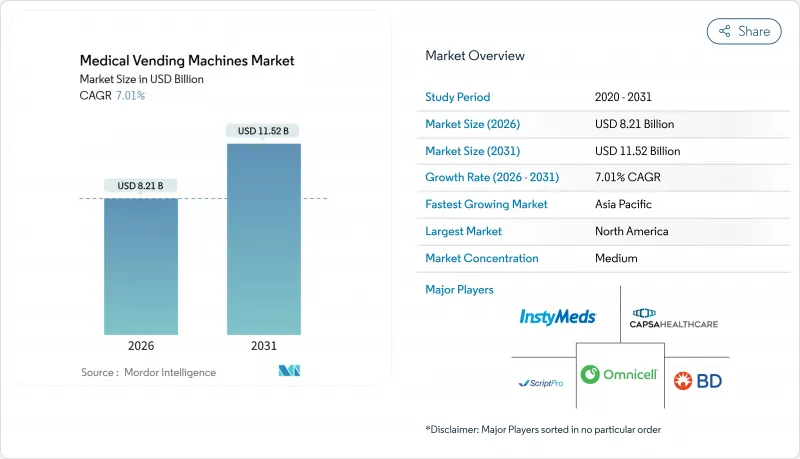
본 보고서는 제품 유형(바닥 설치형, 카운터탑/벤치탑형, 벽걸이형/콤팩트형, 스마트 디스펜싱 캐비닛), 의약품 분류(처방약 등), 기술(RFID 지원 등), 최종 사용자(병원 등), 지역(북미 등)별로 분류되어 있습니다. 시장 전망은 금액(달러) 기준으로 제시되어 있습니다.
전 세계 의료용 자동판매기 시장 동향 및 인사이트
외딴 지역 및 농촌 지역의 처방약 의존도 증가
약국 부족으로 인해 지방 지역 환자들은 처방약 재충전을 위해 30마일 이상 이동해야만 하며, 이러한 격차가 의료용 자판기 시장 수요를 뒷받침하고 있습니다. 커뮤니티 센터, 소방서, 편의점에는 만성 질환 치료제을 24시간 365일 제공할 수 있는 자판기가 설치되어 있어 이동 비용을 절감하고, 약물 복용 순응도 향상에 기여하고 있습니다. 로스앤젤레스 카운티가 2025년에 도입할 예정인, 나록손과 코로나19 검사 키트를 갖춘 무료 자판기는 지자체가 무인 캐비닛을 활용해 공중보건 격차를 해소하는 한 예입니다. 인도에서는 국가 보건 미션(National Health Mission)의 일환으로 시범 도입된 태양광 발전식 디스펜서가 원격 의료용 키오스크와 연동되어, 마을 진료소가 판매 부진한 SKU를 과잉 재고로 보유하는 것을 방지하는 데 기여하고 있습니다. 이러한 도입 사례는 인프라와 원격 검증 기술이 융합될 때 의료용 자판기 시장이 지닌 잠재력을 보여줍니다.
실시간 재고 가시화 및 재고 감소 대책에 대한 수요
미국에서는 행방불명된 재고로 인해 병원이 연간 45억 달러의 손실을 입고 있으며, 오피오이드의 부정 사용에 대한 처벌로 인해 이러한 부담은 더욱 커지고 있습니다. 2024년 BD사의 조사에 따르면, 생체 인식 잠금 장치가 장착된 RFID 캐비닛은 장기 요양 시설에서 원인을 알 수 없는 손실을 최대 77%까지 줄였습니다. 클라우드 대시보드는 의료진이 근무 시간 외에 의약품을 꺼내는 등의 이상 징후를 감지하여, 부정 사용이 심각해지기 전에 규정 준수 심사를 촉발합니다. 뉴욕시 보건·병원 기구(New York City Health+Hospitals)는 2024년, 11개 시설에 걸친 캐비닛 데이터를 통합하여 중복 발주를 줄이고 운영 자금을 마련했습니다. 이러한 성과는 조달 결정을 뒷받침하며, 비용 압박에 직면한 의료 기관들 사이에서 의료용 자판기 시장 전망을 더욱 밝게 하고 있습니다.
사이버 보안 및 물리적 부정 사용 위험
2024년에는 의료 업계에 대한 랜섬웨어 공격이 급증했습니다. Change Healthcare의 데이터 유출 사건만 해도 시정 비용으로 23억-25억 달러가 소요되었습니다. 네트워크에 연결된 약품 보관소도 유사한 취약점을 안고 있어, 투여 설정이나 접속 로그가 해커의 표적이 될 우려가 있습니다. 2024년 5월 Ascension Health가 당한 사이버 공격으로 인해 140개 병원이 종이 기반의 업무 프로세스로 되돌아갈 수밖에 없었고, 예정된 수술이 수 주간 지연되었습니다. 지문 정보 도난이나 지렛대를 이용한 공격과 같은 물리적 변조도 추가적인 위험 요인으로 작용하고 있습니다. 각 벤더사는 현재 에어갭 네트워크, 다단계 인증, 변조 방지 스티커를 권장하고 있지만, 위협이 증가함에 따라 의료용 자동판매기 시장의 단기적인 성장세는 여전히 주춤하고 있습니다.
부문 분석
2025년에는 바닥 설치형 자판기가 매출의 57.24%를 차지했습니다. 이는 200종 이상의 SKU를 수용할 수 있는 용량이나 간호사의 이동 시간을 단축해 주는 공기 이송관과의 연동 등 병원의 요구를 반영한 결과입니다. 이러한 제품의 넓은 설치 면적은 중증도가 높은 의료 현장에서 의료용 자판기 시장 규모를 뒷받침하고 있습니다. 2031년까지 연평균 성장률(CAGR) 11.43%를 나타낼 것으로 예측되는 카운터탑형 및 벤치탑형 모델은 제한된 공간 예산을 안고 있는 외래 진료 센터, 응급 진료 클리닉, 직장 내 건강 관리실에 매력적인 선택지입니다. 벽걸이형 및 소형 유닛은 재고 풍부함보다 기동성이 우선시되는 구급차나 해양 시추 시설에 적합합니다. 스마트 디스펜서 캐비닛은 가격이 비싸지만, 재고 감소와 인건비 절감을 통해 신속한 투자 회수를 실현합니다.
약국에서는 서랍에서 약품이 공급되는 동안 원격지에 있는 약사가 처방전을 확인할 수 있으므로, 직원은 상담에 전념할 수 있게 되어 카운터탑형 자동 판매기가 기존의 약국 카운터를 대체하고 있습니다. 응급실의 벽걸이형 유닛은 야간 근무 중 나록손이나 응급 피임약에 즉시 접근할 수 있게 해줍니다. AI 비전 센서가 알약의 모양과 색상을 식별하여 환자에게 전달되기 전에 오류를 감지합니다. 이러한 발전으로 인해 의료용 자동판매기 시장은 시설 유형에 관계없이 호황을 누리고 있습니다.
2025년에는 처방약이 가치 점유율의 44.63%를 차지할 것으로 예상되며, 그 범위는 유지 요법부터 감사 추적이 요구되는 규제 약물에 이르기까지 다양했습니다. 교통 거점이나 캠퍼스에서는 일반 의약품 판매가 꾸준히 증가하고 있습니다. 병원들이 급증 시에 대비해 비축량을 유지하고 있기 때문에 팬데믹 이후 개인용 보호장비(PPE) 및 의료용품 판매는 높은 수준에서 안정적으로 유지되고 있습니다. 2031년까지 연평균 10.32%의 성장이 예상되는 백신 및 콜드체인 의약품에는 비상 전원 공급 장치와 지속적인 기록 기능을 갖춘 냉장 캐비닛이 필요하며, 이로 인해 예방접종 프로그램 분야의 의료용 자동판매기 시장 규모가 확대되고 있습니다.
콜드체인 장비는 상온형 모델보다 40%-60% 비싸지만, 지방 진료소에서 현장에서 예방접종을 실시할 수 있게 하여 수익과 접종률 향상에 기여하고 있습니다. 처방약 자판기는 더 엄격한 감독을 받지만, 미국의 일부 주에서는 마약류 조제 시 약사의 대면 확인을 여전히 의무화하고 있습니다. OTC(일반의약품) 키오스크는 소매법에 따라 운영되며, 호텔이나 공항에 설치할 수 있습니다. 복도에 설치된 PPE(개인보호장비) 캐비닛은 수작업 확인을 줄이고 주문을 자동화함으로써 의료용 자판기 시장의 효율성 이점을 부각시키고 있습니다.
지역별 분석
2025년, 북미는 매출 점유율의 33.11%를 차지할 것으로 예상되며, 그 원동력은 미국 병원의 자동 캐비닛 보급률이 86.1%에 달한 데 있습니다. EHR(전자건강기록)과의 통합이 진행됨에 따라, 기기가 알레르기 정보를 확인하고 투여량을 자동으로 기록하는 것이 가능해졌습니다. NYC Health+Hospitals가 2024년에 11개 시설에서 도입을 시작한 것은 공공 부문에서 이러한 추세가 탄력을 받고 있음을 뒷받침합니다. FDA의 510(k) 승인 절차를 통한 규제 명확화가 투자를 뒷받침하며, 의료용 자동판매기 시장의 기반을 공고히 하고 있습니다.
유럽은 2위를 차지하고 있으며, 독일, 프랑스, 영국이 주도하고 있습니다. 규제 차이(일부 주에서는 무인 처방전 자판기를 금지하고 있는 등)로 인해 도입 현황에 편차가 나타나고 있습니다. 스페인과 이탈리아는 고령화가 진행 중인 농촌 지역에 대응하기 위해 마을 진료소에 소형 장비를 설치하고 원격약국(Telepharmacy)를 추진하고 있습니다. GDPR(EU 개인정보보호규정) 준수로 인해 암호화 및 동의 요건이 추가되어, 지역 의료용 자판기 시장에서 공급업체의 설계 선택에 영향을 미치고 있습니다.
아시아태평양은 성장의 원동력이 되고 있으며, 2031년까지 연평균 성장률(CAGR)은 10.20%로 예측됩니다. 중국에서는 2026년에 시행될 블록체인 기반 추적성 의무화에 따라 자판기 업그레이드가 진행되고 있습니다. 일본에서는 고령자의 편의성을 고려하여 역에 벽걸이형 유닛이 설치되어 있는 반면, 인도에서는 우타르프라데시 주와 비하르 주에서 원격 의료와 연계된 태양광 발전식 디스펜서의 시범 운영이 진행되고 있습니다. 호주에서는 ‘My Health Record’를 통해 처방전을 스마트카드에 연동하여 무인 처방전 갱신이 가능하도록 하고 있습니다. 한국의 디지털 인프라는 여러 병원 시스템에 걸친 재고 수준을 최적화하는 IoT 대시보드를 뒷받침하고 있으며, 이러한 요소들이 하나로 어우러져 의료용 자판기 시장을 견인하고 있습니다.
중동 및 아프리카 및 남미는 규모는 작지만 활발한 움직임이 보입니다. GCC(걸프협력회의) 국가들의 스마트 병원 프로젝트에서는 자동 조제가 핵심을 이루고 있습니다. 브라질에서는 2024년 규제 개정에 따라 약사의 감독 하에 약국 내 자동판매기 설치가 허용되어, 공급업체에게 새로운 비즈니스 기회가 열렸습니다. 아르헨티나 부에노스아이레스 및 코르도바에서 진행된 실증 실험에서는 광대역 환경의 불안정성이나 전자제품에 대한 관세와 같은 과제가 있음에도 불구하고 실용성이 검증되었으며, 이는 의료용 자판기 시장의 추가적인 확대를 위한 여지가 있음을 시사합니다.
기타 혜택:
- 엑셀 형식 시장 예측(ME) 시트
- 3개월간의 애널리스트 지원
자주 묻는 질문
목차
제1장 서론
제2장 조사 방법
제3장 주요 요약
제4장 시장 구도
제5장 시장 규모와 성장 예측
제6장 경쟁 구도
제7장 시장 기회와 향후 전망
LSH 26.08.26According to Mordor Intelligence, the medical vending machines market size is estimated at USD 8.21 billion in 2026, and is expected to reach USD 11.52 billion by 2031, at a CAGR of 7.01% during the forecast period (2026-2031).
This report is Segmented by Product Type (Floor-Standing Machines, Countertop/Benchtop Machines, Wall-Mounted/Compact Units, Smart Dispensing Cabinets), Medication Class (Prescription Drugs, and More), Technology (RFID-Enabled, and More), End User (Hospitals, and More), and Geography (North America, and More). Market Forecasts are Provided in Terms of Value (USD).
Global Medical Vending Machines Market Trends and Insights
Growing Dependency on Prescription Medicines in Remote & Rural Areas
Pharmacy deserts leave patients in rural districts traveling 30 miles or more for refills, a gap that fuels demand in the medical vending machines market. Community centers, fire stations, and convenience stores host 24/7 machines that dispense chronic-disease drugs, lowering travel costs and improving adherence. Los Angeles County's 2025 rollout of free units stocked with naloxone and COVID-19 tests illustrates how municipalities leverage unattended cabinets to close public-health gaps. In India, solar-powered dispensers piloted under the National Health Mission pair with telemedicine kiosks, helping village clinics avoid over-stocking slow-moving SKUs. Such deployments demonstrate the medical vending machines market potential when infrastructure and remote verification converge.
Demand for Real-Time Inventory Visibility & Shrinkage Control
Unaccounted inventory costs U.S. hospitals USD 4.5 billion annually, a burden magnified by opioid diversion penalties. RFID cabinets with biometric locks have cut unexplained losses by up to 77% in long-term-care settings, according to a 2024 BD study. Cloud dashboards surface anomalies-such as withdrawals outside a clinician's shift-and trigger compliance reviews before diversion escalates. New York City Health + Hospitals unified cabinet data across 11 facilities in 2024, trimming duplicate purchase orders and freeing working capital. These gains reinforce purchasing decisions, strengthening the medical vending machines market outlook among cost-pressured providers.
Cyber-Security & Physical Misuse Risks
Healthcare ransomware attacks spiked in 2024; the Change Healthcare breach alone imposed USD 2.3 billion to USD 2.5 billion in remediation costs. Connected cabinets inherit these vulnerabilities, exposing dose settings and access logs to hackers. Ascension Health's May 2024 cyberattack forced 140 hospitals back to paper workflows, delaying elective surgeries for weeks. Physical tampering-such as stolen fingerprints or crowbar attacks-adds another risk layer. Vendors now promote air-gapped networks, multifactor log-ins, and tamper seals, yet rising threat vectors still temper near-term momentum in the medical vending machines market.
Other drivers and restraints analyzed in the detailed report include:
- Rising Chronic-Disease Burden Driving 24/7 Medication Access
- Integration with Tele-Pharmacy & E-Prescription Platforms
- Complex Multi-Country Regulatory Approvals
For complete list of drivers and restraints, kindly check the Table Of Contents.
Segment Analysis
Floor-standing machines captured 57.24% revenue in 2025, reflecting hospitals' need for 200-plus SKU capacity and integration with pneumatic tubes that cut nurse walk-time. Their footprint anchors the medical vending machines market size in high-acuity settings. Countertop and benchtop models, forecast to post an 11.43% CAGR to 2031, appeal to ambulatory centers, urgent-care clinics, and workplace health rooms that face tight real-estate budgets. Wall-mounted and compact units address EMS vehicles and offshore rigs where mobility trumps inventory depth. Smart dispensing cabinets, while pricey, deliver rapid payback by reducing shrinkage and labor.
Countertop machines are edging out traditional pharmacy counters in drugstores as remote pharmacists verify scripts while the drawer dispenses, freeing staff for counseling. Wall-mounted units in emergency departments provide immediate naloxone or emergency contraception access during overnight shifts. AI vision sensors identify pill shape and color, flagging errors before they reach patients. These evolutions keep the medical vending machines market vibrant across facility types.
Prescription drugs held 44.63% value share in 2025, spanning maintenance therapies and controlled substances that demand audit trails. Over-the-counter items grow steadily in transport hubs and campuses. PPE and supplies stabilized at higher baselines post-pandemic as hospitals maintain surge stockpiles. Vaccines and cold-chain drugs, expected to grow 10.32% annually to 2031, require refrigerated cabinets fitted with backup power and continuous logging, expanding the medical vending machines market size in immunization programs.
Cold-chain units cost 40%-60% more than ambient models yet enable rural clinics to administer shots on-site, boosting revenues and coverage. Prescription-drug vending faces stricter oversight; several U.S. states still mandate live pharmacist review before dispensing narcotics. OTC kiosks operate under retail statutes, opening placement in hotels and airports. PPE cabinets in corridors cut manual checks and automate orders, underscoring the medical vending machines market efficiency benefits.
Complete Report Scope:
- By Product Type
- Floor-Standing Machines
- Countertop / Benchtop Machines
- Wall-Mounted / Compact Units
- Smart Dispensing Cabinets
- By Medication Class
- Prescription Drugs
- Over-the-Counter (OTC) Medicines
- PPE & Medical Supplies
- Vaccines & Cold-Chain Drugs
- By Technology
- RFID-Enabled Machines
- Barcode-Only Systems
- IoT / Cloud-Connected Units
- AI Vision-Based Dispensing
- By End User
- Hospitals & Specialty Clinics
- Retail Pharmacies & Drugstores
- Workplace & Corporate Clinics
- Transportation & Public Venues
- Remote & Rural Health Centres
- By Geography
- North America
- United States
- Canada
- Mexico
- Europe
- Germany
- France
- United Kingdom
- Italy
- Spain
- Rest of Europe
- Asia-Pacific
- China
- Japan
- India
- South Korea
- Australia
- Rest of Asia-Pacific
- Middle East & Africa
- GCC
- South Africa
- Rest of Middle East & Africa
- South America
- Brazil
- Argentina
- Rest of South America
- North America
Geography Analysis
North America held 33.11% revenue share in 2025, anchored by 86.1% U.S. hospital penetration of automated cabinets. Mature EHR integration lets machines verify allergies and log doses automatically. NYC Health + Hospitals' 2024 rollout across 11 facilities underscores public-sector momentum. Regulatory clarity via the FDA's 510(k) pathway sustains investment, reinforcing the medical vending machines market foothold.
Europe sits second, with Germany, France, and the U.K. leading. Fragmented oversight-some states ban unattended prescription vending-creates uneven uptake. Spain and Italy push telepharmacy to serve aging rural areas, installing compact units in village posts. GDPR compliance adds encryption and consent requirements, influencing vendor design choices in the regional medical vending machines market.
Asia-Pacific is the growth engine, forecast at 10.20% CAGR to 2031. China's 2026 blockchain traceability mandate drives cabinet upgrades. Japan installs wall units in train stations for elderly convenience, while India pilots solar-powered dispensers tied to telemedicine in Uttar Pradesh and Bihar. Australia links scripts to smart cards via My Health Record, enabling unattended refills. South Korea's digital infrastructure supports IoT dashboards that optimize par levels across multi-hospital systems, collectively propelling the medical vending machines market forward.
Middle East & Africa and South America remain smaller yet active. GCC smart-hospital projects include automated dispensing as a pillar. Brazil's 2024 rule change allowed cabinets in pharmacies under pharmacist oversight, opening new lanes for vendors. Argentina's pilots in Buenos Aires and Cordoba test viability despite patchy broadband and electronics tariffs, signaling incremental room for the medical vending machines market to expand.
- Advantage Vending & Distribution
- Asteres Inc.
- Beckton Dickinson
- Capsa Healthcare
- CVS Health
- Evoca Group
- InstyMeds Corporation
- Magex LLC
- MedAvail Holdings Inc.
- Omnicell
- Parata Systems
- Pharmashop24
- RXAutomated Solutions
- ScriptPro
- Shanghai Tongsan Vending
- SuZhou Ruiling Medical
- Tabula Rasa HealthCare (DosePak)
- Talyst Systems LLC
- Xenco Medical
- Yuyama Co., Ltd.
Additional Benefits:
- The market estimate (ME) sheet in Excel format
- 3 months of analyst support
TABLE OF CONTENTS
1 Introduction
- 1.1 Study Assumptions & Market Definition
- 1.2 Scope of the Study
2 Research Methodology
3 Executive Summary
4 Market Landscape
- 4.1 Market Overview
- 4.2 Market Drivers
- 4.2.1 Growing Dependency on Prescription Medicines in Remote & Rural Areas
- 4.2.2 Demand for Real-Time Inventory Visibility & Shrinkage Control
- 4.2.3 Rising Chronic-Disease Burden Driving 24/7 Medication Access
- 4.2.4 Integration With Tele-Pharmacy & E-Prescription Platforms
- 4.2.5 Blockchain-Enabled Anti-Counterfeit Dispensing Authentication
- 4.2.6 Hospital Micro-Fulfillment for PPE & Consumables
- 4.3 Market Restraints
- 4.3.1 Cyber-Security & Physical Misuse Risks
- 4.3.2 Complex Multi-Country Regulatory Approvals
- 4.3.3 High Service, Refill & Calibration Costs in Low-Volume Sites
- 4.3.4 Consumer Trust Gap Around Machine-Dispensed Medicines
- 4.4 Value / Supply-Chain Analysis
- 4.5 Regulatory Landscape
- 4.6 Technological Outlook
- 4.7 Porter's Five Forces Analysis
- 4.7.1 Threat of New Entrants
- 4.7.2 Bargaining Power of Buyers
- 4.7.3 Bargaining Power of Suppliers
- 4.7.4 Threat of Substitutes
- 4.7.5 Intensity of Competitive Rivalry
5 Market Size & Growth Forecasts (Value in USD)
- 5.1 By Product Type
- 5.1.1 Floor-Standing Machines
- 5.1.2 Countertop / Benchtop Machines
- 5.1.3 Wall-Mounted / Compact Units
- 5.1.4 Smart Dispensing Cabinets
- 5.2 By Medication Class
- 5.2.1 Prescription Drugs
- 5.2.2 Over-the-Counter (OTC) Medicines
- 5.2.3 PPE & Medical Supplies
- 5.2.4 Vaccines & Cold-Chain Drugs
- 5.3 By Technology
- 5.3.1 RFID-Enabled Machines
- 5.3.2 Barcode-Only Systems
- 5.3.3 IoT / Cloud-Connected Units
- 5.3.4 AI Vision-Based Dispensing
- 5.4 By End User
- 5.4.1 Hospitals & Specialty Clinics
- 5.4.2 Retail Pharmacies & Drugstores
- 5.4.3 Workplace & Corporate Clinics
- 5.4.4 Transportation & Public Venues
- 5.4.5 Remote & Rural Health Centres
- 5.5 By Geography
- 5.5.1 North America
- 5.5.1.1 United States
- 5.5.1.2 Canada
- 5.5.1.3 Mexico
- 5.5.2 Europe
- 5.5.2.1 Germany
- 5.5.2.2 France
- 5.5.2.3 United Kingdom
- 5.5.2.4 Italy
- 5.5.2.5 Spain
- 5.5.2.6 Rest of Europe
- 5.5.3 Asia-Pacific
- 5.5.3.1 China
- 5.5.3.2 Japan
- 5.5.3.3 India
- 5.5.3.4 South Korea
- 5.5.3.5 Australia
- 5.5.3.6 Rest of Asia-Pacific
- 5.5.4 Middle East & Africa
- 5.5.4.1 GCC
- 5.5.4.2 South Africa
- 5.5.4.3 Rest of Middle East & Africa
- 5.5.5 South America
- 5.5.5.1 Brazil
- 5.5.5.2 Argentina
- 5.5.5.3 Rest of South America
- 5.5.1 North America
6 Competitive Landscape
- 6.1 Market Concentration
- 6.2 Market Share Analysis
- 6.3 Company Profiles (includes Global level Overview, Market level overview, Core Segments, Financials as available, Strategic Information, Market Rank/Share for key companies, Products and Services, and Recent Developments)
- 6.3.1 Advantage Vending & Distribution
- 6.3.2 Asteres Inc.
- 6.3.3 Becton, Dickinson and Company
- 6.3.4 Capsa Healthcare
- 6.3.5 CVS Health Corporation
- 6.3.6 Evoca Group
- 6.3.7 InstyMeds Corporation
- 6.3.8 Magex LLC
- 6.3.9 MedAvail Holdings Inc.
- 6.3.10 Omnicell Inc.
- 6.3.11 Parata Systems LLC
- 6.3.12 Pharmashop24 srl
- 6.3.13 RXAutomated Solutions
- 6.3.14 ScriptPro LLC
- 6.3.15 Shanghai Tongsan Vending
- 6.3.16 SuZhou Ruiling Medical
- 6.3.17 Tabula Rasa HealthCare (DosePak)
- 6.3.18 Talyst Systems LLC
- 6.3.19 Xenco Medical
- 6.3.20 Yuyama Co., Ltd.
7 Market Opportunities & Future Outlook
- 7.1 White-space & Unmet-Need Assessment


