|
시장보고서
상품코드
2115150
프랑스의 세라믹 타일 : 시장 점유율 분석, 업계 동향 및 통계, 성장 예측(2026-2031년)France Ceramic Tiles - Market Share Analysis, Industry Trends & Statistics, Growth Forecasts (2026 - 2031) |
||||||
 Mordor Intelligence
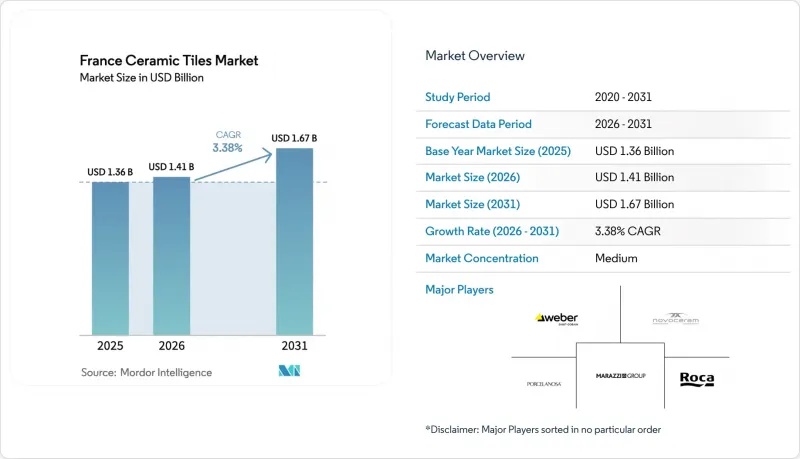
Mordor Intelligence에 의하면, 프랑스의 세라믹 타일 시장 규모는 2025년 13억 6,000만 달러로 평가되었습니다. 2026년에는 14억 1,000만 달러로 확대되어 2026년부터 2031년에 걸쳐 CAGR 3.38%로 성장을 지속하여, 2031년에는 16억 7,000만 달러에 이를 것으로 예측됩니다.
본 보고서는 제품 유형(도자기 타일, 유약 처리된 세라믹 타일 등), 용도(바닥, 벽 등), 최종 사용자(주택, 상업시설), 건설 유형(신축, 리모델링),유통 채널(타일·석재 전문점, 홈센터·DIY 매장 등), 지역(일드프랑스, 오베르뉴-론-알프 등)별로 분류되어 있습니다. 시장 예측은 금액(달러)으로 제시되어 있습니다.
프랑스의 세라믹 타일 시장 동향 및 인사이트
MaPrimeRenov 및 CEE 보조금에 힘입은 리모델링 붐
프랑스의 리모델링 자금 지원 체계는 주거용 바닥재 리모델링을 지속적으로 뒷받침하고 있으며, 이것이 프랑스 세라믹 타일 시장의 단기적인 수요 기반이 되고 있습니다. 국가주택청 이사회는 2026년도 잠정 예산으로 54억 달러(46억 유로)를 승인했으며, 이 중 51억 달러(44억 유로)를 가구 지원에 배정하여 약 35만 가구를 대상으로 하고 있습니다. 여기에는 최소 12만 가구의 고품질 에너지 절약 리모델링과 최소 15만 가구의 단일 조치에 의한 리모델링이 포함되어 있으며, 바닥재 공사가 외피 및 설비 교체와 연계되어 진행되는 대상 프로젝트의 흐름이 유지되고 있습니다. 이러한 예산 배분과 병행하여 에너지 절약 인증서 제도가 운영되고 있으며, 정부의 2025-2035년 프로그램 청사진에서는 중기적으로 개보수량을 안정화하기 위한 지속적인 의무와 정책의 연속성이 제시되어 있습니다. 이러한 지원을 통해 주방,욕실, 현관 등의 내구성이 뛰어난 마감재에 대한 지출이 유지되고 있으며, 이러한 공간에서는 세라믹이 위생성, 내수성, 그리고 긴 수명을 제공합니다. 이 프로그램의 설계는 에너지 성능 등급을 높이는 프로젝트를 우선시하고 있어, 이를 통해 단열 개보수 외에도 표면 재시공을 포함한 종합적인 공사 범위가 촉진되고 있습니다.
고급스러움과 내구성을 추구한 대형 포세린 타일로 전환
대형 도자기 타일은 낮은 수분 흡수율과 높은 강도라는 특성을 유지하면서, 이음매를 최소화한 깔끔한 미관을 실현함으로써 프랑스의 세라믹 타일 시장에서 그 가치를 확고히 하고 있습니다. 대도시권 중심부의 디자인을 중시하는 주택 프로젝트나 고급 상업시설 프로젝트에서는 모서리를 정밀하게 절단한 제품이 지정되고 있으며, 이를 통해 고가 상품으로의 상품 구성 전환이 가속화되고 있습니다. 정평이 나 있는 대형 제조업체와 연계된 프랑스의 생산 체제는 그룹 규모의 역량을 활용하여 최대 120센티미터 크기의 제품을 제공하면서도 현지 마감 및 품질 관리를 유지할 수 있어, 인증을 받고 저배출인 제품군을 찾는 바이어들의 선호에도 부합하고 있습니다. 또한, 낮은 기공률과 내마모성과 같은 포셀린 타일의 기술적 특성은 유동 인구가 많은 장소의 유지 관리 요건에도 적합합니다. 크기가 커질수록 전문적인 취급, 수평 조정 시스템, 그리고 전문 시공업체의 중요성은 여전히 높으며, 이를 통해 디지털화가 진행되는 판매 채널 구조 속에서도 전문 타일 매장이 그 존재 의의를 유지할 수 있게 됩니다.
에너지 요금 변동이 소성 비용을 상승시킨다.
에너지는 세라믹 소성 과정에서 핵심적인 투입 요소이며, 프랑스 전력·가스 시장의 가격 변동으로 인해 비용 전가와 이익률 관리가 계속해서 중요한 과제로 대두되고 있습니다. 에너지 관련 유틸리티의 생산자물가지수에 따르면, 2025년 에너지 비용은 2021년 기준치를 계속 상회했으며, 에너지 위기의 심각한 국면이 지나간 후에도 에너지 집약적 생산의 비용 하한선은 높은 수준으로 유지되었습니다. TURPE 7 프레임워크에 따른 송전망 이용료 변경은 2028년까지 송전 및 배전 수준에서 계획된 네트워크 투자 확대를 반영하고 있으며, 이는 상품 가격 변동과 무관하게 제조업체가 지불하는 송전망 이용료에 구조적인 상승 압력을 가하고 있습니다. 2024년과 2025년에 기업용 전력 소비세가 부활하고 이후 인상됨에 따라 총 전력 공급 비용이 증가했으며, 안정적인 베이스로드 전력의 혜택을 받는 가마 가동 시 헤지 전략이 복잡해졌습니다. 유로스타트(Eurostat) 데이터에 따르면, 2025년 상반기 비가정용 전력 가격은 2024년 상반기에 비해 9.0% 하락하여 일시적인 완화 요인이 되었지만, 규제 요금 및 세제 변경의 전반적인 영향은 여전히 단위당 수익성에 큰 부담으로 작용했습니다.
부문별 분석
2025년에는 도자기질 타일이 48.23%를 차지하며, 낮은 흡수율과 높은 강도가 필수적인 유동 인구가 많은 장소나 습기가 많은 장소의 요구에 적합한 성능 프로파일 덕분에 이 부문을 주도했습니다. 이러한 선도적 지위가 프랑스의 세라믹 타일 시장의 제품 구성 기반을 형성하고 있습니다. 한편, 악센트 벽이나 복잡한 표면에 대한 디자인적 유연성을 바탕으로 모자이크 타일이 가장 빠른 성장세를 기록하고 있습니다. 저VOC 인증을 획득한 제품군과 지속가능성 라벨은 실내 공기질 기준이 요구되는 프로젝트에서 유약 타일 제품 라인을 뒷받침하고 있으며, 이를 통해 프랑스산 컬렉션은 공공 및 민간 입찰에서 계속해서 높은 지지를 유지하고 있습니다. 그룹 차원의 플랫폼을 통해 대형 포세린 타일의 접근성이 확대되고 있는 반면, 현지에서 이루어지는 마감 가공을 통해 국내 브랜드의 가치가 유지되고 있으며, 이러한 조합이 쇼룸의 매력을 높이고 프리미엄 가격대를 뒷받침하고 있습니다. 포셀린 타일과 표준 유약 세라믹 타일 간의 가격 차이가 계속 좁혀지는 가운데, 프로젝트 사양은 주요 주거 공간에서 포셀린 타일을 우선시하는 경향이 강해지고 있는 반면, 모자이크 타일과 특수 타일은 제품 라인업의 장식적 측면을 돋보이게 하고 있습니다.
모자이크 타일은 2031년까지 연평균 성장률(CAGR) 3.68%로 가장 빠른 성장세를 기록할 것으로 예측됩니다. 개발업체와 주택 소유주들은 마모가 심한 바닥이나 습도가 높은 구역에 포세린 타일을 채택하는 한편, 스파, 수영장,액센트 벽면에는 모자이크 타일에 대한 수요가 증가하고 있어, 이로 인해 프랑스의 세라믹 타일 시장의 성장 요인이 다양화되고 있습니다. 전문 소매점은 최대 120센티미터 크기까지 대응할 수 있는 대형 전시 공간과 진열대를 도입하여 이에 대응하고 있으며, 이를 통해 프리미엄 컬렉션의 구매 과정이 개선되고 있습니다. 매장에서의 상품 선정과 디지털을 통한 시각화의 균형이, 대형 타일 채택에 있어 극히 중요한 마감, 질감, 규모를 전달하는 데 도움을 주고 있습니다. 이러한 상황에서 프랑스의 세라믹 타일 시장에서 모자이크 타일이 차지하는 시장 규모는 해당 부문을 선도하는 성장률에 따라 확대될 것으로 예측됩니다. 디자이너들은 부티크 호텔이나 주택 리모델링에 적합한 색상 다양성과 모듈성을 중시하고 있습니다. 미관과 저배출성, 생산 공정의 추적 가능성을 겸비한 인증 제품군은 조달 과정에서 우위를 점하며, 장기적인 브랜드 충성도 형성으로도 이어집니다.
2025년에는 바닥 시공이 시장 가치의 63.11%를 차지했으며, 주거 및 상업시설에서 내구 연한, 청소 용이성, 내마모성이 총 시공 비용을 정당화하는 핵심 용도로 계속 자리매김하고 있습니다. 프랑스의 세라믹 타일 시장은 규모 면에서 여전히 바닥 용도에 의존하고 있지만, 지붕 용도는 역사적 건축물의 외장 보수와 에너지 효율화를 결합한 프로젝트를 배경으로 소규모 기반에서 2031년까지 연평균 성장률(CAGR) 3.56%로 성장하고 있습니다. 벽면 용도는 습기 대책 및 시각적 디자인 효과를 충족하기 위해 장식 유약이 지정되는 습기가 많은 장소나 포인트가 되는 공간에서 안정적인 역할을 유지하고 있습니다. 2025년 바닥 및 벽면 마감 공사에 대한 긍정적인 가격 지표는 꾸준한 개보수 활동과 일치하며, 신축 부문에서는 경쟁하는 대체재가 존재함에도 불구하고 바닥재 판매량을 뒷받침하고 있습니다. 공공 및 민간 시설 기준에서는 유동 인구가 많은 구역의 내구성과 위생성이 점점 더 중요시되고 있어, 교통 기관 및 공공시설 환경에서 바닥재 채택을 더욱 촉진하고 있습니다.
이 부문에서 프랑스의 세라믹 타일 시장 중 지붕 공사와 관련된 시장 규모는 지자체와 소유주가 건물 외피 개보수와 기후 변화 적응 목표를 결합함에 따라 예측 성장률에 따라 확대될 것으로 전망됩니다. 조달 주도형 프로젝트에서는 경질 바닥재에 대한 선호도와 규정 준수 요건이 복도, 로비, 화장실에서 세라믹 타일의 사용을 촉진하고 있습니다. 대체재에 비해 바닥재의 주요 강점은 전체 수명 주기 비용에 있으며, 사용 빈도가 높고 빈번한 청소가 예상되는 상황에서는 여전히 유리한 입지를 유지하고 있습니다. 대형 타일의 선택지가 늘어남에 따라, 바닥재는 현대적인 디자인 요건을 충족하는 매끄러운 외관을 구현하면서도 이음매 유지 관리 부담을 줄일 수 있게 됩니다. 이러한 조건들을 종합해 볼 때, 바닥재는 여전히 수요의 중심을 차지하는 한편, 지붕재는 전문적인 개보수 프로그램에서 부가가치를 창출하고 있습니다.
기타 혜택 :
- 엑셀 형식 시장 예측(ME) 시트
- 3개월간의 애널리스트 지원
목차
제1장 서론
제2장 조사 방법
제3장 개요
제4장 시장 구도
제5장 시장 규모 및 성장 예측
제6장 경쟁 구도
제7장 시장 기회 및 향후 전망
KTHAccording to Mordor Intelligence, the France ceramic tiles market size is expected to grow from USD 1.36 billion in 2025 to USD 1.41 billion in 2026 and is forecast to reach USD 1.67 billion by 2031 at a 3.38% CAGR over 2026-2031.
This report is Segmented by Product Type (Porcelain, Glazed Ceramic, and More), Application (Floor, Wall, and More), End-User (Residential, Commercial), Construction Type (New Construction, Renovation), Distribution Channel (Specialty Tile & Stone Stores, Home Improvement & DIY Stores, and More), and Geography (Ile-De-France, Auvergne-Rhone-Alpes, and More). Market Forecasts are Provided in Value (USD).
France Ceramic Tiles Market Trends and Insights
Renovation Wave Backed by MaPrimeRenov & CEE Subsidies
France's renovation funding pipeline continues to reinforce residential flooring upgrades, which anchors near-term demand in the France ceramic tiles market. The national housing agency's board adopted a provisional budget of USD 5.4 billion (EUR 4.6 billion) for 2026, assigning USD 5.1 billion (EUR 4.4 billion) to household aid with a target of nearly 350,000 homes, including at least 120,000 high-quality energy renovations and a minimum of 150,000 single-action renovations, which sustains the flow of eligible projects where flooring work is bundled with envelope and systems upgrades . The energy savings certificates scheme runs in parallel to this allocation, and the government's 2025-2035 program blueprint indicates continued obligations and policy continuity that keep renovation volumes stable across the medium term. These supports keep spending directed at durable finishes in kitchens, bathrooms, and entryways, where ceramic provides hygiene, water resistance, and long life. The program design favors projects that lift energy performance categories, which encourages comprehensive scopes that include surface renewals alongside thermal retrofits.
Shift to Large-Format Porcelain for Premium Aesthetics & Durability
Large-format porcelain is consolidating value in the France ceramic tiles market because it delivers a clean-lined aesthetic with fewer grout joints while retaining low water absorption and high strength. Design-driven residential projects in metropolitan cores and premium commercial programs are specifying rectified-edge products, which support a mix shift toward higher ticket items. French production linked to established champions can leverage group-scale capabilities to offer formats up to 120 centimetres while maintaining local finishing and quality control, aligning with buyer preference for certified, low-emission portfolios. The technical profile of porcelain, including low porosity and abrasion resistance, also matches the maintenance objectives in high-traffic venues. As formats scale up, specialized handling, levelling systems, and pro installers remain important, which helps specialty tile stores maintain relevance in a channel mix that is otherwise opening to digital journeys.
Volatile Energy Tariffs Inflate Firing Costs
Energy is a core input in ceramic firing, and the price dynamics across the French electricity and gas landscape keep cost pass-through and margin management in the foreground. Producer price indicators for energy-linked utilities show that energy costs in 2025 remained above the 2021 baseline, which sustained a higher cost floor for energy-intensive production even after the acute phase of the energy crisis had passed. Changes to grid access charges under the TURPE 7 framework reflect step-ups in planned network investments at the transmission and distribution levels through 2028, which translate into structural upward pressure on grid fees that manufacturers pay regardless of commodity price swings. The restoration and subsequent increase of the electricity excise duty for businesses in 2024 and 2025 added to the total delivered power cost, complicating hedging strategies for kiln operations that benefit from steady baseload. While Eurostat data point to a 9.0% decline in non-household electricity prices in the first half of 2025 compared with the first half of 2024, which offers some temporary relief, the totality of regulated charges and tax changes continues to weigh on unit economics. .
Other drivers and restraints analyzed in the detailed report include:
- Pilot Green-Hydrogen Kilns Lower Embodied-Carbon of French Tiles
- Antibacterial Glazed Tiles Gain Traction in Hospital Upgrades
- Skilled Tile-Layer Shortage Delays Project Timelines
For complete list of drivers and restraints, kindly check the Table Of Contents.
Segment Analysis
Porcelain tiles accounted for 48.23% in 2025, leading the category with a performance profile that suits heavy footfall and wet-area demands where low water absorption and high strength are essential. This leadership anchors product mix in the France ceramic tiles market, even as mosaics post the fastest growth on the back of design flexibility for feature walls and complex surfaces. Certified low-VOC portfolios and sustainability labels support glazed lines in projects that specify indoor air quality outcomes, which helps French-made collections maintain preference in public and private tenders. Large-format porcelain formats are widening in availability through group-scale platforms while local finishing maintains domestic brand equities, a combination that strengthens showroom appeal and supports premium price points. As price differentials between porcelain and standard glazed ceramic continue to narrow, project specifications tip more often toward porcelain in main living areas while mosaics and specialty pieces lift the decorative end of the range.
Mosaic tiles are expected to post the fastest growth at a 3.68% CAGR through 2031. Developers and homeowners use porcelain for high-wear floors and high-moisture zones, while mosaics gain in spas, pools, and accent walls, which diversifies growth drivers within the France ceramic tiles market. Specialty retailers are adapting with larger display bays and handling fixtures for formats up to 120 centimetres, which improves the path to purchase for premium collections. The balance of in-store curation and digital visualization helps communicate finish, texture, and scale, which are pivotal for large-format adoption. In this context, the France ceramic tiles market size attributed to mosaics is expected to expand in line with their segment-leading growth, with designers favouring colourways and modularity that suit boutique hospitality and residential upgrades. Certified ranges that combine aesthetics with low emissions and traceable production carry an advantage in procurement and deliver longer-term brand loyalty.
Floor installations represented 63.11% of value in 2025, and they remain the core application where service life, cleanability, and abrasion resistance justify total installed cost in residential and commercial settings. The France ceramic tiles market continues to rely on floors for scale, while roofing grows from a smaller base at a 3.56% CAGR through 2031, on projects that combine envelope repairs with energy upgrades in heritage contexts. Wall applications keep a stable role in wet zones and in feature settings where decorative glazes are specified to meet moisture control and visual design outcomes. Positive pricing indicators for floor and wall covering works in 2025 line up with steady renovation activity, which supports flooring volumes despite competitive alternatives in new-build segments. Public and private facility standards increasingly emphasize durability and hygiene in high-traffic areas, further reinforcing floor application selection in transport and institutional environments.
Within the segment, the France ceramic tiles market size linked to roofing applications is projected to expand in line with the forecast growth rate as municipalities and owners combine envelope interventions with climate adaptation aims. Where projects are procurement-driven, hard-surface preferences and compliance requirements support ceramic use in corridors, lobbies, and restrooms. The main line of defence for flooring against substitutes is total lifecycle cost, which remains favourable where heavy use and frequent cleaning are expected. As large-format options proliferate, floors can achieve a seamless look that meets contemporary design briefs while reducing grout line maintenance. Taken together, these conditions keep floors central to demand while roofing captures incremental value in specialized retrofit programs.
Complete Report Scope:
- By Product Type
- Porcelain Tiles
- Glazed Ceramic Tiles
- Unglazed Ceramic Tiles
- Mosaic Tiles
- Others (Decorative, Patterned, Handmade)
- By Application
- Floor
- Wall
- Roofing
- By End-User
- Residential
- Commercial
- Hospitality (Hotels, Resorts)
- Retail Spaces
- Offices & Institutions
- Healthcare
- Educational Facilities
- Transport Hubs (Airports, Metro, Bus Terminals)
- Others
- By Construction Type
- New Construction
- Renovation & Replacement
- By Distribution Channel
- Specialty Tile & Stone Stores
- Home Improvement & DIY Stores
- Online Retail
- Direct Sales to Contractors
- By Geography
- Ile-de-France
- Auvergne-Rhone-Alpes
- Provence-Alpes-Cote d'Azur
- Rest of France
List of Companies Covered in this Report:
- Saint-Gobain Weber
- Novoceram
- Porcelanosa Grupo
- Roca Ceramica
- Marazzi Group
- Florim Ceramiche
- Panariagroup
- Mohawk Industries
- Groupe Boulenger
- Cerabati
- Villeroy & Boch
- Pamesa Ceramica
- Atlas Concorde
- Casalgrande Padana
- Lapeyre
- Keraben Grupo
- RAK Ceramics
- ABK Group
- Imola Ceramica
- Diffusion Ceramique
Additional Benefits:
- The market estimate (ME) sheet in Excel format
- 3 months of analyst support
TABLE OF CONTENTS
1 Introduction
- 1.1 Study Assumptions & Market Definition
- 1.2 Scope of the Study
2 Research Methodology
3 Executive Summary
4 Market Landscape
- 4.1 Market Overview
- 4.2 Market Drivers
- 4.2.1 Renovation wave backed by MaPrimeRenov & CEE subsidies
- 4.2.2 Post-COVID home-improvement culture sustains DIY tile demand
- 4.2.3 Shift to large-format porcelain for premium aesthetics & durability
- 4.2.4 Pilot green-hydrogen kilns lower embodied-carbon of French tiles
- 4.2.5 Antibacterial glazed tiles gain traction in hospital upgrades
- 4.2.6 Italy-Spain-France rail corridor cuts delivery lead-time & cost
- 4.3 Market Restraints
- 4.3.1 Volatile energy tariffs inflate firing costs
- 4.3.2 Vinyl & LVT products erode price-sensitive residential share
- 4.3.3 Skilled tile-layer shortage delays project timelines
- 4.3.4 Tighter EU-ETS Phase IV benchmarks raise compliance outlays
- 4.4 Industry Value Chain Analysis
- 4.5 Porter's Five Forces Analysi
- 4.5.1 Threat of New Entrants
- 4.5.2 Bargaining Power of Suppliers
- 4.5.3 Bargaining Power of Buyers
- 4.5.4 Threat of Substitutes
- 4.5.5 Competitive Rivalry
- 4.6 Insights into the Latest Trends and Innovations in the Market
- 4.7 Insights on Recent Developments (New Product Launches, Strategic Initiatives, Investments, Partnerships, JVs, Expansion, M&As, etc.) in the Industry
5 Market Size & Growth Forecasts
- 5.1 By Product Type
- 5.1.1 Porcelain Tiles
- 5.1.2 Glazed Ceramic Tiles
- 5.1.3 Unglazed Ceramic Tiles
- 5.1.4 Mosaic Tiles
- 5.1.5 Others (Decorative, Patterned, Handmade)
- 5.2 By Application
- 5.2.1 Floor
- 5.2.2 Wall
- 5.2.3 Roofing
- 5.3 By End-User
- 5.3.1 Residential
- 5.3.2 Commercial
- 5.3.2.1 Hospitality (Hotels, Resorts)
- 5.3.2.2 Retail Spaces
- 5.3.2.3 Offices & Institutions
- 5.3.2.4 Healthcare
- 5.3.2.5 Educational Facilities
- 5.3.2.6 Transport Hubs (Airports, Metro, Bus Terminals)
- 5.3.2.7 Others
- 5.4 By Construction Type
- 5.4.1 New Construction
- 5.4.2 Renovation & Replacement
- 5.5 By Distribution Channel
- 5.5.1 Specialty Tile & Stone Stores
- 5.5.2 Home Improvement & DIY Stores
- 5.5.3 Online Retail
- 5.5.4 Direct Sales to Contractors
- 5.6 By Geography
- 5.6.1 Ile-de-France
- 5.6.2 Auvergne-Rhone-Alpes
- 5.6.3 Provence-Alpes-Cote d'Azur
- 5.6.4 Rest of France
6 Competitive Landscape
- 6.1 Market Concentration
- 6.2 Strategic Moves
- 6.3 Market Share Analysis
- 6.4 Company Profiles (includes Global level Overview, Market level overview, Core Segments, Financials as available, Strategic Information, Market Rank/Share for key companies, Products & Services, and Recent Developments)
- 6.4.1 Saint-Gobain Weber
- 6.4.2 Novoceram
- 6.4.3 Porcelanosa Grupo
- 6.4.4 Roca Ceramica
- 6.4.5 Marazzi Group
- 6.4.6 Florim Ceramiche
- 6.4.7 Panariagroup
- 6.4.8 Mohawk Industries
- 6.4.9 Groupe Boulenger
- 6.4.10 Cerabati
- 6.4.11 Villeroy & Boch
- 6.4.12 Pamesa Ceramica
- 6.4.13 Atlas Concorde
- 6.4.14 Casalgrande Padana
- 6.4.15 Lapeyre
- 6.4.16 Keraben Grupo
- 6.4.17 RAK Ceramics
- 6.4.18 ABK Group
- 6.4.19 Imola Ceramica
- 6.4.20 Diffusion Ceramique
7 Market Opportunities & Future Outlook
- 7.1 Carbon-neutral tile lines using green-hydrogen kilns in Provence
- 7.2 Smart temperature-regulating porcelain tiles for heritage retrofits