

|
시장보고서
상품코드
2115844
ASEAN의 택시 : 시장 점유율 분석, 업계 동향과 통계, 성장 예측(2026-2031년)ASEAN Taxi - Market Share Analysis, Industry Trends & Statistics, Growth Forecasts (2026 - 2031) |
||||||
 Mordor Intelligence
Mordor Intelligence에 따르면 ASEAN의 택시 시장 규모는 2025년 243억 9,000만 달러에서 2026년에는 261억 6,000만 달러로 확대되고, 2026년부터 2031년까지 CAGR 7.26%를 기록하며 2031년에는 371억 5,000만 달러에 달할 것으로 예측됩니다.
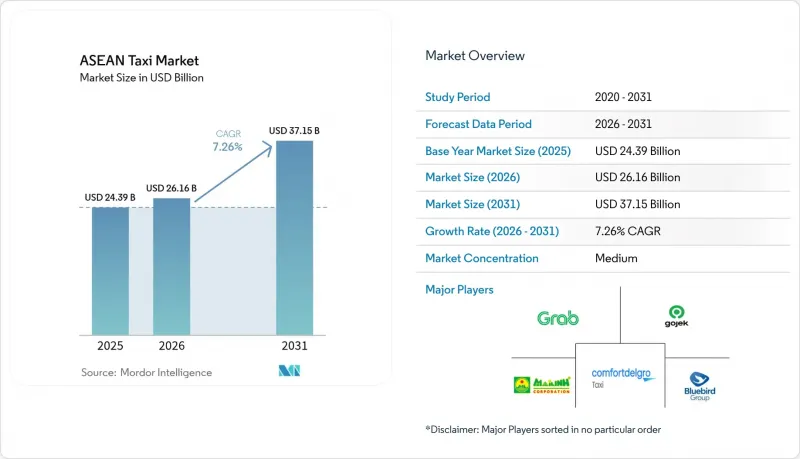
본 보고서는 예약 유형(온라인 및 오프라인), 서비스 유형(기존 미터기 택시 등), 차량 유형(오토바이 등), 차체 스타일(세단 등), 차량 등급(이코노미, 프리미엄/이그제큐티브 등), 최종사용자(법인, 관광객 등) 및 국가별로 분류되어 있습니다. 시장 예측은 금액(달러) 기준으로 제시되어 있습니다.
아세안 택시 시장 동향 및 인사이트
급속한 도시화와 심화되는 교통 체증
아세안 메가시티에서 도시 지역의 교통 체증이 심화되는 가운데, 자카르타와 같은 도시에서는 출퇴근 시간대에 심각한 교통 체증이 발생하고 있습니다. 마닐라에서는 교통 체증이 생산성의 대폭적인 저하로 나타나고 있어, 신뢰할 수 있는 지점 간 이동 수단에 대한 수요가 높다는 점이 부각되고 있습니다. 특히 홍수 등 계절적인 문제나 대중교통 운행이 불안정해질 때에는 택시가 필수적인 존재가 됩니다. 한편, 라이드 헤일링 플랫폼은 운전자의 경로를 교묘하게 변경함으로써 이동의 불확실성을 줄이는 특징이 있으며, 이러한 강점을 바탕으로 기술에 익숙한 도시 지역에서 기존의 길거리 택시 호출 서비스에 비해 유리한 입지를 구축하고 있습니다.
기업용 모빌리티 구독 수요의 급증
아세안 전역에서 기업들은 비용 절감과 업무 유연성 향상이라는 매력에 이끌려 모빌리티 구독 서비스로의 전환을 가속화하고 있습니다. 주목할 만한 변화로, 기업들은 자사 차량 보유에서 벗어나 플랫폼 기반 서비스를 선택하고 있습니다. 이러한 추세는 견조한 성장을 보고하고 있는 GoCorp와 같은 제공업체들에 의해 뒷받침되고 있습니다. 공공 부문도 뒤처지지 않고 있으며, 바콜로드시는 공무 이동에 Grab을 적극적으로 활용하고 있습니다. 이러한 노력을 통해 바콜로드시는 청구 처리 효율화 및 규정 준수 관리 철저화 등의 이점을 누리고 있습니다. 하이브리드 근무 방식이 정착됨에 따라 유연한 차량 호출 서비스에 대한 수요가 증가하고 있으며, 구독형 택시 서비스는 기업에게 매력적이고 확장성이 뛰어난 솔루션으로 자리 잡고 있습니다.
심각한 교통 체증이 운전자의 가동률과 신뢰성을 저하시키고 있다
아세안(ASEAN)의 메가시티에서는 심각한 교통 정체가 운전자의 생산성과 서비스 신뢰성을 저해하고 있습니다. 자카르타의 출퇴근 시간대 저속 주행은 운행 횟수를 감소시키고 연료비를 상승시키고 있습니다. 한편, 방콕과 마닐라에서는 교통 정체로 인한 심각한 경제적 타격을 겪고 있습니다. 장시간의 지연은, 특히 귀가 요금을 예측할 수 없는 경우, 운전기사가 장거리 승차를 수락하는 것을 주저하게 만드는 요인이 되고 있습니다. 배차 플랫폼은 경로 최적화 기능을 제공하지만, 출퇴근 시간대의 물리적 병목 현상으로 인해 여전히 제약을 받고 있으며, 이는 이 지역 택시 시장의 구조적 제약을 더욱 고착시키고 있습니다.
부문 분석
온라인 채널은 2025년 아세안 택시 시장 점유율의 62.11%를 차지하며, 2031년까지 연평균 성장률(CAGR) 7.72%로 성장하고 있습니다. 이는 아세안 주요 도시에서 스마트폰 보급이 확대되고 있음을 반영합니다. 실시간 추적 및 무현금 결제를 선호하는 사용자 경향으로 인해, 오프라인 콜센터 및 길거리 호출 서비스의 수요가 계속해서 감소하고 있습니다. 다만, 현지 앱 사용에 익숙하지 않은 관광객을 대상으로는 여전히 이러한 서비스가 이용되고 있습니다. 오프라인 예약 점유율은 37.89%를 차지하고 있지만, 4G 네트워크가 지방 도시로 확대됨에 따라 그 비율은 해마다 줄어들고 있습니다.
아세안 택시 시장에서는 태국과 말레이시아에서 기존 택시 회사들이 독자적인 앱을 출시하는 움직임이 나타나고 있으며, 이러한 변화로 인해 온라인과 오프라인의 경계가 모호해지고 있습니다. 하이브리드 모델에서는 디지털을 통한 편의성을 제공하면서도 미터기 요금제를 유지할 수 있어, 이를 통해 규제된 요금을 선호하는 고령층 이용자 수를 유지하고 있습니다. 공항이나 호텔에서 오프라인 방식이 여전히 중요한 역할을 하고 있다는 점은, 세심한 서비스와 디지털의 편의성이 공존할 수 있음을 보여줍니다.
2025년, 플랫폼과 연계된 미터제 택시는 아세안 택시 시장 점유율의 43.55%를 차지했습니다. 이 하이브리드 모델을 통한 아세안 택시 시장 점유율은 규제된 미터를 활용해 운임의 투명성을 유지하면서도, 배차에는 앱을 이용함으로써 승차 횟수 증가로 이어지고 있습니다. 반면, 여전히 오프라인 방식을 고수하는 기존 사업자들은 소비자들이 실시간 위치 정보 공유와 디지털 지갑을 필수 기능으로 여기게 되면서 승차율 하락에 직면하고 있습니다.
공유 셔틀 서비스는 기업의 비용 절감 방침과 지속가능성 목표에 힘입어 2031년까지 7.63%라는 가장 높은 연평균 성장률(CAGR)을 기록할 전망입니다. B2B 고객은 안정적인 승차율과 승객 1인당 배출량 감축으로 이어지는 고정 노선 셔틀 서비스를 선호합니다. 이 부문의 성장으로 인해 출퇴근 시간대의 개인 이용 수요는 소폭 둔화되겠지만, 기업들이 자사 소유 차량에서 구독형 모빌리티로 전환함에 따라 시장 가치 전체는 여전히 상승하고 있습니다.
기타 혜택:
- 엑셀 형식의 시장 예측(ME) 시트
- 3개월간의 애널리스트 지원
자주 묻는 질문
목차
제1장 소개
제2장 조사 방법
제3장 주요 요약
제4장 시장 구도
제5장 시장 규모와 성장 예측
제6장 경쟁 구도
제7장 시장 기회와 향후 전망
KSM 26.08.26According to Mordor Intelligence, the ASEAN taxi market size is expected to grow from USD 24.39 billion in 2025 to USD 26.16 billion in 2026 and is forecast to reach USD 37.15 billion by 2031 at 7.26% CAGR over 2026-2031.
This report is Segmented by Booking Type (Online and Offline), Service Type (Traditional Metered Taxi, and More), Vehicle Type (Motorcycles, and More), Vehicle Body Style (Sedan, and More), Vehicle Class Type (Economy, Premium/Executive, and More), End-User (Corporate, Tourist, and More), and Country. The Market Forecasts are Provided in Terms of Value (USD).
ASEAN Taxi Market Trends and Insights
Rapid Urbanization and Worsening Congestion
As urban congestion tightens its grip on ASEAN megacities, cities like Jakarta grapple with pronounced peak-hour slowdowns. In Manila, traffic toll manifests as significant productivity losses, underscoring the demand for dependable point-to-point mobility. Taxis are indispensable, particularly during seasonal challenges like flooding and when public transport falters. Meanwhile, ride-hailing platforms distinguish themselves by adeptly rerouting drivers, curbing travel uncertainties-this edge positions them favorably against conventional street-hail services in tech-savvy urban areas.
Corporate Mobility-Subscription Demand Surge
Across ASEAN, corporations are increasingly turning to mobility subscriptions, drawn by the allure of cost savings and enhanced operational flexibility. In a notable shift, companies are moving away from owning fleets and opting for platform-based services. This trend is underscored by providers like GoCorp, which have reported robust growth. The public sector isn't lagging, with Bacolod City prominently utilizing Grab for official travel. This move has allowed the city to enjoy streamlined billing and efficient compliance tracking benefits. As hybrid work models gain traction, the demand for flexible ride services intensifies, making subscription-based taxi services an attractive and scalable solution for businesses.
Heavy Traffic Lowers Driver Utilization and Reliability
In ASEAN megacities, severe traffic congestion undermines driver productivity and service reliability. Jakarta's peak-hour slow speeds curtail trip volumes and escalate fuel costs. Meanwhile, Bangkok and Manila grapple with significant economic setbacks caused by gridlock. Prolonged delays deter drivers from taking longer trips, particularly when return fares remain unpredictable. While ride-hailing platforms provide routing optimizations, they remain hampered by physical bottlenecks during rush hours, further entrenching the structural constraints of the region's taxi market.
Other drivers and restraints analyzed in the detailed report include:
- Taxi-Fleet Electrification Incentives (E-Taxis)
- Government Support for Regulated Ride-Hailing Frameworks
- Licensing Caps and Quota Restrictions
For complete list of drivers and restraints, kindly check the Table Of Contents.
Segment Analysis
Online channels captured 62.11% of the ASEAN taxi market share in 2025 and are growing at a CAGR of 7.72% through 2031, reflecting widespread smartphone adoption in core ASEAN cities. User propensity for real-time tracking and cashless settlement continues to pull demand from offline call centers and street-hail services, which still cater to tourists unfamiliar with local apps. Offline bookings hold a 37.89% share yet shrink annually as 4G networks extend to secondary towns.
The ASEAN taxi market benefits from traditional fleets launching proprietary apps in Thailand and Malaysia, a shift that blurs the distinction between online and offline categories. Hybrid models allow meter-based pricing while offering digital convenience, which sustains ridership among older demographics who favor regulated fares. Offline's continued relevance at airports and hotels signals that high-touch service can coexist with digital convenience.
Platform-integrated metered taxis delivered 43.55% of the ASEAN taxi market share in 2025. The ASEAN taxi market share associated with this hybrid model leverages regulated meters to preserve fare transparency while using apps for dispatch, resulting in higher trip density. Traditional operators that remain offline face declining occupancy rates as consumers rank real-time location sharing and digital wallets as must-have features.
Shared shuttle services post the fastest 7.63% CAGR to 2031, propelled by corporate cost-control mandates and sustainability targets. B2B clients prefer fixed-route pickups that yield consistent occupancy and lower emissions per passenger. The segment's growth marginally tempers demand for solo rides during peak office hours, yet overall market value still climbs as enterprises shift from owned fleets to subscription mobility.
Complete Report Scope:
- By Booking Type
- Online
- Offline
- By Service Type
- Traditional Metered Taxi
- Platform-Integrated Metered Taxi
- Shared/Shuttle (Corporate/B2B)
- By Vehicle Body Style
- Sedan
- Hatchback
- SUVs & MPVs
- By Vehicle Class Type
- Economy
- Premium/Executive
- Luxury/Business
- By End-User
- Corporate
- Tourist
- Airport
- Others (Individual etc.)
- By Country
- Singapore
- Indonesia
- Malaysia
- Thailand
- Philippines
- Vietnam
- Rest of ASEAN
List of Companies Covered in this Report:
- Grab Holdings Inc.
- Gojek (GoTo Group)
- ComfortDelGro Taxi
- Blue Bird Group
- Mai Linh Group
- Vinasun Corp.
- TADA Mobility
- Ryde Technologies
- Trans-Cab Services
- SMRT Taxis (Strides)
- Sunlight Taxi
- Public Cab Sdn Bhd
- MyCar
- inDrive
- Maxim Taxi
- Thai Taxi Radio
- Uber Technologies Inc.
Additional Benefits:
- The market estimate (ME) sheet in Excel format
- 3 months of analyst support
TABLE OF CONTENTS
1 Introduction
- 1.1 Study Assumptions & Market Definition
- 1.2 Scope of the Study
2 Research Methodology
3 Executive Summary
4 Market Landscape
- 4.1 Market Overview
- 4.2 Market Drivers
- 4.2.1 Rapid Urbanization & Worsening Congestion
- 4.2.2 Smartphone and E-Wallet Penetration Enabling App-Based Bookings
- 4.2.3 Government Support for Regulated Ride-Hailing Frameworks
- 4.2.4 Multimodal Integration with Mass-Transit Networks
- 4.2.5 Corporate Mobility-Subscription Demand Surge
- 4.2.6 Taxi-Fleet Electrification Incentives (E-Taxis)
- 4.3 Market Restraints
- 4.3.1 Heavy Traffic Lowers Driver Utilization & Reliability
- 4.3.2 Licensing Caps and Quota Restrictions
- 4.3.3 Rising Platform Commission Fees Squeeze Driver Earnings
- 4.3.4 Preference For Motorcycle Taxis Over Cars in Key Cities
- 4.4 Value / Supply-Chain Analysis
- 4.5 Regulatory Landscape
- 4.6 Technological Outlook
- 4.7 Porter's Five Forces
- 4.7.1 Bargaining Power of Suppliers
- 4.7.2 Bargaining Power of Buyers
- 4.7.3 Threat of New Entrants
- 4.7.4 Threat of Substitutes
- 4.7.5 Competitive Rivalry
5 Market Size & Growth Forecasts (Value (USD))
- 5.1 By Booking Type
- 5.1.1 Online
- 5.1.2 Offline
- 5.2 By Service Type
- 5.2.1 Traditional Metered Taxi
- 5.2.2 Platform-Integrated Metered Taxi
- 5.2.3 Shared/Shuttle (Corporate/B2B)
- 5.3 By Vehicle Body Style
- 5.3.1 Sedan
- 5.3.2 Hatchback
- 5.3.3 SUVs & MPVs
- 5.4 By Vehicle Class Type
- 5.4.1 Economy
- 5.4.2 Premium/Executive
- 5.4.3 Luxury/Business
- 5.5 By End-User
- 5.5.1 Corporate
- 5.5.2 Tourist
- 5.5.3 Airport
- 5.5.4 Others (Individual etc.)
- 5.6 By Country
- 5.6.1 Singapore
- 5.6.2 Indonesia
- 5.6.3 Malaysia
- 5.6.4 Thailand
- 5.6.5 Philippines
- 5.6.6 Vietnam
- 5.6.7 Rest of ASEAN
6 Competitive Landscape
- 6.1 Market Concentration
- 6.2 Strategic Moves
- 6.3 Market Share Analysis
- 6.4 Company Profiles (Includes Global-level overview, Market-level overview, Core Segments, Financials as available, Strategic Information, Market Rank/Share for key companies, Products & Services, Recent Developments)
- 6.4.1 Grab Holdings Inc.
- 6.4.2 Gojek (GoTo Group)
- 6.4.3 ComfortDelGro Taxi
- 6.4.4 Blue Bird Group
- 6.4.5 Mai Linh Group
- 6.4.6 Vinasun Corp.
- 6.4.7 TADA Mobility
- 6.4.8 Ryde Technologies
- 6.4.9 Trans-Cab Services
- 6.4.10 SMRT Taxis (Strides)
- 6.4.11 Sunlight Taxi
- 6.4.12 Public Cab Sdn Bhd
- 6.4.13 MyCar
- 6.4.14 inDrive
- 6.4.15 Maxim Taxi
- 6.4.16 Thai Taxi Radio
- 6.4.17 Uber Technologies Inc.


