

|
시장보고서
상품코드
2116713
중국의 당뇨병 치료제 시장 : 점유율 분석, 업계 동향과 통계, 성장 예측(2026-2031년)China Diabetes Drugs - Market Share Analysis, Industry Trends & Statistics, Growth Forecasts (2026 - 2031) |
||||||
 Mordor Intelligence
Mordor Intelligence에 의하면, 2026년 중국 당뇨병 치료제 시장 규모는 121억 9,000만 달러로 추정되고 있어 2025년 114억 9,000만 달러에서 확대해, 2031년에는 163억 8,000만 달러에 이를 것으로 예측됩니다.
2026년부터 2031년까지의 연평균 성장률(CAGR)은 6.10%가 될 것으로 전망됩니다.
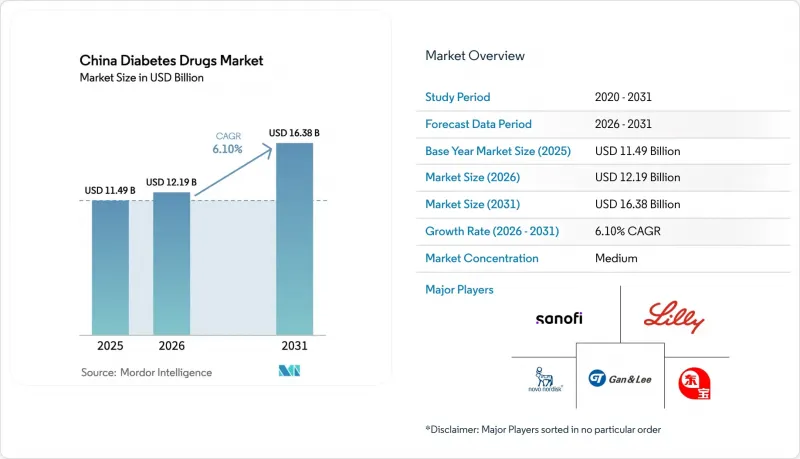
본 보고서는 약물 분류별(인슐린, 경구용 당뇨병 치료제, 비인슐린계 주사제, 병용약), 당뇨병 유형(제1형 및 2형 당뇨병), 의약품 원산지(브랜드 의약품 및 제네릭 의약품/바이오시밀러), 유통 채널(병원 약국, 소매 약국, 온라인 약국, O2O 플랫폼)별로 분류되어 있습니다. 시장 전망은 금액(미 달러) 기준으로 제시되어 있습니다.
중국 당뇨병 치료제 시장 동향 및 인사이트
당뇨병 유병률의 급격한 상승과 발병 연령의 저하
유병률은 2023년에 15.88%에 달했으며, 현재의 추세가 지속된다면 2050년까지 29.1%에 이를 가능성이 있습니다. 도시 지역의 젊은 층에서는 조기에 진단되는 경향이 있어, 이에 따라 의약품의 평생 수요가 확대됨과 동시에 장기적인 대사 관리를 위한 제품 포트폴리오의 우선순위가 재검토되고 있습니다. 베이징, 상하이, 톈진에서 가장 높은 유병률이 보고되고 있으나, 생활 습관 개선과 검진 체계의 보급에 따라 농촌 지역과의 격차는 점차 줄어들고 있습니다. 이러한 역학적 변화로 인해 기업들은 3차 병원 이외의 접근성 확대를 요구받고 있으며, 수십 년에 걸친 치료를 아우르는 환자 지원 도구의 설계가 필요해지고 있습니다. 직접 의료비는 이미 1,653억 달러에 달하고 있으며, 지불 기관들은 지속 가능한 가격으로 HbA1c의 장기적인 관리를 가능하게 하는 약물에 더욱 주목하고 있습니다.
NRDL에 당뇨병 치료제 추가 및 수량 기준 조달
2024년 NRDL(국가 기본 의약품 목록)에 관한 협의에서 117종의 당뇨병 치료제가 승인되었으며, 승인률은 84.6%에 달했습니다. 이에 따라 인슐린 가격의 중앙값은 42.08% 인하되었고, 비용 대비 효과가 높은 브랜드로 시장 점유율 이동이 진행되었습니다. 표준화된 환급 제도는 고가의 수입 의약품의 이익률을 압박하는 한편, 환자의 본인 부담금을 경감시킴으로써 목록 등재 의약품의 처방량을 늘리고 있습니다. 국내 제약사가 특히 큰 혜택을 보고 있으며, 신규 등재 의약품의 71%는 중국 기업이 생산한 것입니다. 다국적 기업에게 있어 생존의 열쇠는 일괄 구매 상한선을 회피할 수 있는 새로운 작용기전이나 고정 용량 복합제를 통한 차별화에 달려 있습니다.
NRDL에 따른 잇따른 가격 인하로 인한 이익률 압박
반복되는 환급 가격 개정에 따라 가격 경쟁의 바닥을 향한 경쟁이 격화되고 있으며, 일부 수입 의약품의 경우 수익성을 유지할 수 없습니다는 이유로 시장 철수 협의가 진행되고 있는 것으로 보고되고 있습니다. 기업은 생산의 현지화를 도모하거나, 의료기기, 앱, 혹은 프리미엄 가격을 정당화할 수 있는 병용 요법을 결합함으로써, 상품화(commoditization)를 피하기 위한 혁신을 추진해야 합니다. 통합이 가속화되는 가운데, 규모가 작은 기업들은 인수합병의 주요 표적이 되고 있습니다.
부문 분석
비인슐린 주사제는 2025년 매출의 31.34%를 차지하며, 연평균 성장률(CAGR)이 10.12%로 가장 높은데, 이는 NRDL 등재가 확정되면 지불 기관의 수용도가 견고함을 반영합니다. 인슐린은 여전히 중국 당뇨병 치료제 시장 점유율의 46.02%라는 가장 큰 비중을 차지하고 있지만, 그 판매량 증가율이 한 자릿수에 그치는 반면, GLP-1 수용체 작용제나 듀얼 작용제의 두 자릿수 성장과는 대조적입니다. 틸제파티드의 가격은 1,758위안으로 기존 GLP-1 제제보다 저렴하면서도 20% 이상의 체중 감량 효과를 보여주고 있어, 신속한 보험 적용이 기대됩니다. 경구용 DPP-4 억제제 및 SGLT-2 제제는 여전히 중요한 초기 치료제로, 병세가 진행된 사례에서는 GLP-1 주사제와 병용되는 경우가 많습니다. WuXi STA사와 Aurisco사의 펩타이드 생산 능력 확대로 인해 국내 공급업체들은 충전 및 마무리 비용을 절감하여 경쟁력을 강화하고 있습니다. 기저 인슐린과 GLP-1 아날로그를 배합한 복합 펜은 임상시험 단계에 접어들었으며, 투여법의 간소화와 특허 기간 연장이 기대되고 있습니다. 신규 생물학적 제제의 승인 대부분이 국내에서 이루어지고 있기 때문에 국내 기업들은 현재 NRDL(국가 의약품 목록)과 관련된 협상에서 큰 협상력을 가지고 있습니다.
잇따른 혁신으로 인해 임상 현장에서는 혈당 조절에 그치지 않고 종합적인 대사 개선으로 중점이 옮겨가고 있습니다. 현재 많은 내분비 전문의들이 과체중 환자에게 더 조기에 GLP-1 주사제 투여를 시작하고 있으며, 이러한 추세로 인해 2031년까지 중국의 비인슐린계 당뇨병 치료제 시장 규모가 26억 2,000만 달러 더 확대될 가능성이 있습니다. 한편, 인슐린 제조업체들은 시장 점유율을 지키기 위해 초속효성이나 ‘목표 혈당 범위 내 체류 시간’의 이점을 재차 강조하고 있습니다. 이러한 전환에 따라, 위험의 균형을 맞추고 가동률을 유지하기 위해 인간 인슐린, 아날로그, 인크레틴 모방제 간의 생산 라인을 유연하게 전환할 수 있어야 합니다.
2형 당뇨병 치료제는 2025년 매출의 92.64%를 차지하며, 연평균 성장률(CAGR) 7.78%로 확대될 것으로 예측됩니다. 발병 연령의 저하와 비만율의 상승으로 인해 평생 약물 사용 기간이 연장되고 있어, 복약 순응도가 소폭 향상되는 것만으로도 매출이 크게 증가할 수 있습니다. 1형 당뇨병 환자는 인원 수는 적지만, 하루에 여러 번의 복잡한 투여 일정과 지속적인 혈당 모니터링이 필요하기 때문에 센서 일체형 인슐린 투여 시스템에 대한 수요가 높아지고 있습니다. 동화동보가 3억 5,000만 위안을 투자한 인슐린 공장 개보수는 양 그룹에 대한 국내 공급을 확보하고, 수입 중단에 대한 리스크 헤지를 목적으로 하고 있습니다.
다제 병용은 일반적이며, 말초신경장애를 앓고 있는 환자는 평균 4.7종의 유효 성분을 복용하는 반면, 합병증이 없는 환자는 3.77종에 그칩니다. 추가로 투여되는 항혈소판제나 지질강하제는 대부분의 경우 동일한 제조업체의 제품이기 때문에 교차 판매의 이점이 있습니다. 합병증 관리가 중요시됨에 따라, GLP-1 제제를 핵심으로 한 심혈관 및 대사 질환 솔루션을 패키지화한 기업은 중국 당뇨병 치료제 시장에서 점유율을 확대하게 될 것입니다. 상하이에서 실시된 대규모 원격 모니터링 시범 사업에 따르면, 텔레코칭을 제공함으로써 HbA1c 수치를 0.45% 낮출 수 있으며, 2형 당뇨병 환자와 인슐린 의존형 당뇨병 환자 모두의 치료 성과가 개선된다는 사실이 시사됩니다.
기타 혜택:
- 엑셀 형식 시장 예측(ME) 시트
- 3개월간의 애널리스트 지원
자주 묻는 질문
목차
제1장 서론
제2장 조사 방법
제3장 주요 요약
제4장 시장 구도
제5장 시장 규모와 성장 예측
제6장 경쟁 구도
제7장 시장 기회와 향후 전망
JHS 26.08.28According to Mordor Intelligence, China diabetes drugs market size in 2026 is estimated at USD 12.19 billion, growing from 2025 value of USD 11.49 billion with 2031 projections showing USD 16.38 billion, growing at 6.10% CAGR over 2026-2031.
This report is Segmented by Drug Class (Insulins, Oral Anti-Diabetics, Non-Insulin Injectable Drugs, Combination Drugs), Diabetes Type (Type-1 and Type-2 Diabetes), Drug Origin (Branded and Generic / Biosimilar), and Distribution Channel (Hospital Pharmacies, Retail Pharmacies, Online Pharmacies, and O2O Platforms). The Market Forecasts are Provided in Terms of Value (USD).
China Diabetes Drugs Market Trends and Insights
Rapid rise in diabetes prevalence & earlier disease onset
Prevalence climbed to 15.88% in 2023 and could reach 29.1% by 2050 if current patterns persist.Urban youth are being diagnosed earlier, extending lifetime demand for medicine and reshaping portfolio priorities toward long-term metabolic control. Beijing, Shanghai, and Tianjin report the highest incidence, yet rural enclaves are closing the gap as lifestyle and screening converge. This epidemiological swing forces firms to widen access beyond tertiary hospitals and design patient-support tools that span decades of therapy. Direct medical expenditure has already hit USD 165.3 billion, sharpening payer focus on drugs that deliver durable HbA1c control at sustainable prices.
Inclusion of more anti-diabetics in NRDL & volume-based procurement
The 2024 NRDL talks cleared 117 diabetes drugs with an 84.6% success rate, cutting median insulin prices by 42.08% and shifting share toward cost-effective brands.Standardized reimbursement compresses margins for premium imports but simultaneously drives volume for listed molecules by reducing patient co-pays. Domestic manufacturers benefit disproportionately; 71% of newly listed agents originated from Chinese firms. For multinationals, survival hinges on differentiating via novel mechanisms or fixed-dose combinations that escape bulk-purchase ceilings.
Margin squeeze from successive NRDL price cuts
Repeated reimbursement rounds are driving a race to the bottom, with some imported agents reporting exit discussions due to unsustainable economics. Companies must localize production or innovate out of commoditization by bundling devices, apps, or combination regimens that justify premiums. Smaller firms lacking scale are prime acquisition targets as consolidation accelerates.
Other drivers and restraints analyzed in the detailed report include:
- Surge in GLP-1/tirzepatide launches and domestic biosimilars
- Hospital-to-retail prescription outflow under dual-invoice policy
- Intensifying safety scrutiny of long-term GLP-1 use
For complete list of drivers and restraints, kindly check the Table Of Contents.
Segment Analysis
Non-insulin injectables account for 31.34% of 2025 revenue yet deliver the fastest 10.12% CAGR, reflecting strong payor acceptance once NRDL listing is secured. Insulin still holds the largest 46.02% slice of the China diabetes drugs market share, but its single-digit volume growth contrasts sharply with double-digit uptake of GLP-1 and dual agonists. Tirzepatide's CNY 1,758 pricing undercuts earlier GLP-1 agents while showing over 20% weight loss efficacy, positioning it for rapid formulary wins. Oral DPP-4 inhibitors and SGLT-2 agents remain important entry therapies, often combined with GLP-1 injectables in advanced cases. Peptide capacity expansions by WuXi STA and Aurisco enable domestic suppliers to lower fill-finish costs, reinforcing competitiveness. Combination pens that co-formulate basal insulin with GLP-1 analogues are entering trials, promising simplified regimens and extended patent life. Because most new biologic approvals originate locally, domestic firms now own significant leverage during NRDL negotiations.
Sequential innovation is shifting clinical practice away from glycemic control alone toward holistic metabolic improvement. Many endocrinologists now start overweight patients on GLP-1 injectables earlier, a practice that could widen the China diabetes drugs market size for non-insulin products by an extra USD 2.62 billion through 2031. Meanwhile, insulin makers reposition ultra-rapid and time-in-range advantages to defend share. The pivot places pressure on production lines to flex between human insulin, analogues, and incretin mimetics to balance risk and sustain utilization.
Type 2 therapies generate 92.64% of 2025 sales and are forecast to expand at a 7.78% CAGR. Younger onset and higher obesity rates extend lifetime drug use, meaning even marginal improvements in adherence translate into substantial incremental revenue. Type 1 patients, though fewer, require complex multi-dose daily regimens and continuous glucose monitoring, fostering demand for sensor-integrated insulin delivery systems. Tonghua Dongbao's CNY 350 million insulin plant upgrade aims to secure domestic supply for both groups, hedging against import disruptions.
Polypharmacy is common: peripheral neuropathy sufferers consume an average of 4.7 active agents versus 3.77 for uncomplicated patients.Add-on antiplatelet and lipid-lowering drugs often come from the same manufacturers, giving them cross-selling advantages. As complication management rises in profile, companies that bundle cardiometabolic solutions around GLP-1 anchors will broaden their footprint within the China diabetes drugs market. Population-scale remote monitoring pilots in Shanghai suggest HbA1c can be trimmed 0.45% when tele-coaching is offered, improving outcomes for both Type 2 and insulin-dependent cohorts.
Complete Report Scope:
- By Drug Class
- Insulins
- Oral Anti-diabetic Drugs
- Non-Insulin Injectables (GLP-1, Amylin, GIP/GLP-1)
- Combination Drugs
- By Diabetes Type
- Type 1 Diabetes
- Type 2 Diabetes
- By Drug Origin
- Branded
- Generic / Biosimilar
- By Distribution Channel
- Hospital Pharmacies
- Retail Chain Pharmacies
- Online Pharmacies & O2O Platforms
List of Companies Covered in this Report:
- Novo Nordisk
- Sanofi
- Eli Lilly and Company
- Merck
- AstraZeneca
- Boehringer Ingelheim
- Pfizer
- Takeda Pharmaceuticals
- Janssen
- Jilin Huisheng Biopharmaceutical Co,. Ltd.
- Astellas Pharma
- Gan & Lee Pharmaceuticals
- Tonghua Dongbao
- Jiangsu Hansoh Pharma
- Hengrui Medicine
- Innovent Biologics
- Oramed Pharmaceuticals Inc.
- Yichang Humanwell
- Zhuhai Livzon
Additional Benefits:
- The market estimate (ME) sheet in Excel format
- 3 months of analyst support
TABLE OF CONTENTS
1 Introduction
- 1.1 Study Assumptions and Market Definition
- 1.2 Scope of the Study
2 Research Methodology
3 Executive Summary
4 Market Landscape
- 4.1 Market Overview
- 4.2 Market Drivers
- 4.2.1 Rapid Rise in Diabetes prevalence & Earlier disease onset
- 4.2.2 Inclusion of more anti-diabetics in NRDL & volume-based procurement
- 4.2.3 Surge in GLP-1/Tirzepatide launches and domestic biosimilars
- 4.2.4 Hospital-to-retail prescription outflow under "dual-invoice" policy
- 4.2.5 Internet hospitals & e-pharmacy platforms boosting adherence
- 4.2.6 Venture & PE funding for peptide CDMO capacity in China
- 4.3 Market Restraints
- 4.3.1 Margin squeeze from successive NRDL price cuts
- 4.3.2 Intensifying safety scrutiny of long-term GLP-1 use
- 4.3.3 Supply-chain bottlenecks for injectable-grade peptides
- 4.3.4 Physician inertia toward newer drug classes in lower-tier cities
- 4.4 Value / Supply-Chain Analysis
- 4.5 Regulatory Landscape
- 4.6 Technology Outlook
- 4.7 Porter's Five Forces Analysis
- 4.7.1 Bargaining Power of Suppliers
- 4.7.2 Bargaining Power of Buyers
- 4.7.3 Threat of New Entrants
- 4.7.4 Threat of Substitutes
- 4.7.5 Intensity of Competitive Rivalry
5 Market Size and Growth Forecasts (Value-USD)
- 5.1 By Drug Class
- 5.1.1 Insulins
- 5.1.2 Oral Anti-diabetic Drugs
- 5.1.3 Non-Insulin Injectables (GLP-1, Amylin, GIP/GLP-1)
- 5.1.4 Combination Drugs
- 5.2 By Diabetes Type
- 5.2.1 Type 1 Diabetes
- 5.2.2 Type 2 Diabetes
- 5.3 By Drug Origin
- 5.3.1 Branded
- 5.3.2 Generic / Biosimilar
- 5.4 By Distribution Channel
- 5.4.1 Hospital Pharmacies
- 5.4.2 Retail Chain Pharmacies
- 5.4.3 Online Pharmacies & O2O Platforms
6 Competitive Landscape
- 6.1 Market Concentration
- 6.2 Market Share Analysis
- 6.3 Company profiles (includes Global level Overview, Market level overview, Core Segments, Financials as available, Strategic Information, Market Rank/Share for key companies, Products and Services, and Recent Developments)
- 6.3.1 Novo Nordisk A/S
- 6.3.2 Sanofi
- 6.3.3 Eli Lilly and Company
- 6.3.4 Merck & Co.
- 6.3.5 AstraZeneca
- 6.3.6 Boehringer Ingelheim
- 6.3.7 Pfizer
- 6.3.8 Takeda
- 6.3.9 Janssen Pharmaceuticals
- 6.3.10 Jilin Huisheng Biopharmaceutical Co,. Ltd.
- 6.3.11 Astellas Pharma
- 6.3.12 Gan & Lee Pharmaceuticals
- 6.3.13 Tonghua Dongbao
- 6.3.14 Jiangsu Hansoh Pharma
- 6.3.15 Hengrui Medicine
- 6.3.16 Innovent Biologics
- 6.3.17 Oramed Pharmaceuticals Inc.
- 6.3.18 Yichang Humanwell
- 6.3.19 Zhuhai Livzon
7 Market Opportunities and Future Outlook
- 7.1 White-Space and Unmet-Need Assessment


