|
시장보고서
상품코드
2118193
유럽의 밀 종자 처리 시장 : 시장 점유율 분석, 업계 동향 및 통계, 성장 예측(2026-2031년)Europe Wheat Seed Treatment - Market Share Analysis, Industry Trends & Statistics, Growth Forecasts (2026 - 2031) |
||||||
 Mordor Intelligence
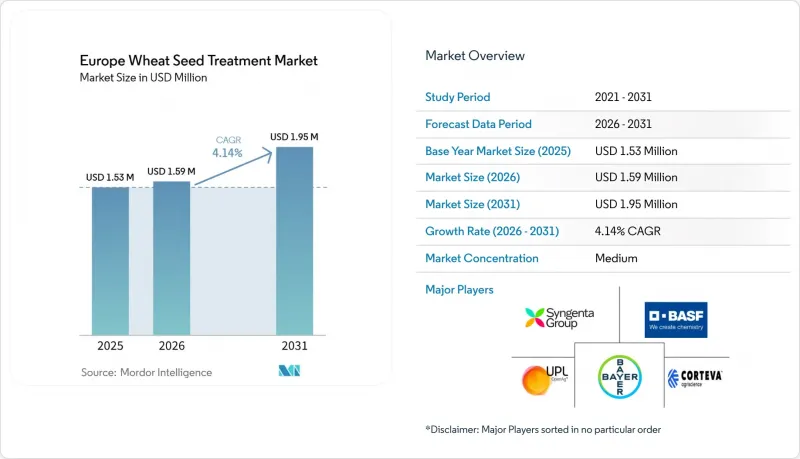
Mordor Intelligence에 의하면, 유럽의 밀 종자 처리 시장 규모는 2025년 153만 달러로 평가되었고, 2026년에는 159만 달러로 추정되고, 2026-2031년 CAGR 4.14%로 성장을 지속할 전망이며, 2031년까지 195만 달러에 이를 것으로 예측됩니다.
본 보고서는 제품 유형별(살충제, 살균제, 선충 구제제 등) 및 지역별(독일, 영국, 프랑스, 이탈리아, 스페인, 러시아 및 기타 유럽)로 분류되어 있습니다. 시장 예측은 금액(달러)으로 제시되어 있습니다.
유럽의 밀 종자 처리 시장 동향 및 인사이트
밀의 곰팡이성 병해 위협 증가
유럽 밀 종자 처리 시장에서는 표준 엽면 살포 프로그램만으로는 곰팡이병의 위협을 관리하기 어려워지고 있어 수요가 견조한 추세를 보이고 있습니다. 2025년에 발표된 조사에 따르면, 2024년 겨울은 온난하고 습한 기후였기 때문에 겨울 밀의 병해 조기 발생이 촉진되었고, 파종 시 방제 필요성에 대한 생산자들의 인식에 변화가 생겼습니다. 또한, 2025년에 발표된 또 다른 연구에서는 유럽의 여러 지역에서 내성을 뚫는 줄기녹병 계통이 확인되었다고 보고되었으며, 이로 인해 작물 발아 전 더 강력한 살균제를 이용한 방제의 중요성이 더욱 높아졌습니다. 이는 생육기 중 살포 시기가 중요해지기 전에, 종자 처리가 종자 및 토양 유래 감염을 억제하는 데 도움이 되기 때문에 중요한 의미를 지닙니다. 또한, 병해 압력이 불안정한 해에는 생산자들이 더 신뢰할 수 있다고 여기는 광범위한 다성분 혼합제에 대한 수요도 증가하고 있습니다.
고위험 유효 성분에 대한 규제상의 전환
유럽의 밀 종자 처리 시장은 규제에 의해 추진되고 있지만, 한편으로는 동일한 과정이 기존 제품에 단기적인 혼란을 초래하고 있습니다. 최근 가장 중요한 사례로는 2024년 11월 플루지옥소닐이 내분비 교란 물질로 분류된 것을 들 수 있습니다. 이는 곡물 종자 처리제 포트폴리오의 매우 큰 비율에 영향을 미쳤으며, 2026년 9월 승인 만료에 앞서 대체제의 필요성이 부각되는 계기가 되었습니다. 와게닝겐 대학·연구기관은 2024년, 새로운 저위험 물질에 대한 투자 결정에서 승인 취득 비용이 큰 비중을 차지하고 있음을 밝혔습니다. 이는 대형 공급업체가 소규모 신규 진출기업보다 제제 재설계가 용이함을 의미합니다. 이러한 압박으로 인해 기존 화학 물질의 여지는 축소되는 반면, 규제를 준수하는 대체제의 상업적 가치는 높아지고 있습니다. 그 결과, 공급업체들은 더 많은 자본, 위험이 낮은 유효 성분, 그리고 시장에서 생존 기간이 긴 새로운 코팅 시스템으로 전환하고 있습니다.
EU 내 재승인 및 잔류 기준 준수에 따른 막중한 부담
유럽의 밀 종자 처리 시장은 제품 재승인에 소요되는 시간과 비용이라는 큰 걸림돌에 여전히 직면해 있습니다. 플루지옥소닐에 대한 결정은 하나의 규제 변경이 많은 곡물 종자 처리제에 동시에 영향을 미쳐, 생산자가 이용할 수 있는 단기 대체품을 줄일 가능성이 있음을 보여주었습니다. 와헤닝겐 대학 및 연구기관의 조사에 따르면, 신청 서류 작성 비용은 여전히 새로운 저위험 제품에 있어 가장 큰 장벽 중 하나이며, 이는 소규모 개발 기업에게 특히 큰 부담이 되고 있습니다. 이로 인해 농업적 수요가 왕성하더라도 제품 포트폴리오의 갱신이 지연되고 있습니다. 또한, 광범위한 제품군에 규정 준수 비용을 분산시킬 수 있는 대기업의 우위를 더욱 공고히 하는 결과로 이어지고 있습니다.
부문 분석
살충제는 유럽 밀 종자 처리 시장에서 가장 큰 제품 유형이며, 2025년에는 50.4%의 점유율을 차지한 것으로 평가되었습니다. 유럽 밀 종자 처리 업계의 이 분야는 발아 전에 토양 해충 및 바이러스를 매개하는 해충을 대상으로 하는 오랫동안 확립된 상업 관행에 여전히 뿌리를 두고 있습니다. 생산자들은 명확한 살포 시기를 확보할 수 있고 초기 생육 정착을 보호할 수 있기 때문에 종자 단계에서의 방제를 계속해서 중시하고 있습니다. 일부 기존 화학 물질에 대한 규제는 수요를 감소시키지 않고, 오히려 구매자들을 더 높은 부가가치를 지닌 대체 제품으로 전환시키는 결과를 낳고 있습니다.
살균제는 유럽 밀 종자 처리 시장에서 가장 빠르게 성장하고 있는 제품 유형으로, 2031년까지 연평균 4.7%의 성장이 예상됩니다. 그 주된 이유는 주요 밀 생산 지역 전반에 걸쳐 푸사리움병, 녹병, 스마트병 및 관련 병해로 인한 압박이 증가하고 있기 때문입니다. 플루지옥소닐에 대한 재심사로 인해 제제 재설계 작업에 시급성이 더해지면서, 공급업체들은 새로운 다성분 배합이나 위험도가 낮은 대안으로 눈을 돌리고 있습니다. 따라서 유럽 밀 종자 처리 업계의 이 분야는 처리 면적의 확대와 더불어 제품 구성의 변화에 의해서도 성장하고 있습니다.
기타 혜택 :
- 엑셀 형식 시장 예측(ME) 시트
- 3개월간의 애널리스트 지원
자주 묻는 질문
목차
제1장 서론
제2장 조사 방법
제3장 개요
제4장 시장 구도
제5장 시장 규모 및 성장 예측
제6장 경쟁 구도
제7장 시장 기회 및 향후 전망
AJY 26.09.01According to Mordor Intelligence, the Europe wheat seed treatment market size is projected to grow from USD 1.53 million in 2025 to USD 1.59 million in 2026 and is forecast to reach USD 1.95 million by 2031 at 4.14% CAGR over 2026-2031.
This report is Segmented by Product Type (Insecticides, Fungicides, Nematicides, and More), and by Geography (Germany, United Kingdom, France, Italy, Spain, Russia, and Rest of Europe). The Market Forecasts are Provided in Terms of Value (USD).
Europe Wheat Seed Treatment Market Trends and Insights
Rising Wheat Fungal Disease Pressure
The Europe wheat seed treatment market is seeing firmer demand because fungal pressure has become harder to manage with standard foliar programs alone. Research published in 2025 showed that warm and moist winter conditions in the 2024 season supported early disease development in winter wheat and changed how growers assessed protection needs at sowing. A second 2025 study also reported resistance-breaking stem rust races across multiple European locations, which raised the value of stronger fungicidal protection before crop emergence. This matters because seed treatment helps limit seed-borne and soil-borne infection before in-season spray timing becomes critical. It also supports demand for broader, multi-active combinations that growers view as more dependable in years with unstable disease pressure.
Regulatory Shift Away From High-Risk Chemical Actives
The Europe wheat seed treatment market is also being pushed forward by regulation, even though the same process creates short-term disruption for existing products. The most important recent example is the November 2024 classification of fludioxonil as an endocrine disruptor, which affected a very large share of cereal seed treatment portfolios and brought attention to replacement needs ahead of the September 2026 approval expiry. Wageningen University and Research showed in 2024 that approval costs carry a heavy weight in investment decisions for new low-risk substances, which means reformulation is easier for large suppliers than for smaller entrants. That pressure is reducing room for older chemistry while raising the commercial value of compliant alternatives. As a result, suppliers are shifting more capital, lower-risk actives, and new coating systems that can stay on the market longer.
Tight EU Re-Approval and Residue Compliance Burden
The Europe wheat seed treatment market still faces a major drag from the time and cost of product re-approval. The fludioxonil decision showed how one regulatory change can affect many cereal seed treatments at the same time and leave growers with fewer short-term substitutes. Wageningen University and Research also found that dossier costs remain one of the largest barriers for new low-risk products, which weighs most heavily on smaller developers. This slows portfolio renewal even when agronomic demand is strong. It also reinforces the advantage of large companies that can spread compliance cost across broader product ranges.
Other drivers and restraints analyzed in the detailed report include:
- Carbon-Linked Agronomy Incentives for Lower-Input Crop Protection
- Seed Treatment Use in Precision Seeding and Variable-Rate Farming
- Higher Cost of Advanced Treatment Formulations and Application Lines
For complete list of drivers and restraints, kindly check the Table Of Contents.
Segment Analysis
Insecticides were the largest product type in the Europe wheat seed treatment market share, with 50.4% share in 2025. This part of the Europe wheat seed treatment industry remains rooted in long-established commercial routines that target soil insects and virus-carrying pests before emergence. Growers continue to value seed-stage control because it offers a clear application window and protects early stand establishment. Restrictions on some legacy chemistries have not reduced demand, as they have shifted buyers toward higher-value replacement products.
Fungicides are the fastest product type in the Europe wheat seed treatment market size and are projected to grow at 4.7% through 2031. The main reason is the heavier pressure from Fusarium, rust, smut, and related diseases across important wheat belts. The fludioxonil review has added urgency to reformulation work, which is pushing suppliers toward new multi-active combinations and lower-risk options. This part of the Europe wheat seed treatment industry is therefore growing through value mix change as much as through area treated.
Complete Report Scope:
- By Product Type
- Insecticides
- Fungicides
- Nematicides
- Other Types
- Europe
- Germany
- United Kingdom
- France
- Italy
- Spain
- Russia
- Rest of Europe
List of Companies Covered in this Report:
- Bayer AG
- Corteva Agriscience
- Syngenta Group
- UPL Limited
- Sumitomo Chemical Co., Ltd.
- BASF SE
- Albaugh LLC
- FMC Corporation
- Incotec Group B.V.
- Croda International Plc
- Koppert B.V.
- Nufarm Limited
- PI Industries Ltd.
- Rovensa Group
- Sipcam Oxon S.p.A.
Additional Benefits:
- The market estimate (ME) sheet in Excel format
- 3 months of analyst support
TABLE OF CONTENTS
1 Introduction
- 1.1 Study Assumptions and Market Definition
- 1.2 Scope of the Study
2 Research Methodology
3 Executive Summary
4 Market Landscape
- 4.1 Market Overview
- 4.2 Market Drivers
- 4.2.1 Rising wheat fungal disease pressure
- 4.2.2 Regulatory shift away from high-risk chemical actives
- 4.2.3 Carbon-linked agronomy incentives for lower-input crop protection
- 4.2.4 Seed treatment use in precision seeding and variable-rate farming
- 4.2.5 Increase in area under cultivation of wheat
- 4.2.6 Cold-chain and shelf-life advances in seed coatings
- 4.3 Market Restraints
- 4.3.1 Tight EU re-approval and residue compliance burden
- 4.3.2 Higher cost of advanced treatment formulations and application lines
- 4.3.3 Limited efficacy consistency across variable climates
- 4.3.4 Brexit-linked approval fragmentation
- 4.4 Regulatory Landscape
- 4.5 Technological Outlook
- 4.6 Porter's Five Forces Analysis
- 4.6.1 Bargaining Power of Suppliers
- 4.6.2 Bargaining Power of Buyers
- 4.6.3 Threat of New Entrants
- 4.6.4 Threat of Substitutes
- 4.6.5 Intensity of Competitive Rivalry
5 Market Size and Growth Forecasts (Value)
- 5.1 By Product Type
- 5.1.1 Insecticides
- 5.1.2 Fungicides
- 5.1.3 Nematicides
- 5.1.4 Other Types
- 5.2 Europe
- 5.2.1 Germany
- 5.2.2 United Kingdom
- 5.2.3 France
- 5.2.4 Italy
- 5.2.5 Spain
- 5.2.6 Russia
- 5.2.7 Rest of Europe
6 Competitive Landscape
- 6.1 Market Concentration
- 6.2 Strategic Moves
- 6.3 Market Share Analysis
- 6.4 Company Profiles (Includes Global Level Overview, Market Level Overview, Core Segments, Financials as Available, Strategic Information, Market Rank/Share for Key Companies, Products and Services, and Recent Developments)
- 6.4.1 Bayer AG
- 6.4.2 Corteva Agriscience
- 6.4.3 Syngenta Group
- 6.4.4 UPL Limited
- 6.4.5 Sumitomo Chemical Co., Ltd.
- 6.4.6 BASF SE
- 6.4.7 Albaugh LLC
- 6.4.8 FMC Corporation
- 6.4.9 Incotec Group B.V.
- 6.4.10 Croda International Plc
- 6.4.11 Koppert B.V.
- 6.4.12 Nufarm Limited
- 6.4.13 PI Industries Ltd.
- 6.4.14 Rovensa Group
- 6.4.15 Sipcam Oxon S.p.A.