

|
시장보고서
상품코드
2118958
남미의 넷 제로 에너지 빌딩 : 시장 점유율 분석, 업계 동향 및 통계, 성장 예측(2026-2031년)South America Net-Zero Energy Buildings - Market Share Analysis, Industry Trends & Statistics, Growth Forecasts (2026 - 2031) |
||||||
 Mordor Intelligence
남미의 넷 제로 에너지 빌딩 시장 규모는 2025년 5억 3,000만 달러로 평가되었습니다. 2026년에는 6억 1,000만 달러로 확대되어 2026년부터 2031년에 걸쳐 CAGR 16.52%로 성장을 지속하여, 2031년에는 13억 1,000만 달러에 이를 것으로 예측됩니다.
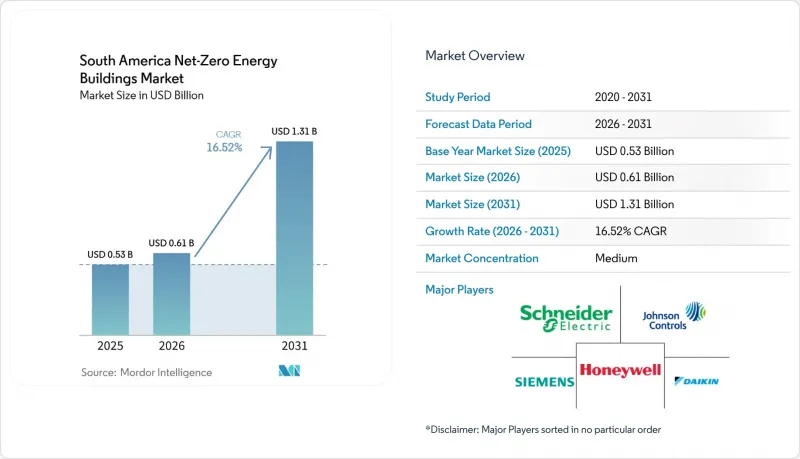
본 보고서는 건물 유형(주거, 상업시설, 공공시설, 산업 시설), 제공 내용(솔루션 및 서비스), 건설 유형(신축 및 개보수), 그리고 국가(브라질, 아르헨티나, 콜롬비아, 칠레 및 기타 남미)별로 분류되어 있습니다. 시장 전망은 금액(미 달러) 기준으로 제시되어 있습니다.
남미의 넷 제로 에너지 건물 시장 동향 및 인사이트
에너지 성능 규제 및 친환경 인증이 넷 제로 건축물의 보급을 촉진
브라질의 CGIEE 결의안 제4/2025호는 신축 건물에 대한 최소 에너지 성능 요건을 규정하고, 그 준수를 건축 허가 취득 시기와 연계시켰습니다. 연방 정부의 공공 건축물은 2027년부터 ENCE 레벨 A 등급을, 2035년까지는 니어 제로 에너지 건축 기준을 달성해야 합니다. 한편, 민간 건축물은 2030년부터 레벨 C를 충족해야 합니다. 광업·에너지부는 이 조치를 통해 2040년까지 1,700만 메가와트시의 전력 절감과 5억 달러의 전력 비용 절감이 가능할 것이라고 밝혔습니다. 이 일정에 따라 개발업자는 설계를 조정할 시간을 확보할 수 있는 반면, 투자자나 제품 공급업체에게는 미래의 최소 성능 기준을 더 예측하기 쉬워집니다. 콜롬비아의 2025년 결의안 제0194호는 ‘Excellence in Design for Greater Efficiencies(EDGE)’를 준수 경로로 인정하고 있으며, 프로젝트 승인 과정에서 이 인증의 중요성을 높이고 있습니다. 2026년까지 콜롬비아에서는 2,540만 제곱미터에 달하는 1,282개 프로젝트에서 36만 4,000세대 이상의 EDGE 인증 주택이 건설되었습니다. 이러한 조치로 인해 남미의 넷 제로 에너지 건축 시장에서 자발적 인증에서 실측된 성능 평가로 이어지는 경로가 더욱 명확해졌습니다.
기업의 탈탄소 목표가 지속 가능한 건축물에 대한 수요를 끌어올리고 있다.
기업의 임차인 및 자산 소유자들은 입지 선정 및 포트폴리오 관리에 있어 에너지 성능을 더욱 중시하고 있습니다. 지멘스의 보고서에 따르면, 조사 대상 기업의 57%가 향후 1년 이내에 에너지 효율에 대한 투자를 확대할 계획이며, 55%는 스마트 빌딩 기술, 54%는 건물의 전기화에 대한 투자를 확대할 계획인 것으로 밝혀졌습니다. 브라질에서는 그린 인증이 부동산 펀드의 전략 및 주요 비즈니스 구역 내 임대 계약 결정에 있어 점점 더 중요하게 여겨지고 있습니다. 이러한 수요는 소유주가 낮은 운영 비용과 더 강력한 환경 실적을 양립시키며, 임차인의 보고 요건을 충족할 수 있는 상업용 건물을 뒷받침하고 있습니다. 또한, 건물이 설계상의 의도가 아닌 실제 성능을 입증해야 하는 경우, 시운전, 인증 및 자문 서비스의 필요성이 부각되고 있습니다. 따라서 남미의 넷-제로 에너지 건물 시장에는 특히 임대 계약이나 대출 계약에서 에너지 절감 증거가 요구되는 경우, 소유주가 제시한 목표를 검증된 결과로 전환할 수 있도록 지원할 수 있는 서비스 제공업체를 위한 큰 수요 여지가 있습니다.
높은 초기 비용과 제한된 그린 파이낸스가 시장 확산을 저해
초기 비용은 여전히 큰 장벽으로 남아 있으며, 특히 대도시권 외 지역의 민간 개발업체에게서 이러한 경향이 두드러집니다. 지멘스의 조사에 따르면, 조사 대상 상업용 부동산 임원 중 60%는 탈탄소화에 너무 많은 비용이 든다고 생각한 반면, 33%는 충분한 자금 조달 수단을 확보하고 있다고 응답했습니다. 현지 금리가 높고 그린 파이낸스 상품이 제한적이기 때문에 에너지 절감 효과가 실현되기 전에 설비나 설계를 변경하는 데 필요한 자금을 조달하기가 어려워지고 있습니다. 세계 그린빌딩 협의회(WGBC)의 조사에 따르면, 미주 지역 응답자의 68%가 도입의 주요 장벽으로 금융 상품의 부족을 꼽았습니다. 이로 인해 운영 기간 동안 수익성이 있을 것으로 보이는 프로젝트와, 처음부터 건설 자금을 확보할 수 있는 프로젝트 사이에 현실적인 격차가 발생하고 있습니다. 국제금융공사(IFC)는 ‘에너지-어-서비스(EaaS)’ 모델을 자본 지출을 보장된 에너지 절감 효과에 연동된 지불 방식으로 전환하는 수단으로 규정하고 있습니다. 이러한 구조가 더욱 보편화되기 전까지는 남미의 넷-제로 에너지 건축 시장은 재무 기반이 탄탄한 프로젝트나 공공 지원을 받는 프로젝트에 집중된 상태가 지속될 것입니다.
부문별 분석
2025년, 남미의 넷 제로 에너지 건물 시장에서 상업용 건물이 44.70%를 차지했습니다. 기업의 환경 이니셔티브, 임대차 계약상의 요건, 그리고 주요 오피스 지역에서의 친환경 인증 활동이 이러한 위상을 뒷받침했습니다. 상파울루에서는 기관 투자자 및 다국적 기업 임차인들이 인증된 공간을 포트폴리오의 질과 임차인 유치에 있어 더욱 중요한 요소로 간주하고 있습니다. 2025년 6월, ‘세계 네트워크 포 제로(Global Network for Zero)’는 브라질의 한 법률 사무소 사무실을 인증했습니다. 이는 운영 측면에서의 넷 제로 인증이 표준 상업시설로도 확대되고 있음을 보여줍니다. 에너지 절약, 임대료 책정, 규정 준수 요건이 일치할 경우, 상업시설 소유주는 투자의 정당성을 더 쉽게 설명할 수 있습니다. 이 때문에 이 부문은 남미의 넷 제로 에너지 건축 업계에서 중심적인 위치를 차지하고 있습니다.
공공시설은 2031년까지 연평균 성장률(CAGR) 17.40%로 확대될 것으로 예상되며, 이는 건축물 유형 중 가장 높은 성장률입니다. 공공 규제와 탄력적인 시설에 대한 필요성이 병원, 대학, 공공시설 수요를 뒷받침하고 있습니다. 브라질의 ‘PROCEL Energia Zero’ 프로그램은 2025년에 1,750만 달러를 지원하여 의료 및 교육 시설을 포함한 공공시설의 제로 에너지 개조를 추진했습니다. 쿠리치바에 위치한 온코페디아트리코 엘라스티뉴 병원은 2024년에 LEED 제로 에너지 인증을 획득하여 의료시설 분야의 지역적 벤치마크가 되었습니다. 또한, 브라질의 미래 성능 기준에 민간 주택이 포함됨에 따라 주택 분야 수요도 증가할 것으로 전망됩니다. 반면, 산업용 건물의 경우 리모델링이 복잡한 데다, 소유주와 임차인 간에 에너지 투자로 인한 이익 분배가 충분히 이루어지지 않는 경우가 많아 진전이 비교적 더딘 실정입니다.
기타 혜택 :
- 엑셀 형식 시장 예측(ME) 시트
- 3개월간의 애널리스트 지원
자주 묻는 질문
목차
제1장 서론
제2장 조사 방법
제3장 주요 요약
제4장 시장 구도
제5장 시장 규모 및 성장 예측
제6장 경쟁 구도
제7장 시장 기회 및 향후 전망
KTH 26.09.04According to Mordor Intelligence, the South America net-Zero energy buildings market size is expected to grow from USD 0.53 billion in 2025 to USD 0.61 billion in 2026 and is forecast to reach USD 1.31 billion by 2031 at 16.52% CAGR over 2026-2031.
This report is Segmented by Building Type (Residential, Commercial, Institutional, and Industrial), by Offerings (Solutions and Services), by Construction Type (New Construction and Renovation), and by Country (Brazil, Argentina, Colombia, Chile, and Rest of South America). The Market Forecasts are Provided in Terms of Value (USD).
South America Net-Zero Energy Buildings Market Trends and Insights
Energy Performance Regulations and Green Certification Drive Net-Zero Building Adoption
Brazil's CGIEE Resolution No. 4/2025 set minimum energy performance requirements for new buildings and linked compliance to the timing of construction permits. Federal public buildings must reach the ENCE Level A rating from 2027 and a near-zero energy building standard by 2035, while private buildings must meet Level C from 2030. The Ministry of Mines and Energy stated that the measure could save 17 million megawatt-hours and avoid USD 0.5 billion in electricity costs by 2040. That timetable gives developers time to adjust designs, while making future minimum performance more predictable for investors and product suppliers. Colombia's Resolution 0194 of 2025 recognizes Excellence in Design for Greater Efficiencies (EDGE) as a compliance route, making certification more relevant to project approval. Colombia had more than 364,000 EDGE-certified housing units across 25.4 million square meters and 1,282 projects by 2026. These measures give the South America net-zero energy buildings market a clearer path from voluntary certification to measured performance.
Corporate Decarbonization Goals Increase Demand for Sustainable Buildings
Corporate tenants and asset owners are making energy performance a more visible part of site selection and portfolio management. Siemens reported that 57% of surveyed organizations planned to increase investment in energy efficiency, 55% in smart building technologies, and 54% in building electrification within the following year. In Brazil, green certifications are increasingly relevant to real estate fund strategy and to leasing decisions in major business districts. This demand supports commercial buildings, where owners can combine lower operating costs with stronger environmental credentials and respond to tenant reporting requirements. It also underscores the need for commissioning, certification, and advisory services when a building must demonstrate actual performance rather than design intent. The South America net-zero energy buildings market, therefore, has room for service providers that can help owners convert stated targets into verified results, particularly where a lease or financing agreement requires evidence of energy savings.
High Upfront Costs and Limited Green Financing Restrict Market Adoption
Upfront cost remains a major barrier, particularly for private developers outside large urban centers. Siemens found that 60% of commercial real estate executives surveyed considered decarbonization too expensive, while 33% reported adequate access to financing. High local interest rates and limited green finance products make it harder to fund equipment and design changes before energy savings are realized. The World Green Building Council found that 68% of respondents in the Americas cited the lack of financial products as a primary barrier to adoption. This creates a practical gap between a project that looks viable over its operating life and one that can secure construction funding at the outset. The International Finance Corporation identifies Energy-as-a-Service models as a way to shift capital spending toward payments tied to guaranteed savings. Until such structures become more common, the South America net-zero energy buildings market will remain concentrated in projects with stronger balance sheets or public support.
Other drivers and restraints analyzed in the detailed report include:
- Declining Costs of Distributed Solar and Smart Controls Improve Project Viability
- Grid Reliability and Climate Risks Increase Demand for Energy-Resilient Buildings
- Fragmented Regulatory Enforcement and Limited Operational Data Increase Compliance Challenges
For complete list of drivers and restraints, kindly check the Table Of Contents.
Segment Analysis
Commercial buildings accounted for 44.70% of the South America net-zero energy buildings market in 2025. Corporate environmental commitments, lease requirements, and green certification activity in prime office districts supported this position. In Sao Paulo, institutional investors and multinational occupiers have made certified space more relevant to portfolio quality and tenant attraction. The Global Network for Zero certified a Brazilian law firm office in June 2025, showing that operational net-zero recognition is reaching standard commercial settings. Commercial owners can more readily justify investments when energy savings, rental positioning, and compliance needs align. This makes the segment central to the South America net-zero energy buildings industry.
Institutional buildings are forecast to expand at a 17.40% CAGR through 2031, the fastest rate among building types. Public mandates and the need for resilient facilities support demand from hospitals, universities, and public buildings. Brazil's PROCEL Energia Zero program committed USD 17.5 million in 2025 for zero-energy retrofits of public facilities, including health and education buildings. The Hospital Oncopediatrico Erastinho in Curitiba received LEED Zero Energy certification in 2024, which provided a regional benchmark for health facilities. Residential demand should also increase as private housing is included in Brazil's future performance framework. Industrial properties are less advanced because retrofits are complex, and landlords and tenants often do not share the benefits of energy investments.
Complete Report Scope:
- By Building Type
- Residential
- Commercial
- Institutional
- Industrial
- By Offerings
- Solutions (New Net-Zero Energy Building Development, Net-Zero Building Retrofit, Integrated Design & Delivery and Smart Net-Zero Building Solutions)
- Services (Architectural & Engineering Design, Construction Services, Commissioning & Certification Services and Consulting Services)
- By Construction Type
- New Construction
- Renovation
- By Country
- Brazil
- Argentina
- Colombia
- Chile
- Rest of South America
List of Companies Covered in this Report:
- Schneider Electric SE
- Johnson Controls International plc
- Siemens AG
- Honeywell International Inc.
- Daikin Industries, Ltd.
- Trane Technologies plc
- Carrier Global Corporation
- Mitsubishi Electric Corporation
- Panasonic Holdings Corporation
- ABB Ltd.
- Saint-Gobain
- Kingspan Group plc
- ROCKWOOL A/S
- Sika AG
- Legrand SA
- Bosch Building Technologies
- Belimo Holding AG
- Skanska AB
- Lendlease Group
- WSP Global Inc.
Additional Benefits:
- The market estimate (ME) sheet in Excel format
- 3 months of analyst support
TABLE OF CONTENTS
1 Introduction
- 1.1 Study Assumptions and Market Definition
- 1.2 Scope of the Study
2 Research Methodology
3 Executive Summary
4 Market Landscape
- 4.1 Market Overview
- 4.2 Market Drivers
- 4.2.1 Energy Performance Regulations and Green Certification Drive Net-Zero Building Adoption
- 4.2.2 Corporate Decarbonization Goals Increase Demand for Sustainable Buildings
- 4.2.3 Declining Costs of Distributed Solar and Smart Controls Improve Project Viability
- 4.2.4 Grid Reliability and Climate Risks Increase Demand for Energy-Resilient Buildings
- 4.2.5 Performance-Linked Finance and Green Leases Support Net-Zero Investments
- 4.2.6 Local Net-Zero Demonstration Projects Accelerate Market Development
- 4.3 Market Restraints
- 4.3.1 High Upfront Costs and Limited Green Financing Restrict Market Adoption
- 4.3.2 Fragmented Regulatory Enforcement and Limited Operational Data Increase Compliance Challenges
- 4.3.3 Dependence on Imported High-Performance Building Components Raises Project Costs
- 4.3.4 Split Incentives in Existing Building Retrofits Slow Net-Zero Adoption
- 4.4 Value and Supply-Chain Analysis
- 4.5 Regulatory Landscape
- 4.6 Technological Outlook
- 4.7 Market Evolution and Adoption Trends
- 4.8 Key Net-Zero Energy Building Projects
- 4.9 Porter's Five Forces Analysis
- 4.9.1 Bargaining Power of Suppliers
- 4.9.2 Bargaining Power of Consumers
- 4.9.3 Threat of New Entrants
- 4.9.4 Threat of Substitutes
- 4.9.5 Intensity of Competitive Rivalry
5 Market Size & Growth Forecasts (Value, USD)
- 5.1 By Building Type
- 5.1.1 Residential
- 5.1.2 Commercial
- 5.1.3 Institutional
- 5.1.4 Industrial
- 5.2 By Offerings
- 5.2.1 Solutions (New Net-Zero Energy Building Development, Net-Zero Building Retrofit, Integrated Design & Delivery and Smart Net-Zero Building Solutions)
- 5.2.2 Services (Architectural & Engineering Design, Construction Services, Commissioning & Certification Services and Consulting Services)
- 5.3 By Construction Type
- 5.3.1 New Construction
- 5.3.2 Renovation
- 5.4 By Country
- 5.4.1 Brazil
- 5.4.2 Argentina
- 5.4.3 Colombia
- 5.4.4 Chile
- 5.4.5 Rest of South America
6 Competitive Landscape
- 6.1 Market Concentration
- 6.2 Strategic Moves
- 6.3 Market Share Analysis
- 6.4 Company Profiles (Includes Global Level Overview, Market Level Overview, Core Segments, Financials as Available, Strategic Information, Products & Services, and Recent Developments)
- 6.4.1 Schneider Electric SE
- 6.4.2 Johnson Controls International plc
- 6.4.3 Siemens AG
- 6.4.4 Honeywell International Inc.
- 6.4.5 Daikin Industries, Ltd.
- 6.4.6 Trane Technologies plc
- 6.4.7 Carrier Global Corporation
- 6.4.8 Mitsubishi Electric Corporation
- 6.4.9 Panasonic Holdings Corporation
- 6.4.10 ABB Ltd.
- 6.4.11 Saint-Gobain
- 6.4.12 Kingspan Group plc
- 6.4.13 ROCKWOOL A/S
- 6.4.14 Sika AG
- 6.4.15 Legrand SA
- 6.4.16 Bosch Building Technologies
- 6.4.17 Belimo Holding AG
- 6.4.18 Skanska AB
- 6.4.19 Lendlease Group
- 6.4.20 WSP Global Inc.
7 Market Opportunities & Future Outlook
- 7.1 White-Space and Unmet-Need Assessment


