
|
시장보고서
상품코드
2120787
유럽의 모바일 클라우드 : 시장 점유율 분석, 업계 동향과 통계, 성장 예측(2026-2031년)Europe Mobile Cloud - Market Share Analysis, Industry Trends & Statistics, Growth Forecasts (2026 - 2031) |
||||||
 Mordor Intelligence
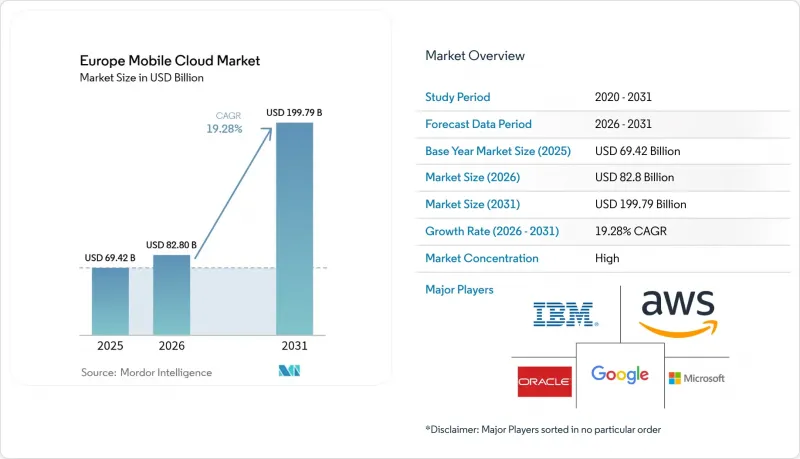
Mordor Intelligence에 의하면, 유럽의 모바일 클라우드 시장 규모는 2025년에 694억 2,000만 달러로 평가되었고, 2026년 828억 달러에서 2031년까지 1,997억 9,000만 달러에 이를 것으로 예측되며, 예측 기간(2026-2031년) CAGR은 19.28%를 기록할 전망입니다.
본 보고서는 사용자별(기업 및 일반 소비자), 용도별(게임, 엔터테인먼트, 교육 등),서비스 모델별(Software-As-A-Service(SaaS), Platform-As-A-Service(PaaS) 등), 도입 모델별(퍼블릭 클라우드, 프라이빗 클라우드 등), 국가별로 분류되어 있습니다.
유럽의 모바일 클라우드 시장 동향 및 인사이트
EU-27 전역에 걸친 주권 클라우드 구역의 구축
유럽연합 집행위원회의 ‘EuroStack’ 프로그램은 2030년까지 10,000개의 분산형 엣지 클라우드 노드 구축을 목표로 하고 있으며, 엄격한 데이터 상주 요건을 충족하는 현지 처리 거점 조성을 지향하고 있습니다. Orange와 Capgemini의 ‘Bleu’ 플랫폼은 SecNumCloud 규정에 따라 Microsoft 기술을 제공하기 위해 2024년에 출범했으며, 규정 준수를 최우선으로 하는 서비스가 기밀성이 높은 워크로드를 유치할 수 있음을 입증했습니다. 곧 도입될 ‘EU 클라우드 서비스 제도’는 주권 및 보안 기준에 따라 공급자를 인증함으로써, 그동안 EU 외부에서 호스팅되던 핵심 분야의 데이터를 EU 내로 되돌리는 과정을 가속화할 것입니다. 동시에, ‘EU 데이터법’은 공급업체에 2027년 1월까지 전환 수수료를 폐지할 것을 의무화하여, 락인(lock-in) 경제를 약화시키고 경쟁력 있는 생태계를 촉진합니다. 공공 기관이 조달 규정을 적용함에 따라, 유럽의 통신 사업자들은 규제 대상 산업과 관련된 클라우드 수요가 크게 증가할 것으로 전망하고 있습니다.
5G SA 구축 가속화로 모바일·클라우드 지연 시간 감소
독일, 영국, 이탈리아, 스페인 등 전 세계 60개 이상의 통신 사업자가 상용 5G SA 네트워크 제공을 시작했습니다. 네트워크 슬라이싱을 통해 모바일·클라우드 애플리케이션의 요구 사항에 맞춘 사전 정의된 지연 시간 및 대역폭 등급이 가능해졌으며, 프리미엄 서비스 계층을 통해 직접 수익화되고 있습니다. 도이체 텔레콤의 ‘5G+Gaming’ 파일럿 프로젝트에서는 클라우드 게임 트래픽의 종단 간 지연 시간이 10밀리초 미만이라는 사실이 이미 입증되었습니다. GSMA는 2030년까지 5G가 유럽에 가져다줄 경제적 가치를 1,640억 유로로 예측하고 있으며, 그 대부분은 SA의 전개에 달려 있습니다. O2 텔레포니카의 클라우드 네이티브 듀얼 모드 코어와 같은 코어 네트워크 업그레이드를 통해 유지보수로 인한 다운타임을 더욱 단축하고 지속적인 기능 출시가 가능해집니다.
하이퍼스케일러 시장 지배력에 대한 감시 강화(CMA 및 EU DMA)
영국 경쟁시장청(CMA)은 AWS와 마이크로소프트가 각각 국내 클라우드 지출의 30-40%를 장악하고 있다고 인정하고, 상호 운용성 및 가격 책정과 관련된 시정 조치를 의무화할 수 있는 ‘전략적 시장 지위(Strategic Market Status)’ 의무를 제안했습니다. 이 당국은 경쟁 개혁을 통해 영국 기업들이 연간 4억 3,000만 파운드의 비용을 절감할 수 있을 것으로 추산하고 있습니다. 브뤼셀에서 ‘디지털 시장법(DMA)’이 동시에 시행됨에 따라 ‘게이트키퍼’ 플랫폼에 대한 규정 준수 요건이 더욱 강화되었으며, 소프트웨어 라이선스와 클라우드 사용량의 묶음 판매 제한 등이 포함되었습니다. AWS와 마이크로소프트는 모두 공급업체를 변경하는 고객에 대한 아웃바운드 통신 요금을 선제적으로 폐지했으며, 이는 최종 판정에 앞서 조치를 조율하고 있음을 시사합니다. 이러한 양보는 고객에게 유익하지만, 공급업체의 이익률을 압박하고 단기적인 투자 속도를 둔화시킬 가능성이 있습니다.
부문 분석
기업들이 성능 보증과 데이터 주권 준수를 우선시한 결과, 2025년 유럽의 모바일 클라우드 시장 매출의 66.35%를 엔터프라이즈 워크로드가 차지했습니다. BBVA와 같은 금융 기관들은 클라우드 네이티브 데이터 플랫폼으로 전환한 후 인사이트 확보까지 걸리는 시간이 단축되었고(분석 속도가 94% 향상됨), 그 효과를 강조했습니다. 이러한 측정 가능한 성과는 고가의 계약 가격을 정당화하며, 지속적인 인프라 투자를 뒷받침하고 있습니다. 소비자 시장의 도입 규모는 작지만, 클라우드 게임 구독 및 모바일 엔터테인먼트 번들 덕분에 연평균 성장률(CAGR) 19.62%라는 기세로 급속히 확대되고 있습니다. 텔레포니카 독일(Telefonica Deutschland)은 100만 명의 5G 사용자를 AWS의 핵심 클라우드로 이전하여 기업과 소비자의 밸류체인을 융합했습니다. 이를 통해 차별화된 네트워크 서비스가 두 부문 모두에서 수익화될 수 있음이 입증되었습니다. 기업은 여전히 유럽의 모바일 클라우드 시장의 기반을 이루고 있지만, 소비자층의 성장은 수익의 다각화를 가져와 기업 예산 주기의 영향을 완화하고 있습니다. 소비자 주도의 견조한 성장은 인구 밀집 지역과 가까운 엣지 컴퓨팅 노드와의 연계를 강화하고 있으며, 그래픽을 많이 사용하는 게임이나 동영상 스트리밍에서 발생하는 지터 현상을 줄이고 있습니다. 네트워크 사업자는 도매 트래픽의 점진적 증가로 혜택을 보는 한편, 하이퍼스케일러는 컨텐츠 캐시를 대도시권의 각 거점에 분산시키고 있습니다. 한편, 기업의 구매 담당자들은 락인(lock-in)을 완화하기 위해 멀티 클라우드 도입 범위를 확대하고 있으며, 보다폰은 3대 주요 제공업체 간에 ‘상업적 긴장감’을 유지함으로써 비용 절감을 실현하고 있습니다. 고급 FinOps 대시보드가 사업 부문별 이용 현황을 추적하여 모든 워크로드가 최적의 비용 효율 구역에서 실행되도록 하고 있습니다. 이 두 가지 추세가 결합된 진화를 통해 유럽의 모바일 클라우드 업계는 탄력성을 유지하고 있습니다.
게임 분야는 2025년 매출의 31.35%를 차지할 것으로 예상되며, 로컬 하드웨어의 제약을 해소하는 종량제 클라우드 게임 서비스에 힘입어 연평균 성장률(CAGR) 21.68%로 성장할 전망입니다. 도이체 텔레콤의 ‘5G+Gaming’ 서비스는 네트워크 슬라이싱이 모바일 광대역 속도에서 프레임 레이트의 일관성을 보장하는 메커니즘을 입증하고 있습니다. 금융 및 비즈니스 용도는 가치 측면에서 2위를 차지하고 있으며, 안전하고 지연 시간이 짧은 통신 경로를 통해 제공되는 실시간 위험 분석이 그 원동력이 되고 있습니다. 자본 시장 허브에 거점을 둔 기업들은 알고리즘 트레이딩에 있어 결정론적 지연 시간을 필요로 하며, 이러한 수요는 엣지 최적화 영역으로 이동하고 있습니다.
원격 학습 플랫폼과 진단용 AI 워크로드가 클라우드로 이전함에 따라 교육 및 의료 용도의 점유율은 지속적으로 확대되고 있습니다. 규제 당국은 기밀성이 높은 의료 데이터를 국내 클라우드 구역에 저장하는 것을 허용하고 있으며, 이를 통해 제공업체는 개인정보 보호법을 위반하지 않고 AI를 활용한 영상 진단 서비스를 전개할 수 있게 되었습니다. 엔터테인먼트 플랫폼은 게임과 동일한 엣지 인프라를 활용하여 버퍼링 없이 적응형 비트레이트 동영상을 스트리밍하고 있습니다. 이러한 다양한 이용 사례가 결합되어 유럽의 모바일 클라우드 시장 전체의 성장을 뒷받침하고 있으며, 증설된 용량에 대한 수요는 확실히 예상됩니다.
기타 혜택:
- 엑셀 형식 시장 예측(ME) 시트
- 3개월간의 애널리스트 지원
자주 묻는 질문
목차
제1장 서론
제2장 조사 방법
제3장 주요 요약
제4장 시장 구도
제5장 시장 규모와 성장 예측
제6장 경쟁 구도
제7장 시장 기회와 향후 전망
LSH 26.09.08According to Mordor Intelligence, the Europe mobile cloud market size was valued at USD 69.42 billion in 2025 and estimated to grow from USD 82.8 billion in 2026 to reach USD 199.79 billion by 2031, at a CAGR of 19.28% during the forecast period (2026-2031).
This report is Segmented by User (Enterprise and Consumer), Application (Gaming, Entertainment, Education, and More), Service Model (Software-As-A-Service (SaaS), Platform-As-A-Service (PaaS), and More), Deployment Model (Public Cloud, Private Cloud, and More), and Country.
Europe Mobile Cloud Market Trends and Insights
Development of Sovereign-Cloud Zones Across EU-27
The European Commission's EuroStack programme targets 10,000 distributed edge-cloud nodes by 2030, creating local processing points that satisfy strict data-residency statutes. Orange and Capgemini's Bleu platform was launched in 2024 to offer Microsoft technology under SecNumCloud rules, proving that compliance-first offerings can attract sensitive workloads. The forthcoming EU Cloud Services Scheme will certify providers against sovereignty and security standards, accelerating repatriation of critical-sector data previously hosted outside the bloc. Simultaneously, the EU Data Act obliges vendors to abolish switching fees by January 2027, undermining lock-in economics and incentivizing a competitive ecosystem. As public agencies adapt procurement rules, European operators expect a sizeable uplift in cloud demand tied to regulated industries.
Intensifying 5G SA Roll-out Lowers Mobile-Cloud Latency
More than 60 operators worldwide have launched commercial 5G SA networks, including installations across Germany, the UK, Italy, and Spain. Network slicing allows predefined latency and bandwidth classes that match mobile-cloud application requirements, directly monetised through premium service tiers. Deutsche Telekom's 5G+ Gaming pilot has already proven sub-10 millisecond end-to-end latency for cloud gaming traffic. The GSMA projects EUR 164 billion in European economic value from 5G by 2030, most of which depends on SA deployment. Core-network upgrades, such as O2 Telefonica's cloud-native dual-mode core, further cut maintenance downtime and enable continuous feature releases.
Rising Scrutiny of Hyperscaler Market Power (CMA and EU DMA)
The UK Competition and Markets Authority found AWS and Microsoft each control 30-40 % of domestic cloud spend, proposing Strategic Market Status obligations that could force interoperability and pricing remedies. The watchdog estimates competitive reforms might save UK businesses GBP 430 million annually. Parallel Digital Markets Act enforcement in Brussels adds further compliance layers for "gatekeeper" platforms, including limits on tying software licences to cloud consumption. Both AWS and Microsoft have pre-emptively eliminated egress fees for customers switching providers, demonstrating behavioural adjustments ahead of final rulings. While such concessions help clients, they compress provider margins and may reduce near-term investment pace.
Other drivers and restraints analyzed in the detailed report include:
- Surge in Enterprise FinOps Tooling for Multi-Cloud Cost Control
- Telco Edge-Cloud Partnerships Monetising Network APIs
- Cross-Border Data-Transfer Compliance Costs (Schrems II and GDPR)
For complete list of drivers and restraints, kindly check the Table Of Contents.
Segment Analysis
Enterprise workloads produced 66.35% of 2025 Europe mobile cloud market revenue as corporates prioritised performance guarantees and sovereignty compliance. Financial institutions such as BBVA highlighted time-to-insight gains-94% faster analytics-after pivoting to cloud-native data platforms. These measurable outcomes justify premium contract values and spur continued infrastructure investment. Consumer adoption, while smaller, is expanding briskly at a 19.62% CAGR due to cloud gaming subscriptions and mobile entertainment bundles. Telefonica Germany moved 1 million 5G users onto AWS core cloud, blending enterprise and consumer value chains, proving that differentiated network services can monetise both segments. Although enterprises remain the bedrock of the Europe mobile cloud market, consumer growth diversifies revenue and cushions against corporate budget cycles. The consumer-driven upswing is increasingly tied to edge-compute nodes situated near population centres, reducing jitter for graphics-intensive titles and video streaming. Network operators benefit from incremental wholesale traffic, while hyperscalers distribute content caches across metropolitan points of presence. Meanwhile, enterprise buyers widen multi-cloud footprints to mitigate lock-in, with Vodafone registering cost savings by maintaining "commercial tension" across three large providers. Advanced FinOps dashboards track usage by business unit, ensuring every workload runs in the optimal cost-performance zone. This dual-track evolution keeps the Europe mobile cloud industry resilient
Gaming secured a 31.35% slice of 2025 revenue and is projected to expand at 21.68% CAGR, propelled by pay-as-you-go cloud gaming services that remove local hardware constraints. Deutsche Telekom's 5G+ Gaming offer demonstrates how network slicing guarantees frame-rate consistency at mobile broadband speeds. Finance and business applications rank second in value, powered by real-time risk analytics delivered over secure, low-latency pipes. Enterprises in capital-markets hubs depend on deterministic latency for algorithmic trading, steering demand toward edge-optimised zones.
Education and healthcare applications continue gaining share as remote-learning platforms and diagnostic AI workloads migrate to cloud. Regulators permit sensitive health data to reside in sovereign cloud zones, enabling providers to roll out AI-powered imaging without contravening privacy law. Entertainment platforms capitalise on the same edge footprints that gaming uses, streaming adaptive-bitrate video without buffering. Collectively, these diverse use cases reinforce growth across the Europe mobile cloud market, ensuring that incremental capacity finds ready buyers.
Complete Report Scope:
- By User
- Enterprise
- Consumer
- By Application
- Gaming
- Finance and Business
- Entertainment
- Education
- Healthcare
- Travel
- By Service Model
- Software-as-a-Service (SaaS)
- Platform-as-a-Service (PaaS)
- Infrastructure-as-a-Service (IaaS)
- By Deployment Model
- Public Cloud
- Private Cloud
- Hybrid Cloud
- By Country
- Germany
- United Kingdom
- France
- Spain
- Italy
- Rest of Europe
List of Companies Covered in this Report:
- Amazon Web Services
- Microsoft Azure
- Google Cloud
- IBM Corporation
- SAP SE
- Deutsche Telekom (T-Systems)
- Vodafone Group
- Orange Business Services
- Telefonica Tech
- Oracle Corporation
- Salesforce Inc.
- Akamai Technologies
- OVHcloud
- Rackspace Technology
- Cloudflare Inc.
- Alibaba Cloud
- Tencent Cloud
- Huawei Cloud
- Nokia Cloud and Network Services
- Kyndryl Holdings
Additional Benefits:
- The market estimate (ME) sheet in Excel format
- 3 months of analyst support
TABLE OF CONTENTS
1 INTRODUCTION
- 1.1 Study Assumptions and Market Definition
- 1.2 Scope of the Study
2 RESEARCH METHODOLOGY
3 EXECUTIVE SUMMARY
4 MARKET LANDSCAPE
- 4.1 Market Overview
- 4.2 Market Drivers
- 4.2.1 Development of sovereign-cloud zones across EU-27
- 4.2.2 Intensifying 5G SA roll-out lowers mobile-cloud latency
- 4.2.3 Surge in enterprise FinOps tooling for multi-cloud cost control
- 4.2.4 Telco edge-cloud partnerships monetising network APIs
- 4.2.5 AI-assisted mobile app dev-ops shrinks time-to-cloud
- 4.2.6 Green-datacentre tax incentives in Germany and Nordics
- 4.3 Market Restraints
- 4.3.1 Rising scrutiny of hyperscaler market power (CMA and EU DMA)
- 4.3.2 Cross-border data-transfer compliance costs (Schrems II, GDPR)
- 4.3.3 Energy-price volatility squeezing datacentre OPEX
- 4.3.4 Shortage of certified cloud-security professionals
- 4.4 Value Chain Analysis
- 4.5 Regulatory Landscape
- 4.6 Technological Outlook (5G SA, Edge, GenAI)
- 4.7 Porter's Five Forces Analysis
- 4.7.1 Threat of New Entrants
- 4.7.2 Bargaining Power of Suppliers
- 4.7.3 Bargaining Power of Buyers
- 4.7.4 Threat of Substitutes
- 4.7.5 Intensity of Rivalry
5 MARKET SIZE AND GROWTH FORECASTS (VALUE)
- 5.1 By User
- 5.1.1 Enterprise
- 5.1.2 Consumer
- 5.2 By Application
- 5.2.1 Gaming
- 5.2.2 Finance and Business
- 5.2.3 Entertainment
- 5.2.4 Education
- 5.2.5 Healthcare
- 5.2.6 Travel
- 5.3 By Service Model
- 5.3.1 Software-as-a-Service (SaaS)
- 5.3.2 Platform-as-a-Service (PaaS)
- 5.3.3 Infrastructure-as-a-Service (IaaS)
- 5.4 By Deployment Model
- 5.4.1 Public Cloud
- 5.4.2 Private Cloud
- 5.4.3 Hybrid Cloud
- 5.5 By Country
- 5.5.1 Germany
- 5.5.2 United Kingdom
- 5.5.3 France
- 5.5.4 Spain
- 5.5.5 Italy
- 5.5.6 Rest of Europe
6 COMPETITIVE LANDSCAPE
- 6.1 Market Concentration
- 6.2 Strategic Moves
- 6.3 Market Share Analysis
- 6.4 Company Profiles (includes Global-level Overview, Market-level Overview, Core Segments, Financials as available, Strategic Information, Market Rank/Share, Products and Services, Recent Developments)
- 6.4.1 Amazon Web Services
- 6.4.2 Microsoft Azure
- 6.4.3 Google Cloud
- 6.4.4 IBM Corporation
- 6.4.5 SAP SE
- 6.4.6 Deutsche Telekom (T-Systems)
- 6.4.7 Vodafone Group
- 6.4.8 Orange Business Services
- 6.4.9 Telefonica Tech
- 6.4.10 Oracle Corporation
- 6.4.11 Salesforce Inc.
- 6.4.12 Akamai Technologies
- 6.4.13 OVHcloud
- 6.4.14 Rackspace Technology
- 6.4.15 Cloudflare Inc.
- 6.4.16 Alibaba Cloud
- 6.4.17 Tencent Cloud
- 6.4.18 Huawei Cloud
- 6.4.19 Nokia Cloud and Network Services
- 6.4.20 Kyndryl Holdings
7 MARKET OPPORTUNITIES AND FUTURE OUTLOOK
- 7.1 White-space and Unmet-need Assessment