

|
시장보고서
상품코드
2121318
인도네시아의 플라스틱 포장 : 시장 점유율 분석, 업계 동향과 통계, 성장 예측(2026-2031년)Indonesia Plastic Packaging - Market Share Analysis, Industry Trends & Statistics, Growth Forecasts (2026 - 2031) |
||||||
 Mordor Intelligence
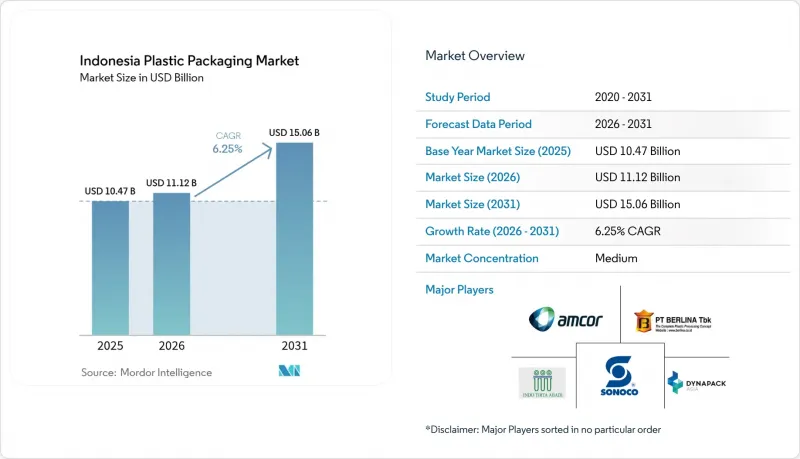
Mordor Intelligence에 따르면 인도네시아의 플라스틱 포장 시장 규모는 2025년에 104억 7,000만 달러로 평가되며, 2026년 111억 2,000만 달러에서 2031년까지 150억 6,000만 달러에 달할 것으로 예측되며, 예측 기간(2026-2031년) 동안 CAGR은 6.25%가 될 전망입니다.
본 보고서는 소재 유형(폴리에틸렌, 폴리프로필렌, PET, 기타), 포장 유형(연질 플라스틱 포장, 경질 플라스틱 포장), 제품 형태(병·용기,트레이·용기, 기타), 최종사용자 산업(식품, 음료, 의약품·의료, 기타), 제조 공정(압출, 사출 성형, 기타)별로 분류되어 있습니다. 시장 예측은 금액(달러) 기준으로 제시되어 있습니다.
인도네시아 플라스틱 포장 시장의 동향 및 인사이트
E-Commerce 및 라스트 마일 배송 수요의 급증
2024년, 인도네시아의 디지털 마켓플레이스에서는 전례 없는 소포 처리량을 기록했으며, 이에 따라 각 변환 업체에 대해 섬 간 운송을 견딜 수 있는 보호 필름, 위조 방지 파우치, 공간 절약형 우편용 봉투의 공급을 요구하는 압력이 높아졌습니다. 국가 전략 프로젝트의 확충으로 배송 시간이 단축되어, 과거에는 위험도가 높다고 여겨졌던 얇은 소재의 사용이 가능해졌습니다. PT Pos Indonesia의 자동 분류 허브에서는 소포 치수 규격이 도입되었으며, 치수 정확도 목표를 달성한 공급업체에게는 보상이 주어지고 있습니다. 현재 E-Commerce 플랫폼에서는 재활용 소재와 퇴비화 가능한 포장재를 공급업체 평가 기준에 반영하고 있으며, 주요 필름 제조사들 사이에서 제품 개발이 급속도로 진행되고 있습니다. 풀필먼트 계약에 지속가능성 조항이 표준화됨에 따라, 선제적으로 대응한 기업들은 입찰에서 우위를 점하고 있습니다.
편의식품·즉석식품 소비 확대
도시 지역의 핵가족은 1인분 용량의 상품이나 가열 후 바로 먹을 수 있는 제품을 점점 더 많이 선택하고 있어, 고차단성 파우치, 트레이, 소분용 소포장에 대한 수요가 확대되고 있습니다. BPOM(인도네시아 식품의약품청)의 2024년 ‘뉴트리레벨’ 표시 규정에 따라 포장 전면의 표시 면적 요건이 확대됨에 따라, 필수 정보를 전달하면서도 진열 시의 매력을 유지할 수 있는 디지털 인쇄 라인에 대한 투자가 촉진되고 있습니다. 정부의 영양 식품 보조금 도입으로 인해 무균 카톤 및 다층 병이 필요한 새로운 유제품·단백질 가공 공장의 생산량이 증가하고 있습니다. 물류 체인은 냉장실 증설로 이에 대응하고 있으며, 결로나 온도 변동에 견딜 수 있는 내천공성 오버랩에 대한 수요를 높이고 있습니다. 그 결과, 인도네시아 플라스틱 포장 시장에서는 고부가가치 식품 용도에서 차지하는 수익 비중이 확대되고 있습니다.
엄격한 일회용 플라스틱 금지 조치 및 EPR 도입
지자체에 의한 일회용 식기, 빨대, 스티로폼 사용 금지로 인해 기존 SKU는 이미 시장에서 사라졌으며, 각 변환 업체들은 자비로 생산 설비를 갱신할 수밖에 없는 상황에 처해 있습니다. 인도네시아의 EPR 제도 하에서는 브랜드 소유자가 현재 규모가 부족한 사용 후 폐기물 수거 비용을 부담해야 하며, 그 비용 부담이 다운스트림로 전가되고 있습니다. 주마다 시행 시기가 제각각이기 때문에 규제 강화가 불균일하게 진행되는 가운데, 수요 예측이 어려워지고 재고 평가 손실 위험도 발생하고 있습니다. 유동성이 제한된 중소기업은 가장 큰 곤경에 처해 있으며, 인도네시아 플라스틱 포장 산업 내에서 산업 재편이 진행될 가능성이 있습니다.
부문 분석
폴리에틸렌은 식료품 봉지, 스트레치 랩, 다층 파우치 등 폭넓은 용도로 활용될 수 있어, 2025년 인도네시아 플라스틱 포장 시장에서 39.45%의 점유율을 유지했습니다. 한편, PET는 음료 및 식용유 제조업체들이 식품 등급 rPET를 채택함에 따라 연평균 7.18%의 성장이 예상됩니다. 이는 코카콜라 인도네시아가 2024년에 100% 재활용 병을 출시한 사실로 뒷받침됩니다. PP는 핫필용 트레이 및 전자레인지용 트레이 부문에서 여전히 중요한 위치를 유지하고 있지만, 발포 플라스틱 사용 금지로 인해 폴리스티렌의 시장 점유율은 축소되고 있습니다. 바이오 기반 폴리머는 여전히 틈새 시장인 헬스케어 및 뷰티 부문을 차지하고 있으며, 프리미엄 포지셔닝을 통해 높은 비용을 상쇄하고 있습니다.
공급 안정성이 조달 정책을 좌우하고 있습니다. 자바 섬에 거점을 둔 필름 압출 제조업체는 치레곤 콤플렉스에서 에틸렌 원료를 구매하는 반면, PET 가공업체는 환율 변동 위험을 헤지하기 위해 현지 병-병 재활용에 대한 의존도를 높이고 있습니다. 인도네시아의 플라스틱 포장 시장은 rPET 생산능력 확대의 혜택을 받고 있으며, 이는 버진 수지 부족을 보완하고 EPR(생산자 책임 회수 제도)의 회수 할당량을 충족시키고 있습니다. 한편, SNI 품질 기준은 일관된 용융 유동 지수와 중금속 규제 준수를 입증할 수 있는 기존 제조업체에 유리하게 작용하고 있습니다.
2025년에는 인도네시아의 가격에 민감한 소매 시장에서 수요가 증가하고 있는 스낵, 인스턴트 라면, 세제 리필용 소포장에 힘입어 연질 솔루션이 매출의 53.61%를 차지했습니다. 산소와 수증기 차단성이 향상된 필름 덕분에 구조를 얇게 만들 수 있게 되어, 유통 기한을 해치지 않으면서 수지 사용량을 최대 18%까지 줄일 수 있습니다. 경질 플라스틱은 화장품 용기 및 무균 음료 카톤 분야에서 프리미엄 위치를 유지하고 있으며, 이러한 부문에서는 위조 방지 기능과 브랜드 이미지 연출이 높은 단가를 정당화하고 있습니다.
인도네시아 플라스틱 포장 시장에서는 연질 포장이 E-Commerce의 부피 효율 문제를 해결함으로써 규모의 경제를 누리고 있습니다. 단일 소재인 PE 또는 PP 구조는 재활용을 효율화하며, 향후 도입될 수거 의무에도 대응하고 있습니다. 대조적으로, 경질 플라스틱 부문의 기업들은 인몰드 라벨링, 고광택 마감, 도시 지역의 제로 웨이스트 매장에 대응한 리필 가능 포장 검사 도입 등을 통해 차별화를 꾀하고 있습니다.
기타 혜택
- 엑셀 형식의 시장 예측(ME) 시트
- 3개월간의 애널리스트 지원
자주 묻는 질문
목차
제1장 소개
제2장 조사 방법
제3장 주요 요약
제4장 시장 구도
제5장 시장 규모와 성장 예측
제6장 경쟁 구도
제7장 시장 기회와 향후 전망
KSM 26.09.03According to Mordor Intelligence, the Indonesia plastic packaging market size was valued at USD 10.47 billion in 2025 and estimated to grow from USD 11.12 billion in 2026 to reach USD 15.06 billion by 2031, at a CAGR of 6.25% during the forecast period (2026-2031).
This report is Segmented by Material Type (Polyethylene, Polypropylene, PET, and More), Packaging Type (Flexible, Rigid), Product Form (Bottles and Jars, Trays and Containers, and More), End-User Industry (Food, Beverage, Pharmaceuticals, and Healthcare, and More), Manufacturing Process (Extrusion, Injection Molding, and More). The Market Forecasts are Provided in Terms of Value (USD).
Indonesia Plastic Packaging Market Trends and Insights
Surge in E-commerce and Last-mile Delivery Demand
Indonesia's digital marketplace recorded unprecedented parcel volumes in 2024, pressuring converters to supply protective films, tamper-evident pouches, and space-efficient mailers that withstand inter-island transit. National Strategic Project upgrades have shortened delivery times and enabled lighter gauges once deemed risky. PT Pos Indonesia's automated sortation hubs introduced standardized parcel dimensions, rewarding suppliers that meet dimensional accuracy targets. E-commerce platforms now include recycled-content or compostable packaging in vendor scorecards, prompting rapid product development among leading film producers. Early movers gain tender advantages as sustainability clauses become standard in fulfillment contracts.
Rising Consumption of Convenience and RTE Foods
Urban nuclear families increasingly choose single-serve and heat-and-eat products, expanding demand for high-barrier pouches, trays, and portion sachets. BPOM's 2024 Nutri-Level labeling rule enlarged front-of-pack footprint requirements, spurring investments in digital printing lines that maintain shelf appeal while conveying mandatory data. The government's nutritious-meal subsidy is raising output from new dairy and protein plants that need aseptic cartons and multilayer bottles. Logistics chains adapt by installing additional cold rooms, reinforcing demand for puncture-resistant overwraps able to handle condensation and temperature swings. As a result, the Indonesia plastic packaging market derives a larger revenue share from high-value food applications.
Stringent Single-Use-Plastic Bans and EPR Rollout
Municipal bans on disposable cutlery, straws, and polystyrene foam have already eliminated legacy SKUs, compelling converters to retool at their own expense. Under Indonesia's EPR scheme, brand owners must finance post-consumer waste collection that currently lacks scale, transferring cost pressure downstream. Fragmented timelines across provinces create forecasting hurdles and inventory write-off risks as rules tighten unevenly. Small firms with limited liquidity struggle most, potentially driving consolidation within the Indonesia plastic packaging industry.
Other drivers and restraints analyzed in the detailed report include:
- Lightweighting Initiatives by FMCG Majors
- Halal-Certification Packaging Design Requirements
- Volatile Resin Prices and Rupiah Depreciation
For complete list of drivers and restraints, kindly check the Table Of Contents.
Segment Analysis
Polyethylene retained 39.45% of the Indonesia plastic packaging market share in 2025 thanks to its versatility across grocery bags, stretch wrap, and multilayer pouches. PET, however, is forecast to grow 7.18% annually as beverage and edible-oil producers embrace food-grade rPET, validated by Coca-Cola Indonesia's debut of 100% recycled bottles in 2024. PP maintains relevance in hot-fill and microwave-ready trays, while polystyrene's share erodes under foam bans. Bio-based polymers still occupy niche healthcare and beauty channels where premium positioning offsets higher costs.
Supply security shapes procurement: Java-based film extruders buy ethylene feedstock from the Cilegon complex, whereas PET converters increasingly rely on local bottle-to-bottle recycling to hedge currency swings. The Indonesia plastic packaging market benefits as rPET capacity scales, bridging virgin resin deficits and satisfying EPR collection quotas. Meanwhile, SNI quality standards favor incumbent producers able to document consistent melt-flow indices and heavy-metal compliance.
Flexible solutions commanded 53.61% revenue in 2025, propelled by snack, instant noodle, and detergent refill sachets that thrive in Indonesia's price-sensitive retail landscape. Films with improved oxygen and moisture barriers permit thinner constructions, reducing resin usage by up to 18% without compromising shelf life. Rigid plastics maintain premium positioning in cosmetics jars and aseptic beverage cartons, where tamper evidence and brand presentation justify a higher unit cost.
The Indonesia plastic packaging market enjoys scale economies as flexibles fulfill e-commerce's volumetric efficiency challenge. Mono-material PE or PP structures streamline recycling, aligning with forthcoming take-back mandates. In contrast, rigid players differentiate via in-mold labeling, high-gloss finishes, and refillable pack pilots responding to urban zero-waste stores.
Complete Report Scope:
- By Material Type
- Polyethylene (PE)
- Polypropylene (PP)
- Polyethylene Terephthalate (PET)
- Polystyrene and EPS
- Other Material Types
- By Packaging Type
- Flexible Plastic Packaging
- Rigid Plastic Packaging
- By Product Form
- Bottles and Jars
- Trays and Containers
- Pouches and Sachets
- Bags and Sacks
- Films and Wraps
- Other Product Forms
- By End-User Industry
- Food
- Beverage
- Pharmaceuticals and Healthcare
- Cosmetics and Personal Care
- Industrial
- Other End-user Industries
- By Manufacturing Process
- Extrusion
- Injection Molding
- Blow Molding
- Thermoforming
- Other Manufacturing Processes
List of Companies Covered in this Report:
- Amcor plc
- PT Dynapack Asia
- Sonoco Products Company
- ALPLA Werke Alwin Lehner GmbH and Co KG
- PT Indo Tirta Abadi
- PT Berlina Tbk
- PT ePac Flexibles Indonesia
- PT Prima Jaya Eratama
- PT Solusi Prima Packaging
- PT Hasil Raya Industries
- PT Indonesia Toppan Printing
- PT Tetra Pak Indonesia (Tetra Pak Group AB)
- PT Huhtamaki Foodservice Indonesia (Huhtamaki Oyj)
- PT DNP Indonesia (Dai Nippon Printing Co., Ltd.)
- PT Lotte Packaging
- PT Lamipak Primantara
- PT Indo Polypack
- PT Packindo Sedya Pratama
- PT Greencore Packaging Indonesia
Additional Benefits:
- The market estimate (ME) sheet in Excel format
- 3 months of analyst support
TABLE OF CONTENTS
1 INTRODUCTION
- 1.1 Study Assumptions and Market Definition
- 1.2 Scope of the Study
2 RESEARCH METHODOLOGY
3 EXECUTIVE SUMMARY
4 MARKET LANDSCAPE
- 4.1 Market Overview
- 4.2 Market Drivers
- 4.2.1 Surge in E-commerce and Last-mile Delivery Demand
- 4.2.2 Rising Consumption of Convenience and RTE Foods
- 4.2.3 Lightweighting Initiatives by FMCG Majors
- 4.2.4 Halal-Certification Packaging Design Requirements
- 4.2.5 Palm-Cooking-Oil Sector's Shift to rPET Bottles
- 4.3 Market Restraints
- 4.3.1 Stringent Single-Use-Plastic Bans and EPR Rollout
- 4.3.2 Volatile Resin Prices and Rupiah Depreciation
- 4.3.3 Insufficient Recycled-Resin Supply Chain
- 4.3.4 BPA-Warning Regulation for Water Bottles
- 4.4 Industry Value Chain Analysis
- 4.5 Regulatory Landscape
- 4.6 Technological Outlook
- 4.7 Porters Five Forces
- 4.7.1 Bargaining Power of Suppliers
- 4.7.2 Bargaining Power of Consumers
- 4.7.3 Threat of New Entrants
- 4.7.4 Threat of Substitute Products
- 4.7.5 Intensity of Competitive Rivalry
- 4.8 The Impact of Macroeconomic Factors on the Market
5 MARKET SIZE AND GROWTH FORECASTS (VALUE)
- 5.1 By Material Type
- 5.1.1 Polyethylene (PE)
- 5.1.2 Polypropylene (PP)
- 5.1.3 Polyethylene Terephthalate (PET)
- 5.1.4 Polystyrene and EPS
- 5.1.5 Other Material Types
- 5.2 By Packaging Type
- 5.2.1 Flexible Plastic Packaging
- 5.2.2 Rigid Plastic Packaging
- 5.3 By Product Form
- 5.3.1 Bottles and Jars
- 5.3.2 Trays and Containers
- 5.3.3 Pouches and Sachets
- 5.3.4 Bags and Sacks
- 5.3.5 Films and Wraps
- 5.3.6 Other Product Forms
- 5.4 By End-User Industry
- 5.4.1 Food
- 5.4.2 Beverage
- 5.4.3 Pharmaceuticals and Healthcare
- 5.4.4 Cosmetics and Personal Care
- 5.4.5 Industrial
- 5.4.6 Other End-user Industries
- 5.5 By Manufacturing Process
- 5.5.1 Extrusion
- 5.5.2 Injection Molding
- 5.5.3 Blow Molding
- 5.5.4 Thermoforming
- 5.5.5 Other Manufacturing Processes
6 COMPETITIVE LANDSCAPE
- 6.1 Market Concentration
- 6.2 Strategic Moves
- 6.3 Market Share Analysis
- 6.4 Company Profiles (includes Global level Overview, Market level Overview, Core Segments, Financials as available, Strategic Information, Market Rank/Share for key companies, Products and Services, and Recent Developments)
- 6.4.1 Amcor plc
- 6.4.2 PT Dynapack Asia
- 6.4.3 Sonoco Products Company
- 6.4.4 ALPLA Werke Alwin Lehner GmbH and Co KG
- 6.4.5 PT Indo Tirta Abadi
- 6.4.6 PT Berlina Tbk
- 6.4.7 PT ePac Flexibles Indonesia
- 6.4.8 PT Prima Jaya Eratama
- 6.4.9 PT Solusi Prima Packaging
- 6.4.10 PT Hasil Raya Industries
- 6.4.11 PT Indonesia Toppan Printing
- 6.4.12 PT Tetra Pak Indonesia (Tetra Pak Group AB)
- 6.4.13 PT Huhtamaki Foodservice Indonesia (Huhtamaki Oyj)
- 6.4.14 PT DNP Indonesia (Dai Nippon Printing Co., Ltd.)
- 6.4.15 PT Lotte Packaging
- 6.4.16 PT Lamipak Primantara
- 6.4.17 PT Indo Polypack
- 6.4.18 PT Packindo Sedya Pratama
- 6.4.19 PT Greencore Packaging Indonesia
7 MARKET OPPORTUNITIES AND FUTURE OUTLOOK
- 7.1 White-space and Unmet-Need Assessment


