

|
시장보고서
상품코드
2121635
중동 및 아프리카의 청량음료 포장 : 시장 점유율 분석, 업계 동향과 통계, 성장 예측(2026-2031년)Middle East And Africa Soft Drinks Packaging - Market Share Analysis, Industry Trends & Statistics, Growth Forecasts (2026 - 2031) |
||||||
 Mordor Intelligence
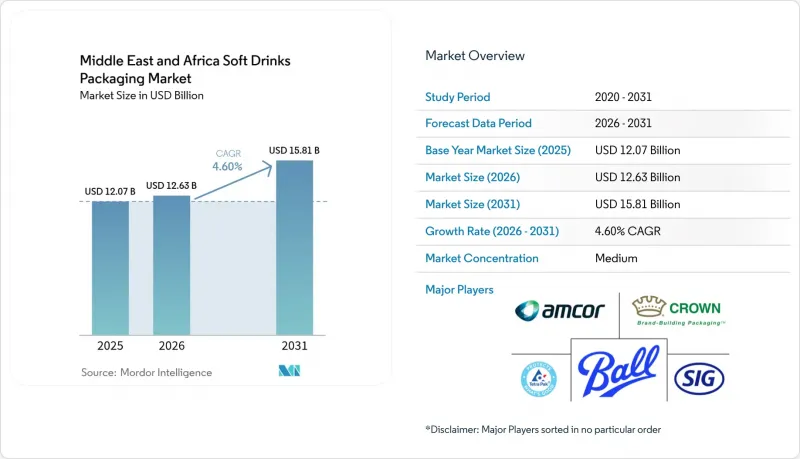
Mordor Intelligence에 따르면 중동 및 아프리카의 청량음료 포장 시장 규모는 2026년에 126억 3,000만 달러로 추정되며, 2025년 120억 7,000만 달러에서 확대되어 2031년에는 158억 1,000만 달러에 달할 것으로 예측됩니다.
2026년부터 2031년까지 연평균 성장률(CAGR) 4.60%로 성장할 것으로 전망됩니다.
본 보고서는 사용되는 주요 소재(플라스틱, 종이·판지, 기타), 포장 형태(병, 캔, 기타), 음료 종류(생수, 주스·넥타, 기타), 포장 용량(330mL 이하, 331-500mL, 501-1,000mL, 1,000mL 초과), 및 지역별로 분류되어 있습니다. 시장 예측은 금액(달러) 기준으로 제시되어 있습니다.
중동 및 아프리카의 청량음료 포장 시장 동향 및 인사이트
GCC 국가들의 생수 소비량 증가
물 부족에 대한 우려가 뿌리 깊고, 지자체별 수돗물 품질에도 편차가 있기 때문에 걸프 지역 가정에서는 계속해서 포장된 생수를 선택하고 있습니다. 사우디아라비아의 ‘국가 물 전략 2030’에서는 수원의 다각화를 우선 과제로 삼고 있으며, 상수도 시설의 현대화가 진행됨에 따라 간접적으로 생수 수요를 뒷받침하고 있습니다. 지역 내 병입 업체에 도입된 사이델(Sidel)사의 80,000 bph PET 라인은 이러한 수요 급증을 포착하기 위한 공장 투자의 한 예입니다. 30세 미만이 60% 이상을 차지하는 젊은 층은 프리미엄 물이나 기능성 물을 선호하는 경향이 있어, 이로 인해 단위당 포장 가치가 상승하고, 중동 및 아프리카 청량음료 포장 시장에서 PET 용기의 우위가 더욱 공고해지고 있습니다.
편의성과 휴대성이 뛰어난 싱글 서브 팩의 수요 급증
바쁜 업무 일정과 편의점의 확대로 인해 330mL 미만의 팩이 일반화되고 있습니다. 소비자들이 섭취량 관리와 휴대성을 동시에 추구함에 따라, 이 크기대의 판매량은 연평균 성장률(CAGR) 5.8%로 증가하고 있으며, 더 큰 크기의 포맷을 앞지르고 있습니다. SIG사의 ‘DomeMini’ 카톤 병(180-350mL)은 휴대성과 무균성을 겸비하여, 외출 시 소비하기에 적합한 카톤 옵션으로 자리 잡고 있습니다. 이러한 추세는 바쁜 라이프스타일과 외식 산업이 교차하는 리야드, 두바이, 요하네스버그에서 특히 두드러지며, 중동 및 아프리카 청량음료 포장 시장을 수익성이 높은 1회용 패키지로의 전환을 촉진하고 있습니다.
UAE 및 사우디아라비아의 EPR 요금 인상 및 플라스틱세 도입 가능성
UAE의 EPR(확대 생산자 책임) 시범 제도는 이미 생수 등 대량 판매 부문에서 규정 준수 비용을 상승시키고 있습니다. 입법 당국은 2026년까지 일회용 플라스틱에 대한 더 광범위한 금지를 계획하고 있어, PET 포장에 대한 가격 압박이 더욱 심화되고 있습니다. 사우디아라비아는 순환 경제 로드맵의 일환으로 유사한 과세 조치를 검토하고 있으며, 이는 불확실성을 초래하여 자본 투자의 지연이나 브랜드들이 알루미늄 및 판지 소재의 대안으로 전환하는 요인이 될 수 있습니다. 그 결과, 중동 및 아프리카의 청량음료 포장 시장에서는 기존 포장 형태의 이익률 압박에 직면하는 한편, 지속가능한 대체재의 성장세가 가속화되고 있습니다.
부문 분석
2025년, 중동 및 아프리카 청량음료 포장 시장에서 플라스틱은 52.05%의 점유율을 유지했습니다. 이는 걸프 지역의 풍부한 원료 공급과 확립된 PET 블로우 성형 인프라에 힘입은 결과입니다. 수지의 경제성이 우수하기 때문에 PET는 생수, 탄산음료, 스포츠 음료의 표준 소재로 자리 잡았습니다. 그러나 종이 및 판지는 연평균 성장률(CAGR) 6.05%를 기록하며, 골판지 용기의 장기 보존성과 지속가능성이라는 강점을 활용한 식물성 음료의 출시를 배경으로 그 성장이 가속화되고 있습니다.
EPR(생산자 책임 회수) 비용의 상승과 캡 고정화 요건으로 인해 브랜드 소유자는 기재의 다양화를 강요받고 있으며, 이로 인해 카톤 공급업체는 전략적 파트너로서의 위상을 높이고 있습니다. SIG의 이집트 재활용 시범 사업과 종이 캡에 관한 Pulpac과의 제휴는 환경에 미치는 총 영향을 줄이는 것을 목표로 한 혁신 주기의 좋은 예입니다. 유리는 여전히 프리미엄 주스 및 수제 소다 제품 라인에 사용되고 있는 반면, 알루미늄은 에너지 드링크 및 프리미엄 생수 분야에서 주목을 받고 있습니다. 이러한 소재 구성의 변화는 중동 및 아프리카 청량음료 포장 시장에서 규제와 소비자의 기대가 공급업체의 사업 전략을 어떻게 재구성하고 있는지를 여실히 보여주고 있습니다.
병은 PET의 광범위한 보급과 충전업체 및 소비자들 사이에서 친숙한 이미지를 바탕으로 2025년 매출의 61.10%를 차지했습니다. 사이델(Sidel)사의 시속 8만 병(bph) 시스템과 같은 대규모 라인은 높은 처리 능력을 유지하면서도 단위 비용을 낮게 억제하고 있습니다. 그러나 유제품 대체품, 프로바이오틱스 음료, 프리미엄 주스가 지속가능성을 강조하는 상온 보관 가능한 패키지로 전환됨에 따라, 카톤과 무균 팩이 가장 빠르게 성장하여 연평균 성장률(CAGR) 5.78%를 기록했습니다.
SIG사의 ‘DomeMini’ 병은, 기존에 플라스틱이 주류를 이루던 ‘간편한 음용 상황’을 현재는 카톤 기술이 공략하고 있음을 입증합니다. 알루미늄 캔은 무한히 재활용이 가능하기 때문에 특히 스포츠 마케팅을 통해 홍보되는 탄산음료나 에너지 드링크 분야에서 안정적인 점유율을 유지하고 있습니다. 파우치와 사셰는 지방 거주자나 가격에 민감한 소비자를 대상으로 하며, 중동 및 아프리카의 청량음료 포장 시장이 사회경제적 계층을 불문하고 충족시켜야 할 다양한 요구를 여실히 드러내고 있습니다.
기타 혜택:
- 엑셀 형식의 시장 예측(ME) 시트
- 3개월간의 애널리스트 지원
자주 묻는 질문
목차
제1장 소개
제2장 조사 방법
제3장 주요 요약
제4장 시장 구도
제5장 시장 규모와 성장 예측
제6장 경쟁 구도
제7장 시장 기회와 향후 전망
KSM 26.09.07According to Mordor Intelligence, the Middle East and Africa soft drinks packaging market size in 2026 is estimated at USD 12.63 billion, growing from 2025 value of USD 12.07 billion with 2031 projections showing USD 15.81 billion, growing at 4.60% CAGR over 2026-2031.
This report is Segmented by Primary Material Used (Plastic, Paper and Paperboard, and More), Packaging Format (Bottles, Cans, and More), Beverage Type (Bottled Water, Juices and Nectars, and More), Pack Capacity (<=330 ML, 331-500 ML, 501-1000 ML, and >1000 ML), and Region. The Market Forecasts are Provided in Terms of Value (USD).
Middle East And Africa Soft Drinks Packaging Market Trends and Insights
Rising Bottled-Water Consumption in GCC
Persistent water-scarcity concerns and variable municipal supply quality continue to steer Gulf households toward packaged hydration. Saudi Arabia's National Water Strategy 2030 has prioritized diversified sourcing, indirectly sustaining bottled water demand as utilities modernize. Sidel's 80,000-bph PET lines, deployed with regional bottlers, illustrate how plant investments capture this surge. A youthful population, more than 60% under 30, gravitates to premium and functional waters, lifting packaging value per unit and reinforcing the primacy of PET containers in the Middle East and Africa soft drinks packaging market.
Surge in Demand for Convenience and On-the-Go Single-Serve Packs
Compressed work routines and the expansion of convenience retail have made sub-330 mL packs commonplace. Unit volumes in this size band are rising at a 5.8% CAGR, outpacing larger formats as consumers blend portion control with mobility. SIG's DomeMini carton bottle (180-350 mL) pairs portability with aseptic integrity, making carton options viable for on-the-go consumption. Uptake concentrates in Riyadh, Dubai, and Johannesburg, where busy lifestyles and food-service channels intersect, propelling the Middle East and Africa soft drinks packaging market toward higher-margin, single-serve applications.
Heightened EPR Fees and Potential Plastic-Tax Roll-out in UAE and KSA
Pilot EPR schemes in the UAE already lift compliance costs for high-volume segments such as bottled water. Legislators plan broader single-use plastic bans by 2026, sharpening price pressure on PET packaging. Saudi Arabia is evaluating comparable levies within its circular-economy roadmap, injecting uncertainty that could delay capital deployment or push brands toward aluminum and paperboard options. The Middle East and Africa soft drinks packaging market accordingly faces margin compression on legacy formats while sustainable alternatives gain traction.
Other drivers and restraints analyzed in the detailed report include:
- Hydrocarbon-to-Polymer Capacity Expansions Lowering PET Cost
- Brand Shift Toward Tethered and Lightweight Caps
- Chronic Deficit in Food-Grade rPET Collection Infrastructure
For complete list of drivers and restraints, kindly check the Table Of Contents.
Segment Analysis
Plastic retained a 52.05% share of the Middle East and Africa soft drinks packaging market in 2025, supported by abundant Gulf feedstocks and established PET blowing infrastructure. Favorable resin economics make PET the default for bottled water, carbonates, and sports drinks. However, paper and paperboard registered a 6.05% CAGR, accelerating on the back of plant-based beverage launches that leverage cartons' extended shelf life and sustainable positioning.
Rising EPR fees and tethered-cap requirements push brand owners to diversify substrates, elevating carton suppliers as strategic partners. SIG's Egyptian recycling pilot and Pulpac collaborations on paper closures exemplify innovation cycles aimed at lowering total environmental impact. Glass continues to serve premium juice and craft soda lines, whereas aluminum garners attention for energy drinks and premium waters. The material mix shift underscores how regulatory and consumer expectations reshape vendor roadmaps within the Middle East and Africa soft drinks packaging market.
Bottles commanded 61.10% of 2025 revenues, anchored by the widespread PET base and familiarity among fillers and consumers. Large-scale lines such as Sidel's 80,000-bph systems keep throughput high and unit costs low. Yet cartons and aseptic bricks grew fastest, clocking a 5.78% CAGR as dairy alternatives, probiotic drinks, and premium juices move into ambient-stable packs that signal sustainability.
SIG's DomeMini bottle confirms how carton technology now targets traditionally plastic-dominated convenience occasions. Aluminum cans hold steady due to infinite recyclability, particularly for carbonates and energy drinks promoted through sports marketing. Pouches and sachets serve rural and price-sensitive shoppers, highlighting the divergent needs the Middle East and Africa soft drinks packaging market must satisfy across socio-economic tiers.
Complete Report Scope:
- By Primary Material Used
- Plastic
- Paper and Paperboard
- Glass
- Metal
- Others
- By Packaging Format
- Bottles
- Cans
- Cartons / Aseptic Bricks
- Pouches and Sachets
- Others
- By Beverage Type
- Bottled Water
- Juices and Nectars
- Carbonated Soft Drinks
- Ready-to-Drink Tea and Coffee
- Sports and Energy Drinks
- Others
- By Pack Capacity
- <=330 mL
- 331 - 500 mL
- 501 - 1 000 mL
- >1 000 mL
- By Region
- Middle East
- Saudi Arabia
- United Arab Emirates
- Qatar
- Rest of Middle East
- Africa
- South Africa
- Egypt
- Nigeria
- Rest of Africa
- Middle East
List of Companies Covered in this Report:
- Tetra Pak International SA
- SIG Group AG
- Amcor plc
- Ball Corporation
- Crown Holdings Inc.
- ALPLA Werke Alwin Lehner GmbH and Co KG
- Plastipak Holdings Inc.
- Nampak Ltd.
- Takween Advanced Industries Co.
- Arabian Plastic Industrial Co. (Apico)
- GZI Industries Ltd.
- Huhtamaki Oyj
- Owens-Illinois Inc.
- Ardagh Metal Packaging S.A.
- Krones AG
- Sidel Group
- Mondi plc
- Greif Inc.
- Vetropack Holding AG
- AL-Jomaih Beverage Cans and Ends Co.
Additional Benefits:
- The market estimate (ME) sheet in Excel format
- 3 months of analyst support
TABLE OF CONTENTS
1 INTRODUCTION
- 1.1 Study Assumptions and Market Definition
- 1.2 Scope of the Study
2 RESEARCH METHODOLOGY
3 EXECUTIVE SUMMARY
4 MARKET LANDSCAPE
- 4.1 Market Overview
- 4.2 Market Drivers
- 4.2.1 Rising bottled-water consumption in GCC
- 4.2.2 Surge in demand for convenience and on-the-go single-serve packs
- 4.2.3 Hydrocarbon-to-polymer capacity expansions lowering PET cost
- 4.2.4 Brand shift toward tethered and lightweight caps to meet EU-style rules
- 4.2.5 Localisation incentives under Saudi Vision 2030 encouraging can lines
- 4.2.6 Growth of aseptic filling hubs for fermented and plant-based drinks
- 4.3 Market Restraints
- 4.3.1 Heightened EPR fees and potential plastic-tax roll-out in UAE and KSA
- 4.3.2 Chronic deficit in food-grade rPET collection infrastructure
- 4.3.3 Water-scarcity policies discouraging high-volume PET bottling licences
- 4.3.4 Rising aluminium feedstock price volatility impacting can adoption
- 4.4 Industry Value Chain Analysis
- 4.5 Impact of Macroeconomic Factors
- 4.6 Regulatory Landscape
- 4.7 Technological Outlook
- 4.8 Porter's Five Forces Analysis
- 4.8.1 Bargaining Power of Suppliers
- 4.8.2 Bargaining Power of Consumers
- 4.8.3 Threat of New Entrants
- 4.8.4 Threat of Substitute Products and Services
- 4.8.5 Intensity of Competitive Rivalry
5 MARKET SIZE AND GROWTH FORECASTS (VALUES)
- 5.1 By Primary Material Used
- 5.1.1 Plastic
- 5.1.2 Paper and Paperboard
- 5.1.3 Glass
- 5.1.4 Metal
- 5.1.5 Others
- 5.2 By Packaging Format
- 5.2.1 Bottles
- 5.2.2 Cans
- 5.2.3 Cartons / Aseptic Bricks
- 5.2.4 Pouches and Sachets
- 5.2.5 Others
- 5.3 By Beverage Type
- 5.3.1 Bottled Water
- 5.3.2 Juices and Nectars
- 5.3.3 Carbonated Soft Drinks
- 5.3.4 Ready-to-Drink Tea and Coffee
- 5.3.5 Sports and Energy Drinks
- 5.3.6 Others
- 5.4 By Pack Capacity
- 5.4.1 <=330 mL
- 5.4.2 331 - 500 mL
- 5.4.3 501 - 1 000 mL
- 5.4.4 >1 000 mL
- 5.5 By Region
- 5.5.1 Middle East
- 5.5.1.1 Saudi Arabia
- 5.5.1.2 United Arab Emirates
- 5.5.1.3 Qatar
- 5.5.1.4 Rest of Middle East
- 5.5.2 Africa
- 5.5.2.1 South Africa
- 5.5.2.2 Egypt
- 5.5.2.3 Nigeria
- 5.5.2.4 Rest of Africa
- 5.5.1 Middle East
6 COMPETITIVE LANDSCAPE
- 6.1 Market Concentration
- 6.2 Strategic Moves
- 6.3 Market Share Analysis
- 6.4 Company Profiles (includes Global level overview, Market level overview, Core Segments, Financials as available, Strategic Information, Market Rank/Share for key companies, Products and Services, and Recent Developments)
- 6.4.1 Tetra Pak International SA
- 6.4.2 SIG Group AG
- 6.4.3 Amcor plc
- 6.4.4 Ball Corporation
- 6.4.5 Crown Holdings Inc.
- 6.4.6 ALPLA Werke Alwin Lehner GmbH and Co KG
- 6.4.7 Plastipak Holdings Inc.
- 6.4.8 Nampak Ltd.
- 6.4.9 Takween Advanced Industries Co.
- 6.4.10 Arabian Plastic Industrial Co. (Apico)
- 6.4.11 GZI Industries Ltd.
- 6.4.12 Huhtamaki Oyj
- 6.4.13 Owens-Illinois Inc.
- 6.4.14 Ardagh Metal Packaging S.A.
- 6.4.15 Krones AG
- 6.4.16 Sidel Group
- 6.4.17 Mondi plc
- 6.4.18 Greif Inc.
- 6.4.19 Vetropack Holding AG
- 6.4.20 AL-Jomaih Beverage Cans and Ends Co.
7 MARKET OPPORTUNITIES AND FUTURE OUTLOOK
- 7.1 White-space and Unmet-need Assessment


