
|
시장보고서
상품코드
2121935
유럽의 금속캔 : 시장 점유율 분석, 업계 동향과 통계, 성장 예측(2026-2031년)Europe Metal Cans - Market Share Analysis, Industry Trends & Statistics, Growth Forecasts (2026 - 2031) |
||||||
 Mordor Intelligence
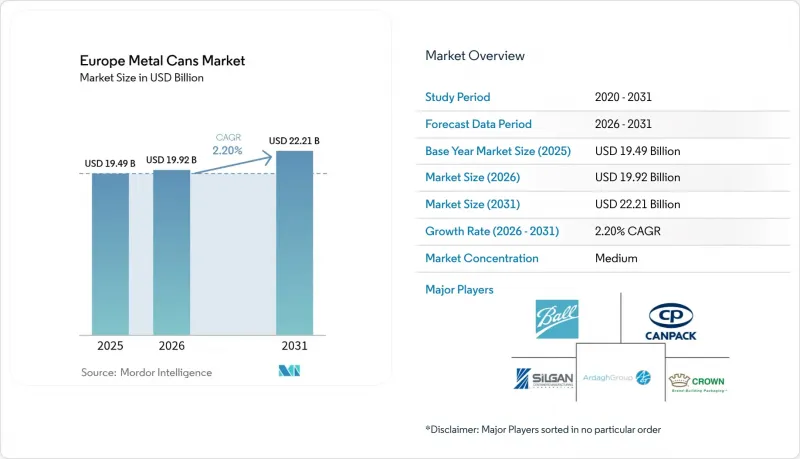
Mordor Intelligence에 따르면 유럽의 금속캔 시장 규모는 2025년에 194억 9,000만 달러로 평가되며, 2026년 199억 2,000만 달러에서 2031년까지 222억 1,000만 달러에 달할 것으로 예측되고 있으며, 예측 기간(2026-2031년)에 CAGR은 2.20%에 달할 전망입니다.
이 보고서는 소재 유형(알루미늄, 강철), 최종사용자(식품, 음료, 에어로졸 캔, 기타), 구조(2피스, 3피스), 용량(250ml 이하, 251-500ml, 500ml 초과) 및 국가(영국, 독일, 프랑스,스페인, 이탈리아, 폴란드, 기타 유럽)별로 분류되어 있습니다. 시장 전망은 금액(달러) 기준으로 제시되어 있습니다.
유럽 금속캔 시장의 동향 및 인사이트
금속 포장의 높은 재활용률
유럽의 알루미늄 음료 캔 재활용률 76% 및 강철 포장 회수율 80.5%는 탄소 배출에 민감한 소비자와 규제 당국 모두에게 공감을 불러일으키는 타의 추종을 불허하는 순환 경제의 이점을 부각시키고 있습니다. 유럽 알루미늄 포장 그룹(European Aluminium Packaging Group)이 추진하는 캔 바닥 뚜껑의 재활용 소재 함유율 100% 달성 노력은 수명 주기 배출량을 최대 95%까지 감축하여, 신속한 탄소 감축 효과를 추구하는 브랜드 소유주에게 강력한 가치 제안을 제공합니다. 견고한 보증금 반환 제도를 통해 독일에서는 이미 캔의 98%가 회수되고 있으며, 1차 금속 가격 변동을 완화하는 안정적인 원료 공급이 확보되어 있습니다. 유럽연합 집행위원회가 2030년까지 순환형 소재 사용률 23.2%를 목표로 삼고 있는 가운데, 금속의 무한한 재활용 사이클 덕분에 유럽의 금속캔 시장은 플라스틱이나 유리 대체재보다 유리한 입지에 있습니다. 재활용 함량에 연동된 제조자 책임 제도에 따른 수수료는 비용 구조를 금속에 더욱 유리한 방향으로 기울게 하여 장기적인 수요를 지원하고 있습니다.
2025-2030년에 강화될 EU의 순환 경제 규제
2025년 2월에 시행된 포장 및 포장 폐기물 규정에서는 2030년까지 모든 포장이 설계상 재활용 가능해야 할 것을 의무화하고, 재활용 소재 함유율의 최저 기준을 정하고 있습니다. 단일 소재이며 이미 규정을 준수하고 있는 금속캔은 명확한 경쟁 우위를 확보하는 반면, 다층 플라스틱은 재설계 비용 및 기술적 과제에 직면하게 될 것입니다. 2040년까지 1인당 포장 폐기물을 15% 감축한다는 추가 요건은 알루미늄의 두께를 얇게 하거나 얇은 강철 캔의 채택을 촉진하여, 재료 효율성과 규제 준수에 따른 비용 절감을 동시에 달성하게 합니다. 확대 생산자 책임 제도에 따른 과금 체계가 통일되고, 현재 제각각인 요금 체계가 해소됨에 따라 국경을 넘는 물류가 원활해질 것입니다. 표준화된 표시 규정은 소비자가 쉽게 분리 수거할 수 있는 캔의 단순한 구성을 지원하여 회수율을 더욱 높이고, 유럽의 금속캔 시장을 강화하게 될 것입니다.
테더가 부착된 캡이 있는 알루미늄 병의 보급
EU의 일회용 플라스틱 지침에 따라 음료 뚜껑은 본체에 고정된 상태여야 하며, 이 요건을 자연스럽게 충족하면서도 기존 캔과는 차별화된 재밀봉 가능한 알루미늄 병의 매력이 높아지고 있습니다. 코카콜라와 펩시코는 2025년 중반까지 유럽에서 4억 개 이상의 테더가 부착된 캡을 도입하여, 소비자에게 이 새로운 사용 편의성을 정착시켰습니다. 병은 외출 중에도 다시 밀봉할 수 있으므로 향이 첨가된 물이나 에너지 드링크와 같은 틈새 시장에서 1회용 캔의 판매량을 잠식하고 있습니다. 날씬한 병 실루엣이 자아내는 고급스러움도 이러한 추세를 지원하고 있으며, 이는 기존 형식에 맞춰 설계된 캔 충전 라인에 과제로 대두되고 있습니다. 두 패키지 모두 재활용성은 높지만, 병이 가진 기능적 우위성으로 인해 단기적으로는 유럽 금속캔 시장의 성장이 둔화될 전망입니다.
부문 분석
알루미늄은 경량성, 내식성 및 음료 업계에서의 확고한 입지 덕분에 2025년 매출의 68.31%를 차지했습니다. 한편, 강철은 수소계 합금이 지속가능성 측면에서 높은 평가를 받고 있으며, 2031년까지 연평균 성장률(CAGR) 3.11%로 성장할 전망입니다. Ball Corporation은 2024년에 EMEA 지역에서 360억 개의 알루미늄 용기를 출하했으며, 이는 해당 지역의 캔 출하량의 39%에 해당하여 알루미늄의 규모의 경제성을 여실히 보여줍니다. 금액 기준으로 볼 때, 알루미늄은 여전히 유럽 금속캔 시장의 핵심이지만, 172 Mt의 친환경 생산 능력 도입이 예상됨에 따라 주도된 철강 부문의 부활로 인해 Scope 3 배출량 감축을 목표로 하는 식품 및 에어로졸 충전 업체들에게 소재 선택의 폭이 넓어지고 있습니다.
강철이 전기 아크로와 더욱 긴밀하게 연계됨으로써 에너지 사용량을 30% 절감하고, 자력 분리를 통한 완전한 순환형 사회를 실현할 수 있게 되어, ‘60일 만에 캔에서 캔으로’라는 슬로건이 현실화되고 있습니다. 동시에, 유럽 알루미늄 포장 그룹은 100% 재활용 소재 사용을 목표로 하고 있으며, 금속의 무한한 재활용 가능성이라는 메시지를 강화하고 있습니다. 소재 간의 경쟁이 혁신을 촉진하고 있습니다. 알루미늄의 두께 감소와 이지 오픈 엔드는 강철의 성형성 향상 및 래커와의 높은 호환성과 결합되어 있습니다. 이처럼 두 소재는 다양한 최종 용도의 요구를 충족시키는 독자적인 성능 수준을 제공함으로써 유럽의 금속캔 시장을 통합하고 있습니다.
음료 부문은 크라프트 맥주, 에너지 드링크, RTD 칵테일의 성장세에 힘입어 2025년 매출의 46.85%를 차지한 반면, 식품 캔은 2031년까지 연평균 성장률(CAGR) 3.68%를 기록할 것으로 예상됩니다. 유럽에서는 연간 약 930억 서빙의 캔 음료가 소비되고 있으며, 이는 유럽 금속캔 시장 규모를 지원하는 고속 2피스 알루미늄 충전 라인에 대한 수요의 기반이 되고 있습니다. Crown Holdings의 경우, 계약 조건 개선과 고부가가치 제품 덕분에 2024년 음료 캔 부문의 수익이 62% 증가하며 지속적인 수익성을 입증했습니다.
오래된 디자인으로 오랫동안 비판받아 온 식품용 캔은 광택 있는 리소그래피, 필포일(peel foil) 필름, 재밀봉 기능 등을 통해 새롭게 단장되어 매장내 어필력을 높이고 있습니다. 5년의 유통기한은 식품 폐기물 감축에 기여하고 있으며, EU가 2030년까지 50% 감축을 목표로 하고 있는 가운데 이는 최우선 과제가 되고 있습니다. 반려동물 사료 업계에서는 영양소 보존 및 프리미엄 그레인프리 제품 라인 확장을 목적으로 금속캔으로의 전환이 진행되고 있으며, 판매량 확대로 이어지고 있습니다. 이러한 요인들이 복합적으로 작용하여, 기존에는 성장이 더딘 편이었던 부문에 성장을 가져왔으며, 유럽의 금속캔 시장에서 역사적으로 음료에 치우쳐 있던 포트폴리오의 균형을 맞추고 있습니다.
기타 혜택:
- 엑셀 형식의 시장 예측(ME) 시트
- 3개월간의 애널리스트 지원
자주 묻는 질문
목차
제1장 서론
제2장 조사 방법
제3장 개요
제4장 시장 구도
제5장 시장 규모와 성장 예측
제6장 경쟁 구도
제7장 시장 기회와 향후 전망
KSA 26.09.04According to Mordor Intelligence, the Europe metal cans market size was valued at USD 19.49 billion in 2025 and estimated to grow from USD 19.92 billion in 2026 to reach USD 22.21 billion by 2031, at a CAGR of 2.20% during the forecast period (2026-2031).
This report is Segmented by Material Type (Aluminum, and Steel), End-User (Food, Beverage, Aerosol Cans, and Other End-Users), Structure (2-Piece, and 3-Piece), Capacity (Up To 250 Ml, 251-500 Ml, and More Than 500 Ml), and Country (United Kingdom, Germany, France, Spain, Italy, Poland, and Rest of Europe). The Market Forecasts are Provided in Terms of Value (USD).
Europe Metal Cans Market Trends and Insights
High recyclability rates of metal packaging
Europe's 76% aluminum beverage-can recycling rate and 80.5% steel-pack recovery underscore an unmatched circular advantage that resonates with carbon-conscious consumers and regulators alike. The European Aluminium Packaging Group's push to reach 100% recycled content for can ends lowers life-cycle emissions by up to 95%, creating a strong value proposition for brand owners seeking quick carbon wins. Robust deposit-return systems, Germany already collects 98% of cans-ensuring a steady feedstock that cushions against primary-metal price swings. As the European Commission targets a 23.2% circular-material-use rate by 2030, metal's infinite recycling loop positions the Europe metal cans market ahead of plastic and glass substitutes. Producer-responsibility fees linked to recycled content further tilt cost structures in favor of metal, reinforcing long-term demand.
EU circular-economy regulations tightening in 2025-30
The Packaging and Packaging Waste Regulation that took effect in February 2025 obliges every package to be "recyclable by design" by 2030 and imposes minimum recycled-content thresholds. Metal cans, being mono-material and already compliant, gain a clear competitive edge while multi-layer plastics face redesign costs and technical hurdles. Additional requirements to trim packaging waste 15% per capita by 2040 incentivize down-gauged aluminum and thin-wall steel formats, aligning material efficiency with compliance savings. Extended-producer-responsibility levies will be harmonized, ending today's patchwork of fees and easing cross-border logistics. Standardized labeling rules favor the simple composition of cans, which consumers can sort easily, further enhancing collection rates and reinforcing the European metal cans market.
Proliferation of tethered-cap aluminum bottles
The EU Single-Use Plastics Directive now requires beverage closures to stay attached, accelerating the appeal of re-sealable aluminum bottles that natively comply while distinguishing themselves from conventional cans. Coca-Cola and PepsiCo rolled out more than 400 million tethered closures in Europe by mid-2025, habituating consumers to the new ergonomics. Because bottles enable on-the-go re-closure, they siphon volume from single-serve cans in flavored water and energy-drink niches. Premium perception of slender bottle silhouettes reinforces this drift, challenging can fill-lines geared for traditional formats. Although both packages recycle well, the functional edge of bottles subtracts incremental growth from the Europe metal cans market in the near term.
Other drivers and restraints analyzed in the detailed report include:
- PET-to-can conversion by craft brewers and RTD cocktails
- Steelmakers' low-carbon alloy launches cut Scope 3 emissions
- Volatility in European rolled-aluminum premiums
For complete list of drivers and restraints, kindly check the Table Of Contents.
Segment Analysis
Aluminum captured 68.31% of 2025 revenue thanks to its low weight, corrosion resistance, and entrenched beverage relationships, while steel is on course for a 3.11% CAGR to 2031 as hydrogen-based alloys broaden its sustainability credentials. Ball Corporation shipped 36 billion aluminum containers in EMEA during 2024, equal to a 39% share of regional can volumes, underscoring aluminum's scale economics. In value terms, aluminum remains the linchpin of the European metal cans market; yet steel's renaissance, powered by anticipated 172 Mt of green capacity, is widening the material choice for food and aerosol fillers looking to cut Scope 3 emissions.
Steel's closer coupling with electric-arc furnaces slashes energy use by 30% and permits full circularity through magnetic separation, making "can-to-can in 60 days" a realistic slogan. Simultaneously, the European Aluminium Packaging Group targets 100% recycled content, reinforcing metal's infinite recyclability narrative. Cross-material competition spurs innovation: aluminum down-gauging and easy-open ends meet steel's improved formability and lacquer compatibility. Both substrates thus consolidate the European metal cans market by offering distinct performance ladders that satisfy diverging end-use needs.
Beverages retained 46.85% of 2025 turnover, propelled by craft brewing, energy drinks, and RTD cocktail momentum, whereas food cans are expected to chart a 3.68% CAGR through 2031. Europe drinks close to 93 billion canned servings yearly, anchoring filler demand for high-speed 2-piece aluminum lines that underpin the Europe metal cans market size. Crown Holdings saw beverage-can income climb 62% in 2024 on stronger contract terms and value-added ends, confirming sustained profitability.
Food cans, long criticized for dated aesthetics, are rejuvenating via glossy lithography, peel-foil membranes, and reseal features that lift shelf appeal. Their five-year shelf life combats food waste, a priority as the EU targets a 50% cut by 2030. Pet food's switch to metal for nutrient retention and premium grain-free lines magnifies volume. Combined, these forces inject growth into a traditionally slower segment, balancing portfolio reliance that historically skewed toward beverages within the European metal cans market.
Complete Report Scope:
- By Material Type
- Aluminum
- Steel
- By End-User
- Food
- Vegetables
- Fruits
- Pet Food
- Soups and Condiments
- Other Food Cans
- Beverage
- Alcoholic
- Non-Alcoholic
- Aerosol Cans
- Other End-users
- Food
- By Structure
- 2-piece
- 3-piece
- By Capacity
- Up to 250 ml
- 251 - 500 ml
- More than 500 ml
- By Country
- United Kingdom
- Germany
- France
- Spain
- Italy
- Poland
- Rest of Europe
List of Companies Covered in this Report:
- Ball Corporation
- Ardagh Group S.A.
- Crown Holdings, Inc.
- Silgan Holdings Inc.
- CANPACK Spolka Akcyjna
- Massilly Holding SAS
- Tgp Tecnocap Group Partecipazioni S.r.l.
- Tata Steel Europe Limited
- ASA Group
- Eurobox Metal Packaging
- Nampak Plastics Europe Limited
- Impress Metal Packaging Ltd.
- Trivium Packaging B.V.
- Envases Europe A/S
- Colep Packaging Portugal, S.A.
- Greif, Inc.
- Pano Verschluss GmbH
- DS Containers, Inc.
- CPMC Ltd
- Toyo Seikan Co., Ltd.
Additional Benefits:
- The market estimate (ME) sheet in Excel format
- 3 months of analyst support
TABLE OF CONTENTS
1 INTRODUCTION
- 1.1 Study Assumptions and Market Definition
- 1.2 Scope of the Study
2 RESEARCH METHODOLOGY
3 EXECUTIVE SUMMARY
4 MARKET LANDSCAPE
- 4.1 Market Overview
- 4.2 Market Drivers
- 4.2.1 High recyclability rates of metal packaging
- 4.2.2 EU circular-economy regulations tightening in 2025-30
- 4.2.3 PET-to-can conversion by craft brewers and RTD cocktails
- 4.2.4 Steelmakers' low-carbon alloy launches cut Scope-3 emissions
- 4.2.5 Deposit-Return-Scheme (DRS) harmonisation across EU-27
- 4.2.6 Aerosol can growth in e-commerce home-care refills
- 4.3 Market Restraints
- 4.3.1 Proliferation of tethered-cap aluminium bottles
- 4.3.2 Volatility in European rolled-aluminium premiums
- 4.3.3 Brand owner down-gauging hitting mill utilisation rates
- 4.3.4 PFAS phase-out costs for epoxy can-linings
- 4.4 Industry Supply-Chain Analysis
- 4.5 Regulatory Landscape
- 4.6 Technological Outlook
- 4.7 Porter's Five Forces Analysis
- 4.7.1 Bargaining Power of Suppliers
- 4.7.2 Bargaining Power of Buyers
- 4.7.3 Threat of New Entrants
- 4.7.4 Threat of Substitutes
- 4.7.5 Intensity of Competitive Rivalry
5 MARKET SIZE AND GROWTH FORECASTS (VALUE)
- 5.1 By Material Type
- 5.1.1 Aluminum
- 5.1.2 Steel
- 5.2 By End-User
- 5.2.1 Food
- 5.2.1.1 Vegetables
- 5.2.1.2 Fruits
- 5.2.1.3 Pet Food
- 5.2.1.4 Soups and Condiments
- 5.2.1.5 Other Food Cans
- 5.2.2 Beverage
- 5.2.2.1 Alcoholic
- 5.2.2.2 Non-Alcoholic
- 5.2.3 Aerosol Cans
- 5.2.4 Other End-users
- 5.2.1 Food
- 5.3 By Structure
- 5.3.1 2-piece
- 5.3.2 3-piece
- 5.4 By Capacity
- 5.4.1 Up to 250 ml
- 5.4.2 251 - 500 ml
- 5.4.3 More than 500 ml
- 5.5 By Country
- 5.5.1 United Kingdom
- 5.5.2 Germany
- 5.5.3 France
- 5.5.4 Spain
- 5.5.5 Italy
- 5.5.6 Poland
- 5.5.7 Rest of Europe
6 COMPETITIVE LANDSCAPE
- 6.1 Market Concentration
- 6.2 Strategic Moves
- 6.3 Market Share Analysis
- 6.4 Company Profiles (includes Global level Overview, Market level overview, Core Segments, Financials as available, Strategic Information, Market Rank/Share for key companies, Products and Services, and Recent Developments)
- 6.4.1 Ball Corporation
- 6.4.2 Ardagh Group S.A.
- 6.4.3 Crown Holdings, Inc.
- 6.4.4 Silgan Holdings Inc.
- 6.4.5 CANPACK Spolka Akcyjna
- 6.4.6 Massilly Holding SAS
- 6.4.7 Tgp Tecnocap Group Partecipazioni S.r.l.
- 6.4.8 Tata Steel Europe Limited
- 6.4.9 ASA Group
- 6.4.10 Eurobox Metal Packaging
- 6.4.11 Nampak Plastics Europe Limited
- 6.4.12 Impress Metal Packaging Ltd.
- 6.4.13 Trivium Packaging B.V.
- 6.4.14 Envases Europe A/S
- 6.4.15 Colep Packaging Portugal, S.A.
- 6.4.16 Greif, Inc.
- 6.4.17 Pano Verschluss GmbH
- 6.4.18 DS Containers, Inc.
- 6.4.19 CPMC Ltd
- 6.4.20 Toyo Seikan Co., Ltd.
7 MARKET OPPORTUNITIES AND FUTURE OUTLOOK
- 7.1 White-space and Unmet-Need Assessment