|
시장보고서
상품코드
2122047
음료 포장 : 시장 점유율 분석, 업계 동향과 통계, 성장 예측(2026-2031년)Beverage Packaging - Market Share Analysis, Industry Trends & Statistics, Growth Forecasts (2026 - 2031) |
||||||
 Mordor Intelligence
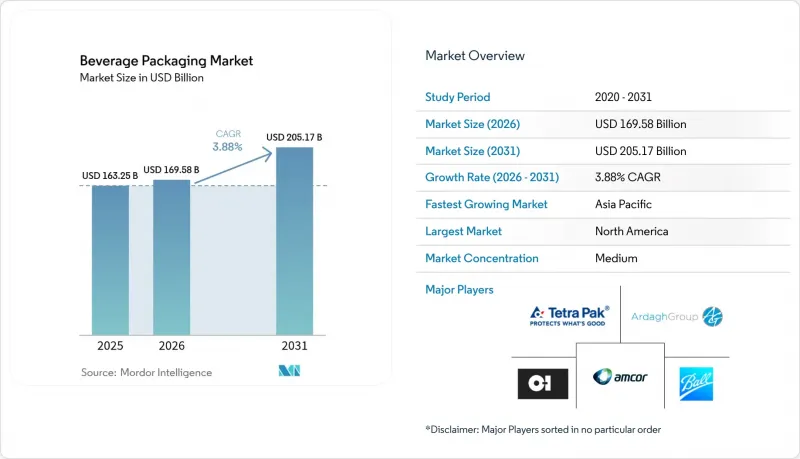
Mordor Intelligence에 따르면 음료 포장 시장 규모는 2025년 1,632억 5,000만 달러에서 2026년에는 1,695억 8,000만 달러로 확대하며, 2026-2031년에 CAGR 3.88%로 추이하며, 2031년에는 2,051억 7,000만 달러에 달할 것으로 예측됩니다.
이 보고서는 소재 유형(플라스틱, 금속, 유리, 판지), 제품 유형(병, 캔, 파우치, 카톤, 맥주통), 포장 형태(무균 포장, 핫필, 콜드필/탄산음료용, 레토르트 대응 등), 음료 유형(탄산음료, 주류, 생수, 우유 등) 및 지역별로 분류되어 있습니다. 시장 예측은 금액(달러) 기준으로 제시되어 있습니다.
세계 음료 포장 시장의 동향 및 인사이트
즉석 음료(RTD)의 프리미엄화
프리미엄 RTD 제품의 출시로 인해 각 브랜드는 범용 플라스틱 용기에서 유리나 세련된 알루미늄 용기로의 전환을 추진하고 있으며, 재활용 소재 함유율 요건을 충족하면서도 더 높은 매장 가격 책정이 가능해졌습니다. 영국에서는 2024년에 168억 파운드(212억 달러) 규모에 달할 것으로 예상되는 증류주 시장에서 2023년 한 해 동안 50개 이상의 새로운 증류소가 설립되며, RTD 증류주 시장은 2030년까지 연평균 16.2%의 성장률을 보일 것으로 전망됩니다. 유리 용기 공급업체들은 프리미엄 지향성을 비즈니스 기회로 활용하고 있습니다. 미국 소비자의 92%가 유리를 ‘품질’과 ‘무한한 재활용 가능성’과 연관 짓고 있기 때문입니다. 각 브랜드 소유사는 투명도가 높은 용기에 스마트 캡이나 QR코드가 부착된 라벨을 결합하여 원산지 정보, 로열티 혜택, 인증된 재활용 절차에 대한 접근을 가능하게 하고 있습니다. 프리미엄 SKU는 리터당 포장 비용이 높기 때문에 음료 포장 시장이 혜택을 보고 있으며, 주류 탄산음료의 판매량 부진을 상쇄하고 있습니다.
알루미늄 캔 생산 능력 확대의 급증
알루미늄의 무한한 재활용 가능성과 70%를 넘는 폐쇄형 회수율은 전 세계적인 생산 능력 확대 경쟁을 가속화하고 있습니다. 볼 코퍼레이션은 플로리다주에 생산 라인을 증설했으며, 2024년에는 오리건주 공장의 착공에 들어갔습니다. 노벨리스(Novelis)는 2031년까지 연간 4%로 예상되는 캔용 강판 수요 증가에 대응하기 위해 아다그(Ardagh)사와의 장기 공급 계약에 따라 앨라배마주에 60만 톤 규모의 압연 공장을 건설 중입니다. 그 결과, 음료 포장 시장에서는 통합형 금속 공급업체들이 비용 측면에서의 우위와 지속가능성에 관한 메시지 전달의 우위를 확보해 나가고 있으며, 이는 맥주 및 탄산수 분야에서 플라스틱 제품에 대한 압박 요인으로 작용하고 있습니다.
변동이 심한 버진 수지 가격
원유 가격의 급등락과 정유소의 가동 중단으로 인해 2025년 초 PTA 및 MEG 비용이 상승했고, 중국과 유럽의 폴리에스터 병용 칩 제조업체들은 재고를 재조정하기 위해 생산 능력을 일시 중단할 수밖에 없었습니다. 현물 수지 계약을 체결한 포장 가공업체들은 이익률 압박에 직면하여, 선물 계약 체결이나 기계적 재활용 시장 진출을 확대했습니다. 그 결과, 음료 포장 시장에서는 재활용 가능한 원료에 대한 투자 비중이 높은 공급업체를 선호하는 경향이 강화되어, 고객을 가격 변동 위험으로부터 보호하고 있습니다.
부문별 분석
플라스틱은 2025년 매출의 41.30%를 차지하며, 확립된 공급망과 비용 측면에서의 우위를 입증하고 있습니다. 그러나 재생 소재 함유율에 관한 규제와 보증금 반환 제도의 확대로 인해 PET의 우위는 위협받고 있습니다. 플라스틱 음료 포장 시장의 규모는 전체적으로 연평균 성장률(CAGR) 3.88%에 그칠 것으로 예측되며, 경량화 및 화학적 재활용 노력이 진행되고 있음에도 불구하고 그 점유율은 둔화될 것으로 보입니다. 판지는 6.29%의 연평균 성장률(CAGR)을 기록할 것으로 예상되며, 이는 모든 소재 중 최고 수준입니다. 또한 알루미늄 캔을 통한 금속의 부활은 재생 가능하거나 무한히 재활용 가능한 기판에 대한 규제적 지원과 소비자의 수요 증가를 여실히 보여주고 있습니다. 그래픽 패키징 인터내셔널(Graphic Packaging International)이 출시한 ‘Boardio’ 판지 캐니스터와 ‘EnviroClip’ 캐리어는 과거 수축 필름이 주류를 이루었던 탄산음료 멀티팩 시장을 겨냥하고 있습니다. 통합 제지 제조업체는 국내 섬유 공급과 75%의 재활용률을 활용하여 버진 수지 가격 변동에 대한 완충 역할을 하고 있습니다.
음료 포장 업계에서는 물류에 따른 배출량이 증가하고 있음에도 불구하고 유리가 ‘고급 소재’로 재평가되고 있습니다. O-I Glass사는 2030년까지 CO₂ 배출량을 25% 감축하는 것을 목표로, 하이브리드 용광로와 경량 병을 도입하여 영국 알로아 공장의 현대화에 1억 5,000만 달러를 투자했습니다. 알루미늄은 70%를 넘는 폐쇄 순환율을 자랑하고 있으며, 노벨리스가 건설을 예정하고 있는 공장은 장기적인 수요에 대한 자신감을 보여주고 있습니다. 이러한 변화들을 종합해 볼 때, 2030년까지 소재 구성이 다양화될 것으로 예상되며, 인구 증가에 따라 절대적인 취급량은 증가하겠지만, 음료 포장 시장에서 플라스틱의 점유율은 하락할 전망입니다.
병은 탄산음료, 물, 유제품 대체품, 주류 등 폭넓은 용도에 대응할 수 있는 범용성 덕분에 2025년 매출의 37.35%를 차지했습니다. 병에 기인한 음료 포장 시장 규모는 형태의 다양화가 진행되는 가운데, 2031년까지 연평균 3.52%의 완만한 성장이 예상됩니다. 테더가 부착된 캡에 대한 규제 대응 및 첨단 배리어 코팅(플라즈마, 이산화규소 등)을 통해 경량화가 더욱 진전되고 있습니다. 한편, 파우치는 1리터당 재료 중량이 60-80% 가볍다는 점과 E-Commerce(EC) 판매에 적합하다는 점을 반영하여 연평균 성장률(CAGR) 6.82%라는 현저한 성장을 보일 것으로 전망됩니다.
와인 및 칵테일 멀티팩 파우치는 낙하 시험을 견디고, 운송 비용을 절감하며, 가정 쓰레기 수거 프로그램에서 수거가 확대되고 있는 단일 소재의 라미네이트 재질을 채택하고 있습니다. 카톤은 테트라팩의 UHT 충전 라인을 통한 25%의 에너지 절감 효과에 힘입어, 무균 처리된 유제품, 주스, 그리고 현재는 식물성 라떼에도 계속해서 사용되고 있습니다. 캔은 크라프트 맥주,에너지 드링크, 탄산수를 통해 입지를 유지하고 있으며, 급속 냉각이라는 특성이 브랜드 충성도를 지원하고 있습니다. 맥주 통은 출하량의 3% 미만으로 틈새 시장이지만, 25년 이상 지속되는 스테인리스 재사용 주기는 ‘제로 웨이스트’라는 이념과 부합합니다.
지역별 분석
북미는 1인당 음료 소비량이 많고 프리미엄화 여지가 있으며, 2025년 매출의 26.60%를 차지했습니다. 크라운 홀딩스는 버지니아주와 네바다주의 새로운 캔 생산 라인 가동에 힘입어 2024년 북미 판매량을 5% 증가시켰습니다. 그러나 캡의 고정화 및 생산자 책임 확대에 따른 수수료와 관련된 주 차원의 법규로 인해 규정 준수상의 복잡성이 증가하고 있으며, 이는 다각화를 추진한 다국적 기업에 유리하게 작용하고 있습니다. 캐나다의 2030년까지 rPET 회수율 통합 목표는 지역 재활용 인프라 구축을 촉진하고, 음료 포장 시장에서 순환형 경제에 대응하는 공급업체를 더욱 지원하고 있습니다. 한편, 아시아태평양에서 수입되는 경량 병으로 인한 경쟁 압력이 높아지고 있으며, 국내 가공업체들에게 비용 측면의 과제가 되고 있습니다.
아시아태평양은 도시화와 가처분 소득 증가에 힘입어 2031년까지 연평균 성장률(CAGR) 5.32%를 기록할 것으로 예측됩니다. 중국에서는 2023년 첫 10개월 동안 음료 생산량이 2.7% 증가한 반면, 맥주 생산량은 22% 급증했습니다. 인도에서는 2025년 4월부터 rPET 사용률을 30%로 의무화하는 제도가 도입되어, 이에 따라 재생 원료에 대한 수요가 높아지는 한편, 규정 위반 시에는 징벌적 과세가 부과될 예정입니다. 사내에서 재활용을 수행하는 다국적 기업(예: 필리핀에 있는 코카콜라의 ‘PETValue’ 시설)은 입지를 공고히 하고 있는 반면, 소규모 가공업체들은 원자재 부족에 직면해 있습니다. 일본의 가공업체들은 ‘즉석 음료’와 건강 지향 음료에 주력하고 있으며, 휴대용 영양식품을 위한 무균 파우치 채택을 촉진하고 있습니다.
유럽은 엄격한 규제 측면에서 주도권을 잡고 있으며, 2025년 2월에 발효되는 PPWR(포장 및 포장 폐기물 규정)에 따라 2028년까지 모든 포장재의 재활용 가능화를, 2030년까지 PET병에 대한 rPET 사용률 30%를 의무화하고 있습니다. 이에 따라 EU내 음료 포장 시장은 단일 소재 슬리브나 수성 잉크 등, 재활용을 고려한 설계(Design-for-Recycling) 프로토콜로 전환되고 있습니다. 식품 등급 rPET의 수급 불균형으로 인해 프리미엄 가격이 높은 수준을 유지하고 있으며, 충전 업체와 재활용 업체 간의 제휴가 촉진되고 있습니다. ESG 규제를 배경으로 한 유리병 생산 능력의 합리화로 인해 지역 와인 및 프리미엄 증류주용 공급이 부족해지면서 가격 안정성이 유지되고 있습니다. 회원국 전체에서 소매업체들이 플라스틱 감축 로드맵을 추진하는 가운데, 유연한 종이 기반 솔루션이 주목받고 있습니다.
기타 혜택:
- 엑셀 형식의 시장 예측(ME) 시트
- 3개월간의 애널리스트 지원
자주 묻는 질문
목차
제1장 서론
제2장 조사 방법
제3장 개요
제4장 시장 구도
제5장 시장 규모와 성장 예측
제6장 경쟁 구도
제7장 시장 기회와 향후 전망
KSA 26.09.03According to Mordor Intelligence, the beverage packaging market size is expected to grow from USD 163.25 billion in 2025 to USD 169.58 billion in 2026 and is forecast to reach USD 205.17 billion by 2031 at 3.88% CAGR over 2026-2031.
This report is Segmented by Material Type (Plastic, Metal, Glass, and Paperboard), Product Type (Bottles, Cans, Pouches, Cartons, and Beer Kegs), Packaging Format (Aseptic, Hot-Fill, Cold-Fill/Carbonated, Retortable, and More), Beverage Type (Carbonated Drinks, Alcoholic Beverages, Bottled Water, Milk, and More), and Geography. The Market Forecasts are Provided in Terms of Value (USD).
Global Beverage Packaging Market Trends and Insights
Premiumisation in Ready-to-Drink Beverages
Premium RTD launches are prompting brands to upgrade from commoditized plastics to glass and sleek aluminum, enabling higher shelf price points while still meeting recycled-content requirements. In the United Kingdom, a spirits sector worth GBP 16.8 billion (USD 21.2 billion) in 2024 recorded more than 50 new distilleries during 2023, and RTD spirits are projected to expand 16.2% per year to 2030. Glass suppliers are capitalizing on premium cues, with 92% of US consumers associating glass with quality and infinite recyclability. Brand owners are pairing high-clarity containers with smart closures and QR-coded labels that unlock provenance data, loyalty rewards, and authenticated recycling instructions. The beverage packaging market benefits as premium SKUs carry higher packaging spend per liter, offsetting volume softness in mainstream carbonates.
Surge in Aluminium-Can Capacity Expansions
Aluminum's infinite recyclability and closed-loop recovery rates above 70% have spurred a global capacity race. Ball Corporation added a Florida line and broke ground on an Oregon plant in 2024. Novelis is building a 600,000-tonne rolling mill in Alabama under long-term supply agreements with Ardagh to accommodate forecast 4% annual can-sheet demand growth through 2031. The beverage packaging market therefore sees integrated metal suppliers gaining cost leverage and sustainability messaging advantages, pressuring plastics in beer and sparkling water.
Volatile Virgin-Resin Prices
Crude oil swings and refinery outages pushed PTA and MEG costs higher in early 2025, forcing polyester bottle-chip producers in China and Europe to idle capacity to re-balance inventories. Packaging converters on spot resin contracts saw margin compression, encouraging forward contracts or integration into mechanical recycling. The beverage packaging market therefore tilts toward suppliers holding equity stakes in recycle-ready feedstock, shielding customers from volatility.
Other drivers and restraints analyzed in the detailed report include:
- PET Lightweighting and Tethered-Cap Regulations
- Growth of E-commerce Multipacks
- Supply Bottlenecks for Recycled PET Flakes
For complete list of drivers and restraints, kindly check the Table Of Contents.
Segment Analysis
Plastic retained 41.30% of 2025 revenue, underlining entrenched supply chains and cost advantages. Yet recycled-content directives and deposit-return expansion are challenging PET's dominance. The beverage packaging market size for plastic is projected to advance only at the overall 3.88% CAGR, tempering its share despite ongoing lightweighting and chemical-recycling projects. Paperboard's 6.29% CAGR-highest among materials-and metal's comeback via aluminum cans illustrate regulatory pull and consumer push toward renewable or infinitely recyclable substrates. Graphic Packaging International's launch of Boardio paperboard canisters and EnviroClip carriers targets carbonated soft drink multipacks once controlled by shrink-film. Integrated mills leverage domestic fiber supply and 75% recycling rates, cushioning them against virgin-resin volatility.
The beverage packaging industry is also witnessing glass repositioned as a prestige material notwithstanding higher logistics emissions. O-I Glass committed USD 150 million to modernize its Alloa, UK plant with hybrid furnaces and lightweight bottles, aiming for a 25% CO2 cut by 2030. Aluminum enjoys a closed-loop rate above 70%, and Novelis' forthcoming mill signals confidence in long-term demand. Collectively, these shifts suggest a diversified material mix by 2030, with plastics losing points of beverage packaging market share even as absolute tonnage rises in line with population growth.
Bottles accounted for 37.35% of 2025 revenue thanks to versatility across carbonates, water, dairy alternates, and alcohol. The beverage packaging market size attributed to bottles is projected to grow modestly at 3.52% to 2031 amid format diversification. Tethered-cap compliance and advanced barrier coatings (e.g., plasma or silicon oxide) are unlocking incremental weight savings. However, pouches are set to capture outsized gains via a 6.82% CAGR, reflecting 60-80% lower material weight per liter and suitability for e-commerce.
Multipack wine and cocktail pouches withstand drop tests, reduce shipping costs, and utilize mono-material laminates increasingly accepted in curbside programs. Cartons continue to service aseptic dairy, juice, and now plant-based lattes, propelled by Tetra Pak's UHT filling lines with energy cuts of 25%. Cans sustain relevance through craft beer, energy drinks, and sparkling water, and their rapid chilling characteristics underpin brand loyalty. Beer kegs remain a niche at under 3% of volume, but stainless-steel re-use cycles of 25+ years align with zero-waste narratives.
Complete Report Scope:
- By Material Type
- Plastic
- Metal
- Glass
- Paperboard
- By Product Type
- Bottles
- Cans
- Pouches
- Cartons
- Beer Kegs
- By Packaging Format
- Aseptic
- Hot-Fill
- Cold-Fill/Carbonated
- Retortable
- Shelf-Stable Ambient
- Chilled Distribution
- By Beverage Type
- Carbonated Drinks
- Alcoholic Beverages
- Bottled Water
- Milk
- Fruit and Vegetable Juices
- Energy Drinks
- Plant-based Drinks
- Other Beverage Types
- By Geography
- North America
- United States
- Canada
- Mexico
- Europe
- United Kingdom
- Germany
- France
- Italy
- Spain
- Austria
- Poland
- Russia
- Rest of Europe
- Asia-Pacific
- China
- India
- Japan
- Australia
- Rest of Asia-Pacific
- South America
- Brazil
- Argentina
- Rest of South America
- Middle East
- Saudi Arabia
- United Arab Emirates
- Turkey
- Rest of Middle East
- Africa
- South Africa
- Rest of Africa
- North America
Geography Analysis
North America captured 26.60% of 2025 revenue due to to high per-capita beverage intake and premiumization headroom. Crown Holdings registered 5% North American volume growth in 2024, boosted by new Virginia and Nevada can lines. Yet state-level legislation on tethered caps and expanded-producer-responsibility fees creates compliance complexity that favors diversified multinationals. Canada's harmonized rPET targets to 2030 incent regional reclamation infrastructure, further bolstering circular-ready suppliers within the beverage packaging market. Competitive pressures arise from Asia-Pacific imports of lightweight bottles, challenging domestic converters on cost.
Asia-Pacific is forecast to post a 5.32% CAGR through 2031, underpinned by urbanization and rising disposable incomes. China recorded 2.7% output growth in beverages across the first ten months of 2023 while beer production jumped 22%. India's rPET mandate at 30% from April 2025 introduces both demand for recycled feedstock and punitive taxes for non-compliance. Multinationals with in-house recycling (e.g., Coca-Cola's PETValue facility in the Philippines) gain a foothold, whereas small converters face input scarcity. Japanese processors focus on "ready-to-eat" and healthy beverages, encouraging aseptic pouch uptake for portable nutrition.
Europe commands stringent regulatory leadership with the PPWR effective February 2025 mandating all packaging be recyclable by 2028 and 30% rPET in PET bottles by 2030. The beverage packaging market in the bloc therefore pivots toward design-for-recycling protocols such as monomaterial sleeves and water-based inks. Supply-demand imbalances in food-grade rPET keep premiums elevated, encouraging partnerships between fillers and recyclers. Glass capacity rationalization amid ESG constraints tightens supply for regional wine and premium spirits, supporting value retention. Flexible paper-based solutions gain traction as retailers commit to plastic reduction roadmaps across member states.
- Amcor plc
- Ball Corporation
- Tetra Laval International SA
- O-I Glass Inc.
- Crown Holdings Inc.
- Ardagh Group S.A.
- Ardagh Metal Packaging S.A.
- Verallia S.A.
- Vidrala S.A.
- Vetropack Holding Ltd.
- Silgan Holdings Inc.
- Berry Global Group Inc.
- Mondi plc
- Sonoco Products Company
- CCL Industries Inc.
- Smurfit Kappa Group plc
- CANPACK S.A.
- Huhtamaki Oyj
- Toyo Seikan Group Holdings Ltd.
- Nampak Ltd.
- Krones AG
- Guala Closures Group
Additional Benefits:
- The market estimate (ME) sheet in Excel format
- 3 months of analyst support
TABLE OF CONTENTS
1 INTRODUCTION
- 1.1 Study Assumptions and Market Definition
- 1.2 Scope of the Study
2 RESEARCH METHODOLOGY
3 EXECUTIVE SUMMARY
4 MARKET LANDSCAPE
- 4.1 Market Overview
- 4.2 Market Drivers
- 4.2.1 Premiumisation in ready-to-drink (RTD) beverages
- 4.2.2 Surge in aluminium-can capacity expansions
- 4.2.3 PET lightweighting and tethered-cap regulations
- 4.2.4 Growth of e-commerce multipacks (mainly alcohol)
- 4.2.5 Rise of digital watermarks for circularity (under-radar)
- 4.2.6 Beverage concentrates and "soda-at-home" ecosystems (under-radar)
- 4.3 Market Restraints
- 4.3.1 Volatile virgin-resin prices
- 4.3.2 Supply bottlenecks for recycled PET flakes
- 4.3.3 Anti-single-use plastics policy acceleration (under-radar)
- 4.3.4 Investor ESG scrutiny curbing cap-ex in glass (under-radar)
- 4.4 Value Chain Analysis
- 4.5 Regulatory Landscape
- 4.6 Technological Outlook
- 4.7 Porter's Five Forces Analysis
- 4.7.1 Bargaining Power of Suppliers
- 4.7.2 Bargaining Power of Buyers/Consumers
- 4.7.3 Threat of New Entrants
- 4.7.4 Threat of Substitutes
- 4.7.5 Intensity of Competitive Rivalry
- 4.8 Assessment of Macro Economic Trends on the Market
5 MARKET SIZE AND GROWTH FORECASTS (VALUES)
- 5.1 By Material Type
- 5.1.1 Plastic
- 5.1.2 Metal
- 5.1.3 Glass
- 5.1.4 Paperboard
- 5.2 By Product Type
- 5.2.1 Bottles
- 5.2.2 Cans
- 5.2.3 Pouches
- 5.2.4 Cartons
- 5.2.5 Beer Kegs
- 5.3 By Packaging Format
- 5.3.1 Aseptic
- 5.3.2 Hot-Fill
- 5.3.3 Cold-Fill/Carbonated
- 5.3.4 Retortable
- 5.3.5 Shelf-Stable Ambient
- 5.3.6 Chilled Distribution
- 5.4 By Beverage Type
- 5.4.1 Carbonated Drinks
- 5.4.2 Alcoholic Beverages
- 5.4.3 Bottled Water
- 5.4.4 Milk
- 5.4.5 Fruit and Vegetable Juices
- 5.4.6 Energy Drinks
- 5.4.7 Plant-based Drinks
- 5.4.8 Other Beverage Types
- 5.5 By Geography
- 5.5.1 North America
- 5.5.1.1 United States
- 5.5.1.2 Canada
- 5.5.1.3 Mexico
- 5.5.2 Europe
- 5.5.2.1 United Kingdom
- 5.5.2.2 Germany
- 5.5.2.3 France
- 5.5.2.4 Italy
- 5.5.2.5 Spain
- 5.5.2.6 Austria
- 5.5.2.7 Poland
- 5.5.2.8 Russia
- 5.5.2.9 Rest of Europe
- 5.5.3 Asia-Pacific
- 5.5.3.1 China
- 5.5.3.2 India
- 5.5.3.3 Japan
- 5.5.3.4 Australia
- 5.5.3.5 Rest of Asia-Pacific
- 5.5.4 South America
- 5.5.4.1 Brazil
- 5.5.4.2 Argentina
- 5.5.4.3 Rest of South America
- 5.5.5 Middle East
- 5.5.5.1 Saudi Arabia
- 5.5.5.2 United Arab Emirates
- 5.5.5.3 Turkey
- 5.5.5.4 Rest of Middle East
- 5.5.6 Africa
- 5.5.6.1 South Africa
- 5.5.6.2 Rest of Africa
- 5.5.1 North America
6 COMPETITIVE LANDSCAPE
- 6.1 Market Concentration
- 6.2 Strategic Moves
- 6.3 Market Share Analysis
- 6.4 Company Profiles (includes Global level Overview, Market level overview, Core Segments, Financials as available, Strategic Information, Market Rank/Share for key companies, Products and Services, and Recent Developments)
- 6.4.1 Amcor plc
- 6.4.2 Ball Corporation
- 6.4.3 Tetra Laval International SA
- 6.4.4 O-I Glass Inc.
- 6.4.5 Crown Holdings Inc.
- 6.4.6 Ardagh Group S.A.
- 6.4.7 Ardagh Metal Packaging S.A.
- 6.4.8 Verallia S.A.
- 6.4.9 Vidrala S.A.
- 6.4.10 Vetropack Holding Ltd.
- 6.4.11 Silgan Holdings Inc.
- 6.4.12 Berry Global Group Inc.
- 6.4.13 Mondi plc
- 6.4.14 Sonoco Products Company
- 6.4.15 CCL Industries Inc.
- 6.4.16 Smurfit Kappa Group plc
- 6.4.17 CANPACK S.A.
- 6.4.18 Huhtamaki Oyj
- 6.4.19 Toyo Seikan Group Holdings Ltd.
- 6.4.20 Nampak Ltd.
- 6.4.21 Krones AG
- 6.4.22 Guala Closures Group
7 MARKET OPPORTUNITIES AND FUTURE OUTLOOK
- 7.1 White-space and Unmet-Need Assessment