

|
시장보고서
상품코드
2125325
아프리카의 LED 조명 시장 : 시장 점유율 분석, 업계 동향 및 통계, 성장 예측(2026-2031년)Africa LED Lighting - Market Share Analysis, Industry Trends & Statistics, Growth Forecasts (2026 - 2031) |
||||||
 Mordor Intelligence
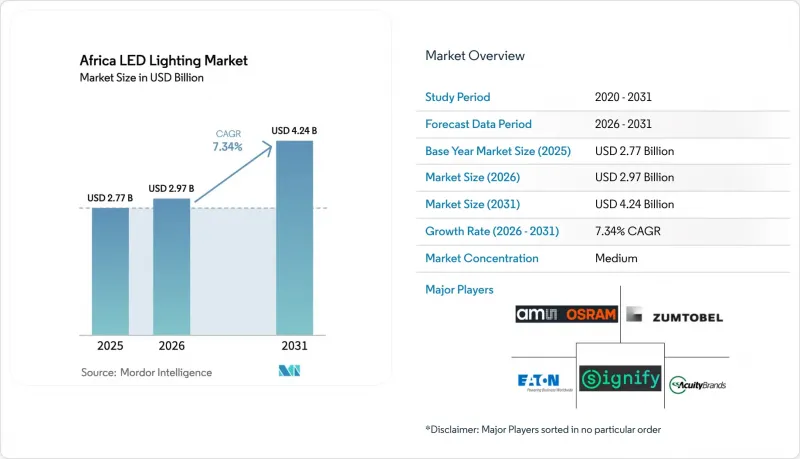
Mordor Intelligence에 의하면, 아프리카의 LED 조명 시장 규모는 2025년 27억 7,000만 달러로 평가되었고, 2026년에는 29억 7,000만 달러로 추정되고, 2026-2031년 CAGR 7.34%로 성장을 지속할 전망이며, 2031년에는 42억 4,000만 달러에 이를 것으로 예측됩니다.
본 보고서는 제품 유형별(램프, 조명 기구), 유통 채널별(직접 판매, 도매·소매, 전자상거래), 용도별(상업용 사무실 등), 설치 유형별(신규 설치, 개보수 설치), 최종 사용자별(실내, 실외, 자동차), 국가별(남아프리카, 나이지리아 등)로 분류되어 있습니다. 시장 전망은 금액(달러) 기준으로 제시되어 있습니다.
아프리카의 LED 조명 시장 동향 및 인사이트
정부의 에너지 효율 규제 및 단계적 폐지 의무
2024년 1월에 시행되는 남아프리카공화국의 ‘최소 에너지 성능 기준(MEPS)’에서는 모든 정부 시설에서 LED 조명 사용이 의무화되어 있습니다. 한편, 가나의 2025년 정책 프레임워크에서는 공공 조달 시 인증된 고효율 램프의 채택을 지침으로 제시하고 있습니다. 나이지리아의 표준화 기관은 현재 IEC 62560에 기반한 수입 규정 준수를 시행하고 있으며, 이로 인해 저품질 램프가 배제되고 인증된 브랜드에 대한 수요가 증가하고 있습니다. 각 기관은 일정에 따른 개보수 목표를 달성해야 하므로, 이러한 지침을 통해 수년에 걸친 조달 주기가 확보됩니다. 인증을 받은 공급업체는 예측 가능한 대량 주문을 확보할 수 있으며, 현지 유통업체은 세관 서류 심사를 통과하는 품목 수는 제한적이지만 이익률이 높은 제품군을 재고로 보유함으로써 혜택을 얻습니다. 민간 건설업체들은 공공 기관의 사양을 모방하는 경우가 많기 때문에 규제로 인한 이러한 추세는 소매, 상업, 산업 분야 수요로도 파급되고 있습니다.
LED 부품의 원가 하락과 가격 경쟁력 강화
세계적인 공급 과잉으로 인해 2024년에는 LED 칩 가격이 15-20% 하락했으며, 드라이버 전자 부품도 플랫폼 표준화를 통해 비슷한 수준의 비용 절감을 실현했습니다. 우간다에 거점을 둔 Pearlight사는 이러한 부품 원가 하락을 반영하여 수입품과 동등한 제품보다 10-15% 저렴한 가격을 책정함으로써, 중산층 주택 소유자들 사이에서 비용 중심의 전환 물결을 가속화하고 있습니다. 나이지리아에서는 도매업체들이 18개월 미만의 손익분기점 회수 기간을 강조하고 있으며, 이러한 주장은 전기 요금이 보조금으로 충당되는 지역에서도 공감을 얻고 있습니다. 또한, 부품 가격 하락은 지자체의 가로등 프로그램에서 조명 기구 교체를 가속화하고 있습니다. 예산 범위 내에서 한 번의 조달로 구매할 수 있는 가로등 기둥의 수가 늘어나기 때문에 제한된 자금을 광활한 교외 지역에 효율적으로 배분할 수 있게 되기 때문입니다.
가격에 민감한 부문에서 조명 기구의 높은 초기 비용
많은 농촌 가정에서 등유 램프 가격은 5달러 미만인 반면, 조명 기구 1대당 15-25달러라는 가격은 여전히 감당하기 어려운 수준으로 여겨집니다. 이러한 가격 차이는 전력 보조금으로 인해 월별 청구액이 억제되어, 결과적으로 에너지 절약으로 인한 가시적인 이점이 희미해지는 지역에서 더욱 두드러집니다. 소액 대출과 지역 차원의 일괄 발주를 결합한 프로그램이 이러한 장벽을 완화하고 있지만, 도입은 여전히 간헐적인 수준에 머물러 있습니다. 각 제조업체들은 엔트리 레벨의 루멘 요건을 충족시키면서도, 통합 센서 등의 고급 기능에 대해서는 소득 수준이 업그레이드를 허용할 수 있는 단계가 될 때까지 보류하는 단순화된 광학 패키지 실험을 진행하고 있습니다.
부문 분석
2025년 매출 중 조명 기구가 59.83%를 차지했습니다. 이는 시설 관리자들이 대규모 캠퍼스 전체의 개보수 감사를 간소화할 수 있는 일체형 하우징을 선호했기 때문입니다. 이러한 주도적인 입장은 입찰 서류에 특정 빔 각도, 방진·방수 등급, 보증 기간이 명시되어 있는 경우, 아프리카 LED 조명 시장이 턴키 솔루션을 선호하는 경향을 반영하고 있습니다. 램프는 점유율은 작지만 연평균 성장률(CAGR) 7.96%로 가장 빠르게 성장하고 있습니다. 비용에 민감한 일반 가정에서는 배선 공사 없이 기존 소켓에 A60 전구를 꽂을 수 있기 때문에 이 카테고리는 LED를 처음 도입하는 소비자들에게 진입점 역할을 하고 있습니다. 제네시스 원 라이팅(Genesis One Lighting)은 요하네스버그의 한 쇼핑몰에 2,400개의 하이베이 조명 기구를 설치하여 에너지 절감 효과를 입증했습니다. 그 결과 전력 사용량이 65% 감소했으며, 부동산 관리자에 대한 가치 제안이 더욱 강화되었습니다.
제품 구성의 변화는 조달 주기에 영향을 미칩니다. 조명 기구는 대부분의 경우 사전 타당성 조사나 설치 인력이 필요하기 때문에 구매가 회계 연도 예산에 맞추어 집중되는 경향이 있습니다. 반면, 전구는 소매점이나 전자상거래 채널을 통해 지속적으로 유통되어 도매업체의 매출액 계절 변동을 완화하고 있습니다. 앞으로 아프리카의 LED 조명 시장에서는 Zigbee나 Bluetooth를 통해 통신하는 스마트 칩이 탑재된 전구로의 업그레이드가 진행될 것으로 예상되며, 이러한 추세로 인해 조명 기구에 대한 수요의 일부가 기존 소켓용 제품으로 이동할 가능성이 있습니다.
2025년에는 요하네스버그 대도시권, 라고스, 나이로비에서 급속한 가구 형성에 힘입어 주택 부문이 53.02%의 점유율을 차지했습니다. 에너지 절약 의식이 높은 소비자들은 60W 백열전구를 9W LED로 교체하고 있으며, 이러한 움직임으로 밝기를 유지하면서도 월간 전력 사용량을 대폭 절감하고 있습니다. 상업시설은 기업의 탄소 감축 약속을 배경으로, 조명 개조가 ESG 스코어카드에서 즉각적인 성과를 가져다주기 때문에 가장 빠르게 성장하는 분야로 부상하고 있습니다. 소매 체인은 상품의 매력을 높이고 고객의 체류 시간을 늘리기 위해 고연색성(CRI) 조명 기구를 활용하고 있는 반면, 사무실 소유주는 입주자의 생산성을 높이기 위해 조광이 가능한 백색 램프를 도입하고 있어, 이에 따라 상업 분야의 도입률은 연평균 성장률(CAGR) 9.14%로 성장을 지속하고, 있습니다.
산업 분야에서의 보급은 다소 뒤처지고 있지만, 공장에서는 주변 온도가 40°C를 초과해도 하이베이 조명 기구가 루멘 유지율을 유지할 수 있는 것으로 밝혀져 꾸준히 성장하고 있습니다. 전문 원예 분야에서의 시범 도입도 탄력을 받고 있으며, Florensis Kenya사는 Philips의 GreenPower 모듈을 도입함으로써 93%의 에너지 절감 효과와 작물 품질 향상을 달성했다고 보고하여, 농업이 틈새 수요 증가의 원동력이 될 수 있음을 시사하고 있습니다. 아프리카 LED 조명 시장의 틈새 분야 규모는 현재로서는 여전히 작지만, 애그리테크 자금 조달 패키지가 정착되면 확대될 것으로 예측됩니다.
기타 혜택 :
- 엑셀 형식 시장 예측(ME) 시트
- 3개월간의 애널리스트 지원
자주 묻는 질문
목차
제1장 서론
제2장 조사 방법
제3장 주요 요약
제4장 시장 구도
제5장 시장 규모 및 성장 예측
제6장 경쟁 구도
제7장 시장 기회 및 향후 전망
AJY 26.09.15According to Mordor Intelligence, the Africa LED lighting market size is expected to grow from USD 2.77 billion in 2025 to USD 2.97 billion in 2026 and is forecast to reach USD 4.24 billion by 2031 at 7.34% CAGR over 2026-2031.
This report is Segmented by Product Type (Lamps, and Luminaires/Fixtures), Distribution Channel (Direct Sales, Wholesale Retail, and E-Commerce), Application (Commercial Offices, and More), Installation Type (New Installation, and Retrofit Installation), End User (Indoor, Outdoor, and Automotive), and Country (South Africa, Nigeria, and More). The Market Forecasts are Provided in Terms of Value (USD).
Africa LED Lighting Market Trends and Insights
Government Energy-Efficiency Regulations and Phase-Out Mandates
South Africa's Minimum Energy Performance Standards, effective January 2024, require the use of LED lighting in all government facilities, while Ghana's 2025 policy framework directs public procurement toward certified high-efficiency lamps. Nigeria's Standards Organization now enforces IEC 62560 import compliance that excludes low-grade lamps and elevates demand for certified brands. These directives ensure multi-year purchasing cycles, as agencies must meet schedule-driven retrofit targets. Certified suppliers gain predictable volume orders, and local distributors benefit from stocking a narrower yet higher-margin product mix that satisfies documentation checks at customs channels. Private builders often mirror public specifications, so regulatory momentum cascades into demand for retail, commercial, and industrial sectors as well.
Declining LED Component Costs and Rising Affordability
Global oversupply enabled LED chip prices to decline by 15-20% in 2024, while driver electronics achieved similar savings through platform standardization. Uganda-based Pearlight converts the lower bill of materials into price tags that sit 10-15% below imported equivalents, catalyzing a cost-led switching wave among mid-income homeowners. In Nigeria, wholesalers spotlight breakeven payback periods of less than 18 months, an argument that resonates even where grid tariffs are subsidized. Component deflation also accelerates fixture replacement in municipal streetlight programs because budgets buy more poles per tranche, stretching limited capital across sprawling suburbs.
High Upfront Fixture Cost in Price-Sensitive Segments
Many rural homes still view USD 15-25 per fixture as unattainable when kerosene lamps cost under USD 5. The price gap is more pronounced where electricity subsidies lower monthly bills, thereby reducing the visible benefit of efficiency. Programs that blend microloans with community-level bulk orders are easing the hurdle, yet adoption remains episodic. Manufacturers are experimenting with stripped-down optical packages that meet entry-level lumen needs while deferring premium features-such as integrated sensors-until incomes permit upgrades.
Other drivers and restraints analyzed in the detailed report include:
- Urban Infrastructure Expansion and Smart-City Projects
- Pay-As-You-Go Solar LED Models Unlocking Rural Demand
- Voltage Instability Causing Premature Driver Failures
For complete list of drivers and restraints, kindly check the Table Of Contents.
Segment Analysis
Luminaires contributed 59.83% of 2025 sales as facility managers preferred integrated housings that simplify retrofit audits across large campuses. This leadership reflects how the Africa LED Lighting market favors turnkey solutions when tender documents stipulate specific beam angles, ingress protection ratings, and warranty duration. Lamps, although a smaller slice, are the fastest growing at an 7.96% CAGR. Cost-sensitive households can slot an A60 bulb into an existing socket without rewiring, making the category the entry point for first-time adopters. Genesis One Lighting validated the energy-saving promise by installing 2,400 high-bay luminaires in a Johannesburg mall, resulting in a 65% reduction in electricity use and reinforcing the value proposition for property managers.
The shift in mix influences procurement cycles. Luminaires often require upfront feasibility studies and installation crews, so purchases cluster around fiscal-year budgets. Lamps, by contrast, flow continuously through retail and e-commerce channels, smoothing revenue seasonality for wholesalers. Over time, the Africa LED Lighting market is likely to witness lamp upgrades incorporating smart chips that communicate via Zigbee or Bluetooth, a development that may redirect some luminaire demand into sockets already in place.
The residential segment held a 53.02% share in 2025, driven by rapid household formation in greater Johannesburg, Lagos, and Nairobi. Energy-aware consumers are swapping 60-W incandescent bulbs for 9-W LEDs, a move that slashes monthly usage while preserving brightness. Commercial spaces are emerging as the fastest climber, buoyed by corporate carbon pledges that make lighting retrofits a quick win within ESG scorecards. Retail chains utilize high CRI fixtures to enhance product appeal and extend dwell time, while office landlords incorporate tunable white lamps to support occupant productivity, driving a 9.14% CAGR in commercial adoption.
Industrial uptake lags slightly yet grows steadily as factories discover that high-bay luminaires sustain lumen maintenance despite ambient temperatures above 40 °C. Specialized horticulture trials are also gaining traction: Florensis Kenya reported 93% energy savings and improvements in crop quality with Philips GreenPower modules, signaling how agriculture can become a niche volume driver. The Africa LED Lighting market size for niche verticals remains small today, but stands to expand once agritech financing packages normalize.
Complete Report Scope:
- By Product Type
- Lamps
- Luminaires / Fixtures
- By Distribution Channel
- Direct Sales
- Wholesale Retail
- E-commerce
- By Application
- Commercial Offices
- Retail Stores
- Hospitality
- Industrial
- Highway and Roadway
- Architectural
- Public Places
- Hospitals
- Horticulture Gardens
- Residential
- Automotive
- Others (Chemicals, Oil and Gas, Agriculture)
- By Installation Type
- New Installation
- Retrofit Installation
- By End User
- Indoor
- Outdoor
- Automotive
- By Country
- South Africa
- Nigeria
- Rest of Africa
List of Companies Covered in this Report:
- Signify N.V.
- ams-OSRAM AG
- Acuity Brands, Inc.
- Eaton Corporation plc
- Zumtobel Group AG
- Schreder SA
- Foshan Electrical and Lighting Co., Ltd. (FSL Group)
- Opple Lighting Co., Ltd.
- Nichia Corporation
- CreeLED, Inc.
- LG Innotek Co., Ltd.
- Panasonic Holdings Corporation
- BEKA (Pty) Ltd trading as BEKA Schreder
- LED Lighting SA (Pty) Ltd
- Sunfor Technologies (Pty) Ltd
- Afrison LED (Pty) Ltd
- D.light Design Inc.
- BBOXX Limited
- Heliospectra AB
Additional Benefits:
- The market estimate (ME) sheet in Excel format
- 3 months of analyst support
TABLE OF CONTENTS
1 INTRODUCTION
- 1.1 Study Assumptions and Market Definition
- 1.2 Scope of the Study
2 RESEARCH METHODOLOGY
3 EXECUTIVE SUMMARY
4 MARKET LANDSCAPE
- 4.1 Market Overview
- 4.2 Market Drivers
- 4.2.1 Government energy-efficiency regulations and phase-out mandates
- 4.2.2 Declining LED component costs and rising affordability
- 4.2.3 Urban infrastructure expansion and smart-city projects
- 4.2.4 Pay-as-you-go solar LED models unlocking rural demand
- 4.2.5 E-commerce penetration enabling D2C LED distribution
- 4.2.6 Free-zone manufacturing incentives boosting local output
- 4.3 Market Restraints
- 4.3.1 High upfront fixture cost in price-sensitive segments
- 4.3.2 Limited consumer awareness in rural communities
- 4.3.3 Voltage instability causing premature driver failures
- 4.3.4 Weak e-waste and recycling framework raising compliance cost
- 4.4 Industry Value Chain Analysis
- 4.5 Impact of Macroeconomic Factors
- 4.6 Regulatory Landscape
- 4.7 Technological Outlook
- 4.8 Porter's Five Forces Analysis
- 4.8.1 Threat of New Entrants
- 4.8.2 Bargaining Power of Suppliers
- 4.8.3 Bargaining Power of Buyers
- 4.8.4 Threat of Substitutes
- 4.8.5 Intensity of Competitive Rivalry
5 MARKET SIZE AND GROWTH FORECASTS (VALUE)
- 5.1 By Product Type
- 5.1.1 Lamps
- 5.1.2 Luminaires / Fixtures
- 5.2 By Distribution Channel
- 5.2.1 Direct Sales
- 5.2.2 Wholesale Retail
- 5.2.3 E-commerce
- 5.3 By Application
- 5.3.1 Commercial Offices
- 5.3.2 Retail Stores
- 5.3.3 Hospitality
- 5.3.4 Industrial
- 5.3.5 Highway and Roadway
- 5.3.6 Architectural
- 5.3.7 Public Places
- 5.3.8 Hospitals
- 5.3.9 Horticulture Gardens
- 5.3.10 Residential
- 5.3.11 Automotive
- 5.3.12 Others (Chemicals, Oil and Gas, Agriculture)
- 5.4 By Installation Type
- 5.4.1 New Installation
- 5.4.2 Retrofit Installation
- 5.5 By End User
- 5.5.1 Indoor
- 5.5.2 Outdoor
- 5.5.3 Automotive
- 5.6 By Country
- 5.6.1 South Africa
- 5.6.2 Nigeria
- 5.6.3 Rest of Africa
6 COMPETITIVE LANDSCAPE
- 6.1 Market Concentration
- 6.2 Strategic Moves
- 6.3 Market Share Analysis
- 6.4 Company Profiles (includes Global level Overview, Market level overview, Core Segments, Financials as available, Strategic Information, Market Rank/Share for key companies, Products and Services, and Recent Developments)
- 6.4.1 Signify N.V.
- 6.4.2 ams-OSRAM AG
- 6.4.3 Acuity Brands, Inc.
- 6.4.4 Eaton Corporation plc
- 6.4.5 Zumtobel Group AG
- 6.4.6 Schreder SA
- 6.4.7 Foshan Electrical and Lighting Co., Ltd. (FSL Group)
- 6.4.8 Opple Lighting Co., Ltd.
- 6.4.9 Nichia Corporation
- 6.4.10 CreeLED, Inc.
- 6.4.11 LG Innotek Co., Ltd.
- 6.4.12 Panasonic Holdings Corporation
- 6.4.13 BEKA (Pty) Ltd trading as BEKA Schreder
- 6.4.14 LED Lighting SA (Pty) Ltd
- 6.4.15 Sunfor Technologies (Pty) Ltd
- 6.4.16 Afrison LED (Pty) Ltd
- 6.4.17 D.light Design Inc.
- 6.4.18 BBOXX Limited
- 6.4.19 Heliospectra AB
7 MARKET OPPORTUNITIES AND FUTURE OUTLOOK
- 7.1 White-space and Unmet-need Assessment


