|
시장보고서
상품코드
2125443
인도네시아의 사이버 보안 시장 : 시장 점유율 분석, 업계 동향 및 통계, 성장 예측(2026-2031년)Indonesia Cybersecurity - Market Share Analysis, Industry Trends & Statistics, Growth Forecasts (2026 - 2031) |
||||||
 Mordor Intelligence
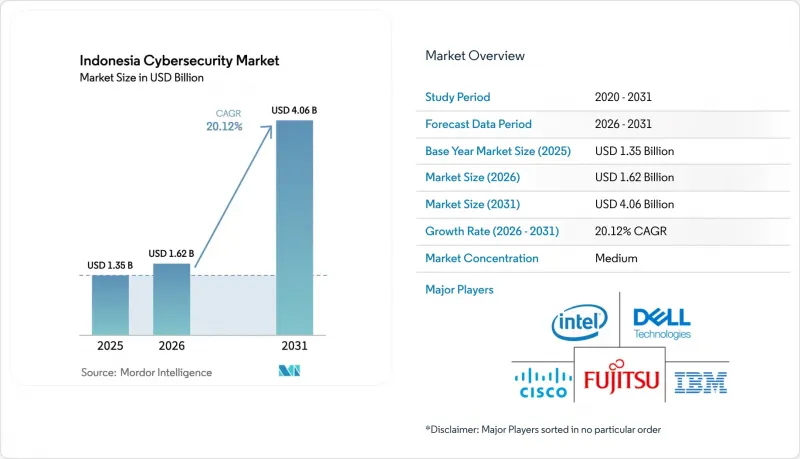
Mordor Intelligence에 의하면, 인도네시아 사이버 보안 시장 규모는 2025년에 13억 5,000만 달러로 평가되었고, 2026년 16억 2,000만 달러에서 2031년까지 40억 6,000만 달러에 이를 것으로 예측되며, 예측 기간(2026-2031년) CAGR은 20.12%를 나타낼 전망입니다.
본 보고서에서는 업계를 제공별(솔루션 및 서비스), 배포 방식별(온프레미스 및 클라우드), 조직 규모별(중소기업 및 대기업), 최종 사용자 업종별(은행, 금융서비스 및 보험(BFSI), 헬스케어 등)로 분류하고 있습니다. 시장 예측은 금액(달러) 기준으로 제시되어 있습니다.
인도네시아의 사이버 보안 시장 동향 및 인사이트
BI-FAST 및 QRIS 의무화에 힘입은 디지털 결제 거래의 급증
QRIS 거래량은 2024년 4월 194.06%, 2024년 8월 217.33%로 급증했으며, 실시간 코드 수용을 시작한 중소기업 수가 1,478만 개사에 달함에 따라 공격 표면이 확대되었습니다. 거래액은 2025년에 1,153억 4,000만 달러에 달할 것으로 예상되며, 발행사 및 인수사는 첨단 사기 분석 시스템 도입을 서둘러야 하는 상황에 놓여 있습니다. Bank Neo Commerce는 이미 AI를 활용한 딥페이크 사기에 대해 경고하고 있으며, 결제 채널 전반에 걸쳐 생체 인증 및 행동 분석을 통한 관리의 시급성을 부각시키고 있습니다. BI의 ‘전국 결제 시스템 청사진’은 일괄 결지에서 즉시 결제로의 전환을 추진하고 있으며, 이로 인해 감지 속도에 대한 요구 사항은 더욱 높아지고 있습니다. 그 결과, 소매 결제 생태계 전반에서 네트워크 기반 침입 방지 도구와 API 보안 도구는 선택 사항에서 필수 사항으로 전환되고 있습니다.
정부의 PDN(국가 데이터센터) 프로그램이 사이버 보안 지출을 가속화
치카랑 거점만 해도 25,000코어, 200TB의 메모리, 40PB의 스토리지를 수용하며, 629개의 레거시 정부 데이터 사일로를 통합하고 있습니다. 2024년 6월에 발생한 랜섬웨어로 인한 시스템 중단은 282개 정부 기관의 업무를 중단시켰고, 취약성에 대한 우려를 뒷받침하는 동시에 제로 트러스트 게이트웨이 및 백업 오케스트레이션의 긴급 조달로 이어졌습니다. 바탐과 누산타라에서 동시에 진행되고 있는 구축 작업은 마이크로 세분화된 네트워크, 불변 백업, 자동화된 사고 대응을 필요로 하는 주권 클라우드 전략의 기반이 됩니다. ‘데이터센터 인 어 박스(Data Center-in-a-Box)’, AI-SOC 플랫폼, 그리고 규정 준수 대시보드를 제공하는 벤더들은 향후 몇 년간 지속될 공공 부문의 지출 주기에서 유리한 입지를 점하고 있습니다.
인증받은 인도네시아어 구사 사이버 보안 인력 부족
인도네시아에서는 2025년까지 10만 명의 보안 전문가가 필요할 것으로 예상되지만, 2018-2024년 50만 명을 양성하는 ‘디지털 인재 장학금(Digital Talent Scholarship)’ 프로그램이 시행되고 있음에도 불구하고, 실제로 배출되는 인원은 그 극히 일부에 불과합니다. 높은 급여를 배경으로 고위 인력이 핀테크 기업이나 통신 기업으로 유출되면서 중요 인프라 팀의 인력 부족을 초래하고 있습니다. 초봉 평균이 연간 1억 2,000만-1억 8,000만 루피아로 매우 높기 때문에 중소기업은 사내 분석가 채용을 주저하고 있습니다. 그 결과, MSSP 계약이나 자동화된 SOC 도구에 대한 수요는 증가하고 있지만, 도입에 시간이 걸리기 때문에 사고 대응 준비가 지연되는 사태가 계속되고 있습니다.
부문 분석
솔루션 분야는 2025년 매출의 62.86%를 차지했으며, 인도네시아에서 급증하는 랜섬웨어에 대응하기 위한 네트워크 방화벽, 보안 웹 게이트웨이, 엔드포인트 에이전트가 성장을 주도했습니다. 인도네시아 사이버 보안 시장의 솔루션 시장 규모는 2025년에 8억 5,000만 달러에 달할 것으로 예상되며, PDN 구축 및 BI-FAST 규정 준수가 종합적인 플랫폼 업그레이드를 촉진함에 따라 두 자릿수 성장 궤도를 달리고 있습니다. 데이터 유출 방지 및 ID 거버넌스 분야는 개인 데이터 보호법에 따라 매출액의 최대 2%에 해당하는 벌금의 영향을 받고 있으며, 이로 인해 이사회가 암호화 및 특권 액세스 관리 솔루션에 대한 투자를 결정하는 데 박차를 가하고 있습니다. 한편, 마이크로서비스를 도입하는 디지털 네이티브 은행들 사이에서는 컨테이너 워크로드 보호에 대한 수요가 증가하고 있습니다.
매니지드 서비스는 연평균 성장률(CAGR) 17.14%를 나타낼 것으로 예측되며, 과도한 업무 부담을 안고 있는 CISO들이 성과 기반 계약으로 전환함에 따라 제품 부문을 능가하는 성장이 예상됩니다. MDR, SOC-as-a-Service 및 취약점 관리 구독 서비스는 24시간 상주 분석가를 보유하지 않은 중소기업에게 매력적인 선택지가 되고 있습니다. 컨설팅 부문에서는 도입을 간소화하기 위해 제로 트러스트 참조 설계 및 규제 격차 평가를 패키지화하고 있습니다. 인도네시아의 사이버 보안 시장은 계속해서 하이브리드형 서비스 제공에 의존하고 있으며, 각 벤더들은 자본 지출의 장벽을 낮추기 위해 하드웨어 업데이트, 소프트웨어 라이선싱 및 관리형 감지 서비스를 사용자당 균일한 가격으로 패키지화하고 있습니다.
인도네시아 중앙은행(Bank Indonesia), 금융서비스감독청(OJK), 국가사이버보안청(BSSN)이 여전히 데이터 상주성을 우선시하고 있기 때문에 온프레미스 환경은 2025년 지출의 53.33%를 차지했습니다. 금융 기관은 로컬 키 관리를 요구하고 있으며, 국영 기업은 퍼블릭 클라우드의 제어 기능과의 통합성이 낮은 메인프레임을 유지하고 있습니다. 그 결과, 온프레미스 하드웨어 보안 모듈, 네트워크 세분화 어플라이언스 및 SIEM 박스의 인도네시아 내 사이버 보안 시장 점유율은 업데이트 주기가 긴 데도 불구하고 여전히 높은 수준을 유지하고 있습니다.
한편, Microsoft Azure의 인도네시아 리전, AWS 자카르타, Telkom의 바탐 하이퍼스케일 사이트가 가동을 시작함에 따라 클라우드 기반 보안은 연평균 성장률(CAGR) 19.92%로 확대되고 있습니다. SaaS 형태로 제공되는 SWG, CASB, SASE 솔루션은 디지털 네이티브 은행과 거래 급증에 대응하는 소매 앱으로부터 지지를 얻고 있습니다. 인도네시아 클라우드 보안 시장 규모는 ‘One Data Policy’에 따라 의무화된 ‘모델 투 데이터(Model-to-Data)’ 아키텍처에 힘입어 2031년까지 18억 5,000만 달러를 넘어설 것으로 예측됩니다. 규정 준수 및 민첩성이라는 두 가지 요구 사항을 모두 충족하는 설계로서, 로컬 데이터 플레인과 클라우드 컨트롤 플레인을 결합한 하이브리드 메쉬 접근 방식이 주류로 자리 잡고 있습니다.
기타 혜택 :
- 엑셀 형식 시장 예측(ME) 시트
- 3개월간의 애널리스트 지원
자주 묻는 질문
목차
제1장 서론
제2장 조사 방법
제3장 주요 요약
제4장 시장 구도
제5장 시장 규모 및 성장 예측
제6장 경쟁 구도
제7장 시장 기회 및 향후 전망
AJY 26.09.15According to Mordor Intelligence, the Indonesia cybersecurity market size was valued at USD 1.35 billion in 2025 and estimated to grow from USD 1.62 billion in 2026 to reach USD 4.06 billion by 2031, at a CAGR of 20.12% during the forecast period (2026-2031).
This report Segments the Industry Into Offering (Solutions and Services), Deployment Mode (On-Premise and Cloud), Organization Size (SMEs and Large Enterprises), and End-User Vertical (BFSI, Healthcare, and More). The Market Forecasts are Provided in Terms of Value (USD).
Indonesia Cybersecurity Market Trends and Insights
Surge in Digital Payment Transactions Fueled by BI-FAST and QRIS Mandates
QRIS volumes surged by 194.06% in April 2024 and 217.33% in August 2024, broadening the attack surface to 14.78 million SMEs now accepting real-time codes. Transaction values are forecast to hit USD 115.34 billion in 2025, compelling issuers and acquirers to deploy advanced fraud analytics. Bank Neo Commerce has already flagged AI-driven deep-fake scams, underscoring the urgency for biometric and behavioral controls across payment rails. The BI National Payment System Blueprint pushes a shift from batch clearing to instant settlement, further elevating detection speed requirements. Consequently, network-based intrusion prevention and API-security tools are moving from optional to mandatory across retail payments ecosystems.
Government PDN (National Data Center) Program Accelerating Cybersecurity Spend
The Cikarang site alone houses 25,000 cores, 200 TB of memory, and 40 PB of storage, consolidating 629 legacy government data silos. A ransomware outage in June 2024 that disrupted 282 agencies validated vulnerability concerns and led to emergency procurement of zero-trust gateways and backup orchestration. Parallel builds in Batam and Nusantara will underpin sovereign-cloud strategies that demand micro-segmented networks, immutable backups, and automated incident response. Vendors offering data-center-in-a-box, AI-SOC platforms, and compliance dashboards are well positioned for this multiyear public-sector spend cycle.
Shortage of Certified Bahasa-Speaking Cybersecurity Talent
Indonesia needs 100,000 security specialists by 2025 yet produces only a fraction of that number despite the Digital Talent Scholarship training 500,000 individuals from 2018-2024. Salary premiums divert senior staff to fintechs and telecoms, leaving critical infrastructure teams understaffed. Entry-level packages averaging IDR 120-180 million per year deter SMEs from hiring in-house analysts. Consequently, demand for MSSP contracts and automated SOC tools is growing, but lengthy onboarding times still delay incident-response readiness.
Other drivers and restraints analyzed in the detailed report include:
- Rising Ransomware Incidents Across Indonesian SOEs
- 5G and Industry 4.0 Roll-outs in Bekasi-Karawang Manufacturing Belt
- Fragmented Oversight Creating Compliance Ambiguity
For complete list of drivers and restraints, kindly check the Table Of Contents.
Segment Analysis
Solutions generated 62.86% of 2025 revenue, led by network firewalls, secure web gateways, and endpoint agents that address Indonesia's ransomware surge. The Indonesia cybersecurity market size for solutions amounted to USD 0.85 billion in 2025 and is tracking a double-digit growth arc as PDN build-outs and BI-FAST compliance drive holistic platform upgrades. Data-loss prevention and identity governance lines are benefiting from the Personal Data Protection Act's penalties of up to 2% of turnover, pushing boards to fund encryption and privileged-access vaults. Meanwhile, demand for container workload protection is rising among digital-native banks deploying microservices.
Managed Services is projected to log a 17.14% CAGR, outpacing products as over-extended CISOs pivot toward outcome-based contracting. MDR, SOC-as-a-Service, and vulnerability management subscriptions are proving attractive to SMEs that lack round-the-clock analysts. Consulting arms are bundling zero-trust reference designs and regulatory-gap assessments to simplify onboarding. The Indonesia cybersecurity market continues to lean on hybrid delivery, with vendors packaging hardware refresh, software licensing, and managed detection in unified per-user pricing to ease capex barriers.
On-Premises estates captured 53.33% of 2025 spending because Bank Indonesia, OJK, and BSSN still prioritize data residency. Financial institutions demand local key management, and SOEs retain mainframes that integrate poorly with public cloud controls. As a result, the Indonesia cybersecurity market share for on-prem hardware security modules, network segmentation appliances, and SIEM boxes remained high despite their lengthy refresh cycles.
Cloud-Delivered security, however, is expanding at 19.92% CAGR as Microsoft Azure Indonesia Regions, AWS Jakarta, and Telkom's Batam hyperscale sites go live. SaaS-delivered SWG, CASB, and SASE offerings resonate with digital-native banks and retail apps that scale transaction bursts. The Indonesia cybersecurity market size for cloud security is expected to exceed USD 1.85 billion by 2031, driven by "model-to-data" architectures mandated under the One Data Policy. Hybrid mesh approaches-local data plane, cloud control plane-are emerging as the design of choice to meet both compliance and agility needs.
Complete Report Scope:
- By Offering
- Solutions
- Application Security
- Cloud Security
- Data Security
- Identity and Access Management
- Infrastructure Protection
- Integrated Risk Management
- Network Security Equipment
- Endpoint Security
- Other Solutions
- Services
- Professional Services
- Managed Services
- Solutions
- By Deployment Mode
- On-Premise
- Cloud
- By Organization Size
- SMEs
- Large Enterprises
- By End-User Vertical
- BFSI
- Healthcare
- IT and Telecom
- Industrial and Defense
- Retail
- Energy and Utilities
- Manufacturing
- Others
List of Companies Covered in this Report:
- IBM Corporation
- Cisco Systems Inc.
- Fortinet Inc.
- Palo Alto Networks Inc.
- Trend Micro Incorporated
- Check Point Software Technologies Ltd.
- PT Xynexis International
- PT Telkomsigma (Telkom Indonesia)
- PT Daya Cipta Mandiri Solusi (Noosc)
- PT Sakti Solusi Data
- PT Mitra Integrasi Komputindo
- Dell Technologies Inc.
- Huawei Technologies Co. Ltd.
- Microsoft Corporation
- Amazon Web Services Inc.
- Google Cloud
- CyberArk Software Ltd.
- CrowdStrike Holdings Inc.
- Kaspersky Lab
- Sophos Ltd.
- PT Xapiens Teknologi Indonesia
- Zscaler Inc.
- Darktrace plc
- PT Sigma Cipta Caraka
Additional Benefits:
- The market estimate (ME) sheet in Excel format
- 3 months of analyst support
TABLE OF CONTENTS
1 INTRODUCTION
- 1.1 Study Assumptions and Market Definition
- 1.2 Scope of the Study
2 RESEARCH METHODOLOGY
3 EXECUTIVE SUMMARY
4 MARKET LANDSCAPE
- 4.1 Market Overview
- 4.2 Market Drivers
- 4.2.1 Surge in Digital Payment Transactions Fueled by BI-FAST and QRIS Mandates
- 4.2.2 Government PDN (National Data Center) Program Accelerating Cybersecurity Spend
- 4.2.3 Rising Ransomware Incidents Across Indonesian SOEs
- 4.2.4 5G and Industry 4.0 Roll-outs in Bekasi-Karawang Manufacturing Belt
- 4.2.5 Expansion of Islamic Digital Banking Requiring Sharia-Compliant Security Controls
- 4.2.6 Enforcement of Personal Data Protection Act 2022 (UU PDP)
- 4.3 Market Restraints
- 4.3.1 Shortage of Certified Bahasa-Speaking Cybersecurity Talent
- 4.3.2 Legacy On-Prem Tech Stacks in Tier-2 Enterprises
- 4.3.3 Low Cyber-Insurance Penetration
- 4.3.4 Fragmented Oversight (BSSN, Kominfo, OJK) Creating Compliance Ambiguity
- 4.4 Evaluation of Critical Regulatory Framework
- 4.5 Value Chain Analysis
- 4.6 Technological Outlook
- 4.7 Porter's Five Forces Analysis
- 4.7.1 Bargaining Power of Suppliers
- 4.7.2 Bargaining Power of Buyers
- 4.7.3 Threat of New Entrants
- 4.7.4 Threat of Substitutes
- 4.7.5 Competitive Rivalry
- 4.8 Impact Assessment of Key Stakeholders
- 4.9 Key Use Cases and Case Studies
- 4.10 Impact on Macroeconomic Factors of the Market
- 4.11 Investment Analysis
5 MARKET SIZE AND GROWTH FORECASTS (VALUE)
- 5.1 By Offering
- 5.1.1 Solutions
- 5.1.1.1 Application Security
- 5.1.1.2 Cloud Security
- 5.1.1.3 Data Security
- 5.1.1.4 Identity and Access Management
- 5.1.1.5 Infrastructure Protection
- 5.1.1.6 Integrated Risk Management
- 5.1.1.7 Network Security Equipment
- 5.1.1.8 Endpoint Security
- 5.1.1.9 Other Solutions
- 5.1.2 Services
- 5.1.2.1 Professional Services
- 5.1.2.2 Managed Services
- 5.1.1 Solutions
- 5.2 By Deployment Mode
- 5.2.1 On-Premise
- 5.2.2 Cloud
- 5.3 By Organization Size
- 5.3.1 SMEs
- 5.3.2 Large Enterprises
- 5.4 By End-User Vertical
- 5.4.1 BFSI
- 5.4.2 Healthcare
- 5.4.3 IT and Telecom
- 5.4.4 Industrial and Defense
- 5.4.5 Retail
- 5.4.6 Energy and Utilities
- 5.4.7 Manufacturing
- 5.4.8 Others
6 COMPETITIVE LANDSCAPE
- 6.1 Market Concentration
- 6.2 Strategic Moves
- 6.3 Market Share Analysis
- 6.4 Company Profiles {(includes Global level Overview, Market level overview, Core Segments, Financials as available, Strategic Information, Market Rank/Share for key companies, Products and Services, and Recent Developments)}
- 6.4.1 IBM Corporation
- 6.4.2 Cisco Systems Inc.
- 6.4.3 Fortinet Inc.
- 6.4.4 Palo Alto Networks Inc.
- 6.4.5 Trend Micro Incorporated
- 6.4.6 Check Point Software Technologies Ltd.
- 6.4.7 PT Xynexis International
- 6.4.8 PT Telkomsigma (Telkom Indonesia)
- 6.4.9 PT Daya Cipta Mandiri Solusi (Noosc)
- 6.4.10 PT Sakti Solusi Data
- 6.4.11 PT Mitra Integrasi Komputindo
- 6.4.12 Dell Technologies Inc.
- 6.4.13 Huawei Technologies Co. Ltd.
- 6.4.14 Microsoft Corporation
- 6.4.15 Amazon Web Services Inc.
- 6.4.16 Google Cloud
- 6.4.17 CyberArk Software Ltd.
- 6.4.18 CrowdStrike Holdings Inc.
- 6.4.19 Kaspersky Lab
- 6.4.20 Sophos Ltd.
- 6.4.21 PT Xapiens Teknologi Indonesia
- 6.4.22 Zscaler Inc.
- 6.4.23 Darktrace plc
- 6.4.24 PT Sigma Cipta Caraka
7 MARKET OPPORTUNITIES AND FUTURE OUTLOOK
- 7.1 White-space and Unmet-Need Assessment