|
시장보고서
상품코드
2125505
미국의 혈당 모니터링 시장 : 시장 점유율 분석, 업계 동향 및 통계, 성장 예측(2026-2031년)United States Blood Glucose Monitoring - Market Share Analysis, Industry Trends & Statistics, Growth Forecasts (2026 - 2031) |
||||||
 Mordor Intelligence
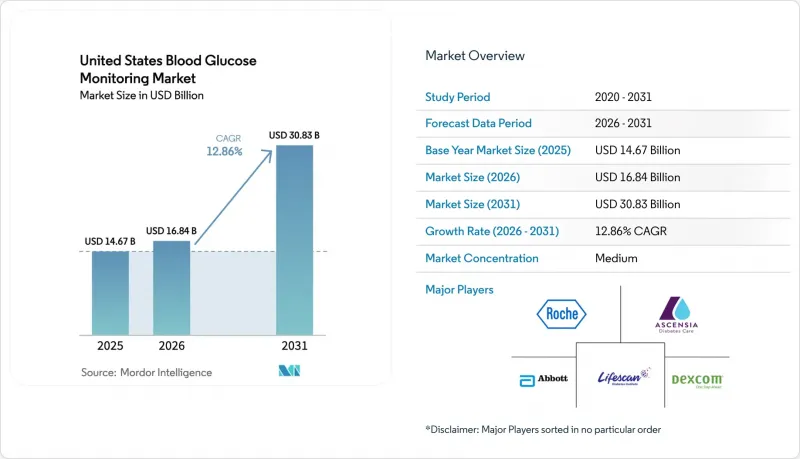
Mordor Intelligence에 의하면, 미국의 혈당 모니터링 시장 규모는 2025년 146억 7,000만 달러로 평가되었고, 2026년에는 168억 4,000만 달러로 추정되고, 2031년까지 308억 3,000만 달러에 이를 것으로 예측되며, 2026-2031년 CAGR 12.86%로 성장할 전망입니다.
본 보고서는 기기 유형별(SMBG 기기(혈당 측정기, 테스트 스트립, 랜싯), CGM 기기별(센서, 내구성 기기)), 환자 유형별(1형 당뇨병, 2형 당뇨병, 임신성 당뇨병), 최종 사용자별(병원 및 클리닉, 재택 간호, 진단센터)로 분류되어 있습니다. 시장 전망은 금액(달러) 기준으로 제시되어 있습니다.
미국의 혈당 모니터링 시장 동향 및 인사이트
당뇨병 유병률 증가
CDC 보고서에 따르면, 2025년에는 3,840만 명의 미국인(인구의 11.6%)이 당뇨병을 앓고 있었으며, 65세 이상 성인의 유병률은 29.2%에 달했습니다. 앨라배마주, 미시시피주, 루이지애나주에서는 비만율이 35%를 초과하고 내분비학 관련 자원이 부족하여 부담이 특히 크며, 원격의료를 활용한 CGM에 대한 수요가 증가하고 있습니다. 2024년 직접 의료비는 총 3,070억 달러에 달했으나, 2형 당뇨병 기저 인슐린 사용자의 CGM 도입률은 여전히 8% 미만에 그치고 있어, 아직 개발되지 않은 확장 기회가 있음을 여실히 보여주고 있습니다. 전당뇨는 9,760만 명의 성인에게 영향을 미치고 있으며, 10년 이내에 2형 당뇨병으로 진행될 위험은 70%에 달할 전망입니다. 이것이 기기 판매 대수를 뒷받침하는 수요 원천이 되고 있습니다. 현재, 고용주의 보험 플랜에서는 후속 비용을 사전에 방지하기 위해 당뇨병 전단계인 직원에 대한 CGM 비용을 보상해 주고 있어 사용자층이 확대되고 있습니다. 그 결과, 지속적인 모니터링은 단발성 검사에서 위험군 전체를 대상으로 한 보편적인 모니터링으로 전환되고 있습니다.
CGM의 기술적 진보
2024년 3월부터 9월 사이에, 덱스콤(Dexcom)의 일반의약품(OTC)용 ‘Stelo’, 애보트(Abbott)의 ‘Lingo’, 메드트로닉(Medtronic)의 ‘Simplera’, 센소닉스(Senseonics)의 365일 지속형 ‘Eversense’를 포함한 4개의 센서 플랫폼이 FDA 승인을 획득했습니다. 1년간의 이식이 가능해짐에 따라, 이전에는 6개월 이내 사용 중단의 18%를 차지하던 접착성 피부염이 완화되었습니다. 애보트사가 메드트로닉사와 제휴하여 Libre 센서를 MiniMed 펌프에 통합한 것은 상호 운용성의 전략적 중요성을 부각시키며, 환자가 자신에게 맞춤화된 하이브리드 솔루션을 구축할 수 있게 해줍니다. 덱스콤은 ‘Stelo’의 가격을 센서 2개 분량의 1개월 치에 99달러로 책정하여, 처방전을 통한 보험 적용을 받지 못하는 3,000만 명의 미국 전당뇨 환자들에게도 소매점을 통해 제품이 공급될 수 있음을 보여주었습니다. 착용 기간이 14일에서 365일까지 늘어남에 따라 일일 비용은 1달러 가까이까지 낮아져, 지금까지 0.15달러짜리 테스트 스트립에 얽매여 있던 메디케이드 및 자비 진료 부문으로의 진출이 가능해집니다.
CGM 기기의 높은 비용
CGM의 본인 부담 비용은 연간 1,200달러에서 2,400달러에 달하는 반면, SMBG는 180달러에서 360달러로, 6배나 더 비싸기 때문에 무보험자나 고액 공제 플랜 가입자들을 멀어지게 하고 있습니다. 조사에 따르면, 2형 당뇨병 환자의 34%가 비용 문제로 인해 90일 이내에 CGM 사용을 중단하고, 1장당 0.15달러인 테스트 스트립을 대량 구매해 사용하던 방식으로 되돌아갔습니다. 약국 혜택 관리 회사(PBM)가 협상한 리베이트가 실제 계산대에 반영되는 경우는 거의 없어, 월 300-400달러라는 고가에 놀라게 되는 상황이 계속되고 있습니다. 덱스콤(Dexcom)사의 ‘스텔로(Stelo)’는 99달러로 정가보다 저렴하지만, 전체 비용을 소비자에게 전가하고 있어 보급에는 한계가 있습니다. 인구 5만 명 미만의 지방 카운티에서는 CGM 도입률이 도시 지역에 비해 62% 낮아, 건강 격차를 더욱 확대시키고 있습니다.
부문 분석
2025년, 자가 측정 시스템은 미국 혈당 모니터링 시장 점유율의 56.71%를 차지했습니다. 이는 측정기와 테스트 스트립을 1회당 0.80-1.20달러에 묶어 판매하는 3년짜리 병원 계약에 힘입은 결과입니다. 테스트 스트립이 매출의 대부분을 차지하는 이유는 기저 인슐린 사용자 1인당 연간 730-1,095장의 스트립을 소비하는 것이 일반적이며, 독자적인 화학 기술이 고객 유지율을 유지하고 있기 때문입니다. 랜셋은 상품화(commoditization)에 직면해 있으며, 0.02달러짜리 제네릭 제품이 브랜드 제품의 이익률을 압박하고 있습니다. 한편, CGM 센서는 365일간 사용 가능한 이식형 제품과 OTC 채널에 힘입어 2031년까지 연평균 성장률(CAGR) 13.69%를 기록할 전망입니다. 센서는 교체 주기가 안정적이어서 CGM 매출의 약 72%를 차지하고 있지만, 송신기는 구독 모델의 수익성을 확보하기 위해 보조금이 적용되고 있습니다.
중환자실에서는 CGM의 평균 절대 상대 오차(MARD)가 9-12%로, FDA가 2024년에 정한 인슐린 투여 허용 오차 범위(±5%)를 초과하기 때문에 혈당 측정기가 여전히 사용되고 있습니다. 감염 관리에 대한 경고가 있음에도 불구하고, 저소득 가정에서는 테스트 스트립과 랜싯의 재사용이 여전히 센서의 수익성을 저해하고 있습니다. 14일형 센서에서 365일형 센서로 전환함으로써 일일 비용이 절감되고, 6개월 이내에 환자의 18%에서 나타나는 접착제 관련 이탈률이 감소합니다. 덱스콤의 ‘스테로’는 당뇨병 전단계 환자를 위한 소매 채널을 활용하는 반면, 안전성을 중시하여 설계된 병원용 랜셋은 OSHA 규제로 인해 40%의 프리미엄 가격을 유지하고 있습니다.
기타 혜택
- 엑셀 형식 시장 예측(ME) 시트
- 3개월간의 애널리스트 지원
자주 묻는 질문
목차
제1장 서론
제2장 조사 방법
제3장 주요 요약
제4장 시장 구도
제5장 시장 규모 및 성장 예측
제6장 경쟁 구도
제7장 시장 기회 및 향후 전망
AJY 26.09.15According to Mordor Intelligence, the United States blood glucose monitoring market size is expected to increase from USD 14.67 billion in 2025 to USD 16.84 billion in 2026 and reach USD 30.83 billion by 2031, growing at a CAGR of 12.86% over 2026-2031.
This report is Segmented by Device Type (SMBG Devices: Glucometers, Test Strips, Lancets; CGM Devices: Sensors, Durables), Patient Type (Type 1 Diabetes, Type 2 Diabetes, Gestational Diabetes), and End-User (Hospitals & Clinics, Homecare Settings, Diagnostic Centers). The Market Forecasts are Provided in Terms of Value (USD).
United States Blood Glucose Monitoring Market Trends and Insights
Rising Diabetes Prevalence
CDC reported that 38.4 million Americans, or 11.6% of the population, lived with diabetes in 2025, while prevalence among adults 65+ climbed to 29.2%. The burden is disproportionately heavy in Alabama, Mississippi, and Louisiana, where obesity exceeds 35% and endocrinology resources are sparse, spurring telehealth-enabled CGM demand. Direct medical costs totaled USD 307 billion in 2024; however, CGM uptake among Type 2 basal insulin users remained below 8%, highlighting untapped expansion opportunities. Prediabetes affects 97.6 million adults and carries a 70% risk of progressing to Type 2 within a decade, feeding a pipeline that sustains device volumes. Employer plans now reimburse CGM for prediabetic staff to avert downstream expenses, broadening the user base. Consequently, continuous monitoring is shifting from episodic testing toward universal surveillance across risk cohorts.
Technological Advances in CGM
Four sensor platforms received FDA clearance between March and September 2024, including Dexcom's OTC Stelo, Abbott's Lingo, Medtronic's Simplera, and Senseonics' 365-day Eversense. One-year implantability reduces adhesive dermatitis, which previously caused 18% of discontinuations within six months. Abbott's partnership with Medtronic to embed Libre sensors into MiniMed pumps underscores the strategic importance of interoperability, enabling patients to assemble personalized hybrid solutions. Dexcom priced Stelo at USD 99 for a two-sensor month, demonstrating that retail shelves can reach the 30 million prediabetic Americans lacking prescription coverage. As wear duration stretches from 14 days to 365 days, per-day costs decrease toward USD 1, unlocking Medicaid and cash-pay segments that have been long tethered to USD 0.15 test strips.
High Cost of CGM Devices
Out-of-pocket CGM costs range from USD 1,200 to USD 2,400 annually, compared to USD 180 to USD 360 for SMBG, a six-fold premium that dissuades uninsured and high-deductible plan members. Survey work revealed that 34% of Type 2 users abandoned CGM within 90 days due to cost concerns, reverting to bulk-purchased strips at USD 0.15 each. Rebates negotiated by pharmacy benefit managers seldom reach the checkout counter, preserving the sticker shock of USD 300-400 per month. Dexcom's USD 99 Stelo cuts the list price but shifts the full cost to consumers, limiting its reach. Rural counties with fewer than 50,000 residents post CGM adoption rates 62% below urban peers, magnifying health inequity.
Other drivers and restraints analyzed in the detailed report include:
- Medicare Reimbursement Expansion
- Interoperable "DIY Looping" Ecosystems
- Semiconductor Sensor Supply Risk
For complete list of drivers and restraints, kindly check the Table Of Contents.
Segment Analysis
Self-monitoring systems captured 56.71% of the United States blood glucose monitoring market share in 2025, driven by three-year hospital contracts that bundled meters and strips at USD 0.80-1.20 per test. Test strips dominate revenue because basal insulin users typically burn through 730-1,095 strips annually, and proprietary chemistries help keep customers loyal. Lancets face commoditization, with generic units at USD 0.02 eroding branded margins. Conversely, CGM sensors are slated to post a 13.69% CAGR through 2031, fueled by 365-day implantables and OTC channels. Sensors account for about 72% of CGM revenue due to their steady replacement cadence, while transmitters are subsidized to secure subscription economics.
Glucometers persist in critical-care wards because the CGM mean absolute relative difference of 9-12% is outside the +-5% insulin-dosing tolerance FDA set in 2024. The reuse of strips and lancets still undercuts sensor economics in low-income homes, despite infection control warnings. The transition from 14-day to 365-day sensors reduces the daily cost and mitigates adhesive-related dropout, which is observed in 18% of patients within six months. Dexcom's Stelo exploits prediabetes retail channels, while safety-engineered hospital lancets maintain a 40% premium due to OSHA mandates.
Complete Report Scope:
- By Device Type
- SMBG Devices
- Glucometers
- Test Strips
- Lancets
- CGM Devices
- Sensors
- Durables
- SMBG Devices
- By Patient Type
- Type 1 Diabetes
- Type 2 Diabetes
- Gestational Diabetes
- By End-user
- Hospitals & Clinics
- Homecare Settings
- Diagnostic Centers
List of Companies Covered in this Report:
- Abbott Laboratories
- Acon Laboratories
- AgaMatrix
- Arkray
- Ascensia
- Bionime
- Dexcom
- Lifescan
- Medtronic
- Roche
- Rossmax
Additional Benefits:
- The market estimate (ME) sheet in Excel format
- 3 months of analyst support
TABLE OF CONTENTS
1 Introduction
- 1.1 Study Assumptions & Market Definition
- 1.2 Scope of the Study
2 Research Methodology
3 Executive Summary
4 Market Landscape
- 4.1 Market Overview
- 4.2 Market Drivers
- 4.2.1 Rising Diabetes Prevalence
- 4.2.2 Technological Advances in CGM
- 4.2.3 Medicare Reimbursement Expansion
- 4.2.4 Employer-Sponsored Wellness Mandates
- 4.2.5 Interoperable "DIY Looping" Ecosystems
- 4.2.6 Telehealth CPT Codes for Remote BG Monitoring
- 4.3 Market Restraints
- 4.3.1 High Cost of CGM Devices
- 4.3.2 Economic Reuse of Test Strips
- 4.3.3 Data-Privacy Hesitancy with Cloud Platforms
- 4.3.4 Semiconductor Sensor Supply Risk
- 4.4 Regulatory Landscape
- 4.5 Technological Outlook
- 4.6 Porter's Five Forces Analysis
- 4.6.1 Threat of New Entrants
- 4.6.2 Bargaining Power of Buyers
- 4.6.3 Bargaining Power of Suppliers
- 4.6.4 Threat of Substitutes
- 4.6.5 Competitive Rivalry
5 Market Size & Growth Forecasts
- 5.1 By Device Type
- 5.1.1 SMBG Devices
- 5.1.1.1 Glucometers
- 5.1.1.2 Test Strips
- 5.1.1.3 Lancets
- 5.1.2 CGM Devices
- 5.1.2.1 Sensors
- 5.1.2.2 Durables
- 5.1.1 SMBG Devices
- 5.2 By Patient Type
- 5.2.1 Type 1 Diabetes
- 5.2.2 Type 2 Diabetes
- 5.2.3 Gestational Diabetes
- 5.3 By End-user
- 5.3.1 Hospitals & Clinics
- 5.3.2 Homecare Settings
- 5.3.3 Diagnostic Centers
6 Competitive Landscape
- 6.1 Market Concentration
- 6.2 Market Share Analysis
- 6.3 Company Profiles (includes Global level Overview, Market-level Overview, Core Segments, Financials, Strategic Information, Market Rank/Share, Products & Services, Recent Developments)
- 6.3.1 Abbott Diabetes Care
- 6.3.2 Acon Laboratories Inc.
- 6.3.3 Agamatrix Inc.
- 6.3.4 Arkray Inc.
- 6.3.5 Ascensia Diabetes Care
- 6.3.6 Bionime Corporation
- 6.3.7 Dexcom Inc.
- 6.3.8 LifeScan
- 6.3.9 Medtronic PLC
- 6.3.10 Roche Holding AG
- 6.3.11 Rossmax International Ltd.
7 Market Opportunities & Future Outlook
- 7.1 White-space & Unmet-need Assessment