

|
시장보고서
상품코드
2154437
통신탑 토지 임대 벤치마킹 : 시장 점유율 분석, 업계 동향과 통계, 성장 예측(2026-2031년)Telecom Tower Land Lease Benchmarking - Market Share Analysis, Industry Trends & Statistics, Growth Forecasts (2026 - 2031) |
||||||
 Mordor Intelligence
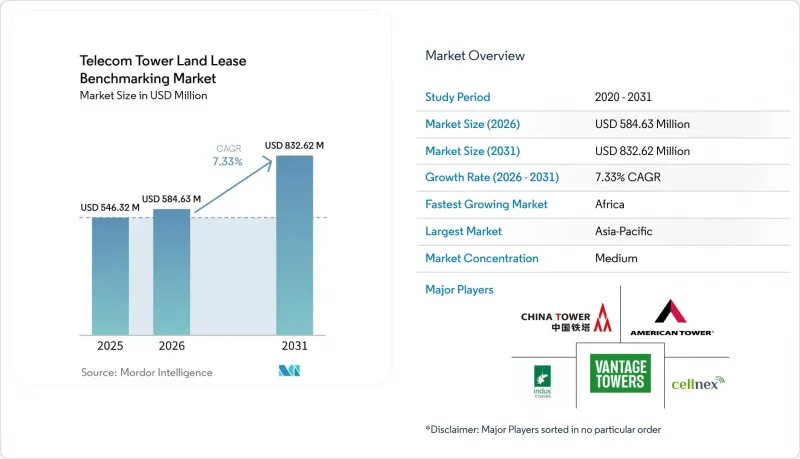
에 따르면 통신탑용지 리스 벤치마킹 시장 규모는 2025년 5억 4,632만 달러, 2026년 5억 8,463만 달러에서 2031년까지 8억 3,262만 달러로 확대할 것으로 예측되고 있으며, 2026-2031년까지 연평균 성장률(CAGR)은 7.33%에 달할 전망입니다.
전 세계 통신탑 부지 임대 벤치마킹 시장의 동향 및 인사이트
5G 밀도 향상 및 네트워크 용량 확대
차세대 미드밴드의 전개는 통신 타워 부지 임대 벤치마킹 시장에서 새로운 활동의 주요 원동력으로 계속 작용하고 있습니다. 안테나 설치, 코로케이션 신청 또는 사이트 업그레이드 시마다 새로운 임대 계약 체결이나 기존 계약 수정이 필요할 수 있습니다. 아메리칸 타워(American Tower)는 코로케이션 및 신청 건수에서 전년 대비 대폭적인 증가를 보고하고 있으며, 이는 현재 진행 중인 네트워크 활동의 규모를 지원하고 있습니다. 중파 대역의 주파수 대역은 저주파 대역에 비해 전파 거리가 짧기 때문에 통신사업자는 이전 세대 네트워크 설계에서는 가치가 낮았던 기지국을 가동해야 합니다. 이로 인해 이전에는 경쟁이 치열하지 않았던 기지국에서 임대료, 접근권 및 임대료 상승률에 관한 비교 데이터가 더욱 중요해집니다. 이는 통신 타워 부지 임대 벤치마킹 시장에서 각 거점의 과거 계약 조건과 현재의 네트워크 가치를 구분해야 하기 때문입니다. 신설보다 코로케이션이 선호되는 경향은 기존 거점의 경제적 수명을 연장하는 동시에, 특히 여러 통신사업자가 동일한 커버리지 자산을 필요로 하는 이용량이 많은 회랑 지역에서 장기적인 임대료 리스크를 높입니다. 이로 인해 성숙한 지역에서 매크로 기지국의 신설이 제한적인 경우에도 임대 비교의 유용성은 유지됩니다.
지방 통신망 정비 프로그램과 공공 접속 자금
공공 광대역 프로그램은 임대 선례가 제한적인 지역에서 사이트에 대한 접근 수요를 창출하고 있습니다. 미국 농무부는 ‘커뮤니티 커넥트(Community Connect) 보조금 프로그램’을 통해 기존 광대역 서비스가 없는 지역 사회를 지원하고 있습니다. BEAD 프로그램은 대부분의 주에서 상당한 자금을 잠정적으로 배정하고 있으며, 그 수혜자에는 지방 전력 회사와 통신사업자가 포함됩니다. 지방 회랑 지역의 신규 사이트의 경우, 확립된 임대료 시세가 존재하지 않을 가능성이 있으므로, 지역에 맞는 임대료 비교가 필요합니다. 또한 통신 타워 토지 임대 벤치마크 시장에는 지역 수요, 접근성 제약, 그리고 부지의 실무적 역할을 반영한 증거가 요구됩니다. 이 작업은 토지 등기 기록이 파편화되어 있고, 지역 가격 이력이 제한적이며, 부지 접근 권한이 새로 협상되는 경우 더욱 어려워집니다. 그 결과 발생하는 임대 평가 및 문서화 수요는 장기적으로 통신 타워 토지 임대 벤치마크 시장을 지원하게 될 것입니다. 또한 접근권, 임대 기간, 임대료 조정에 관한 현지 기록의 중요성도 높아집니다.
인프라 공유의 포화와 임차인의 교체
인프라 공유는 새로운 코로케이션 프로젝트나 기존 사이트에서의 임대 계약 변경 건수를 제한할 가능성이 있습니다. 모바일 사업자는 주파수 대역 통합 및 네트워크 통합 후 중복되는 네트워크 커버리지를 축소할 가능성이 있습니다. 이로 인해 갱신 및 계약 종료 협상이 더욱 세밀해지는 한편, 통신 타워 부지 임대 벤치마크 시장에서 신규 업무의 원천 일부가 좁아지게 될 것입니다. 미국의 주요 상장 타워 기업 3곳은 2025년에 해지율 상승을 보고했으며, 2026년 내내 특히 스프린트(Sprint)의 임대 해지 및 디시 와이어리스(DISH Wireless)의 채무 불이동으로 인한 압박이 지속될 것으로 예상하고 있습니다. 이로 인해 타워의 총 수는 여전히 높은 수준을 유지하겠지만, 임대료 비교를 지원하는 거래 기반은 축소될 것입니다. 아메리칸 타워(American Tower)는 2025년에 계약상의 에스컬레이터 조항에 따른 인상분의 일부가 계약 갱신율 하락으로 상쇄되었다고 보고했습니다. 통신 타워 부지 임대차 시장의 벤치마크는 일부 성숙한 부지에서 활동적인 거래 상대방의 감소와 나머지 부지에서 갱신 협상의 복잡화에 적응해야 합니다. 이에 따라 관심은 거래 건수에서 계약 기록의 질과 비교 가능성으로 옮겨가고 있습니다.
부문별 분석
2025년에는 지상 임대 계약이 55.24%의 점유율을 차지할 것으로 예상되며, 2031년까지 연평균 성장률(CAGR) 7.66%로 확대될 전망입니다. 이러한 우위는 사하라 이남 아프리카 및 남아시아·동남아시아에서 지상 수준의 거시 인프라가 계속해서 중요함을 반영합니다. 이 지역에서의 신규 타워 건설에는 토지 이용에 관한 1세대 계약이 필요한 경우가 많으며, 통신 타워 토지 임대에 관한 벤치마크 시장은 토지 소유자나 사업자가 초기 계약 조건을 설정할 때 현지 참고 사례가 제한적인 상황에서 협상을 지원할 수 있습니다. 아메리칸 타워(American Tower)는 미국내 인수에 앞서 진행한 투자에 이어, 추가적인 토지 지분 확보를 계획하고 있습니다. 영구 지상권이나 선불 임대 계약은 정기적인 임대료 지불을 자본 지출로 대체할 수 있습니다. 이 전략은 지상 자산에 대한 지속적인 신뢰를 보여주는 동시에, 타워 소유주에게 미래 임대료 변동 위험을 줄여주고, 향후 비교에 활용할 수 있는 임대 계약 구성의 변화를 가져옵니다.
유럽에서는 새로운 마스트 건설에 대한 규제로 인해 기존 건물이 우선시되므로, 옥상 임대 계약의 중요성이 높아지고 있습니다. 통신 타워 토지 임대 벤치마크 시장에서는 이러한 부지에 대한 건물 관리 의무, 구조적 제약 및 지자체 요건을 평가해야 합니다. 또한 전신주나 도로 시설에 설치되는 스몰셀에 따라 지상권 및 통행권의 적용 범위도 확대되고 있습니다. 대부분의 경우, 사이트당 수익은 지상이나 옥상 계약 형태보다 낮습니다. 그 밖의 접근 형태로는 급수탑, 송전 철탑 및 통신 이외의 구조물 등이 있습니다. 이러한 계약 형태는 표준화가 진행되지 않았기 때문에 현지의 접근권 및 운영상의 의무에 대해 보다 상세한 평가가 필요합니다.
2025년, 매크로 타워 사이트는 통신 타워 부지 임대 벤치마킹 시장 규모의 58.72%를 차지했습니다. 이 규모는 대규모 도입 실적과 확립된 입지에서의 코로케이션의 지속적인 가치를 반영하고 있습니다. 4G 커버리지 확대와 5G 앵커 사이트가 여전히 필요한 신흥 시장에서는 매크로 타워 건설이 계속해서 중요하므로 통신 타워 부지 임대 벤치마킹 시장은 성숙한 자산의 갱신과 신규 사이트 개발을 모두 계속해서 대상으로 하고 있습니다. 인더스 타워스는 2025년 인도내 타워 포트폴리오를 대폭 확대하며, 매크로 타워가 여전히 네트워크 확장의 중심임을 보여주었습니다. 이러한 사이트는 일반적으로 장기 부지 계약을 체결하고 있으며, 여러 임차인이 입주해 있습니다. 지속적인 임대료 지급이 보장되어 있으므로 특히 계약 갱신이나 개정 시기가 다가올 때 비교 가능한 임대료 데이터와 임대료 인상 조항에 대한 데이터는 토지 소유자와 타워 기업 모두에게 중요합니다.
스몰 셀 사이트는 2031년까지 연평균 성장률(CAGR) 7.72%로 확대될 것으로 예상되며, 이는 사이트 구성 중 가장 빠른 성장 속도입니다. 이들은 매크로 타워만으로는 충분한 용량을 공급할 수 없는 고밀도 미드밴드 및 밀리미터파 대역의 커버리지를 지원하고 있습니다. 크라운 캐슬(Crown Castle)이 2026년 5월에 진행한 스몰셀 매각에서는 주요 도시 지역 액세스 포트폴리오가 알리움 네트웍스(Allium Networks)에 양도되었습니다. 옥상 사이트에는 일반적으로 건물 소유주, 관리 회사 또는 지방 자치 단체가 관여합니다. 실내 및 분산 안테나 시스템(DAS) 사이트는 공항, 교통 통로, 경기장 등에서 이용되고 있습니다. 이러한 사이트는 단가가 높고, 특수한 접속 조건이나 설계 요건이 필요하며, 부동산 관리자나 공공기관과의 조율도 필요하므로 전체 설치 장소에서 차지하는 비율은 적습니다.
지역별 분석
2025년, 아시아태평양은 31.27%의 점유율을 차지했습니다. 차이나 타워는 광범위한 타워 포트폴리오를 운영하며 대규모 자산 기반을 유지하고 있습니다. 인도에서는 차세대 모바일 구축 주기가 더욱 성숙해짐에 따라 관심은 계약 갱신 조건이나 코로케이션 계약 개정으로 옮겨가고 있습니다. 인도네시아 및 기타 동남아시아 시장에서는 여전히 서비스가 충분히 제공되지 않고 있으며, 새로운 설치 장소에 대한 접근 권한 확보를 위한 협상이 계속해서 필요합니다. edotco사는 말레이시아, 방글라데시, 캄보디아, 미얀마, 파키스탄, 스리랑카, 필리핀 전역에서 광범위한 타워 포트폴리오를 운영하고 있습니다. 이 지역에는 국가 주도형, 독립형, 분산형 토지 소유자 모델이 공존하고 있으므로, 임대료, 계약 기간 및 임대료 인상률에 관한 논의에서는 단일 지역 벤치마크보다 국가별 및 지역별 비교가 더 유용합니다.
북미에서는 토지 임대 기반이 성숙되어 있으며, 25년 50년 계약이 갱신 기간에 접어들고 있습니다. 아메리칸 타워(American Tower)는 2025년에 미국내 지상권 취득에 대한 지출을 전년 대비 대폭 늘렸습니다. 이 지역의 임대 벤치마크 활동은 복잡한 갱신 협상 및 지상권 매입에 의해 지원되고 있습니다. 캐나다에 테리온(Terion)이 설립됨에 따라 TELUS와의 장기 마스터 리스백 계약에 기반하여 광범위한 사이트 포트폴리오를 보유한 전문 타워 사업자가 탄생했습니다. 유럽은 국가별로 상이한 도시 계획 규제, 재산권 및 임대 관행이 특징입니다. 셀넥스(Cellnex), 밴티지 타워스(Vantage Towers), 토템(TOTEM), 도이체 훙크투름(Deutsche Funkturm), GD 타워스(GD Towers)는 현지 규제 및 부동산에 대한 지식이 요구되는 이러한 다양한 환경에서 사업을 운영하고 있습니다.
아프리카는 2031년까지 연평균 성장률(CAGR) 7.88%로 확대될 것으로 예측되며, 이는 지역별 성장률 중 가장 높은 수치입니다. 이 지역은 확립된 모바일 네트워크의 통합과 많은 농촌 지역에서 신규 계약이 체결되고 있는 시장에서 차세대 네트워크의 조기 구축에 힘입어 성장하고 있습니다. 헬리오스 타워스는 임차인 비율이 증가했다고 보고했습니다. MTN은 IHS 타워스 인수 계획을 발표했으며, 이는 아프리카의 여러 시장에서 타워 소유권에 영향을 미칠 것입니다. 남미에서는 주요 타워 포트폴리오를 통해 브라질, 콜롬비아 및 중미 지역에 임대 활동이 집중되고 있습니다. 중동에서는 사우디아라비아의 TAWAL과 인프라 투자 프로그램과 연계된 중립 호스트 체계의 구축이 성장 동력이 되고 있습니다.
기타 혜택:
- 엑셀 형식의 시장 예측(ME) 시트
- 3개월간의 애널리스트 지원
자주 묻는 질문
목차
제1장 서론
- 조사 전제조건과 시장 정의
- 조사 범위
제2장 조사 방법
제3장 개요
제4장 시장 구도
- 시장 개요
- 시장 성장 촉진요인
- 시장 성장 억제요인
- 업계 가치/ 밸류체인 분석
- 규제 상황
- 거시경제 요인이 시장에 미치는 영향
- 기술 전망
- Porter's Five Forces 분석
제5장 시장 규모와 성장 예측
- 토지 이용 형태별
- 사이트 구성별
- 고객/ 거래 상대별
- 리스 경제학별
- 지역별
- 북미
- 미국
- 캐나다
- 멕시코
- 남미
- 브라질
- 아르헨티나
- 콜롬비아
- 기타 남미 국가
- 유럽
- 독일
- 영국
- 프랑스
- 이탈리아
- 러시아
- 기타 유럽 국가
- 아시아태평양
- 중국
- 인도
- 일본
- 인도네시아
- 기타 아시아태평양 국가
- 중동
- 사우디아라비아
- 아랍에미리트
- 튀르키예
- 기타 중동 국가
- 아프리카
- 나이지리아
- 남아프리카공화국
- 케냐
- 기타 아프리카 국가
- 북미
제6장 경쟁 구도
- 시장 집중도
- 전략적 동향
- 시장 점유율 분석
- 기업 개요
- American Tower Corporation
- Cellnex Telecom, S.A.
- Vantage Towers AG
- GD Towers Holding GmbH
- SBA Communications Corporation
- Crown Castle Inc.
- China Tower Corporation Limited
- Indus Towers Limited
- IHS Holding Limited
- Helios Towers plc
- Phoenix Tower International
- edotco Group Sdn Bhd
- TOTEM
- Vertical Bridge REIT, LLC
- Atlas Tower Group
- TAWAL
- Telesites S.A.B. de C.V.
- Deutsche Funkturm GmbH
- Tillman Infrastructure LLC
- Boldyn Networks
제7장 시장 기회와 향후 전망
KSA 26.10.23According to Mordor Intelligence, the telecom tower land lease benchmarking market size is projected to expand from USD 546.32 million in 2025 and USD 584.63 million in 2026 to USD 832.62 million by 2031, registering a CAGR of 7.33% between 2026 to 2031.
Global Telecom Tower Land Lease Benchmarking Market Trends and Insights
5G Densification and Network Capacity Expansion
Next-generation mid-band deployment remains the main source of new activity in the telecom tower land lease benchmarking market. Each antenna installation, colocation request, or site upgrade can require a new lease or an amendment to an existing agreement. American Tower reported a substantial year-over-year increase in colocation and total applications, demonstrating the scale of network activity underway. Mid-band spectrum has a shorter propagation range than lower-frequency spectrum, so operators must activate sites that held less value under earlier-generation network designs. This makes comparable rent, access, and escalation data more important for sites that were previously not heavily contested, because the telecom tower land lease benchmarking market needs to separate historical terms from current network value in each location. The preference for colocation over new construction also prolongs the economic life of established locations and increases long-term rent exposure in busy corridors, especially where several operators need the same coverage assets. This keeps lease comparison relevant even when new macro construction is limited in mature areas.
Rural Coverage Programs and Public Connectivity Funding
Public broadband programs are creating demand for site access in areas with limited lease precedents. The U.S. Department of Agriculture is supporting communities without existing broadband service through its Community Connect Grant Program. The BEAD program had provisionally awarded substantial funding across most states, with rural electric and telecommunications providers among the recipients. New sites in rural corridors need locally relevant rental comparisons because established rates may not exist, and the telecom tower land lease benchmarking market needs evidence that reflects local demand, access constraints, and the site's practical operating role. This work is more demanding where land records are fragmented, local pricing history is limited, and site access is newly negotiated. The resulting need for lease valuation and documentation supports the telecom tower land lease benchmarking market over a longer period. It also places more weight on local records of access rights, lease duration, and rent adjustments.
Infrastructure-Sharing Saturation and Tenant Churn
Infrastructure sharing can limit the number of new colocation events and lease amendments at existing sites. Mobile operators may reduce overlapping network footprints after spectrum consolidation or network integration, which narrows some sources of new work for the telecom tower land lease benchmarking market, even as renewal and exit negotiations become more detailed. The three large U.S. public tower companies reported elevated churn in 2025 and expected continuing pressure during 2026, particularly from Sprint lease terminations and DISH Wireless defaults. This reduces the transaction base that supports lease comparisons even when total tower counts remain high. American Tower reported that churn offset part of contractual escalator gains in 2025. The telecom tower land lease benchmarking market must adapt to fewer active counterparties at some mature sites and more complex renewal discussions at the remaining locations. This shifts attention from volume of transactions toward the quality and comparability of contract records.
Other drivers and restraints analyzed in the detailed report include:
- TowerCo Sale-and-Leaseback and Asset Monetization
- Urban Small-Cell and Rooftop Site Scarcity
- Zoning, Permitting and Community-Consent Delays
For complete list of drivers and restraints, kindly check the Table Of Contents.
Segment Analysis
Ground leases accounted for 55.24% share in 2025 and are projected to expand at a 7.66% CAGR through 2031. This lead reflects the continuing importance of ground-level macro infrastructure in Sub-Saharan Africa and South and Southeast Asia. New towers in these areas frequently require first-generation agreements for land access, and the telecom tower land lease benchmarking market can support discussions where landowners and operators have limited local evidence for setting initial contract terms. American Tower planned additional ground-interest acquisitions following prior investments in U.S. acquisitions. Perpetual easements and prepaid leases can replace recurring rent with a capital commitment. The strategy shows continued confidence in ground-level assets while reducing future rent variability for the tower owner, and it changes the pool of leases available for later comparison.
Rooftop leases are becoming more important in Europe, where restrictions on new mast construction favor existing buildings. The telecom tower land lease benchmarking market must assess building management obligations, structural limitations, and municipal requirements for these sites. Easements and rights-of-way are also expanding with small cells placed on utility poles and street furniture. Their revenue per site is lower than ground or rooftop arrangements in many cases. Other access types include water towers, utility pylons, and nontelecom structures. These arrangements are less standardized, so they require more detailed assessment of local access rights and operating obligations.
Macro tower sites held 58.72% share of the telecom tower land lease benchmarking market size in 2025. Their scale reflects the large installed base and the continued value of colocation at established locations. Macro construction remains important in emerging markets where 4G coverage extension and 5G anchor sites are still needed, so the telecom tower land lease benchmarking market continues to cover both mature asset renewals and new site origination. Indus Towers significantly expanded its tower portfolio in India during 2025, demonstrating that macro towers remain central to network expansion. These sites normally have long-term ground agreements and multiple tenants. Their recurring lease commitments make comparable rental and escalator data important for both landowners and tower companies, particularly when agreements approach renewal or amendment dates.
Small-cell sites are projected to expand at a 7.72% CAGR through 2031, the fastest rate among site configurations. They support dense mid-band and millimeter-wave coverage where macro towers cannot supply sufficient capacity alone. Crown Castle's May 2026 small-cell sale transferred a major urban access portfolio to Arium Networks. Rooftop sites commonly involve building owners, management companies, or municipalities. In-building and distributed antenna system sites serve airports, transit corridors, and stadiums. These sites have high unit values but account for a smaller share of total locations because they need specialized access, design terms, and coordination with property managers or public agencies.
Complete Report Scope:
- By Land Access Type
- Ground Lease
- Rooftop Lease
- Easement and Right-of-Way
- Other Land Access Types
- By Site Configuration
- Macro Tower Site
- Small-Cell Site
- Rooftop Site
- In-Building and Distributed Antenna Site
- By Customer / Counterparty
- Independent Towerco
- MNO Captive Infrastructure
- Neutral Host Provider
- Public-Sector Network Operator
- Private Wireless and Enterprise Network
- By Lease Economics
- Fixed Annual Escalator
- CPI-Linked Escalator
- Hybrid Index and Fixed Escalator
- Revenue-Share and Colocation-Linked Rent
- One-Time Upfront Consideration
- By Geography
- North America
- United States
- Canada
- Mexico
- South America
- Brazil
- Argentina
- Colombia
- Rest of South America
- Europe
- Germany
- United Kingdom
- France
- Italy
- Russia
- Rest of Europe
- Asia-Pacific
- China
- India
- Japan
- Indonesia
- Rest of Asia-Pacific
- Middle East
- Saudi Arabia
- United Arab Emirates
- Turkey
- Rest of Middle East
- Africa
- Nigeria
- South Africa
- Kenya
- Rest of Africa
- North America
Geography Analysis
Asia-Pacific commanded 31.27% share in 2025. China Tower operated an extensive tower portfolio and maintained a substantial asset base. India has a more mature next-generation mobile deployment cycle, which shifts attention toward renewal terms and colocation amendments. Indonesia and other Southeast Asian markets remain underserved and continue to need new site access arrangements. edotco operates an extensive tower portfolio across Malaysia, Bangladesh, Cambodia, Myanmar, Pakistan, Sri Lanka, and the Philippines. The region includes state-led, independent, and fragmented landlord models, so national and local comparisons are more useful than a single regional benchmark for rent, term, and escalation discussions.
North America has a mature land lease base, with 25- to 50-year contracts moving into renewal periods. American Tower increased its spending on U.S. ground-lease acquisitions substantially in 2025 compared with the previous year. This regional lease benchmarking activity is supported by complex renewal discussions and ground-interest buyouts. Terrion's formation in Canada created a dedicated tower operator with an extensive site portfolio under a long-term master leaseback with TELUS. Europe is shaped by varied national planning rules, property rights, and lease conventions. Cellnex, Vantage Towers, TOTEM, Deutsche Funkturm, and GD Towers operate in this diverse setting, which requires local regulatory and property knowledge.
Africa is projected to expand at a 7.88% CAGR through 2031, the fastest regional rate. The region is supported by established mobile network consolidation and early next-generation deployments in markets where many rural agreements are newly established. Helios Towers reported an increase in its tenancy ratio. MTN announced a proposed acquisition of IHS Towers that would affect tower ownership across several African markets. South America has lease activity concentrated in Brazil, Colombia, and Central America through major tower portfolios. The Middle East is supported by Saudi Arabia's TAWAL and developing neutral-host frameworks linked to infrastructure investment programs.
- American Tower Corporation
- Cellnex Telecom, S.A.
- Vantage Towers AG
- GD Towers Holding GmbH
- SBA Communications Corporation
- Crown Castle Inc.
- China Tower Corporation Limited
- Indus Towers Limited
- IHS Holding Limited
- Helios Towers plc
- Phoenix Tower International
- edotco Group Sdn Bhd
- TOTEM
- Vertical Bridge REIT, LLC
- Atlas Tower Group
- TAWAL
- Telesites S.A.B. de C.V.
- Deutsche Funkturm GmbH
- Tillman Infrastructure LLC
- Boldyn Networks
Additional Benefits:
- The market estimate (ME) sheet in Excel format
- 3 months of analyst support
TABLE OF CONTENTS
1 INTRODUCTION
- 1.1 Study Assumptions and Market Definition
- 1.2 Scope of the Study
2 RESEARCH METHODOLOGY
3 EXECUTIVE SUMMARY
4 MARKET LANDSCAPE
- 4.1 Market Overview
- 4.2 Market Drivers
- 4.2.1 5G Densification and Network Capacity Expansion
- 4.2.2 Rural Coverage Programs and Public Connectivity Funding
- 4.2.3 Towerco Sale-and-Leaseback and Asset Monetization
- 4.2.4 Urban Small-Cell and Rooftop Site Scarcity
- 4.2.5 Portfolio-Level Lease Aggregation and Data-Enabled Negotiation
- 4.2.6 Digital-Twin Screening of Ground-Lease Buyout Targets
- 4.3 Market Restraints
- 4.3.1 Infrastructure-Sharing Saturation and Tenant Churn
- 4.3.2 Zoning, Permitting and Community-Consent Delays
- 4.3.3 Land Aggregator Bargaining Power and Rent Repricing
- 4.3.4 Renewal Valuation Uncertainty Under No-Network Assumptions
- 4.4 Industry Value / Supply-Chain Analysis
- 4.5 Regulatory Landscape
- 4.6 Impact of Macroeconomic Factors on the Market
- 4.7 Technological Outlook
- 4.8 Porter's Five Forces Analysis
- 4.8.1 Threat of New Entrants
- 4.8.2 Bargaining Power of Landowners
- 4.8.3 Bargaining Power of Towercos and MNOs
- 4.8.4 Threat of Substitutes
- 4.8.5 Competitive Rivalry
5 MARKET SIZE AND GROWTH FORECASTS (VALUE)
- 5.1 By Land Access Type
- 5.1.1 Ground Lease
- 5.1.2 Rooftop Lease
- 5.1.3 Easement and Right-of-Way
- 5.1.4 Other Land Access Types
- 5.2 By Site Configuration
- 5.2.1 Macro Tower Site
- 5.2.2 Small-Cell Site
- 5.2.3 Rooftop Site
- 5.2.4 In-Building and Distributed Antenna Site
- 5.3 By Customer / Counterparty
- 5.3.1 Independent Towerco
- 5.3.2 MNO Captive Infrastructure
- 5.3.3 Neutral Host Provider
- 5.3.4 Public-Sector Network Operator
- 5.3.5 Private Wireless and Enterprise Network
- 5.4 By Lease Economics
- 5.4.1 Fixed Annual Escalator
- 5.4.2 CPI-Linked Escalator
- 5.4.3 Hybrid Index and Fixed Escalator
- 5.4.4 Revenue-Share and Colocation-Linked Rent
- 5.4.5 One-Time Upfront Consideration
- 5.5 By Geography
- 5.5.1 North America
- 5.5.1.1 United States
- 5.5.1.2 Canada
- 5.5.1.3 Mexico
- 5.5.2 South America
- 5.5.2.1 Brazil
- 5.5.2.2 Argentina
- 5.5.2.3 Colombia
- 5.5.2.4 Rest of South America
- 5.5.3 Europe
- 5.5.3.1 Germany
- 5.5.3.2 United Kingdom
- 5.5.3.3 France
- 5.5.3.4 Italy
- 5.5.3.5 Russia
- 5.5.3.6 Rest of Europe
- 5.5.4 Asia-Pacific
- 5.5.4.1 China
- 5.5.4.2 India
- 5.5.4.3 Japan
- 5.5.4.4 Indonesia
- 5.5.4.5 Rest of Asia-Pacific
- 5.5.5 Middle East
- 5.5.5.1 Saudi Arabia
- 5.5.5.2 United Arab Emirates
- 5.5.5.3 Turkey
- 5.5.5.4 Rest of Middle East
- 5.5.6 Africa
- 5.5.6.1 Nigeria
- 5.5.6.2 South Africa
- 5.5.6.3 Kenya
- 5.5.6.4 Rest of Africa
- 5.5.1 North America
6 COMPETITIVE LANDSCAPE
- 6.1 Market Concentration
- 6.2 Strategic Moves
- 6.3 Market Share Analysis
- 6.4 Company Profiles (includes Global Level Overview, Market Level Overview, Core Segments, Financials as available, Strategic Information, Market Rank/Share, Products and Services, Recent Developments)
- 6.4.1 American Tower Corporation
- 6.4.2 Cellnex Telecom, S.A.
- 6.4.3 Vantage Towers AG
- 6.4.4 GD Towers Holding GmbH
- 6.4.5 SBA Communications Corporation
- 6.4.6 Crown Castle Inc.
- 6.4.7 China Tower Corporation Limited
- 6.4.8 Indus Towers Limited
- 6.4.9 IHS Holding Limited
- 6.4.10 Helios Towers plc
- 6.4.11 Phoenix Tower International
- 6.4.12 edotco Group Sdn Bhd
- 6.4.13 TOTEM
- 6.4.14 Vertical Bridge REIT, LLC
- 6.4.15 Atlas Tower Group
- 6.4.16 TAWAL
- 6.4.17 Telesites S.A.B. de C.V.
- 6.4.18 Deutsche Funkturm GmbH
- 6.4.19 Tillman Infrastructure LLC
- 6.4.20 Boldyn Networks
7 MARKET OPPORTUNITIES AND FUTURE OUTLOOK
- 7.1 White-Space and Unmet-Need Assessment


