

|
시장보고서
상품코드
2155001
남미의 가스 센서 : 시장 점유율 분석, 업계 동향과 통계, 성장 예측(2026-2031년)South America Gas Sensors - Market Share Analysis, Industry Trends & Statistics, Growth Forecasts (2026 - 2031) |
||||||
 Mordor Intelligence
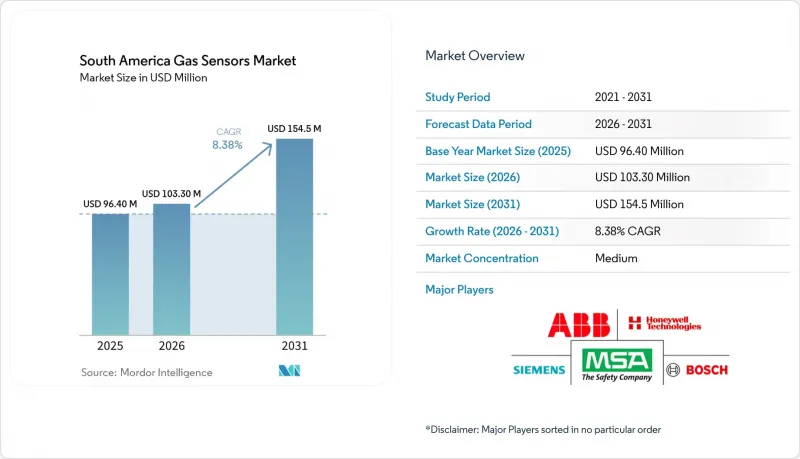
에 따르면 남미의 가스 센서 시장 규모는 2025년 9,640만 달러, 2026년 1억 330만 달러에서 2031년까지 1억 5,450만 달러로 확대될 것으로 예측되고 있으며, 2026-2031년까지 연평균 성장률(CAGR)은 8.38%에 달할 전망입니다.
남미 가스 센서 시장의 동향 및 인사이트
더욱 엄격해진 산업 안전 및 배출 규제
브라질에서는 NR-15, NR-20, NR-33 및 NR-35를 통해 체계적인 산업 안전 체계가 유지되고 있습니다. 이러한 규정은 건강에 유해한 작업, 가연성 물질, 밀폐 공간, 고소 작업, 가스 감지기 교정 및 폭발성 환경에서의 보호를 포괄합니다. ABNT는 2024년 12월 ABNT NBR IEC 60079-29-2를 개정하여 가연성 가스 및 산소 감지기의 선정, 설치, 사용 및 유지보수에 관한 요건을 강화했습니다. 이번 개정을 통해 문서화 및 교정 기록 요건이 강화됨에 따라 필요한 기록이 누락되었거나 업데이트된 요건에 대한 지속적인 성능을 입증할 수 없는 구형 장비의 교체 수요가 발생할 가능성이 있습니다. 페루는 2026년 3월에 2026년판 광업 안전 보건 규정을 공표하여, 지금까지 공식적인 규정 준수 요건의 대상에 일관되게 포함되지 않았던 중규모 광업 사업에 대해 가스 모니터링 의무를 확대했습니다. 브라질의 NR-15가 개정될 가능성이 있으며, 현재도 정기적인 샘플링에 의존하고 있는 분야에서 연속 모니터링의 활용이 증가할 가능성이 있습니다.
석유 및 가스, 광업, 화학 산업의 사업 확대
BP는 2025년 8월, 브라질 산토스 분지에 위치한 부메랑게 광구에서 대규모 석유 및 가스 매장량을 발견했다고 발표했습니다. 향후 심해 개발에서는 공정 안전, 비상 정지 시스템 및 운영 무결성에 관한 요건을 충족하기 위해 고정식 가스 센서가 필요하게 될 것입니다. 아르헨티나에서는 Vista Energy사와 YPF사의 바카 무에르타 광구 생산 계획에 따라 주 정부의 배출량 보고 요건에 기반한 탄화수소 및 CO₂ 모니터링 수요가 증가하고 있습니다. 아네로 및 네우켄시 근교의 새로운 석유화학 인프라에서도 밀폐 공간 및 적재 구역내 VOC 및 유독 가스 모니터링이 필요합니다. 일상 업무 중 작업자가 탄화수소, 이산화탄소, 유독 가스의 혼합 가스에 노출될 가능성이 있는 이러한 용도에서는 전기화학식 다중 가스 감지기가 여전히 표준 사양으로 사용되고 있습니다. 식품 등급 공급망에서 사용되는 회수 산업용 CO₂는 원유 가격 변동이 아닌 석유화학제품 생산량에 연동되는 순도 센서의 새로운 용도를 창출하고 있습니다.
높은 설치 비용과 수명 주기 비용
고정식 다점 가스 감지 네트워크에는 인증된 배선, 시운전, 연간 교정 및 센서 소자 교체가 필요합니다. 남미의 산업 시설에서 이러한 수명 주기 요건에 드는 비용은 하드웨어 정가의 2배에서 4배에 달할 수 있습니다. 브라질의 센서 부품 수입 관세는 세계 기준과 비교했을 때, 도착 비용에 10-20%를 가산하게 됩니다. 이러한 비용 구조로 인해 교체 주기가 지연될 가능성이 있으며, 새로운 아키텍처에 필요한 케이블, 비계, 현장 작업량을 줄일 수 있는 경우에도 구식 유선 시스템이 계속 사용되는 이유 중 하나입니다. 브라질에서 실시된 체계적 검토에 따르면 남미의 저비용 대기질 센서 노드 가격은 교정 서비스를 제외하고 71달러에서 1,573달러 사이인 것으로 나타났습니다. 외딴 지역의 운영 담당자들은 12-24개월 후에 교체가 필요할 수 있는 전기화학식 셀보다, 서비스 간격이 3년 이상인 NDIR 및 MEMS 설계 센서에 주목하고 있습니다.
부문 분석
가스 유형 선정은 각 시설의 노출원 및 모니터링 목적(근로자 보호, 누출 파악, 공정 제어, 공기질 감시, 식품 보관 안전 확보 등)과 밀접한 관련이 있습니다. 따라서 가연성 가스, 유독 가스 및 산소 결핍 상태가 동시에 발생할 수 있는 상황에서는 다중 가스 구성의 중요성이 여전히 높습니다.
2025년, 남미의 가스 센서 시장에서 탄화수소(VOC/CH4)는 26.10%의 점유율을 차지했습니다. 이 부문은 브라질, 아르헨티나, 콜롬비아 전역의 상류 석유 및 가스, 철강, 화학 산업의 운영 과정에서 발생하는 가연성 가스 노출을 반영하고 있습니다. 하한 폭발 한계(LEL) 감시를 위해 구성된 촉매 비드식 측정기나 멀티가스 전기화학식 측정기는 정유소 및 산업 플랜트에서 여전히 표준 장비로 사용되고 있습니다. 이러한 광범위한 도입 실적은 특히 정유소, 생산 시설, 화학 플랜트와 같이 지속적인 모니터링 없이는 안전하게 가동할 수 없는 위험구역에서 사업자가 모니터링 범위를 유지해야 하는 경우의 교체 수요를 지원하고 있습니다.
2031년까지 CO₂는 가장 빠르게 확대될 가스 유형이 될 것입니다. 빌딩 자동화, HVAC 최적화, 식품 및 음료 콜드 체인, 그리고 CO₂ 농도가 높은 프리솔트층에서의 해양 모니터링 수요가 이러한 수요를 지원하고 있습니다. BP사의 부메랑게(Bumerangue) 유전에서는 수반 가스 중에 고농도의 CO₂가 포함되어 있으며, 해당 광구가 개발 단계로 전환될 경우 CO₂ 감지 수요가 더욱 높아질 것으로 예상됩니다. O2 센서는 밀폐 공간 검증에서 안정적인 역할을 유지하고 있는 반면, H2S 및 SO2 감지 장치는 칠레와 페루의 광업 분야에서 사워 가스 처리 및 황산 제조 작업을 지원하고 있습니다. 또한 대기질 기준이 강화됨에 따라 상파울루, 보고타, 산티아고의 도시 지역 프로그램을 통해 NOx 모니터링의 적용 범위도 확대되고 있습니다.
따라서 이 카테고리는 중공업의 안전 요구 사항뿐만 아니라 더 광범위한 상업 및 시민용 용도에도 대응하고 있으며, 공급업체는 생산 환경에서의 노출 위험에 대처하는 것 외에도 환기, 저장 및 환경 모니터링 요구 사항에도 대응할 수 있게 됩니다. 이러한 광범위한 적용 범위로 인해 단일 산업용 구매 주기에 대한 의존도가 낮아집니다.
MEMS 반도체 광학 장치는 2031년까지 연평균 성장률(CAGR) 10.15%로 확대될 것으로 예측되며, 이는 모든 기술 유형 중 가장 높은 성장률입니다. 소형화 및 저전력 소비라는 특성은 배터리 구동 기기, IoT 웨어러블 기기 및 LoRaWAN 노드에 적합합니다. 2026년 연구에서는 단일 실리콘 기판 위에 구축되고, 광학 결합이 개선되었으며, 신속한 가스 교환이 가능한 통합형 NDIR CO₂ 센서가 소개되었습니다. 이러한 기술적 특성은 습도가 높은 환경이나 온도 변동이 심한 조건에서 작동하는 산업용 및 공공용 도입과 관련이 있으며, 이러한 환경에서는 센서의 설치 면적, 전력 소비량 및 신속한 가스 교환 능력이 설치 옵션에 영향을 미칩니다.
남미의 가스 센서 업계에서 전기화학 기술은 여전히 가장 광범위한 도입 실적을 자랑하고 있습니다. 이 기술은 ppm 단위의 감도나 확립된 교정 절차가 중요한 CO, H₂S, O₂ 모니터링 분야에서 계속해서 널리 채택되고 있습니다. PID 센서는 석유화학 분야의 위생 관리 및 산업 노출 평가를 위한 VOC 모니터링에 대응하고 있습니다. 또한 사무실, 학교, 병원 등에서 CO₂ 모니터링 요구 사항이 일반화됨에 따라 NDIR 장치는 공정 안전 분야에서 건물 시스템으로 적용 범위를 확대하고 있습니다. NDIR의 높은 단가가 정당화되지 않는 경우, 특히 이미 성숙한 유선식 감지 시스템과 확립된 유지보수 관행이 있는 현장에서는 촉매 비드 제품이 고정식 가연성 가스 모니터링을 위한 비용 효율적인 선택지로 계속 자리 잡고 있습니다.
기술 선택은 점검 주기, 이용 가능한 전력, 작동 조건 및 감지가 필요한 가스의 유형에 따라 달라집니다. 이러한 고려 사항들로 인해 몇 가지 확립된 감지 기법에 대한 수요는 여전히 유지되고 있습니다.
기타 장점:
- 엑셀 형식의 시장 예측(ME) 시트
- 3개월간의 애널리스트 지원
자주 묻는 질문
목차
제1장 서론
- 조사 전제조건과 시장 정의
- 조사 범위
제2장 조사 방법
제3장 개요
제4장 시장 구도
- 시장 개요
- 거시경제 요인이 시장에 미치는 영향
- 시장 성장 촉진요인
- 시장 성장 억제요인
- 업계 밸류체인 분석
- 규제 상황
- 기술 전망
- Porter's Five Forces 분석
제5장 시장 규모와 성장 예측
- 가스 유형별
- 기술별
- 폼팩터별
- 접속성별
- 최종 용도 산업별
- 국가별
- 브라질
- 아르헨티나
- 콜롬비아
- 기타 남미 국가
제6장 경쟁 구도
- 시장 집중도
- 전략적 동향
- 시장 점유율 분석
- 기업 개요
- ABB Ltd.
- Honeywell International Inc.
- MSA Safety Incorporated
- Dragerwerk AG & Co. KGaA
- Siemens AG
- Robert Bosch GmbH
- Amphenol Corporation
- Industrial Scientific Corporation
- Blackline Safety Corporation
- Crowcon Detection Instruments Limited
- RIKEN KEIKI CO., LTD.
- Figaro Engineering Inc.
- Nemoto & Co., Ltd.
- Dynament Ltd.
- MEMBRAPOR AG
- Trolex Ltd.
- Sensirion AG
- Process Sensing Technologies
- GfG Gesellschaft fur Geratebau mbH
- SENKO CO., LTD.
제7장 시장 기회와 향후 전망
KSAAccording to Mordor Intelligence, the South America gas sensors market size is projected to expand from USD 96.40 million in 2025 and USD 103.30 million in 2026 to USD 154.5 million by 2031, registering a CAGR of 8.38% between 2026 to 2031.
South America Gas Sensors Market Trends and Insights
Stricter Industrial Safety and Emissions Regulations
Brazil maintains a structured occupational safety framework through NR-15, NR-20, NR-33, and NR-35. These rules cover unhealthy activities, flammables, confined spaces, work at height, gas detector calibration, and protection in explosive atmospheres. ABNT revised ABNT NBR IEC 60079-29-2 in December 2024, strengthening requirements for selecting, installing, using, and maintaining flammable-gas and oxygen detectors. The revision increases documentation and calibration record requirements, which can bring replacement demand for legacy equipment that lacks the required records or cannot demonstrate continued performance against the updated requirements. Peru published its 2026 mining safety and health regulation in March 2026, extending formal gas-monitoring obligations to more mid-tier mining operations that had previously been less consistently covered by formal compliance requirements. A potential revision to Brazil's NR-15 could increase the use of continuous monitoring in sectors that still rely on periodic sampling.
Expansion of Oil and Gas, Mining, and Chemical Operations
BP announced a major oil and gas discovery at the Bumerangue block in Brazil's Santos Basin in August 2025. Future deepwater development would require fixed gas sensors for process safety, emergency shutdown systems, and operational integrity requirements. In Argentina, Vaca Muerta production plans by Vista Energy and YPF support demand for hydrocarbon and CO2 monitoring under provincial emissions reporting requirements. New petrochemical infrastructure near Anelo and Neuquen City also requires VOC and toxic-gas monitoring in confined spaces and loading areas. Electrochemical multi-gas instruments remain the normal specification for those applications, where workers may face a mix of hydrocarbon, carbon dioxide, and toxic-gas exposures during routine operations. Recovered industrial CO2 used in food-grade supply chains creates another use for purity sensors that is linked to petrochemical output rather than oil price movements.
High Installation and Lifecycle Costs
Fixed multi-point gas detection networks require certified wiring, commissioning, annual calibration, and sensor element replacement. In South American industrial facilities, those lifecycle requirements can cost 2 to 4 times the listed hardware price. Brazil's import duties on sensor components add 10-20% to landed costs compared with global benchmarks. This cost structure can delay refresh cycles and helps explain the continued use of older wired systems, even where newer architectures could reduce the amount of cable, scaffolding, and site work required. A Brazilian systematic review found that low-cost air-quality sensor nodes in South America ranged from USD 71 to USD 1,573 before calibration services. Remote operators are giving more attention to NDIR and MEMS designs with service intervals of 3 years or more, rather than electrochemical cells that may require replacement after 12-24 months.
Other drivers and restraints analyzed in the detailed report include:
- Methane-Leak Detection for Remote Production Assets
- Growth in Smart-City and Indoor-Air-Quality Monitoring
- Sensor Interference, Drift, and Calibration Burden
For complete list of drivers and restraints, kindly check the Table Of Contents.
Segment Analysis
Gas type selection remains closely tied to the source of exposure and the monitoring purpose at each facility, including worker protection, leak identification, process control, air-quality oversight, and food storage integrity. This keeps multi-gas configurations important, where flammable, toxic, and oxygen-deficient conditions can occur together.
Hydrocarbons (VOC/CH4) held 26.10% of the South America gas sensors market share in 2025. The segment reflects flammable-gas exposure in upstream oil and gas, steel, and chemical operations across Brazil, Argentina, and Colombia. Catalytic bead instruments and multi-gas electrochemical devices configured for lower-explosive-limit monitoring remain standard equipment in refineries and industrial plants. Their broad installed base supports replacement demand where operators must maintain coverage in hazardous locations, particularly where refineries, production facilities, and chemical plants cannot safely operate without continuous monitoring.
CO2 is the fastest-expanding gas type through 2031. Building automation, HVAC optimization, food and beverage cold chains, and offshore monitoring needs at high-CO2 pre-salt reservoirs support this demand. BP's Bumerangue discovery contains elevated CO2 in associated gas, creating a further need for CO2 sensing if the block moves into development. O2 sensors retain a stable role in confined-space verification, while H2S and SO2 devices support sour-gas processing and sulfuric acid operations in Chilean and Peruvian mining. NOx monitoring is also extending through urban programs in Sao Paulo, Bogota, and Santiago as ambient air standards tighten.
The category therefore serves both heavy industrial safety needs and a wider set of commercial and civic applications, allowing suppliers to address exposure risks in production environments as well as ventilation, storage, and ambient monitoring needs. That range reduces reliance on any single industrial purchasing cycle.
MEMS semiconductor optical devices are forecast to expand at a CAGR of 10.15% through 2031, the highest rate across technology types. Their smaller size and lower power use suit battery-powered equipment, IoT wearables, and LoRaWAN nodes. A 2026 study described an integrated NDIR CO2 sensor built on a single silicon substrate with improved optical coupling and rapid gas exchange. These technical characteristics are relevant to industrial and civic deployments that operate in humid or thermally variable conditions, where sensor footprint, power draw, and the ability to exchange gas rapidly affect installation choices.
Electrochemical technology retains the deepest installed base in the South America gas sensors industry. It remains widely specified for CO, H2S, and O2 monitoring where parts-per-million sensitivity and established calibration procedures are important. PID sensors support VOC monitoring for petrochemical hygiene and industrial exposure assessments. NDIR devices are expanding from process safety into building systems as CO2 requirements become more common in offices, schools, and hospitals. Catalytic bead products remain a cost-effective option for fixed combustible-gas monitoring when NDIR's higher unit cost is not justified, especially at sites that already have mature hard-wired detection systems and established maintenance practices.
Technology choice also depends on service intervals, available power, operating conditions, and the type of gas that requires detection. These considerations preserve demand for several established sensing methods.
Complete Report Scope:
- By Gas Type
- Oxygen
- Carbon Monoxide (CO)
- Carbon Dioxide ( CO2)
- Nitrogen Oxides (NOx)
- Hydrocarbons (VOC/CH4)
- Other Gases ( SO2, H2S)
- By Technology
- Electrochemical
- Photo-Ionization (PID)
- Solid-State / MOS
- Catalytic Bead
- Non-Dispersive Infrared (NDIR)
- MEMS-Semiconductor Optical
- By Form Factor
- Fixed / In-Situ Modules
- Portable / Hand-Held Devices
- Wearable Badges / Patches
- By Connectivity
- Wired (4-20 mA, CAN, RS-485)
- Wireless (BLE, NB-IoT, LoRaWAN)
- By End-Use Industry
- Industrial Safety and Process (Oil and Gas, Chemicals)
- Automotive Powertrain and HVAC
- Building Automation / Smart Homes
- Medical and Life-Science Equipment
- Food, Beverage, and Cold-Chain Logistics
- Environmental Monitoring and Smart City Nodes
- Other End-Use Industries
- By Country
- Brazil
- Argentina
- Colombia
- Rest of South America
List of Companies Covered in this Report:
- ABB Ltd.
- Honeywell International Inc.
- MSA Safety Incorporated
- Dragerwerk AG & Co. KGaA
- Siemens AG
- Robert Bosch GmbH
- Amphenol Corporation
- Industrial Scientific Corporation
- Blackline Safety Corporation
- Crowcon Detection Instruments Limited
- RIKEN KEIKI CO., LTD.
- Figaro Engineering Inc.
- Nemoto & Co., Ltd.
- Dynament Ltd.
- MEMBRAPOR AG
- Trolex Ltd.
- Sensirion AG
- Process Sensing Technologies
- GfG Gesellschaft fur Geratebau mbH
- SENKO CO., LTD.
Additional Benefits:
- The market estimate (ME) sheet in Excel format
- 3 months of analyst support
TABLE OF CONTENTS
1 INTRODUCTION
- 1.1 Study Assumptions and Market Definition
- 1.2 Scope of the Study
2 RESEARCH METHODOLOGY
3 EXECUTIVE SUMMARY
4 MARKET LANDSCAPE
- 4.1 Market Overview
- 4.2 Impact of Macroeconomic Factors on the Market
- 4.3 Market Drivers
- 4.3.1 Stricter Industrial Safety and Emissions Regulations
- 4.3.2 Expansion of Oil and Gas, Mining, and Chemical Operations
- 4.3.3 Growth in Smart-City and Indoor-Air-Quality Monitoring
- 4.3.4 Connected-Worker and Wireless Sensor Deployments
- 4.3.5 Lithium and Copper Project Monitoring Requirements
- 4.3.6 Methane-Leak Detection for Remote Production Assets
- 4.4 Market Restraints
- 4.4.1 High Installation and Lifecycle Costs
- 4.4.2 Sensor Interference, Drift, and Calibration Burden
- 4.4.3 Limited Local Service and Calibration Infrastructure
- 4.4.4 Fragmented Procurement Across Small Industrial Operators
- 4.5 Industry Value Chain Analysis
- 4.6 Regulatory Landscape
- 4.7 Technological Outlook
- 4.8 Porter's Five Forces Analysis
- 4.8.1 Threat of New Entrants
- 4.8.2 Bargaining Power of Suppliers
- 4.8.3 Bargaining Power of Buyers
- 4.8.4 Threat of Substitutes
- 4.8.5 Competitive Rivalry
5 MARKET SIZE AND GROWTH FORECASTS (VALUE)
- 5.1 By Gas Type
- 5.1.1 Oxygen
- 5.1.2 Carbon Monoxide (CO)
- 5.1.3 Carbon Dioxide ( CO2)
- 5.1.4 Nitrogen Oxides (NOx)
- 5.1.5 Hydrocarbons (VOC/CH4)
- 5.1.6 Other Gases ( SO2, H2S)
- 5.2 By Technology
- 5.2.1 Electrochemical
- 5.2.2 Photo-Ionization (PID)
- 5.2.3 Solid-State / MOS
- 5.2.4 Catalytic Bead
- 5.2.5 Non-Dispersive Infrared (NDIR)
- 5.2.6 MEMS-Semiconductor Optical
- 5.3 By Form Factor
- 5.3.1 Fixed / In-Situ Modules
- 5.3.2 Portable / Hand-Held Devices
- 5.3.3 Wearable Badges / Patches
- 5.4 By Connectivity
- 5.4.1 Wired (4-20 mA, CAN, RS-485)
- 5.4.2 Wireless (BLE, NB-IoT, LoRaWAN)
- 5.5 By End-Use Industry
- 5.5.1 Industrial Safety and Process (Oil and Gas, Chemicals)
- 5.5.2 Automotive Powertrain and HVAC
- 5.5.3 Building Automation / Smart Homes
- 5.5.4 Medical and Life-Science Equipment
- 5.5.5 Food, Beverage, and Cold-Chain Logistics
- 5.5.6 Environmental Monitoring and Smart City Nodes
- 5.5.7 Other End-Use Industries
- 5.6 By Country
- 5.6.1 Brazil
- 5.6.2 Argentina
- 5.6.3 Colombia
- 5.6.4 Rest of South America
6 COMPETITIVE LANDSCAPE
- 6.1 Market Concentration
- 6.2 Strategic Moves
- 6.3 Market Share Analysis
- 6.4 Company Profiles (includes Global Level Overview, Market Level Overview, Core Segments, Financials as available, Strategic Information, Market Rank/Share, Products and Services, Recent Developments)
- 6.4.1 ABB Ltd.
- 6.4.2 Honeywell International Inc.
- 6.4.3 MSA Safety Incorporated
- 6.4.4 Dragerwerk AG & Co. KGaA
- 6.4.5 Siemens AG
- 6.4.6 Robert Bosch GmbH
- 6.4.7 Amphenol Corporation
- 6.4.8 Industrial Scientific Corporation
- 6.4.9 Blackline Safety Corporation
- 6.4.10 Crowcon Detection Instruments Limited
- 6.4.11 RIKEN KEIKI CO., LTD.
- 6.4.12 Figaro Engineering Inc.
- 6.4.13 Nemoto & Co., Ltd.
- 6.4.14 Dynament Ltd.
- 6.4.15 MEMBRAPOR AG
- 6.4.16 Trolex Ltd.
- 6.4.17 Sensirion AG
- 6.4.18 Process Sensing Technologies
- 6.4.19 GfG Gesellschaft fur Geratebau mbH
- 6.4.20 SENKO CO., LTD.
7 MARKET OPPORTUNITIES AND FUTURE OUTLOOK
- 7.1 White-Space and Unmet-Need Assessment


