

|
시장보고서
상품코드
2065583
북미의 통합 GPU 시장 : 시장 점유율 분석, 업계 동향 및 통계, 성장 예측(2026-2031년)North America Integrated GPU - Market Share Analysis, Industry Trends & Statistics, Growth Forecasts (2026 - 2031) |
||||||
 Mordor Intelligence
Mordor Intelligence에 의하면, 북미의 통합 GPU 시장 규모는 2025년에 103억 2,000만 달러로 평가되었고, 2026-2031년 CAGR 16.61%로 확대될 전망이며, 2031년에는 251억 8,000만 달러에 이를 것으로 예측됩니다.
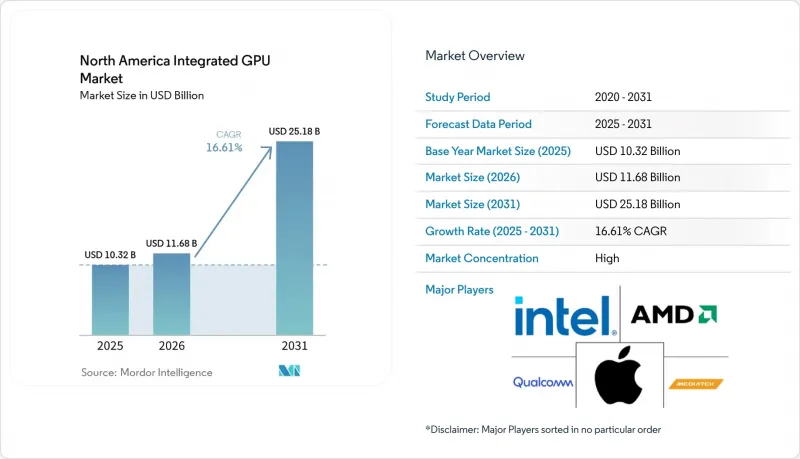
본 보고서는 디바이스 카테고리별(데스크톱 및 노트북용 프로세서, 모바일 SoC(스마트폰 및 태블릿), 임베디드 및 산업용 SoC, 그래픽 기능을 통합한 서버 및 데이터센터용 프로세서), 성능 등급별(엔트리 레벨(50달러 미만), 메인스트림(50-150달러), 퍼포먼스(150-300달러), 기타), 그리고 국가별로 분류되어 있습니다. 시장 전망은 금액(달러) 기준으로 제시되어 있습니다.
북미의 통합 GPU 시장 동향 및 인사이트
Windows 10 지원 종료 후 AI PC의 교체 주기
Windows 10은 2025년 10월 14일에 지원이 종료됨에 따라, 기업 및 중소기업(SMB)의 시스템 환경에서 여전히 널리 사용되고 있던 시스템에 대한 정기적인 보안 및 기능 업데이트가 더 이상 제공되지 않게 되었습니다. 북미에서는 이러한 변화로 인해, 보안 및 규정 준수 요건을 준수하며 업무를 수행하는 IT 팀에게 PC 교체는 더욱 시급한 결정 사항이 되었습니다. 인텔의 Core Ultra 시리즈 3 Panther Lake 프로세서는 2026년 1월 CES에서 상용 판매가 시작되었습니다. 이 제품은 인텔 18A 공정으로 제조된 최초의 클라이언트용 칩으로, 최대 180 Platform TOPS의 성능을 발휘하며, 이전 세대보다 훨씬 뛰어난 성능을 구현한 Xe3 Arc GPU를 탑재하고 있습니다. 또한, 마이크로소프트의 ‘Copilot+’가 PC에 요구하는 40 NPU TOPS라는 사양으로 인해, 많은 구형 시스템이 기기 내 AI 처리에 적합한 하드웨어의 범주에서 제외되게 되었습니다. 지원 종료의 명확한 기한과 하드웨어의 뚜렷한 성능 향상이 맞물리면서, 기업들은 구매를 미루기보다는 리프레시 예산을 앞당길 수밖에 없는 상황에 처해 있습니다. 또한, 구매자들이 단순히 노후화된 PC를 교체하는 데 그치지 않고 AI 대응 능력 자체에 투자하고 있기 때문에 북미 통합 GPU 시장의 단기적인 성장도 촉진되고 있습니다.
프리미엄 스마트폰 및 태블릿용 SoC에서 GenAI 워크로드 증가
2025년 10월 15일에 출시된 애플의 M5는 3세대 3나노미터 기술, 10코어 GPU, 각 GPU 코어에 탑재된 전용 신경망 가속기, 그리고 153 GB/s의 통합 메모리 대역폭을 채택하고 있습니다. 애플에 따르면, 이 칩은 M4에 비해 GPU AI 연산 최고 성능이 4배 이상 향상되어, 해당 지역에서 판매되는 프리미엄 노트북, 태블릿 및 공간 인식 기기의 성능 기준을 한 단계 높였습니다. 퀄컴의 이종 설계에서는 Adreno GPU와 Hexagon NPU를 동일한 다이 위에 통합하여, 칩 외부로의 데이터 마이그레이션을 방지하고 메모리 레이턴시를 줄임으로써 기기 내 토큰 생성을 향상시키고 있습니다. 이는 북미의 통합 GPU 시장에서 중요한 의미를 지닙니다. 프리미엄 사용자들은 음성, 시각, 번역, 어시스턴트 기능 등이 더 높은 응답성과 개인정보 보호를 보장받으면서 로컬에서 실행되기를 점점 더 기대하고 있기 때문입니다. 2025년 6월에 출하된 마이크론사의 10.7 Gbps 1-gamma LPDDR5X는 해당사의 Llama 2 테스트에서 전력 소비를 20% 절감하고, AI 음성 번역의 응답 시간을 50% 이상 단축했습니다. 따라서 메모리 처리량의 향상은 단순한 벤치마크 점수 상승에 그치지 않고, 플래그십 스마트폰 및 태블릿에서 iGPU의 지속적인 실용성을 높여주고 있습니다.
게임 및 워크스테이션에서 개별 GPU의 성능 한계
통합 그래픽스는 여전히 CPU 및 시스템 메모리를 공유하기 때문에 사용 가능한 대역폭은 GDDR6X나 HBM을 채택한 디스크리트 그래픽 카드보다 훨씬 낮습니다. 인텔은 Xe3 그래픽을 탑재한 팬서 레이크(Panther Lake)가 엔트리급 모바일 전용 디스크리트 GPU의 성능에 근접했다고 밝혔지만, 하이엔드 게이밍용 및 워크스테이션용 그래픽 카드와는 여전히 큰 격차가 있습니다. 북미에서는 게임, 3D 컨텐츠 제작, 건축 시각화, 시뮬레이션과 같은 분야가 대당 가격이 가장 높은 전문가용 부문에 집중되어 있기 때문에 이러한 차이는 중요한 의미를 지닙니다. 또한, 이러한 워크로드에는 지속적인 메모리 대역폭과 24GB를 초과하는 VRAM 용량이 필요하지만, 현재의 iGPU 플랫폼으로는 다중 사용자 환경이나 다중 모델 환경에서 이러한 요구 사항을 충족할 수 없습니다. 벤더에게 있어 문제는 총 출하 대수보다는 수익 밀도에 있으며, 그래픽 관련 지출의 고가 부문은 여전히 디스크리트 하드웨어가 차지하고 있기 때문입니다. 그 결과, 북미 내장 GPU 시장은 수익성이 가장 높은 워크스테이션 및 매니아용 카테고리를 완전히 대체하지 않으면서도 급속히 성장할 수 있습니다.
부문별 분석
2025년, 모바일 SoC는 기기 카테고리 매출의 49.55%를 차지했으며, 이 부문에서 북미 통합 GPU 시장 점유율의 가장 큰 비중을 차지했습니다. 프리미엄 스마트폰 및 태블릿 분야에서 애플의 강점이 선두 자리를 유지하는 데 기여한 반면, 퀄컴은 고부가가치 Windows-on-ARM 시스템 및 프리미엄 모바일 컴퓨팅 분야에서 입지를 더욱 공고히 했습니다. 데스크톱 및 노트북용 프로세서는 북미 통합 GPU 시장에서 여전히 중심적인 위치를 차지하고 있습니다. 이는 기업의 시스템 갱신 수요가 단순한 정기적인 업데이트에 그치지 않고, AI를 지원하는 클라이언트 하드웨어와도 밀접하게 연관되어 있기 때문입니다. AMD에 따르면, 자사의 모바일 프로세서 시장 점유율은 2025년 4분기에 26.0%로 상승할 전망이며, 이는 기업용 및 프리미엄 소비자용 시스템에서 Ryzen AI의 채택 확대가 반영된 결과입니다. 임베디드 및 산업용 SoC는 매출 규모 면에서는 여전히 소규모에 그쳤지만, 공장 자동화, 에너지, 소매 기기 도입 분야에서 계속해서 널리 보급되고 있습니다.
통합 그래픽스를 탑재한 서버 및 데이터센터용 프로세서 시장은 2031년까지 연평균 성장률(CAGR) 16.98%로 확대될 것으로 예상되며, 가장 빠르게 성장하는 기기 부문이 될 전망입니다. 이러한 성장은 랙 에지에서 나타나는 실질적인 요구를 반영한 것입니다. 랙엣지에서는 추론, 시각화, 미디어 처리 및 로컬 디스플레이 출력을 별도의 애드인 카드 비용을 들이지 않고 동시에 실행해야 하는 경우가 많기 때문입니다. 인텔은 Xe3P 기반의 데이터센터용 GPU ‘Crescent Island’를 발표하며 이러한 방향성을 강조했습니다. 이 제품은 공랭식 엔터프라이즈 추론 워크로드를 위해 160 GB의 LPDDR5X 메모리를 탑재하고 있습니다. 또한 AMD는 2025년 11월, 데이터센터 AI 매출이 매우 빠르게 증가할 것으로 전망한다고 밝히며, 엣지 지향 서버 플랫폼 전반에서 임베디드 그래픽스 IP의 더 광범위한 활용을 촉진하고 있습니다. 북미의 통합 GPU 업계 전반에서 이 카테고리는 대기 상태에서의 전력 소비 감소, 도입 절차의 간소화, 그리고 별도의 가속기 카드를 도입할 타당한 이유가 없는 지점이나 공장에서의 이용 사례 덕분에 수요가 확대되고 있습니다.
기타 혜택 :
- 엑셀 형식 시장 예측(ME) 시트
- 3개월간의 애널리스트 지원
자주 묻는 질문
목차
제1장 서론
제2장 조사 방법
제3장 주요 요약
제4장 시장 구도
제5장 시장 규모 및 성장 예측
제6장 경쟁 구도
제7장 시장 기회 및 향후 전망
LSH 26.06.24According to Mordor Intelligence, the north america integrated GPU market size was USD 10.32 billion in 2025 and is projected to reach USD 25.18 billion by 2031 at a CAGR of 16.61% during 2026-2031.
This report is Segmented by Device Category (Desktop and Laptop Processors, Mobile SoCs (Smartphones and Tablets), Embedded and Industrial SoCs, and Server and Data Center Processors With Integrated Graphics), Performance Tier (Entry-Level (less Than USD 50), Mainstream (USD 50 - USD 150), Performance (USD 150 - USD 300), and More), and Country. The Market Forecasts are Provided in Terms of Value (USD).
North America Integrated GPU Market Trends and Insights
AI PC Refresh Cycle After Windows 10 End of Support
Windows 10 reached end of support on October 14, 2025, which removed regular security and feature updates for systems that were still widely used across enterprise and SMB fleets. In North America, that change turned PC replacement into a more urgent decision for IT teams working under security and compliance requirements. Intel's Core Ultra Series 3 Panther Lake processors entered commercial availability at CES in January 2026 as the first client chips built on Intel 18A, with up to 180 Platform TOPS and an Xe3 Arc GPU that moved performance well above the prior generation. Microsoft's Copilot+ PC threshold of 40 dedicated NPU TOPS also placed many older systems outside the preferred hardware pool for on-device AI work. This pairing of a firm support deadline and a clear hardware step-up is pulling refresh budgets forward instead of letting companies delay purchases. It is also supporting near-term expansion in the North America integrated GPU market because buyers are paying for AI readiness rather than only replacing aging PCs.
Rising GenAI Workloads on Premium Smartphone and Tablet SoCs
Apple's M5, released on October 15, 2025, used third-generation 3-nanometer technology, a 10-core GPU, dedicated Neural Accelerators in each GPU core, and 153 GB/s of unified memory bandwidth. Apple said the chip delivered more than 4x peak GPU AI compute versus M4, which raised the performance standard for premium notebooks, tablets, and spatial devices sold in the region. Qualcomm's heterogeneous design pairs the Adreno GPU with the Hexagon NPU on the same die, which improves on-device token generation by avoiding off-chip data movement and reducing memory latency. This matters in the North America integrated GPU market because premium users increasingly expect voice, vision, translation, and assistant features to run locally with better responsiveness and privacy. Micron's 1-gamma LPDDR5X, shipped in June 2025 at 10.7 Gbps, cut power use by 20% and improved AI voice-translation response times by more than 50% in the company's Llama 2 testing. Higher memory throughput is therefore improving sustained iGPU usability in flagship smartphones and tablets rather than only lifting headline benchmark scores.
Performance Ceiling Versus Discrete GPUs in Gaming and Workstations
Integrated graphics still share system memory with the CPU, which keeps available bandwidth well below discrete cards that use GDDR6X or HBM. Intel said Panther Lake with Xe3 graphics moved closer to entry-level discrete mobile performance, but that still leaves a large gap to higher-end gaming and workstation cards. In North America, that gap matters because gaming, 3D content creation, architectural visualization, and simulation remain concentrated in professional segments that pay the highest per-unit prices. These workloads also require sustained memory bandwidth and VRAM pools that can exceed 24 GB, which current iGPU platforms do not match in multi-user or multi-model settings. The issue for vendors is less about total shipment volumes and more about revenue density, because the premium end of graphics spending still sits in discrete hardware. As a result, the North America integrated GPU market can grow rapidly without fully displacing the most profitable workstation and enthusiast categories.
Other drivers and restraints analyzed in the detailed report include:
- Cost and Power Advantage Versus Discrete Graphics in Mainstream Systems
- Growth in Edge AI and Industrial HMI SoCs
- Shared Memory Bandwidth and Capacity Constraints
For complete list of drivers and restraints, kindly check the Table Of Contents.
Segment Analysis
Mobile SoCs held 49.55% of device-category revenue in 2025, the largest slice of the North America integrated GPU market share within this segmentation. Apple's strength in premium smartphones and tablets helped sustain that lead, while Qualcomm continued to build its role in higher-value Windows-on-ARM systems and premium mobile computing. Desktop and laptop processors remain central to the North America integrated GPU market because enterprise refresh demand is now tied to AI-ready client hardware rather than only routine replacement. AMD said its mobile processor unit share rose to 26.0% in Q4 2025, reflecting stronger Ryzen AI uptake in enterprise and premium consumer systems. Embedded and industrial SoCs stayed smaller in revenue terms, but they remained widely distributed across factory automation, energy, and retail equipment deployments.
Server and Data Center Processors with Integrated Graphics are projected to expand at a 16.98% CAGR through 2031, making them the fastest-growing device category. That growth reflects a practical need at the rack edge, where inference, visualization, media handling, and local display output often need to run together without the cost of a discrete add-in card. Intel highlighted this direction with Crescent Island, an Xe3P-based data center GPU announced with 160 GB of LPDDR5X memory for air-cooled enterprise inference workloads. AMD also said in November 2025 that it expected very rapid expansion in data center AI revenue, which supports wider use of embedded graphics IP across edge-oriented server platforms. Across the North America integrated GPU industry, this category is gaining from lower idle power, simpler deployment, and branch and factory use cases that do not justify a separate accelerator card.
List of Companies Covered in this Report:
- Intel Corporation
- Advanced Micro Devices, Inc.
- Apple Inc.
- Qualcomm Incorporated
- MediaTek Inc.
- NVIDIA Corporation
- Samsung Electronics Co., Ltd.
- NXP Semiconductors N.V.
- Renesas Electronics Corporation
- Texas Instruments Incorporated
- Arm Holdings plc
- Imagination Technologies Group plc
- Google LLC
- STMicroelectronics N.V.
- Synaptics Incorporated
- Socionext Inc.
- Telechips Inc.
- Amlogic, Inc.
- Rockchip Electronics Co., Ltd.
- Microchip Technology Incorporated
Additional Benefits:
- The market estimate (ME) sheet in Excel format
- 3 months of analyst support
TABLE OF CONTENTS
1 INTRODUCTION
- 1.1 Study Assumptions and Market Definition
- 1.2 Scope of the Study
2 RESEARCH METHODOLOGY
3 EXECUTIVE SUMMARY
4 MARKET LANDSCAPE
- 4.1 Market Overview
- 4.2 Impact of Macroeconomic Factors on the Market
- 4.3 Market Drivers
- 4.3.1 AI PC Refresh Cycle After Windows 10 End of Support
- 4.3.2 Rising GenAI Workloads on Premium Smartphone and Tablet SoCs
- 4.3.3 Cost and Power Advantage Versus Discrete Graphics in Mainstream Systems
- 4.3.4 Growth in Edge AI and Industrial HMI SoCs
- 4.3.5 LPDDR5X and Unified Memory Bandwidth Lifting iGPU Usability
- 4.3.6 Single-Chip Platform Optimization Under Tariff Pressure
- 4.4 Market Restraints
- 4.4.1 Performance Ceiling Versus Discrete GPUs in Gaming and Workstations
- 4.4.2 Shared Memory Bandwidth and Capacity Constraints
- 4.4.3 Tariffs and Memory Inflation Raising System Prices
- 4.4.4 Limited Fit for Integrated Graphics in Server and Data Center Deployments
- 4.5 Industry Value Chain Analysis
- 4.6 Regulatory Landscape
- 4.7 Technological Outlook
- 4.8 Porter's Five Forces Analysis
- 4.8.1 Threat of New Entrants
- 4.8.2 Bargaining Power of Suppliers
- 4.8.3 Bargaining Power of Buyers
- 4.8.4 Threat of Substitutes
- 4.8.5 Intensity of Rivalry
5 MARKET SIZE AND GROWTH FORECASTS (VALUE)
- 5.1 By Device Category
- 5.1.1 Desktop and Laptop Processors
- 5.1.2 Mobile SoCs (Smartphones and Tablets)
- 5.1.3 Embedded and Industrial SoCs
- 5.1.4 Server and Data Center Processors with Integrated Graphics
- 5.2 By Performance Tier
- 5.2.1 Entry-Level (Less than USD 50)
- 5.2.2 Mainstream (USD 50 - USD 150)
- 5.2.3 Performance (USD 150 - USD 300)
- 5.2.4 High-Performance (Greater than USD 300)
- 5.3 By Country
- 5.3.1 United States
- 5.3.2 Canada
- 5.3.3 Mexico
6 COMPETITIVE LANDSCAPE
- 6.1 Market Concentration
- 6.2 Strategic Moves
- 6.3 Market Share Analysis
- 6.4 Company Profiles (includes Global Level Overview, Market Level Overview, Core Segments, Financials as available, Strategic Information, Market Rank/Share, Products and Services, Recent Developments)
- 6.4.1 Intel Corporation
- 6.4.2 Advanced Micro Devices, Inc.
- 6.4.3 Apple Inc.
- 6.4.4 Qualcomm Incorporated
- 6.4.5 MediaTek Inc.
- 6.4.6 NVIDIA Corporation
- 6.4.7 Samsung Electronics Co., Ltd.
- 6.4.8 NXP Semiconductors N.V.
- 6.4.9 Renesas Electronics Corporation
- 6.4.10 Texas Instruments Incorporated
- 6.4.11 Arm Holdings plc
- 6.4.12 Imagination Technologies Group plc
- 6.4.13 Google LLC
- 6.4.14 STMicroelectronics N.V.
- 6.4.15 Synaptics Incorporated
- 6.4.16 Socionext Inc.
- 6.4.17 Telechips Inc.
- 6.4.18 Amlogic, Inc.
- 6.4.19 Rockchip Electronics Co., Ltd.
- 6.4.20 Microchip Technology Incorporated
7 MARKET OPPORTUNITIES AND FUTURE OUTLOOK
- 7.1 White-Space and Unmet-Need Assessment


