

|
시장보고서
상품코드
2099089
ASEAN의 AI 기반 에너지 관리 소프트웨어 시장 : 시장 점유율 분석, 업계 동향 및 통계, 성장 예측(2026-2031년)ASEAN AI-powered Energy Management Software - Market Share Analysis, Industry Trends & Statistics, Growth Forecasts (2026 - 2031) |
||||||
 Mordor Intelligence
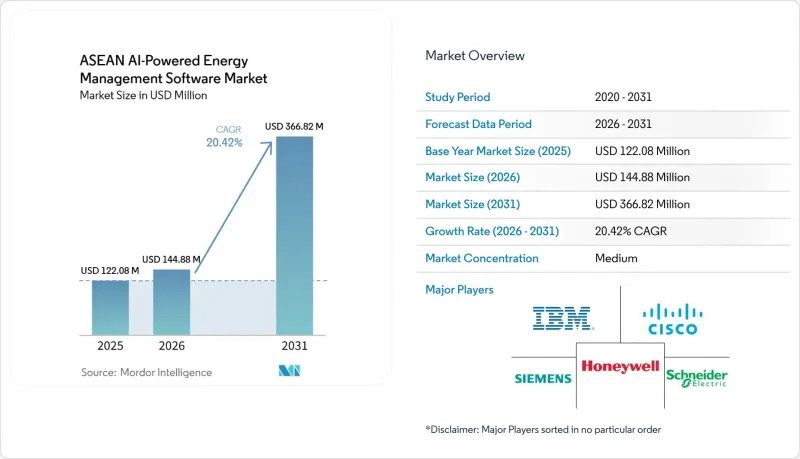
Mordor Intelligence에 의하면, ASEAN의 AI 기반 에너지 관리 소프트웨어 시장 규모는 2025년 1억 2,208만 달러로 평가되었고, 2026년에는 1억 4,488만 달러로 확대될 것으로 추정되고, 2026-2031년 CAGR 20.42%로 성장을 지속할 전망이며, 2031년에는 3억 6,682만 달러에 이를 것으로 예측됩니다.
본 보고서는 컴포넌트별(소프트웨어 및 서비스), 배포 방식별(클라우드 기반, 온프레미스형, 하이브리드형), 용도별(에너지 소비 및 수요 최적화, 자산 성능 및 예측 유지보수 등), 최종 사용자별(유틸리티, 상업용 건물, 산업 시설 등), 그리고 지역별로 분류되어 있습니다. 시장 전망은 금액(달러) 기준으로 제시되어 있습니다.
아세안(ASEAN)의 AI 기반 에너지 관리 소프트웨어 시장 동향 및 인사이트
에너지 비용 상승 및 피크 부하 변동
전력 가격 변동으로 인해, 아세안(ASEAN)의 AI 기반 에너지 관리 소프트웨어 시장에서 에너지 관리 소프트웨어가 일상적인 비용 관리의 최전선으로 부상하고 있습니다. 국제에너지기구(IEA)에 따르면, 동남아시아의 전력 수요는 2035년까지 연평균 4% 증가할 것으로 예측되며, 이로 인해 전력 회사와 대규모 소비자에게는 부하를 보다 정밀하게 관리해야 한다는 압박이 계속되고 있습니다. 수요가 이처럼 급속히 증가함에 따라 구매자들은 몇년전보다 요금 리스크, 피크 수요 요금, 그리고 1시간 미만의 단위로 이루어지는 스케줄링에 더욱 주의를 기울이게 되었습니다. 이로 인해 조달 행태가 변화하고 있습니다. 소프트웨어가 단순히 연간 소비량을 줄이는 것뿐만 아니라 청구액의 변동을 억제할 것으로 기대되기 때문입니다. 또한, ‘APAEC 2026-2030’에서는 2030년까지 아세안(ASEAN)의 에너지 집약도를 2005년 수준 대비 40% 감축한다는 목표가 설정되어 있어, 이에 따라 보다 엄격한 에너지 관리에 대한 정책적 뒷받침이 강화되고 있습니다. 따라서 아세안의 인공지능(AI) 기반 에너지 관리 소프트웨어 시장에서 강력한 부하 관리 및 보고서 작성 도구를 갖춘 공급업체들은 예산 승인을 얻기 위한 보다 직접적인 경로를 모색하고 있습니다.
아세안 도시권 내 스마트 빌딩 개보수 가속화
상업용 부동산 분야의 개보수 활동은 아세안의 AI 기반 에너지 관리 소프트웨어 시장에서 여전히 가장 뚜렷한 수요 채널 중 하나입니다. 지멘스는 2025년 3월 아세안 시장을 겨냥한 ‘Building X’를 출시하고, 방콕의 ‘True Digital Park’를 클라우드 기반 빌딩 최적화의 초기 도입 사례로 활용했습니다. 지멘스에 따르면, 이번 도입을 통해 온도, 습도, 에너지 매개변수의 실시간 모니터링과 AI를 통한 최적화가 가능해졌으며, 참여 빌딩에서는 일반적으로 1년 이내에 투자 회수가 실현되었다고 합니다. 이 점이 중요한 이유는 많은 부동산 소유주들이 구식 시설 제어 시스템을 전면적으로 교체하지 않고도 성능을 향상시키는 단계적인 업그레이드를 원하고 있기 때문입니다. 아세안 에너지 센터(ASEAN Energy Centre)에 따르면, ESCO 모델은 감사, 자금 조달, 설치, 측정을 패키지로 제공할 수 있어 사내 도입 체계가 갖춰지지 않은 소유주의 부담을 덜어줄 수 있다고 합니다. 이러한 개보수 수요와 도입 지원의 결합으로 인해 기존 건물은 당분간 소프트웨어 도입의 중심축으로 남아 있을 것입니다.
레거시 BMS 및 SCADA와의 통합 복잡성
구형 빌딩 관리 시스템(BMS) 및 전력망 제어 시스템(SCADA)과의 통합은 아세안(ASEAN)의 AI 기반 에너지 관리 소프트웨어 시장에서 여전히 가장 시급한 장벽으로 남아 있습니다. 많은 기존 시설에서는 공조, 조명, 계측, 플랜트 제어가 각각 별도의 시스템으로 운영되고 있으며, 이러한 시스템들은 데이터를 원활하게 교환할 수 있도록 설계되지 않았습니다. 이러한 데이터 흐름의 취약성은 AI 기반 권장 사항의 정확도를 떨어뜨리고, 테스트, 시운전, 문제 해결에 소요되는 시간을 연장시킵니다. 아세안 에너지 센터(ASEAN Energy Centre)에 따르면, ESCO 주도의 개보수 공사에서는 감사, 자금 조달, 설치, 검증을 결합할 수 있지만, 노후된 자산의 경우 소프트웨어가 안정적으로 작동하기 위해서는 여전히 현장 차원의 세심한 설계가 필요합니다. 따라서 구매자들은 초기 도입처를 넘어 확장하기 전에 단기간 내 투자 회수, 검증된 상호 운용성, 그리고 명확한 도입 지원을 요구하고 있습니다. 이러한 요인이 에너지 소비량은 많지만 기술 예산이 제한적인 중규모 상업시설에서 도입을 가장 크게 지연시키고 있습니다.
부문 분석
2025년 아세안(ASEAN)의 AI 기반 에너지 관리 소프트웨어 시장에서 소프트웨어는 66.31%를 차지했으며, 여러 거점에 걸친 가시성을 원하는 고객들에게 주요 관심사가 되었습니다. 구매자들은 일반적으로 분석, 대시보드, 보고 기능부터 도입을 시작했습니다. 이는 보다 고도화된 자동화 작업이 시작되기 전에 이러한 도구들이 실용적인 데이터 레이어를 구축했기 때문입니다. 이러한 도입 순서는 중요했습니다. 왜냐하면 초기 플랫폼 선택이 이후의 통합, 워크플로우 및 업데이트 결정을 좌우하는 경우가 많았기 때문입니다. 아세안(ASEAN)의 AI 기반 에너지 관리 소프트웨어 시장에서 소프트웨어는 벤더가 현장 인프라를 재구축하지 않고도 기능을 업데이트할 수 있는 클라우드 제공 모델의 이점도 누렸습니다. 이 부문이 2025년에 주도적인 위치를 차지한 것은 직접적인 운영상의 가치를 제공할 뿐만 아니라, 보다 광범위한 디지털 에너지 프로그램으로의 진입점 역할도 수행했기 때문입니다.
서비스 분야는 2031년까지 연평균 성장률(CAGR) 23.81%로 확대될 것으로 예측되며, 이는 해당 부문 내에서 가장 빠른 성장 속도입니다. 이러한 성장은 통합, 시운전, 교육 및 변경 관리와 관련하여 많은 고객이 여전히 상당한 지원을 필요로 하고 있음을 반영합니다. 아세안 에너지 센터(ASEAN Energy Center)에 따르면, 아세안 지역의 ESCO 제공업체는 감사, 자금 조달, 설치, 측정 및 검증을 결합함으로써 건물 소유주의 실행 부담을 줄일 수 있다고 합니다. 이 서비스 계층이 중요한 이유는 AI 도구가 계량기, 제어 장치, 운영 일정이 확실하게 연결되어야만 제대로 기능하기 때문입니다. 따라서 예측 기간 동안 소프트웨어가 여전히 더 큰 수익원이 될 것으로 보이지만, 서비스 부문은 소프트웨어보다 더 빠른 속도로 성장할 것으로 전망됩니다.
2025년, 아세안의 AI 기반 에너지 관리 소프트웨어 시장에서 클라우드 기반 솔루션이 61.45%의 점유율을 차지했습니다. 이는 확장성과 낮은 초기 인프라 비용이 여전히 가장 중요한 구매 우선순위임을 보여줍니다. 클라우드 도입을 통해 조직은 각 거점에 별도의 로컬 서버 환경을 구축하지 않고도 분산된 포트폴리오 전체에 걸쳐 모니터링, 보고서 작성 및 소프트웨어 업데이트를 수행할 수 있게 됩니다. 지멘스는 2025년 3월 ‘Building X for ASEAN’을 출시하며 이 지역에 구체적인 사례를 제시했습니다. 이 출시가 중요하게 여겨졌던 이유는 상업 운영 사업자들이 더 신속한 배포, 더 적은 유지 관리, 그리고 원격 최적화를 위한 명확한 로드맵을 원했기 때문입니다. 따라서 2025년에도 클라우드는 새로운 다중 사이트 빌딩 포트폴리오에서 여전히 기본 선택지로 자리매김했습니다.
하이브리드 도입은 2031년까지 연평균 성장률(CAGR) 23.48%를 나타낼 것으로 예측되며, 이 그룹 내에서 가장 높은 성장률을 나타낼 것입니다. 공공 및 산업 사업자들은 시간적 제약이 있는 제어 기능을 온프레미스에서 유지하면서, 보다 광범위한 분석 및 보고 기능을 클라우드 환경으로 이전하는 경우가 많습니다. 이러한 구조는 가동 시간, 내부 승인 규칙, 운영 위험 간의 균형을 맞추어야 하는 시설에 적합합니다. 또한, 데이터 취급에 대한 기대치가 여전히 엄격하거나 아직 확립되지 않은 시장에서 벤더에게 실용적인 진입 경로를 제공합니다. 아세안(ASEAN)의 AI 기반 에너지 관리 소프트웨어 시장이 성숙해짐에 따라, 하이브리드형 설계는 산업 분야 및 전력망용 이용 사례에서 더욱 보편화될 것으로 예측됩니다.
기타 혜택 :
- 엑셀 형식 시장 예측(ME) 시트
- 3개월간의 애널리스트 지원
자주 묻는 질문
목차
제1장 서론
제2장 조사 방법
제3장 주요 요약
제4장 시장 구도
제5장 시장 규모 및 성장 예측
제6장 경쟁 구도
제7장 시장 기회 및 향후 전망
AJY 26.08.07According to Mordor Intelligence, the ASEAN AI-powered energy management software market size is expected to grow from USD 122.08 million in 2025 to USD 144.88 million in 2026 and is forecast to reach USD 366.82 million by 2031 at 20.42% CAGR over 2026-2031.
This report is Segmented by Component (Software, and Services), Deployment Mode (Cloud-Based, On-premises, and Hybrid), Application (Energy Consumption and Demand Optimization, Asset Performance and Predictive Maintenance, and More), End User (Utilities, Commercial Buildings, Industrial Facilities, and More), and Geography. The Market Forecasts are Provided in Terms of Value (USD).
ASEAN AI-powered Energy Management Software Market Trends and Insights
Rising Energy Costs and Peak Load Volatility
Power price volatility has pushed energy software to the forefront of day-to-day cost control across the ASEAN AI-powered Energy Management Software Market. The International Energy Agency said Southeast Asia's electricity demand is projected to rise by 4% annually to 2035, which keeps pressure on utilities and large users to manage load more precisely. When demand rises this quickly, buyers pay more attention to tariff exposure, peak demand charges, and sub-hourly scheduling than they did a few years ago. That changes procurement behavior because software is now expected to reduce billing volatility, not just trim annual consumption. APAEC 2026-2030 also set a target to reduce ASEAN energy intensity by 40% by 2030 relative to 2005 levels, which adds policy weight to tighter energy controls. In the ASEAN Artificial Intelligence Powered Energy Management Software Market, vendors with strong load management and reporting tools are therefore finding a more direct path into budget approval.
Accelerated Smart Building Retrofits in ASEAN Urban Clusters
Retrofit activity in commercial properties remains one of the clearest demand channels for the ASEAN AI-powered Energy Management Software Market. Siemens launched Building X for ASEAN in March 2025 and used True Digital Park in Bangkok as an early reference site for cloud-based building optimization. Siemens said the deployment enabled real-time monitoring and AI-driven optimization of temperature, humidity, and energy parameters, with a typical return on investment of under 1 year for participating buildings. This matters because many property owners want staged upgrades that improve performance without forcing a full replacement of older site controls. The ASEAN Center for Energy said ESCO models can bundle audits, financing, installation, and measurement, thereby reducing the burden on owners who lack internal implementation capacity. That combination of retrofit demand and delivery support keeps existing buildings at the center of near-term software adoption.
High Integration Complexity With Legacy BMS and SCADA
Integration with older building and grid control systems remains the most immediate barrier in the ASEAN AI-powered Energy Management Software Market. Many brownfield assets still operate with separate systems for HVAC, lighting, metering, and plant controls, and those systems were not built to cleanly exchange data. That weak data flow reduces the quality of AI recommendations and extends testing, commissioning, and troubleshooting time. The ASEAN Centre for Energy said ESCO-led retrofits can combine audits, financing, installation, and verification, but older assets still require careful site-level design before software can perform consistently. Buyers, therefore, look for short payback, proven interoperability, and clear implementation support before expanding beyond initial sites. This slows adoption most in mid-tier commercial properties where energy use is meaningful but technical budgets remain limited.
Other drivers and restraints analyzed in the detailed report include:
- Government Incentives for Energy Efficiency and Digitalization
- AI-Enabled Load Optimization Across Multi-Site Portfolios
- Limited Availability of Skilled Energy Data and AI Specialists
For complete list of drivers and restraints, kindly check the Table Of Contents.
Segment Analysis
Software accounted for 66.31% of the ASEAN AI-powered Energy Management Software Market in 2025, making it the primary focus for customers seeking visibility across multiple sites. Buyers usually started with analytics, dashboards, and reporting because those tools created a usable data layer before deeper automation work began. This ordering mattered because the first platform choice often shaped later integration, workflow, and renewal decisions. In the ASEAN AI-powered Energy Management Software Market, software also benefited from cloud delivery models that enabled vendors to update functionality without rebuilding site infrastructure. The segment led in 2025 because it delivered direct operational value and also acted as the gateway to broader digital energy programs.
Services are projected to expand at a 23.81% CAGR through 2031, the fastest pace within this segmentation. That growth reflects the significant support many customers still need for integration, commissioning, training, and change management. The ASEAN Center for Energy said ESCO providers in ASEAN can combine audits, financing, installation, and measurement and verification, thereby reducing the execution burden for building owners. This service layer matters because AI tools only perform well when meters, controls, and operating schedules are reliably connected. Services are therefore set to grow faster than software, even though software will remain the larger revenue pool across the forecast period.
Cloud-based solutions held 61.45% of the ASEAN AI-powered Energy Management Software Market share in 2025, which showed that scalability and lower upfront infrastructure costs remained the strongest buying priorities. Cloud deployment lets organizations activate monitoring, reporting, and software updates across dispersed portfolios without building separate local server environments at each site. Siemens gave the region a visible example when it launched Building X for ASEAN in March 2025. That launch mattered because commercial operators wanted faster rollout, lighter upkeep, and clearer paths to remote optimization. Cloud, therefore, remained the default choice for new multi-site building portfolios in 2025.
Hybrid deployment is projected to grow at a 23.48% CAGR through 2031, the fastest rate in this grouping. Utilities and industrial operators often keep time-sensitive control functions on site while shifting wider analytics and reporting to cloud environments. This structure suits facilities that need to balance uptime, internal approval rules, and operational risk. It also gives vendors a practical route into markets where data handling expectations remain strict or unsettled. As the ASEAN AI-powered Energy Management Software Market matures, hybrid design is likely to gain more ground in industrial and grid-facing use cases.
Complete Report Scope:
- By Component
- Software
- Services
- By Deployment Mode
- Cloud-Based
- On-Premises
- Hybrid
- By Application
- Energy Consumption and Demand Optimization
- Asset Performance and Predictive Maintenance
- Smart Grid and Distributed Energy Resource (DER) Management
- Renewable Energy Forecasting and Integration
- Energy Trading, Pricing and Market Intelligence
- By End User
- Utilities
- Commercial Buildings
- Industrial Facilities
- Residential Buildings
- By Geography
- Singapore
- Indonesia
- Malaysia
- Philippines
- Thailand
- Vietnam
- Rest of ASEAN
List of Companies Covered in this Report:
- Schneider Electric SE
- Siemens AG
- Honeywell International Inc.
- Johnson Controls International plc
- ABB Ltd
- Cisco Systems, Inc.
- IBM Corporation
- Microsoft Corporation
- Oracle Corporation
- SAP SE
- Enel X S.r.l.
- AutoGrid Systems, Inc.
- Uplight, Inc.
- C3.AI, Inc.
- BrainBox AI Inc.
- GridPoint, Inc.
- DEXMA Sensors, S.L.
- EnergyCAP, LLC
- CopperTree Analytics Inc.
- Verdigris Technologies, Inc.
Additional Benefits:
- The market estimate (ME) sheet in Excel format
- 3 months of analyst support
TABLE OF CONTENTS
1 INTRODUCTION
- 1.1 Study Assumptions and Market Definition
- 1.2 Scope of the Study
2 RESEARCH METHODOLOGY
3 EXECUTIVE SUMMARY
4 MARKET LANDSCAPE
- 4.1 Market Overview
- 4.2 Market Drivers
- 4.2.1 Rising Energy Costs and Peak Load Volatility
- 4.2.2 Accelerated Smart Building Retrofits in ASEAN Urban Clusters
- 4.2.3 Government Incentives for Energy Efficiency and Digitalization
- 4.2.4 AI-Enabled Load Optimization Across Multi-Site Portfolios
- 4.2.5 Growth of Distributed Energy Resources and Battery Integration
- 4.2.6 Demand for Continuous Compliance Reporting and ESG Traceability
- 4.3 Market Restraints
- 4.3.1 High Integration Complexity with Legacy BMS and SCADA
- 4.3.2 Limited Availability of Skilled Energy Data and AI Specialists
- 4.3.3 Data Sovereignty and Cybersecurity Concerns for Cloud Deployment
- 4.3.4 Uneven Digitization Across ASEAN Commercial and Industrial Assets
- 4.4 Industry Value Chain Analysis
- 4.5 Regulatory Landscape
- 4.6 Technological Outlook
- 4.7 Impact of Macroeconomic Factors on the Market
- 4.8 Porter's Five Forces Analysis
- 4.8.1 Bargaining Power of Suppliers
- 4.8.2 Bargaining Power of Buyers
- 4.8.3 Threat of New Entrants
- 4.8.4 Threat of Substitutes
- 4.8.5 Competitive Rivalry
5 MARKET SIZE AND GROWTH FORECASTS (VALUE)
- 5.1 By Component
- 5.1.1 Software
- 5.1.2 Services
- 5.2 By Deployment Mode
- 5.2.1 Cloud-Based
- 5.2.2 On-Premises
- 5.2.3 Hybrid
- 5.3 By Application
- 5.3.1 Energy Consumption and Demand Optimization
- 5.3.2 Asset Performance and Predictive Maintenance
- 5.3.3 Smart Grid and Distributed Energy Resource (DER) Management
- 5.3.4 Renewable Energy Forecasting and Integration
- 5.3.5 Energy Trading, Pricing and Market Intelligence
- 5.4 By End User
- 5.4.1 Utilities
- 5.4.2 Commercial Buildings
- 5.4.3 Industrial Facilities
- 5.4.4 Residential Buildings
- 5.5 By Geography
- 5.5.1 Singapore
- 5.5.2 Indonesia
- 5.5.3 Malaysia
- 5.5.4 Philippines
- 5.5.5 Thailand
- 5.5.6 Vietnam
- 5.5.7 Rest of ASEAN
6 COMPETITIVE LANDSCAPE
- 6.1 Market Concentration
- 6.2 Strategic Moves
- 6.3 Market Share Analysis
- 6.4 Company Profiles (includes Global Level Overview, Market Level Overview, Core Segments, Financials as available, Strategic Information, Market Rank/Share, Products and Services, Recent Developments)
- 6.4.1 Schneider Electric SE
- 6.4.2 Siemens AG
- 6.4.3 Honeywell International Inc.
- 6.4.4 Johnson Controls International plc
- 6.4.5 ABB Ltd
- 6.4.6 Cisco Systems, Inc.
- 6.4.7 IBM Corporation
- 6.4.8 Microsoft Corporation
- 6.4.9 Oracle Corporation
- 6.4.10 SAP SE
- 6.4.11 Enel X S.r.l.
- 6.4.12 AutoGrid Systems, Inc.
- 6.4.13 Uplight, Inc.
- 6.4.14 C3.ai, Inc.
- 6.4.15 BrainBox AI Inc.
- 6.4.16 GridPoint, Inc.
- 6.4.17 DEXMA Sensors, S.L.
- 6.4.18 EnergyCAP, LLC
- 6.4.19 CopperTree Analytics Inc.
- 6.4.20 Verdigris Technologies, Inc.
7 MARKET OPPORTUNITIES AND FUTURE OUTLOOK
- 7.1 White-Space and Unmet-Need Assessment


