
|
시장보고서
상품코드
2099247
중동 및 아프리카의 현장 근로자 기술 시장 : 점유율 분석, 업계 동향 및 통계, 성장 예측(2026-2031년)Middle East and Africa Frontline Worker Technology - Market Share Analysis, Industry Trends & Statistics, Growth Forecasts (2026 - 2031) |
||||||
 Mordor Intelligence
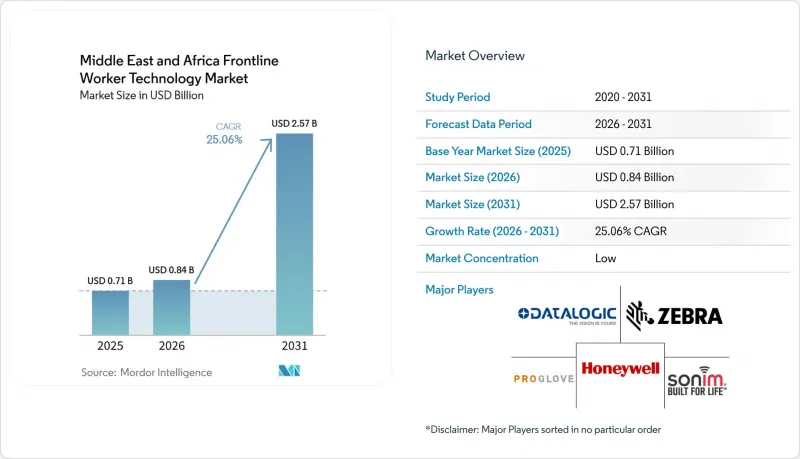
Mordor Intelligence에 의하면, 중동 및 아프리카 현장 근로자 기술 시장 규모는 2025년 7억 1,000만 달러, 2026년 8억 4,000만 달러에서 2031년까지 25억 7,000만 달러로 확대되어 2026년부터 2031년까지 연평균 복합 성장률(CAGR)은 25.06%를 나타낼 것으로 예측됩니다.
본 보고서는 구성 요소(소프트웨어 및 서비스), 배포 방식(클라우드 기반, 하이브리드형, On-Premise형), 조직 규모(대기업 및 중소기업), 용도(직원 커뮤니케이션 및 참여도 등), 최종 사용 산업(소매 및 전자상거래 등), 그리고 지역별로 분류되어 있습니다. 시장 전망은 금액(달러) 단위로 제시되어 있습니다.
중동 및 아프리카 현장 근로자 기술 시장 동향 및 인사이트
데스크리스 업무 흐름의 ‘모바일 퍼스트’를 통한 디지털화
종이 지시서나 구두 감독에서 모바일 워크플로우로의 전환은 중동 및 아프리카 현장 근로자 기술 시장 수요를 견인하는 가장 큰 요인으로 계속 작용하고 있습니다. 록웰 오토메이션의 2026년 조사에 따르면, 사우디아라비아 및 UAE 제조업체의 98%가 디지털 전환을 필수적이라고 인식하고 있으며, 직원의 40%가 재교육 프로그램에 참여하고 있는데, 이는 전년의 30%에서 증가한 수치입니다. 이는 디지털화가 핵심 시스템을 넘어 현장 팀이 사용하는 일상적인 업무 실행 단계로 확대되고 있음을 보여줍니다. 또한, 마슈렉이 2025년에 파견 근로자 관리, 서비스 조달 및 인력 배치 관리 분야에서 SAP Fieldglass를 도입한 사례에서도, 규제가 엄격한 고용주들이 현장 업무와 밀접하게 관련된 인력 관리 프로세스를 디지털화하고 있음이 밝혀졌습니다. 그 결과, 아랍어를 지원하는 모바일 도구를 신속하게 도입하여 다수의 하청업체 거점에 배포할 수 있는 벤더는 중동 및 아프리카 현장 근로자 기술 시장에서 더욱 견고한 입지를 다지고 있습니다.
고위험 현장에서 근로자 안전 규정 준수 강화
많은 고위험 환경에서 현장 운영자들은 수기 보고 대신 감사 가능한 디지털 기록을 필요로 하게 되었기 때문에 안전 규정 준수는 직접적인 수요의 원동력이 되고 있습니다. 아랍에미리트(UAE) 인적자원·에미리트화부는 GITEX Global 2025에서 'Smart Safety Tracker'를 발표했습니다. 이는 생성형 AI를 활용하여 각 작업 현장의 산업안전보건 모니터링을 지원하는 솔루션입니다. 공공 부문에서의 도입은 규제 대상 부문이나 공공 프로젝트에 참여하는 민간 고용주의 규정 준수 기준을 높이기 위해 중요한 의미를 지닙니다. 이와 유사한 압력으로 인해 보고의 신속성과 데이터의 질이 상업적 영향을 미치게 된 건설, 산업, 인프라 현장에서는 안전 및 규정 준수 플랫폼에 대한 관심이 높아지고 있습니다. 중동 및 아프리카 현장 근로자 기술 시장에서는 이에 따라 안전 관련 워크플로가 독립적인 관리 도구로 취급되는 것이 아니라 핵심 업무 시스템에 통합되는 방향으로 나아가고 있습니다.
견고한 기기의 도입에 따른 높은 총 소유 비용
견고한 단말기, 단말기 관리, 데이터 통신 요금제, 액세서리 및 지원에 드는 비용은 소규모 구매자에게 여전히 현실적인 장벽으로 작용하고 있습니다. 이 과제는 많은 고용주가 여전히 제한된 예산과 긴 갱신 주기로 현장 모바일 환경을 관리하고 있는 아프리카 시장에서 더욱 심각합니다. 문제는 초기 단말기 비용에만 그치지 않고, 지속적인 통신비 및 지원 비용 또한 전체 직원의 실제 사용을 제한하는 요인이 될 수 있습니다. 각 벤더사는 SaaS형 가격 책정이나 BYOD(개인 소유 단말기 반입) 옵션을 통해 대응하고 있지만, 이러한 모델로는 산업용 등급의 하드웨어가 필요한 이용 사례를 완전히 해결할 수는 없습니다. 그 결과, 중동 및 아프리카 현장 근로자 기술 시장에서는 자금력이 풍부한 대기업과 가격에 민감하며 도입 속도가 완만한 사용자 사이에서 여전히 양극화가 진행되고 있습니다.
부문 분석
2025년 중동 및 아프리카 현장 근로자 기술 시장에서 소프트웨어가 77.11%의 점유율을 차지할 것으로 예상되며, 이는 구독형 라이선싱 및 SaaS 제공이 여전히 주요 수익원임을 뒷받침합니다. 이러한 우위는 막대한 하드웨어 투자 없이도 기존 기기에 도입할 수 있는 용도의 실용적인 가치를 반영합니다. 많은 현장 환경에서 구매자는 우선 워크플로우, 커뮤니케이션, 규정 준수 관련 소프트웨어를 선택합니다. 이러한 도구는 단기간 내에 눈에 띄는 업무 개선을 가져오기 때문입니다. 고용주들이 수작업으로 이루어지던 일상 업무를 모바일 실행 시스템으로 대체해 나가는 가운데, 이러한 추세로 인해 소프트웨어는 중동 및 아프리카 현장 근로자 기술 산업의 중심적인 위치를 계속 차지하고 있습니다.
도입 및 현지화 수요가 증가함에 따라, 서비스 부문은 2031년까지 연평균 성장률(CAGR) 26.11%를 기록하며 가장 빠른 성장세를 보일 것으로 예측됩니다. 현재, 점점 더 많은 구매자들이 아랍어 설정, 다중 거점 도입 지원, 급여 계산 시스템 및 EHS(환경·안전·위생) 시스템과의 통합, 그리고 도입 지원 서비스를 필요로 하고 있습니다. Firstup사는 2026년, Forrester사에 의뢰한 조사 결과를 통해 자사의 직원용 커뮤니케이션 플랫폼에서 3년간 398%의 투자 수익률(ROI)을 달성했다고 발표했습니다. 이는 각 벤더사가 기본 구독 요금제에 분석 기능과 관리형 지원을 포함시키고 있는 이유를 보여줍니다. 중동 및 아프리카 현장 근로자 기술 시장이 성숙해짐에 따라, 고객이 측정 가능한 도입 실적과 도입 후 성과 향상을 요구하게 되면서 서비스의 충실도가 점점 더 중요해지고 있습니다.
2025년에는 클라우드 기반 도입이 69.66%의 점유율을 차지하며, 중동 및 아프리카 현장 근로자 기술 시장에서 가장 큰 비중을 차지했습니다. 이는 분산된 직원 전체에 걸쳐 더 신속한 배포, 인프라 부담 경감, 그리고 업데이트의 용이성이 요구되고 있음을 반영합니다. 또한, 클라우드 기반 제공 방식은 고립된 지점 수준의 도입이 아닌, 시스템 연결성에 의존하는 임금 보호 및 급여 계산과 연동된 워크플로우에도 적합합니다. 그 결과, 중동 및 아프리카 현장 근로자 기술 시장에서는 신규 프로젝트의 대부분에서 클라우드가 기본 선택지로 자리 잡아가고 있습니다.
또한, 클라우드는 2031년까지 연평균 성장률(CAGR) 27.44%로 가장 높은 성장세를 보일 것으로 예측되며, 그 선도적 위상은 여전히 확대되고 있는 것으로 나타났습니다. 한편, 기밀성이 높은 직원 기록이나 특정 호스팅 요건에 대해 현지 관리가 필요한 고객의 경우, 하이브리드 모델에 대한 지지가 높아지고 있습니다. Cority사는 현지 데이터 상주 요건을 충족하기 위해 2024년 사우디아라비아의 Google Cloud 다마무 리전에서 'CorityOne EHS' 플랫폼을 출시했습니다. 이는 각 벤더들이 지역별 규정 준수 요건에 맞추어 인프라를 조정하고 있음을 보여주는 좋은 사례입니다. 일부 공공기관이나 엄격하게 관리되는 환경에서는 On-Premise 모델이 여전히 선택지 중 하나로 남아 있지만, 중동 및 아프리카의 현장 근로자 대상 기술 산업이 보다 유연한 제공 모델로 전환됨에 따라 그 역할은 점차 축소되고 있습니다.
기타 혜택:
- 엑셀 형식 시장 예측(ME) 시트
- 3개월간의 애널리스트 지원
자주 묻는 질문
목차
제1장 서론
제2장 조사 방법
제3장 주요 요약
제4장 시장 구도
제5장 시장 규모와 성장 예측
제6장 경쟁 구도
제7장 시장 기회와 향후 전망
JHSAccording to Mordor Intelligence, the Middle East and Africa frontline worker technology market size is projected to expand from USD 0.71 billion in 2025 and USD 0.84 billion in 2026 to USD 2.57 billion by 2031, registering a CAGR of 25.06% between 2026 and 2031.
This report is Segmented by Component (Software, and Services), Deployment (Cloud-Based, Hybrid, and On-Premises), Organization Size (Large Enterprises, and Small and Medium Enterprises), Application (Employee Communication and Engagement, and More), End-User Industry (Retail and E-Commerce, and More), and Geography. The Market Forecasts are Provided in Terms of Value (USD).
Middle East and Africa Frontline Worker Technology Market Trends and Insights
Mobile-First Digitization of Deskless Workflows
The shift from paper instructions and verbal supervision to mobile workflows remains the strongest force behind demand in the Middle East and Africa frontline worker technology market. Rockwell Automation's 2026 survey showed that 98% of manufacturers in Saudi Arabia and the UAE viewed digital transformation as essential, and 40% of employees were in reskilling programs, up from 30% a year earlier. This shows that digitization is moving beyond core systems and into the daily execution layer used by frontline teams. Mashreq's 2025 rollout of SAP Fieldglass across contingent worker management, services procurement, and staffing management also showed that highly regulated employers are digitizing workforce processes that sit close to field operations. As a result, vendors that can deploy mobile tools quickly in Arabic and across many subcontractor locations are in a stronger position in the Middle East and Africa frontline worker technology market.
Rising Worker Safety Compliance in High-Risk Sites
Safety compliance has become a direct demand driver, as site operators now need auditable digital records rather than manual reporting in many high-risk environments. The UAE Ministry of Human Resources and Emiratisation introduced its Smart Safety Tracker at GITEX Global 2025, using generative AI to support occupational health and safety monitoring across work sites. This matters because public-sector adoption raises the compliance standard for private employers that serve regulated sectors or public projects. The same pressure is lifting interest in safety and compliance platforms across construction, industrial, and infrastructure sites where reporting speed and data quality now carry commercial consequences. In the Middle East and Africa frontline worker technology market, this has pushed safety workflows closer to core operating systems rather than keeping them as separate administrative tools.
High Total Cost of Ownership for Ruggedized Deployments
The cost of rugged devices, device management, data plans, accessories, and support remains a real barrier for smaller buyers. This challenge is sharper in African markets where many employers still manage field mobility with tight budgets and long replacement cycles. The issue is not only the upfront device bill, because recurring connectivity and support costs can also limit actual usage across a workforce. Vendors are responding with SaaS pricing and bring-your-own-device options, but those models do not fully solve use cases that require industrial-grade hardware. The Middle East and Africa frontline worker technology market, therefore, continues to split between better-funded enterprise buyers and price-sensitive adopters that move more slowly.
Other drivers and restraints analyzed in the detailed report include:
- Expansion of Ruggedized Enterprise Mobility in Industrial Operations
- Growth of Real-Time Workforce Visibility and Dispatching
- Interoperability Gaps Across Legacy HR, EHS, And Field Systems
For complete list of drivers and restraints, kindly check the Table Of Contents.
Segment Analysis
Software held 77.11% of the Middle East and Africa frontline worker technology market in 2025, confirming that subscription licensing and SaaS delivery remain the main revenue drivers. This lead reflects the practical value of applications that can be deployed onto existing devices without large hardware investment. In many field settings, buyers first choose workflow, communication, and compliance software because these tools deliver visible operational improvements in a short period. That pattern keeps software at the center of the Middle East and Africa frontline worker technology industry as employers replace manual routines with mobile execution systems.
Services are projected to record the fastest growth, with a 26.11% CAGR through 2031, as implementation and localization needs rise. More buyers now need Arabic-language setup, multi-site deployment support, integration with payroll and EHS systems, and managed adoption services. Firstup said in 2026 that a commissioned Forrester study found 398% return on investment over 3 years from its workforce communications platform, which shows why vendors are attaching analytics and managed support to the base subscription. As the Middle East and Africa frontline worker technology market matures, service depth is becoming increasingly important, as customers seek measurable adoption and stronger post-deployment performance.
Cloud-based deployment held a 69.66% share in 2025, making it the largest share of the Middle East and Africa frontline worker technology market. This reflects the need for faster rollout, lower infrastructure burden, and easier updates across distributed workforces. Cloud delivery also fits wage protection and payroll-linked workflows that depend on system connectivity rather than isolated site-level installations. The Middle East and Africa frontline worker technology market has therefore moved toward cloud as the default option for most new projects.
Cloud is also projected to post the fastest CAGR of 27.44% through 2031, indicating its lead is still widening. At the same time, hybrid models are gaining support in accounts that need local control over sensitive workforce records or specific hosting requirements. Cority launched its CorityOne EHS platform in Saudi Arabia on Google Cloud's Dammam region in 2024 to meet local data-residency requirements, demonstrating how vendors are adapting their infrastructure to regional compliance expectations. On-premises models remain in the mix for some public and tightly controlled environments, but their role is narrowing as the Middle East and Africa frontline worker technology industry moves to more flexible delivery models.
Complete Report Scope:
- By Component
- Software
- Services
- By Deployment
- Cloud-Based
- Hybrid
- On-Premises
- By Organization Size
- Large Enterprises
- Small and Medium Enterprises
- By Application
- Employee Communication and Engagement
- Workforce Execution and Task Management
- Workforce Scheduling and Coordination
- Learning and Knowledge Enablement
- Workforce Analytics and Performance Management
- Safety and Compliance Management
- Other Applications
- By End-User Industry
- Retail and E-Commerce
- Industrial Manufacturing
- Healthcare and Life Sciences
- Transportation and Logistics
- Hospitality
- Construction
- Government and Public Administration
- Other Industries
- By Geography
- Middle East
- Saudi Arabia
- United Arab Emirates
- Turkey
- Rest of Middle East
- Africa
- South Africa
- Nigeria
- Egypt
- Rest of Africa
- Middle East
List of Companies Covered in this Report:
- Beekeeper AG
- Firstup, Inc.
- Staffbase GmbH
- WorkJam, Inc.
- Axonify Inc.
- YOOBIC SAS
- Connecteam Ltd.
- Quinyx AB
- LumApps SAS
- Poppulo Limited
- Speakap B.V.
- Claromentis Limited
- Sociabble SAS
- Happeo Oy
- Blinking Owl Limited
- Flip GmbH
- Simpplr, Inc.
- Workvivo Limited
- Snappii, Inc.
- Connecteer, Inc.
- Eletive AB
- Interaction Ltd.
- Jolt Software, Inc.
- Opterus Inc.
- Mambo.IO Ltd.
Additional Benefits:
- The market estimate (ME) sheet in Excel format
- 3 months of analyst support
TABLE OF CONTENTS
1 INTRODUCTION
- 1.1 Study Assumptions and Market Definition
- 1.2 Scope of the Study
2 RESEARCH METHODOLOGY
3 EXECUTIVE SUMMARY
4 MARKET LANDSCAPE
- 4.1 Market Overview
- 4.2 Market Drivers
- 4.2.1 Mobile-First Digitization of Deskless Workflows
- 4.2.2 Rising Worker Safety Compliance in High-Risk Sites
- 4.2.3 Expansion of Ruggedized Enterprise Mobility in Industrial Operations
- 4.2.4 Growth of Real-Time Workforce Visibility and Dispatching
- 4.2.5 Demand for Offline-Capable Applications in Connectivity-Constrained Sites
- 4.2.6 Adoption of Wearable and Voice-Enabled Hands-Free Productivity Tools
- 4.3 Market Restraints
- 4.3.1 High Total Cost of Ownership for Ruggedized Deployments
- 4.3.2 Interoperability Gaps Across Legacy HR, EHS, and Field Systems
- 4.3.3 Uneven Digital Infrastructure Across Secondary Cities and Remote Sites
- 4.3.4 Data Sovereignty and Device Governance Complexity
- 4.4 Impact of Macroeconomic Factors on the Market
- 4.5 Industry Value Chain Analysis
- 4.6 Technology Outlook
- 4.7 Regulatory Landscape
- 4.8 Porter's Five Forces Analysis
- 4.8.1 Threat of New Entrants
- 4.8.2 Bargaining Power of Suppliers
- 4.8.3 Bargaining Power of Buyers
- 4.8.4 Threat of Substitutes
- 4.8.5 Intensity of Competitive Rivalry
5 MARKET SIZE AND GROWTH FORECASTS (VALUE)
- 5.1 By Component
- 5.1.1 Software
- 5.1.2 Services
- 5.2 By Deployment
- 5.2.1 Cloud-Based
- 5.2.2 Hybrid
- 5.2.3 On-Premises
- 5.3 By Organization Size
- 5.3.1 Large Enterprises
- 5.3.2 Small and Medium Enterprises
- 5.4 By Application
- 5.4.1 Employee Communication and Engagement
- 5.4.2 Workforce Execution and Task Management
- 5.4.3 Workforce Scheduling and Coordination
- 5.4.4 Learning and Knowledge Enablement
- 5.4.5 Workforce Analytics and Performance Management
- 5.4.6 Safety and Compliance Management
- 5.4.7 Other Applications
- 5.5 By End-User Industry
- 5.5.1 Retail and E-Commerce
- 5.5.2 Industrial Manufacturing
- 5.5.3 Healthcare and Life Sciences
- 5.5.4 Transportation and Logistics
- 5.5.5 Hospitality
- 5.5.6 Construction
- 5.5.7 Government and Public Administration
- 5.5.8 Other Industries
- 5.6 By Geography
- 5.6.1 Middle East
- 5.6.1.1 Saudi Arabia
- 5.6.1.2 United Arab Emirates
- 5.6.1.3 Turkey
- 5.6.1.4 Rest of Middle East
- 5.6.2 Africa
- 5.6.2.1 South Africa
- 5.6.2.2 Nigeria
- 5.6.2.3 Egypt
- 5.6.2.4 Rest of Africa
- 5.6.1 Middle East
6 COMPETITIVE LANDSCAPE
- 6.1 Market Concentration
- 6.2 Strategic Moves
- 6.3 Market Share Analysis
- 6.4 Company Profiles (includes Global Level Overview, Market Level Overview, Core Segments, Financials as available, Strategic Information, Market Rank/Share, Products and Services, Recent Developments)
- 6.4.1 Beekeeper AG
- 6.4.2 Firstup, Inc.
- 6.4.3 Staffbase GmbH
- 6.4.4 WorkJam, Inc.
- 6.4.5 Axonify Inc.
- 6.4.6 YOOBIC SAS
- 6.4.7 Connecteam Ltd.
- 6.4.8 Quinyx AB
- 6.4.9 LumApps SAS
- 6.4.10 Poppulo Limited
- 6.4.11 Speakap B.V.
- 6.4.12 Claromentis Limited
- 6.4.13 Sociabble SAS
- 6.4.14 Happeo Oy
- 6.4.15 Blinking Owl Limited
- 6.4.16 Flip GmbH
- 6.4.17 Simpplr, Inc.
- 6.4.18 Workvivo Limited
- 6.4.19 Snappii, Inc.
- 6.4.20 Connecteer, Inc.
- 6.4.21 Eletive AB
- 6.4.22 Interaction Ltd.
- 6.4.23 Jolt Software, Inc.
- 6.4.24 Opterus Inc.
- 6.4.25 Mambo.IO Ltd.
7 MARKET OPPORTUNITIES AND FUTURE OUTLOOK
- 7.1 White-Space and Unmet-Need Assessment