

|
시장보고서
상품코드
2099394
북미의 현장 근로자 기술 : 시장 점유율 분석, 업계 동향 및 통계, 성장 예측(2026-2031년)North America Frontline Worker Technology - Market Share Analysis, Industry Trends & Statistics, Growth Forecasts (2026 - 2031) |
||||||
 Mordor Intelligence
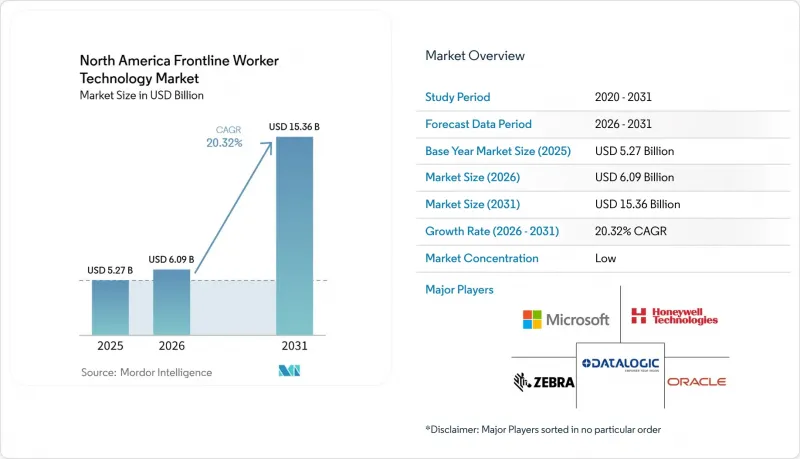
Mordor Intelligence에 의하면, 북미의 현장 근로자 기술 시장 규모는 2025년 52억 7,000만 달러로 평가되었습니다. 2026년 60억 9,000만 달러에서 2031년까지 153억 6,000만 달러로 확대되고 2026년부터 2031년까지 연평균 복합 성장률(CAGR)은 20.32%를 나타낼 전망입니다.
본 보고서는 구성 요소(소프트웨어 및 서비스), 배포 방식(클라우드 기반, 하이브리드형, On-Premise형), 조직 규모(대기업 및 중소기업), 용도(학습·지식 활용 등), 최종 사용자 산업(소매 및 전자상거래, 호스피탈리티 등), 그리고 지역별로 분류되어 있습니다. 시장 전망은 금액(달러) 기준으로 제시되어 있습니다.
북미의 현장 근로자 기술 시장 동향 및 인사이트
규제 대상 업무에서 컴플라이언스 관련 디지털 워크플로우 증가
북미의 현장 근로자 기술 시장에서 규정 준수 요건은 단순한 배경 조건에서 직접적인 구매 동인으로 변화하고 있습니다. 전자 기록 관리에 대한 수요로 인해 고용주는 지연이 따르는 수동 보고에 의존하기보다는 작업 현장에서 안전 및 워크플로우 데이터를 수집해야 하는 압박을 받고 있습니다. 또한, 전자 감시에 관한 전미노동관계위원회(NLRB)의 지침으로 인해 조직이 직원의 감시를 어떻게 문서화하고 정당화해야 하는지에 대한 기준이 높아졌으며, 비공식적인 추적 도구가 아닌 감사 가능한 워크플로우 플랫폼의 활용이 촉진되고 있습니다. 이로 인해 공급업체 선정 기준이 변화하고 있습니다. 내장된 거버넌스 제어 기능이 현장에서의 사용 편의성만큼이나 중요해졌기 때문입니다. 제약 제조 및 의료 분야에서는 미리 설정된 감사 추적 기록의 중요성이 점점 더 커지고 있습니다. 구매자들은 규정 준수 심사 시 검증 및 해명이 용이한 시스템을 요구하고 있습니다. 또한, 규정 준수를 중심으로 한 신속한 구매 주기를 문서화하고 정당화할 수 있다는 점도 북미의 현장 근로자 기술 시장을 견인하고 있습니다. 이러한 프로젝트는 재량적인 소프트웨어 지출에 비해 지연될 가능성이 낮기 때문입니다.
교대 근무 및 현장 업무의 인력 부족
교대 근무 고용주 대다수가 여전히 업무 인력 확보에 어려움을 겪고 있어, 인력 부족은 북미의 현장 근로자 기술 시장의 주요 성장 요인으로 계속 작용하고 있습니다. 2025년 1분기에는 트럭 운송 업계의 임금이 전년 동기 대비 16% 상승했고, 창고 업계의 임금도 15% 상승하여 현장 인력을 둘러싼 경쟁이 얼마나 치열해지고 있는지를 여실히 보여주었습니다. 운송, 물류, 자동차 업계에서는 2025년 미국 고용주의 74%가 인력 확보의 어려움을 보고해, 인력을 점진적으로 증원하는 대신 디지털 도구를 활용해 생산성을 향상시킬 필요성이 커졌습니다. 제조 현장에서도 유사한 과제에 직면해 있으며, 75%에 가까운 기업이 숙련된 인력 부족으로 인해 채용이 어렵다고 보고하고 있습니다. 그 결과, 기업들은 북미의 현장 근로자 기술 시장에서 직접적인 노동 생산성 향상 방안으로 디지털 작업 지시서, 작업 경로 설정, 분석 도구를 도입하고 있습니다. 또한, 고용주는 신입 사원이 더 빨리 실무에 투입되기를 원하기 때문에 이러한 압박으로 인해 신입 사원의 정착 기간에 대한 기대치도 점차 단축되고 있습니다.
분산된 레거시 시스템이 기업 내 도입을 지연시키고 있습니다.
레거시 시스템의 파편화는 특히 복잡한 산업 환경에서 북미의 현장 근로자 기술 시장의 발전을 여전히 지연시키고 있습니다. 많은 기업에서는 데이터 공유가 용이하도록 설계되지 않은 ERP 시스템, 제조 실행 시스템(MES), SCADA 플랫폼, 무선 도구, 종이 기반 워크플로를 여전히 운영하고 있습니다. 그 결과, 테스트 주기가 길어지고 통합 작업의 부담이 증가하며, 배포하기 전에 전문 컨설턴트에 대한 의존도가 높아지고 있습니다. 이 문제는 유틸리티 및 제약 업계에서 더욱 심각합니다. 왜냐하면 워크플로우 변경은 실제 운영이 승인되기 전에 문서화된 검증이 필요한 경우가 많기 때문입니다. 조사 자료에 따르면, 가트너는 ‘통합의 복잡성’을 기업용 AI 도입의 가장 큰 장벽으로 지목하고 있으며, 이는 현장 기술 도입 전반에서 나타나는 경향과 일치합니다. 즉, 디지털화에 대한 투자가 가장 활발한 기업 중 일부조차도 북미의 현장 근로자 기술 시장에서는 여전히 도입이 더딘 실정입니다. 이는 레거시 시스템의 기반이 깊을수록 의존도가 줄어들기는커녕 오히려 증가하기 때문입니다.
부문 분석
2025년 북미의 현장 근로자 기술 시장에서 구성 요소별 점유율로는 소프트웨어가 80.21%를 차지했으며, 이는 팬데믹 이후 기업들이 플랫폼 도입을 얼마나 급속도로 확대했는지를 반영합니다. 서비스 부문은 2026년부터 2031년에 걸쳐 연평균 성장률(CAGR) 26.72%라는 더 높은 성장률을 나타낼 것으로 예측됩니다. 이러한 변화는 구매자들이 단순한 라이선스 구매에 그치지 않고, 성공적인 도입에 더 많은 관심을 기울이고 있음을 보여줍니다. 그 결과, 북미의 현장 근로자 기술 시장에서는 통합, 교육, 관리형 지원 및 도입 서비스에 대한 수요가 증가하고 있습니다. 이러한 수요는 현장 플랫폼을 ERP, MES 및 운영 기술(OT) 환경에 연결하는 데 따르는 복잡성과 직접적으로 연관되어 있습니다.
초기 도입 기업들은 사내 IT 리소스로 도입을 관리하려는 경우가 많았으나, 이후 많은 조직이 체계적인 배포 지원을 위해 다시 벤더나 파트너에 의존하게 되었습니다. 기업들이 지연 시간을 줄이고 도입 성과를 향상시키기를 원함에 따라, 이러한 추세가 서비스 수익 증가로 이어지고 있습니다. 또한 성과 기반 계약도 서비스 구성을 뒷받침하고 있습니다. 이는 일부 구매자가 사용자 수에 따른 구독 요금뿐만 아니라 가동 시간 향상, 온보딩 개선, 혹은 생산성 목표 달성에 대해서도 대가를 지불하게 되었기 때문입니다. 맥킨지는 2026년 1월 보고서에서 주요 운영 기업들이 기술에 2달러를 지출할 때마다 프로세스 혁신에 3달러, 규모 확대 및 도입 촉진에 5달러를 투자하고 있다고 밝혔습니다. 이는 도입의 성공이 실행 지원에 얼마나 크게 의존하고 있는지를 보여줍니다. 그 결과, 북미의 현장 근로자 기술 업계는 소프트웨어의 폭넓은 적용 범위만큼이나 도입 역량이 중요시되는 수익 구조로 점차 전환되고 있습니다.
2025년 북미의 현장 근로자 기술 시장 규모 중 클라우드 기반 도입이 78.05%를 차지했으며, 해당 모델은 2031년까지 연평균 성장률(CAGR) 25.58%로 확대될 것으로 예측됩니다. 이러한 규모 및 성장의 조합은 기업들이 현재 통합 관리형 플랫폼을 얼마나 강력하게 선호하고 있는지를 보여줍니다. 클라우드 인프라는 자동 업데이트, 여러 거점에 걸친 가시성, 통합된 기기 관리, 그리고 분산된 직원들 간의 데이터 집계를 용이하게 지원합니다. 많은 고용주가 매장, 창고, 공장, 서비스 거점에 걸쳐 있는 대규모 현장 직원을 관리해야 하기 때문에 이러한 이점은 북미의 현장 직원용 기술 시장에서 특히 중요합니다. 또한, 공유 데이터나 모델에 대한 접근이 필요한 AI 기반 이용 사례의 확산도 지원합니다.
그렇지만 현장 업무 수행이 클라우드 연결에만 의존하는 것은 아닙니다. 작업 현장, 하역장, 야드, 원격지 등에서는 여전히 연결 단절이 빈번하게 발생하기 때문에 많은 작업 환경에서는 엣지 처리나 로컬 캐시가 여전히 필요합니다. 클라우드 백엔드와 동기화하면서 ‘오프라인 우선’ 성능을 지원하는 벤더는 이러한 상황에 대응하는 데 유리한 입장에 있습니다. 데이터 상주 요건이나 검증 요건이 여전히 엄격한 의료, 제약, 정부 기관 분야에서는 하이브리드 모델이나 On-Premise 모델이 계속해서 중요시되고 있습니다. 따라서 북미의 현장 작업자 대상 기술 업계는 엣지 기능에서 멀어지는 것이 아니라, 클라우드 관리형 아키텍처를 중심으로 이를 통합해 나가고 있습니다.
기타 혜택 :
- 엑셀 형식 시장 예측(ME) 시트
- 3개월간의 애널리스트 지원
자주 묻는 질문
목차
제1장 서론
제2장 조사 방법
제3장 주요 요약
제4장 시장 구도
제5장 시장 규모 및 성장 예측
제6장 경쟁 구도
제7장 시장 기회 및 향후 전망
KTH 26.08.10According to Mordor Intelligence, the North America frontline worker technology market size is projected to expand from USD 5.27 billion in 2025 and USD 6.09 billion in 2026 to USD 15.36 billion by 2031, registering a CAGR of 20.32% between 2026 and 2031.
This report is Segmented by Component (Software, and Services), Deployment (Cloud-Based, Hybrid, and On-Premises), Organization Size (Large Enterprises, and Small and Medium Enterprises), Application (Learning and Knowledge Enablement, and More), End-User Industry (Retail and E-Commerce, Hospitality, and More), and Geography. The Market Forecasts are Provided in Terms of Value (USD).
North America Frontline Worker Technology Market Trends and Insights
Rising Compliance-Linked Digital Workflows in Regulated Operations
Compliance requirements have moved from a background condition to a direct purchase trigger in the North America frontline worker technology market. Electronic recordkeeping needs are pushing employers to capture safety and workflow data at the point of work rather than rely on delayed manual reporting. The NLRB guidance on electronic surveillance has also raised the standard for how organizations document and justify worker monitoring, encouraging the use of auditable workflow platforms rather than informal tracking tools. This is changing vendor selection because built-in governance controls now matter as much as frontline usability. In pharmaceutical manufacturing and healthcare, pre-configured audit trails are becoming more important. Buyers want systems that are easier to validate and defend during compliance reviews. Documenting and justifying faster compliance-led buying cycles are also helping the North America frontline worker technology market, as these projects are less likely to be delayed than discretionary software spending.
Labor Scarcity Across Shift-Based and Field Operations
Labor scarcity remains a core growth driver for the North America frontline worker technology market, as many shift-based employers still struggle to fill operational roles. Trucking wages rose 16%, and warehousing pay increased 15% year over year in Q1 2025, underscoring how intense the competition for frontline labor had become. In transportation, logistics, and automotive, 74% of US employers reported difficulty filling roles in 2025, reinforcing the pressure to improve output with digital tools rather than incremental hiring. Manufacturing sites faced the same issue, with nearly 75% reporting difficulty hiring due to a shortage of skilled candidates. As a result, companies are buying digital work instructions, task routing, and analytics tools as direct labor productivity solutions in the North America frontline worker technology market. That same pressure is also shortening onboarding expectations because employers need new hires to become effective faster.
Fragmented Legacy Systems Slow Enterprise Rollouts
Legacy system fragmentation continues to slow the North America frontline worker technology market, especially in complex industrial settings. Many enterprises still operate with ERP systems, manufacturing execution systems, SCADA platforms, radio tools, and paper workflows that were never designed to easily share data. That creates longer testing cycles, heavier integration work, and added dependence on specialized consultants before a rollout can move into production. The issue is more severe in utilities and pharmaceutical operations because workflow changes often need documented validation before they can be approved for live use. Gartner was cited in the input as identifying integration complexity as the top barrier to operational AI deployment, which supports the same pattern seen across frontline rollouts. This means some of the most digitally invested enterprises still move slowly in the North America frontline worker technology market because deeper legacy estates create more dependencies, not fewer.
Other drivers and restraints analyzed in the detailed report include:
- ROI Pressure on Reduced Downtime and Faster Task Completion
- Expansion of AI-Guided Work Instructions at the Point of Use
- Frontline Change Fatigue and Adoption Resistance
For complete list of drivers and restraints, kindly check the Table Of Contents.
Segment Analysis
Software held 80.21% of the North America frontline worker technology market share in 2025 within the component mix, reflecting how quickly enterprises expanded platform deployments after the pandemic. Services are forecast to record the faster growth rate at a 26.72% CAGR through 2026-2031. This shift shows that buyers are moving beyond basic license purchases and paying more attention to implementation success. The North America frontline worker technology market is therefore seeing stronger demand for integration, training, managed support, and deployment services. That demand is directly tied to the complexity of connecting frontline platforms to ERP, MES, and operational technology environments.
Earlier adopters often tried to manage deployments with internal IT resources, but many organizations later returned to vendors and partners for structured rollout support. That pattern is increasing service revenue because enterprises want fewer delays and better adoption outcomes. Outcome-based contracting also supports the services mix because some buyers now pay for uptime gains, onboarding improvements, or productivity targets rather than only per-seat subscriptions. McKinsey reported in January 2026 that leading operations companies invested USD 3 in process revamping and USD 5 in scaling and adoption for every USD 2 spent on technology, which shows how heavily successful deployments depend on execution support. As a result, the North America frontline worker technology industry is gradually moving toward a revenue mix where deployment capability matters almost as much as software breadth.
Cloud-based deployment accounted for 78.05% of the North America frontline worker technology market size in 2025, and the same model is projected to expand at a 25.58% CAGR through 2031. This combination of scale and growth shows how strongly enterprises now prefer centrally managed platforms. Cloud infrastructure supports automatic updates, multi-site visibility, centralized device management, and easier data aggregation across distributed workforces. Those benefits are especially important in the North America frontline worker technology market because many employers need to manage large frontline populations across stores, warehouses, plants, and service sites. It also supports the spread of AI-enabled use cases that need shared data and model access.
Even so, frontline execution does not depend solely on cloud connectivity. Many work environments still need edge processing and local caching because connectivity gaps remain common on shop floors, docks, yards, and remote sites. Vendors that support offline-first performance while synchronizing with cloud back ends are better placed to serve these conditions. Hybrid and on-premises models remain relevant in healthcare, pharmaceuticals, and government settings, where data residency and validation requirements remain high. The North America frontline worker technology industry is therefore not moving away from edge capabilities, but is organizing them around a cloud-managed architecture.
Complete Report Scope:
- By Component
- Software
- Services
- By Deployment
- Cloud-Based
- Hybrid
- On-Premises
- By Organization Size
- Large Enterprises
- Small and Medium Enterprises
- By Application
- Employee Communication and Engagement
- Workforce Execution and Task Management
- Workforce Scheduling and Coordination
- Learning and Knowledge Enablement
- Workforce Analytics and Performance Management
- Safety and Compliance Management
- Other Applications
- By End-User Industry
- Retail and E-Commerce
- Industrial Manufacturing
- Healthcare and Life Sciences
- Transportation and Logistics
- Hospitality
- Construction
- Government and Public Administration
- Other End-User Industries
- By Geography
- United States
- Canada
- Mexico
List of Companies Covered in this Report:
- Zebra Technologies Corporation
- Honeywell International Inc.
- Microsoft Corporation
- ServiceNow, Inc.
- SAP SE
- Oracle Corporation
- WorkJam, Inc.
- Beekeeper AG
- TeamViewer SE
- RealWear, Inc.
- Vuzix Corporation
- ProGlove GmbH
- Datalogic S.p.A.
- Panasonic Holdings Corporation
- Motorola Solutions, Inc.
- AWS, Inc.
- Logility Supply Chain Solutions, Inc.
- Samsara Inc.
- Augmentir, Inc.
- Frontline Education, Inc.
Additional Benefits:
- The market estimate (ME) sheet in Excel format
- 3 months of analyst support
TABLE OF CONTENTS
1 INTRODUCTION
- 1.1 Study Assumptions and Market Definition
- 1.2 Scope of the Study
2 RESEARCH METHODOLOGY
3 EXECUTIVE SUMMARY
4 MARKET LANDSCAPE
- 4.1 Market Overview
- 4.2 Market Drivers
- 4.2.1 Rising Compliance-Linked Digital Workflows in Regulated Operations
- 4.2.2 Labor Scarcity Across Shift-Based and Field Operations
- 4.2.3 ROI Pressure on Reduced Downtime and Faster Task Completion
- 4.2.4 Expansion of AI-Guided Work Instructions at the Point of Use
- 4.2.5 Proliferation of Ruggedized Wearables and Mobile-First Enterprise Apps
- 4.2.6 Growing Demand for Real-Time Knowledge Capture from Senior Workers
- 4.3 Market Restraints
- 4.3.1 Fragmented Legacy Systems Slow Enterprise Rollouts
- 4.3.2 Frontline Change Fatigue and Adoption Resistance
- 4.3.3 Device Hygiene, Durability, and Support Complexity
- 4.3.4 Data Privacy and Worker Monitoring Concerns
- 4.4 Industry Value Chain Analysis
- 4.5 Regulatory Landscape
- 4.6 Technological Outlook
- 4.7 Impact of Macroeconomic Factors on the Market
- 4.8 Porter's Five Forces Analysis
- 4.8.1 Threat of New Entrants
- 4.8.2 Bargaining Power of Suppliers
- 4.8.3 Bargaining Power of Buyers
- 4.8.4 Threat of Substitutes
- 4.8.5 Competitive Rivalry
5 MARKET SIZE AND GROWTH FORECASTS (VALUE)
- 5.1 By Component
- 5.1.1 Software
- 5.1.2 Services
- 5.2 By Deployment
- 5.2.1 Cloud-Based
- 5.2.2 Hybrid
- 5.2.3 On-Premises
- 5.3 By Organization Size
- 5.3.1 Large Enterprises
- 5.3.2 Small and Medium Enterprises
- 5.4 By Application
- 5.4.1 Employee Communication and Engagement
- 5.4.2 Workforce Execution and Task Management
- 5.4.3 Workforce Scheduling and Coordination
- 5.4.4 Learning and Knowledge Enablement
- 5.4.5 Workforce Analytics and Performance Management
- 5.4.6 Safety and Compliance Management
- 5.4.7 Other Applications
- 5.5 By End-User Industry
- 5.5.1 Retail and E-Commerce
- 5.5.2 Industrial Manufacturing
- 5.5.3 Healthcare and Life Sciences
- 5.5.4 Transportation and Logistics
- 5.5.5 Hospitality
- 5.5.6 Construction
- 5.5.7 Government and Public Administration
- 5.5.8 Other End-User Industries
- 5.6 By Geography
- 5.6.1 United States
- 5.6.2 Canada
- 5.6.3 Mexico
6 COMPETITIVE LANDSCAPE
- 6.1 Market Concentration
- 6.2 Strategic Moves
- 6.3 Market Share Analysis
- 6.4 Company Profiles (includes Global Level Overview, Market Level Overview, Core Segments, Financials as available, Strategic Information, Market Rank/Share, Products and Services, Recent Developments)
- 6.4.1 Zebra Technologies Corporation
- 6.4.2 Honeywell International Inc.
- 6.4.3 Microsoft Corporation
- 6.4.4 ServiceNow, Inc.
- 6.4.5 SAP SE
- 6.4.6 Oracle Corporation
- 6.4.7 WorkJam, Inc.
- 6.4.8 Beekeeper AG
- 6.4.9 TeamViewer SE
- 6.4.10 RealWear, Inc.
- 6.4.11 Vuzix Corporation
- 6.4.12 ProGlove GmbH
- 6.4.13 Datalogic S.p.A.
- 6.4.14 Panasonic Holdings Corporation
- 6.4.15 Motorola Solutions, Inc.
- 6.4.16 AWS, Inc.
- 6.4.17 Logility Supply Chain Solutions, Inc.
- 6.4.18 Samsara Inc.
- 6.4.19 Augmentir, Inc.
- 6.4.20 Frontline Education, Inc.
7 MARKET OPPORTUNITIES AND FUTURE OUTLOOK
- 7.1 White-Space and Unmet-Need Assessment


