

|
시장보고서
상품코드
2099400
ASEAN의 현장 근로자 기술 : 시장 점유율 분석, 업계 동향 및 통계, 성장 예측(2026-2031년)ASEAN Frontline Worker Technology - Market Share Analysis, Industry Trends & Statistics, Growth Forecasts (2026 - 2031) |
||||||
 Mordor Intelligence
Mordor Intelligence에 의하면, ASEAN의 현장 근로자 기술 시장 규모는 2025년에 3억 1,000만 달러로 평가되었습니다. 2026년부터 2031년에 걸쳐 CAGR 27.99%로 확대되어 2031년에는 13억 1,000만 달러에 이를 것으로 예측됩니다.
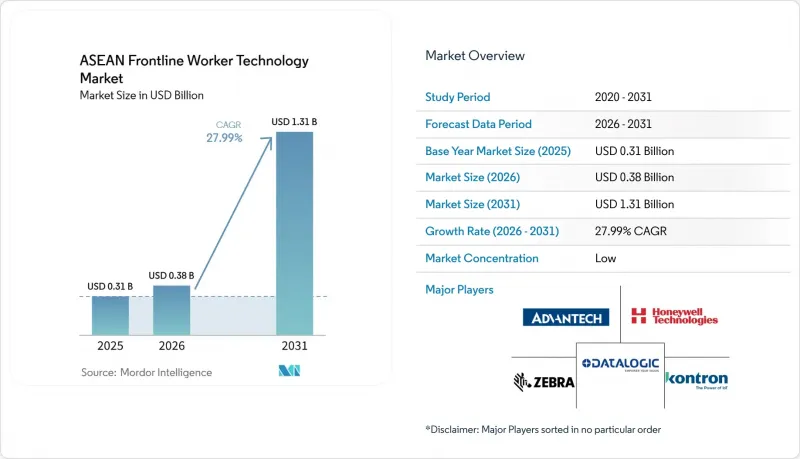
본 보고서는 구성 요소(소프트웨어 및 서비스), 배포 방식(클라우드 기반, 하이브리드형, On-Premise형), 조직 규모(대기업 및 중소기업), 용도(직원 커뮤니케이션 및 참여도 등), 최종 사용자 산업(소매 및 전자상거래, 건설 등), 지역별로 분류되어 있습니다. 시장 전망은 금액(달러)으로 표시되어 있습니다.
ASEAN의 현장 근로자 기술 시장 동향 및 인사이트
아세안(ASEAN) 제조 거점에서의 산업 디지털화 진전
산업의 현대화에 따라, ASEAN 현장 근로자 기술 시장의 구매 및 제조 거점 전반에 걸친 도입 방식에 변화가 일어나고 있습니다. 기업들은 전체 생산 워크플로우에 걸친 신속한 조정, 보다 적절한 예외 처리, 가시성 향상을 요구함에 따라 조달 활동은 공장 수준의 운영 성과에 중점을 두게 되었습니다. 이러한 변화는 ‘아세안 디지털 마스터플랜 2030’에 기반한 상호 운용 가능한 디지털 표준 및 국경을 초월한 디지털 협력에 대한 지역적 정책 지원에 힘입어 가속화되고 있습니다. 동남아시아 전역의 기업 차원 자동화 계획 또한 단편적인 기술 업그레이드가 아닌 업무 프로세스에 대한 근본적인 재검토를 나타내고 있으며, 이는 실행 및 커뮤니케이션 플랫폼에 대한 지속적인 수요를 뒷받침하고 있습니다. 따라서 아세안의 현장 근로자 기술 시장은 산업 정책 및 운영상의 압박과 보조를 맞추어 변화하고 있으며, 도입 지연이 발생할 여지는 줄어들고 있습니다. 서비스 제공을 현지화하고, 규정 준수 요건을 충족하며, 다중 거점 확장을 지원할 수 있는 공급업체는 이러한 수요를 지속적인 계약으로 전환하는 데 유리한 입장에 있습니다.
커넥티드 워커 및 견고한 기기의 도입 확대
기업들이 육체적으로 혹독하고 시간적 제약이 심한 환경에서 일하는 직원들을 연결함에 따라, ASEAN의 현장 근로자 기술 시장은 점점 더 기기에 의존하는 양상을 보이고 있습니다. 러기드 핸드헬드 단말기, 태블릿, 스캐너, 웨어러블 단말기 및 작업 안내 도구는 단순한 하드웨어 구매가 아닌, 보다 광범위한 워크플로우 재설계의 일환으로 도입되고 있습니다. 하네웰이 2026년 1월에 'Performance+ for Guided Work'를 출시한 것은 창고 및 물류 현장에서 음성 안내, 분석 기능, 다국어 지원이 업무 성과와 어떻게 직접적으로 연결되는지를 보여주었습니다. 또한, 블랙라인 세이프티(Blackline Safety)의 ‘G8’ 발표는 안전용 웨어러블 단말기에 대해 통신, 모니터링, 클라우드 연결을 단일 플랫폼에 통합하는 것이 이제 기대되고 있으며, 통합된 현장용 솔루션으로의 광범위한 전환을 반영하고 있음을 보여주었습니다. 이는 아세안(ASEAN) 지역의 현장 근로자 기술 시장에 중요한 의미를 지닙니다. 왜냐하면 기기와 소프트웨어를 번들로 도입하는 방식은 전환 비용을 높이고, 시간이 지남에 따라 공급업체와의 관계를 더욱 공고히 하기 때문입니다. 또한 대규모 현장 팀 전체에서 이러한 도입을 원활하게 운영하기 위해서는 설정, 통합, 교육, 지속적인 지원이 필요하므로 서비스의 역할도 확대될 것입니다.
견고한 기기와 도입 생태계의 높은 초기 비용
도입 시 초기 비용은 특히 가격에 민감한 제조 및 물류 환경에서 여전히 ASEAN의 현장 근로자 기술 시장의 명백한 걸림돌로 작용하고 있습니다. 이 문제는 기기 자체에만 국한되지 않습니다. 왜냐하면 완전한 도입에는 대개 기기 관리, 지원, 통합 및 작업자 교육이 포함되기 때문입니다. 인도네시아의 노동 안전 관리 디지털 전환에 관한 조사에서는 많은 기업이 ‘관심’ 단계에서 ‘실행’ 단계로 전환할 때 직면하는 구조적 한계가 드러났습니다. 구독이나 리스 같은 대응책이 등장하고 있으며, 2025년 6월 CHN과 The Joy Factory가 체결한 제휴는 공급업체들이 서비스 지향적인 하드웨어 활용을 통해 자본 부담을 줄이려 하고 있음을 보여줍니다. 그렇지만 ASEAN의 현장 근로자 기술 시장에서는 여전히 도입 현황에 편차가 나타나고 있습니다. 소규모 사업자들은 견고한 단말기를 전면적으로 도입하기 전에 투자 회수 기간이 짧은 소프트웨어 모듈을 우선시하는 경우가 많기 때문입니다. 이러한 제약 요인은 수요가 급속히 증가하고 있는 분야이자, 광범위한 배포에 드는 비용이 도입 규모를 제한하고 있는 중소기업(SME) 부문에서 가장 두드러집니다.
부문 분석
2025년 ASEAN의 현장 근로자 기술 시장에서 소프트웨어가 76.44%를 차지했으며, 구매자들이 워크플로우, 커뮤니케이션, 분석, 규정 준수 각 영역에 가장 많은 예산을 할당했음이 나타났습니다. 이러한 구성 비율은 ASEAN의 현장 근로자 기술 시장이 하드웨어만이 현장의 디지털화를 정의하던 ‘기기 주도 단계’를 이미 벗어났음을 시사합니다. 구매 기업들은 업무 수행, 직원 간 커뮤니케이션, 사고 대응 및 보고를 단일 운영 계층 아래에서 통합할 수 있는 플랫폼을 점점 더 선호하게 되었습니다. 이로 인해 기존 디바이스를 교체하지 않고도 여러 거점에 배포할 수 있는 소프트웨어 모듈의 가치도 높아졌습니다. 이러한 상황에서 소프트웨어는 기업이 대규모 인프라 업그레이드를 완료하기 전부터 직원 간의 협업을 개선할 수 있게 해주기 때문에 확장의 기반이 되어 왔습니다.
서비스 시장은 2031년까지 연평균 성장률(CAGR) 30.84%를 나타낼 것으로 예측되며, 이는 ASEAN의 현장 근로자 기술 업계에서 실제 도입에 수반되는 구현 부담이 종종 발생한다는 점을 반영합니다. 도입에는 일반적으로 언어 설정, 기기 등록, 워크플로우 설계, 교육 및 가동 개시 후 지원이 필요하기 때문에 서비스 제공업체는 단순한 소프트웨어 재판매 이상의 역할을 수행하게 됩니다. 2025년 11월에 출시된 Scandit의 SDK 8은 지능형 데이터 수집이 업무 워크플로우의 더 깊은 부분으로 침투하고 있음을 보여주며, 현장 도입과 관련된 통합 및 설정 작업의 필요성이 높아지고 있습니다. 또한, 기업들이 전 사업장에 걸쳐 더 정확한 기록, 더 견고한 에스컬레이션 경로, 그리고 더 엄격한 보고 체계를 요구함에 따라, 안전 및 감사에 대한 기대도 도입을 더욱 복잡하게 만들고 있습니다. 그 결과, ASEAN의 현장 근로자 기술 시장의 서비스 규모는 단순한 수량 증가뿐만 아니라 도입의 복잡화를 배경으로 확대되고 있습니다.
2025년, ASEAN의 현장 근로자 기술 시장에서 클라우드 기반 도입이 69.12%를 차지했습니다. 이는 구매자들이 단일 환경에서 여러 현장 거점을 관리할 수 있는 보다 간단한 방법을 원하고 있음을 보여줍니다. 클라우드 모델은 거점별 인프라 유지 관리 부담을 줄여주고, 업데이트 배포, 사용 현황 추적, 그리고 국가 간 워크플로우 표준화를 용이하게 합니다. 이는 많은 사업자가 분산된 시설을 운영하고 있으며, 현장 팀 전체에 걸쳐 일관된 가시성이 필요하기 때문에 ASEAN의 현장 근로자 기술 시장에서 중요한 의미를 지닙니다. 또한 클라우드 도입은 구현 주기 단축 및 사내 IT 관리 비용 절감을 원하는 조직의 요구에도 부응하고 있습니다. 따라서 특히 소프트웨어의 범위가 커뮤니케이션, 업무 관리, 규정 준수 추적에 이르는 경우, 많은 신규 도입 사례에서 클라우드가 기본 선택지로 자리 잡고 있습니다.
지연, 로컬 처리 또는 내부 정책으로 인해 완전한 클라우드 기반 환경이 현실적이지 않은 경우, 하이브리드 도입이 주목받고 있습니다. 기밀 정보를 다루는 시설이나 보다 엄격한 내부 통제 하에 운영되는 시설에서는 On-Premise 도입이 여전히 중요하게 여겨지고 있습니다. '아세안 디지털 마스터플랜 2030'은 지역 전체의 디지털 상호운용성 확대를 지원하고 있으며, 이를 통해 클라우드 주도형 솔루션은 시간이 지남에 따라 구조적 장벽을 줄이며 규모를 확대해 나갈 수 있게 될 것입니다. 하지만 업종에 따라 현장 상황과 기업 요구 사항이 크게 다르기 때문에 ASEAN의 현장 근로자 기술 시장에서는 앞으로도 혼합형 도입 기반이 계속해서 지지를 받을 것입니다. 구매자들은 현장 특유의 운영 요구 사항에 대한 관리 권한을 잃지 않으면서 클라우드의 이점을 누리고자 하므로, 유연한 도입 경로를 제공하는 벤더가 우위를 유지할 가능성이 높습니다.
기타 혜택 :
- 엑셀 형식 시장 예측(ME) 시트
- 3개월간의 애널리스트 지원
자주 묻는 질문
목차
제1장 서론
제2장 조사 방법
제3장 주요 요약
제4장 시장 구도
제5장 시장 규모 및 성장 예측
제6장 경쟁 구도
제7장 시장 기회 및 향후 전망
KTH 26.08.10According to Mordor Intelligence, the ASEAN frontline worker technology market size stood at USD 0.31 billion in 2025 and is forecast to reach USD 1.31 billion by 2031, at a CAGR of 27.99% during 2026-2031.
This report is Segmented by Component (Software, and Services), Deployment (Cloud-Based, Hybrid, and On-Premises), Organization Size (Large Enterprises, and Small and Medium Enterprises), Application (Employee Communication and Engagement, and More), End-User Industry (Retail and E-Commerce, Construction, and More), and Geography. The Market Forecasts are Provided in Terms of Value (USD).
ASEAN Frontline Worker Technology Market Trends and Insights
Rising Industrial Digitization in ASEAN Manufacturing Hubs
Industrial modernization is changing how the ASEAN frontline worker technology market is bought and deployed across manufacturing corridors. Procurement is moving closer to plant-level operational outcomes because companies want faster coordination, better exception handling, and stronger visibility across production workflows. This shift is being reinforced by regional policy support for interoperable digital standards and cross-border digital coordination under the ASEAN Digital Master Plan 2030. Firm-level automation plans across Southeast Asia also point to a deeper reworking of worker processes rather than isolated technology upgrades, which supports sustained demand for execution and communication platforms. The ASEAN frontline worker technology market is therefore moving in step with industrial policy and operating pressure, reducing the room for delayed adoption. Vendors that can localize service delivery, meet compliance expectations, and support multisite rollouts are better placed to convert this demand into recurring contracts.
Expansion of Connected Worker and Rugged Device Deployment
The ASEAN frontline worker technology market is becoming increasingly device-intensive as companies connect workers in physically demanding, time-sensitive environments. Rugged handhelds, tablets, scanners, wearables, and guided-work tools are being adopted as part of a broader workflow redesign rather than as stand-alone hardware purchases. Honeywell's January 2026 launch of Performance+ for Guided Work showed how voice guidance, analytics, and multilingual support are being tied directly to operational performance in warehouse and logistics settings. Blackline Safety's G8 announcement also showed that safety wearables are now expected to combine communication, monitoring, and cloud connectivity into a single platform, reflecting a wider move toward integrated frontline stacks. This matters for the ASEAN frontline worker technology market because bundled device-and-software deployments raise switching costs and deepen vendor relationships over time. It also expands the role of services, since companies need setup, integration, training, and ongoing support to make these deployments work across large frontline teams.
High Upfront Cost of Rugged Devices and Deployment Ecosystems
Upfront deployment cost remains a clear drag on the ASEAN frontline worker technology market, especially in price-sensitive manufacturing and logistics environments. The issue is not limited to the device itself, because full deployment often includes device management, support, integration, and worker training. Research on digital transformation in occupational safety management in Indonesia identified structural limits that many firms face when moving from interest to execution. Subscription and leasing responses are emerging, and the June 2025 partnership between CHN and The Joy Factory showed how suppliers are trying to reduce the capital burden through service-oriented hardware access. Even so, the ASEAN frontline worker technology market still faces uneven adoption, as smaller operators often prioritize shorter-payback software modules before committing to a full rugged device estate. This restraint is most visible in the SME segment, where demand is growing quickly but the cost of a broad rollout still limits deployment depth.
Other drivers and restraints analyzed in the detailed report include:
- Compliance Pressure for Worker Safety, Traceability, and Auditability
- Multisite Workforce Scheduling across Distributed Operations
- Fragmented Connectivity across Industrial and Remote Sites
For complete list of drivers and restraints, kindly check the Table Of Contents.
Segment Analysis
Software accounted for 76.44% of the ASEAN frontline worker technology market in 2025, indicating that buyers were allocating the largest budgets to workflow, communication, analytics, and compliance layers. That mix suggests the ASEAN frontline worker technology market had already moved beyond a device-led phase in which hardware alone defined frontline digitization. Buyers increasingly preferred platforms that could unify task execution, worker communication, incident handling, and reporting under one operating layer. This also increased the value of software modules that can be rolled out across multiple sites without replacing existing devices. In that context, software remained the anchor for expansion because it could improve workforce coordination even before companies completed larger infrastructure upgrades.
Services are projected to grow at a 30.84% CAGR through 2031, reflecting the implementation burden that often accompanies real deployments in the ASEAN frontline worker technology industry. Rollouts usually require language setup, device enrollment, workflow design, training, and support after go-live, which gives service providers a larger role than simple software resale. Scandit's SDK 8 release in November 2025 demonstrated how intelligent data capture is moving deeper into operational workflows, increasing the need for integration and configuration work around frontline deployments. Safety and audit expectations are also making implementation more complex, as companies seek cleaner records, stronger escalation paths, and better reporting discipline across sites. As a result, the ASEAN frontline worker technology market size for services is rising on the back of deployment complexity rather than simple volume growth alone.
Cloud-based deployment accounted for 69.12% of the ASEAN frontline worker technology market in 2025, underscoring buyers' desire for a simpler way to manage multiple frontline locations under a single environment. Cloud models lower the burden of maintaining site-by-site infrastructure and make it easier to roll out updates, track usage, and standardize workflows across countries. This matters in the ASEAN frontline worker technology market because many operators run distributed facilities and need consistent visibility across their frontline teams. Cloud deployment also meets the needs of organizations seeking faster implementation cycles and lower internal IT overhead. It has therefore become the default route for many new deployments, especially when software scope spans communication, tasking, and compliance tracking.
Hybrid deployment is gaining traction when latency, local processing, or internal policy make a fully cloud-based setup impractical. On-premises deployment still matters in facilities that handle sensitive information or operate under tighter internal controls. The ASEAN Digital Master Plan 2030 supports broader digital interoperability across the region, which helps cloud-led solutions scale with fewer structural barriers over time. Even so, the ASEAN frontline worker technology market will continue to support a mixed deployment base, as site conditions and enterprise requirements vary widely across industries. Vendors that offer flexible deployment paths are likely to maintain an advantage, as buyers want cloud benefits without losing control over site-specific operational needs.
Complete Report Scope:
- By Component
- Software
- Services
- By Deployment
- Cloud-Based
- Hybrid
- On-Premises
- By Organization Size
- Large Enterprises
- Small and Medium Enterprises
- By Application
- Employee Communication and Engagement
- Workforce Execution and Task Management
- Workforce Scheduling and Coordination
- Learning and Knowledge Enablement
- Workforce Analytics and Performance Management
- Safety and Compliance Management
- Other Applications
- By End-User Industry
- Retail and E-Commerce
- Industrial Manufacturing
- Healthcare and Life Sciences
- Transportation and Logistics
- Hospitality
- Construction
- Government and Public Administration
- Other End-User Industries
- By Geography
- Singapore
- Indonesia
- Malaysia
- Philippines
- Thailand
- Vietnam
- Rest of ASEAN
List of Companies Covered in this Report:
- Zebra Technologies Corporation
- Honeywell International Inc.
- Panasonic Holdings Corporation
- Datalogic S.p.A.
- Kontron AG
- Advantech Co., Ltd.
- Getac Technology Corporation
- Handheld Group AB
- SOTI Inc.
- Ivanti, Inc.
- ProGlove GmbH
- Scandit AG
- Bluebird Inc.
- Bullitt Group Limited
- MioTech
- ST Engineering
- M3 Mobile Co., Ltd.
- Trimble Inc.
- Blackline Safety Corp.
- JLT Mobile Computers AB
Additional Benefits:
- The market estimate (ME) sheet in Excel format
- 3 months of analyst support
TABLE OF CONTENTS
1 INTRODUCTION
- 1.1 Study Assumptions and Market Definition
- 1.2 Scope of the Study
2 RESEARCH METHODOLOGY
3 EXECUTIVE SUMMARY
4 MARKET LANDSCAPE
- 4.1 Market Overview
- 4.2 Market Drivers
- 4.2.1 Rising Industrial Digitization in ASEAN Manufacturing Hubs
- 4.2.2 Expansion of Connected Worker and Rugged Device Deployment
- 4.2.3 Compliance Pressure for Worker Safety, Traceability, and Auditability
- 4.2.4 Multisite Workforce Scheduling Across Distributed Operations
- 4.2.5 AI-Enabled Real-Time Task Orchestration at the Edge
- 4.2.6 Cloud Adoption for Frontline Operations and Field Data Capture
- 4.3 Market Restraints
- 4.3.1 High Upfront Cost of Rugged Devices and Deployment Ecosystems
- 4.3.2 Fragmented Connectivity Across Industrial and Remote Sites
- 4.3.3 Limited Frontline Change Readiness and Training Gaps
- 4.3.4 Data Security and Device Management Complexity
- 4.4 Industry Value Chain Analysis
- 4.5 Regulatory Landscape
- 4.6 Technological Outlook
- 4.7 Impact of Macroeconomic Factors on the Market
- 4.8 Porter's Five Forces Analysis
- 4.8.1 Threat of New Entrants
- 4.8.2 Bargaining Power of Suppliers
- 4.8.3 Bargaining Power of Buyers
- 4.8.4 Threat of Substitutes
- 4.8.5 Competitive Rivalry
5 MARKET SIZE AND GROWTH FORECASTS (VALUE)
- 5.1 By Component
- 5.1.1 Software
- 5.1.2 Services
- 5.2 By Deployment
- 5.2.1 Cloud-Based
- 5.2.2 Hybrid
- 5.2.3 On-Premises
- 5.3 By Organization Size
- 5.3.1 Large Enterprises
- 5.3.2 Small and Medium Enterprises
- 5.4 By Application
- 5.4.1 Employee Communication and Engagement
- 5.4.2 Workforce Execution and Task Management
- 5.4.3 Workforce Scheduling and Coordination
- 5.4.4 Learning and Knowledge Enablement
- 5.4.5 Workforce Analytics and Performance Management
- 5.4.6 Safety and Compliance Management
- 5.4.7 Other Applications
- 5.5 By End-User Industry
- 5.5.1 Retail and E-Commerce
- 5.5.2 Industrial Manufacturing
- 5.5.3 Healthcare and Life Sciences
- 5.5.4 Transportation and Logistics
- 5.5.5 Hospitality
- 5.5.6 Construction
- 5.5.7 Government and Public Administration
- 5.5.8 Other End-User Industries
- 5.6 By Geography
- 5.6.1 Singapore
- 5.6.2 Indonesia
- 5.6.3 Malaysia
- 5.6.4 Philippines
- 5.6.5 Thailand
- 5.6.6 Vietnam
- 5.6.7 Rest of ASEAN
6 COMPETITIVE LANDSCAPE
- 6.1 Market Concentration
- 6.2 Strategic Moves
- 6.3 Market Share Analysis
- 6.4 Company Profiles (includes Global Level Overview, Market Level Overview, Core Segments, Financials as available, Strategic Information, Market Rank/Share, Products and Services, Recent Developments)
- 6.4.1 Zebra Technologies Corporation
- 6.4.2 Honeywell International Inc.
- 6.4.3 Panasonic Holdings Corporation
- 6.4.4 Datalogic S.p.A.
- 6.4.5 Kontron AG
- 6.4.6 Advantech Co., Ltd.
- 6.4.7 Getac Technology Corporation
- 6.4.8 Handheld Group AB
- 6.4.9 SOTI Inc.
- 6.4.10 Ivanti, Inc.
- 6.4.11 ProGlove GmbH
- 6.4.12 Scandit AG
- 6.4.13 Bluebird Inc.
- 6.4.14 Bullitt Group Limited
- 6.4.15 MioTech
- 6.4.16 ST Engineering
- 6.4.17 M3 Mobile Co., Ltd.
- 6.4.18 Trimble Inc.
- 6.4.19 Blackline Safety Corp.
- 6.4.20 JLT Mobile Computers AB
7 MARKET OPPORTUNITIES AND FUTURE OUTLOOK
- 7.1 White-Space and Unmet-Need Assessment


