
|
시장보고서
상품코드
2113842
이탈리아의 병원 용품 시장 : 시장 점유율 분석, 업계 동향 및 통계, 성장 예측(2026-2031년)Italy Hospital Supplies - Market Share Analysis, Industry Trends & Statistics, Growth Forecasts (2026 - 2031) |
||||||
 Mordor Intelligence
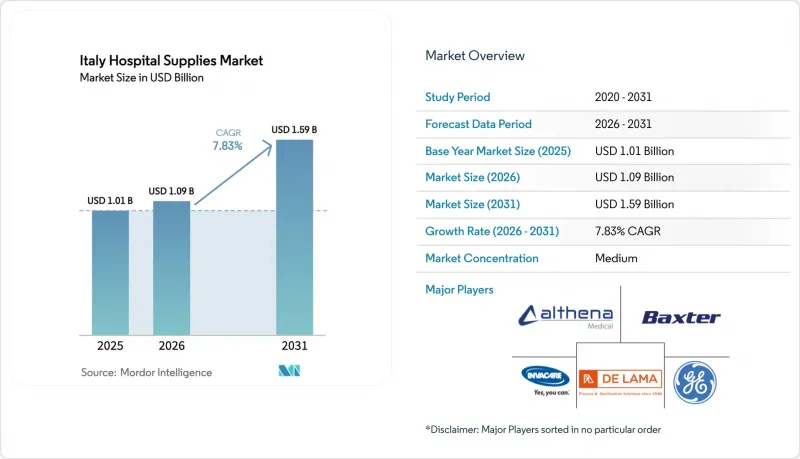
Mordor Intelligence에 의하면, 이탈리아의 병원 용품 시장 규모는 2025년에 10억 1,000만 달러로 평가되었고 2026년 10억 9,000만 달러에서 2031년까지 15억 9,000만 달러에 이를 것으로 예측됩니다.
예측 기간(2026-2031년) 동안 연평균 성장률(CAGR)은 7.83%를 나타낼 것으로 전망됩니다.
본 보고서는 제품별(환자 검사 장비, 수술실용 장비, 이동 보조 기구·이송 장비 등), 최종 사용자별(외래수술센터(ASC) 등), 유통 채널별(직접 입찰/일괄 조달, 유통업체·딜러를 통한 판매, 전자상거래 및 GPO 플랫폼)로 분류되어 있습니다. 시장 예측은 금액(달러)으로 표시되어 있습니다.
이탈리아의 병원 용품 시장 동향 및 인사이트
증가하는 만성 질환의 부담
2022년, 이탈리아 인구의 23.8%가 65세 이상이었으며, 이 비율은 2050년까지 34%를 나타낼 것으로 예측됩니다. 이러한 인구 통계학적 동향으로 인해 주사기, 혈당 측정기, 상처 관리용 드레싱 등의 병원 용품에 대한 안정적인 수요가 확보되고 있습니다. 사망 원인의 31%를 차지하는 심혈관 질환에 더해, 인구의 40.9%가 적어도 하나의 만성 질환을 앓고 있는 상황에서 병원에서는 환자 검사용 기기의 대량 조달을 위해 CONSIP에 의한 다년 계약 체계가 도입되었습니다. 당뇨병 발병률의 상승은 특히 전자 차트와 연동된 연속 혈당 모니터의 반복적인 구매를 촉진하고 있습니다. 2019년부터 2021년에 걸쳐 불안 장애 및 우울증 정신 질환 진단 건수는 각각 19.8%와 17.3% 증가하여, 지역 의료시설과 3차 의료 센터를 연결하는 원격 정신과 진료 키트 수요를 뒷받침했습니다. 재입원을 효과적으로 줄여주는 만성 질환 관리 번들 키트를 제공하는 공급업체들은 이탈리아 전역의 병원 용품 시장에서 가치 기반 입찰에서 경쟁 우위를 점하고 있습니다.
정부의 부흥 계획에 따른 설비 투자
PNRR(국가 부흥·회복 계획)에는 의료 지출로 156억 3,000만 유로(171억 9,000만 달러)가 편성되어 있으며, 이 중 40억 5,000만 유로는 병원의 기술 업그레이드, 16억 7,000만 유로가 디지털 인프라에 배정되어 있습니다. 조달 목표에는 CT, MRI, 혈관조영장치 3,100대 및 병원 84곳의 내진 보강이 포함되어 있습니다. 2024년 시행 지연으로 인해 2026년 마일스톤을 달성하려면 7배의 속도 향상이 필요해졌으며, 이로 인해 입찰 기간이 단축되어 CONSIP 인증을 보유한 기존 사업자에게 유리한 상황이 조성되고 있습니다. 남부 지역에는 불균형적으로 많은 예산이 배정되었으나, 행정 역량의 부족으로 인해 승인이 지연되고 있어 이탈리아의 병원 용품 시장 내 ‘양극화’ 경향이 더욱 심화되고 있습니다.
엄격한 규제 및 입찰 규정 준수
CONSIP은 2024년에 283억 유로 규모의 통합 조달을 처리했으나, 24-36개월의 기본 계약을 통해 가격이 고정되므로 원자재비가 상승하면 이익률이 압박을 받게 됩니다. EU의 MDR(의료기기 규정)은 엄격한 임상 평가 및 UDI(고유 식별자) 표시 의무를 부과하고 있어, 중견 제조업체의 규정 준수 비용을 20-30% 가량 상승시키고 있습니다. 라치오주와 캄파니아주에서 입찰이 세분화됨에 따라 낙찰까지 걸리는 기간이 최대 9개월에 달하는 경우도 있어, 공급업체의 현금 흐름에 압박을 주고 있습니다. 다국적 기업들은 전담 규제 대응 팀을 보유하여 이러한 장벽을 극복하고 있는 반면, 소규모 이탈리아 제조업체들은 멸균 및 이동 보조 기구 등의 분야에서 철수하고 있어, 이탈리아의 병원 용품 시장은 점차 통합되고 있습니다.
부문 분석
일회용 병원 용품은 2025년 수요의 45.76%를 차지했습니다. 이는 53만 건의 병원 내 감염과 34%의 MRSA 유병률로 인해 일회용 워크플로가 도입되었기 때문입니다. 이탈리아의 일회용 병원 용품 시장은 카바페넴 내성 클레브시엘라 뉴모니아 균주가 27%를 차지하는 등 항생제 내성균 증가에 힘입어 2031년까지 217억 달러에 달할 것으로 예측됩니다. 수술실용 기기 시장은 3,100대의 대규모 기기를 대상으로 40억 5,000만 유로의 PNRR 자금이 투입된 점과 외과의사들의 로봇 지원 플랫폼 선호에 힘입어 연평균 성장률(CAGR) 8.43%를 기록할 전망입니다. 가치 중심의 입찰에서는 라이프사이클 서비스와 예측 유지보수에 대해 가산점이 부여되기 때문에 B. Braun, Stryker, Medtronic 각사의 제품 포트폴리오에 대한 평가가 높아지고 있습니다.
환자 검사 장비는 만성 질환을 앓고 있는 국민의 40.9%를 대상으로 하며, FSE 2.0 대시보드와의 블루투스 연결 기능을 통합하고 있습니다. 이동 보조 기기는 고령층 사이에서 보급이 확대되고 있는 반면, 멸균 장비의 업그레이드에서는 MDR의 시판 후 감사 요건을 충족하기 위한 자동 사이클 기록 기능에 중점을 두고 있습니다. 주사기 및 바늘에 대한 수요는 견조한 추세를 보이고 있으나, EU 지침 2010/32/EU의 영향으로 안전성을 고려한 수납형 디자인의 보급이 가속화되고 있습니다.
기타 혜택 :
- 엑셀 형식 시장 예측(ME) 시트
- 3개월간 애널리스트 지원
자주 묻는 질문
목차
제1장 서론
제2장 조사 방법
제3장 주요 요약
제4장 시장 구도
제5장 시장 규모 및 성장 예측
제6장 경쟁 구도
제7장 시장 기회 및 향후 전망
KTH 26.08.26According to Mordor Intelligence, the Italy hospital supplies market size was valued at USD 1.01 billion in 2025 and is estimated to grow from USD 1.09 billion in 2026 to reach USD 1.59 billion by 2031, at a CAGR of 7.83% during the forecast period (2026-2031).
This report is Segmented by Product (Patient Examination Devices, Operating Room Equipment, Mobility Aids & Transportation Equipment, and More), End User (Ambulatory Surgical Centres, and More), and Distribution Channel (Direct Tender / Bulk Procurement, Distributor & Dealer Sales, and E-Commerce & GPO Platforms). The Market Forecasts are Provided in Terms of Value (USD).
Italy Hospital Supplies Market Trends and Insights
Expanding Chronic-Disease Burden
In 2022, 23.8% of Italy's population was aged 65 and above, a figure expected to reach 34% by 2050. This demographic trend ensures a stable demand for medical supplies such as syringes, glucose meters, and wound-care dressings. Cardiovascular diseases, responsible for 31% of deaths, along with 40.9% of the population reporting at least one chronic condition, have led hospitals to adopt multi-year CONSIP frameworks for bulk procurement of patient-examination devices. The rising incidence of diabetes is driving repeat purchases of continuous glucose monitors, particularly those integrated with electronic health records. Between 2019 and 2021, mental health diagnoses for anxiety and depression increased by 19.8% and 17.3%, respectively, fueling demand for telepsychiatry kits that connect community facilities with tertiary care centers. Suppliers offering bundled chronic-care kits, which effectively reduce hospital readmissions, are gaining competitive advantages in value-based tenders across Italy's hospital supplies market.
Government Recovery-Plan Capital Investments
The PNRR earmarked EUR 15.63 billion (USD 17.19 billion) for health spending, including EUR 4.05 billion for hospital technology upgrades and EUR 1.67 billion for digital infrastructure. Procurement targets encompass 3,100 CT, MRI, and angiography systems and 84 hospital seismic retrofits. Execution delays in 2024 require a sevenfold acceleration to meet 2026 milestones, compressing tender windows and favoring incumbents with CONSIP credentials. Southern regions receive disproportionate allocations, yet limited administrative capacity postpones approvals, intensifying a two-speed dynamic inside the Italy hospital supplies market.
Stringent Regulatory and Tender Compliance
CONSIP handled EUR 28.3 billion in centralized procurement during 2024, yet 24-36-month framework contracts lock in pricing, squeezing margins when raw-material costs rise. EU MDR imposes rigorous clinical-evaluation and UDI labeling duties, raising compliance costs by 20-30% for midsize producers. Fragmented tenders in Lazio and Campania extend award cycles by up to nine months, pressuring vendor cash flow. Multinationals absorb these hurdles with specialized regulatory teams, while smaller Italian manufacturers exit segments such as sterilization and mobility aids, subtly consolidating the Italy hospital supplies market.
Other drivers and restraints analyzed in the detailed report include:
- Rapid Digitalization of Hospital Infrastructure
- Shift Toward Outpatient and Home-Care Models
- Regional Budgetary Constraints
For complete list of drivers and restraints, kindly check the Table Of Contents.
Segment Analysis
Disposable Hospital Supplies captured 45.76% of 2025 demand as 530,000 hospital-acquired infections and 34% MRSA prevalence forced single-use workflows. The Italy hospital supplies market for disposables is forecast to reach USD 21.7 billion by 2031, supported by antimicrobial-resistant strains, including 27% of Klebsiella pneumoniae strains that are carbapenem-resistant. Operating Room Equipment will post an 8.43% CAGR, fueled by EUR 4.05 billion in PNRR funds for 3,100 large devices and by surgeon preference for robotic-assisted platforms. Value-based tenders award points for lifecycle services and predictive maintenance, elevating the portfolios of B. Braun, Stryker, and Medtronic.
Patient Examination Devices cater to 40.9% of citizens with chronic conditions and integrate Bluetooth links to FSE 2.0 dashboards. Mobility Aids gain traction among the elderly, while Sterilization equipment upgrades focus on automated cycle-logging to satisfy MDR post-market audits. Syringe and needle demand remains steady, yet safety-engineered retractable designs see faster uptake, encouraged by EU Directive 2010/32/EU.
Complete Report Scope:
- By Product
- Patient Examination Devices
- Operating Room Equipment
- Mobility Aids & Transportation Equipment
- Sterilisation & Disinfectant Equipment
- Disposable Hospital Supplies
- Syringes & Needles
- Other Products
- By End User
- Ambulatory Surgical Centres
- Diagnostic Centres
- Home-Health-Care Settings
- Hospitals
- Specialty Clinics
- Other End Users
- By Distribution Channel
- Direct Tender / Bulk Procurement
- Distributor & Dealer Sales
- E-Commerce & GPO Platforms
List of Companies Covered in this Report:
- Althena Medical
- B. Braun
- Baxter International Inc. (Hill-Rom Services)
- Cardinal Health
- ConvaTec Group plc
- DE LAMA S.p.A.
- Dragerwerk
- Favero Health Projects
- Fazzini
- Fisher & Paykel Healthcare Corp. Ltd
- GE Healthcare
- Getinge
- Invacare
- Johnson & Johnson
- Medtronic
- Pentaferte Italia
- Koninklijke Philips
- Siemens Healthineers
- Smiths Group
- Stryker
Additional Benefits:
- The market estimate (ME) sheet in Excel format
- 3 months of analyst support
TABLE OF CONTENTS
1 Introduction
- 1.1 Study Assumptions & Market Definition
- 1.2 Scope of the Study
2 Research Methodology
3 Executive Summary
4 Market Landscape
- 4.1 Market Overview
- 4.2 Market Drivers
- 4.2.1 Expanding Chronic-Disease Burden
- 4.2.2 Heightened Hospital-Infection Awareness
- 4.2.3 Government Recovery-Plan Capital Investments
- 4.2.4 Rapid Digitalization of Hospital Infrastructure
- 4.2.5 Shift Toward Outpatient & Home-Care Models
- 4.2.6 Emergence of Value-Based Procurement Practices
- 4.3 Market Restraints
- 4.3.1 Stringent Regulatory & Tender Compliance
- 4.3.2 Regional Budgetary Constraints
- 4.3.3 Healthcare Workforce Shortages
- 4.3.4 Global Supply-Chain Vulnerabilities
- 4.4 Value / Supply-Chain Analysis
- 4.5 Regulatory Landscape
- 4.6 Technological Outlook
- 4.7 Porter's Five Forces Analysis
- 4.7.1 Threat Of New Entrants
- 4.7.2 Bargaining Power Of Buyers / Consumers
- 4.7.3 Bargaining Power Of Suppliers
- 4.7.4 Threat Of Substitute Products
- 4.7.5 Intensity Of Competitive Rivalry
- 4.8 Procurement & Tendering Framework Analysis
5 Market Size & Growth Forecasts (Value, USD)
- 5.1 By Product
- 5.1.1 Patient Examination Devices
- 5.1.2 Operating Room Equipment
- 5.1.3 Mobility Aids & Transportation Equipment
- 5.1.4 Sterilisation & Disinfectant Equipment
- 5.1.5 Disposable Hospital Supplies
- 5.1.6 Syringes & Needles
- 5.1.7 Other Products
- 5.2 By End User
- 5.2.1 Ambulatory Surgical Centres
- 5.2.2 Diagnostic Centres
- 5.2.3 Home-Health-Care Settings
- 5.2.4 Hospitals
- 5.2.5 Specialty Clinics
- 5.2.6 Other End Users
- 5.3 By Distribution Channel
- 5.3.1 Direct Tender / Bulk Procurement
- 5.3.2 Distributor & Dealer Sales
- 5.3.3 E-Commerce & GPO Platforms
6 Competitive Landscape
- 6.1 Market Concentration
- 6.2 Market Share Analysis
- 6.3 Company Profiles {(Includes Global Level Overview, Market Level Overview, Core Segments, Financials as Available, Strategic Information, Market Rank/Share for Key Companies, Products & Services, and Recent Developments)}
- 6.3.1 Althena Medical
- 6.3.2 B. Braun Melsungen AG
- 6.3.3 Baxter International Inc. (Hill-Rom Services)
- 6.3.4 Cardinal Health Inc.
- 6.3.5 ConvaTec Group plc
- 6.3.6 DE LAMA S.p.A.
- 6.3.7 Dragerwerk AG & Co. KGaA
- 6.3.8 Favero Health Projects Spa
- 6.3.9 Fazzini S.r.l.
- 6.3.10 Fisher & Paykel Healthcare Corp. Ltd
- 6.3.11 General Electric Company (GE Healthcare)
- 6.3.12 Getinge AB
- 6.3.13 Invacare Corporation
- 6.3.14 Johnson & Johnson (Ethicon)
- 6.3.15 Medtronic plc
- 6.3.16 Pentaferte Italia Srl
- 6.3.17 Philips Healthcare
- 6.3.18 Siemens Healthineers AG
- 6.3.19 Smith & Nephew plc
- 6.3.20 Stryker Corporation
7 Market Opportunities & Future Outlook
- 7.1 White-Space & Unmet-Need Assessment