
|
시장보고서
상품코드
2120383
중국의 병원 용품 : 시장 점유율 분석, 업계 동향과 통계, 성장 예측(2026-2031년)China Hospital Supplies - Market Share Analysis, Industry Trends & Statistics, Growth Forecasts (2026 - 2031) |
||||||
 Mordor Intelligence
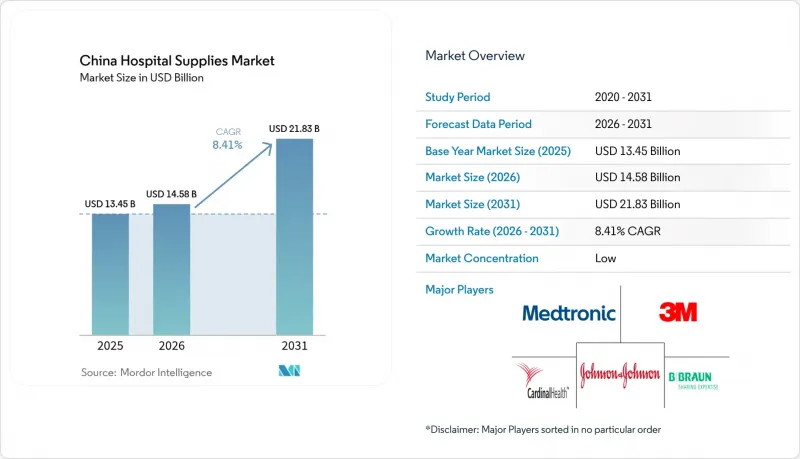
Mordor Intelligence에 따르면 중국의 병원 용품 시장 규모는 2025년에 134억 5,000만 달러로 평가되며, 2026년 145억 8,000만 달러에서 2031년까지 218억 3,000만 달러에 달할 것으로 예측되고 있으며, 예측 기간(2026-2031년) CAGR은 8.41%에 달할 전망입니다.
이 보고서는 제품 유형(환자 검사 장비, 수술실용 장비, 이동 보조 기구 및 이송 장비, 멸균·소독 장비, 일회용 병원 용품, 기타 제품 유형) 및 최종사용자(공립 병원, 사립 병원, 전문 의료·재활 센터)별로 분류되어 있습니다. 시장 예측은 금액(달러) 기준으로 제시되어 있습니다.
중국 병원 용품 시장의 동향 및 인사이트
전국적인 의료 인프라 확충 및 수용 능력 향상
2024년 현재, 중국에는 3만 9,000개의 병원과 1,037만 개의 병상이 있으며, 이는 중국 역사상 최대 규모의 수용 능력 확대를 나타냅니다. 2급 및 3급 도시의 신규 시설이나 개보수된 시설에서는 기본적인 일회용품부터 첨단 진단 시스템에 이르기까지 포괄적인 임상 용품이 필요합니다. 지역 의료 센터 프로그램과 연계된 정부 보조금으로 인해 병원 관리자들은 국가 입찰 리스트에 부합하는 표준화된 고품질 의료 용품을 조달할 수밖에 없게 되었습니다. 병상 수의 증가는 수액 세트, 상처 드레싱, 카테터 등 환자 관리 용품에 대한 안정적인 조달 수요도 촉진하고 있습니다. 신속한 납품과 경쟁력 있는 가격 책정을 보장할 수 있는 현지 제조업체는 건설 프로젝트가 완공에 가까워짐에 따라 증가하는 수주를 확보하는 데 유리한 입장에 있습니다.
만성질환 부담 증가와 고령화로 인한 수술 건수 증가
이미 만성질환 환자의 66.3%를 고령자가 차지하고 있으며, 33.7%가 다중 질환을 앓고 있으며, 급성기 병동에는 지속적인 압박이 가해지고 있습니다. 순환기, 종양, 투석 서비스의 시술 건수가 증가하고 있으며, 수술용 드레이프부터 이식형 의료기기에 이르기까지 소모품에 대한 하류 수요가 발생하고 있습니다. 또한 병원은 입원 중 만성 동반 질환을 관리하기 위해 더 많은 모니터링 장비를 비축해야 합니다. 입원시 평균 본인 부담금이 1,199.24달러에 달하는 재정적 부담으로 인해 구매 담당자들은 수입품보다 비용 효율이 뛰어난 국산품을 우선적으로 선택하고 있습니다.
규제 강화와 NMPA 승인 절차의 장기화로 인해 신제품 출시가 지연되고 있다
‘의료기기 관리법’ 초안에서는 시판 후 조사가 확대되고, 위반에 대한 처벌이 강화되고 있습니다. 국내 혁신 기업은 신속 심사 혜택을 받는 반면, 다국적 기업은 심사 기간의 장기화와 추가 서류 요건에 직면하여 상용화 일정이 지연되고 있습니다. 그 결과, 병원들은 수입된 신제품의 도입을 미루고 기존 SKU에 계속 의존하고 있습니다. 또한 새로운 법적 체계 하에서는 갱신 신청을 지원하기 위해 제조사가 RWE(Real World Evidence)(real-world evidence)에 대한 투자를 늘려야 할 의무가 부과되어, 규정 준수 비용이 증가하고 있습니다. 이러한 제약이 있음에도 불구하고 현지화된 임상 평가를 완료한 기업은 궁극적으로 각 부처의 가치 기반 구매 구상에서 우선권을 확보할 가능성이 있습니다.
부문 분석
2025년 중국 병원 용품 시장에서 일회용 병원 용품은 37.85%의 점유율을 차지하며, 일회용 제품이 교차 오염 위험을 줄이고 폐기물 관리 절차를 간소화하므로 판매량은 꾸준한 성장세를 이어가고 있습니다. 중국의 일회용 주사기, 장갑, 수술용 드레이프 병원 용품 시장 규모는 고령자 및 만성질환 환자층의 시술 건수 증가에 따라 확대될 것으로 예상됩니다. 고급 카테터 부문에서는 여전히 수입 브랜드가 지배적이지만, 현지 기업은 각 성의 입찰 상한가를 충족하는 가격대에서 범용 일회용 제품을 점점 더 많이 공급하고 있습니다. RFID 태그가 부착된 수술 팩 등의 기술적 업그레이드는 보다 정확한 추적성을 가능하게 하며, 새로운 규제상 보고 의무도 충족하고 있습니다.
멸균·소독 기기는 병원내 감염 감소 목표와 중앙 멸균 부서의 설비 갱신을 배경으로, 2026-2031년에 연평균 성장률(CAGR) 9.16%로 가장 높은 성장세를 보일 것으로 전망됩니다. 도시 지역의 병원에서는 노후화된 에틸렌옥사이드계 멸균 장비를, 사이클 타임을 단축하고 노동 안전성을 향상시키는 저온 과산화수소 플라즈마 장비로 교체하고 있습니다. 3차 병원이 ISO 13485 완전 준수를 향해 움직이기 시작함에 따라 중국 병원용품 자동 세척·소독기 시장 규모는 확대되고 있습니다. 국내 제조사들은 IoT 대시보드를 탑재하고, 경쟁력 있는 가격 정책과 현지 애프터서비스 체계를 갖춘 멸균 장치를 제공함으로써 밸류체인의 상류로 진출하고 있으며, 이로 인해 다국적 공급업체들이 오랫동안 누려왔던 가격 우위가 서서히 사라지고 있습니다.
기타 혜택:
- 엑셀 형식의 시장 예측(ME) 시트
- 3개월간의 애널리스트 지원
자주 묻는 질문
목차
제1장 서론
제2장 조사 방법
제3장 개요
제4장 시장 구도
제5장 시장 규모와 성장 예측
제6장 경쟁 구도
제7장 시장 기회와 향후 전망
KSA 26.09.02According to Mordor Intelligence, the China hospital supplies market size was valued at USD 13.45 billion in 2025 and estimated to grow from USD 14.58 billion in 2026 to reach USD 21.83 billion by 2031, at a CAGR of 8.41% during the forecast period (2026-2031).

This report is Segmented by Product Type (Patient Examination Devices, Operating Room Equipment, Mobility Aids and Transportation Equipment, Sterilisation and Disinfectant Equipment, Disposable Hospital Supplies, and Other Product Types), End User (Public Hospitals, Private Hospital, Specialty and Rehabilitation Centers). The Market Forecasts are Provided in Terms of Value (USD).
China Hospital Supplies Market Trends and Insights
Expansion of National Healthcare Infrastructure & Capacity Upgrades
China reported 39,000 hospitals and 10.37 million hospital beds in 2024, indicating the broadest capacity expansion in the country's history. New and renovated facilities in tier-2 and tier-3 cities require comprehensive clinical inventories ranging from basic disposables to advanced diagnostic systems. Government grants tied to regional medical-center programs compel hospital administrators to acquire standardized, high-quality supplies that align with national tender lists. Bed growth also stimulates stable procurement for patient-care items such as infusion sets, wound dressings, and catheters. Local manufacturers that can guarantee rapid fulfillment and competitive pricing are well positioned to capture incremental orders as construction projects reach completion.
Rising Burden of Chronic Diseases and Aging Population Boosting Procedure Volumes
Older adults already account for 66.3% of chronic-disease cases, and 33.7% experience multimorbidity, placing sustained pressure on acute-care wards. Procedure volumes for cardiology, oncology, and dialysis services are rising, creating downstream demand for consumables ranging from surgical drapes to implantable devices. Hospitals must also stock higher quantities of monitoring equipment to manage chronic comorbidities during inpatient stays. The financial stress associated with average out-of-pocket hospitalization costs of USD 1,199.24 has led purchasing managers to favor cost-efficient, domestically produced items over imported equivalents.
Regulatory Tightening & Lengthy NMPA Approvals Slowing New-Product Launches
The draft Medical Device Administration Law expands post-market surveillance and increases penalties for non-compliance. While domestic innovators benefit from fast-track pathways, multinational firms face longer review cycles and additional documental requirements, delaying commercial timelines. Hospitals therefore postpone the adoption of new imported devices, sustaining reliance on existing SKUs. The new legal framework also obliges manufacturers to increase investment in real-world evidence to support renewal applications, boosting compliance costs. Despite the constraints, companies that complete localized clinical evaluations may eventually secure preferential slots in provincial value-based purchasing initiatives.
Other drivers and restraints analyzed in the detailed report include:
- Government Spending Growth through "Healthy China 2030" Initiatives
- Infection Control Awareness Post-COVID
- Emergence of Home Care Services
For complete list of drivers and restraints, kindly check the Table Of Contents.
Segment Analysis
Disposable hospital supplies claimed 37.85% of China hospital supplies market share in 2025 and continue to experience steady volume growth because single-use items reduce cross-contamination risk and simplify waste-management protocols. The China hospital supplies market size for disposable syringes, gloves, and surgical drapes is projected to expand in tandem with rising procedure counts among elderly and chronic-disease cohorts. Imported brands still dominate premium catheter categories, but local firms increasingly supply commoditized disposables at price points that meet provincial tender caps. Technological upgrades such as RFID-tagged surgical packs support more precise traceability, aligning with new regulatory reporting obligations.
Sterilization & disinfection equipment is poised to register the fastest 9.16% CAGR over 2026-2031, driven by hospital-acquired infection targets and upgrades to central sterile services departments. Urban hospitals are replacing aging ethylene-oxide systems with low-temperature hydrogen-peroxide plasma units that reduce cycle times and improve occupational safety. The China hospital supplies market size for automated washer-disinfectors is expanding as tertiary hospitals move toward full ISO 13485 compliance. Domestic manufacturers have moved up the value chain with competitively priced, locally serviced sterilizers that incorporate IoT dashboards, thereby eroding the historic premium enjoyed by multinational suppliers.
Complete Report Scope:
- By Product Type
- Patient Examination Devices
- Operating Room Equipment
- Mobility Aids & Transportation Equipment
- Sterilisation & Disinfectant Equipment
- Disposable Hospital Supplies
- Other Product Types
- By End User
- Public Hospital
- Private Hospital
- Specialty & Rehabilitation Centers
List of Companies Covered in this Report:
- 3M
- B. Braun
- Baxter
- Beckton Dickinson
- Boston Scientific
- Cardinal Health
- Medtronic
- Johnson & Johnson
- Terumo
- Smiths Group
- Stryker
- Mindray Bio-Medical Electronics Co. Ltd.
- Shandong Weigao Group Medical Polymer Co. Ltd.
- Jiangsu Yuyue Medical Equipment & Supply Co. Ltd.
- Shinva Medical Instrument
- Lepu Medical Technology (Beijing) Co. Ltd.
- Kindly Medical Instruments Co. Ltd.
- Zhende Medical Co. Ltd.
- Henan Tuoren Medical Device Co. Ltd.
- Shanghai Kinetic Medical Co. Ltd.
Additional Benefits:
- The market estimate (ME) sheet in Excel format
- 3 months of analyst support
TABLE OF CONTENTS
1 Introduction
- 1.1 Study Assumptions & Market Definition
- 1.2 Scope of the Study
2 Research Methodology
3 Executive Summary
4 Market Landscape
- 4.1 Market Drivers
- 4.1.1 Expansion of National Healthcare Infrastructure & Capacity Upgrades
- 4.1.2 Rising Burden of Chronic Diseases and Aging Population Boosting Procedure Volumes
- 4.1.3 Government Spending Growth through "Healthy China 2030" Initiatives
- 4.1.4 Infection Control Awareness Post-COVID
- 4.1.5 Growth in Public Hospital Procurement
- 4.1.6 Digital Healthcare & Smart Hospital Adoption
- 4.2 Market Restraints
- 4.2.1 Regulatory Tightening & Lengthy NMPA Approvals Slowing New-Product Launches
- 4.2.2 Emergence of Home Care Services
- 4.2.3 Counterfeit Products & Quality Variability
- 4.2.4 Urban-Rural Healthcare Disparities
- 4.3 Porter's Five Forces Analysis
- 4.3.1 Threat of New Entrants
- 4.3.2 Bargaining Power of Buyers
- 4.3.3 Bargaining Power of Suppliers
- 4.3.4 Threat of Substitutes
- 4.3.5 Competitive Rivalry
5 Market Size & Growth Forecasts (Value in USD)
- 5.1 By Product Type
- 5.1.1 Patient Examination Devices
- 5.1.2 Operating Room Equipment
- 5.1.3 Mobility Aids & Transportation Equipment
- 5.1.4 Sterilisation & Disinfectant Equipment
- 5.1.5 Disposable Hospital Supplies
- 5.1.6 Other Product Types
- 5.2 By End User
- 5.2.1 Public Hospital
- 5.2.2 Private Hospital
- 5.2.3 Specialty & Rehabilitation Centers
6 Competitive Landscape
- 6.1 Market Concentration
- 6.2 Market Share Analysis
- 6.3 Company Profiles (includes Global level Overview, Market level overview, Core Segments, Financials as available, Strategic Information, Market Rank/Share for key companies, Products & Services, and Recent Developments)
- 6.3.1 3M
- 6.3.2 B. Braun Melsungen AG
- 6.3.3 Baxter International Inc.
- 6.3.4 Becton, Dickinson and Company
- 6.3.5 Boston Scientific Corporation
- 6.3.6 Cardinal Health Inc.
- 6.3.7 Medtronic
- 6.3.8 Johnson & Johnson
- 6.3.9 Terumo Corporation
- 6.3.10 Smith & Nephew PLC
- 6.3.11 Stryker Corporation
- 6.3.12 Mindray Bio-Medical Electronics Co. Ltd.
- 6.3.13 Shandong Weigao Group Medical Polymer Co. Ltd.
- 6.3.14 Jiangsu Yuyue Medical Equipment & Supply Co. Ltd.
- 6.3.15 Shinva Medical Instrument Co. Ltd.
- 6.3.16 Lepu Medical Technology (Beijing) Co. Ltd.
- 6.3.17 Kindly Medical Instruments Co. Ltd.
- 6.3.18 Zhende Medical Co. Ltd.
- 6.3.19 Henan Tuoren Medical Device Co. Ltd.
- 6.3.20 Shanghai Kinetic Medical Co. Ltd.
7 Market Opportunities & Future Outlook
- 7.1 White-space & Unmet-need Assessment