

|
시장보고서
상품코드
2114112
중국의 수산 사료 시장 : 시장 점유율 분석, 업계 동향 및 통계, 성장 예측(2026-2031년)China Aqua Feed - Market Share Analysis, Industry Trends & Statistics, Growth Forecasts (2026 - 2031) |
||||||
 Mordor Intelligence
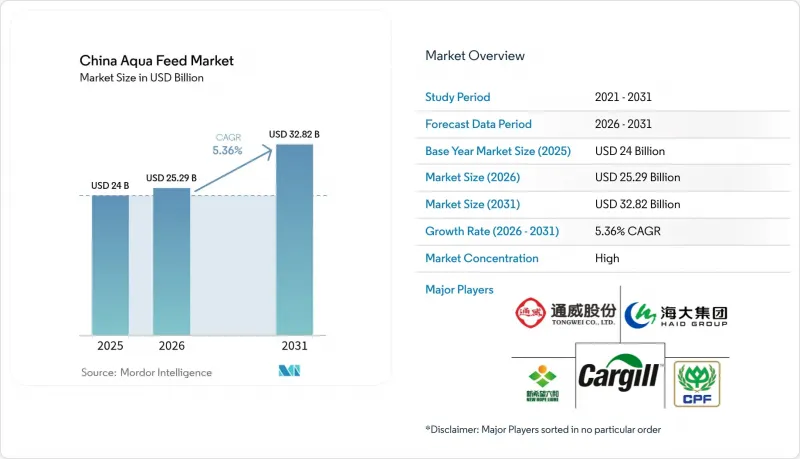
Mordor Intelligence에 의하면, 2026년 중국의 수산 사료 시장 규모는 252억 9,000만 달러로 추정되고, 2025년 240억 달러에서 확대해, 2031년에는 328억 2,000만 달러에 이를 것으로 예측됩니다.
2026-2031년 연평균 성장률(CAGR) 5.36%로 성장할 것으로 전망됩니다.
본 보고서는 대상 동물별(어류, 갑각류 등), 원료별(곡물, 어분, 대두박 등), 형태별(펠렛, 압출 사료 등)로 분류되어 있습니다. 시장 전망은 금액(달러) 기준으로 제시되어 있습니다.
중국의 수산 사료 시장 동향 및 인사이트
1인당 국내 수산물 소비량 증가
2024년, 도시 지역 가구의 수산물 소비량은 41.6Kg으로, 2020년 대비 9.5% 증가했습니다. 이는 콜드체인망 확충으로 보존 기간이 연장되고, 전자상거래를 통해 입수가 용이해졌기 때문입니다. 수요는 새우, 틸라피아, 연어와 같은 어종으로 이동하고 있으며, 이러한 어종에는 어분의 배합 비율이 높은 고영양 사료가 필요하기 때문에 프리미엄 배합 사료의 1메트르톤당 수익이 증가하고 있습니다. 연안 지역 주민들의 소비량은 이미 50Kg을 넘어선 반면, 내륙 지역 소비자들은 평균 30Kg에 그치고 있어 중부 지방의 판매량 증가 여지가 시사되고 있습니다. ‘빅 푸드(Big Food)’ 계획에 따른 보조금으로 양식장의 현대화 비용이 상쇄됨에 따라, 양식업자들은 양육 기간을 단축하는 고품질 압출 사료로의 전환을 촉진받고 있습니다. JD Fresh 등의 온라인 플랫폼에서는 2024년 수산물 매출이 전년 대비 30% 증가를 기록하며, 물류 주도의 소비 변화가 입증되었습니다.
농업 기술(애그리테크)을 지원하는 정부의 ‘쌍순환’ 정책
제14차 5개년 계획에서는 사료 공장의 자동화, 종묘 개량 및 순환식 양식 시스템에 대해 150억 위안(21억 달러)의 보조금이 편성되어 기술 도입이 가속화되고 있습니다. 사물인터넷(IoT) 센서와 자동 급이기를 결합한 각 성의 시범 사업에서는 실증 농장에서 인건비를 40%, 사료 요구율을 15% 절감하는 데 성공했습니다. 규제 당국은 현재 2026년까지 시판 사료의 80%가 국가 품질 기준을 충족하도록 의무화하고 있으며, 이로 인해 소규모 사료 공장이 시장에서 도태되면서 업계 재편이 가속화되고 있습니다. 통웨이(Tonway)사와 광동 하이더 그룹(Guangdong Haide Group)은 이러한 우대 조치를 활용하여 연간 10만 미터톤을 초과하는 압출 생산 라인을 가동하고, 약 25%의 에너지 절감 효과를 실현했습니다. 국내 원료 자급자족에 중점을 둔 정책으로 인해 대두 압착 능력 확대와 곤충 단백질 실증 사업이 촉진되어, 수입 가격 변동으로부터 기업을 보호하는 완충 역할을 하고 있습니다.
어분 및 대두 가격 변동
2024년, 엘니뇨 현상으로 인해 안초비 어획 할당량이 감축됨에 따라,페루산 어분의 거래 가격은 톤당 1,500-1,600달러 사이에서 등락했으며, 2분기 가격 급등 시에는 제분업체의 이익률을 200-300베이시스포인트 하락시켰습니다. 대두박은 브라질의 수확 전망 불확실성과 미국 및 중국 간의 정책 전환을 배경으로 450-550달러 사이에서 변동했으며, 30일 주기로 재고 관리를 하는 제유소들은 운전자금 배분을 어쩔 수 없이 해야 했습니다. 대기업들은 헤지나 장기 계약을 통해 공급을 확보하고 있지만, 중소규모의 독립 기업들은 심각한 현금 유동성 부족에 직면해 있으며, 이는 업계 재편을 가속화하고 있습니다.
부문별 분석
어류용 사료는 후베이성, 후난성, 장시성의 견조한 수요에 힘입어 2025년 매출의 45.60%를 차지했습니다. 갑각류 사료 부문은 가장 빠르게 성장하고 있으며, 광둥성과 광시 좡족 자치구의 대왕새우 양식 집약화로 인해 연평균 성장률(CAGR) 7.45%가 예상됩니다. 중국 수산 사료 시장에서 갑각류 사료 시장 규모는 초식 어종용 사료를 넘어설 전망입니다. 이는 수출 프리미엄으로 인해 어분의 배합 비율을 높이는 것이 정당화되기 때문입니다. 2024년에 180만 메트르톤의 수확량을 예상하는 틸라피아용 사료는 수출 호조를 유지하고 있지만, 이익률을 압박하는 질병 위험에 직면해 있습니다. 산동성의 육상 연어 양식장은 1만 5,000메트르톤의 생산량을 기록하고 있으며, 잉어용 사료보다 30% 비싼 고단백 배합 사료가 필요하기 때문에 이는 성장 잠재력이 큰 틈새 시장입니다. 칭하이성과 간쑤성의 송어용 사료는 규모는 작지만, 냉수성 어류 특유의 지질 구성으로 인해 프리미엄 가격을 유지하고 있습니다. 연체동물 및 기타 종을 합친 수요 점유율은 10% 미만이지만, 미세조류 첨가제의 새로운 기회가 열리고 있습니다.
육종 기술의 향상으로 2024년에 승인된 개량 잉어 및 틸라피아 품종에서는 사료 전환 효율이 8%에서 10% 향상되었습니다. 한편, 갑각류용 사료의 경우 어분의 배합 비율을 25% 이상으로 유지하면서도 이익률의 균형을 맞추는 데 어려움을 겪고 있습니다. 종별 맞춤형 조사나 공동 육종 프로그램에 투자하는 기업은 영양적 정밀도가 가격 프리미엄으로 이어지는 시장을 개척할 수 있습니다. 그 결과, 잉어가 수량 기준에서 지배적인 위치를 유지하는 가운데서도, 고부가가치 어종을 위한 사료의 중국 수산 사료 시장 점유율은 상승할 전망입니다.
기타 혜택 :
- 엑셀 형식 시장 예측(ME) 시트
- 3개월간의 애널리스트 지원
자주 묻는 질문
목차
제1장 서론
제2장 조사 방법
제3장 주요 요약
제4장 시장 구도
제5장 시장 규모 및 성장 예측
제6장 경쟁 구도
제7장 시장 기회 및 향후 전망
AJY 26.08.26According to Mordor Intelligence, the China aquafeed market size in 2026 is estimated at USD 25.29 billion, growing from 2025 value of USD 24 billion with 2031 projections showing USD 32.82 billion, growing at 5.36% CAGR over 2026-2031.
This report is Segmented by Animal Type (Fish, Crustaceans, and More), by Ingredient Type (Cereals and Grains, Fishmeal, Soymeal, and More), and by Form (Pellets, Extruded Feed, and More). The Market Forecasts are Provided in Terms of Value (USD).
China Aqua Feed Market Trends and Insights
Expanding Domestic Seafood Consumption Per Capita
Urban households consumed 41.6 kilograms of seafood in 2024, up 9.5% from 2020, as cold-chain networks extend shelf life and e-commerce improves access. Demand is shifting toward shrimp, tilapia, and salmon, species that require nutrient-dense feeds with higher fishmeal inclusion, thereby increasing revenue per metric ton for premium formulations. Coastal residents already exceed 50 kilograms, while inland consumers average 30 kilograms, indicating runway for volume in the central provinces. Subsidies under the "Big Food" plan offset pond-modernisation costs, steering farmers toward high-quality extruded diets that shorten grow-out cycles. Online platforms such as JD Fresh booked 30% year-on-year seafood sales growth in 2024, validating a logistics-driven consumption shift.
Government Dual Circulation Policy Supporting Agritech
The 14th Five-Year Plan earmarked CNY 15 billion (USD 2.1 billion) in subsidies for feed-mill automation, breeding upgrades, and recirculating aquaculture systems, accelerating technology adoption. Provincial pilots that blend Internet of Things (IoT) sensors with automated feeders cut labor costs by 40% and feed conversion ratios by 15% on demonstration farms. Regulators now require that 80% of commercial feeds meet national quality standards by 2026, squeezing out sub-scale mills and propelling consolidation. Tongwei and Guangdong Haid Group tapped these incentives to launch extrusion lines exceeding 100,000 metric tons per year, capturing energy savings near 25%. The policy's focus on domestic ingredient self-sufficiency has spurred soybean-crushing capacity and insect-protein pilots, buffering firms against import volatility.
Volatility of Fishmeal and Soybean Prices
Peruvian fishmeal traded from USD 1,500 to USD 1,600 per metric ton in 2024 as El Nino cut anchovy quotas, knocking 200 to 300 basis points off mill margins during the Q2 price spike. Soybean meal fluctuated between USD 450 and USD 550 amid Brazilian harvest uncertainty and U.S.-China policy shifts, forcing mills on 30-day inventory cycles to ration working capital. Larger players lock supply through hedging and long-term contracts, but smaller independents face acute cash-flow stress that fuels consolidation.
Other drivers and restraints analyzed in the detailed report include:
- Rising Export-oriented Aquaculture Clusters in Coastal Provinces
- Rapid Consolidation of Feed Mills Boosting Capacity Utilization
- Outbreaks of Aquatic Animal Diseases
For complete list of drivers and restraints, kindly check the Table Of Contents.
Segment Analysis
Fish feeds underpinned 45.60% of 2025 revenue, sustained by resilient demand in Hubei, Hunan, and Jiangxi. The crustacean category is the fastest riser, projected at a 7.45% CAGR due to vannamei shrimp intensification in Guangdong and Guangxi. The China aquafeed market size for crustacean diets is set to outpace herbivorous species as export premiums justify higher fishmeal inclusion rates. Tilapia feeds, servicing 1.8 million metric tons of harvest in 2024, retain export tailwinds but face disease risks that squeeze margins. Land-based salmon farms in Shandong turned out 15,000 metric tons and require high-protein formulations priced 30% above carp equivalents, a niche with strong upside. Trout diets in Qinghai and Gansu, though minor, command premium pricing tied to cold-water lipid profiles. Mollusk and miscellaneous species together hold under 10% of demand, yet open micro-algae additive opportunities.
Technological upgrades in breeding drove an 8% to 10% gain in conversion efficiency for improved carp and tilapia strains approved in 2024. Meanwhile, crustacean diets wrestle with balancing >25% fishmeal inclusion against profit margins. Companies investing in species-specific research and joint breeding programs can tap segments where nutritional precision commands price premiums. Consequently, the China aquafeed market share for high-value species feeds should rise even as carp maintains volumetric dominance.
Complete Report Scope:
- By Animal Type
- Fish
- Carp
- Tilapia
- Salmon
- Catfish
- Other Fish Species
- Crustaceans
- Shrimps and Prawns
- Crabs
- Mollusks
- Oysters
- Mussels
- Scallops
- Trout
- Other Animal Types
- Fish
- By Ingredient Type
- Cereals and Grains
- Fishmeal
- Soymeal
- Additives
- Vitamins
- Minerals
- Enzymes
- Alternative Proteins (e.g., insect, microbial)
- By Form
- Pellets
- Extruded Feed
- Powder
- Liquid
List of Companies Covered in this Report:
- Tongwei Co. Ltd.
- Guangdong Haid Group Co. Ltd.
- New Hope Liuhe Co. Ltd.
- Cargill Inc.
- BioMar Group (Schouw & Co.)
- Charoen Pokphand Foods PCL
- Nutreco NV - Skretting (SHV Holdings NV)
- Alltech Inc.
- Archer Daniels Midland Co.
- Aller Aqua Group A/S
- Biomin (DSM-Firmenich AG)
- Hanpel Tech Co. Ltd.
- Wellhope Agri-Tech Co. Ltd.
- Guangdong Evergreen Feed Industry Co. Ltd.
Additional Benefits:
- The market estimate (ME) sheet in Excel format
- 3 months of analyst support
TABLE OF CONTENTS
1 Introduction
- 1.1 Study Assumptions and Market Definition
- 1.2 Scope of the Study
2 Research Methodology
3 Executive Summary
4 Market Landscape
- 4.1 Market Overview
- 4.2 Market Drivers
- 4.2.1 Expanding domestic seafood consumption per-capita
- 4.2.2 Government "Dual Circulation" policy supporting agritech
- 4.2.3 Rising export-oriented aquaculture clusters in coastal provinces
- 4.2.4 Rapid consolidation of feed mills boosting capacity utilization
- 4.2.5 Deployment of AI-based smart feeders in large ponds
- 4.2.6 Commercialization of insect-based proteins
- 4.3 Market Restraints
- 4.3.1 Volatility of fishmeal and soybean prices
- 4.3.2 Outbreaks of aquatic animal diseases
- 4.3.3 Smallholder reluctance toward high-performance extruded feed
- 4.3.4 Environmental carrying-capacity limits in major delta regions
- 4.4 Regulatory Landscape
- 4.5 Technological Outlook
- 4.6 Porter's Five Forces Analysis
- 4.6.1 Threat of New Entrants
- 4.6.2 Bargaining Power of Consumers
- 4.6.3 Bargaining Power of Suppliers
- 4.6.4 Threat of Substitute Products
- 4.6.5 Intensity of Competitive Rivalry
5 Market Size and Growth Forecasts (Value)
- 5.1 By Animal Type
- 5.1.1 Fish
- 5.1.1.1 Carp
- 5.1.1.2 Tilapia
- 5.1.1.3 Salmon
- 5.1.1.4 Catfish
- 5.1.1.5 Other Fish Species
- 5.1.2 Crustaceans
- 5.1.2.1 Shrimps and Prawns
- 5.1.2.2 Crabs
- 5.1.3 Mollusks
- 5.1.3.1 Oysters
- 5.1.3.2 Mussels
- 5.1.3.3 Scallops
- 5.1.4 Trout
- 5.1.5 Other Animal Types
- 5.1.1 Fish
- 5.2 By Ingredient Type
- 5.2.1 Cereals and Grains
- 5.2.2 Fishmeal
- 5.2.3 Soymeal
- 5.2.4 Additives
- 5.2.4.1 Vitamins
- 5.2.4.2 Minerals
- 5.2.4.3 Enzymes
- 5.2.5 Alternative Proteins (e.g., insect, microbial)
- 5.3 By Form
- 5.3.1 Pellets
- 5.3.2 Extruded Feed
- 5.3.3 Powder
- 5.3.4 Liquid
6 Competitive Landscape
- 6.1 Market Concentration
- 6.2 Strategic Moves
- 6.3 Market Share Analysis
- 6.4 Company Profiles (Includes Global level Overview, Market Level Overview, Core Segments, Financials as Available, Strategic Information, Market Rank/Share for Key Companies, Products and Services, and Recent Developments)
- 6.4.1 Tongwei Co. Ltd.
- 6.4.2 Guangdong Haid Group Co. Ltd.
- 6.4.3 New Hope Liuhe Co. Ltd.
- 6.4.4 Cargill Inc.
- 6.4.5 BioMar Group (Schouw & Co.)
- 6.4.6 Charoen Pokphand Foods PCL
- 6.4.7 Nutreco NV - Skretting (SHV Holdings NV)
- 6.4.8 Alltech Inc.
- 6.4.9 Archer Daniels Midland Co.
- 6.4.10 Aller Aqua Group A/S
- 6.4.11 Biomin (DSM-Firmenich AG)
- 6.4.12 Hanpel Tech Co. Ltd.
- 6.4.13 Wellhope Agri-Tech Co. Ltd.
- 6.4.14 Guangdong Evergreen Feed Industry Co. Ltd.


