
|
시장보고서
상품코드
2121404
수산 사료 : 시장 점유율 분석, 업계 동향과 통계, 성장 예측(2026-2031년)Aquafeed - Market Share Analysis, Industry Trends & Statistics, Growth Forecasts (2026 - 2031) |
||||||
 Mordor Intelligence
2025년 수산 사료 시장 규모는 세계의 시장 가치 63.7%를 차지하고 있으며, 이것은 아시아·대서양 지역의 양식 사업에서 잉어, 틸라피아, 연어가 계속해 주류가 되고 있는 것이 요인이 되고 있습니다.
새우를 필두로 한 갑각류용 사료는 에콰도르와 인도에서 바나메이 새우의 수확량이 두 자릿수 성장세를 보일 것으로 예상됨에 따라 2026-2031년까지 연평균 성장률(CAGR) 5.4%를 기록할 전망입니다.
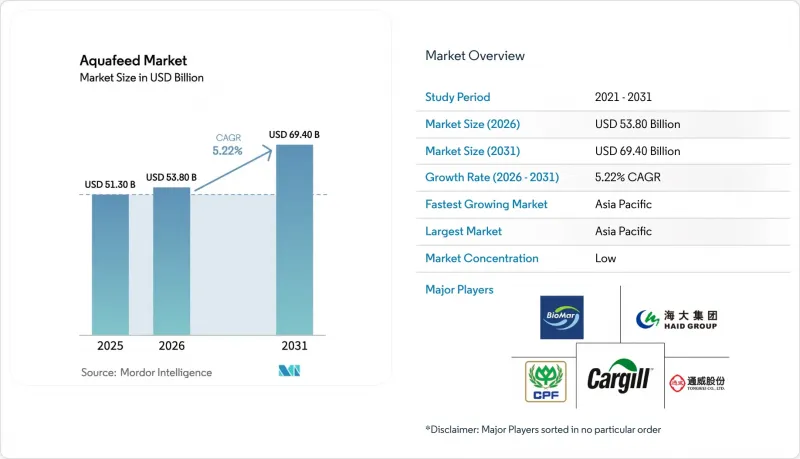
Mordor Intelligence에 따르면 수산 사료 시장 규모는 2025년에 513억 달러로 평가되며, 2026년에는 538억 달러에 달할 것으로 추정됩니다. 이 보고서는 유형별(어류 사료, 연체동물 사료 등), 성분별(곡물, 지방종자·두류 등), 첨가제 유형별(아미노산, 비타민·미네랄, 기타), 형태별(펠릿, 압출 성형 사료, 기타),생애주기 단계별(스타터, 그로워, 기타), 지역별(북미, 유럽, 기타)로 분류되어 있습니다. 시장 예측은 금액(달러) 기준으로 제시되어 있습니다.
세계 수산 사료 시장의 동향 및 인사이트
전 세계 수산물 소비량 증가
1인당 수산물 섭취량은 2019년 19.2kg에서 2025년에는 21.4kg으로 증가할 전망이며, 이 수요의 58%를 이미 양식업이 공급하고 있으며, 혼합 사료 업계에 구조적인 호재가 되고 있음이 부각되고 있습니다. 인도, 인도네시아, 나이지리아에서 확대되고 있는 중산층은 곡물에서 어패류 단백질로 소비를 전환하고 있으며, 경제 성장이 둔화되고 있는 상황에서도 꾸준한 소비를 견인하고 있습니다. 사료의 경제성 측면에서도 생선과 새우는 생체중 1킬로그램당 불과 1.2-1.8킬로그램의 사료만 필요로 하여, 돼지고기에 비해 현저히 적기 때문에 양식업의 효율성 면에서 우위가 더욱 두드러집니다. 중국만 해도 2031년까지 수산물 수요가 연평균 3.8% 증가할 것으로 예측되며, 자국의 기록적인 생산량 대부분을 흡수할 뿐만 아니라 베트남이나 태국 등 인접 국가들의 제품도 흡수하고 있습니다. 국제표준화기구(ISO) 22000에 기반한 통일된 식품 안전 기준 덕분에 무역 마찰이 완화되어 사료 제조업체들은 수출 규모를 확대할 수 있게 되었습니다. 이러한 요인들이 맞물려 모든 주요 지역에서 수산 사료 시장이 확대되고 있는 한편, 원자재 가격의 급등에도 불구하고 가격 안정성이 유지되고 있습니다.
집약형 양식 시스템의 확대
토지 제약과 인건비 급등으로 인해 광대한 양식 연못에서 영양가가 높은 사료를 필요로 하는 고밀도 시스템으로의 전환이 진행되고 있습니다. 노르웨이의 연안 양식장에서는 현재 1유닛당 20만 마리의 연어가 사육되고 있으며, 이는 기존 기준의 2배에 달합니다. 한편, 인도의 바이오플록 양식장에서는 1헥타르당 새우 수확량이 4배에 달합니다. 이러한 고밀도화는 질병 위험을 높이기 때문에 사료 제조업체는 매일 변동하는 원료 가격에 대응하기 위해 ‘최저 비용 배합 모델’을 활용하여 아미노산 및 에너지 함량을 미세 조정해야 합니다. 베트남의 양식업자들은 방류 밀도를 1제곱미터당 150-200마리의 포스트라바로 높였으며, 그 결과 단백질 함량 38-42%에 면역 활성화제가 배합된 사료를 구매하고 있습니다. 유럽과 미국의 규제 당국은 항생제 잔류 기준치를 낮추고 있으며, 양식장은 약제 대신 기능성 첨가제로 전환해야 하는 상황에 처해 있습니다. 이러한 모든 요인이 고품질 사료에 대한 수요를 높이며, 판매량 증가세가 완만하더라도 수산 사료 시장의 가치를 끌어올리고 있습니다.
질병 발생이 사료 수요의 급격한 변동을 초래한다
2024년에는 ‘조기 사망 증후군’으로 인해 태국의 새우 어획량이 40%나 급감했고, 그 결과 1분기 동안 사료 수요가 18만 메트릭톤 감소했을 뿐만 아니라 사료 공장의 가동 중단까지 불가피하게 되었습니다. 2025년에는 에콰도르와 콜롬비아에서 발생한 ‘틸라피아 호수 바이러스’로 인해 현지 사료 수요가 25% 감소했고, 재고가 수개월 동안 처분되지 못하는 사태가 발생했습니다. 칠레에서 재발한 감염성 연어 빈혈증으로 인해 800만 마리의 물고기가 처분되었고, 사료 수주량이 3만 5,000메트릭톤 감소했습니다. 새우용 시판 백신은 여전히 3종에 그치는 반면, 연어용은 15종이 있으며, 갑각류 양식업자들은 면역 활성화제가 포함된 사료에 대해 8-12% 더 높은 비용을 부담할 수밖에 없습니다. 이러한 충격은 예측 불가능한 공급량 격차를 초래하여 수산 사료 시장의 꾸준한 확장을 저해하고 있습니다.
부문 분석
송어, 농어, 메기 사료는 여전히 가격에 민감하지만, 질병을 배경으로 한 기능성 첨가제로의 전환으로 인해 구매자들은 프리미엄 등급의 제품으로 이동하고 있습니다. 연어 사료의 경우, 현재 오메가-3 함량을 유지하면서 소매업체의 지속가능성 기준을 충족하기 위해, 조류유에 더해 25-30%의 곤충성 단백질을 배합한 사료가 시범적으로 도입되고 있습니다.
갑각류 부문의 성장세는 지역 간 원료 흐름의 재균형을 지속적으로 촉진하고 있으며, 남미로의 대두박 유입을 늘리고, 노르웨이 및 베트남의 사료 공장으로의 곤충분 유입을 촉진하고 있습니다. 프리미엄급 새우용 배합 사료는 이미 범용 어류용 육성 펠릿보다 25% 높은 가격을 형성하고 있으며, 판매량에 앞서 수산 사료 시장 전체의 가치를 끌어올리고 있습니다. 연체동물 사료의 틈새 시장 성장세는 여전히 미미하지만, 이는 중국 굴 양식장에서 수질에 대한 우려가 커지고 있음을 여실히 보여주고 있습니다. 메기 수요는 수출 경로에서 팡가시우스가 가격 면에서 경쟁하고 있으며, 정체 상태이지만, 특정 면역 자극제를 배합한 제품 덕분에 2027년 이후에는 이익률이 회복될 것으로 예측됩니다.
2025년에는 지방종자 및 두류가 시장 가치의 29.6%를 차지하며, 톤당 500달러에 거래되는 대두박이 톤당 1,500달러인 어분에 비해 비용 면에서 우위를 점하고 있음을 보여주었습니다. 곤충 분말, 조류, 단세포 단백질 등의 신규 단백질은 유럽식품안전청(EFSA)의 최근 안전성 승인을 받아, 2026-2031년까지의 예측 기간 중 연평균 성장률(CAGR) 6.0%로 성장하여 2031년까지 사료 배합 비용 총액의 9%를 차지할 전망입니다. 어분과 어유는 유생기 및 어미기 단계에서 여전히 대체할 수 없는 기능적 역할을 수행하므로 원료 예산의 상당 부분을 계속 차지하고 있습니다. 곡물 유래 에너지원을 통해 압출 성형 라인은 펠릿의 내구성에 필요한 전분 함량 목표를 달성할 수 있게 됩니다.
송어와 농어의 사료에 검은파리 유충의 사용이 확대됨에 따라 단백질 1킬로그램당 토지 및 물 발자국이 90% 이상 감소하고 있으며, 이러한 이점은 현재 대출 기관에 의해 환경 대출 계약 조항에 반영되고 있습니다. 가스 발효에서 유래한 단세포 단백질은 2027년까지 1미터톤당 900달러가 될 전망이며, 이는 현재의 곤충 원료 가격보다 훨씬 낮은 수준입니다. 또한 중국에서 실시된 시범 시험 결과, 틸라피아 사료에 최대 40%까지 혼합할 수 있는 것으로 나타났습니다. 이러한 진전으로 인해 공급망의 다각화가 진행되고 있으며, 어분 가격의 주기적인 급등에도 불구하고 수산 사료 시장의 성장 전망은 더욱 밝아지고 있습니다.
지역별 분석
아시아태평양은 2025년 수산 사료 시장 가치의 69.9%를 차지하며, 2031년까지 연평균 성장률(CAGR) 5.5%로 성장할 것으로 예측됩니다. 중국의 3,000만 메트릭톤 어획량이 국내 수요를 견인하는 한편, 인도의 새우 양식장에서는 85만 메트릭톤의 갑각류용 사료가 소비되고 있습니다. 베트남은 팡가시우스와 새우 생산량의 70%를 수출에 의존하고 있으며, 대두의 추적성을 의무화하는 유럽의 지속가능성 규제의 영향을 받기 쉬운 상황에 놓여 있습니다. 태국에서는 질병 유행으로부터의 회복이 진행되고 있지만, 양식 밀도 감소로 인해 헥타르당 사료 사용량이 최대 20%까지 줄어들었습니다. 인도네시아 정부의 가격 상한제 도입은 양식업자의 비용을 안정화시키는 한편, 제분업자의 새로운 압출 성형 라인 투자를 제한하고 있습니다. 일본은 단세포 단백질의 시험장 역할을 하고 있으며, 호주의 육상 연어 양식장에서는 고에너지 사료가 필요합니다. 이 모든 요인이 지역 수산 사료 시장 점유율을 끌어올리는 고가 틈새 시장에 기여하고 있습니다.
중동 및 아프리카에서는 성장이 관찰됩니다. 이집트의 틸라피아 부문에서는 45만 톤의 배합 사료가 소비되고 있으며, 나이지리아의 메기 부문은 연평균 10%의 성장률을 보이고 있습니다. 사우디아라비아는 2030년까지 10만 메트릭톤의 육상 양식 연어를 생산하는 것을 목표로 하고 있으며, 25%의 수입 관세를 회피하기 위해 지역 맞춤형 혼합 사료를 제조하는 다국적 사료 제조사를 유치하고 있습니다. 터키는 농어 수출에 크게 의존하고 있으며, 환율 변동으로 인해 이익률이 압박받는 과제에 직면해 있습니다. 한편, 남아프리카공화국에서는 전력 인프라 확충이 계획되어 있으며, 이로 인해 동케이프주의 조개류 양식 지역에서의 사료 수요가 3배로 증가할 가능성이 있습니다. 이러한 신흥 거점에서 수산 사료 시장의 성장을 지속시키기 위해서는 지역 정부의 지원이 핵심이 됩니다.
유럽과 북미에서는 보다 안정적인 속도로 성장이 지속되고 있습니다. 노르웨이 한 나라만 해도 180만 메트릭톤の 사료를 소비하고 있으며, 연어 사료에 20%의 곤충 유래 원료와 10%의 조류유를 배합하는 실험을 시행하는 등 배합 기술의 혁신을 추진하고 있습니다. 스코틀랜드에서 새로 승인된 연안 양식 케이지에서는 영양가를 손상시키지 않으면서 수심 40-60미터까지 가라앉는 펠릿이 요구되고 있습니다. 미국 메인주와 캘리포니아주의 순환식 연어 양식장에서는 2만 톤의 프리미엄 수요가 추가되었으며, 티라피아용 사료 가격의 거의 3배에 달하는 가격을 지불하고 있습니다. 칠레는 질병으로 인한 타격에서 회복되고 있으며, 스페인의 유기농 농어 시장은 12%의 성장세를 보이고 있으며, 수산양식관리협의회(ASC) 기준을 충족하는 사료 제조업체에 혜택을 주고 있습니다. 이러한 프로젝트들이 맞물리면서, 아시아가 계속해서 주도권을 쥐고 있는 가운데 선진국들이 수산 사료 시장 규모에 기여하는 비중을 더욱 공고히 하고 있습니다.
기타 혜택:
- 엑셀 형식의 시장 전망(ME) 시트
- 3개월간의 애널리스트 지원
자주 묻는 질문
목차
제1장 서론
제2장 조사 방법
제3장 개요
제4장 시장 구도
제5장 시장 규모와 성장 예측
제6장 경쟁 구도
제7장 시장 기회와 향후 전망
KSA 26.09.04The aquafeed market size for fish feed accounted for 63.7% of the global value in 2025, is driven by the continued dominance of carp, tilapia, and salmon in Asian and Atlantic farm budgets. Crustacean formulas, led by shrimp, are experiencing a 5.4% CAGR from 2026 to 2031, driven by double-digit growth in vannamei harvests in Ecuador and India.
According to Mordor Intelligence, the aquafeed market size was valued at USD 51.30 billion in 2025 and is estimated to reach USD 53.80 billion in 2026. This report is Segmented by Species (Fish Feed, Mollusk Feed, and More), by Ingredient (Cereals and Grains, Oilseeds and Pulses, and More), by Additive Type (Amino Acids, Vitamins and Minerals, and More), by Form (Pellets, Extruded Feed, and More), by Life-Cycle Stage (Starter, Grower, and More), and by Geography (North America, Europe, and More). The Market Forecasts are Provided in Terms of Value (USD).
Global Aquafeed Market Trends and Insights
Rising Global Seafood Consumption
Per-capita seafood intake climbed to 21.4 kilograms in 2025, up from 19.2 kilograms in 2019, and aquaculture already supplies 58% of that demand, underscoring the structural tailwind for formulated feeds. The expanding middle classes in India, Indonesia, and Nigeria are trading up from cereals to fish proteins, driving steady consumption even as economic growth cools. Feed economics reinforce the appeal that fish and shrimp require only 1.2-1.8 kilograms of feed per kilogram of live weight, significantly lower than pork, giving aquaculture an efficiency edge. China alone projects seafood demand to rise 3.8% annually through 2031, absorbing most of its own record output and drawing product from neighbors such as Vietnam and Thailand. Harmonized food-safety rules under the International Organization for Standardization (ISO) 22000 are reducing trade friction and enabling mills to scale for export. These forces combine to lift the aquafeed market across all major regions, while sustaining price discipline despite raw material inflation.
Expansion of Intensive Aquaculture Farming Systems
Land constraints and rising labor costs are prompting a shift from extensive ponds to high-density systems that need nutrient-dense feeds. Offshore cages in Norway now stock 200,000 salmon per unit, double prior norms, while biofloc ponds in India yield four times the shrimp per hectare. Such density raises disease risk, so mills must fine-tune amino acid and energy levels using least-cost formulation models that react to daily ingredient prices. Vietnam's operators have increased their stocking density to 150-200 post-larvae per square meter and consequently purchase feeds with 38-42% protein, plus immunostimulants. Regulators in Europe and the United States are lowering antibiotic residue ceilings, prompting farms to shift toward functional additives rather than drugs. All of these factors increase demand for premium rations and boost the aquafeed market value, even if volume gains moderate.
Disease Outbreaks Causing Abrupt Feed-Demand Swings
Early Mortality Syndrome slashed Thai shrimp harvests by 40% in 2024, resulting in a 180,000 metric tons reduction in feed demand in one quarter and forcing mill shutdowns. In 2025, Tilapia Lake Virus in Ecuador and Colombia cut local feed offtake by 25% and left inventories unsold for months. Resurgent Infectious Salmon Anemia in Chile removed 8 million fish and reduced feed orders by 35,000 metric tons. Shrimp still has only three commercial vaccines versus fifteen for salmon, so crustacean farmers must pay 8-12% more for immunostimulant rations. Such shocks create unpredictable volume gaps that limit the steady expansion of the aquafeed market.
Other drivers and restraints analyzed in the detailed report include:
- Advances in Functional Feed Additives and Precision Nutrition
- Blockchain-Enabled Raw-Material Traceability Mandates
- Stricter Phosphorus-Discharge Caps on Aquaculture Effluents
For complete list of drivers and restraints, kindly check the Table Of Contents.
Segment Analysis
Trout, seabass, and catfish feeds remain price sensitive, but disease-driven shifts toward functional additives are moving buyers into premium tiers. Salmon diets are now being trialed with 25-30% insect protein alongside algae oil to protect omega-3 levels while meeting retailer sustainability codes.
Growth momentum within the crustacean segment continues to rebalance regional ingredient flows, drawing more soybean meal into South America and attracting insect meal to Norwegian and Vietnamese mills. Premium shrimp formulas already command 25% higher prices than generic fish grower pellets, driving up the overall aquafeed market value ahead of volume. Niche gains in mollusk feed remain small but highlight rising water-quality concerns in Chinese oyster farms. Catfish demand is flat as pangasius competes on price in export channels, yet targeted immunostimulant blends are projected to revive margins from 2027 onward.
Oilseeds and pulses held a 29.6% value share in 2025, underscoring the cost advantage of soybean meal, which trades at USD 500 per metric ton, compared to fish meal at USD 1,500. Novel proteins, including insect meal, algae, and single-cell protein, are projected to grow at a CAGR of 6.0% during the 2026-2031 forecast period and account for 9% of total formulation spending by 2031, following recent safety approvals by the European Food Safety Authority. Fish meal and fish oil still account for a significant portion of ingredient budgets, as their functional role in larval and broodstock stages remains irreplaceable. Grain energy sources enable extrusion lines to meet the starch targets necessary for pellet durability.
The rising uptake of black soldier fly larvae in trout and seabass feeds is reducing land and water footprints by more than 90% per kilogram of protein, an advantage that lenders are now incorporating into environmental loan covenants. Single-cell protein from gas fermentation is on track to cost USD 900 per metric ton by 2027, which is well below current insect prices, and pilots in China suggest including levels of up to 40% in tilapia diets. Such gains diversify supply chains and reinforce the outlook for aquafeed market growth, despite periodic spikes in fishmeal prices.
Complete Report Scope:
- By Species
- Fish Feed
- Carp
- Salmon
- Tilapia
- Catfish
- Other Fish Feed
- Mollusk Feed
- Crustacean Feed
- Shrimp
- Other Crustacean Feed
- Other Aquafeed
- Fish Feed
- By Ingredient
- Cereals and Grains
- Oilseeds and Pulses
- Fish Meal and Fish Oil
- Novel Proteins (Insect, Algae, SCP)
- Additives
- Others
- By Additive Type
- Amino Acids
- Vitamins and Minerals
- Probiotics
- Enzymes
- Antioxidants
- Others
- By Form
- Pellets
- Extruded Feed
- Powder
- Liquid
- By Life-cycle Stage
- Starter
- Grower
- Finisher
- Broodstock
- By Geography
- North America
- United States
- Canada
- Mexico
- Rest of North America
- Europe
- Spain
- United Kingdom
- France
- Germany
- Italy
- Russia
- Rest of Europe
- Asia-Pacific
- China
- India
- Japan
- Thailand
- Vietnam
- Australia
- Rest of Asia-Pacific
- South America
- Brazil
- Argentina
- Rest of South America
- Middle East
- Turkey
- Saudi Arabia
- United Arab Emirates
- Rest of Middle East
- Africa
- South Africa
- Egypt
- Rest of Africa
- North America
Geography Analysis
The Asia-Pacific region generated 69.9% of the 2025 aquafeed market value and is projected to grow at a CAGR of 5.5% through 2031. China's 30 million metric tons harvest drives local demand while India's shrimp ponds absorb 850,000 metric tons of crustacean diets. Vietnam relies on exports for 70% of its pangasius and shrimp, making the industry sensitive to European sustainability rules that require soybean traceability. Thailand's recovery from disease outbreaks is underway, yet lower-density stocking has trimmed feed per hectare by up to 20%. Government price caps in Indonesia stabilize farmer costs but limit mill investment in new extrusion lines. Japan serves as a sandbox for single-cell proteins, and Australia's land-based salmon farms require high-energy diets, both contributing to premium-price niches that boost the regional aquafeed market share.
Africa and the Middle East are experiencing growth, as Egypt's tilapia segment consumes 450,000 tons of formulations and Nigeria's catfish sector increases by 10% annually. Saudi Arabia aims to produce 100,000 metric tons of land-based salmon by 2030 and is attracting multinational mills to build regional blends that will avoid 25% import tariffs. Turkey relies heavily on seabass exports and struggles with currency fluctuations that narrow margins, while South Africa plans electricity upgrades that could triple feed demand in Eastern Cape shellfish zones. Regional government backing is key to sustaining aquafeed market growth in these nascent hubs.
Europe and North America grow at a steadier rate. Norway alone consumes 1.8 million metric tons of feed and pushes formulation innovation by testing 20% insect inclusion and 10% algae oil in salmon diets. Scotland's newly licensed offshore cages demand pellets that sink 40-60 meters without nutrient loss. United States recirculating salmon farms in Maine and California are adding 20,000 tons of premium demand and paying almost triple tilapia feed prices. Chile rebounds from disease shocks and Spain's organic seabass segment is climbing 12%, rewarding mills that meet Aquaculture Stewardship Council standards. Together these projects consolidate the developed-world contribution to the aquafeed market size even as Asia keeps the lead.
- Cargill, Incorporated
- SHV Holdings N.V. (NUTRECO N.V.)
- BioMar Group A/S
- Charoen Pokphand Foods Public Company Limited
- Archer Daniels Midland Company
- Alltech Inc.
- JAPFA Ltd.
- De Heus Animal Nutrition
- Tongwei Co., Ltd.
- Aller Aqua A/S
- Guangdong HAID Group Co., Ltd.
- INVE Technologies N.V.
- Avanti Feeds Limited
- Thai Union Group Public Company Limited
- Godrej Agrovet Limited (Godrej Enterprises Group)
- Growel Feeds Private Limited
Additional Benefits:
- The market estimate (ME) sheet in Excel format
- 3 months of analyst support
TABLE OF CONTENTS
1 Introduction
- 1.1 Study Assumptions and Market Definition
- 1.2 Scope of the Study
2 Research Methodology
3 Executive Summary
4 Market Landscape
- 4.1 Market Overview
- 4.2 Market Drivers
- 4.2.1 Rising global seafood consumption
- 4.2.2 Expansion of intensive aquaculture farming systems
- 4.2.3 Advances in functional feed additives and precision nutrition
- 4.2.4 Blockchain-enabled raw-material traceability mandates
- 4.2.5 ESG-linked loan covenants accelerating uptake of alternative proteins
- 4.2.6 AI-driven feeding automation improving feed-conversion ratios
- 4.3 Market Restraints
- 4.3.1 Volatility in fish-meal and fish-oil prices
- 4.3.2 Disease outbreaks causing abrupt feed-demand swings
- 4.3.3 Stricter phosphorus-discharge caps on aquaculture effluents
- 4.3.4 Novel-protein supply diverted to premium pet-food segment
- 4.4 Regulatory Landscape
- 4.5 Technological Outlook
- 4.6 Porter's Five Forces Analysis
- 4.6.1 Threat of New Entrants
- 4.6.2 Bargaining Power of Suppliers
- 4.6.3 Bargaining Power of Buyers
- 4.6.4 Threat of Substitutes
- 4.6.5 Intensity of Competitive Rivalry
5 Market Size and Growth Forecasts (Value)
- 5.1 By Species
- 5.1.1 Fish Feed
- 5.1.1.1 Carp
- 5.1.1.2 Salmon
- 5.1.1.3 Tilapia
- 5.1.1.4 Catfish
- 5.1.1.5 Other Fish Feed
- 5.1.2 Mollusk Feed
- 5.1.3 Crustacean Feed
- 5.1.3.1 Shrimp
- 5.1.3.2 Other Crustacean Feed
- 5.1.4 Other Aquafeed
- 5.1.1 Fish Feed
- 5.2 By Ingredient
- 5.2.1 Cereals and Grains
- 5.2.2 Oilseeds and Pulses
- 5.2.3 Fish Meal and Fish Oil
- 5.2.4 Novel Proteins (Insect, Algae, SCP)
- 5.2.5 Additives
- 5.2.6 Others
- 5.3 By Additive Type
- 5.3.1 Amino Acids
- 5.3.2 Vitamins and Minerals
- 5.3.3 Probiotics
- 5.3.4 Enzymes
- 5.3.5 Antioxidants
- 5.3.6 Others
- 5.4 By Form
- 5.4.1 Pellets
- 5.4.2 Extruded Feed
- 5.4.3 Powder
- 5.4.4 Liquid
- 5.5 By Life-cycle Stage
- 5.5.1 Starter
- 5.5.2 Grower
- 5.5.3 Finisher
- 5.5.4 Broodstock
- 5.6 By Geography
- 5.6.1 North America
- 5.6.1.1 United States
- 5.6.1.2 Canada
- 5.6.1.3 Mexico
- 5.6.1.4 Rest of North America
- 5.6.2 Europe
- 5.6.2.1 Spain
- 5.6.2.2 United Kingdom
- 5.6.2.3 France
- 5.6.2.4 Germany
- 5.6.2.5 Italy
- 5.6.2.6 Russia
- 5.6.2.7 Rest of Europe
- 5.6.3 Asia-Pacific
- 5.6.3.1 China
- 5.6.3.2 India
- 5.6.3.3 Japan
- 5.6.3.4 Thailand
- 5.6.3.5 Vietnam
- 5.6.3.6 Australia
- 5.6.3.7 Rest of Asia-Pacific
- 5.6.4 South America
- 5.6.4.1 Brazil
- 5.6.4.2 Argentina
- 5.6.4.3 Rest of South America
- 5.6.5 Middle East
- 5.6.5.1 Turkey
- 5.6.5.2 Saudi Arabia
- 5.6.5.3 United Arab Emirates
- 5.6.5.4 Rest of Middle East
- 5.6.6 Africa
- 5.6.6.1 South Africa
- 5.6.6.2 Egypt
- 5.6.6.3 Rest of Africa
- 5.6.1 North America
6 Competitive Landscape
- 6.1 Market Concentration
- 6.2 Strategic Moves
- 6.3 Market Share Analysis
- 6.4 Company Profiles (Includes Global Level Overview, Market Level Overview, Core Segments, Financials as Available, Strategic Information, Market Rank/Share for Key Companies, Products and Services, and Recent Developments)
- 6.4.1 Cargill, Incorporated
- 6.4.2 SHV Holdings N.V. (NUTRECO N.V.)
- 6.4.3 BioMar Group A/S
- 6.4.4 Charoen Pokphand Foods Public Company Limited
- 6.4.5 Archer Daniels Midland Company
- 6.4.6 Alltech Inc.
- 6.4.7 JAPFA Ltd.
- 6.4.8 De Heus Animal Nutrition
- 6.4.9 Tongwei Co., Ltd.
- 6.4.10 Aller Aqua A/S
- 6.4.11 Guangdong HAID Group Co., Ltd.
- 6.4.12 INVE Technologies N.V.
- 6.4.13 Avanti Feeds Limited
- 6.4.14 Thai Union Group Public Company Limited
- 6.4.15 Godrej Agrovet Limited (Godrej Enterprises Group)
- 6.4.16 Growel Feeds Private Limited